From Underground to Main Street: The Cultural Shift in Detroit's Cannabis Scene

Jamie
Head Cultivator
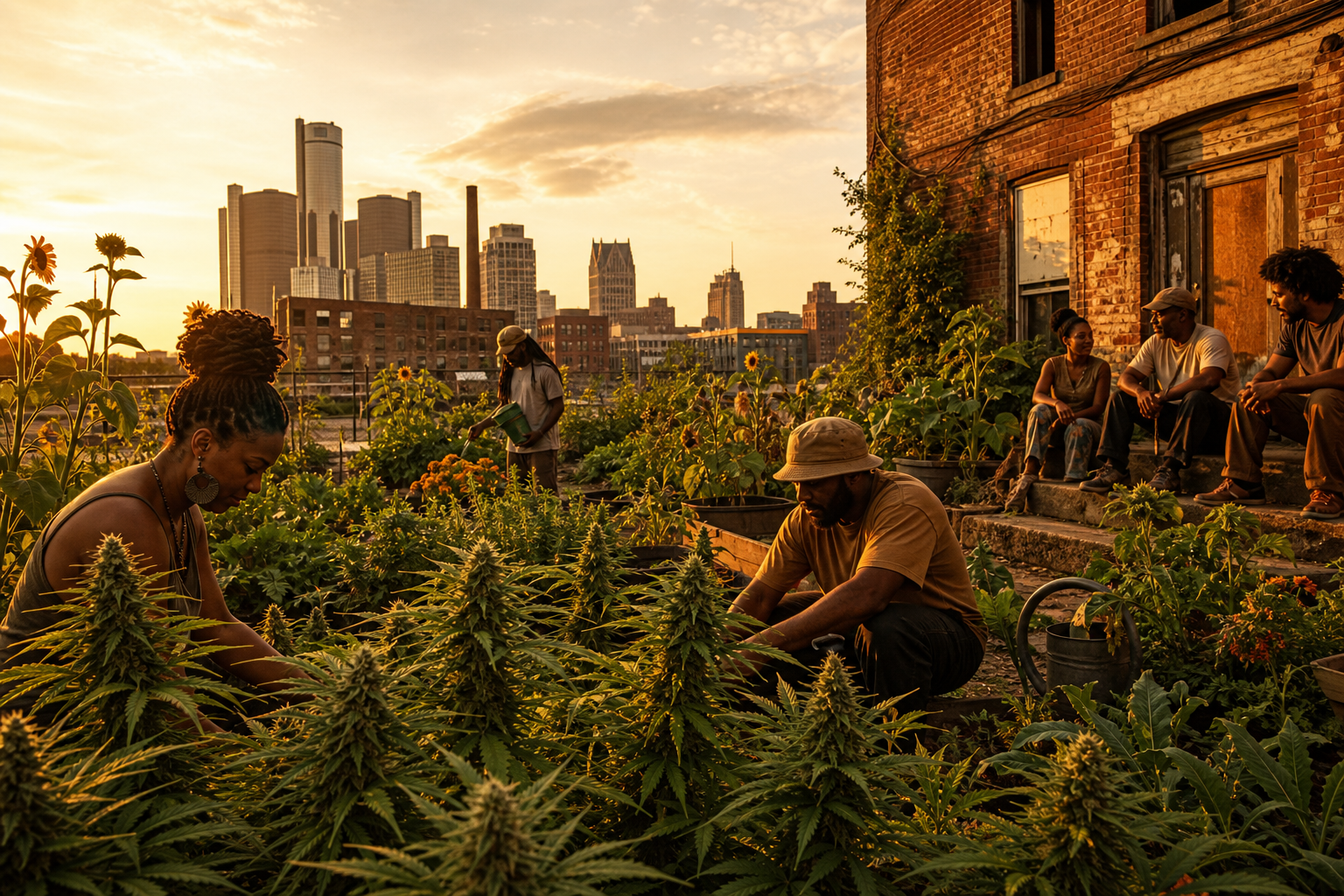
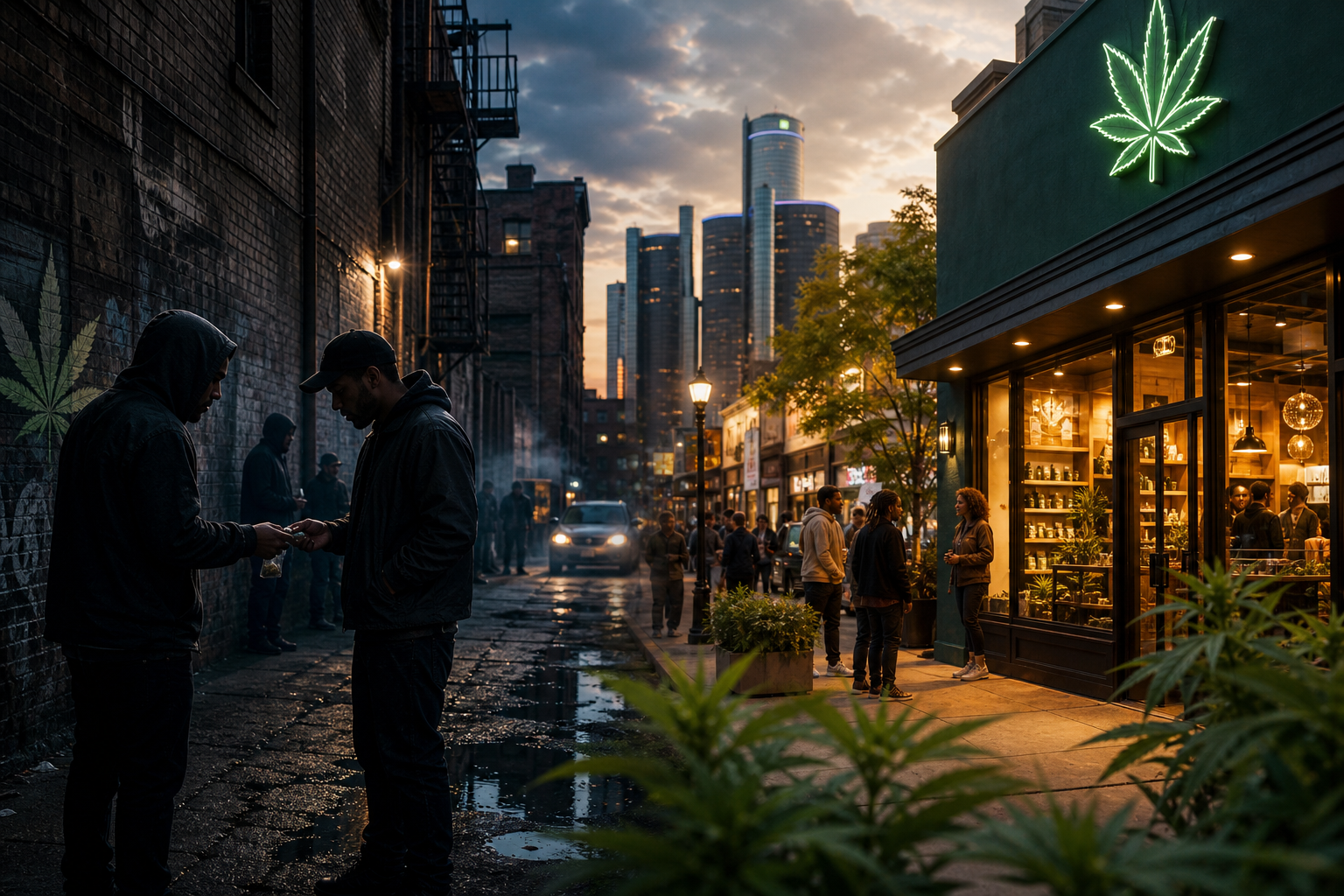
Fifteen years ago in Detroit, buying cannabis meant knowing a guy who knew a guy, meeting in a parking lot after dark, and hoping you weren't getting ripped off or arrested. Today, you walk into a brightly lit storefront on Woodward Avenue, browse a menu of lab-tested strains, pay with a debit card, and walk out with a receipt. This shift in Detroit cannabis culture — from underground commodity to regular consumer product — is one of the fastest changes the city has seen. But the change goes deeper than convenience. It's changed who uses cannabis, where they use it, how they talk about it, and what cannabis means in Detroit neighborhoods from 8 Mile to the Riverfront.
What Was Detroit Cannabis Culture Like Before 2008? #
Before Michigan's Medical Marihuana Act passed in 2008, Detroit's cannabis culture operated entirely underground—secretive, risky, and only available through people you knew. There were no legal dispensaries, no lab-tested products, and no consumer protections—just a black market shaped entirely by criminal risk. This wasn't California's sort-of-legal medical gray market or Colorado's pre-legalization tolerance. This was full prohibition, enforced unevenly but persistently by the Detroit Police Department in an era when the city was struggling with violent crime and cannabis arrests were easy wins. Detroit recorded over 3,000 cannabis possession arrests annually during the early 2000s, with enforcement concentrated in mostly Black neighborhoods even though usage rates were similar across racial groups.
The Pre-Legalization Reality #
| Aspect | Pre-2008 Reality |
|---|---|
| Access | Personal connections only; no retail, no delivery, no clarity |
| Quality | Completely unregulated; no testing for potency, mold, or pesticides |
| Price | Highly variable; $20-60 per eighth depending on your connect |
| Risk | Arrest, jail, job loss, housing discrimination |
| Social setting | Private homes, occasionally public parks (risky), never legitimate venues |
| Conversation | Whispered, coded, secretive |
| Who's buying | Skewed young, male, and willing to accept legal risk |
The social patterns of prohibition created specific behaviors. Consumption was intensely private — even among friends, you didn't openly discuss your cannabis use unless you were sure of the company. Parents hid it from children. Employees hid it from employers. The culture was defined by secrecy, and secrecy shaped everything about how people related to the plant.
The Medical Gray Market (2008-2018) #
Michigan's 2008 medical marijuana law created a gray area that Detroit navigated unevenly. The law allowed patients and caregivers to grow limited amounts, but it didn't establish a licensed retail system. What emerged was a patchwork:
- Caregiver networks — patients connected to individual growers
- Dispensary proliferation — storefronts opened in a legal gray area, operating as "patient clubs" or "consultancies"
- Enforcement inconsistency — raids happened, then stopped, then happened again depending on political winds
During this decade, Detroit developed a sort-of-legal-but-not-really cannabis culture that was more visible than the prohibition era but still uncertain. You could walk into a dispensary on 8 Mile, but it might be shut down next week. The culture remained cautious — consumers didn't publicly celebrate their status, and the industry operated with one eye on the exit.
How Did Legalization Change Detroit's Cannabis Culture in December 2019? #
When Michigan's adult-use cannabis law took effect on December 1, 2019, Detroit's cannabis culture transformed overnight from a gray-market medical system to a regulated, consumer marketplace where people could buy openly. Licensed adult-use dispensaries opened their doors, removing the criminal risk that had shaped every aspect of cannabis culture for generations. Michigan issued over 1,500 recreational licenses within the first year of legalization, making cannabis one of the fastest-growing new industries in state history.
What Changed Overnight #
| Before December 2019 | After December 2019 |
|---|---|
| Medical card required | 21+ with ID |
| Gray-area dispensaries | Licensed, inspected, regulated facilities |
| Cash only | Debit/credit at most locations |
| No product information | Lab-tested, labeled, potency disclosed |
| Secretive consumption | Becoming normal, increasingly public |
| Arrest risk for possession | Legal possession up to 2.5 ounces |
The biggest cultural shift wasn't the retail experience — it was the removal of criminal risk. When cannabis possession stopped being a crime, the shame around it began to fade. Not right away, and not completely, but noticeably.
Who Are Detroit's Cannabis Consumers in 2026? #
Legalization dramatically expanded who's buying cannabis—Detroit's 2026 cannabis consumers now include retirees, professionals, parents, and veterans, not just young men. The consumer base shifted from a narrow prohibition-era stereotype to a broad cross-section of the city's population, fundamentally changing how the culture operates.
Who Consumes Now (vs. Then) #
| Demographic | Pre-Legalization | Post-Legalization (2026) |
|---|---|---|
| Age | Skewed 18-35 | Even distribution 21-65+ |
| Gender | ~70% male | Near 50/50 |
| Income | Working class and underground economy | All income levels, including affluent professionals |
| Race | Disproportionately Black (enforcement hit Black people way more often) | More reflective of general population |
| Employment | Service industry, gig work, unemployed | Includes professionals, healthcare workers, educators |
| First exposure | Teenage, secretive | Increasingly adult, informed, curious |
The expansion beyond the young-male-skateboarder stereotype has been the single most significant cultural change. In 2026, Detroit's cannabis consumers include:
- Retirees managing arthritis and sleep issues
- Parents using after kids are in bed
- Professionals replacing alcohol with cannabis
- Veterans managing PTSD
- Seniors exploring alternatives to pharmaceuticals
This expansion of who's buying has forced the culture to grow up. The market now serves people who want reliable dosing, consistent quality, and professional service — not just the highest THC percentage for the lowest price. At Divine Toke, our Detroit-based sun-grown organic farm serves this maturing market with living soil cultivation that produces flower with richer terpene profiles than indoor alternatives, priced accessibly at $15 per eighth.
Where Do People Consume Cannabis in Detroit Now? #
Prohibition forced consumption into private, hidden spaces, but legalization has gradually expanded cannabis into designated home spaces, private events, and increasingly visible social settings. The geography of consumption shifted from sneaky basement sessions and parking lot handoffs to legitimate social settings where cannabis use is openly acknowledged.
Private Spaces: The Home Normalization #
The most significant change has happened in private homes. Where cannabis consumption was once hidden from children, partners, and houseguests, it's now increasingly normalized:
- Designated consumption areas — some homes now have "smoking rooms" or outdoor consumption spaces, similar to how some households handle alcohol
- Parental openness — parents are increasingly honest with adult children about their cannabis use, modeling responsible consumption
- Social hosting — offering cannabis to guests is becoming as normal as offering a beer, particularly among adults 40+
This home acceptance is the foundation of broader cultural change. When cannabis becomes part of home life — consumed openly in living rooms instead of sneakily in basements — the bad reputation fades quickly.
Public Spaces: The Emerging Cannabis Social Scene #
Detroit's public cannabis culture remains limited by state law, which prohibits consumption lounges and public use. But within those constraints, a social scene is emerging:
Cannabis-friendly events:
- Private parties with consumption areas
- Cannabis yoga classes (consumption before practice)
- Art gallery openings with consumption sections
- Music events with designated consumption zones
The consumption lounge question: Michigan has been slow to license consumption lounges compared to states like Nevada and California. As of 2026, Detroit has limited legal options for public consumption. This creates a gap — people can buy cannabis legally but have few legal places to consume it outside private residences. The cultural pressure for consumption lounges is building, and they're likely coming within the next 1-2 years.
The Workplace Reality #
Employment remains the frontier where prohibition culture persists. Despite legalization:
- Most employers can still drug test and fire for cannabis use
- Federal contractors and employees are subject to federal prohibition
- Many professional workplaces maintain "don't ask, don't smell" policies
The cultural shift here is slower because employment law hasn't caught up with state legalization. Employees remain cautious, and the "cannabis closet" persists in professional contexts even as it opens in social ones.
How Has the Language Around Cannabis Changed in Detroit? #
The vocabulary has shifted from coded prohibition slang like "weed" and "pot" to professional terms like "cannabis," "flower," and "consumption," showing how people are getting used to it as a legitimate product. This language change mirrors the broader cultural shift from underground scene secrecy to mainstream consumer acceptance.
Terminology Evolution #
| Era | Common Terms | What It Signaled |
|---|---|---|
| Prohibition (pre-2008) | "Weed," "pot," "dope," "stuff," "bud" | Insider language, often coded |
| Medical gray market (2008-2018) | "Medical marijuana," "MMJ," "meds," "medicine" | Legitimacy-seeking, health framing |
| Legalization (2019-present) | "Cannabis," "flower," "product," "consumption" | Professional, becoming normal, precise |
The shift from "marijuana" to "cannabis" is the most visible language change. "Marijuana" carries historical baggage — it's the term used in prohibition propaganda, linked to racially-biased enforcement, and associated with the underground scene. "Cannabis" is the scientific name, neutral and professional. Dispensaries use it. Media uses it. Increasingly, consumers use it.
Similarly, "getting high" is being supplemented with "consumption," "medicating," or "session." The language reflects a desire to normalize cannabis as a routine activity rather than a deviant one.
The Medical vs. Adult-Use Conversation #
Even in legal markets, consumers often navigate between medical and adult-use framing:
- Public conversation: Tends toward wellness, relaxation, sleep support — "I use it to unwind"
- Private conversation: More open about recreational pleasure — "I enjoy the feeling"
- Medical contexts: Increasingly explicit about conditions — "I use 5mg THC for my lower back pain"
This dual framing — wellness in public, pleasure in private — reflects the ongoing cultural conversation. Full acceptance would mean no distinction between "I enjoy a glass of wine" and "I enjoy cannabis." Detroit isn't there yet, but the trend is moving in that direction.
How Has Detroit's Cannabis Industry Changed From Underground to Legal? #
Detroit cannabis sellers have transformed from underground operators risking arrest to licensed, tax-paying business owners who sponsor community events and sit on local business councils. This shift from criminal to entrepreneur has fundamentally changed how the community relates to the industry, replacing both-sides-watching-their-backs relationships with legitimate commerce.
The Underground Operator (Pre-2019) #
The prohibition-era dealer was:
- Operating outside the law, at legal risk
- Often connected to other illegal activities
- No quality control or accountability
- Cash-only, no receipts, no recourse for bad product
- Suspicious of newcomers and law enforcement
This created a situation where both sides were watching their backs — both parties were committing a crime, and that shared risk shaped the culture.
The Licensed Operator (2019-Present) #
The licensed dispensary owner is:
- Fully legal, tax-paying, inspected
- Accountable to state regulators and customers
- Providing lab-tested, quality-controlled products
- Accepting multiple payment methods, issuing receipts
- Part of the legitimate business community
This legitimacy has helped cannabis become part of everyday life. Dispensary owners sit on local business councils. They sponsor community events. They employ over 30,000 people across Michigan with benefits and legal protections. The legal cannabis industry contributed $267 million in state tax revenue in 2024, becoming part of Detroit's economic fabric rather than an underground economy on its margins.
The Equity Question #
One issue that legalization has brought up: who owns the legal industry?
Detroit's cannabis industry has struggled to meet social equity goals. Many of the people who suffered most during prohibition — Black Detroiters arrested and incarcerated way more often — have been left out of the legal market due to:
- High capital requirements for licensing
- Exclusion of people with cannabis convictions from ownership
- Complex regulatory barriers
This has created tension. The underground dealers of the 2000s were often Black Detroiters serving their community. The licensed owners of the 2020s are mostly white and wealthy. The culture is wrestling with whether legalization has truly served the communities that carried the costs of prohibition.
How Does Age Shape Detroit's Cannabis Culture Today? #
Detroit's cannabis culture varies dramatically by generation—Gen Z treats cannabis as a normal wellness product, Millennials navigate between prohibition trauma and advocacy, while Boomers return to cannabis as retirees after decades of abstinence. This diversity across age groups means the city contains multiple cannabis cultures operating simultaneously.
Generation Z (Born 1997-2012) #
Relationship to cannabis:
- Came of age after legalization
- Never experienced prohibition culture
- Expect cannabis to be regulated, tested, and professionally sold
- Often view cannabis as safer than alcohol
- Higher comfort with public conversation about use
Cultural markers:
- Prefers vapes and edibles over smoking
- Values convenience (delivery, online ordering)
- Treats cannabis like any other wellness product
- Low tolerance for sketchy or unprofessional experiences
Millennials (Born 1981-1996) #
Relationship to cannabis:
- Transitioned from prohibition to legalization as adults
- Most likely to have had negative legal encounters (arrests, job consequences)
- Strongest advocates for full acceptance and social equity
- Often balancing cannabis use with parenting
Cultural markers:
- Most likely to use for specific purposes (sleep, anxiety, pain)
- Value quality and transparency
- Active in advocating for consumption lounges and employment protections
- Navigate between "responsible parent" and "cannabis consumer" identities
Generation X and Boomers (Born 1964-1980 and earlier) #
Relationship to cannabis:
- Longest prohibition-era experience
- Most likely to have stopped consuming during career/family years
- Returning to cannabis as retirees or empty-nesters
- Often using for medical purposes with doctor awareness
Cultural markers:
- Prefer flower and traditional consumption methods
- Value in-person service and education
- Most cautious about public acknowledgment of use
- Often surprised by potency of modern cannabis
This diversity across age groups means Detroit's cannabis culture isn't all one thing. A 25-year-old's relationship to cannabis is fundamentally different from a 65-year-old's, even when both are legal consumers.
What Cannabis Stigma Still Exists in Detroit After Legalization? #
Despite state legalization, the shame around cannabis persists in employment, housing, family court, and professional settings—even as social and family acceptance has become normal quickly. The gap between social acceptance and institutional acceptance represents the biggest remaining barrier to full acceptance in Detroit's cannabis culture.
Where Stigma Is Strong #
| Context | Why Stigma Persists | Timeline for Change |
|---|---|---|
| Employment | Federal prohibition, drug testing technology, liability concerns | 5-10 years |
| Housing | Federal housing restrictions, landlord discretion | 5-10 years |
| Child custody | Family court sticking to old views, "unfit parent" stereotypes | 10+ years |
| Healthcare settings | Federal funding restrictions, bad reputation among older providers | 5-10 years |
| Professional reputation | Conservative industries, generational attitudes | 10-20 years |
Where Stigma Has Faded #
| Context | How Acceptance Happened |
|---|---|
| Social settings | Becoming normal through exposure; everyone knows someone who consumes |
| Family | Generational shift; adult children making use normal with parents |
| Entertainment | Cannabis content in media, celebrity openness |
| Wellness spaces | Integration with yoga, meditation, holistic health |
| Detroit neighborhoods | Visibility of legal dispensaries; becoming part of the economy |
The pattern is clear: personal, social contexts normalize faster than institutional, regulated contexts. Your friends don't care if you use cannabis. Your employer might.
What Does the Future Hold for Detroit's Cannabis Culture? #
By 2030, Detroit's cannabis culture will likely feature licensed consumption lounges, employment protections for off-duty use, and broader federal rescheduling that removes remaining institutional barriers. The trend points toward full acceptance, though questions of equity, corporate consolidation, and medical-recreational distinctions will persist.
Likely Developments #
| Development | Probability | Timeline |
|---|---|---|
| Consumption lounges | High | 2026-2028 |
| Employment protections | Moderate | 2027-2030 |
| Federal rescheduling | Moderate-High | 2026-2028 |
| Home delivery expansion | High | Already expanding |
| Cannabis tourism | Moderate | 2028-2030 |
| Full social acceptance | Moderate | 2030+ |
The Enduring Questions #
Even as the culture becomes normal, some tensions will persist:
- Quality vs. accessibility: Will premium craft cannabis coexist with affordable mass-market products?
- Corporate vs. local: Will Detroit's cannabis industry stay locally owned or consolidate under national brands?
- Medical vs. recreational: Will the distinction blur or remain legally significant?
- Equity: Will communities harmed by prohibition gain proportionally from legalization?
FAQ: Detroit's Changing Cannabis Culture #
Q: How has cannabis culture in Detroit changed since legalization? #
A: Detroit's cannabis culture has shifted from underground, secretive, and high-risk to visible, becoming normal, and regulated. Consumption moved from hidden parking lots to legitimate storefronts. The consumer base expanded from mostly young men to a broad demographic including professionals, parents, and seniors. Language shifted from coded slang to professional terms. The industry transformed from illegal operators to licensed, tax-paying businesses integrated into the local economy. This change parallels broader shifts in how Michiganders understand what actually matters when choosing between indica, sativa, and hybrid strains.
Q: What was buying cannabis like in Detroit before 2008? #
A: Before Michigan's 2008 medical marijuana law, cannabis was entirely underground. Purchase required personal connections, meetings in private locations, cash-only transactions, and acceptance of legal risk. Quality was unregulated, potency unknown, and there was no recourse for bad product. Socially, use was hidden from employers, family, and often friends. Arrest risk was real — particularly for Black Detroiters, who were arrested way more often.
Q: Who consumes cannabis in Detroit now? #
A: Detroit's 2026 cannabis consumers span all demographics: retirees managing pain and sleep, parents replacing alcohol, professionals decompressing after work, veterans addressing PTSD, and curious first-timers exploring alternatives to pharmaceuticals. The consumer base is near gender-balanced, spans ages 21 to 80+, and includes all income levels and professions — a dramatic expansion from the prohibition-era profile of young, male, risk-tolerant consumers. It's not just one type of person anymore.
Q: Where do people consume cannabis in Detroit? #
A: Most consumption remains in private homes, where acceptance has grown fastest — designated consumption spaces, parental openness with adult children, and social hosting are increasingly common. Public consumption remains limited by state law, though private events with consumption areas are growing. Legal consumption lounges are likely coming within 1-2 years. Workplace consumption remains rare due to employment restrictions.
Q: Has the stigma around cannabis disappeared in Detroit? #
A: The shame around cannabis has faded significantly in social and family settings but persists in institutional settings. Most Detroiters personally know cannabis consumers and don't view use as wrong. However, employment drug testing, housing restrictions, family court attitudes, and some professional environments maintain negative associations. Full acceptance — where cannabis is treated exactly like alcohol — is likely 10-20 years away.
Q: How has the language around cannabis changed? #
A: The terminology has professionalized. "Cannabis" (the scientific name) has largely replaced "marijuana" (the prohibition-era term with racialized history). "Flower" has replaced "bud" or "weed." "Consumption" and "session" supplement "getting high." This language shift reflects broader acceptance — cannabis is increasingly discussed as a consumer product rather than an underground scene substance.
Q: What happened to the underground dealers when legalization came? #
A: Detroit's underground cannabis economy fragmented. Some operators transitioned to legal license ownership (though capital requirements excluded many). Some became employees of licensed facilities. Some shifted to other informal economic activity. Some simply exited as legal options became available. The underground market persists for consumers seeking lower prices, untaxed product, or delivery to areas without dispensaries.
Q: Is cannabis really normalized for everyone in Detroit? #
A: Acceptance is uneven. It's furthest along among younger adults, in social settings, and in neighborhoods with visible dispensaries. It's least advanced in conservative religious communities, among older adults with strong prohibition-era associations, and in professional contexts with drug testing. Race and class also shape experience — communities with higher arrest rates during prohibition often view legalization more cautiously.
Q: What's the biggest remaining barrier to full cannabis acceptance? #
A: Employment remains the largest barrier. Most Michigan employers can still drug test and fire employees for off-duty cannabis use. Until employment protections align with legalization, many consumers — particularly professionals and parents — remain partially "in the closet," using cannabis privately while maintaining a cannabis-free image at work. Federal rescheduling and state employment law changes would speed up full acceptance. For those exploring cannabis for wellness purposes, understanding workplace policies remains essential.
Q: How has Divine Toke contributed to Detroit's cannabis culture? #
A: As a Detroit-based sun-grown organic cannabis farm using living soil and biodynamic practices, Divine Toke represents the cultural shift from underground to legitimate, from mystery to transparency, from risk to responsibility. By providing lab-tested, organic, locally-grown cannabis at $15/eighth and $115/ounce with education-first service, we're part of normalizing cannabis as a quality consumer product rather than a shady commodity. Our Sun+Earth aligned practices reflect the values of a maturing market that prioritizes craft cultivation over mass production. Our team reflects Detroit's diversity, and our commitment to community engagement — not just compliance — aims to ensure legalization benefits the city that carried prohibition's costs.
Detroit's cannabis culture is still evolving. If you're curious about how sun-grown organic cannabis fits into this changing landscape, or if you have questions about navigating Detroit's legal cannabis scene, visit Divine Toke. Whether you're a longtime consumer adjusting to the legal market or a curious newcomer exploring your first purchase, we're here to help you understand this plant and this moment in Detroit's history.
Related Articles #
Explore more perspectives on cannabis culture and community:
- First-Timer's Guide: What Nobody Tells You About Cannabis — Essential reading for newcomers navigating Detroit's legal cannabis landscape for the first time
- Mother's Day Cannabis Wellness Guide — How parents and caregivers are incorporating cannabis into wellness routines
- What Actually Matters: Indica vs. Sativa vs. Hybrid — Understanding strain selection beyond outdated categorizations
- The Entourage Effect: Why Whole Plant Beats Isolates — The science behind sun-grown organic cannabis superiority
- Schedule III Medical-Only: What Happens Next? — Federal rescheduling implications for Detroit consumers
- Sun+Earth Certified Cannabis Farming — How Divine Toke's Detroit-based cultivation aligns with regenerative agriculture principles
Grown in Detroit. Shipped to your door.
Small-batch, sun-grown cannabis cultivated in living soil. Mail-order shipping to all 50 states.