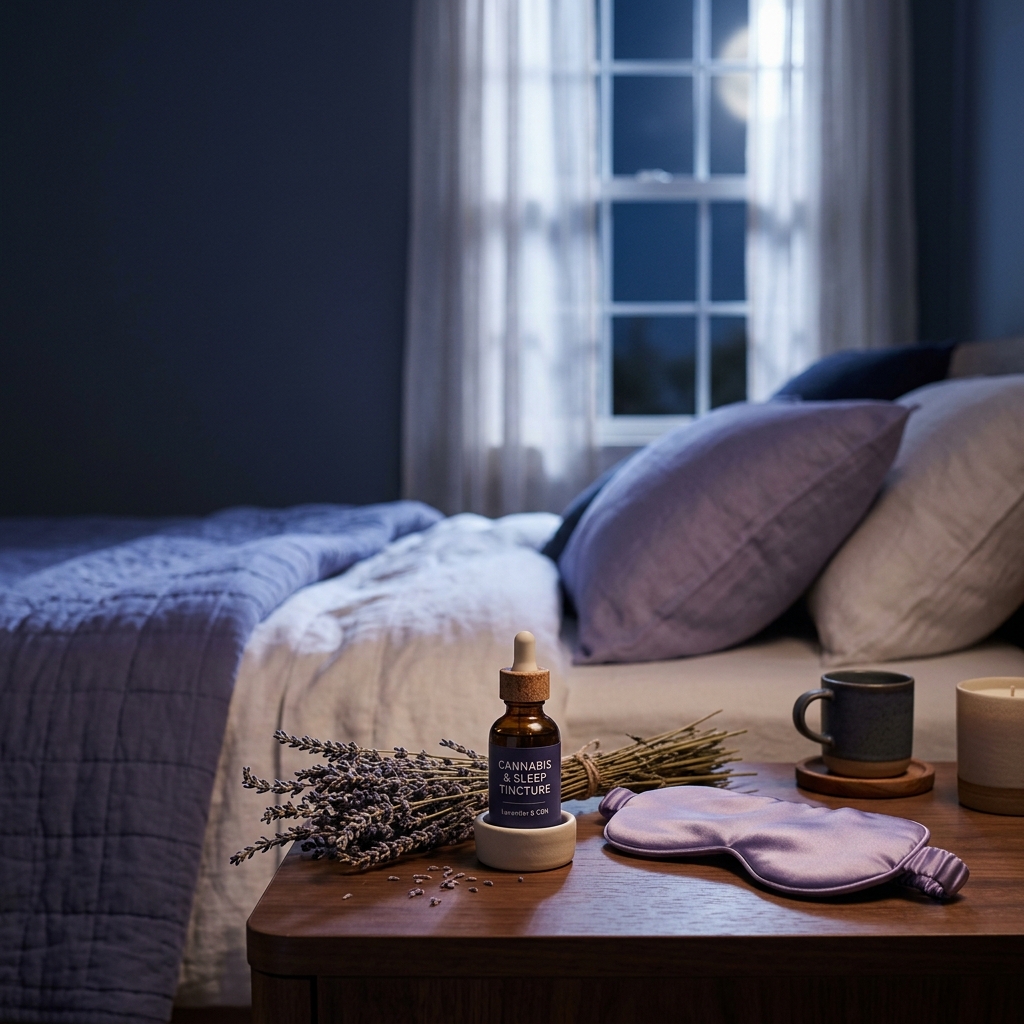
Why Sleep and Weed Work Together: A Terpene-First Approach
CBN gets all the credit, but myrcene might be doing the real work. Here's a terpene-first approach to using cannabis for better sleep — and why THC percentage is the wrong metric.
Questions this article answers
- what cannabis strain helps you sleep
- does CBN help with sleep
- which terpene makes you sleepy
- how to use cannabis for insomnia

Head Cultivator
On this page
The most effective cannabis for sleep isn't the highest-THC strain on the shelf — it's the one with the right terpene profile. Myrcene (sedating muscle relaxant) and linalool (calming anxiolytic) do more for your sleep architecture than raw THC, and CBN adds a mild sedative layer that early research suggests enhances the overall effect.
If you've been chasing THC percentage for sleep and waking up groggy, you're using the wrong metric.
Michigan winters bring short days and long dark evenings; metro Detroit shift workers often stack that darkness on top of rotating schedules. Cannabis can be one tool for wind-down — it is not a cure for insomnia, and chronic sleep problems belong with a doctor first.
How Cannabis Affects Sleep #
Cannabis influences sleep through multiple pathways:
| Pathway | Compound | Effect on Sleep |
|---|---|---|
| CB1 receptor activation | THC | Reduces time to fall asleep (sleep latency) |
| Muscle relaxation | Myrcene | Releases physical tension, reduces restlessness |
| Nervous system calming | Linalool | Enhances GABA activity → sedation without impairment |
| Mild sedation | CBN | Gentle sleep promotion, especially combined with THC |
| Anxiety reduction | CBD | Quiets racing thoughts that prevent sleep onset |
| Pain dampening | THC + BCP | Reduces pain that interrupts sleep cycles |
The Sleep Terpene Stack #
For optimal sleep support, look for this combination on lab results:
🛏️ Sleep Terpene Stack:
   Myrcene (dominant, >0.3%) — physical relaxation
   Linalool (present, >0.1%) — nervous system calm
   + CBN if available — gentle sedation boost
   + Moderate THC (10-20%) — don't need max potency
Why High-THC Strains Can Hurt Sleep #
Paradoxically, very high-THC strains (28%+) can disrupt sleep quality rather than improve it:
- Elevated THC suppresses REM sleep — the dreaming stage critical for memory consolidation and emotional processing
- Residual psychoactivity keeps the mind partially activated, reducing deep sleep quality
- THC tolerance builds quickly at high doses, requiring escalating amounts for the same effect
- Morning grogginess from heavy THC sedation can impair next-day function
The sweet spot: 10-20% THC with a rich myrcene/linalool terpene profile provides sleep support without REM suppression or next-day fog.
Strain Archetypes for Sleep #
| Strain Profile | THC Range | Key Terpenes | Sleep Application |
|---|---|---|---|
| Granddaddy Purple | 17-23% | Myrcene, Linalool, BCP | Full-body relaxation, deep physical sedation |
| Northern Lights | 16-21% | Myrcene, BCP, Pinene | Classic sleep strain, body-heavy, calming |
| Purple Punch | 18-22% | Myrcene, Limonene, BCP | Relaxation with slight mood lift before sleep |
| Bubba Kush | 15-22% | Myrcene, Limonene, BCP | Heavy body, minimal racing thoughts |
| ACDC (low THC) | <5% THC, 15%+ CBD | Myrcene, Pinene | For those who want sleep support without any high |
Practical Sleep Protocol #
Michigan Edible Dose Ceiling #
If you buy adult-use sleep edibles in Michigan, the CRA maximum THC bulletin under R 420.404 caps infused edibles at 10 mg THC per serving and 200 mg THC per package. That 10 mg figure is a regulatory ceiling — not a starter dose. For sleep, start lower (2.5–5 mg) and leave 60–90 minutes before bed. Medical infused products can allow higher per-serving THC under the same bulletin; still dose from your clinician's guidance, not the package max.
60-90 Minutes Before Bed #
- Take a tincture or edible with moderate THC (start 2.5–5 mg; stay within Michigan's adult-use serving cap) and CBN if available
- This allows onset to align with your natural wind-down — useful when Detroit winter darkness or a late shift has your clock out of sync
30 Minutes Before Bed #
- Vaporize 2-3 draws of a myrcene-dominant flower at low temperature (340-360°F)
- Low temp preserves the sedating terpenes that higher heat destroys
In Bed #
- Avoid screens — blue light counteracts both your natural melatonin and cannabis's calming effects
- Let the myrcene and linalool do their work — physical relaxation comes first, sleep follows
Tolerance Management #
- Don't use cannabis every night if you can help it — 4-5 nights per week maximum preserves effectiveness
- Take periodic 2-3 day breaks to prevent tolerance escalation
- If you need nightly use, keep doses as low as effective
FAQ: Cannabis and Sleep #
Q: What's the best terpene for sleep? #
A: Myrcene is the most effective terpene for sleep — it produces physical sedation and muscle relaxation that directly promotes sleep onset. Combined with linalool (nervous system calming) and CBN (mild sedation), it creates the ideal sleep-promoting terpene stack.
Q: Does cannabis help with insomnia? #
A: Cannabis can reduce sleep latency (time to fall asleep) and increase total sleep time for some people. It's most often tried for sleep trouble tied to pain, anxiety, or physical restlessness — not a standalone fix for chronic insomnia. If sleep problems are persistent, see a doctor first; Michigan winters and shift work can worsen sleep, but they don't change that rule.
Q: Does THC affect REM sleep? #
A: Yes. THC suppresses REM sleep at moderate-to-high doses, reducing dreaming. While this can be beneficial for PTSD patients (fewer nightmares), long-term REM suppression may affect memory consolidation. Using moderate doses and taking breaks helps maintain healthy sleep architecture.
Q: Is CBN really a sleep cannabinoid? #
A: CBN has a reputation as a sleep aid, and early research suggests mild sedative properties, especially when combined with THC. However, the science is still developing. The "sleepy old weed" effect may involve multiple degradation compounds, not CBN alone. It's helpful but not a standalone solution.
Q: Why do I feel groggy the morning after using cannabis for sleep? #
A: Morning grogginess usually indicates too high a dose or consumption too close to bedtime. Try reducing your dose by 25-50%, consuming earlier in the evening (90+ minutes before bed), and choosing strains with moderate THC (15-20%) rather than maximum potency.
Q: Can CBD alone help with sleep? #
A: CBD alone doesn't produce sedation, but it reduces anxiety and pain — two major causes of sleep disruption. For people whose insomnia is anxiety-driven, 25-50mg CBD before bed can be effective. For physical restlessness, adding a small amount of THC and myrcene-rich flower is more effective.
Q: How long should I use cannabis for sleep? #
A: Cannabis is a short-to-medium-term support tool for many people (weeks to months), not a permanent fix. For long-term use, incorporate tolerance breaks (2–3 consecutive nights off per week) and keep sleep hygiene in the mix. Address underlying sleep issues with a clinician in parallel — especially if insomnia has lasted more than a few weeks.
Q: What's the Michigan limit on sleep edibles? #
A: Adult-use infused edibles sold under Michigan CRA rules max out at 10 mg THC per serving and 200 mg THC per package (CRA bulletin under R 420.404). Use that as a ceiling when shopping in Detroit or elsewhere in Michigan — start well below 10 mg for sleep, and wait a full onset window before redosing.
Q: Does smoking before bed affect lung health? #
A: Combustion produces respiratory irritants regardless of material. For nightly use, switch to a vaporizer or tincture to eliminate smoke exposure entirely. Vaporized cannabis at low temperature delivers the same terpene and cannabinoid benefits without the combustion byproducts.
Good sleep is the foundation of everything else. The right flower, at the right dose, at the right time — and a doctor in the loop when Michigan winter darkness or shift work isn't the whole story.
Grown in Detroit. Shipped to your door.
Small-batch, sun-grown cannabis cultivated in living soil. Mail-order shipping to all 50 states.
You Might Also Enjoy
Cannabis and Sleep: How CBN, THC, and Terpenes Help You Rest
May 5, 2026 · 35 min read
A Big Review Found Medical Cannabis May Barely Help Insomnia. Here Is What That Means
October 13, 2026 · 21 min read
You Felt Rested, the Tracker Said Otherwise: The New Study on Cannabis and Middle-Age Sleep
October 9, 2026 · 28 min read