Cannabis vs. Alcohol: The Great Swap

Jamie
Head Cultivator
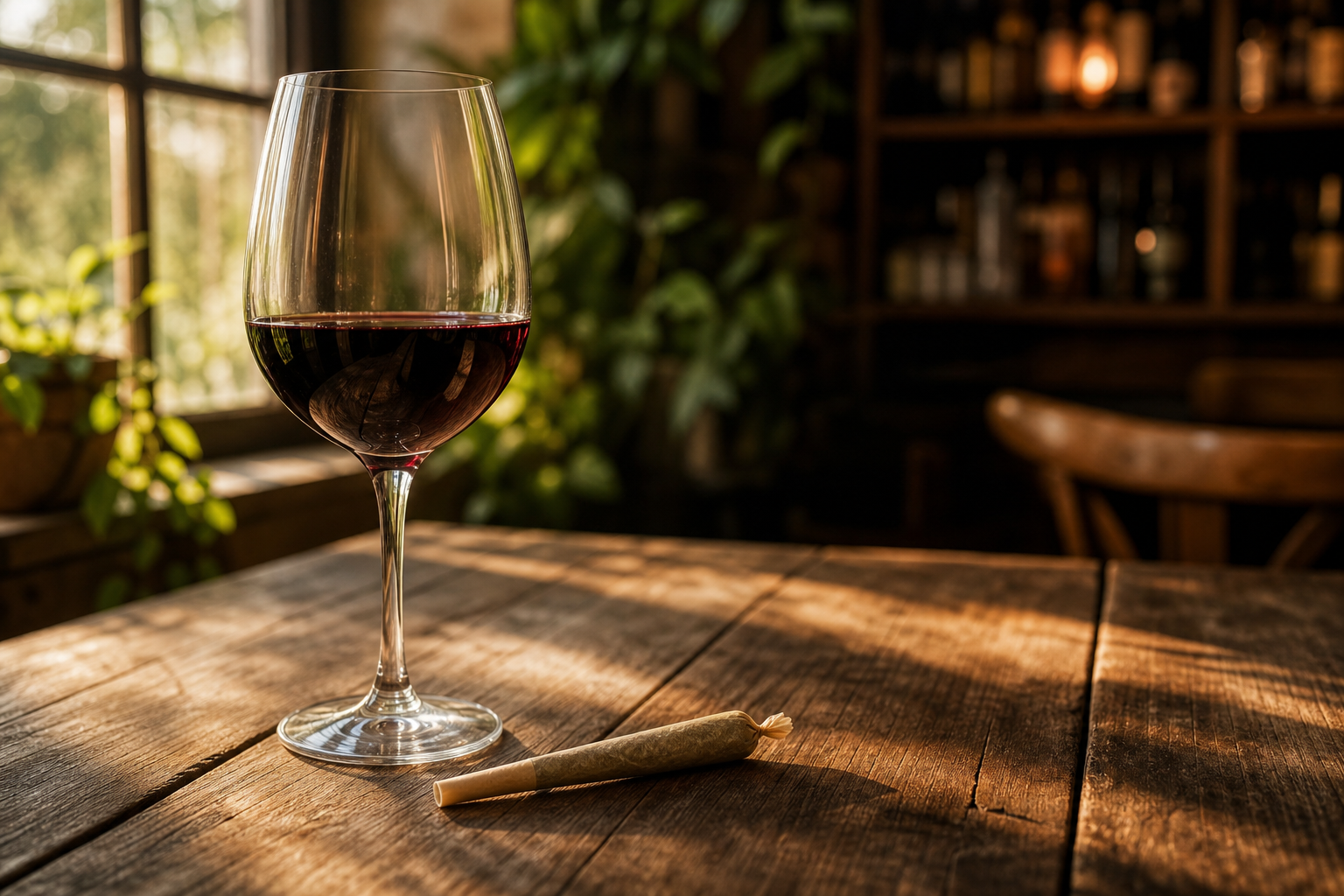
People are swapping their wine glasses for joints at record rates. Maybe you noticed it at parties. Maybe you're thinking about it yourself. The question on everyone's mind is simple: Is weed actually safer than booze?
The short answer from 2026 research: cannabis carries far lower mortality risk than alcohol, but neither substance is risk-free. This guide breaks down what actually happens to your body, your mornings, and your social life when you make the swap.
How Do Alcohol and Cannabis Compare on Mortality Risk? #
Alcohol kills roughly 95,000 Americans every year. Cannabis has no established fatal overdose count. The numbers aren't even close.
According to the CDC, excessive drinking causes about 95,000 annual deaths in the U.S. alone. That includes liver disease, alcohol poisoning (about 2,200 deaths), drunk driving crashes, and alcohol-related cancers. The World Health Organization reported 2.6 million global deaths tied to alcohol in 2019.
Cannabis sits at the other end of the spectrum. A 2026 government-funded expert panel scored alcohol at 79 on overall harm while cannabis scored just 15. The mortality risk associated with cannabis is approximately 114 times less than alcohol. While cannabis-related deaths can occur in specific circumstances (like impaired driving or rare pediatric accidents), there is no CDC category for fatal cannabis overdose because the substance itself does not shut down breathing or vital organs the way alcohol, opioids, or sedatives can.
What this means for you: If your primary concern is not dying from the substance itself, cannabis is demonstrably safer. That doesn't mean zero risk—but the risk profile is completely different.
What About Physical Health? Liver, Brain, and Beyond #
Alcohol damages the liver directly and shows more consistent evidence of brain structure harm. Cannabis affects brain function without the same level of organ damage, though it's not harmless.
The Liver Story #
Alcohol is a well-established cause of chronic liver disease, including fatty liver, hepatitis, and cirrhosis. Your liver processes alcohol as a toxin, and heavy drinking overwhelms it. According to CDC data, alcohol-related liver disease is a major driver of those 95,000 annual deaths.
Cannabis, by contrast, does not have an established pattern of direct liver damage. Some 2025 research from VCU even suggests cannabis compounds may help protect the liver from alcohol-related damage—though this is preliminary and doesn't mean cannabis "cancels out" alcohol harm if you use both.
Brain Health Comparison #
Here's where it gets more nuanced. Both substances affect your brain, but differently:
| Health Factor | Alcohol Impact | Cannabis Impact |
|---|---|---|
| Gray matter | Linked to reduced volume in heavy drinkers | Mixed evidence; some studies show effects, others don't |
| White matter | Consistent evidence of damage | Less consistent findings than alcohol |
| Daily function | Impairs coordination, judgment, memory | Affects memory, attention, decision-making, reaction time |
| Long-term risk | Well-established cognitive decline with heavy use | Less clear long-term structural impact |
The CDC notes that cannabis directly affects brain areas responsible for memory, learning, attention, decision-making, coordination, emotions, and reaction time. These effects are real and measurable, especially during intoxication. However, the evidence for permanent structural brain changes from adult cannabis use is less consistent than what we see with alcohol. University of Colorado Boulder research found cannabinoids may be easier on the brain than alcohol.
Bottom line: Alcohol wins the "most damaging to organs" contest. Cannabis has real brain effects you should respect, but the long-term structural harm appears less severe than alcohol at comparable use levels.
Hangover vs. Hangover: The Morning-After Reality #
Alcohol hangovers are usually more intense and predictable. Cannabis next-day effects are typically milder but can include fatigue and brain fog.
If you've ever woken up after a night of drinking, you know the classic alcohol hangover: pounding headache, nausea, dehydration, sensitivity to light and sound, maybe some regret. Alcohol hangovers are well-studied, predictable, and miserable.
Cannabis "hangovers" are different. Research dating back to 1985 found measurable residual effects about 9 hours after smoking, but the experience varies wildly between people:
| Symptom | Alcohol Hangover | Cannabis Next-Day |
|---|---|---|
| Headache | Very common | Sometimes |
| Nausea | Very common | Rare, mild if present |
| Dehydration/thirst | Very common | Dry mouth (cotton mouth) |
| Fatigue | Very common | Common |
| Brain fog | Common | Common |
| Light/sound sensitivity | Common | Rare |
| Duration | 8-24+ hours | Usually shorter |
Key differences:
- Alcohol hangovers are driven by dehydration, acetaldehyde (a toxic byproduct of alcohol metabolism), inflammation, and sleep disruption
- Cannabis next-day effects seem driven by residual THC, sleep quality changes, and individual tolerance
- Mixing both substances typically produces worse next-day effects than either alone
The honest take: Most people report cannabis mornings are gentler than alcohol mornings, but you'll still feel "off" sometimes—especially with high doses, edibles, or unfamiliar products.
Calories, Weight, and Your Waistline #
Alcohol packs empty calories and can promote weight gain. Cannabis itself has negligible calories, though the munchies are real.
Let's talk numbers (CDC alcohol calorie data):
| Drink/Method | Calories | Notes |
|---|---|---|
| Beer (12 oz) | 150 | Light beers ~100 |
| Wine (5 oz) | 120-130 | ~158 for larger pour |
| Cocktail | 150-300+ | Mixers add sugar bombs |
| Hard liquor (1.5 oz) | 100 | Before mixers |
| Smoked/vaped cannabis | Near zero | Negligible direct calories |
| THC beverage | 30-50 | Much lower than alcohol |
Alcohol provides about 7 calories per gram of pure ethanol. Your body also prioritizes burning alcohol over other fuel sources, which can temporarily slow fat metabolism. The result: liquid calories that add up fast and may promote weight gain through multiple mechanisms.
Cannabis is different. The plant material itself contributes negligible calories when smoked or vaped. THC beverages typically contain 30-50 calories—significantly less than alcoholic alternatives.
The catch: The munchies are real. THC activates appetite pathways in your brain. Many cannabis users consume more calories through snacking than they save by skipping alcohol. It's a behavioral trade-off, not a guaranteed weight loss strategy.
Interestingly, population studies consistently find that cannabis users tend to have lower BMI and obesity rates despite reporting higher calorie intake. A 2025 review in PMC concluded "cannabis use is not associated with weight gain, or may even facilitate weight loss." The mechanism isn't fully understood—possibly metabolic effects, possibly lifestyle factors—but the correlation is persistent across studies.
Practical takeaway: If you're counting calories, swapping alcohol for cannabis (especially THC beverages) removes a significant calorie source. Just watch the snack drawer.
Addiction Potential: Which One Hooks You Harder? #
Both can cause dependence, but alcohol has higher population-level addiction burden and more dangerous withdrawal.
Let's be straight: you can become dependent on either substance. The question is how likely it is and what happens when you try to stop.
Prevalence of Use Disorders (SAMHSA 2024) #
According to the SAMHSA 2024 National Survey on Drug Use and Health:
- Alcohol use disorder: 9.7% of Americans age 12+ (past year)
- Cannabis use disorder: Varies by study, roughly 9% of users develop dependence
In raw numbers, about 27.9 million Americans had alcohol use disorder versus roughly 19 million with cannabis use disorder (2022 data). Alcohol affects more people simply because more people use it heavily.
Withdrawal: The Critical Difference #
This is where alcohol's danger becomes undeniable:
| Factor | Alcohol Withdrawal | Cannabis Withdrawal |
|---|---|---|
| Severity | Can be life-threatening | Uncomfortable but not medically dangerous |
| Common symptoms | Tremors, agitation, seizures, delirium tremens | Irritability, restlessness, sleep problems, depressed mood |
| Medical supervision | Often required for heavy users | Rarely required |
| Duration | 3-7 days (acute) | 1-2 weeks |
Alcohol withdrawal can kill you. Heavy drinkers who quit cold turkey risk seizures and delirium tremens—a severe syndrome with confusion, fever, and cardiovascular collapse. This is why medical detox exists for alcohol.
Cannabis withdrawal is real and unpleasant—think irritability, trouble sleeping, and feeling "off" for a week or two—but it's not medically dangerous in the same way. You're not going to seizure from stopping cannabis.
Treatment Statistics #
Only 19.3% of people who need substance use treatment actually receive it per CDC data. For alcohol specifically, only 2.5% of people with past-year alcohol use disorder received medication-assisted treatment.
What this means: Alcohol has the higher public health burden, more severe withdrawal risk, and is harder to quit for heavy users. Cannabis dependence is real but typically less medically severe.
The Cali Sober Movement: Why People Are Making the Swap in 2026 #
34% of Americans now identify as "California sober"—quitting alcohol while continuing cannabis use. Gen Z leads at 48%.
The "Cali sober" lifestyle (also called "sober curious" with cannabis) is exploding. Here's what the 2026 data shows:
Who's Doing It? #
According to the Circana Sober Curious Nation Survey 2025:
- 34% of all Americans identify as California sober (December 2025 survey)
- 48% of Gen Z—the highest of any generation
- 49% of Americans planned to drink less in 2025
- 65% of Gen Z specifically planned to reduce alcohol
- 39% planned to go fully dry
What's Driving the Shift? #
Several factors are converging:
- Health consciousness — People are questioning alcohol's place in wellness culture
- THC beverages — 38% of Gen Z and 37% of millennials planned to try THC/CBD drinks in 2025
- Cost — Alcohol prices keep rising; cannabis is often cheaper per "session"
- Social acceptance — Cannabis stigma is fading while alcohol's problems become more visible
- Harm reduction — People recognizing that "all or nothing" sobriety doesn't work for everyone
Does It Actually Reduce Drinking? #
Research published in PMC suggests yes. Studies show people who use cannabis before drinking consume less alcohol and delay their first drink. Among the nearly 40% of drinkers who also use cannabis, over 60% say cannabis use affects how often they drink alcohol.
The honest framing: Cali sober isn't a treatment program or a guarantee of health. It's a harm-reduction approach. For people who struggle with alcohol but don't want total abstinence from all substances, swapping to cannabis represents a lower-risk alternative. It's not zero-risk—it's lower-risk.
How to Make the Swap: A Practical Framework #
Start low, go slow, and treat it like learning a new skill—not a direct one-to-one replacement.
If you're considering swapping alcohol for cannabis, here's a practical approach based on harm reduction principles:
1. Know Your "Why" #
Are you trying to:
- Eliminate hangovers?
- Reduce health risks?
- Save money?
- Sleep better?
- Cut calories?
Your goals shape your approach. Someone seeking hangover relief might prefer low-dose THC beverages. Someone prioritizing health might focus on clean, tested flower over high-potency concentrates.
2. Start Low and Go Slow #
| If you used to drink... | Try starting with... |
|---|---|
| 1-2 drinks socially | 2.5mg THC edible or a few puffs |
| 3-4 drinks regularly | 5mg THC or a single small bowl |
| Heavy daily drinking | Consider medical guidance; cannabis alone may not address alcohol dependence |
Cannabis isn't a direct replacement for alcohol's effects. You won't feel exactly the same. That's okay. The goal is finding a new equilibrium, not replicating the old one.
3. Choose Your Method Wisely #
| Method | Onset | Duration | Best For |
|---|---|---|---|
| THC beverages | 15-30 min | 2-4 hours | Social settings, replacing cocktails |
| Vaporizing | Immediate | 1-3 hours | Quick relaxation, dose control |
| Smoking | Immediate | 1-3 hours | Familiar ritual, immediate feedback |
| Edibles | 30-90 min | 4-8 hours | Sleep, long events, avoiding lung exposure |
For alcohol replacement, THC beverages are the most direct substitute—social, measured doses, familiar drinking ritual. Check out our edibles dosing guide for more on safe consumption.
4. Watch for Cross-Addiction #
Some people simply transfer their dependence from one substance to another. Warning signs:
- Can't relax without cannabis
- Escalating doses to get the same effect
- Using cannabis to avoid dealing with underlying issues
If this sounds familiar, consider talking to a professional. The goal is healthier patterns, not just different substance dependence.
5. Don't Mix Early On #
Using cannabis and alcohol together can amplify both substances' effects and increase impairment. While some experienced users practice this deliberately, it's not recommended when you're still learning your cannabis tolerance.
Social Considerations: Work, Family, and the Real World #
Cannabis comes with different social risks than alcohol—legal, professional, and personal.
Before making the swap, consider the practical realities:
Drug Testing #
Alcohol leaves your system within hours. Cannabis metabolites can be detectable for days or weeks, depending on use frequency and test type. If you face workplace drug testing, this is a serious consideration. Many employers still test for THC even in legal states.
Legal Status #
While cannabis is legal in Michigan for adults 21+, it remains federally illegal. This affects:
- Gun ownership (ATF Form 4473 asks about cannabis use)
- Federal employment
- Housing (some landlords prohibit cannabis even where legal)
- Travel between states
Alcohol faces none of these complications.
Social Stigma #
Despite rapid normalization, cannabis still carries more stigma than alcohol in many contexts. Family gatherings, professional networking, and certain social circles may be less accepting of cannabis than wine or beer.
Impairment Duration #
| Substance | You feel impaired | You might still test positive |
|---|---|---|
| Alcohol | 2-8 hours | 12-24 hours (breath/blood) |
| Smoked/vaped cannabis | 2-4 hours | 3-30+ days (urine) |
| Edible cannabis | 4-8 hours | 3-30+ days (urine) |
The practical reality: Swapping alcohol for cannabis trades one set of risks for another. For many people, the trade is worth it. But go in with clear eyes.
FAQ: Your Cannabis vs. Alcohol Questions Answered #
Q: Is weed actually safer than alcohol? #
A: Yes, by most mortality and health measures. Cannabis has no established fatal overdose mechanism, while alcohol kills about 95,000 Americans annually. Alcohol causes well-documented liver disease and brain damage; cannabis shows less consistent evidence for long-term organ harm. However, cannabis is not risk-free—it impairs driving, can trigger anxiety in some users, and carries unique legal and social risks.
Q: Can I become addicted to cannabis if I replace alcohol? #
A: Yes, cannabis use disorder is real. About 9% of cannabis users develop dependence, characterized by tolerance, withdrawal symptoms (irritability, sleep issues), and continued use despite negative consequences. The risk is lower than alcohol (which affects roughly 10% of users), and cannabis withdrawal is medically less dangerous, but dependency can still develop—especially with daily high-dose use.
Q: Will I lose weight if I switch from alcohol to cannabis? #
A: You might, but it's not guaranteed. Alcohol packs 7 calories per gram plus often-sugary mixers. Cannabis itself has negligible calories. However, THC stimulates appetite (the "munchies"), which can offset calorie savings. Population studies show cannabis users tend to have lower BMI despite eating more, but individual results vary widely based on eating habits and product choice.
Q: What's the best cannabis product for replacing alcohol? #
A: THC beverages are the closest direct substitute. They offer social ritual, measured dosing (typically 2-10mg THC), and familiar consumption patterns. For sleep-focused replacement, low-dose edibles (2.5-5mg) work well. For immediate stress relief without calories, vaporizing clean flower provides rapid onset and easier dose control than smoking.
Q: How do I explain "Cali sober" to family or coworkers? #
A: Frame it as harm reduction, not moral superiority. "I've cut out alcohol because it wasn't working for me, and I occasionally use cannabis instead." You don't owe anyone explanations, but if pressed, emphasize the health comparison: lower calories, no hangovers, and dramatically lower overdose risk. Avoid preachy tones—people respond better to personal choice than proselytizing.
Q: Can I use cannabis to quit drinking entirely? #
A: Some people successfully use cannabis as a transition tool, but it's not a treatment for alcohol use disorder. If you're physically dependent on alcohol, stopping without medical supervision can be dangerous (seizures, delirium tremens). For heavy drinkers, professional help—detox programs, therapy, or medication-assisted treatment—is safer than self-medicating with any substance, including cannabis.
Q: What's a "cannabis hangover" and how do I avoid it? #
A: Next-day grogginess, fatigue, and brain fog can follow heavy cannabis use—especially with edibles or high-THC products. To minimize: stick to lower doses, stay hydrated, don't mix with alcohol, and allow adequate sleep time (cannabis can affect sleep architecture). If you experience regular next-day fog, try reducing your dose or switching to a different consumption method.
Q: Does cannabis actually protect your liver from alcohol damage? #
A: Early research suggests cannabis compounds may have protective effects, but this is preliminary. A 2025 VCU-led study found cannabis compounds may lower risk of alcohol-related liver disease, but this doesn't mean cannabis "cancels out" alcohol harm. The safest approach for your liver is reducing or eliminating alcohol, regardless of cannabis use.
Q: How long does cannabis impairment last compared to alcohol? #
A: Subjective impairment typically lasts 2-4 hours for smoked/vaped cannabis, 4-8 hours for edibles—similar to alcohol's 2-8 hour window. However, cannabis metabolites remain detectable in urine for days or weeks, while alcohol clears within 12-24 hours. This disconnect between felt impairment and test detection creates unique risks for drug testing, even when you're not actively high.
Q: Is it safe to drive after using cannabis instead of drinking? #
A: No—impaired driving is impaired driving, regardless of substance. Cannabis slows reaction time, affects coordination, and impairs judgment. While cannabis-impaired driving appears less deadly than alcohol-impaired driving (no "cannabis equivalent" of the .08 BAC fatality correlation), it's still dangerous and illegal. If you wouldn't drive after drinking, don't drive after using cannabis.
Q: What about microdosing cannabis instead of drinking? #
A: Microdosing (1-2.5mg THC) can provide mild relaxation without strong intoxication—closer to "one glass of wine" than "getting stoned." Many Cali sober practitioners prefer microdoses for social situations where they want to take the edge off without significant impairment. See our microdosing guide for detailed protocols.
The Bottom Line #
Cannabis is safer than alcohol by most objective health measures—but "safer" doesn't mean "safe."
The 2026 evidence is clear: alcohol carries dramatically higher mortality risk, more severe organ damage, more dangerous withdrawal, and heavier public health burden. Cannabis offers a lower-risk alternative for adults who want to unwind, socialize, or manage stress without the same level of physical harm.
But swapping substances isn't the same as addressing why you were using alcohol heavily in the first place. If you're looking to make a change, cannabis can be a tool—but it's not a magic solution.
If you're curious to explore what clean, sun-grown cannabis feels like compared to the alternatives, browse our shop. We grow everything ourselves in Michigan soil, with no pesticides, no shortcuts, and no mystery about what you're putting in your body.
For more guidance on starting your cannabis journey safely, check out our first-timer's guide and our detailed edibles dosing recommendations. Whether you're Cali sober, sober curious, or just exploring harm reduction, we're here to help you make informed choices.
This article is for educational purposes only and is not medical advice. Always consult your healthcare provider before starting any new wellness routine, especially if you have a history of substance use disorder or are taking medications that may interact with cannabis.