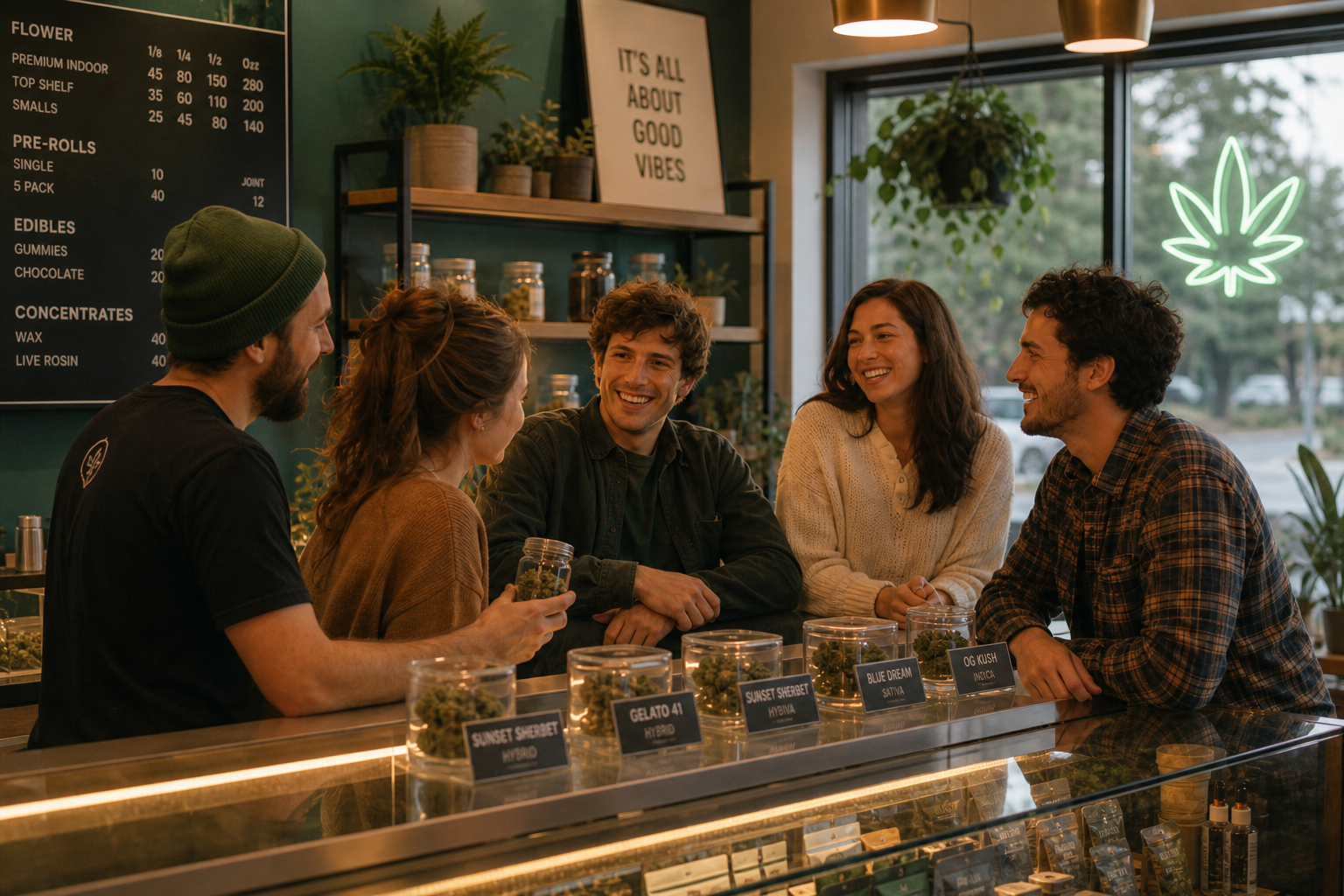
Meet Your Budtender: What Good Dispensary Service Looks Like

Jamie
Head Cultivator
Walking into a dispensary can feel like walking into a hardware store where every aisle is labeled in a language you barely speak. That person behind the counter — your budtender — is supposed to be the helpful clerk who walks you to the right aisle, not a salesperson chasing a quota. Good dispensary service means honest guidance, clear answers, and zero pressure.
What Does a Budtender Actually Do? #
A budtender is the frontline cannabis expert at a licensed dispensary who helps you pick products, explains how they work, and rings you up — all while following state law. Think of them like the person at a hardware store who knows every tool on the wall. They guide you. They do not diagnose you.
According to Oaksterdam University's budtender role guide, a budtender sits somewhere between a customer service pro and a product educator. Their job goes well beyond grabbing a jar off the shelf.
| Daily Task | What It Means for You |
|---|---|
| ID check | They verify you are 21+ (or have a valid medical card if under 21) before any sale |
| Product education | They explain THC, CBD, terpenes, and how different formats hit differently |
| Personalized picks | They match products to your goals, budget, and experience level |
| Compliance | They follow Michigan CRA rules on purchase limits, packaging, and sales |
| Safe guidance | They teach you how to dose and store what you buy — without playing doctor |
A great budtender listens first and talks second. They ask what kind of day you had, what effect you want, and how much experience you have. Then they narrow the menu down to two or three real options instead of dumping twenty jars on the counter.
Budtenders are not pharmacists. They know the products on their shelves. They cannot write you a treatment plan or tell you cannabis will fix a medical condition. That line matters, and we will come back to it.
If this is your first visit, our first-timer's guide covers what to bring, what to expect, and how to leave without feeling overwhelmed.
How Do You Spot a Great Budtender vs a Pushy One? #
A great budtender asks questions, listens, and offers two or three options that fit your goals — a pushy one steers you toward the priciest jar without asking what you need. The difference is easy to feel once you know what to look for.
Signs of Good Service #
Good budtenders share a few habits that show up fast:
- They ask about your experience level before recommending anything strong
- They explain why they picked a product — terpene profile, THC level, format — not just the brand name
- They respect your budget and do not shame you for asking about sales or smaller sizes
- They say "I don't know" when they do not know, then look it up or grab a coworker
- They check in on timing — how long until effects hit, how long they last, whether you need to drive later
| Good Budtender Move | Why It Matters |
|---|---|
| "What effect are you going for?" | Matches product to your goal, not a strain name |
| "Have you tried edibles before?" | Prevents a rookie from eating a 100mg brownie |
| "This one is lighter — want to start there?" | Shows they care about your comfort, not the upsell |
| "Here's the COA if you want to see the lab results" | Transparency builds trust |
Red Flags to Watch For #
Pushy service has tells too. Walk away (or ask for someone else) if you hear:
- "This is the strongest thing we have — you need this" without asking about your tolerance
- Medical claims like "this will fix your back pain" or "this is safe during pregnancy"
- Dismissive answers when you ask basic questions
- Pressure to buy more than you came for — bulk deals are fine, but only when you want them
- No mention of dosing when you are buying edibles or concentrates for the first time
A 2026 dispensary etiquette guide from Mood puts it plainly: describe the effect you want, your tolerance, and your budget. A budtender who skips all three and jumps to a price tag is not doing their job.
You deserve the hardware-store clerk, not the commission-chasing salesperson. If the vibe feels off, it probably is.
What Questions Should You Ask Your Budtender? #
The best questions focus on how you want to feel, how strong you want it, and how you plan to consume — not on memorizing strain names. Your budtender is paid to know this stuff. Use them.
Here is a cheat sheet for first visits and return trips:
| Question | Why Ask It |
|---|---|
| "I'm new — where should I start?" | Signals you need a walkthrough of formats (flower, edibles, vapes) |
| "What do you have for [relaxing / sleep / energy]?" | Gets recommendations tied to effects, not hype |
| "What's the low-and-slow dose for this?" | Prevents overdoing edibles or concentrates |
| "How long until this kicks in, and how long does it last?" | Helps you plan your evening |
| "What's the difference between these two?" | Side-by-side comparison beats guessing from the menu |
| "Which option is easiest for a beginner?" | Cuts through a wall of choices |
| "What are you personally liking right now?" | Budtenders often know hidden gems on the menu |
| "What's the final price with tax?" | Michigan cannabis is taxed — no surprises at the register |
According to Rolling NJ's budtender question guide, sharing your experience level is the single best way to start the conversation. Say "first time," "I usually do edibles," or "I want something mild." That one sentence saves ten minutes of back-and-forth.
Questions budtenders love:
- What effect do you want?
- How much experience do you have?
- Do you need to drive or work afterward?
- What's your budget today?
Questions that do not help much:
- "What's the dankest strain?" (vague — they cannot read your mind)
- "What gets you the highest?" (if you are new, that is a bad starting point)
- "Just give me whatever" (they will guess — and guesses miss)
No question is too basic. A good budtender has heard "what is a terpene?" a thousand times. If you want to learn more about smelling and picking flower, our terpene nose-shopping guide pairs well with a budtender conversation.
How Do You Describe What You Want (Without Strain Names)? #
Skip the strain names and tell your budtender the effect you want, your experience level, and your budget — they will handle the rest. Strain names change every harvest. Effects and chemistry do not.
Use this simple script:
| Instead of Saying… | Try Saying… |
|---|---|
| "I want Blue Dream" | "I want something uplifting but not racey — light THC, maybe some CBD" |
| "Give me an indica" | "I want to wind down after my shift — body calm, not couch-lock if possible" |
| "What's fire?" | "I'm experienced, I want flavor and a clean head high — mid to high THC is fine" |
| "Something for sleep" | "I need help falling asleep — slow onset is okay, nothing that makes me groggy at 3 a.m." |
Three words that unlock good recommendations:
- Effect — relaxed, focused, social, sleepy, creative
- Intensity — mild, moderate, strong (or "I'm new, keep it light")
- Format — flower, edible, vape, tincture, topical
The old indica-vs-sativa shortcut is outdated. What actually matters is the cannabinoid and terpene profile — the chemical recipe in each batch. Our post on what indica, sativa, and hybrid actually mean explains why "indica" on the label does not guarantee sleep.
Terpenes are your friend here. Tell your budtender you like earthy and calming smells (myrcene, linalool) or citrus and bright smells (limonene). They can point you toward batches that match — especially if the shop lets you smell the flower.
Be honest about tolerance. If the last edible wrecked your weekend, say so. If you smoke daily, say that too. A budtender who knows your history gives better picks every time.
Bring your budget. "I have forty bucks after tax" is a perfectly good opener. Good service means working within your range, not pushing you past it.
What Can Budtenders Legally Say — and What Can't They? #
Budtenders can explain products, compare options, and share general effect profiles — but they cannot diagnose conditions, prescribe treatments, or promise medical outcomes. They are retail staff, not doctors.
The Cannabis Specialists organization is clear: budtenders should not advise on dosing for medical conditions, frequency of use for a illness, or expected medical benefits. When someone asks "what do you have for back pain?" the right move is to refer them to a qualified healthcare provider — not pick a jar and call it medicine.
| Budtenders CAN | Budtenders CANNOT |
|---|---|
| Explain THC and CBD levels on a label | Diagnose your condition |
| Compare two products side by side | Say "this treats your anxiety" or "this cures pain" |
| Describe general effects ("most people find this relaxing") | Guarantee a specific outcome for you |
| Teach you how to read a COA (lab report) | Tell you it is safe to use while pregnant |
| Explain Michigan purchase and possession limits | Advise you to stop or change prescription meds |
State regulators take this seriously. After a study found roughly 69% of surveyed dispensary employees recommended cannabis to callers asking about morning sickness, and nearly 36% said it was safe during pregnancy, the Colorado Marijuana Enforcement Division warned that health claims made by budtenders — not just on labels — can trigger administrative action against the license.
That does not mean budtenders are useless for wellness shoppers. It means the conversation stays in the lane of product education, not medical treatment.
What good sounds like:
- "Many customers use this in the evening to unwind — start with one gummy and wait two hours."
- "This topical is for localized comfort on sore muscles — it won't get you high."
- "If you are on blood thinners or pregnant, talk to your doctor before using any cannabis product."
What crosses the line:
- "This will fix your insomnia."
- "You should stop taking your anxiety meds and use this instead."
- "Cannabis is totally safe for your condition."
If you have a real medical question, bring it to your healthcare provider. Your budtender can help you shop once you know your boundaries.
Do Michigan Budtenders Need Certification? #
Michigan does not require a state license or certification to work as a budtender — but every cannabis employee must be at least 21 and pass a background check. Training happens on the job or through voluntary programs.
According to Cannabis Career's Michigan employment guide, there are currently no licensing or certification requirements for cannabis workers under the Michigan Cannabis Regulatory Agency (CRA). Employers still must register staff in the state's monitoring system and report any disqualifying convictions.
| Requirement | Michigan Rule |
|---|---|
| Minimum age | 21 years old |
| Background check | Required for all cannabis employees |
| State budtender license | Not required as of 2026 |
| Employer registration | Yes — in the statewide monitoring system |
Voluntary certifications exist and some shops prefer them:
| Program | What It Covers |
|---|---|
| NCCB Certified Cannabis Budtender (CCBT) | 80-question exam, 70% to pass — strains, compliance, customer service |
| Oaksterdam Michigan Dispensary Worker Training | Michigan laws, dosing, retail skills, public health |
A certificate on the wall does not guarantee a great experience. A budtender who listens beats one who memorized flashcards but ignores your budget. That said, shops that invest in training tend to give more consistent answers — especially on compliance basics like purchase limits.
Michigan possession limits your budtender should know:
- 2.5 ounces of flower in public
- Up to 10 ounces at home (amounts over 2.5 oz must be locked up)
- 15 grams of concentrate max in public
If a budtender cannot explain basic Michigan rules, that is a yellow flag. They do not need to be lawyers — but they should know the lines that keep you legal.
Should You Tip Your Budtender? #
Tipping is appreciated but never required — think coffee shop, not sit-down restaurant. If a budtender spends real time helping you, a small cash tip is a kind gesture. A quick grab-and-go? Optional.
The Cannabis Store's tipping guide breaks it down by service level:
| Service Level | Suggested Tip |
|---|---|
| Quick purchase (you knew what you wanted) | $1–2 or spare change |
| Consultation (strain pick, dosing advice, product comparison) | $2–5 or about 10% of the purchase |
| Complex order (special request, long menu walk-through) | $5–10 or up to 15–20% |
Before you tip, check the shop's policy. Some dispensaries post a no-tipping rule. Others have a tip jar or a digital prompt at checkout. If you are unsure, ask: "Is tipping customary here?" — most budtenders appreciate the question.
Etiquette do's:
- Tip in cash when possible (cannabis banking is still messy federally)
- Tip after the transaction, not as a bribe for better product
- Say thank you — it costs nothing and it matters
Etiquette don'ts:
- Do not assume tipping is expected everywhere
- Do not tip if the shop forbids it
- Do not expect freebies or special treatment because you tipped last time
A 2026 Mood dispensary etiquette guide suggests $5–$10 when a budtender spends real time helping you find the right product. For a thirty-second pickup, skip it guilt-free.
Tipping does not buy better weed. It acknowledges good service — the same way you would thank the hardware clerk who walked you to the right aisle and back.
How Do You Build a Relationship With Your Dispensary? #
Pick a shop you trust, be honest about what works, and come back — that is how you build a budtender relationship that actually helps you over time. Loyalty is not about spending the most. It is about communicating clearly.
Steps that work:
- Find a shop with values you share — clean sourcing, fair pricing, staff who listen. If organic and sun-grown matter to you, look for shops that can talk about how their flower is grown, not just what the THC number is.
- Introduce yourself. "I'm Jamie, first time here, I usually prefer mild edibles" gives them something to remember next visit.
- Give feedback. "That gummy was perfect" or "that vape was too harsh" helps them calibrate. Good budtenders take notes — literally or mentally.
- Ask for the same person if someone clicked with you. Many shops can note your preference in their system.
- Shop local when you can. Detroit's cannabis scene runs on relationships. Our look at the Detroit organic cannabis community shows how grower-to-customer connections shape what ends up on the shelf.
| Relationship Builder | Why It Pays Off |
|---|---|
| Consistent honest feedback | They stop recommending stuff you hate |
| Knowing your tolerance | Dosing advice gets sharper over time |
| Asking about new drops | You hear about quality batches before they sell out |
| Respecting store rules | Staff remember the easy customers |
What not to do:
- Do not name-drop or flex about how much you spend
- Do not expect illegal favors (extra weight, under-the-table deals)
- Do not argue with compliance rules — budtenders did not write them
The best dispensary relationship feels like your favorite corner store. They know your name, they know you like lighter stuff after a long shift, and they never make you feel dumb for asking.
At Divine Toke, we believe shopping for cannabis should feel that way — grounded, honest, and human. Whether you are buying our sun-grown organic flower or just learning the ropes, the goal is the same: leave with something that fits your life, not a hard sell you regret in the parking lot.
Frequently Asked Questions #
What does a budtender do at a dispensary? #
A budtender helps you choose cannabis products, explains how they work, checks your ID, and processes your sale — all while following state law. They are product guides, not doctors. The Oaksterdam budtender role guide lists their core jobs as education, personalized recommendations, and compliance with dispensary rules.
How do I know if my budtender is giving good advice? #
Good advice starts with questions about your goals, experience, and budget — not a hard push toward the most expensive product. If they explain why they picked something (THC level, terpenes, format) and offer a lighter option for beginners, you are in good hands. If they make medical promises or skip dosing talk on edibles, look elsewhere.
What should I say on my first dispensary visit? #
Say "it's my first time" and describe the effect you want — relaxed, sleepy, social, or curious and cautious. That one sentence changes everything. According to Southwest Michigan's first-visit guide, bring a valid ID, expect to pay cash or debit, and plan to consume at home — not in the parking lot.
Can budtenders recommend products for pain or anxiety? #
They can suggest products based on general effect profiles, but they cannot treat or diagnose pain, anxiety, or any medical condition. Cannabis Specialists advises referring medical questions to a healthcare provider. A budtender might say "many customers find this relaxing" — not "this will fix your anxiety."
Do I need to know strain names before I walk in? #
No — describing the effect you want works better than reciting strain names. Names change between growers and harvests. Tell your budtender you want something mild for sleep or uplifting for a cookout. They will match chemistry to your goal. See our indica vs sativa guide for why labels alone do not tell the full story.
Are budtenders required to be certified in Michigan? #
No — Michigan does not require budtender certification, but workers must be 21+ and pass a background check. The CRA sets rules for licensed businesses, not individual retail certificates. Voluntary programs like the NCCB CCBT exam exist but are not mandatory.
How much should I tip a budtender? #
$1–2 for a quick pickup, $2–5 or about 10% if they helped you choose, and $5–10 for a long consultation — but tipping is never required. The Cannabis Store notes that some shops ban tipping entirely, so check the policy first.
Can I ask for the same budtender every time? #
Yes — most dispensaries can note your preference, especially if you are a regular. Building rapport helps because they learn your tolerance and taste over time. Be polite about it during slow hours; during a rush, whoever is free may serve you.
What if my budtender pushes the most expensive product? #
Ask for alternatives at a lower price point, or politely ask for another staff member. Good budtenders work within your budget. If you feel pressured, you can leave without buying. A shop that only upsells is telling you where their priorities are.
Is it okay to browse the menu on my phone first? #
Absolutely — reviewing the menu before you walk in saves time and helps you ask smarter questions. Just stay open to recommendations. The best batch on the menu today might be something you have never heard of, and a good budtender will tell you why it fits.
Closing #
Your budtender should feel like the helpful person at the hardware counter — someone who walks you to the right shelf, explains the difference between two options, and sends you home with what you actually need. Not a hype machine. Not a doctor. A guide.
If you are still nervous about your first trip, start with our first-timer's guide. Want to shop smarter once you are inside? Learn to smell for terpenes and skip the outdated indica-sativa guessing game with what actually matters on the label.
If you are curious to try sun-grown organic flower from a Michigan farm that cares about clean inputs and honest conversations, check out what we are growing at Divine Toke. We would rather earn your trust over repeat visits than push a single sale on day one.
This article is for educational purposes only and is not medical advice. Always consult your healthcare provider before starting any new wellness routine.
Grown in Detroit. Shipped to your door.
Small-batch, sun-grown cannabis cultivated in living soil. Mail-order shipping to all 50 states.
You Might Also Enjoy
Late-Summer Harvest in Michigan: What Outdoor Flower Season Means for Detroit Consumers
August 8, 2026 · 23 min read

National Wellness Month: Building a Cannabis Wellness Routine That Actually Sticks
August 1, 2026 · 29 min read
Divine Dispensary vs Divine Toke: Finding Organic Cannabis in Detroit
July 26, 2026 · 26 min read