Mycorrhizal Fungi: The Underground Network Feeding Sun-Grown Cannabis

Jamie
Head Cultivator
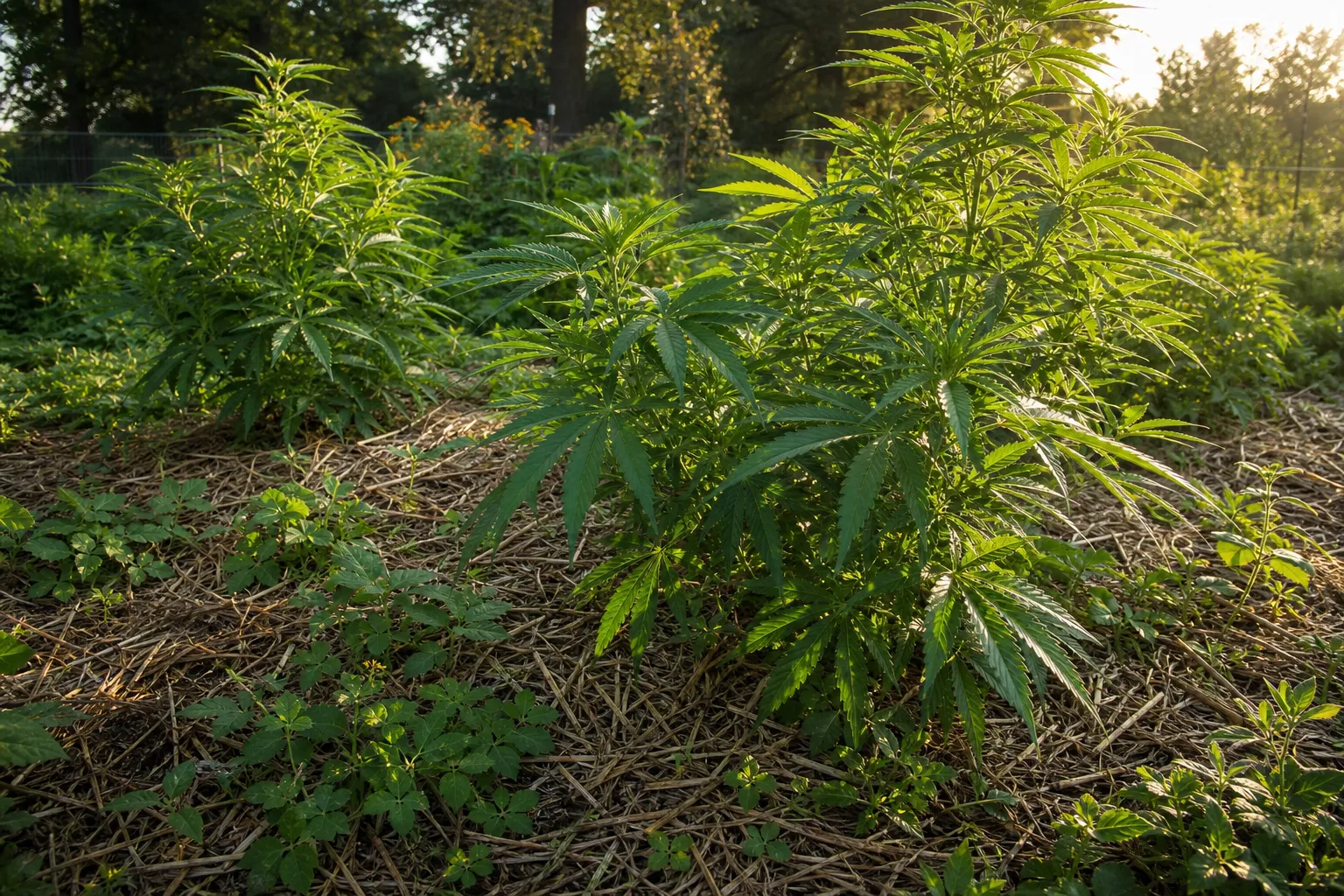
Under every healthy sun-grown cannabis plant is a quieter story than the one on the jar label. Thin fungal threads lace through living soil, trade minerals for plant sugars, and help roots reach what a bare root tip cannot. That partnership is mycorrhizal fungi — the underground network feeding a lot of the outdoor flower Detroit-area shoppers taste when soil is treated like a team, not a sponge for bottled feed.
This guide answers one plain question: what are mycorrhizal fungi, and how does that network actually feed sun-grown cannabis? No magic powder worship. No invented farm recipes. Just the biology, the farming habits that help or hurt, and how the idea connects to living soil, no-till, and regenerative cannabis process thinking Michigan growers keep circling back to.
What Are Mycorrhizal Fungi? #
Mycorrhizal fungi are beneficial soil fungi that partner with plant roots: the fungus trades hard-to-reach minerals and water for sugars the plant makes in the sun. The word breaks down clean — myco means fungus, rhiza means root. It is a root-and-fungus team, not mold on your buds and not the sticky trichomes you see on flower.
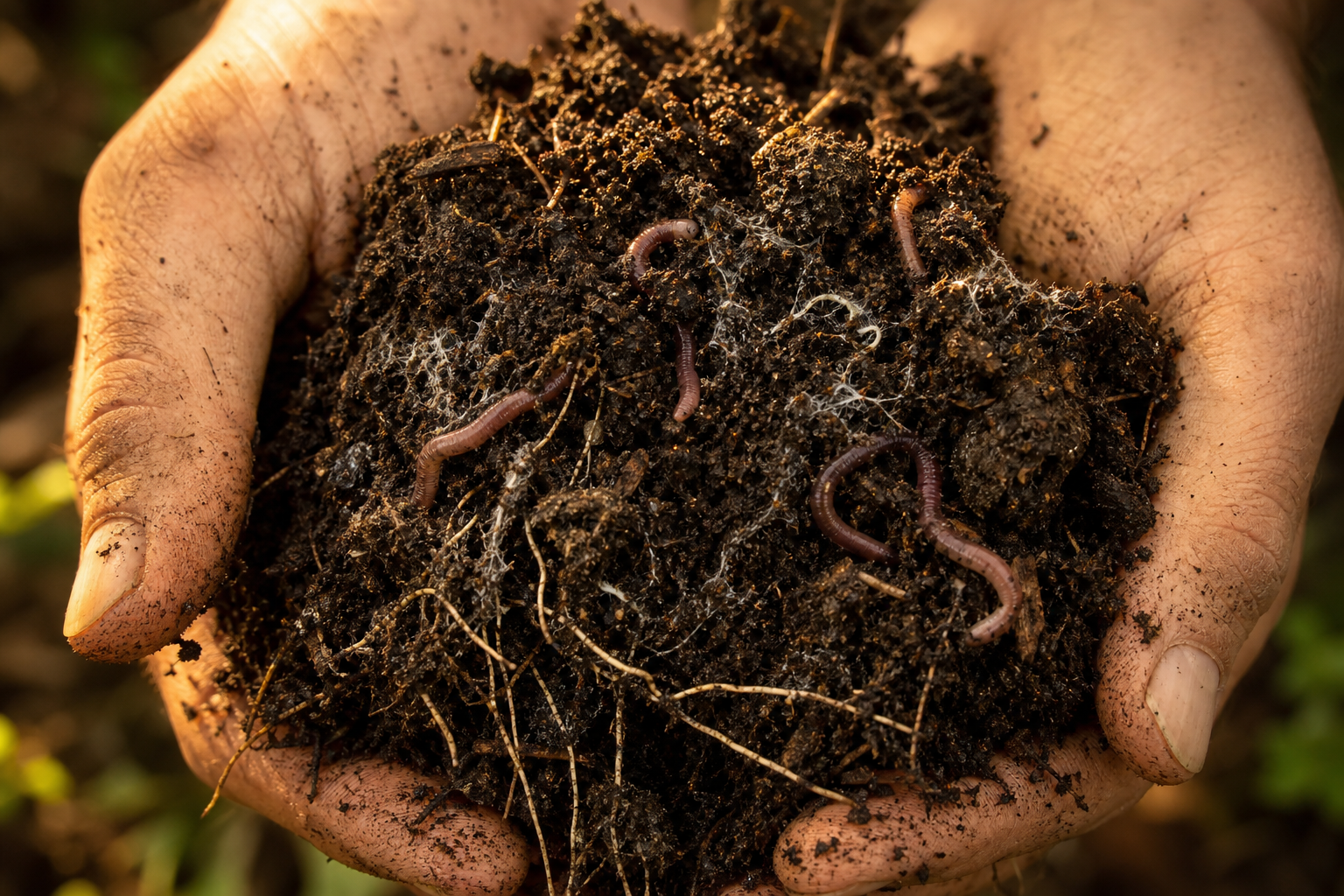
Ohio State University Extension puts the scale in kitchen language: roughly 80 to 90 percent of plants form some kind of mycorrhizal relationship by building hyphae networks. Hyphae are the thin threads. Think spider silk for soil — far finer than most roots, able to slip into pore spaces a root tip is too thick to explore.
USDA NRCS soil biology materials treat mycorrhizal fungi as a core part of living ground, not a boutique garden gimmick. When soil educators say “feed the soil,” this is one of the crews they mean.
A few plain facts to lock in:
- Not a disease. Pathogenic fungi attack. Mycorrhizal fungi trade.
- Not compost tea foam. You cannot see the full network with a naked eye in a jar of water.
- Not optional trivia for sun-grown. Outdoor living soil leans on biology because the plant is not living on a perfect hydro recipe.
- Paid in carbon. The plant spends sugars. The fungus spends exploration and mineral mining.
If you already read our piece on why living soil is not just dirt, slot mycorrhizae in as one of the headliners in that underground city — next to bacteria, protozoa, worms, and organic matter.
The Plant–Fungus Trade in Plain English #
The deal is simple: plant pays in sugar, fungus pays in reach. Leaves catch Michigan summer sun and build carbohydrates. Some of that energy moves down to the roots and out to fungal partners. In return, the fungus extends a web of hyphae into soil volumes the root alone would never efficiently comb.
Reviews of arbuscular mycorrhizal fungi in farming systems, including UF/IFAS guidance on AMF biology and benefits, describe the same core jobs over and over:
- Widen the foraging zone beyond the root surface
- Move phosphorus and other stubborn nutrients toward the plant
- Help with water in dry spells by exploring fine pores
- Influence soil structure as hyphae and related compounds help bind crumbs of soil
Barbecue-test version: roots are the driveway. Hyphae are the side streets and alley shortcuts to the grocery store.
| Who | What They Bring | What They Need |
|---|---|---|
| Cannabis plant | Sugars from photosynthesis; a living root to colonize | Minerals, water, a calmer stress load |
| Mycorrhizal fungus | Hyphal reach; mineral scavenging; soil-thread architecture | Carbon from a living host; decent soil habitat |
| Grower / farm system | Host plants, organic matter, low unnecessary disturbance | Patience; less “sterilize and salt-feed” habit |
That table is the whole philosophy of living soil in eight rows. You are not replacing the sun. You are not replacing genetics. You are keeping the underground supply chain open.
Arbuscular Mycorrhizal Fungi vs Other Types #
For cannabis and most vegetables, the main partner type is arbuscular mycorrhizal fungi — AMF — which grow into the root’s outer cells and form tiny tree-like exchange structures called arbuscules. “Arbuscular” is just a fancy way of saying those little exchange trees.
You will also hear about other mycorrhiza styles in forests — ectomycorrhizal fungi that sheath tree roots, for example. Those matter for oaks and pines. They are not the headline act for a cannabis flower bed. Cannabis conversations almost always mean AMF.
Common genus names show up on inoculant labels and in papers:
- Rhizophagus (you will see Rhizophagus irregularis a lot in research)
- Funneliformis
- Glomus (older labels still use this name)
- Claroideoglomus and friends in mixed products
A 2021 study on Rhizophagus irregularis and Cannabis sativa is one example of researchers testing a named AMF species on cannabis growth and quality. A 2022 hemp study looked at AMF effects on growth and cannabinoid content in Cannabis sativa. A 2024 hemp physiology paper tracked how AMF can shift physiological and secondary-metabolite responses. None of those papers turn a spore packet into a miracle claim — they show cannabis is in the AMF conversation, not outside it.
Broader plant reviews such as PMC10489935 frame AMF as partners with nearly all land plants in the big evolutionary picture, boosting access to soil resources plants struggle to unlock alone.
| Type You Hear About | Typical Hosts | Cannabis Relevance |
|---|---|---|
| Arbuscular (AMF) | Most crops, grasses, many herbs | Primary partnership to understand |
| Ectomycorrhizal | Many trees | Forest talk; not your flower pot default |
| Ericoid / others | Specialty plant groups | Niche; ignore for shop-floor cannabis literacy |
Shopper takeaway: when a Michigan sun-grown farm talks “mycorrhizae,” they almost always mean the AMF root partnership inside a living soil system — the same family of ideas as cover crops and companions, not a forest mushroom forage.
How Do Mycorrhizae Feed Cannabis Roots? #
Mycorrhizae feed cannabis by acting like a second, finer root system that mines phosphorus, some micronutrients, and water, then hands those resources to the plant at exchange sites inside the root. The plant does not get “fungus vitamins.” It gets better logistics.
A classic open-access review, Roles of Arbuscular Mycorrhizas in Plant Phosphorus Nutrition (PMC3135927), walks through how plants use special transporters to take up phosphate released by the fungal partner. Later work keeps reinforcing the same theme: AMF hyphae matter a lot when phosphorus is awkward to grab. See also Frontiers work on AMF and phosphorus uptake and a 2023 New Phytologist line of research on how hyphae and the bacteria around them can shape phosphorus movement.
Phosphorus: The Hard-to-Reach Mineral #
Phosphorus is often in the soil but not in a form or place roots can easily drink — AMF are one of nature’s workarounds. Garden centers talk about “P” on the N-P-K label like it is a juice box. In real ground, phosphorus sticks to soil surfaces, hides in organic matter, and moves slowly. Roots can sit near a phosphorus pocket and still struggle if chemistry and distance are wrong.
AMF hyphae change the math:
- They explore more soil volume per unit of plant carbon spent
- They can access tiny pores and zones roots miss
- They deliver phosphate to the root through the mycorrhizal pathway described in PMC3135927
- Studies across crops, including work summarized in PMC10181197, keep showing inoculation can change nitrogen and phosphorus uptake patterns — always depending on soil, species, and management
Here is the plot twist every living-soil grower eventually hits: when phosphorus is already dumped on thick, plants often invest less in the partnership. A review on how mycorrhizal symbiosis responds to phosphorus and a pile of agronomy experience say the same thing in different accents. If the buffet is free and salty, why hire the waiter?
That is one reason sterile media plus heavy synthetic P can look “fine” in a short veg cycle and still train a system that never builds a serious fungal network. The plant got fed. The underground economy never opened for business.
| Phosphorus Situation | Likely Plant Behavior | Farming Translation |
|---|---|---|
| Tied-up / low available P | Strong reason to partner with AMF | Living soil + biology shines |
| Moderate, biologically cycled P | Partnership often worth the sugar cost | Compost, roots, time |
| Very high soluble P feed | Colonization often drops | Salt-heavy bottles can sideline fungi |
For sun-grown cannabis aiming at flavor and resilience, the goal is rarely “maximum bottled P.” The goal is enough P moving through a living system without torching the workforce that helps deliver it.
Water, Micronutrients, and Stress Buffering #
Beyond phosphorus, AMF hyphae help plants tap water and certain micronutrients, and they can soften abiotic stress — with results that vary by strain of fungus, soil, and season. UF/IFAS and general AMF reviews such as PMC10489935 list drought tolerance, nutrient uptake, and soil health maintenance among the practical reasons farmers care.
Plain list of secondary benefits people actually notice in the field:
- Zinc and copper access in some soils where those metals misbehave
- Water foraging during stretch dry spells between storms
- Transplant settle when seedlings move into real ground (the Rhizophagus / cannabis study explicitly frames reduced transplant shock as a research interest)
- Soil crumb structure help via hyphal networks and glomalin-related proteins (more below)
Secondary metabolites — the aroma and resin story shoppers care about — are an active research edge. Papers on AMF and plant secondary metabolites (PMC9184413), cannabis microbiota and secondary metabolites (PMC8254954), and hemp metabolite shifts (PMC11050865, PMC9360772) all point the same direction: soil biology can nudge plant chemistry, but it is not a vending machine where you insert spores and receive a guaranteed terpene menu.
Honest sentence for Detroit budtender energy: mycorrhizae are a foundation play, not a strain-name flavor packet.
Why Sun-Grown Cannabis Needs This Underground Network #
Sun-grown cannabis needs mycorrhizal networks because outdoor plants live in real soil weather — variable water, real mineral chemistry, and long root runs — where biology is the buffering system bottled rooms try to fake with meters and salts. Indoor can grow great flower. It often does it by replacing ecology with engineering. Sun-grown regenerative systems lean the other way. That contrast is the heart of our sun-grown vs indoor conversation and the wider regenerative process cluster.
Living Soil Is a Team Sport #
Mycorrhizae do not replace compost, mulch, or sane irrigation — they ride on top of a living soil team. Colorado State University Extension’s living soil overview keeps the basics unfancy: soil organisms need habitat, moisture stability, and food from organic inputs and residues. Starving the crew and then sprinkling an inoculant is like firing the kitchen staff and ordering a single meal kit.
How the team fits together:
- Organic matter and compost feed a broad microbial loop — see our deep dive on composting at scale
- Living roots keep carbon flowing below ground even when cash-crop canopy changes
- AMF extend the root economy and help structure soil
- Reduced disturbance keeps hyphal highways from being plowed into confetti
- Diverse plants (cover crops, companions) host fungi when cannabis is not in the bed
Research on composts and cover crops together shows these tools can shift soil chemistry and microbiome patterns — not always in a cartoon “more of everything” way, but enough to remind you inputs are biological conversations, not just N-P-K arithmetic.
NCAT’s cover crop and green manure overview hits the same regenerative drum: protect soil, feed microbes, cycle nutrients, build resilience. Mycorrhizae are one beneficiary of that mindset.
Michigan Outdoor Context #
Michigan sun-grown flower sits in a real climate: freeze–thaw winters, humid summers, sandy pockets and heavier ground, and a short aggressive outdoor season — all of which make soil structure and living roots more valuable than a poster slogan. We are not going to invent a private farm’s inoculation calendar here. We can talk climate honesty.
Michigan-relevant plain points:
- Winter is a host problem as much as a temperature problem. AMF need living plant partners. Bare, empty, repeatedly tilled ground heading into shoulder seasons is rough on the underground workforce. Ohio State’s discussion of fallow syndrome and mycorrhizae decline is written for grain country, but the principle travels: long stretches without hosts can weaken the fungal bench.
- Summer storms and dry weeks both show up. Hyphal reach and stable aggregates help soil take water and hold it instead of crusting and runoff theater.
- Terroir is biology plus parent material plus weather. Our Michigan terroir piece is about how land shapes flower. Mycorrhizae are part of that land story whether a label says so or not.
- Sun-grown time in soil is longer than a two-week rockwool sprint. More days in biologically active ground means more days the partnership can matter.
Divine Toke’s public lane is Detroit-area Michigan sun-grown organic cannabis education — soil-first thinking, not a lab-coat cosplay. The underground network is one reason “sun and soil” is a quality story instead of only a romance story.
What Breaks Mycorrhizal Networks on a Farm? #
The fastest ways to wreck mycorrhizal networks are aggressive tillage, long bare fallows, and management that keeps soil more sterile and salt-soaked than alive. You do not need a villain monologue. You need a short list of habits that snap hyphae and starve hosts.
SPUN’s overview of threats to mycorrhizal biodiversity names the big human pressures in blunt terms: when plant partners disappear under logging, hard agriculture, and pavement, the fungi lose their world. Farm-scale versions of that pressure are tillage, fumigation mindsets, and empty ground.
Tillage and Bare Soil #
Tillage physically chops hyphal networks and disrupts the soil structure that shelters them. That is not poetry. It is mechanics. A 2024 open-access study on tillage and AMF communities (PMC11034428) examines how tillage practices and crop growth interact to reshape AMF communities. Zero-tillage research links reduced disturbance with conserving AM fungi and glomalin-related soil benefits. Trade press covering soil biology, such as No-Till Farmer’s summary on tillage damaging beneficial fungi, repeats what regenerative growers already feel in their hands: the plow is not free.
Why bare soil piles on:
- No living root means less carbon flowing to fungal partners
- Erosion and UV hammer surface biology
- Boom-bust moisture stresses the whole web
- Weeds-only or nothing can still be better than sterile empty — but planned cover crops beat hope
This is exactly why our no-till cannabis argument is not aesthetics. Leaving soil unflipped is infrastructure protection for an invisible highway system.
| Habit | What It Does For AMF | Better Default |
|---|---|---|
| Deep frequent tillage | Shreds hyphae; restarts succession | No-till / minimal till |
| Long bare fallow | Starves host-dependent fungi | Cover crop / living mulch |
| Constant bare cultivation between plants | Keeps breaking surface networks | Mulch + targeted hand work |
| “Clean bed” obsession | Looks neat, lives poor | Messy living surface |
Salt-Heavy Feeding and Sterile Media Habits #
High-salt synthetic feeding and sterile start media do not always “kill every fungus on contact,” but they often make the partnership unnecessary, inhospitable, or both. Plants with luxury soluble phosphorus reduce colonization pressure. Media without organic habitat give hyphae nothing to work with. Repeated broad biocides and a scrub-the-world mindset treat soil life like a contaminant.
OSU’s organic inoculant fact sheet (SAG-17) is practical here: mycorrhizal fungi expand the soil volume plants can mine for phosphorus and other nutrients as they colonize roots — which assumes you actually let a root zone be a habitat.
Common mismatch patterns:
- Inoculate a cube, then drown the plant in high-P bloom juice
- Pasteurize or sterilize everything, then wonder why biology products “did nothing”
- Expect a powder to outrun weekly soil destruction
- Confuse pathogenic mold fear with beneficial fungi literacy
Living soil farms that compost well, mulch, and stop flipping ground are not anti-science. They are choosing a different control panel — ecology first, bottles as tools, not the other way around.
Inoculation, Compost, and Real-World Living Soil Practice #
Inoculation can help establish AMF where fungi are missing, but long-term success comes from host plants, organic matter, and low disturbance more than from any single bag of spores. Rodale Institute’s on-farm AMF inoculum work and eOrganic’s on-farm AM fungus inoculum guide both treat inoculum as a farm system practice, not a personality trait of the product label.
When Inoculants Help — and When They Do Not #
Inoculants help most in disturbed, depleted, or previously sterile root zones; they help least when you immediately destroy habitat or when a healthy native community is already working.
Good candidate situations:
- New beds built from lifeless base materials
- Land with a history of heavy tillage and bare fallow
- Container systems that were run sterile and are transitioning toward living soil
- Transplants moving into ground where you want early colonization pressure
Weak expectations:
- A teaspoon fixing compacted, lifeless dirt with no mulch and no organic matter
- Weekly tillage after inoculation
- Luxury phosphorus feeding that tells the plant to cancel the contract
- Treating inoculant as a substitute for compost and root exudates
OSU SAG-17 belongs in the same honest toolbox as the cannabis papers: biology products are conditional tools. Cannabis-specific studies (PMC8309143, PMC9360772, PMC11050865) show responses are real in experiments, not that every jar on a dispensary shelf secretly contains a unique fungal signature you can taste by brand myth.
Barbecue-test rule: inoculate like you are seating guests, then cook them a real dinner (habitat). Do not seat guests and bulldoze the dining room.
Cover Crops, Mulch, and No-Till Allies #
Cover crops, mulch, and no-till are the day-to-day allies that keep mycorrhizal networks fed and intact between and during cannabis cycles.
Practical alliance list:
- Keep something living rooted when beds would otherwise sit empty
- Feed soil with compost and residues so the broader microbiome has fuel (PMC8519115, CSU living soil)
- Stop recreational tillage (PMC11034428, zero tillage / glomalin paper)
- Mulch to buffer moisture and protect structure
- Use companions thoughtfully so the bed stays a community — details in cover crops and companion planting
Glomalin-related soil proteins associated with AMF show up in the soil-structure and carbon conversation. Work such as PMC9099716, PMC9292920, and a 2025 glomalin-related soil protein review (PMC12029919) ties AMF activity to aggregation and carbon topics researchers still actively refine. Farm translation without the jargon stack: fungal-friendly systems tend to build soil that holds together and holds life better than powdery, repeatedly flipped dirt.
That is regenerative farming as hand-feel, not as hashtag.
A Shop-Floor Glossary Without the Textbook Fog #
You only need a handful of words to talk about mycorrhizae without sounding like a conference badge. Keep this pocket card:
- Hyphae — the thin fungal threads exploring soil
- Mycelium — the network those threads form together
- Arbuscule — the tiny exchange "tree" inside a root cell where the trade happens
- Colonization — whether the fungus successfully partnered with the root
- Inoculant — a product or on-farm mix meant to introduce or boost AMF
- Glomalin-related proteins — sticky fungal-associated compounds researchers link to soil crumbs and carbon topics (PMC12029919, PMC9099716)
If a sales pitch uses twenty brand-new trademarked microbe names and zero talk about tillage, hosts, or compost, smile and ask about the system. The network is a relationship. Relationships need a place to live.
What "Feeding the Plant" Looks Like Week to Week #
Week to week, mycorrhizae do not show up as a dramatic overnight stretch the way a nitrogen jolt can — they show up as steadier foraging, better soil behavior, and a plant that is less desperate when weather or chemistry gets awkward. That is why living-soil growers sound patient and why bottle-only schedules can feel more like video-game buffs.
A plain seasonal arc for Michigan sun-grown thinking:
- Shoulder season hosts — something living in the ground so fungi are not abandoned
- Transplant / establish — roots meet soil life; inoculant is optional insurance in dead starts
- Canopy build — plant pays sugar; fungus expands reach for phosphorus and water
- Flower — mineral logistics still matter; soil structure helps after storms
- Post-harvest bed care — mulch, compost, covers; do not till the story to death
None of that requires inventing a private farm SOP. It is the same regenerative logic already covered in our regenerative process and no-till pieces, zoomed in on one underground partner.
Research on AMF and secondary metabolites (PMC9184413) plus cannabis-focused microbiota discussion (PMC8254954) keeps the humility clause alive: biology can influence plant chemistry, and context still runs the show. Shoppers should buy the farming system and the cured jar in front of them — not a spore mythology.
How Shoppers Can Taste the Difference #
Shoppers cannot taste a spore under a microscope — they taste the outcome of a system: sun-grown living soil flower that was allowed to mature with biology intact often shows up as louder aroma, better burn, and a fuller “this came from ground” character than rushed sterile production. That is a quality heuristic, not a lab certificate for fungi on the COA.
What a Michigan adult-use shopper can actually do:
- Ask how it was grown — sun-grown, living soil, organic practices, outdoor or light-dep context
- Smell before stories — terpene character still leads; soil systems are one reason volatile oils can show up rich when post-harvest is handled well
- Be suspicious of magic claims — “inoculated with unicorn blend” without a real cultivation story is marketing frosting
- Connect the cluster — living soil, no-till, compost, cover crops, and sun-grown are one family of choices, not five unrelated buzzwords
- Remember cure and storage still matter — great soil cannot save a destroyed jar
Divine Toke speaks to Detroit-area shoppers who want sun-grown organic flower with a regenerative backbone. Mycorrhizal literacy helps you understand why that backbone matters when someone waves a THC percentage like it is the whole report card.
Cross-read if you are stacking farming literacy this month: living soil guide, living soil ecosystem, no-till, regenerative process, composting at scale, and Michigan terroir.
Common Mycorrhizae Myths to Skip #
The biggest mycorrhizae myths are that powder alone fixes bad soil, that fungal networks are magical plant telephones, and that beneficial root fungi are the same thing as bud rot.
Myth stack, cleaned up:
- Myth: “I inoculated, so I have living soil.” Reality: inoculum is a spark. Habitat is the campfire. Rodale and eOrganic frame production systems, not fairy dust.
- Myth: “Tillage does not matter if I reapply product.” Reality: you can keep breaking the highway and buying new on-ramps, or you can stop driving the plow through the web (PMC11034428, No-Till Farmer).
- Myth: “More phosphorus bottles equal more biology.” Reality: high available P often reduces the plant’s interest in paying fungi (phosphorus–symbiosis review).
- Myth: “Common mycorrhizal networks mean plants gossip like neighbors on a porch.” Reality: shared hyphal networks are a real research topic — see PMC11020090 — but pop science loves to overplay mind-meld metaphors. Stick to nutrients, water, and soil architecture before movie plots.
- Myth: “White fuzzy on buds is mycorrhizae doing work.” Reality: root-zone AMF are not a frosty cola. Canopy fuzz is a quality-control problem until proven otherwise.
- Myth: “Indoor cannot be good because it lacks mycorrhizae.” Reality: indoor can be excellent with engineering. This article argues sun-grown living soil has a different nutrient logic, not that every other method is fake.
- Myth: “One cannabis study means guaranteed higher THC for every cultivar.” Reality: hemp/cannabis AMF papers show promising, condition-dependent shifts (PMC9360772, PMC11050865, PMC8309143, PMC8254954) — not a universal potency cheat code.
Frequently Asked Questions About Mycorrhizal Fungi and Cannabis #
What are mycorrhizal fungi in cannabis soil? #
Mycorrhizal fungi are beneficial fungi that partner with cannabis roots to trade minerals and water for plant sugars. In cannabis systems the important group is usually arbuscular mycorrhizal fungi (AMF). OSU Extension notes most plants form these relationships through hyphal networks. They live in the root–soil interface, not as the trichomes on flower.
How do mycorrhizal fungi help cannabis plants? #
They extend the plant’s reach for phosphorus, support uptake of other soil resources, assist with water foraging, and contribute to soil structure — which can support growth and stress resilience. Reviews like PMC3135927 and PMC10489935, plus UF/IFAS PP383, describe those core jobs. Cannabis/hemp trials (PMC8309143, PMC9360772) show growth and chemistry can respond when colonization takes.
What is arbuscular mycorrhizal fungi (AMF)? #
AMF are the mycorrhizal fungi that enter root tissues and form arbuscules — tiny tree-shaped exchange structures — inside root cells. They are the main mycorrhizal partners for most crops, including cannabis. Names like Rhizophagus irregularis appear often in inoculation research (PMC8309143).
Do mycorrhizae improve phosphorus uptake? #
Yes — improved phosphorus uptake is one of the best-documented AMF benefits, especially when phosphorus is hard for roots to access alone. The mechanism and plant transporter story are laid out in PMC3135927, with ongoing work such as Frontiers 2022 and New Phytologist 2023. Flooding soil with soluble P can reduce how much the plant invests in the partnership.
Does tillage destroy mycorrhizal networks? #
Tillage is one of the most damaging routine farm habits for hyphal networks because it physically breaks them and disturbs their habitat. Evidence and synthesis threads include PMC11034428, zero-tillage conservation of AMF, and agronomy reporting like No-Till Farmer. That is a major reason no-till living soil systems protect underground infrastructure.
Should growers inoculate cannabis with mycorrhizae? #
Inoculate when the root zone is likely missing AMF or is being rebuilt — then support the fungi with hosts, organic matter, and low disturbance. Rodale, eOrganic, and OSU SAG-17 all frame inoculum as part of a system. If you till weekly and salt-feed hard, the packet is not your real problem.
Are mycorrhizal fungi the same as trichomes or mold on buds? #
No. Mycorrhizal fungi partner with roots in soil; trichomes are resin glands on the plant surface; mold on buds is a contamination or disease issue until proven otherwise. Root-zone AMF are microscopic partners. White fuzz on colas is not “the network showing.” Keep canopy cleanliness and root biology in separate mental buckets.
Why do sun-grown and living-soil farms talk about fungi so much? #
Because sun-grown living soil depends on biological nutrient cycling and soil structure instead of fully replacing those services with sterile media and constant soluble salts. AMF are central mineral traders and soil architects in that model (USDA NRCS soil biology, UF/IFAS, glomalin/structure papers like PMC9292920). For Michigan outdoor flower, weather variability makes that living buffer even more valuable.
Closing Thoughts #
Mycorrhizal fungi are the underground network that helps sun-grown cannabis feed itself through living soil — a sugar-for-minerals partnership you protect with roots, organic matter, and minimal tillage, not with slogans. Phosphorus logistics, hyphal reach, soil crumbs, and host plants are the unsexy truths underneath the romance.
Primary question answered: what are mycorrhizal fungi, and how do they feed sun-grown cannabis? They are root-partner fungi — mainly AMF — that extend the plant’s foraging web. They shine when soil is alive and undisturbed enough to keep the web intact. They disappoint when we plow them to pieces and try to replace a civilization with a shaker bottle.
If you want the wider regenerative picture, keep walking the cluster: regenerative cannabis process, living soil, no-till, cover crops, composting at scale, and sun-grown vs indoor. The flower on a Detroit-area shelf is the end of a long underground sentence. Mycorrhizae are one of the verbs.
Grown in Detroit. Shipped to your door.
Small-batch, sun-grown cannabis cultivated in living soil. Mail-order shipping to all 50 states.