Michigan Terroir: How Our Land Shapes Our Flower

Jamie
Head Cultivator
Here at Divine Toke, we believe that great cannabis isn't just manufactured—it is grown. The land, the weather, and the soil of Michigan all leave a unique mark on every single flower we harvest.
What Is Cannabis Terroir and Why Does It Matter? #
Cannabis terroir is the complete environmental package—including soil, climate, sunlight, and local microbes—that shapes a plant's unique flavor, aroma, and effects. It means that where a plant is grown becomes an active part of its chemical identity, making sun-grown flowers taste and feel different than those grown in sterile indoor rooms.
If you have ever eaten a homegrown summer tomato straight off the vine, you already know what terroir is. It is the reason that tomato tastes like sweet sunshine, while a grocery store tomato grown in a plastic greenhouse tastes like cardboard. The word "terroir" (pronounced tehr-wahr) comes from the French word for land. For centuries, wine makers have used it to explain how the soil, hills, and weather of a specific valley make their grapes taste unique.
The same thing happens with cannabis. When cannabis is grown outdoors in natural soil, it absorbs the mineral signature of the earth, reacts to the daily shifts in temperature, and drinks in the full spectrum of the sun. These environmental factors act as gentle stressors, prompting the plant to produce a richer blend of cannabinoids (the active compounds like THC and CBD) and terpenes (the natural oils that give cannabis its smell and flavor).
Terroir is not just a marketing buzzword; it is a biological reality. Plants are highly sensitive organisms that constantly adapt to their surroundings. When a cannabis plant is grown indoors, it is shielded from the natural world. The temperature is always 75 degrees, the lights are on a strict timer, and the soil is sterile rockwool. While this produces consistent, high-THC buds, it deprives the plant of the natural challenges that trigger the production of complex secondary metabolites—the compounds the plant builds to protect itself.
In contrast, an outdoor plant must navigate the wind, the rain, the changing sun, and the living soil. To survive and thrive, it builds a robust immune system, coating its flowers in a thick, sticky layer of resin that is packed with a diverse array of aromatic compounds. This is why sun-grown cannabis often has a much deeper and more complex aroma than indoor cannabis.
According to a 2026 review by Moksha Cannabis, terroir is what gives a strain its "regional typicity"—a fancy way of saying it tastes like the place it was born. This concept is supported by a 2023 study on agricultural terroir which demonstrated that the specific combination of soil chemistry and local climate directly alters the secondary metabolite profile of crops, creating a unique chemical fingerprint that cannot be replicated elsewhere.
| Terroir Component | What It Includes | How It Shapes the Flower |
|---|---|---|
| Soil Composition | Minerals, clay, sand, and pH levels | Determines nutrient uptake and boosts terpene production |
| Regional Climate | Temperature, humidity, and rainfall | Cool nights trigger protective resin and terpene synthesis |
| Sunlight & UV | Natural light spectrum and UV-B rays | Increases THC potency and creates "frosty" trichomes |
| Soil Microbiome | Beneficial bacteria and mycorrhizal fungi | Unlocks organic nutrients and enhances secondary metabolites |
How Michigan's Climate and Latitude Shape Outdoor Cannabis #
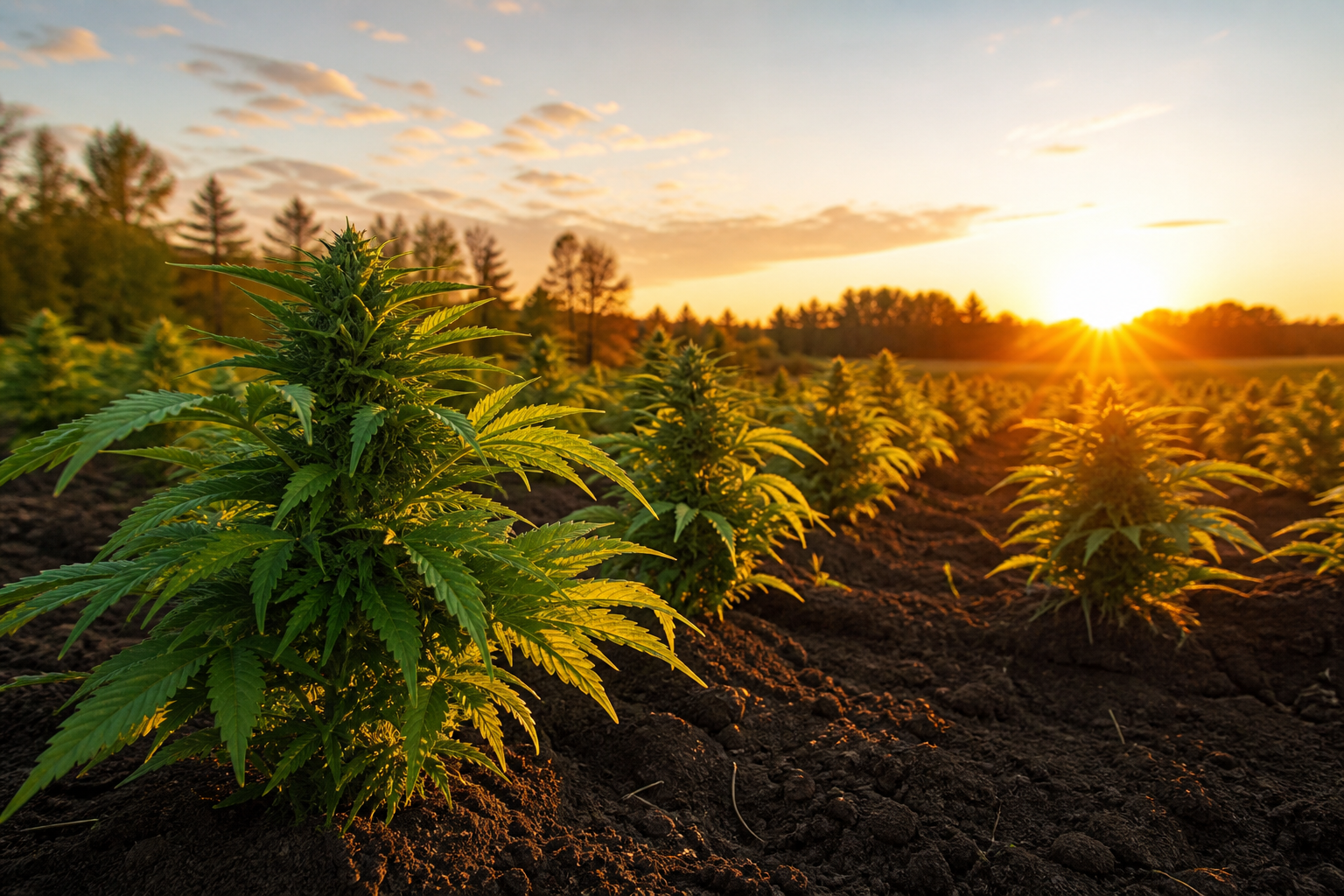
Michigan's position at the 42nd to 45th parallel North gives our outdoor cannabis a short, intense growing season with warm summer days and cool autumn nights. This specific temperature swing acts as a natural trigger, forcing the plant to produce thick, aromatic resin to protect its flowers before the autumn frost sets in.
Growing cannabis outdoors in the Great Lakes State is a race against the calendar. Because of our northern latitude, our growing season runs from late May to early October. According to the Dutch Passion USA Climates Guide, Michigan experiences a humid continental climate, which is very similar to the classic growing regions of Northern Europe.
While indoor growers keep their rooms at a constant, boring temperature, our outdoor plants experience the full drama of Michigan weather. In July, we get hot, humid days that fuel rapid vegetative growth. But by mid-August, the days rapidly shorten. When the daylight drops below 14 hours, it signals the plants that autumn is coming, triggering them to start flowering.
But Michigan isn't just one big climate block. Our state is shaped by the Great Lakes, which create unique microclimates. The most famous of these is the Southwest Michigan "fruit belt." This region, running along the shores of Lake Michigan, benefits from a powerful "lake effect." The massive body of water acts as a giant thermal buffer, absorbing heat during the hot summer months and slowly releasing it during the autumn. This moderates the temperature, preventing sudden early frosts and extending the growing season by up to two weeks compared to inland areas.
As we move into September, Michigan nights get crisp and cool. This temperature drop is a massive benefit for terpene expression. When temperatures fall at night, the plant slows down its respiration and focuses its energy on building trichomes—the tiny, mushroom-shaped resin glands on the flower that hold all the THC and terpenes. The cool nights act as a gentle stressor, telling the plant to coat its buds in sticky, protective oils.
Because fall rains can bring high humidity and the risk of mold, choosing the right strains is critical for Michigan growers. Many local cultivators rely on autoflower varieties (which finish in 8 to 10 weeks regardless of daylight) or fast-flowering photoperiod strains that can be harvested in mid-September, beating the cold October rains.
Here is how the typical Michigan outdoor growing season unfolds:
- Late May (The Start): Plants go into the ground after the last frost, usually around Memorial Day. The long, 15-hour days of late spring and early summer fuel massive leaf and stem growth, allowing the plants to build a strong, sturdy frame.
- Mid-August (The Shift): Daylight hours drop below 14 hours, triggering the flowering phase. Plants stop growing taller and start building bud sites along their branches, preparing to produce flowers.
- September (The Sweet Spot): Warm, sunny days and cool, 50-degree nights trigger heavy trichome and terpene production. The plants sense the coming winter and coat their buds in thick, sticky resin to protect their seeds.
- Early October (The Harvest): Flowers are harvested at peak ripeness, just before the heavy fall rains and early frosts arrive. This requires careful daily monitoring of the trichomes to ensure we harvest at the perfect moment of potency and flavor.
Glacial Till and Sandy Loam: Michigan's Unique Soil Signature #
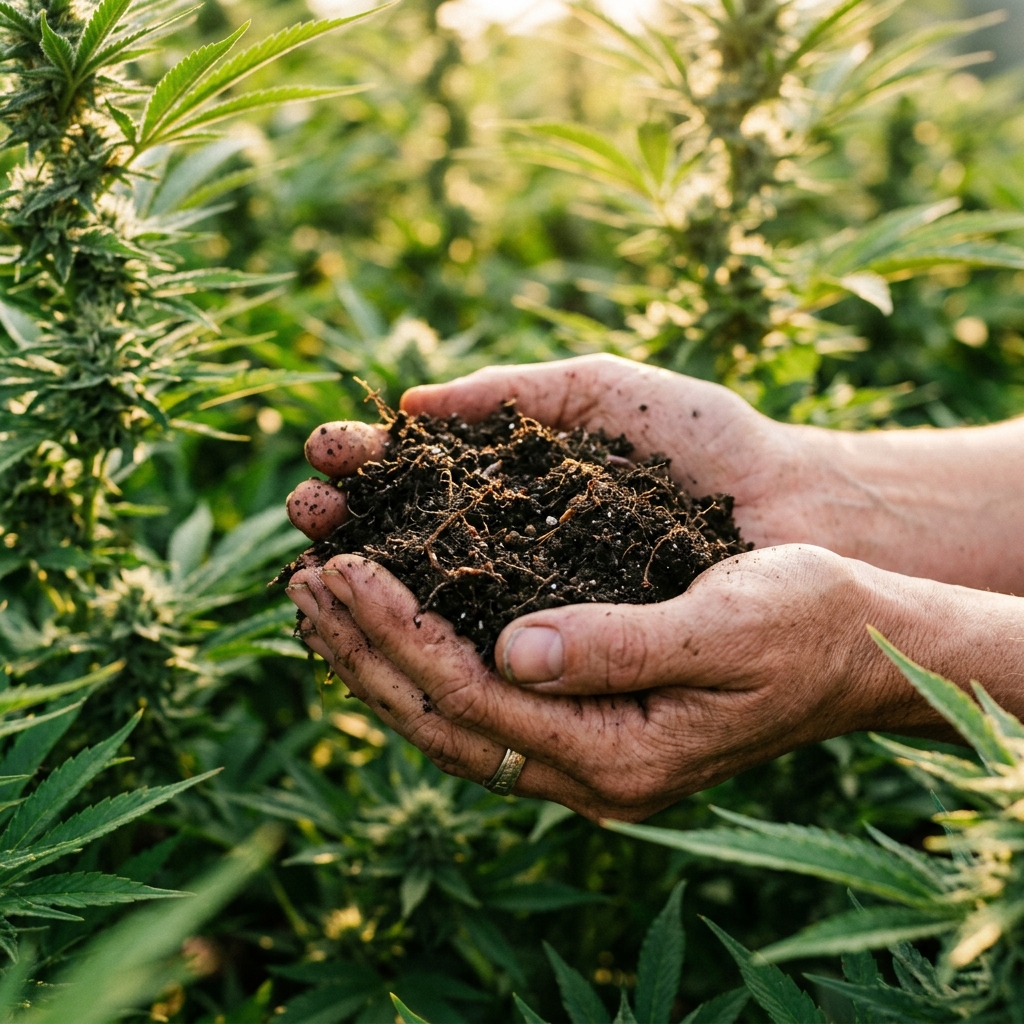
Michigan's soils were carved out by ancient glaciers, leaving behind a rich mix of sandy loam and glacial till that offers perfect drainage and aeration for cannabis roots. This natural soil structure allows roots to breathe and spread deeply, absorbing a complex blend of local minerals that synthetic indoor soils simply cannot replicate.
To understand Michigan's soil, you have to go back about 10,000 years to the last Ice Age. As massive glaciers melted and retreated across our peninsula, they ground up rocks and left behind a geological treasure chest called "glacial till." This till is a natural mixture of sand, silt, clay, and gravel.
For cannabis plants, the absolute best byproduct of this glacial history is sandy loam. Sandy loam is a gardener's dream soil. It is made of mostly sand and silt, with just a tiny bit of clay. Cannabis roots are notoriously sensitive; if they sit in heavy, wet clay, they suffocate and rot. But in sandy loam, the water drains away easily, leaving plenty of air pockets. This allows the roots to breathe and stretch out deep into the ground.
At the same time, sandy loam contains enough organic matter and silt to hold onto essential nutrients. This gives the plant a steady, slow-release buffet of natural minerals like calcium, magnesium, and potassium. When roots can spread out naturally in this glacial mix, they absorb a wider variety of trace minerals than they ever could from a plastic pot filled with synthetic liquid fertilizers.
The minerals left behind by glaciers play a massive role in plant health and terpene synthesis:
- Calcium: Essential for building strong cell walls. It acts like the bricks and mortar of the plant, helping it stand tall against Michigan winds.
- Magnesium: The central atom in chlorophyll, which is what the plant uses to turn sunlight into energy. Our glacial soils are naturally rich in magnesium, giving our plants deep green leaves and plenty of energy.
- Silica: Glacial sand is packed with silica, which strengthens the plant's stems and leaves, making them tough and resistant to pests and mold.
Additionally, our soils are rich in Soil Organic Matter (SOM) and humic acids. These organic compounds act as natural chelators—meaning they bind to minerals and make them much easier for the plant's roots to absorb. This rich, complex geological makeup is what gives Michigan outdoor cannabis its unique mineral foundation.
Depending on where you are in Michigan, the soil can vary, and growers have to adapt:
| Michigan Soil Type | What It Is | How It Affects Cannabis | How We Manage It |
|---|---|---|---|
| Sandy Loam | Perfect mix of sand, silt, and organic matter | Excellent drainage and aeration; roots grow deep and healthy | No major changes needed; just top-dress with organic compost |
| Glacial Till & Clay | Heavy, dense soil that holds a lot of water | Can suffocate roots and trap water, leading to root rot | We dig wide holes and mix in peat moss, compost, and gravel to loosen it up |
| Pure Sand | Found near the lake shores; drains water instantly | Drains too fast; nutrients wash away before the plant can drink them | We add heavy amounts of organic compost and mulching to hold moisture |
Sun-Grown vs. Indoor: What Science Says About Terpene Expression #
Scientific research shows that sun-grown cannabis produces a significantly wider variety and higher concentration of terpenes—especially larger aroma molecules called sesquiterpenes—compared to indoor-grown cannabis. Natural sunlight and outdoor environmental shifts trigger the plant to build a stronger chemical shield, resulting in a richer, more complex flavor profile.
For years, indoor growers claimed that their weed was superior because they could control every single detail of the room. But a landmark 2023 study published in the journal Molecules by Columbia University researchers proved that nature actually does it better. The researchers took genetically identical cannabis clones (clones are exact genetic copies of a single plant) and grew some indoors under artificial lights and others outdoors under the natural sun.
When they tested the harvested flowers, the results were eye-opening. The sun-grown cannabis had a much higher diversity and concentration of terpenes than the indoor-grown cannabis. In particular, the outdoor plants were loaded with sesquiterpenes.
Terpenes come in different sizes:
- Monoterpenes: These are small, light molecules like limonene (citrus smell) and myrcene (earthy smell). They evaporate very easily.
- Sesquiterpenes: These are larger, heavier molecules like beta-caryophyllene (spicy, black pepper smell) and alpha-humulene (woody, hops smell). Because they are heavier, they don't evaporate as quickly, meaning the flavor and aroma stick around much longer on the flower and in your mouth.
The Columbia University study found that heavy sesquiterpenes like beta-caryophyllene, alpha-humulene, and alpha-bergamotene were up to three times higher in the sun-grown samples compared to the indoor ones. Why does this happen? It comes down to the plant's natural defense system. When cannabis grows under the open sky, it has to protect itself from UV rays, wind, and temperature changes. It does this by building an "oxidation shield" made of sticky, aromatic resin.
At a molecular level, terpenes act as natural antioxidants. When the plant is exposed to the sun's intense rays, the ultraviolet light can damage the delicate cannabinoids like THC. To prevent this, the plant floods its trichomes with terpenes, which absorb the energy and act as a physical and chemical barrier. This shield keeps the THC from breaking down. Indoor plants, living in a sterile, climate-controlled bubble under artificial lights, never feel the need to build this robust shield. This is why their terpene profiles are often much simpler and less diverse.
| Terpene Feature | Sun-Grown (Outdoor) | Indoor-Grown |
|---|---|---|
| Terpene Diversity | High (produces a wider variety of flavor compounds) | Lower (narrower, more basic terpene profile) |
| Sesquiterpenes | Very High (rich in heavy compounds like beta-caryophyllene) | Lower (fewer heavy, long-lasting flavor compounds) |
| Limonene & Myrcene | Significantly Higher (p-value < 0.05 in scientific testing) | Lower (less intense citrus and earthy notes) |
| Aroma Complexity | Richer & Deeper (smells like a complex forest or garden) | Sharper & Simpler (often dominated by just one or two smells) |
This scientific evidence confirms what outdoor farmers have known for generations: you can't fake the power of the sun. When you smoke sun-grown flower, you are tasting the plant's natural response to its environment.
To learn more about how natural sunlight changes the game, check out our guide on sun-grown vs. indoor weed.
The Living-Soil Microbiome: Nature's Biological Flavor Catalyst #
A living-soil microbiome acts as a natural flavor and potency booster by using billions of beneficial bacteria and fungi to unlock organic nutrients for the cannabis plant. This active underground network forms a symbiotic relationship with the roots, helping the plant absorb trace minerals and trigger the synthesis of complex cannabinoids and terpenes.
Most commercial indoor cannabis is grown in sterile, inert media like rockwool or coco coir. In these systems, the plants are fed a strict diet of liquid chemical fertilizers dissolved in water. It is the plant equivalent of living on meal replacement shakes. The plants survive, but they miss out on the rich, complex nutrition that only a living soil can provide.
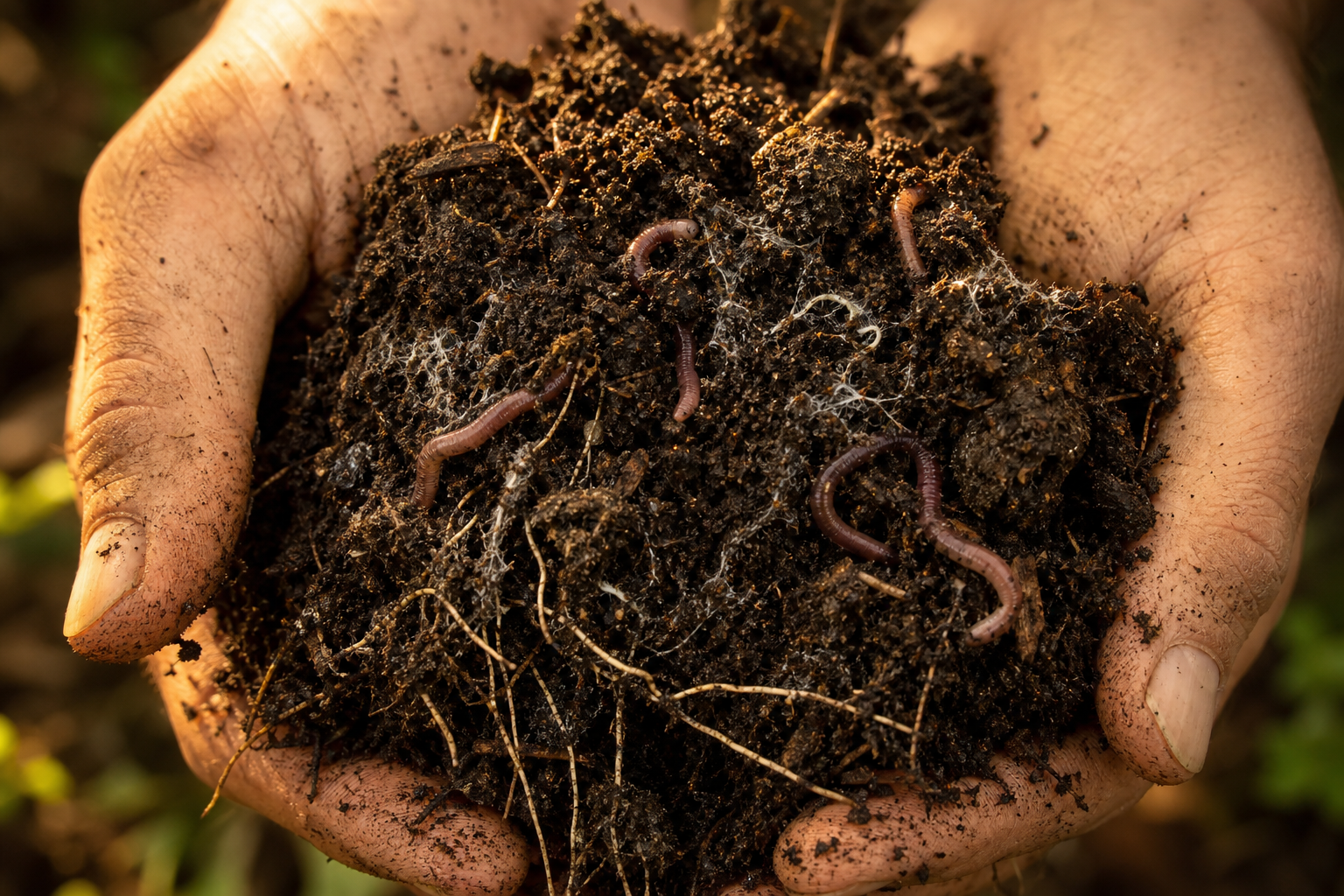
In a living soil, the dirt is teeming with life. A single teaspoon of healthy soil contains billions of beneficial bacteria, protozoa, and fungi. This is called the rhizosphere microbiome—the active zone of life right around the plant's roots. According to a 2023 study in Frontiers in Agronomy, these soil microbiomes are the primary drivers of agricultural terroir, directly shaping the unique chemical profiles of the plants that grow in them.
These microbes act like a team of underground chefs. They break down organic matter—like compost, leaves, and bone meal—and turn it into simple, water-soluble nutrients that the plant can easily absorb.
This process is part of the Soil Food Web. When we add organic compost, cover crops, or compost teas to our soil, we aren't feeding the plant directly. Instead, we are feeding the microbes. Protozoa and beneficial nematodes (tiny, microscopic worms) eat the bacteria and fungi. As they digest them, they excrete nutrients in a form that the cannabis plant's roots can immediately drink up. It is a beautiful, self-sustaining loop.
Two main players in this underground team make a massive difference:
- Mycorrhizal Fungi: These are beneficial fungi that attach themselves directly to the cannabis roots. They grow tiny, microscopic threads called hyphae that extend far beyond where the plant's roots can reach, essentially acting as an extension of the root system. They help the plant absorb water and hard-to-reach minerals like phosphorus, which is crucial for building big, sticky buds.
- Plant Growth-Promoting Rhizobacteria (PGPR): These are beneficial bacteria (like Bacillus and Pseudomonas) that live around the roots. They produce natural enzymes that unlock locked-up nutrients in the soil and protect the roots from harmful pests and diseases.
Scientific research shows that these microbial relationships directly boost the plant's secondary metabolites (cannabinoids and terpenes). A 2024 study published in Frontiers in Plant Science (PMC12662754) found that growing hemp in healthy, cover-cropped living soil led to a massive increase in cannabinoids. For example, the study showed that CBDA levels were up to 6.3 times higher in cover-cropped soil compared to traditional tilled soil, while CBG levels were 3.7 times higher.
Another study reviewed by the National Institutes of Health (PMC8254954) showed that inoculating cannabis roots with specific beneficial soil bacteria increased total terpene and cannabinoid yields by about 11%.
When we feed the soil, the soil feeds the plant. By letting these natural organisms do their job, we help the plant express its full genetic potential, resulting in richer flavors and smoother effects.
If you want to dive deeper into how this underground magic works, take a look at our complete living soil cannabis guide.
Cannabinoid Integrity: How Natural Sunlight Prevents Degradation #
Natural outdoor sunlight contains a balanced spectrum of light, including UV-B rays, that stimulates the cannabis plant to produce more THC and protect its trichomes from breaking down. This natural light exposure keeps the cannabinoids in their raw, un-degraded state, resulting in a cleaner and more stable flower compared to indoor grows under artificial lights.
When you grow cannabis indoors, you are trying to replicate the sun using high-powered metal halide, high-pressure sodium, or LED lights. While these lights are incredibly bright, they only emit a narrow, artificial spectrum of light. They completely miss the subtle shifts and balanced wavelengths of natural sunlight.
One of the most important parts of natural sunlight is UV-B radiation. In humans, UV-B rays are what cause sunburns. To protect itself from these harsh rays, the cannabis plant does something amazing: it produces more THC. Trichomes—the sticky, resinous glands on the flower—act as a natural sunscreen for the plant. The resin absorbs the UV-B rays, protecting the delicate seeds and plant tissue inside.
At a biological level, the plant produces THCA (tetrahydrocannabinolic acid), which is the raw, non-psychoactive form of THC. THCA is a powerful antioxidant and UV-absorber. When the plant is hit with natural UV-B light, it ramps up THCA production in the trichome heads to shield its DNA from radiation damage. A classic study by Lydon et al. (1987), reviewed in a comprehensive NIH paper (PMC8254954), demonstrated that exposing cannabis plants to UV-B radiation directly increases their THC concentrations. Natural sunlight naturally triggers this defense mechanism, leading to "frostier," more potent buds.
But sunlight doesn't just help build cannabinoids—it also keeps them from breaking down. Indoor grow rooms are often plagued by hot spots and intense, focused heat from artificial bulbs. This heat stress can cause oxidation, which is when oxygen and heat break down the active compounds in the flower.
When THCA is exposed to excess heat and air, it slowly loses its acid molecule and converts to THC. If the heat continues, that THC degrades further into a minor cannabinoid called CBN (cannabinol). While CBN is great for sleep, having too much of it in your daytime smoke will make you feel heavy, groggy, and tired.
The Columbia University study (PMC9861703) compared genetically identical clones grown indoors and outdoors. The researchers discovered that the indoor-grown samples had significantly higher levels of oxidized and degraded cannabinoids compared to the sun-grown samples.
By growing under the open sky, outdoor cannabis benefits from natural wind, air movement, and the gentle, moving light of the sun. This prevents heat spots and keeps the cannabinoids in their fresh, un-degraded state. The result is a more stable, clean-burning flower that delivers the exact effects you expect, without the grogginess caused by heat-damaged buds.
To understand more about how natural sunlight shapes our growing process, check out our article on the regenerative cannabis process.
Does Where Cannabis Is Grown Change How It Smokes and Feels? #
Yes, where and how cannabis is grown directly changes how it smokes, tastes, and feels by altering the balance of terpenes and cannabinoids in the flower. Sun-grown cannabis in organic living soil offers a smoother burn, a richer taste, and a more balanced, long-lasting effect due to the synergy of natural compounds.
When you smoke cannabis, you aren't just inhaling THC. You are inhaling a complex chemical cocktail of over 100 cannabinoids and dozens of terpenes. How these compounds interact in your body is called the entourage effect. It is the idea that the natural compounds in cannabis work better together as a team than they do on their own.
Because sun-grown cannabis in living soil has a wider variety and higher concentration of terpenes, it delivers a much more balanced and rounded "feel." Many consumers find that while high-THC indoor weed can sometimes feel harsh, racey, or one-dimensional, sun-grown flower offers a smoother, more comfortable, and longer-lasting experience. The presence of minor cannabinoids and a diverse terpene profile helps smooth out the edges of the THC, reducing the risk of anxiety or paranoia.
The difference in taste is also night and day. Because of the high concentration of heavy sesquiterpenes (like beta-caryophyllene and alpha-humulene) in sun-grown cannabis, the flavor is deeper and more complex. Instead of a sharp, artificial chemical taste, you get rich notes of pine, fresh earth, citrus, and spice that linger on your palate long after you exhale.
Finally, the grow method directly affects how the flower burns. Here is how you can evaluate the quality of your smoke:
- The Ash Test: Look at the ash in your bowl or joint. Cannabis grown in organic living soil burns with a clean, fluffy, white or light gray ash. This is a sign that the plant was fed naturally and didn't have excess chemical salts trapped in its tissues. If the ash is dark, black, and chunky, it means there are leftover chemical fertilizers in the flower. This is a common issue with indoor commercial grows that use heavy synthetic nutrients and fail to flush the plants properly before harvest.
- The Oil Ring: When smoking a joint of high-quality, sun-grown living-soil flower, you will often see a dark, sticky "ring of oil" form right behind the burning cherry. This is a sign of high terpene and resin concentration. As the hot smoke passes through the joint, it melts the abundant trichomes, creating a visible ring of concentrated resin that enhances the flavor and potency of every puff.
- The Throat Feel: A clean, organic smoke should be smooth on your throat. If you find yourself coughing heavily or feeling a sharp, scratchy burn in your throat, it is often a sign of synthetic liquid nutrients that weren't properly flushed out of the plant before harvest. Organic living-soil cannabis provides a much gentler, smoother smoke because it contains only natural, plant-built compounds without any residual chemical salts.
Where and how your cannabis is grown isn't just a detail on the package—it is the foundation of the entire smoking experience.
To learn more about how our natural farming methods make a difference in the final smoke, check out our guide on regenerative cannabis process.
Why Divine Toke Believes in the Power of Michigan's Soil #
At Divine Toke, we believe that Michigan's natural soil and sun are our greatest assets, which is why we grow our cannabis in organic living soil under the open sky. By working with nature instead of trying to control it, we harvest clean, Sun+Earth Certified flower that is smooth to smoke and deeply rooted in our local land.
We love Michigan. We love our lakes, our woods, and our hardworking communities. And we believe that our local land is capable of growing some of the finest cannabis in the world. That is why we chose to build a sun-grown, regenerative farm instead of a warehouse full of power-hungry lights and plastic pots.
Our commitment to quality is backed by our Sun+Earth Certification. This certification is the gold standard for clean cannabis, and it is built on three core pillars:
- Earth Care: We grow our cannabis in the ground, under the actual sun, using regenerative organic farming methods. We never use synthetic chemical pesticides, herbicides, or liquid fertilizers. Instead, we use cover crops, natural compost, and beneficial insects to keep our soil and plants healthy.
- Human Empowerment: We believe in treating our workers with respect and dignity. This means paying fair, living wages, providing safe working conditions, and supporting our local community.
- Community Engagement: We are proud to be a local Michigan business. We source our compost and farming supplies from local businesses, and we support local environmental and social equity initiatives.
By growing our cannabis in harmony with Michigan's natural seasons, we capture the true essence of our local terroir. When you smoke our flower, you are tasting the rich glacial soils, the fresh Great Lakes air, and the intense summer sun of Michigan. It is a difference you can see, smell, and feel.
If you are curious to try our sun-grown organic flower, you can explore our seasonal selections and learn more about how we celebrate the sun in our summer solstice sun-grown cannabis guide. We are proud to grow clean, honest weed for hardworking Michiganders, and we invite you to taste the difference that real soil and sun make.
Frequently Asked Questions About Michigan Cannabis Terroir #
Q: What does "terroir" mean when talking about cannabis? #
Terroir refers to how a specific region's soil, climate, sunlight, and local microbes shape the flavor, smell, and effects of cannabis. Just like with wine, the unique environmental conditions of a farm are absorbed by the plant, creating a distinct chemical profile. According to a 2026 agricultural review, terroir is what gives a crop its "regional typicity," meaning a strain grown in Michigan will taste and feel different than the exact same strain grown in California.
Q: Does outdoor cannabis have more terpenes than indoor cannabis? #
Yes, scientific testing shows that sun-grown outdoor cannabis has a wider variety and higher concentration of terpenes than indoor cannabis. Natural sunlight and outdoor weather shifts trigger the plant to build more aromatic oils as a shield against the elements. A landmark Columbia University study (PMC9861703) found that sun-grown plants had significantly higher levels of key terpenes like limonene and myrcene compared to indoor-grown clones of the exact same genetics.
Q: How does Michigan's climate affect how outdoor cannabis grows? #
Michigan's mid-latitude climate (42°N to 45°N) provides a short, intense growing season of about 4.5 months from late May to early October. Our warm summer days fuel rapid growth, while our cool autumn nights trigger heavy resin and terpene production. According to the Dutch Passion USA climate guide, our humid continental climate is very similar to Northern Europe, making early-finishing or autoflower strains essential to beat the late-fall rains.
Q: What is living soil, and why does it matter for the final flower? #
Living soil is a growing medium teeming with billions of beneficial bacteria and fungi that naturally break down organic matter to feed the plant. This active underground ecosystem acts as a natural flavor catalyst, helping the plant absorb a wider variety of trace minerals. A 2024 study in Frontiers in Plant Science (PMC12662754) showed that plants grown in healthy, cover-cropped living soil had up to 6.3 times higher CBDA levels than those grown in traditional tilled soil.
Q: Does where cannabis is grown change its THC and CBD levels? #
Yes, the growing environment directly influences cannabinoid synthesis, often shifting the balance between THC, CBD, and minor cannabinoids. While indoor environments can maximize raw THC, outdoor environments naturally produce more diverse cannabinoid profiles. Research published by the National Institutes of Health (PMC8254954) shows that soil microbes and natural sunlight can increase total cannabinoid yields by 11% while promoting minor cannabinoids like CBG and CBC.
Q: What are sesquiterpenes, and why are they higher in sun-grown weed? #
Sesquiterpenes are larger, heavier terpene molecules—like beta-caryophyllene and alpha-humulene—that provide deep, long-lasting flavors and aromas. These heavy compounds do not evaporate as easily as lighter terpenes, meaning the flavor sticks around much longer on the bud. The Columbia University study (PMC9861703) found that sun-grown cannabis had up to three times higher levels of sesquiterpenes like alpha-bergamotene compared to genetically identical indoor samples.
Q: How does natural sunlight change the flavor of cannabis? #
Natural sunlight contains a full spectrum of light that triggers the plant to produce a richer, more diverse blend of aromatic terpenes. This full-spectrum exposure, combined with natural soil minerals, creates a deeper and more complex flavor profile. According to terpene research (PMC9861703), sun-grown plants express a wider array of secondary flavor compounds, giving the smoke earthy, woody, and spicy undertones that indoor lights cannot replicate.
Q: Is sun-grown cannabis more prone to mold in Michigan? #
Yes, Michigan's humid autumns can increase the risk of mold, but this is easily managed with smart strain selection and proper timing. Outdoor growers prevent mold by harvesting in mid-September or using autoflower strains that finish in 8 to 10 weeks, beating the damp October weather. According to local cultivation guidelines, selecting mold-resistant genetics and ensuring good airflow around the plants are the most effective ways to harvest a clean, pristine crop.
Q: Does indoor cannabis degrade or oxidize faster than outdoor cannabis? #
Yes, scientific testing shows that indoor-grown cannabis has significantly higher levels of oxidized and degraded cannabinoids compared to sun-grown cannabis. The intense, focused heat and hot spots from indoor artificial lights cause the active compounds in the flower to break down prematurely. The Columbia University study (PMC9861703) confirmed that indoor samples showed much higher levels of degradation, which can turn active THC into CBN and make the smoke feel heavy and groggy.
Q: Why does Divine Toke grow in living soil instead of using liquid fertilizers? #
We grow in living soil to support regenerative agriculture and to harvest a cleaner, smoother-burning flower with a more complex flavor profile. Liquid chemical fertilizers can leave harsh mineral salts in the plant's tissues, which can cause a harsh smoke and black ash. By feeding the soil microbiome naturally, we achieve a clean, smooth burn with light gray ash and a pure taste, certified by the Sun+Earth standard.