Living Soil Isn't Dirt — It's an Ecosystem

Jamie
Head Cultivator
You've heard the phrase "living soil," but here's what it actually means: under your feet right now, there is a city that never sleeps. Bacteria break down last year's leaves. Fungi string networks between roots. Tiny creatures called protozoa eat the bacteria. Worms drag the leftovers deep underground. And the whole crew clocks in every single night to feed the plant above.
That's the soil food web. It's not a marketing term. It's the reason sun-grown organic cannabis can taste and smell like nothing else — and why a bag of synthetic powder from the garden center can't replace it.
If you've already read our living soil overview guide, you know the basics. This post goes deeper: who exactly lives in that soil, what each one does, and how they all work together as a team to feed your plant.
The Basics: What "Living Soil" Actually Means #
Living soil is not just dirt with organic fertilizer mixed in. It is a community of billions of living organisms that work together as an ecosystem — and that ecosystem is what feeds the plant.
Regular potting mix and dead hydro media give the plant molecules it can absorb. Living soil does something completely different: it builds a biological machine that converts raw organic material into exactly what the plant needs, when it needs it. The machine runs 24 hours a day. The plant doesn't have to rely on a grower guessing the right formula.
Here is the fast way to understand it:
- Dead soil (or synthetic systems): grower adds nutrients → plant absorbs them
- Living soil: organic matter → bacteria break it down → protozoa eat bacteria → nitrogen releases → plant absorbs it
That second path is slower, but it's also self-correcting. The plant signals what it needs (more on that below), the biology responds, and the system adjusts. No charts. No deficiency locks. No salt buildup burning the roots.
According to a 2024 PMC study (PMC10999704), a rich and varied microbial population in healthy soil — including bacteria, fungi, viruses, archaea, algae, and protozoa — plays a central role in plant health and soil fertility. The soil is not a passive medium. It's a partner.
What the Soil Food Web Actually Is #
The soil food web is the network of living things in healthy soil — bacteria, fungi, protozoa, nematodes, and worms — that break down organic matter and pass nutrients up the chain until they reach plant roots.
Think of it like a town with a working economy. The bacteria are the street cleaners, breaking down raw materials into usable parts. The fungi are the delivery trucks, hauling those parts across long distances. The protozoa and nematodes are the middle managers, eating workers and recycling what's left. The worms are the heavy machinery, turning the whole place over and making sure air and water get through.
According to the USDA Natural Resources Conservation Service (NRCS), the organisms in just the top six inches of healthy soil on one acre can weigh anywhere from 2,500 to more than 5,000 pounds. That's not a typo. There's more living weight underground on a healthy farm than there is standing on top of it.
| Layer of the Food Web | Who Lives There | What They Do |
|---|---|---|
| Primary decomposers | Bacteria, fungi | Break down dead plant matter into raw nutrients |
| Primary consumers | Protozoa, nematodes | Eat bacteria and fungi; release nutrients |
| Secondary consumers | Predatory nematodes, mites | Keep populations in balance |
| Ecosystem engineers | Earthworms | Mix, aerate, build soil structure |
| The plant | Cannabis roots | Feed the web with sugar; receive nutrients in return |
The Bacteria: First Responders in the Soil #
Bacteria are the most abundant living things in soil, and their entire job is breaking down organic matter so the plant can eat.
According to Ohio State University Extension, a single teaspoon of healthy soil holds between 100 million and 1 billion bacteria. A single teaspoon. If you scooped a tablespoon of garden soil into your hand right now, you'd be holding more bacteria than there are people on Earth — a fact confirmed directly by the USDA NRCS.
Bacteria are not all the same. There are many different types, each with a different specialty:
| Bacteria Type | What They Do | Why It Matters for Cannabis |
|---|---|---|
| Decomposers | Break down dead organic matter into simple molecules | Release nutrients locked in compost and plant debris |
| Nitrogen-fixers | Pull nitrogen gas from the air and convert it to plant-available forms | Free nitrogen source — no synthetic fertilizer needed |
| Nitrifying bacteria | Convert ammonium to nitrate, another form roots can use | Keep nitrogen cycling through the root zone |
| Rhizosphere bacteria | Live directly around roots, fed by plant sugar | Speed up nutrient delivery right where the plant needs it |
| Actinomycetes | Long, threadlike bacteria that break down tough woody material | Give healthy soil that rich, earthy smell |
That earthy, deep smell you get from good soil? That's largely from actinomycetes producing a compound called geosmin. Healthy soil smells alive because it is.
Bacteria work fastest in warm, moist soil with plenty of organic matter. Ohio State Extension notes that bacteria are directly tied to nutrient recycling for carbon, nitrogen, phosphorus, and sulfur — the four core macronutrients that cannabis needs most. When you add synthetic fertilizer and collapse the bacteria population, the plant is left dependent on whatever's in the bottle with no biological backup.
The Fungi: Underground Highways #
Mycorrhizal fungi are the delivery network of the soil — they connect to cannabis roots and extend them dozens of times further than the roots could ever reach alone.
The word "mycorrhiza" means "fungus-root" in Latin. These fungi thread microscopic tubes called hyphae through the soil, connecting to the cannabis plant's root system. The plant gives the fungi sugar (made from sunlight) and in exchange the fungi bring back phosphorus, zinc, water, and other minerals from deep in the soil where roots can't go.
A 2022 study published in Frontiers in Plant Science found that arbuscular mycorrhizal fungi (AMF) inoculation significantly improved cannabinoid production in Cannabis sativa. The mechanism: better phosphorus uptake feeds the pathways that build the compounds cannabis is known for.
More directly for flavor — a 2023 review in PMC (PMC9959559) shows that AMF associations have been linked to improved essential oil and secondary metabolite production in aromatic plants. Terpenes — the oils that give cannabis its smell and taste — are secondary metabolites. Healthier root system, more nutrients, more terpenes.
Here is what mycorrhizal fungi actually deliver to cannabis roots:
| What Fungi Bring | How It Helps the Plant |
|---|---|
| Phosphorus | Fuels terpene and cannabinoid synthesis pathways |
| Water | Improves drought resilience; keeps metabolic processes running |
| Zinc | Enzyme co-factor for terpene synthase activity |
| Iron | Supports chlorophyll production and overall vigor |
| Disease resistance | Fungal presence primes root immune responses |
There are two main types of mycorrhizal fungi in living soil:
- Arbuscular mycorrhizal fungi (AMF) — grow inside root cells; most common in cannabis grow media
- Ectomycorrhizal fungi — wrap around the outside of roots; more common in trees
For cannabis, AMF are the relevant type. They colonize inside the root and create direct nutrient transfer points called arbuscules — tiny tree-like structures where the exchange of sugar for minerals happens.
This is why living soil cannabis often smells more complex. The fungal web is doing work that a bottle of liquid fertilizer can't replicate.
The Protozoa: Tiny Managers That Feed the Plant #
Protozoa are microscopic single-celled organisms that eat bacteria — and in doing so, they release the nitrogen the plant actually needs.
Here's how the nitrogen chain works in living soil:
- Bacteria break down organic matter and store the nitrogen in their own bodies
- Protozoa eat the bacteria
- Protozoa release excess nitrogen as ammonium (NH₄⁺) — a form the plant can directly absorb
- The plant's roots pull in that ammonium and use it to grow
The USDA NRCS Soil Biology guide describes protozoa as essential links in the nutrient cycling chain: they graze on microbial populations and regulate how much plant-available nitrogen is released into the root zone.
Without protozoa, bacteria would lock up nitrogen in their cells and the plant wouldn't get it. It's a chain. Take out one link and the whole system slows down.
This is also why living soil is "self-feeding." The organic matter → bacteria → protozoa → plant loop keeps running as long as you add compost and keep the soil biology alive. You don't need to guess what the plant needs — the soil figures it out.
The Nematodes: The Population Police #
Nematodes are microscopic roundworms that keep the soil balanced — they eat bacteria, fungi, and other nematodes, preventing any one population from taking over.
Most people have heard "nematodes" and thought "bad." In outdoor growing, there are both helpful and harmful types. The helpful ones are critical to a functioning soil food web.
According to the USDA NRCS Soil Biology guide:
| Nematode Type | What They Eat | Benefit to Soil |
|---|---|---|
| Bacterivorous | Bacteria | Regulate bacterial populations; release nitrogen |
| Fungivorous | Fungi | Control fungal growth; release nutrients |
| Predatory | Other nematodes, protozoa | Keep the whole food web balanced |
| Root-feeding | Plant roots | Can be harmful — kept in check by healthy food web |
In healthy living soil, the predatory nematodes keep root-feeding nematodes from building up. The food web regulates itself. In dead soil or synthetic systems, root-feeding nematode populations can spike because there's nothing to control them — leading to crop damage that growers then treat with chemical pesticides, making the soil biology worse.
The Earthworms: Heavy Machinery #
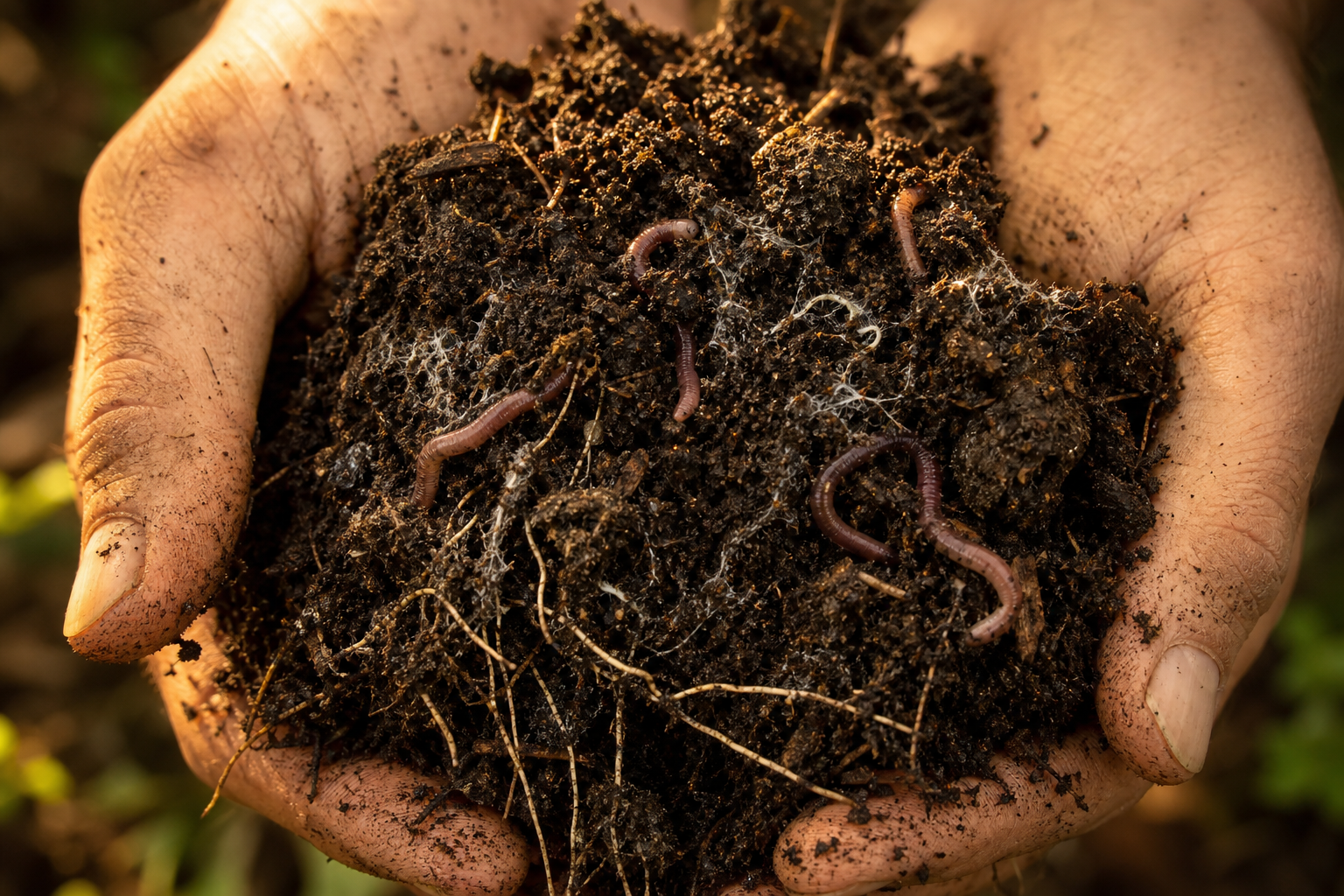
Earthworms are the ecosystem engineers of living soil — they physically reshape the ground, mix organic matter down deep, and produce castings that are some of the most nutrient-rich material in nature.
The USDA notes that earthworms improve soil structure, water movement, nutrient cycling, and plant growth. Michigan State University Extension confirms that earthworm populations are one of the best visible indicators of overall soil health.
Worm castings are remarkable. According to the Soil Association, worm castings contain:
- 5x more nitrogen than surrounding soil
- 7x more phosphorus than surrounding soil
- 1,000x more beneficial bacteria than the soil the worm ate
That last number is wild. Every time a worm crawls through the dirt, it creates a little pocket of ultra-rich, bacteria-packed material right at root level. That's why worm compost (vermicompost) is so valuable — and why a farm without earthworms is a farm without a foundation.
A 2023 PMC study (PMC10522571) found that earthworms contribute significantly to food crop production worldwide, influencing plant growth through impacts on soil structure, water capture, and organic matter processing.
How the Plant Talks to This Whole Crew #
Cannabis roots don't just sit there waiting — they actively communicate with the soil food web by releasing chemical signals that recruit the exact microbes they need.
The zone right around the roots is called the rhizosphere. According to Nature/Scitable's rhizosphere overview, this thin zone of soil is where most of the real action happens. Plants change the chemistry of the rhizosphere by pumping out:
- Sugars — to feed bacteria and fungi
- Amino acids — to attract specific microbes
- Organic acids — to dissolve locked-up minerals
- Flavonoids — to signal to mycorrhizal fungi that it's time to connect
A 2018 PMC study (PMC6394481) showed that root exudates function as the "architects of the rhizosphere microbiome" — plants literally select which microbes grow around them based on what they need.
For cannabis, this means a plant growing in living soil is having a constant, two-way conversation with the soil food web. The plant says "I need more phosphorus" and adjusts its exudates to attract more mycorrhizal fungi. It says "I need more nitrogen" and calls in the bacteria. In a synthetic nutrient system, that conversation is cut off — the plant gets what's in the bottle, whether that's what it needs or not.
How the Carbon Loop Keeps the Whole System Running #
The soil food web is powered by carbon — and the cannabis plant is the one putting carbon into the system through its roots.
Here is how the loop works:
- The cannabis plant captures sunlight and converts CO₂ into sugar through photosynthesis
- The plant pumps some of that sugar out through its roots into the soil
- Bacteria and fungi eat the sugar and multiply
- Protozoa and nematodes eat the bacteria
- Nutrients release back into the soil water where roots absorb them
- The plant uses those nutrients to grow, which fuels more photosynthesis
This is the carbon loop. It's circular. The plant feeds the soil; the soil feeds the plant. When you break it by flooding the root zone with synthetic nitrogen, you short-circuit the loop. The bacteria don't need to process organic matter anymore — food arrives pre-made. Their population crashes. Then when you stop adding synthetic nutrients, there's no biology left to pick up the slack.
Research from the Nature/Scitable rhizosphere overview notes that plants modify the rhizosphere by releasing organic compounds to assist with nutrient access. This is not accidental root leakage — it's deliberate. The plant is running a transaction with the soil food web, and it does it constantly.
The carbon loop also explains why no-till growing works so well alongside living soil. Every time you till, you break the fungal networks and expose stored soil carbon to air, where it burns off as CO₂. No-till keeps the carbon in the ground, where the biology can use it.
Why This Produces Better Terpenes and Flavor #
The soil food web creates mild, natural plant stress that triggers cannabis to produce more terpenes — the oils responsible for smell, taste, and the character of the high.
Terpenes are part of a plant's defense system. When a cannabis plant has to work through mild challenges — sourcing its own nutrients through the food web, adapting to natural soil chemistry shifts, dealing with the microbial neighborhood around its roots — it responds by making more protective compounds. Those compounds are terpenes.
To understand terpenes better, check out our guide to what terpenes are and how they work.
The PMC review of AMF and essential oil production (PMC9959559) notes that the improved nutrient status created by mycorrhizal symbiosis supports increased secondary metabolite production in aromatic plants — the exact category cannabis belongs to.
The nutrient pathway matters here. When mycorrhizal fungi deliver phosphorus directly to cannabis roots, the plant has the raw building blocks to run its terpene synthesis pathways — specifically the MEP pathway, which is how cannabis builds most of its aromatic compounds. More phosphorus availability, more terpene precursors, more aroma.
In contrast, a plant sitting in a hydroponic tray with its nutrients pre-measured and delivered has no reason to produce defense compounds. Everything is handed to it. The result is often a clean-looking product that tastes flat compared to something grown in real, living dirt.
Here is a rough comparison of what the two systems deliver:
| Quality Factor | Living Soil | Hydroponics / Synthetic |
|---|---|---|
| Terpene complexity | Higher — plant builds defenses | Lower — plant has no stress to respond to |
| Flavor depth | Multi-layered, earthy, rich | Often cleaner but simpler |
| Smoke quality | Often smoother, white ash | Can burn harsh if salts remain |
| Aroma intensity | Strong, natural | Moderate |
| Consistency | Variable batch-to-batch (nature) | More consistent (controlled) |
This is the flavor argument for soil-grown cannabis: it's not that the plant is "happier" — it's that it worked harder, and that work shows up in the nose.
How to Keep the Soil Ecosystem Alive #
Living soil isn't self-sustaining without inputs — you have to feed the biology the same way you'd feed any living system.
The most important inputs are:
1. Compost #
Compost is the base food source for bacteria and fungi. Finished compost introduces billions of organisms into the soil and gives them organic carbon to process. Our composting guide breaks down how to build and use it properly. Add 1–2 inches of compost as a top-dressing each growing season and let the worms pull it down.
2. Worm Castings (Vermicompost) #
Worm castings are concentrated nutrition in biological form. Because they already contain billions of bacteria (1,000x more than regular soil, per the Soil Association), adding castings seeds the food web with healthy populations. Use them as a soil amendment before planting or brew into a compost tea.
3. Avoid Synthetic Fertilizers and Pesticides #
Synthetic nitrogen salts suppress bacterial populations. Chemical pesticides that target fungus gnats or spider mites often hit beneficial nematodes and fungi as collateral damage. Once you've built a living soil ecosystem, synthetic inputs are the fastest way to tear it back down.
4. Cover Crops #
Cover crops planted between growing cycles keep the soil covered, reduce erosion, and feed the biology with constant root exudates even when the main crop isn't growing. Our regenerative cannabis farming overview covers how cover crops fit into the whole regenerative system.
5. No-Till or Minimal Disturbance #
Mycorrhizal fungal networks take months to build. A single pass with a rototiller destroys them in minutes. Minimize soil disturbance. Top-dress instead of digging in.
Signs Your Soil Food Web Is Working #
You don't need a microscope to know if your soil biology is healthy — the soil tells you.
A living soil ecosystem shows itself in observable ways. These are the signs to look for:
What Healthy Living Soil Looks Like #
- Crumbly, dark, and loose — good structure from fungal networks and earthworm activity
- Earthy smell — that deep, forest-floor scent means actinomycetes and healthy biology
- Earthworms present — Michigan State Extension confirms earthworm populations are a reliable indicator of overall soil health
- No crust on the surface — biological activity keeps the top layer soft and porous
- Water absorbs quickly — healthy soil holds moisture like a sponge instead of running off
What Dead or Depleted Soil Looks Like #
- Hard-packed and gray or pale — biological activity has stopped
- No earthworms — a bad sign; synthetic inputs or over-tilling wiped them out
- Water pools on the surface — compaction means poor aeration and drainage
- White salt crust — leftover residue from synthetic fertilizers
- Nutrient deficiency signs on plants despite feeding — no biology to process the inputs
The USDA NRCS estimates that the organisms in the top six inches of healthy farmland weigh 2,500–5,000+ lbs per acre. You can feel the difference between that kind of living ecosystem and a dead substrate the moment you pick up a handful.
If your soil is somewhere in the middle — slightly compacted, a few worms, okay drainage — you can rebuild it. Add compost. Stop tilling. Stop synthetic inputs. Give the biology a full season to come back. It will.
Living Soil vs. Synthetic Nutrients: The Core Difference #
The difference between living soil and synthetic nutrients is not just what goes into the plant — it's who's doing the feeding.
| Factor | Living Soil | Synthetic Nutrients |
|---|---|---|
| Who feeds the plant | The soil food web (bacteria, fungi, protozoa, worms) | The grower, via liquid or dry fertilizers |
| Nitrogen source | Mineralized from organic matter by biology | Manufactured ammonium, nitrate, or urea |
| Phosphorus delivery | Mycorrhizal fungi carry it directly to roots | Dissolved in water solution |
| Nutrient release | Gradual, biology-driven, buffered | Fast, direct, no buffer |
| Terpene potential | Higher — plant builds defense compounds | Lower — plant has no stress to respond to |
| Soil health over time | Improves — biology multiplies | Degrades — salts accumulate, biology collapses |
| Risk of "burn" | Very low — nature self-regulates | Real — over-application damages roots |
The USDA NRCS Soil Biology guide sums it up this way: in healthy soil, organisms are central to soil function — not incidental. They are the mechanism. Synthetic systems bypass the mechanism.
FAQ: The Soil Food Web and Cannabis #
Q: What is the soil food web? #
A: The soil food web is the interconnected community of living organisms in healthy soil — including bacteria, fungi, protozoa, nematodes, and earthworms — that break down organic matter and cycle nutrients to plants. According to the USDA NRCS, healthy soil contains millions of species and billions of organisms working as an ecosystem. Each group plays a specific role in the chain.
Q: How many living things are in a teaspoon of healthy soil? #
A: More than you can count. Ohio State University Extension puts the bacterial count alone at 100 million to 1 billion per teaspoon. The USDA NRCS states that a teaspoon of healthy soil contains more living organisms than there are people on Earth when you include all the bacteria, fungi, protozoa, and other microbes. It's not a metaphor — it's a number.
Q: Does living soil actually make cannabis taste better? #
A: Most growers say yes, and there's a scientific reason. Terpenes — the oils that give cannabis its smell and flavor — are defense compounds the plant builds under mild natural stress. A plant sourcing nutrients through the soil food web has to work harder than a plant in hydro, and that work shows up in terpene density. A 2023 PMC review (PMC9959559) confirms that mycorrhizal associations improve aromatic compound production in plants. You can smell the difference.
Q: What do mycorrhizal fungi do for cannabis plants? #
A: They extend the plant's root system and dramatically increase its ability to absorb phosphorus, water, and other nutrients. Mycorrhizal fungi form a symbiosis with cannabis roots, trading mineral delivery for the sugar the plant produces through photosynthesis. A 2022 Frontiers in Plant Science study found that AMF inoculation significantly improved cannabinoid production in cannabis. The fungi aren't optional — they're part of how the plant was designed to eat.
Q: Why do protozoa matter to cannabis nutrition? #
A: Protozoa eat bacteria and release nitrogen in a form cannabis roots can immediately absorb. Without protozoa, bacteria would store nitrogen in their own cells and the plant couldn't get it. The USDA NRCS identifies protozoa as essential links in the soil food web's nutrient cycle. They're the release valve that gets nitrogen out of the microbial loop and into the plant.
Q: Are earthworms actually important for cannabis growing? #
A: Yes — worm castings are one of the most nutrient-dense materials in nature. According to the Soil Association, worm castings contain 5x more nitrogen, 7x more phosphorus, and 1,000x more beneficial bacteria than the surrounding soil. Worms also physically aerate the soil, improve water retention, and build soil structure. A farm with no worms is missing one of its most powerful tools.
Q: Can you build a living soil ecosystem in pots or containers? #
A: Yes, but it requires maintaining biology in a smaller space. Start with a high-quality living soil mix that includes compost, worm castings, and a source of mycorrhizal fungi. Feed the biology with compost teas or top-dressings. Avoid synthetic fertilizers, which can disrupt the microbial population in a container. The food web can establish in pots, but it needs regular feeding since there's no large soil volume to draw from.
Q: What kills the soil food web? #
A: Synthetic fertilizers, pesticides, tilling, and dry conditions are the biggest threats. Synthetic nitrogen salts can suppress bacterial and fungal populations. Chemical pesticides designed for pests often kill beneficial nematodes and fungi as side effects. Tilling destroys the fungal hyphae networks that took seasons to build. The USDA NRCS recommends minimal disturbance, cover crops, and organic inputs to protect soil biology.
Q: Is hydroponic cannabis inferior to soil-grown? #
A: Not necessarily in all ways, but living soil has distinct advantages for flavor and soil health. Hydroponic systems can produce very clean, potent cannabis, but the plant doesn't have access to the full soil food web and the natural stress signals that drive terpene production. The conversation between roots and microbes — what researchers call the rhizosphere interaction — simply doesn't exist in a hydro tray. Many growers use hydroponics for yield; many use living soil for quality.
Q: What does "the plant talks to the soil" mean? #
A: Roots release chemical signals — called exudates — that recruit specific microbes the plant needs. A 2018 PMC study (PMC6394481) describes root exudates as the "architects of the rhizosphere microbiome" — plants change what they release based on what they need, and the microbes respond. This two-way communication is the foundation of how living soil works, and it's the reason you can't replace it with a bottle of nutrients.
Q: Does living soil matter for autoflower cannabis strains? #
A: Yes — autoflowers still benefit from living soil, but the timeline is shorter. Autoflower plants have a fast life cycle, which means there's less time for the soil food web to fully establish a relationship with the root system. Pre-inoculated soil with active mycorrhizal fungi and established bacterial populations is especially important for autos — you want the biology ready before the plant needs it, not still catching up. A well-built living soil mix works just as well for autoflowers as for photoperiods.
Q: What's the difference between this article and your living soil guide? #
A: Our living soil guide is the overview — what living soil is and why it matters. This article goes deeper into the specific organisms in the soil food web, what each one does, and how they interact as a connected system. Think of that guide as the introduction and this one as the inside look at who's actually doing the work underground.
Where Divine Toke's Flower Fits In #
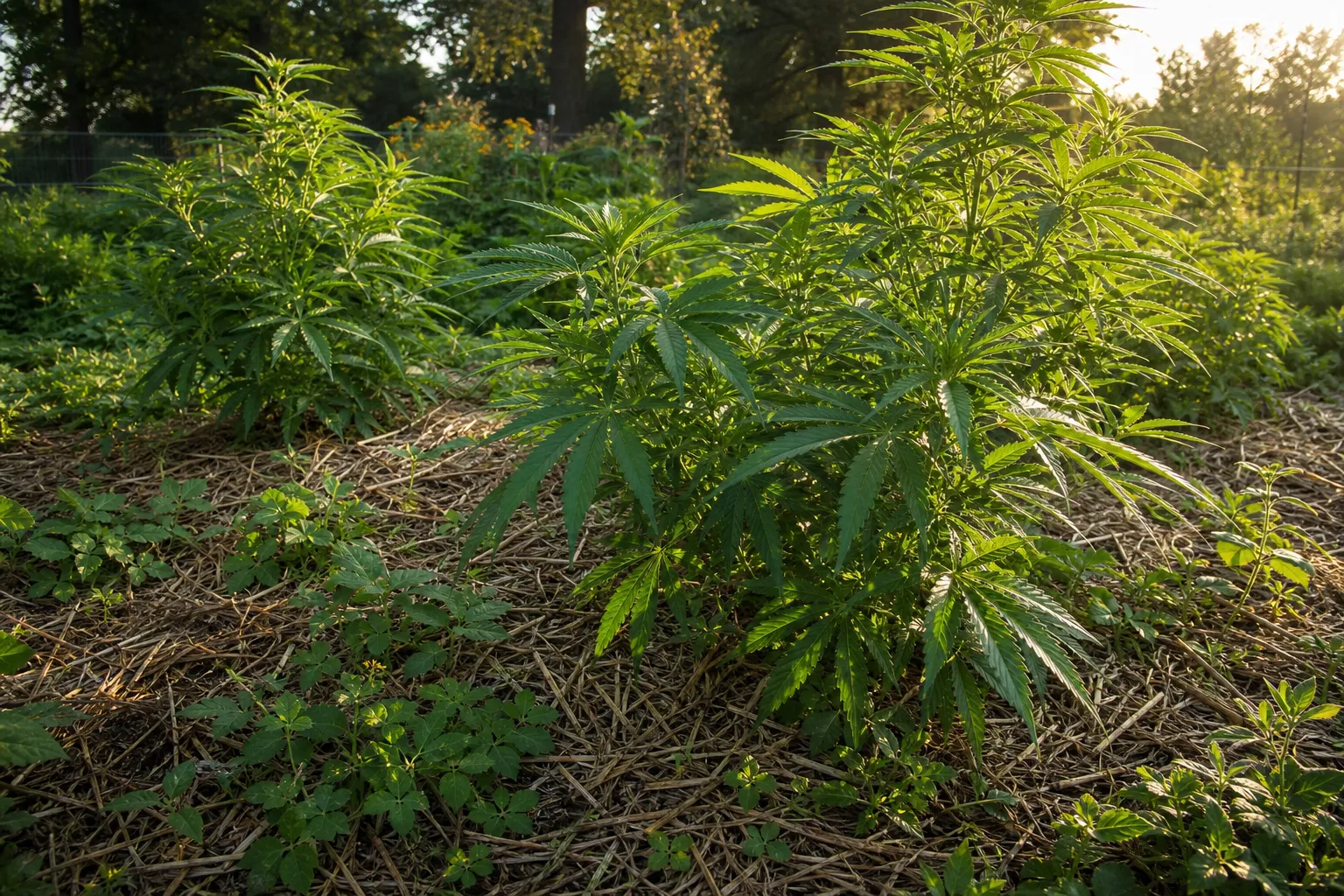
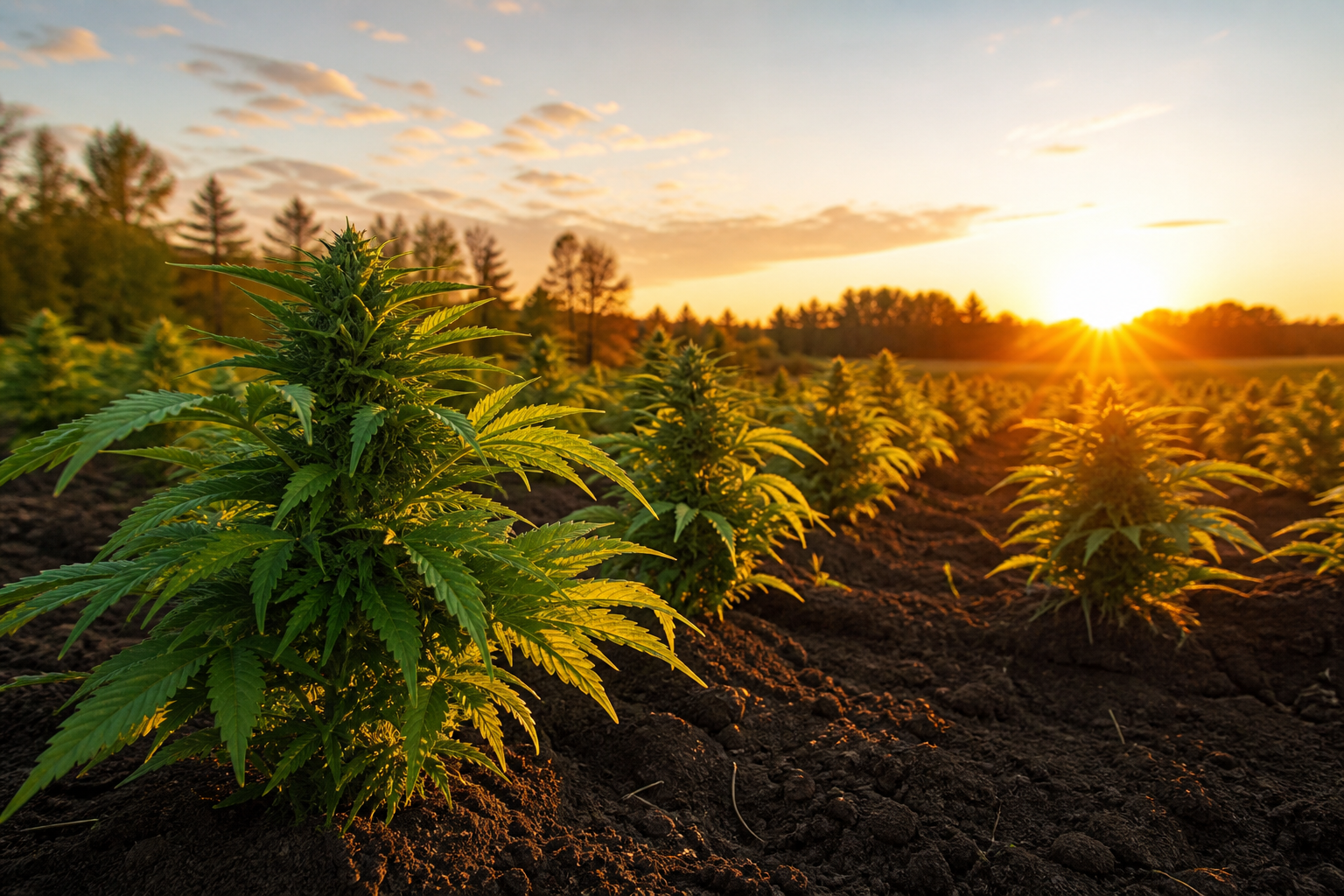
At Divine Toke, we grow sun-grown organic flower in Detroit — which means our plants have access to a real, functioning soil food web. The bacteria, fungi, protozoa, nematodes, and worms are all part of the system. No synthetic salts to collapse the microbial population. No chemical pesticides to take out the beneficial nematodes.
The result is flower that was grown the way the plant was designed to grow — by feeding the soil and letting the soil feed the plant.
Here is a quick summary of the whole food web in one place:
| Organism | Role | What They Give the Plant |
|---|---|---|
| Bacteria | Decompose organic matter; fix nitrogen | Ammonium, nitrate, soil structure |
| Mycorrhizal fungi | Extend root reach; deliver minerals | Phosphorus, zinc, water |
| Protozoa | Eat bacteria; release excess nutrients | Plant-available nitrogen |
| Nematodes | Regulate populations; cycle nutrients | Balanced ecosystem; nutrient release |
| Earthworms | Aerate; mix organic matter; produce castings | Rich, available nitrogen and phosphorus |
Every time you smoke clean, soil-grown flower, that whole crew did their job.
If you're curious about what this kind of growing actually looks like on the farm, check out our living soil guide for the full foundation. For the bigger picture on how regenerative farming connects all these pieces together, read our regenerative cannabis process breakdown. And if the compost side of things is what interests you, our composting guide goes deep on how we build the material that feeds this whole ecosystem.
The soil is alive. It's working. It never punches out. That's what you're really buying when you buy organic, sun-grown cannabis — not just a product, but the result of an entire underground ecosystem doing its job.
This article is for educational purposes only and is not medical advice. Always consult your healthcare provider before starting any new wellness routine.
Grown in Detroit. Shipped to your door.
Small-batch, sun-grown cannabis cultivated in living soil. Mail-order shipping to all 50 states.