What Is Mother Indica? Mother Plants and Indica Explained

Jamie
Head Cultivator
If you typed “mother indica” into a search bar, you’re not alone — and you’re not wrong for being confused. That phrase usually smashes two different ideas together: a mother plant (the female kept as a living genetic bank) and indica (an old botanical label that now mostly shows up as a menu category). This post untangles both, in farm English, so you know what growers mean — and what actually shapes the jar you buy.
What Is a Cannabis Mother Plant? #
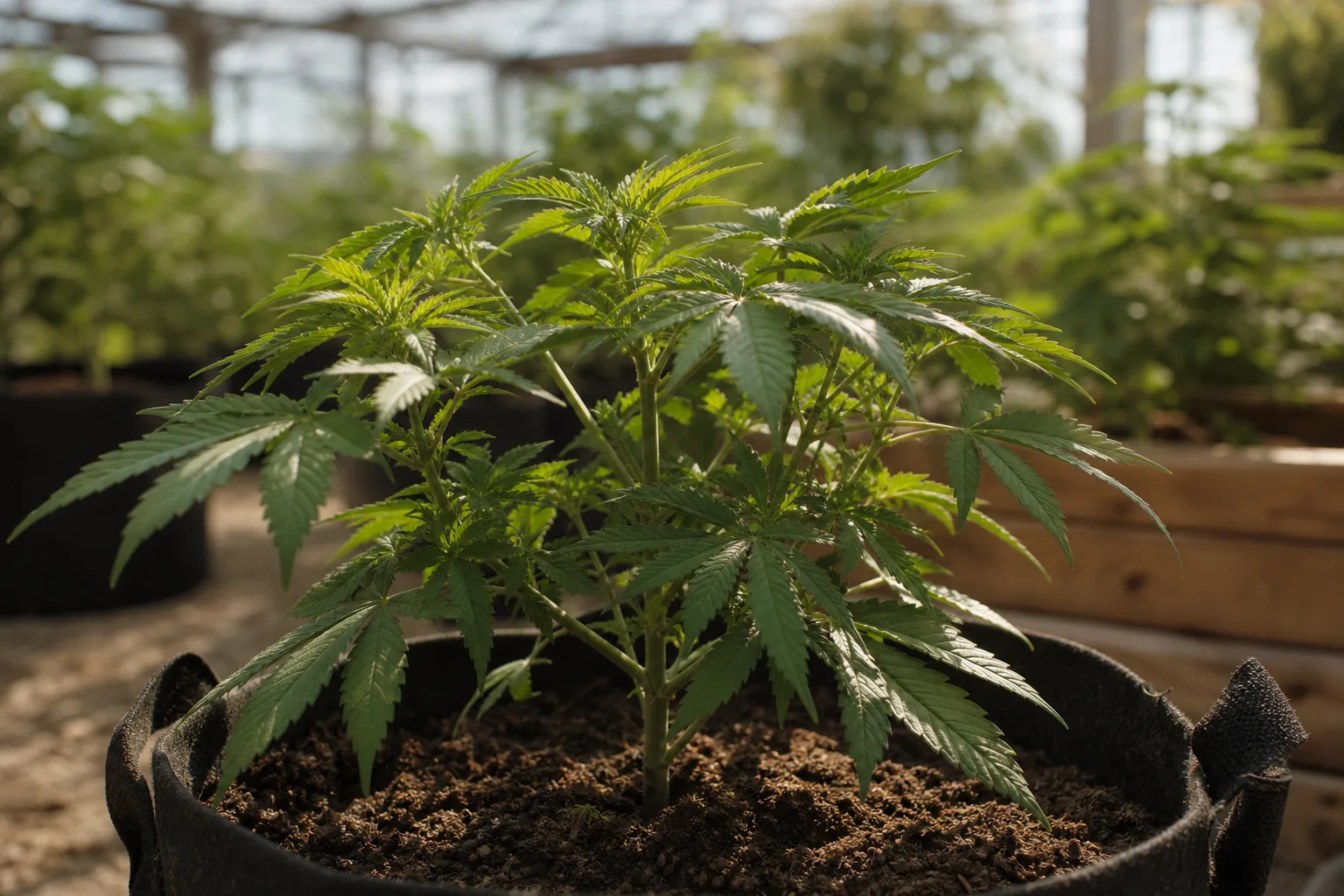
A cannabis mother plant is a selected female kept in the vegetative (grow-only) stage so growers can take cuttings from her again and again — each cutting roots into a genetic copy called a clone. She is not a special “species.” She is a working plant: the living backup of a cultivar a farm wants to run the same way, harvest after harvest. Guides from Weedmaps and commercial growers describe mothers as the operation’s genetic source for uniform crops.
Think of her like a favorite sourdough starter. You don’t bake the starter — you pull pieces from it so every loaf starts from the same culture. Same idea with a mother: you keep her green and branching, and you flower her daughters (the clones).
| Term | Plain meaning |
|---|---|
| Mother plant | Female kept in veg as a cutting source |
| Clone / cutting | A rooted branch that is a genetic copy of the mother |
| Cultivar / cut | The specific plant type farms preserve through mothers |
| Phenotype | How one plant actually looks and performs (seeds can vary) |
Why Farms Call Her a “Mother” #
Farms call her a mother because every production plant in that line is her daughter — a clone cut from her branches. According to Cannabis Business Times and grower references like Jorge Cervantes’ mother-plant overview in High Times, the job is consistency: same growth habit, same flowering window, and the same general chemistry tendencies the farm already tested and liked.
Growers usually pick a mother after watching a plant prove itself. They look for:
- Vigor — strong stems, steady growth, good recovery after pruning
- Clean health — no pests, mold, or weird leaf issues hiding in the tissue
- Useful traits — yield, aroma, resin, structure that fits the room or field
- Stability — she doesn’t “surprise” you with weird sex traits under normal care
A 2025 commercial overview from SunMed Growers frames mothers as a way to preserve quality genetics across production — the opposite of rolling the dice every cycle with random seed stock.
Mother Plant vs Flowering Plant #
A mother stays vegetative on purpose; a flowering plant is flipped onto a short-day light schedule so buds form. For photoperiod cannabis (the common kind that needs a light change to bloom), growers keep mothers on a long-day schedule — most often 18 hours of light and 6 hours of dark (18/6) — and never give them a sustained 12/12 flower flip. That light rule is standard across mother-care guides from Weedmaps to commercial ops writing for Cannabis Business Times.
| Role | Light pattern | Goal |
|---|---|---|
| Mother | Long days (often 18/6) | Stay leafy, make cuttings |
| Production plant (clone) | Short days (often 12/12 indoors) | Make flower |
| Outdoor sun-grown plant | Natural day length | Flower when nights get long enough |
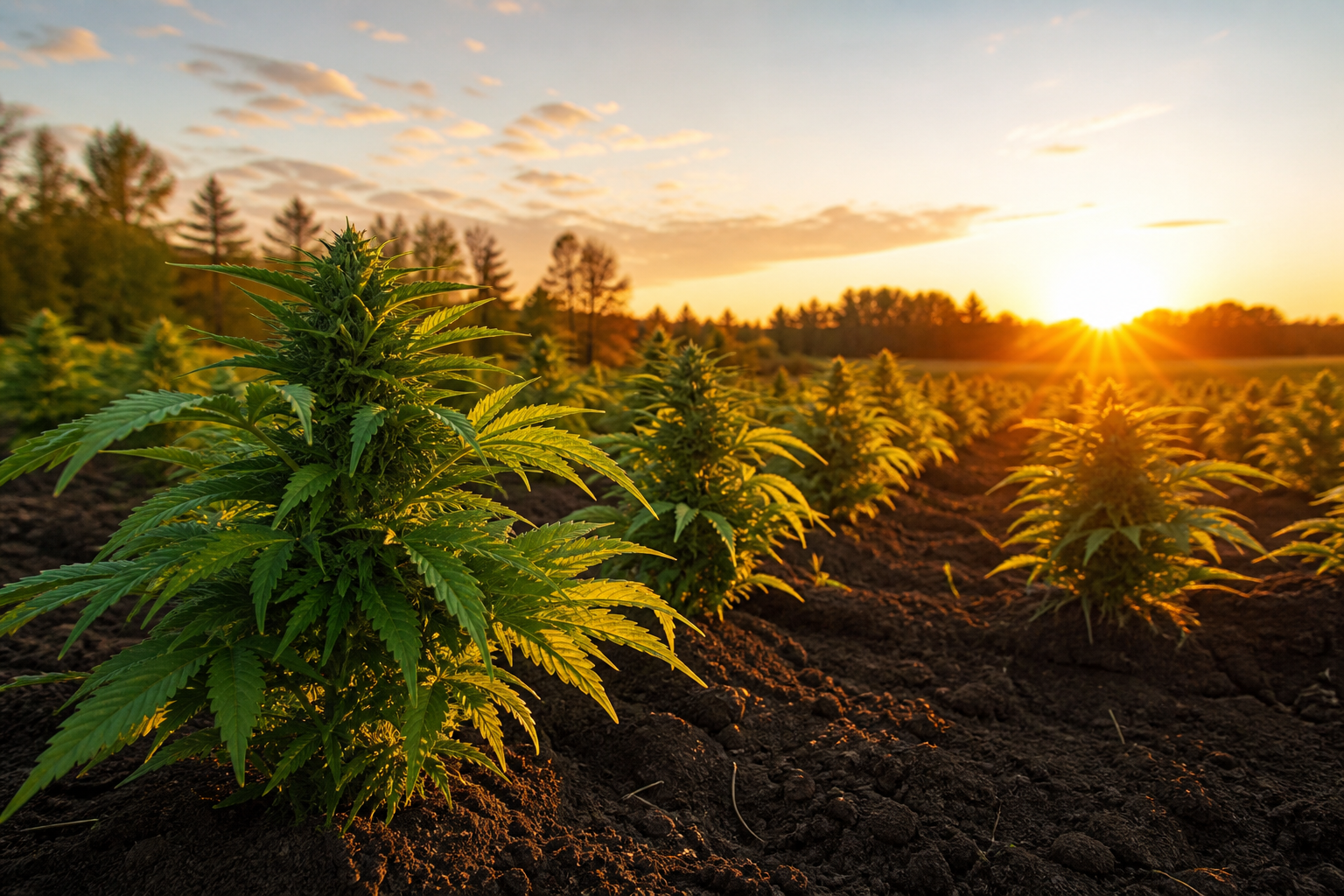
At Divine Toke — a sun-grown organic cannabis farm rooted in Detroit, Michigan — the same core idea applies whether a cut starts under lights or heads to the field: you preserve the plant you trust, then grow it out with healthy soil and clean inputs. For how that soil side works, see our notes on living soil as an ecosystem and why we don’t flip our soil.
What Does Indica Actually Mean — and Why Do People Search "Mother Indica"? #
“Indica” literally means “of India” in Latin, and in cannabis it started as Jean-Baptiste Lamarck’s 1785 name for Cannabis indica — a plant type he linked to India and intoxicating use, separate from European hemp-style Cannabis sativa. People search “mother indica” because they’re usually trying to connect two ideas at once: a mother plant used for clones, and an indica label they saw on a menu, jar, or grow tip. It is almost never a secret third species called “Mother Indica.”
The American Herbal Products Association’s Herbs in History: Cannabis and taxonomic reviews such as McPartland’s systematics paper (PMC6225593) place the indica/sativa naming fight inside a long, messy botanical story. The short version for shoppers: the word is old; the modern menu meaning is newer and looser.
Indica Started as a Plant Shape Label #
Early indica/sativa talk was about how the plant grows — height, leaf shape, climate — not a guaranteed “couch-lock vs. energy” effect chart. Classic field notes often sorted plants like this:
| Old field cue | Often labeled “indica-leaning” | Often labeled “sativa-leaning” |
|---|---|---|
| Height | Shorter, bushier | Taller, lankier |
| Leaflets | Broader | Narrower |
| Flowering time | Often faster | Often longer |
| Climate story | Cooler / shorter seasons | Warmer / longer seasons |
That table helped farmers and collectors talk about plants. It was never a lab certificate for how you will feel. Chemist Arno Hazekamp’s widely cited paper “That which we call Indica, by any other name would smell as sweet” argued that the popular indica/sativa split fails as a chemistry map — samples labeled one way often smell and test more like the other. National Geographic’s science coverage and Bedrocan’s research summary make the same consumer point in plainer language: today’s labels are a weak guide to genetics and effects.
How “Mother Indica” Usually Gets Misread #
Most “mother indica” searches are a mash-up of grower slang (“mother”) plus a store label (“indica”) — not a unique Divine Toke strain name or a separate botanical category. Here’s how those searches usually decode:
| What someone typed | What they often meant | Better question |
|---|---|---|
| “mother indica” | A mother plant from an indica-labeled cut | “What is a cannabis mother plant?” |
| “indica mother plant” | Keep a short/bushy cultivar for clones | “How do you keep a mother in veg?” |
| “Mother Indica” (capitalized) | A brand or strain name they saw somewhere | Check the lab panel, not the nickname |
| “indica clone” | A rooted cut sold under an indica tag | Ask for terpenes + THC/CBD, not just the tag |
None of that means you’re dumb for searching it. Language in cannabis shops and forums got messy on purpose — short labels sell. The farm reality is simpler: mother = cloning source; indica = old morphology / modern marketing word.
A quick translation card you can keep in your head:
- Mother → “We keep this female to make copies.”
- Indica → “Someone sorted this into a relaxing/short-plant bucket.”
- Mother + indica together → “Usually both ideas at once — not a rare third thing.”
For the full “why your menu lies” deep dive, read Indica vs. Sativa vs. Hybrid: What Actually Matters.
Clone vs Seed: Why Mother Plants Exist #
Mother plants exist so farms can run clones — genetic copies — instead of gambling on seed-to-seed variation every cycle. Seeds are great for hunting new winners and breeding. Clones are great when you’ve already found a winner and want her again. Consumer and cultivation explainers from Cannigma, Atlas Seed, and Montel’s CEA overview all land on that same tradeoff.
| If you want… | Better starting point | Why |
|---|---|---|
| Same canopy and timing every run | Clone from a mother | Uniform genetics |
| A known female (no sexing) | Clone from a mother | Taken from a proven female |
| Batch-to-batch product consistency | Clone from a mother | Locks in a selected cut |
| New phenotypes / breeding | Seed | Fresh genetic mixes |
| Maximum diversity | Seed | Each plant can differ |
| Strong taproot vigor (often) | Seed | Seedlings build roots differently |
Clones win on repeatability. Once a farm likes a plant’s smell, structure, and lab numbers, cloning from a mother is how that cut becomes a production line. Atlas Seed puts it bluntly for commercial rooms: clones are the tool for genetic replication and uniformity.
Seeds win on discovery. Open a pack of seeds and you may get several “siblings” that look related but perform differently — that’s phenotype hunting. Breeders need that variation. Farms that only want one known cut usually do not.
The clone catch: a cutting only copies what the mother has — including hidden problems. If the mother carries mites, powdery mildew, or stress habits, clones can inherit the mess. That’s why mother rooms obsess over clean tools, clean water, and early pest checks. Seeds break that closed loop, but they reintroduce the lottery.
Practical takeaway for new growers:
- Hunt with seed when you’re exploring.
- Keep a mother only after one plant clearly earns the job.
- Flower clones, not the mother, if you want an ongoing supply of that cut.
- Refresh mothers when clone vigor drops (more on that next).
If you want the farm-day picture of how a cut becomes flower on a sun-grown schedule, walk through our seed-to-smoke day on the Divine Toke farm.
How Cloning Actually Works (Simple Steps) #
Cloning is plant cutting + rooting — not lab science fiction. Most grower guides describe a process that looks like this in real rooms:
- Select a healthy mother branch with a few nodes and no pest signs.
- Cut a few inches of stem, usually just below a node (the bump where a leaf meets the stem).
- Prep the stem — some growers lightly scrape or split the base; many apply a rooting gel or powder.
- Stick the cutting into a clean, moist rooting plug or small cup of medium.
- Hold humidity high and light gentle for several days while roots form.
- Harden off once roots show, then pot up into the next container.
| Stage | What “good” looks like | Red flag |
|---|---|---|
| Day 0–2 | Cutting stays perky under humidity | Severe wilt that never recovers |
| Day 3–10 | White roots peek from the plug | Soft black stem rot |
| After rooting | New leaf tips push | Stalled growth + yellow crash |
That timeline varies with temperature, cultivar, and technique. The constant is cleanliness. Dirty trays turn a good mother into a disease factory.
How Growers Keep Mother Plants Healthy #
Healthy mothers stay in steady vegetative growth: long-day light, regular pruning, enough root room, clean IPM habits, and replacement when clone quality slips. Commercial mother-room writing in Cannabis Business Times treats mother care as production infrastructure — not a cute side plant in the corner.
Light, Food, and Pruning Basics #
Keep mothers vegetative with long days (commonly 18/6), moderate light, nitrogen-forward veg feeding, and steady pruning so fresh side shoots stay available for cuttings. Mother-maintenance guides from Weedmaps, High Times’ Jorge Cervantes overview, and Cannabis Business Times repeat the same non-negotiables:
| Care lever | Typical mother-room practice | Why it matters |
|---|---|---|
| Light schedule | ~18/6 (sometimes 20/4) | Prevents flower flip |
| Light intensity | Moderate — not bloom-blast levels | Less stress, steadier cuttings |
| Nutrition | Veg-leaning feed (more nitrogen focus) | Supports leafy regrowth |
| Pruning | Regular tip/side pruning | Keeps a bushy cutting farm |
| Root space | Upsize pots / avoid chronic binding | Tired roots = weak clones |
| Sanitation | Clean shears, clean trays, plant-by-plant tools when possible | Stops pest/disease loops |
A simple cutting workflow most hobby and commercial guides describe:
- Pick a healthy, non-woody side branch.
- Cut a few inches (often described around 4–6 inches) just below a node.
- Stick the cutting in a clean rooting medium (rockwool, coco, soil plugs, and similar).
- Keep humidity and gentle light steady until roots show.
- Transplant the rooted clone; leave the mother in veg.
Do not strip a mother bald every week. Over-harvesting cuttings stresses her and can slow the next round. Many ops give mothers a rest window between heavy cutting sessions — the same common-sense rest you’d give any plant you’re repeatedly pruning.
How Long Mothers Last Before Replacement #
There is no single “expires on” date, but many commercial rooms rotate mothers every few months to about a year when clone vigor declines; some hobbyists keep well-managed mothers longer. Reports gathered across grower and trade sources often land in these bands:
| Setup | Common refresh window | Signal it’s time |
|---|---|---|
| Tight commercial mother room | Often 3–6 months (sometimes up to ~12) | Slower rooting, weaker cuts, uneven clones |
| Careful small grow | Often 6–18 months | Same quality signals |
| Rare long-keepers | Years, with renovation | Only if clone metrics stay strong |
The durable rule is not calendar worship. It’s metrics: rooting speed, clone uniformity, and mother health. When those slip, growers take a fresh, vigorous clone of the same cut and promote that clone to the new mother — same genetics, younger body. Cannabis Business Times and SunMed’s 2025 mother-plant overview both stress that mother management is ongoing work, not a one-time setup.
A Simple Mother-Room Checklist #
If you only remember a short list, remember this: stable light, clean tools, steady pruning, watch the roots, replace when clones weaken.
Weekly
- Confirm the light timer still hits long days (no accidental 12/12)
- Walk the plant for mites, fungus gnats, odd spots, or wilt
- Wipe shears before and after every cutting session
- Note which branches are ready vs. which need recovery time
Monthly
- Reassess pot size and root health
- Thin inner growth so air can move through the canopy
- Compare recent clone rooting speed to last month’s notes
- Check that feed strength still matches vegetative growth (not bloom formulas)
Every cycle / quarter
- Decide: keep this mother, or promote a vigorous clone into her job
- Deep-clean trays, floors, and any shared tools
- Review whether this cut still earns canopy space vs. a better hunter find
None of that requires a fancy brand name on the plant. It requires attention — the same attention that shows up later as steadier flower on the shelf.
Indica vs Sativa Myths: Why Terpenes Matter More #
Modern science and industry research keep finding the same thing: indica/sativa labels are a weak predictor of genetics, chemistry, and effects — cannabinoids plus terpenes (the chemovar) tell you more. That matters for “mother indica” searches because an indica-tagged mother only tells you how someone marketed that cut. It does not guarantee couch-lock for every person, every dose, every day.
Here’s the clean stack of evidence in plain English:
- Chemistry mismatch: Hazekamp’s indica naming paper showed popular labels fail as a chemical sorting system.
- Genetics mismatch: Summaries of genomics work, including Bedrocan’s research write-up and National Geographic’s reporting, describe labels that do not map cleanly onto genetic relatedness.
- Taxonomy is contested: McPartland (PMC6225593) and practical taxonomy work such as Small et al.’s cannabis taxonomy paper show scientists still argue about species/subspecies lines — while shop menus keep selling a simple three-bucket story.
- Accessible science explainers like Technology Networks’ sativa vs indica overview translate that for consumers: look at the chemical profile.
| Shopping shortcut | What it actually tells you | Trust level for effects |
|---|---|---|
| “Indica” on the jar | Store category / marketing | Low |
| Plant looks short & bushy | Morphology cue | Low for effects |
| THC / CBD numbers | Potency balance | Medium (dose still rules) |
| Terpene panel (myrcene, limonene, linalool, etc.) | Aroma chemistry that shapes experience | Higher than the indica tag |
| Your own notes (dose, time, method) | What you felt | Highest personal signal |
Terpenes are the aromatic oils — the mango / pine / citrus / lavender smells. People often link myrcene (earthy, mango-ish) with the sleepy reputation people pin on “indicas.” That pattern shows up in consumer lore for a reason, but it is not a one-terpene remote control. Dose, THC:CBD balance, other terpenes, and your own body still move the needle.
So if a farm says “we keep a mother of an indica-leaning cut,” translate it as: they preserve a specific plant they like, often one with a certain structure or aroma family — not a magic sleep guarantee. For the full shopping method (smell first, chemistry second, label last), stay with Indica vs. Sativa vs. Hybrid: What Actually Matters.
A Plain-English Chemovar Cheat Sheet #
Chemovar just means “chemical variety” — the mix of cannabinoids and terpenes in that batch. You do not need a chemistry degree to use the idea.
| If the jar leans toward… | You might notice… | Still remember… |
|---|---|---|
| Myrcene-forward aroma (earthy, mango-ish) | Heavier body feel for many people | Dose can flip the night |
| Limonene-forward aroma (citrus) | Brighter mood tone for many people | High THC can still overwhelm |
| Linalool-forward aroma (lavender-ish) | Calmer edge for many people | Pairing with other terpenes changes it |
| Pinene-forward aroma (pine) | Clearer head for some people | Individual response varies |
This is directional, not destiny. Two “indica” jars can smell totally different. Two cuts from different mothers can share a nickname and still diverge once soil, sun, cure, and storage enter the chat. That is why farms obsess over mothers and process — genetics without good growing is just potential.
What Mother Plants Mean for the Flower You Buy #
When a farm runs flower from a mother-kept cut, they’re aiming for repeatable structure and chemistry — not a new random plant every harvest. That’s the consumer upside of mothers: the jar can track closer to last month’s jar when cultivation stays steady. SunMed’s 2025 mother-plant overview and Atlas Seed’s clone uniformity notes both frame cloning as a consistency tool.
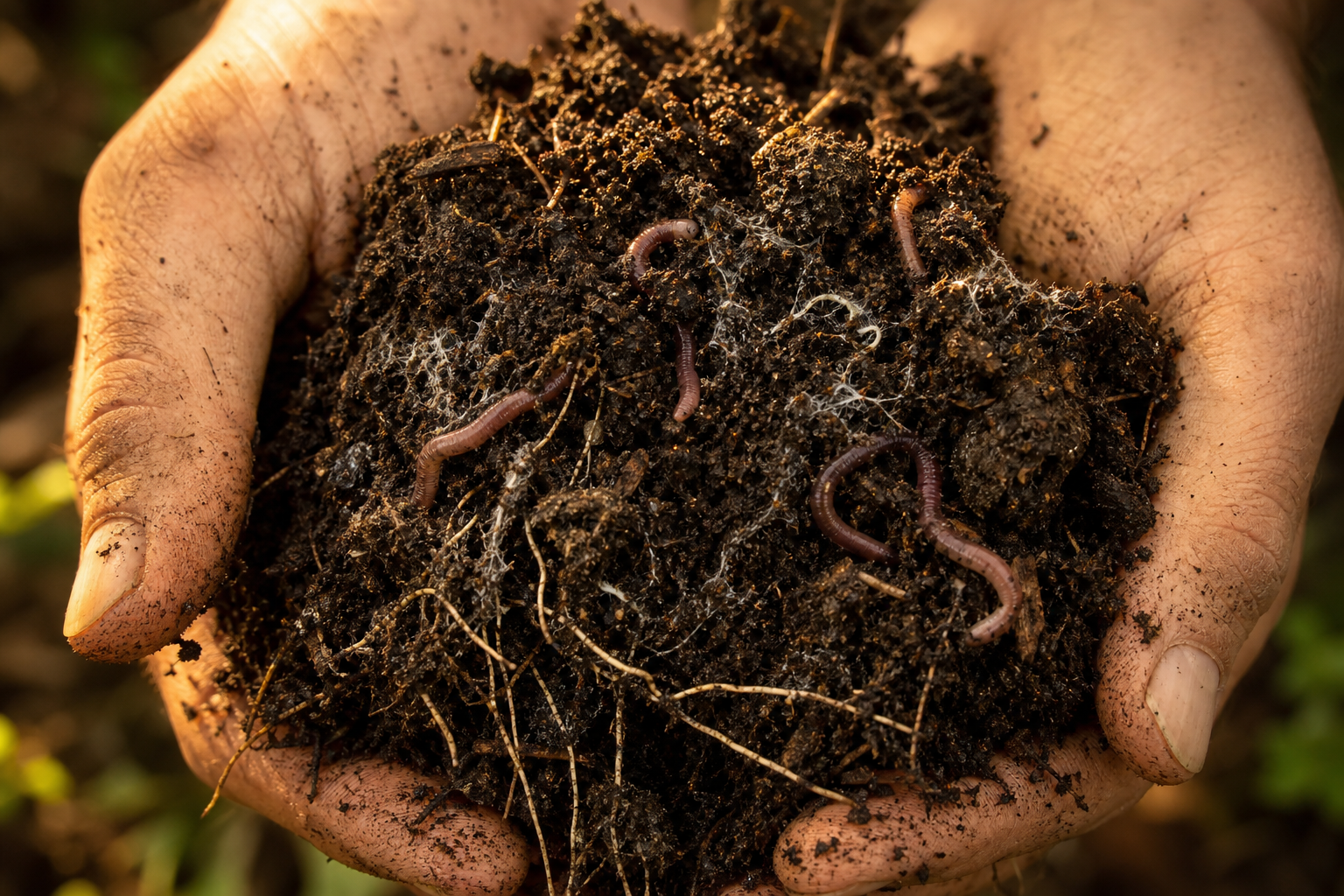
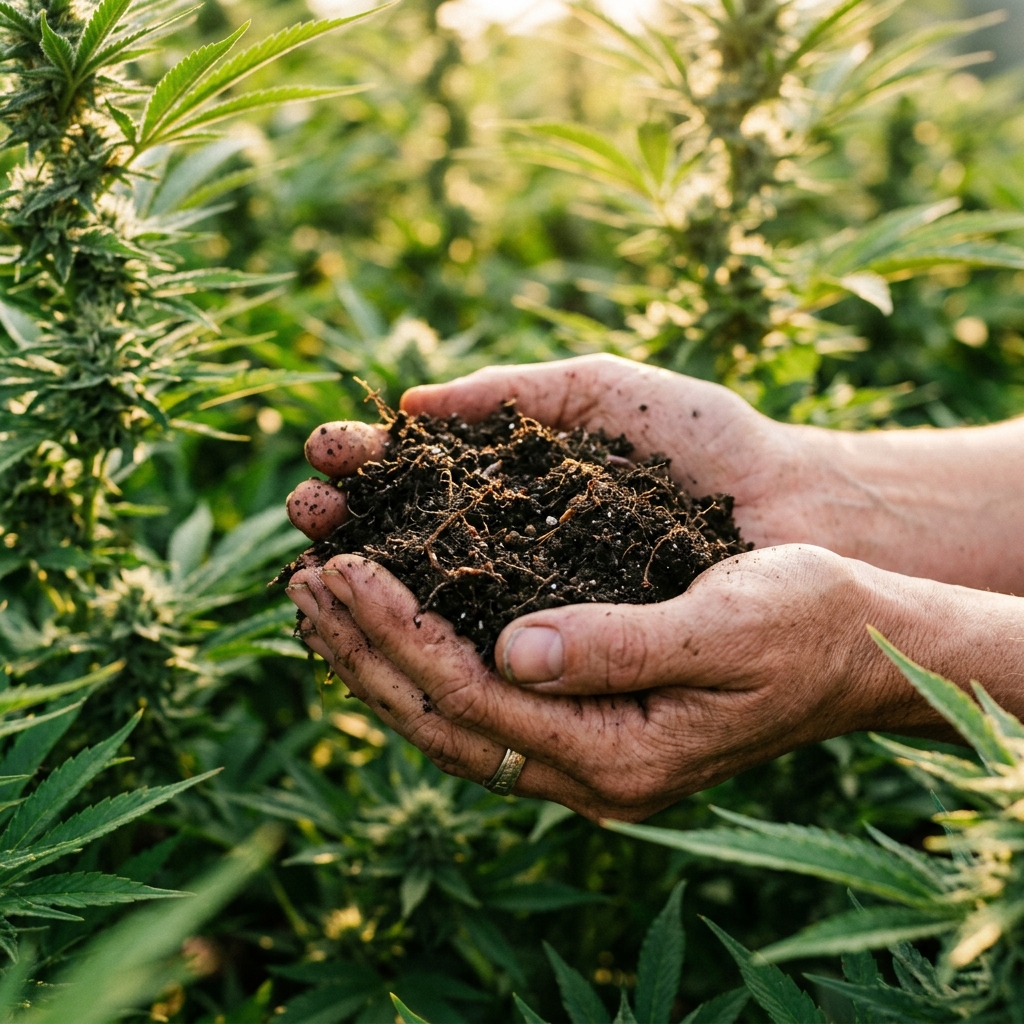
Genetics are only half the story. The same cut grown in dead dirt with harsh inputs will not smoke like the same cut grown in a living soil system with careful water and sun. At Divine Toke, we talk about mothers and soil in the same breath because the cut is the recipe, and the soil is the kitchen. Dig into living soil as an ecosystem and no-till cannabis if you want that half of the picture.
What to ask (or look for) as a shopper:
| Question | Why it helps |
|---|---|
| What’s on the terpene panel? | Better effect clue than “indica” |
| Is this a known cut / consistent cultivar? | Mother-based production often shows up as steadier batches |
| How was it grown? | Soil, sun, and inputs change aroma and feel |
| What’s the harvest / package date? | Freshness matters as much as the nickname |
| Any lab test for contaminants? | Clean flower is non-negotiable |
You do not need a farm to invent a strain name like “Mother Indica” for any of this to make sense. In fact, be wary of flashy names that outrun the lab sticker. Names sell. Panels inform.
If you want the human-scale walkthrough — morning checks, plant work, and how a day on a Detroit-rooted sun-grown farm actually feels — read A Day in the Life: Seed to Smoke at Divine Toke.
Common Mistakes New Growers Make With Mothers #
The biggest mother-plant mistakes are flowering the mother by accident, over-cutting her, ignoring pests until clones spread them, and treating “indica” as a personality guarantee. Trade and grower guides keep warning about the same traps — especially sanitation and mother stress — in places like Cannabis Business Times and Weedmaps’ mother-plant explainer.
| Mistake | What goes wrong | Better habit |
|---|---|---|
| Flipping the mother to 12/12 | She buds; cutting supply crashes | Keep a hard 18/6 (or similar long day) |
| Taking too many cuttings | Weak regrowth, stressed plant | Rotate cutting zones; let her recover |
| Skipping IPM | One mite problem becomes a clone epidemic | Inspect weekly; clean tools every session |
| Keeping a root-bound mummy forever | Slow clones, sad leaves | Upsize, root-prune, or replace with a young copy |
| Worshipping the indica label | Wrong expectations in the jar | Shop by terpenes + dose notes |
| Cloning a sick “winner” | You copy the sickness too | Only promote clean, vigorous plants |
| Confusing mother with breeding pair | Wrong mental model for seed making | Mothers clone; seed needs pollen + female |
A mother room should feel a little boring: stable light, stable feed, clean floors, sharp scissors wiped down, no drama. Drama is for phenotype hunts and harvest week — not for the plant you’re trusting as your genetic bank.
How to Decode “Mother Indica” at the Dispensary #
When a budtender or a menu scrap says something like “mother indica,” translate it into three separate checks: Is this about cloning genetics, a menu category, or just a nickname? Most confusion collapses once you split those layers.
Three questions that beat the nickname #
“Is this from a known cut / clone line?”
If yes, you’re hearing mother-plant language — consistency is the point.“What’s dominant on the terpene panel?”
That answer predicts experience better than the indica sticker. Technology Networks and National Geographic both push consumers toward chemistry over folklore.“How was it grown and when was it harvested?”
Sun-grown living-soil flower and rushed indoor runs of “the same cut” can feel different. Process is not trivia.
| Menu phrase | Likely meaning | Your next move |
|---|---|---|
| “Indica” | Store category | Ask for terpenes |
| “Indica-dominant hybrid” | Marketing blend language | Still ask for terpenes |
| “Mother cut” / “keeper cut” | Clone line from a selected female | Ask about consistency / grow method |
| “Mother Indica” as a proper name | Possibly a branded nickname | Verify lab label; don’t assume Divine Toke (or anyone) invented a secret strain |
What we will not do here #
Divine Toke will not invent a strain called “Mother Indica” to chase a search term. That would be dishonest branding dressed up as education. The honest move is explaining the search, teaching the farm terms, and pointing you at real signals: cut + chemovar + grow method.
If you want more farm context after the counter conversation, pair this post with seed-to-smoke on the farm and the terpene-first indica/sativa breakdown.
Frequently Asked Questions #
What is a cannabis mother plant? #
A cannabis mother plant is a selected female kept in vegetative growth so growers can take cuttings that become genetic clones. She stays on a long-day light schedule (often 18/6) and is not flowered for production. Weedmaps’ mother-plant guide describes her as the source plant for consistent clone crops.
What does indica actually mean — and why do people search "mother indica"? #
Indica comes from Latin for “of India,” and entered cannabis naming when Lamarck described Cannabis indica in 1785; “mother indica” searches usually mix that label with “mother plant” grower slang. People are rarely looking for a separate species. They’re trying to understand mothers, indica tags, or both at once. For taxonomy context, see McPartland’s systematics review (PMC6225593) and AHPA’s cannabis history note.
Are cannabis clones genetically identical to the mother plant? #
Yes — a rooted clone is a genetic copy of the mother plant it came from. That is the whole point of cloning: lock in a selected cut. Environment still changes how the plant grows and smells, so “identical DNA” is not the same as “identical jar every time,” but the starting genetics match. Atlas Seed frames this as genetic replication for uniformity.
Is it better to grow from seed or from a clone? #
Neither is always better — seeds are better for hunting new phenotypes; clones are better for repeating a proven plant. Commercial rooms often prefer clones for canopy timing and product consistency, while breeders lean on seed diversity. Cannigma’s seeds-vs-clones guide and Montel’s CEA comparison spell out that tradeoff clearly.
How long can you keep a cannabis mother plant? #
Some growers keep mothers for many months or longer, but many commercial ops refresh them every 3–12 months when clone vigor drops. The useful signal is clone quality — rooting speed and uniformity — not a magic birthday. Cannabis Business Times mother-management tips treat replacement as normal production hygiene.
Can a mother plant flower? #
Yes — if she gets a flower light schedule (or outdoor short days), a photoperiod mother can bloom like any other plant. Farms avoid that on purpose so she keeps making cuttings. Once she fully flips, she stops being a convenient cutting factory until you restart from a vegetative clone of that same cut.
Does an “indica” mother mean the flower will put you to sleep? #
No — an indica label on a mother is not a reliable sleep guarantee; terpenes, cannabinoids, dose, and your body matter more. Research summarized by Hazekamp, National Geographic, and Technology Networks keeps pointing shoppers toward chemical profiles over menu buckets.
Can pests or disease pass from a mother plant to her clones? #
Yes — cuttings can carry mites, mold pressure, and other problems from an unclean mother, which is why sanitation is non-negotiable. Clean shears, early IPM checks, and quarantining sketchy plants protect the whole room. Mother-care writing in Cannabis Business Times treats cleanliness as part of the job, not a bonus.
What’s the difference between a mother plant and a breeding parent? #
A mother plant is kept for cloning (asexual copies); a breeding parent is used in seed making with pollen and selection across seedlings. Both can be female plants people care about, but the goals differ. Mothers preserve a known cut. Breeding creates new mixes you then have to hunt and test.
Why do commercial cannabis farms prefer clones? #
Commercial farms prefer clones when they need predictable timing, uniform canopies, and repeatable product chemistry across large runs. Once a cut wins in testing, mothers let that win scale. SunMed’s 2025 overview and Atlas Seed both describe cloning as a consistency engine for production.
If You’re Curious About How We Grow #
Mothers are how farms keep a cut honest; indica is an old word that got hired as a marketing nickname — shop the terpene panel and the grow story, not the search-term mash-up. If “mother indica” sent you down a rabbit hole, you now have the split: cloning language on one side, menu folklore on the other.
At Divine Toke — sun-grown, organic-minded cannabis from Detroit, Michigan — we care about the whole chain: preserving good plants, feeding living soil, and keeping the grow honest from cut to cure. That is the unglamorous work behind a jar that smells like itself week after week.
If you’re curious to try flower grown with that kind of patience:
- Start with whatever current sun-grown Divine Toke flower your local menu carries.
- Read the lab sticker before the nickname.
- Note dose, time of day, and aroma in a phone note — your own log beats internet lore.
- Come back to the same cut later and see if the farm’s consistency shows up for you.
Keep learning around this cluster:
- Indica vs. Sativa vs. Hybrid: What Actually Matters
- Living Soil Isn’t Dirt — It’s an Ecosystem
- No-Till Cannabis: Why We Never Flip Our Soil
- A Day in the Life: Seed to Smoke at Divine Toke
This article is for educational purposes only and is not medical advice. Always consult your healthcare provider before starting any new wellness routine.
Grown in Detroit. Shipped to your door.
Small-batch, sun-grown cannabis cultivated in living soil. Mail-order shipping to all 50 states.