Divine Dispensary vs Divine Toke: Finding Organic Cannabis in Detroit

Jamie
Head Cultivator
If you typed “Divine Dispensary” into Google from Detroit, you’re not alone. A lot of people are looking for clean, organic-style cannabis and land on a name that sounds like a shop. This guide clears up the brand-vs-store mix-up, covers Michigan adult-use rules, and shows how to find licensed retailers and real organic-leaning brands.
You’ll get direct answers to the questions people ask most: whether Divine Toke is the same as “Divine Dispensary,” how to find a real organic-leaning brand in Detroit, whether recreational cannabis is legal for adults 21+, and how much you can legally possess in Michigan. No shame for the search terms. Just a clear map.
Is Divine Toke the Same as “Divine Dispensary”? #
No. Divine Toke is a Detroit-area cannabis farm and brand — not a retail dispensary named “Divine Dispensary.” If you searched that phrase, you were almost certainly looking for either our flower or another shop with a similar “Divine” name. That mix-up is common, and it’s an easy fix once you know the difference.
Here’s the plain version:
- Divine Toke grows and brands sun-grown, living-soil cannabis for Michigan consumers who want cleaner flower.
- A dispensary (also called a retailer or provisioning center) is the licensed storefront where you buy cannabis products from many brands.
- Searching “divine dispensary” often means “I want Divine Toke” or “I want organic weed near Detroit” — not a claim that those two words are the same business.
We’re not here to shame a typo or a guess. Search engines lump similar names together. Out-of-state shops with “Devine” or “Divine” in the title can also show up. Your job is simple: separate who grew it from where you buy it, then verify the store is licensed before you go.
What People Usually Mean When They Search “Divine Dispensary” #
Most Detroit-area searches for “divine dispensary” are trying to solve one of three jobs. Naming the job makes the next click obvious.
| Likely intent | What you want | Next move |
|---|---|---|
| Find Divine Toke flower | The farm/brand, not a store named Divine | Ask licensed shops for Divine Toke by brand name |
| Find organic-style weed nearby | Cleaner grow methods on a legal menu | Verify the retailer, then ask for sun-grown / living-soil brands |
| Find any shop with “Divine” in the name | A specific storefront | Confirm Michigan CRA license before you drive |
None of those intents make you a bad searcher. Cannabis naming is messy on purpose — brands want to sound spiritual, shops want to sound friendly, and directories want every keyword on the page. The fix is a two-step habit: name the brand, verify the shop.
If you want the community side of clean cannabis in the city, start with our guide to the Detroit organic cannabis community. For the farming story behind sun-grown flower, see Sun+Earth certified cannabis farming.
Brand vs Dispensary: What’s the Difference? #
A cannabis brand is who grew or made the product. A dispensary is the licensed shop that sells it. Think of it like coffee: one company roasts the beans; another runs the café. You can love the roast and still buy it at many cafés — or miss the roast entirely if you only search the café’s name.
| Factor | Cannabis brand (e.g. Divine Toke) | Dispensary / retailer |
|---|---|---|
| Main job | Grow, process, or package flower and other products | Sell licensed products to adults 21+ (or medical patients) |
| License type | Cultivation, processing, or related facility licenses | Adult-use retailer or medical provisioning center |
| What you see online | Farm story, growing method, product line | Store hours, address, menu of many brands |
| “Organic” claim lives here | Usually on the farm / product (certification, soil, sun-grown) | Shop can carry organic-leaning brands — the storefront itself isn’t the farm |
| How you verify | Brand site, package label, third-party seals (when used) | Michigan CRA Verify a License |
In Michigan, both sides of that table are regulated by the Michigan Cannabis Regulatory Agency (CRA). The CRA oversees adult-use and medical facility licensing so consumers can check that a business is real before they spend money.
Why Search Results Get Confusing #
Google mixes brand names, shop names, and look-alike spellings — so “Divine Dispensary” can surface farms, menus, and unrelated out-of-state stores. That’s a search problem, not a character flaw.
Common reasons the results get messy:
- Shared words. “Divine,” “organic,” and “dispensary” are popular marketing words across many states.
- Brand vs store intent. People type the product name they remember and add “dispensary” because that’s where they expect to buy it.
- Directories and maps. Weed menus and map pins often list shops first, even when you meant a farm brand.
- Out-of-state twins. Businesses with similar names can exist in other states; they are not Michigan CRA licensees just because the name feels familiar.
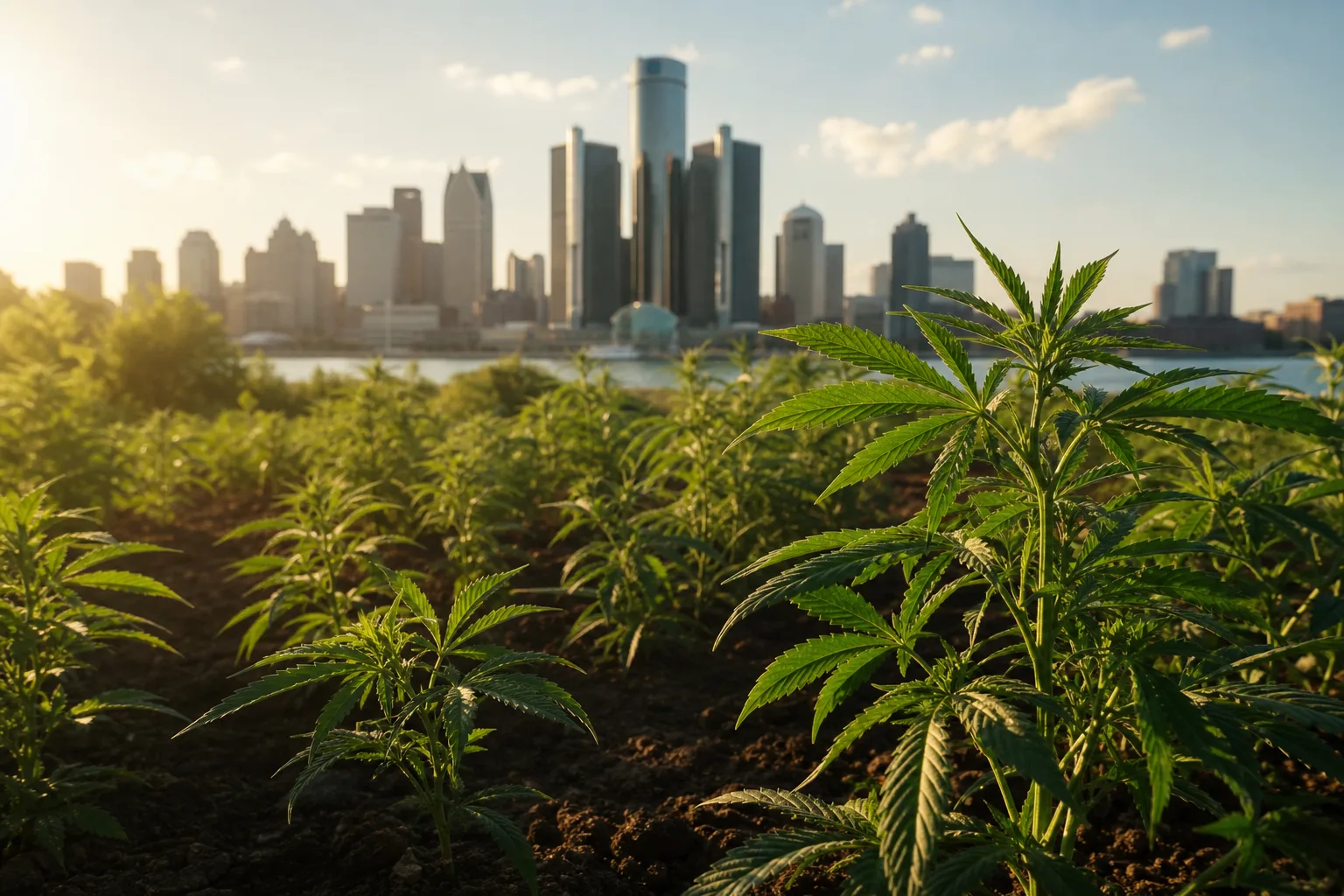
When a result looks promising, ask two questions: Is this a Michigan-licensed retailer? and Is this the brand I actually want, or just a store that might carry it? For Detroit-focused farming context, growing cannabis in Detroit’s urban revival explains how local cultivation fits into the city’s story.
How Do I Find a Real Organic Cannabis Brand in Detroit? #
Look for how the flower was grown — sun, soil, and third-party seals — then buy it from a Michigan-licensed retailer. “Organic” on a storefront sign is marketing. Cleaner cannabis is usually a brand and farm claim you verify on the jar, the lab label, and the grower’s story.
Practical checklist for Detroit shoppers:
- Start with a licensed shop. Use the CRA’s Verify a License tool (or Detroit’s Office of Cannabis Affairs resources) before you visit.
- Ask which brands are sun-grown or living-soil. Budtenders can point to specific SKUs — see what good dispensary service looks like.
- Read the package, not just the menu emoji. Look for clear grow method language and any named certification.
- Treat “organic” carefully. Cannabis does not use the same everyday USDA organic grocery path as tomatoes; third-party cannabis programs fill that gap.
- Know Sun+Earth Certified. Per Sun+Earth, the seal is for sun-grown, soil-based regenerative standards verified with farm review — it attaches to the farm or product, not the whole dispensary building. Their explainer on what it means to be Sun+Earth Certified is a solid plain-English overview.
- Support operators you can actually identify. For local ownership context, see Black-owned cannabis businesses in Detroit.
At Divine Toke, we talk about sun-grown, living-soil flower because that’s the farming lane we care about. We won’t invent strain awards or secret farm addresses here — if a claim isn’t on the package or a public page, treat it as noise.
Signals That Matter More Than a Store Name #
Grow method, inputs, and lab transparency beat a catchy dispensary name every time. Here’s a simple scorecard you can run in your head while you shop.
| Signal | Stronger | Weaker |
|---|---|---|
| Light | Sun-grown / outdoor / greenhouse with real sun story | “Indoor craft” with no other detail when you asked for organic |
| Medium | Living soil, regenerative practices named | “Hydro” + mystery nutrients when you asked for organic |
| Inputs | No synthetic pesticides claimed + third-party seal when available | “Natural vibes” with no farm named |
| Proof | Package cultivator name + COA available | Menu emoji only |
| License | Shop appears on CRA Verify a License | Cash-only stranger with a text menu |
You will not find a perfect scorecard on every shelf. Michigan’s market is big. The goal is progress: licensed shop + named brand + clear grow story. That already puts you ahead of anyone buying mystery flower off a rumor.
Urban farming history in the city also matters for people who care where their plant money goes. Growing cannabis in Detroit’s urban revival connects vacant-lot farming energy to the legal market without pretending every jar is grown on a Detroit block.
What “Organic Dispensary Detroit MI” Usually Means #
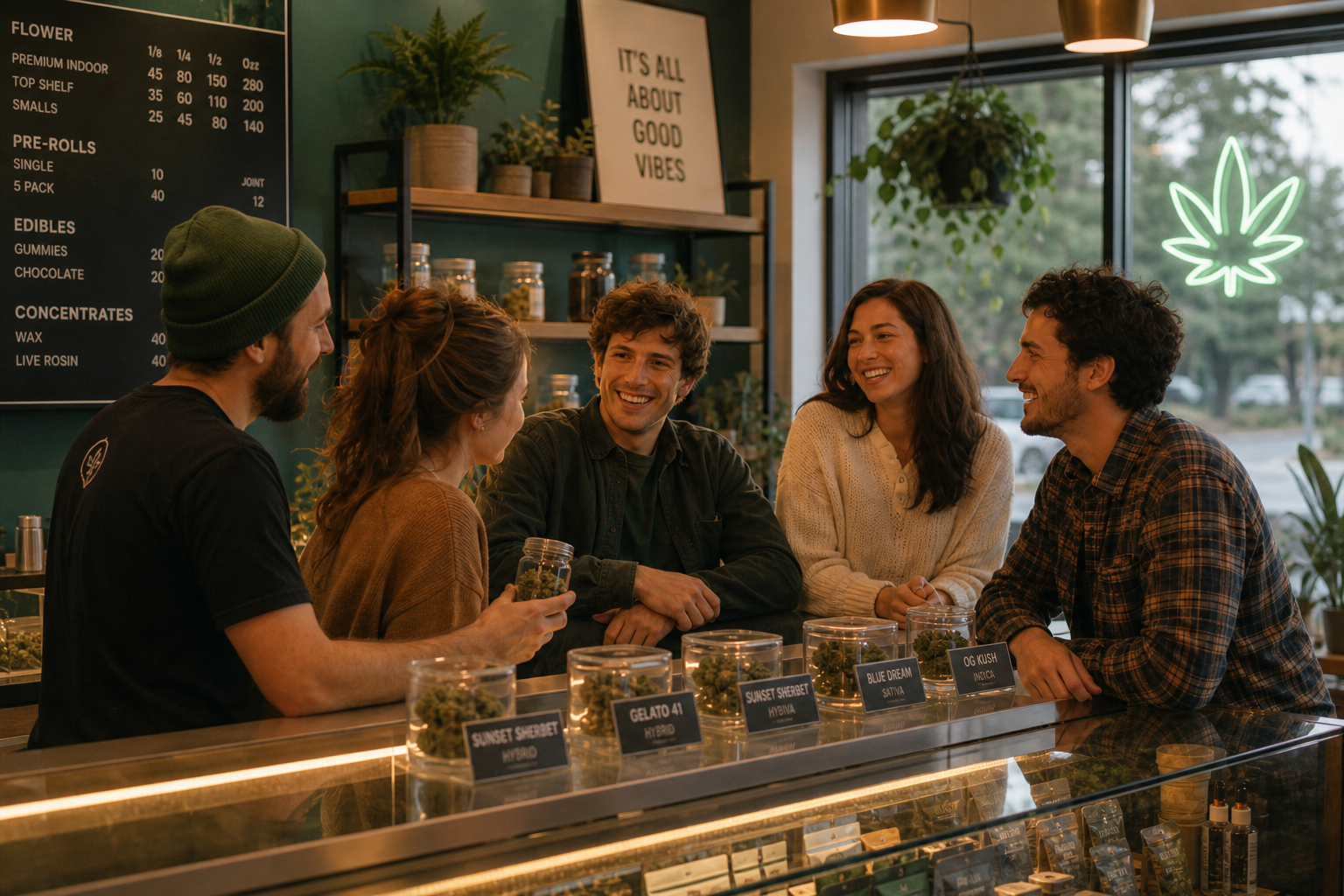
That search almost always means “a Detroit shop that sells organic-style or regeneratively grown flower” — not a store that personally farms every jar on the shelf. Most retailers carry dozens of brands. One shelf can hold indoor commodity flower next to sun-grown living-soil jars.
Use this decode key when you see the phrase:
| What you typed | What you probably want | What to do next |
|---|---|---|
| “organic dispensary detroit mi” | Licensed Detroit retailer with cleaner brands | Verify the shop on CRA, then ask for sun-grown / certified brands |
| “divine dispensary” | Divine Toke brand or similar-name shop | Confirm brand vs store; check CRA if it’s a retailer |
| “organic cannabis Detroit” | Farm method + local access | Compare grow stories; buy only from licensed channels |
If a menu says “organic” with no farm name, certification, or grow method, ask one follow-up: Who grew this, and how? A clear answer beats a vibe-heavy label every time. Deeper farming detail lives in Sun+Earth certified cannabis farming and the Detroit organic cannabis community roundup.
Is Recreational Cannabis Legal in Michigan for Adults 21+? #
Yes. In Michigan, adult-use (recreational) cannabis is legal for people 21 and older under the Michigan Regulation and Taxation of Marihuana Act. The Michigan CRA’s MRTMA page states that personal use and possession are legal for those 21 and over, and that personal use is defined around possession and home cultivation limits (covered in the next section).
A few ground rules that matter in real life:
- Age gate: Adult-use purchase and possession are for adults 21+.
- Two lanes: Michigan also runs a medical program (patients and caregivers) alongside adult-use retail. Same plant family, different rules and IDs.
- Licensed sales: Commercial retail is regulated by the Cannabis Regulatory Agency. Buy from licensed shops — not random social sellers.
- Public use is not a free-for-all. The MRTMA summary on the CRA site notes the act does not authorize public consumption, school possession, or driving under the influence.
- Local control exists. Municipalities can restrict commercial businesses even though personal adult-use is statewide under the act.
Adult-use legalization came from Proposal 1 / Initiated Law 1 of 2018. The full text is published by the Michigan Legislature as mcl-Initiated-Law-1-of-2018.pdf. Licensed adult-use retail sales began in late 2019 after the state built the licensing system the ballot measure required.
As of 2026, if you’re 21+ in Michigan and shopping at a CRA-licensed retailer, you are in the legal adult-use lane — as long as you stay inside possession, transport, and public-use rules.
Medical vs Adult-Use: Which Lane Are You In? #
If you are 21+ without a medical card, you shop adult-use retail. If you are a registered medical patient, you may use the medical program lane — and you should follow that program’s rules, not guess from a blog table. Michigan kept both systems after adult-use passed. The CRA site splits Adult-Use and Medical Marijuana Program for a reason.
Quick compare for everyday shopping:
| Question | Adult-use (21+) | Medical program |
|---|---|---|
| Who can buy? | Adults 21+ with valid ID | Registered patients (and caregivers under program rules) |
| Where to buy? | Licensed adult-use retailers | Licensed medical facilities / provisioning centers (as applicable) |
| Why people choose it | Convenience, no patient card | Possible patient-specific product access or program benefits |
| Where to confirm rules | CRA Adult-Use / MRTMA | CRA Medical Marijuana Program pages via michigan.gov/cra |
You do not need to become a lawyer to buy a gram. You do need to know which ID you are showing at the counter and which license type the shop holds when you verify it.
How Much Cannabis Can You Legally Possess in Michigan? #
For adults 21+, Michigan’s adult-use law generally allows 2.5 ounces on your person (with no more than 15 grams as concentrate), up to 10 ounces at home with secure storage for amounts over 2.5 ounces, and up to 12 plants for personal home cultivation. Those numbers come from the MRTMA text in Initiated Law 1 of 2018. The CRA MRTMA summary highlights the headline figures: 2.5 ounces in possession and up to 12 plants at home.
| Situation (adult-use, 21+) | Legal amount (MRTMA) | Plain-English note |
|---|---|---|
| On you / outside the home | 2.5 ounces or less of marihuana | Includes flower and other forms under that total |
| Concentrate inside that limit | Not more than 15 grams as concentrate | Concentrate counts toward the 2.5 oz framework |
| At your residence | Up to 10 ounces, plus cannabis from plants grown on the premises | Amount over 2.5 oz must be stored securely at home |
| Home grow | Up to 12 plants for personal use | Cap is per premises under the act’s personal-use rules |
These are personal adult-use limits, not a green light to sell to neighbors. Selling without the right commercial license is a different legal world.
Medical patients follow medical program rules that can differ from adult-use retail shopping. If you hold a medical card, confirm current patient limits with the CRA’s medical program materials rather than assuming the adult-use table above is your only rulebook. Start at the CRA homepage and open the Medical Marijuana Program section.
What “2.5 Ounces” Looks Like in Real Life #
2.5 ounces is a legal ceiling for what you carry, not a shopping challenge. Many people buy far less per visit — a gram, an eighth, or a couple of pre-rolls — and stay nowhere near the limit.
Rough consumer translation (approximate; products vary):
- 1 gram ≈ a small single session for many flower users
- 3.5 grams (an eighth) ≈ a common small jar size
- 28 grams ≈ 1 ounce ≈ a larger personal stock-up
- 2.5 ounces ≈ 70 grams ≈ the adult-use on-person cap under MRTMA
Concentrates are denser by nature, which is why the act carves out a 15-gram concentrate sub-limit inside the broader possession framework in Initiated Law 1 of 2018. If your cart is all vape carts and wax, do the concentrate math — don’t only count flower jars.
When in doubt, buy less, go home, and restock. Michigan’s adult-use market is built for repeat legal purchases at licensed shops, not for stuffing a backpack to the statutory max.
Home Grow and Secure Storage Rules #
Yes — Michigan adults 21+ may cultivate up to 12 plants at home for personal use, and may keep more flower at the residence than they can carry in public, if the extra amount is stored securely. The statute’s residence clause pairs the 10-ounce home possession figure with the 12-plant cultivation cap; see Initiated Law 1 of 2018.
Practical tips Detroiters ask about:
- Plants stay personal. Home grow under adult-use rules is for personal use, not a backyard storefront.
- Secure storage matters. If you keep more than 2.5 ounces at home, lock it up — kids, guests, and theft risk are real.
- Landlord and HOA rules still apply. State personal-use permission does not erase every lease or condo bylaw.
- Extraction limits exist. The CRA MRTMA overview notes the act does not authorize butane extraction in residential property.
If your real question is “what does it cost to open a shop that sells this legally,” that’s a business licensing topic — we cover it lightly below and in depth in Michigan cannabis licensing: the real cost.
How to Verify a Licensed Dispensary in Michigan #
Use the Michigan CRA’s official Verify a License tools — don’t trust a Facebook ad or a map pin alone. The CRA’s Verify a License page links separate searches for adult-use establishments, medical marijuana facilities, tribal marijuana businesses, and hemp processor-handlers.
Step-by-step for a Detroit shop visit:
- Open michigan.gov/cra and choose Verify a License, or go straight to Verify a License.
- Pick the right lane — usually Adult-Use Establishment for recreational retail.
- Search the business name. Leave fields blank only if you intend to download a full results set (the CRA page explains that download flow).
- Confirm the license is current and matches the storefront you plan to visit.
- Optional: check Detroit’s Office of Cannabis Affairs for city-level cannabis resources and retailer context.
- If something feels off, walk away. Licensed shops expect ID checks for adults 21+.
Why this matters for “divine dispensary” searches: a look-alike name is not a license. Verifying takes two minutes and beats driving across town to a dead listing or an unlicensed seller.
The CRA also posts disciplinary actions and FAQs from the same agency hub. If you’re comparing operators in the city — including equity-focused businesses — pair license checks with community reporting like Black-owned cannabis businesses in Detroit.
What a Clean Verification Looks Like #
A clean result matches the legal business name, license type, and active status to the door you plan to walk through. If the Instagram handle is cute but the CRA record is empty, believe the CRA.
Checklist while you search:
- Correct module: Adult-use retail vs medical facility — don’t verify the wrong license class.
- Name match: Doing-business-as names can differ slightly from the legal entity; when unsure, call the shop and ask for the licensed entity name.
- Address sanity: Confirm you’re not looking at a different city with a similar brand.
- Status: Current / active beats “we used to be licensed.”
- Complaints / discipline (optional): The CRA publishes disciplinary materials from the agency site when you want a deeper look.
None of this requires you to memorize Michigan Administrative Code. It requires one official search before you trust a menu screenshot. The Accela-powered adult-use search linked from the CRA verify page is the same ecosystem regulators use to publish establishment records — start from Verify a License rather than a random third-party directory as your only source.
What to Ask a Budtender When You Want Clean Flower #
Ask short, specific questions about grow method, brand, and lab results — a good budtender will answer without the sales fog. You’re not being difficult. You’re shopping for something you put in your body.
Try these:
- “Which brands on the menu are sun-grown or living soil?” Forces a brand-level answer, not a vibe.
- “Do you have anything Sun+Earth Certified or made with certified flower?” Named programs beat vague “organic” stickers. Background: Sun+Earth.
- “Can I see the package label / COA for this jar?” Michigan regulated products should have clear labeling; ask before you commit.
- “Is this indoor, greenhouse, or outdoor?” Light source changes how flower smells and feels for a lot of people.
- “Who actually grew this?” If the answer is only the dispensary’s house nickname with no farm story, dig once more.
For more on reading the counter experience — pacing, pressure, and what respectful service looks like — read Meet your budtender: good dispensary service.
| Red flag | Better signal |
|---|---|
| “Everything here is organic” with no brand names | Specific farm brands + grow method |
| Refuses to show label info | Hands you the jar and walks through cannabinoids |
| Pushes the highest-THC item only | Asks what effect or wellness goal you want |
| Can’t explain where a product came from | Points to cultivator name on the package |
Detroit shops vary. Your job is not to memorize every license number — it’s to buy from licensed retailers and choose brands that can explain their dirt, sun, and inputs.
Cost of Opening a Dispensary vs Buying Product #
Buying a jar at a licensed shop is a consumer purchase. Opening a dispensary is a multi-license business build with state fees, local approvals, build-out, and compliance costs that run far beyond a retail menu price. If you searched something like “michigan dispensary license cost” while chasing organic flower, you may have mixed two different questions.
Keep them separate:
| Goal | What you’re doing | Where to go next |
|---|---|---|
| Find clean flower in Detroit | Shop as a consumer (21+) at CRA-licensed retailers | This article + budtender questions above |
| Confirm a shop is legal | Verify the retailer’s license | CRA Verify a License |
| Understand what it costs to open a licensed shop | Business / licensing research | Michigan cannabis licensing: the real cost |
We are not reprinting the full fee stack here. License applications, municipal permits, security, and metered tracking are their own deep dive — and that post already covers it. For consumers, the takeaway is simpler: you do not need a dispensary license to buy legal cannabis in Michigan. You need a valid ID showing you’re 21+ (or a medical pathway if that’s your lane) and a licensed retailer.
Common Mistakes When Searching for Organic Cannabis in Detroit #
The biggest mistakes are trusting a name match, confusing a shop with a farm, and skipping the CRA license check. Fix those three and most of the “divine dispensary” confusion disappears.
Mistake 1: Assuming the Brand Owns the Storefront #
A brand name in your search bar does not mean that brand runs a retail counter under the same words. Divine Toke is a farm/brand example of that pattern. Many cultivators sell through multiple independent retailers. If a map pin doesn’t match the brand story you know, you’re probably looking at a different business — or an outdated listing.
Mistake 2: Treating “Organic Dispensary” as a Farm Certificate #
Store marketing is not the same as farm certification. A retailer can hang an “organic” vibe on the window while stocking mostly conventional indoor flower. Ask which brands are sun-grown or third-party certified. Use Sun+Earth as one named standard when a seal is on the package. For city context, the Detroit organic cannabis community post keeps the focus on growers and neighbors, not slogans.
Mistake 3: Skipping License Verification #
If the shop isn’t in the CRA system, price and “organic” claims don’t matter. Start at Verify a License. Two minutes beats a wasted trip. Detroit’s Office of Cannabis Affairs is a useful city companion resource when you’re sorting local operators.
Mistake 4: Mixing Consumer Shopping With License-Cost Research #
“How much does a dispensary license cost?” is a business question. “Where do I buy clean flower?” is a consumer question. Both are valid — they’re just different articles. Soft answer: consumers buy product; operators pay licensing and build-out. Deep answer: Michigan cannabis licensing: the real cost.
Mistake 5: Ignoring Possession Limits After a Good Haul #
A great shop visit still ends with state possession rules. Adults 21+ stay inside the 2.5-ounce on-person framework (with the 15-gram concentrate cap), the 10-ounce home storage rules, and the 12-plant home-grow cap in Initiated Law 1 of 2018. Buying legal product does not erase how much you can carry out the door.
| Mistake | Fast fix |
|---|---|
| Brand = store assumption | Ask “Is this a retailer or a cultivator brand?” |
| Organic window sticker | Ask for grow method + brand name on the jar |
| Unverified shop | CRA Verify a License |
| License-cost rabbit hole | Read the licensing cost guide separately |
| Over-purchase | Check MRTMA limits before the cart hits 2.5 oz |
Quick Answers for Broad “Michigan” Cannabis Searches #
If you landed here from a vague search like “michigan” plus cannabis words, start with legality and possession — then narrow to Detroit organic shopping. Broad queries are noisy. AI Overviews and People Also Ask boxes often surface the same two questions we answered above in depth.
| Broad question | Short answer | Where it’s covered |
|---|---|---|
| Is recreational cannabis legal in Michigan for adults 21+? | Yes, under MRTMA / adult-use rules | Legality section + FAQ |
| How much cannabis can you legally possess in Michigan? | 2.5 oz on person (15 g concentrate max), 10 oz at home with secure storage, 12 plants | Possession table + statute PDF |
| Where do I buy legally? | CRA-licensed retailers | Verify a License |
| How do I find organic options in Detroit? | Licensed shop + brand grow method | Organic brand section |
Keep the CRA homepage bookmarked. State pages beat random forums when the question is “is this legal?” or “how much can I hold?”
That same CRA hub is also where you’ll find adult-use resources, medical program links, social equity information, and the verify tools linked throughout this article. When a friend texts you a screenshot of a “too good” menu, send them the verify page first. It’s the cheapest habit in Michigan cannabis — and it works whether you’re shopping for Divine Toke or any other brand.
Official pages update when rules or tools change, so prefer the live CRA links over screenshots saved in group chats.
A Simple Detroit Shopping Script #
Use this five-line script at any licensed counter when you want cleaner flower without the awkward dance.
- “I’m looking for sun-grown or living-soil flower — what brands do you carry?”
- “Is any of it Sun+Earth Certified or labeled with a similar third-party seal?”
- “Can I see the package label for that one?”
- “Who grew it?”
- “I’m staying under Michigan’s personal possession limits — thanks.”
That script works whether you arrived via “divine dispensary,” “organic dispensary detroit mi,” or a friend’s text. It keeps the focus on grow method and legality — not on whoever won the SEO keyword lottery that week.
If the budtender lights up and walks you through options, you’re in good hands. If they only push the loudest THC number, reset the conversation or try another licensed shop. More on pacing that conversation: Meet your budtender.
FAQ #
Is Divine Toke the same as Divine Dispensary? #
No. Divine Toke is a farm and brand, not a retail shop called “Divine Dispensary.” People often add the word “dispensary” when they mean a product or grower they want to find in Detroit. Separate the brand name from the store name, then buy through a CRA-licensed retailer. If a map result shows a “Divine” or “Devine” shop in another state, treat it as unrelated until a Michigan license record says otherwise.
How do I find a real organic cannabis brand in Detroit? #
Verify a licensed retailer first, then ask for sun-grown, living-soil, or third-party-certified brands by name. Cannabis doesn’t use the same everyday USDA grocery “organic” path, so look for clear grow methods and seals like those described by Sun+Earth. Our Detroit organic cannabis community guide expands the local angle. Bring the shopping script from this article — five questions beat scrolling menus for an hour.
Is recreational cannabis legal in Michigan for adults 21+? #
Yes. Adult-use cannabis is legal for adults 21 and older under Michigan’s MRTMA. The CRA MRTMA page states personal use and possession are legal for those 21+, with commercial sales handled through the licensed system. Public consumption and driving under the influence are still restricted.
How much cannabis can you legally possess in Michigan? #
Adults 21+ may generally possess 2.5 ounces (with no more than 15 grams as concentrate), keep up to 10 ounces at home with secure storage for amounts over 2.5 ounces, and grow up to 12 plants for personal use. Those limits are in Initiated Law 1 of 2018; the CRA also summarizes the 2.5-ounce and 12-plant figures.
What’s the difference between a cannabis brand and a dispensary? #
The brand grows or makes the product; the dispensary is the licensed store that sells many brands. Searching “divine dispensary” mixes those jobs. Check the jar for the cultivator/brand, and check the CRA for the shop’s retailer license via Verify a License.
How do I verify a Michigan dispensary is licensed? #
Use the official CRA Verify a License tools on michigan.gov/cra/verify-a-license-1. Search adult-use establishments for recreational retail, confirm the name matches the storefront, and skip any seller that can’t show up as licensed. Detroit’s Office of Cannabis Affairs also publishes city cannabis resources.
Can adults grow cannabis at home in Michigan? #
Yes. Under adult-use rules, adults 21+ may cultivate up to 12 plants at a residence for personal use. The CRA MRTMA summary and the statute PDF both speak to the plant cap. Leases, HOAs, and secure-storage rules still matter.
What does Sun+Earth Certified mean for cannabis? #
It is a third-party seal for sun-grown, soil-based regenerative cannabis standards — not a dispensary storefront badge. Sun+Earth describes farm-level review for practices that go beyond vague “natural” marketing. See also what Sun+Earth Certified means and our Sun+Earth farming explainer.
Does an “organic dispensary” grow its own organic weed? #
Usually no — most shops sell many brands, and “organic” claims belong to specific farms or product lines. Ask which cultivator grew the jar and what method they used. A store can stock cleaner brands without being a farm itself.
How much does a Michigan dispensary license cost? #
Far more than a retail menu price — state fees are only one slice of build-out, local approvals, and compliance. For the business-side breakdown, read Michigan cannabis licensing: the real cost. Consumers shopping for flower do not need that license; they need a licensed retailer and a valid 21+ ID.
Finding Your Way to Clean Cannabis in Detroit #
If “Divine Dispensary” brought you here, you’re in the right place to untangle the name — and to shop smarter for organic-leaning flower in Michigan. Divine Toke is the farm/brand side of that search. Licensed retailers are where you complete the purchase. The CRA sits in the middle as the license truth source.
Recap in one breath:
- Divine Toke ≠ “Divine Dispensary.” Brand vs shop.
- Adult-use is legal for 21+ under MRTMA — confirm on the CRA MRTMA page.
- Possession has numbers: 2.5 oz on person (15 g concentrate cap), up to 10 oz at home with secure storage, up to 12 plants — see Initiated Law 1 of 2018.
- Organic is a grow story. Verify the shop, then ask for the brand.
- License cost is a different question. Soft-link only: Michigan cannabis licensing: the real cost.
If you’re curious to try sun-grown, living-soil flower from Divine Toke, look for our products at licensed Michigan retailers and ask your budtender by brand name. Pair that with the community and farming reads already linked above:
- Detroit’s organic cannabis community
- Urban growing in Detroit
- Sun+Earth certified farming
- Good budtender service
- Black-owned cannabis businesses in Detroit
Search engines will keep mixing names. You don’t have to. Name the brand you want, verify the retailer on the CRA site, and ask how the flower was grown. That habit works whether you live in Detroit proper, the east side, or you’re visiting Michigan and trying not to get lost in the menus.
This article is for educational purposes only and is not legal or medical advice. Cannabis laws and license statuses can change — confirm details on official Michigan CRA pages before you buy, grow, or travel with cannabis. Always consult a qualified professional for personal legal or health questions.
Grown in Detroit. Shipped to your door.
Small-batch, sun-grown cannabis cultivated in living soil. Mail-order shipping to all 50 states.