Black-Owned Cannabis Businesses in Detroit: A Growing Movement

Jamie
Head Cultivator
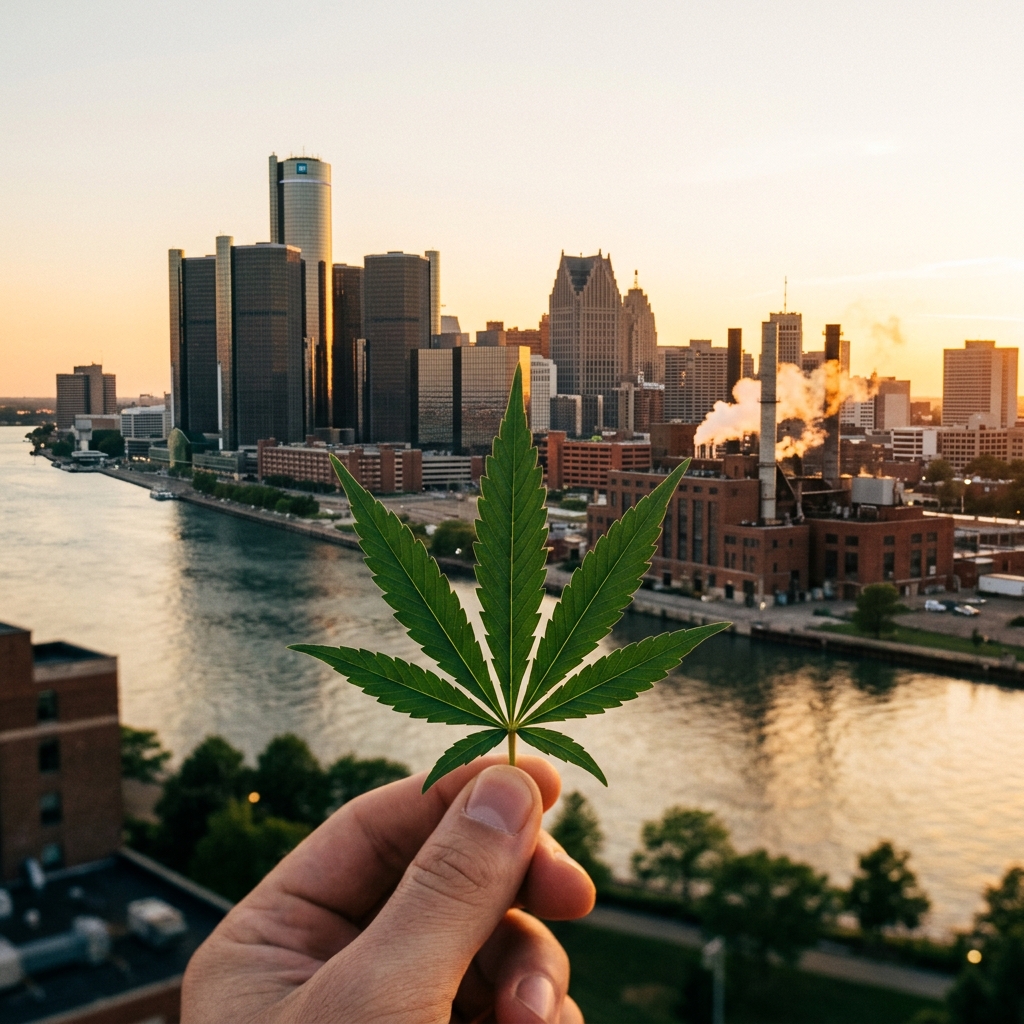
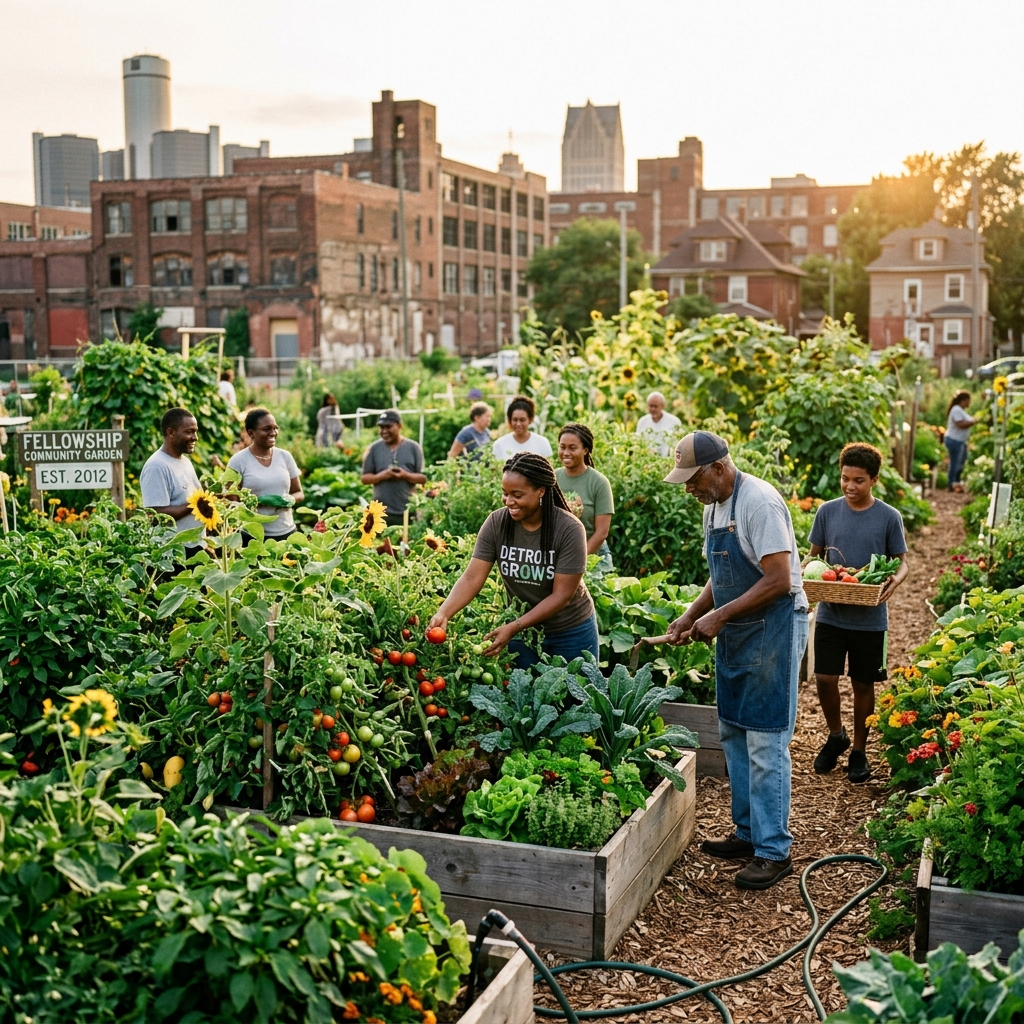
Detroit's cannabis story is not only a policy spreadsheet. It is storefronts opening, workers getting hired, and families trying to turn legalization into something that actually lands in the neighborhoods hit hardest by the War on Drugs.
Black-owned cannabis businesses in Detroit are growing — city Round 2 awards put 13 majority African American–owned operators on the license list — but capital, zoning, banking, and taxes still make survival harder than getting approved. This guide covers what is moving, what still blocks equity, and how everyday consumers can help without guessing or greenwashing.
Quick Facts (As of City Round 2 + CRA Program Data) #
| Fact | Number / detail | Source |
|---|---|---|
| Round 2 approved applicants | 37 | City of Detroit OMVE |
| Majority African American–owned (Round 2) | 13 | Same |
| Detroit-resident majority owners (Round 2) | 21 | Same |
| Majority women-owned (Round 2) | 5 | Same |
| Round 1 African American newly licensed owners (cited in Round 2 release) | 16 | Same |
| 2024 CRA Social Equity Grant pool | $1M shared by 62 licensees | Cannabis Business Times / CRA |
Those are public program numbers. They are not a claim that every awardee is open, profitable, or majority-controlled in practice. Keep that gap in mind as you read.
Why Black-Owned Cannabis Businesses Matter in Detroit #
Ownership is the difference between a paycheck and a stake. Jobs help. Ownership builds rent money, hiring power, and neighborhood wealth that stays when the shift ends.
For decades, marijuana enforcement hit Black Detroiters harder than the crime stats alone can explain. Arrests, probation holds, and lost work followed people long after a bag of flower left the picture. Legalization was sold as repair. Repair only works if the people who paid the cost can own the upside — stores, farms, brands, and the cash flow that comes with them.
That is why this conversation sits next to our deeper look at who actually benefits from Detroit cannabis equity and our Juneteenth cannabis justice history. The point is not guilt shopping. The point is whether legal cannabis becomes another extractive industry — or a local economy people can see on their own block.
Here is what ownership changes in practice:
- Hiring power — owners decide who gets trained and who gets a second chance
- Product choices — local shops can stock Michigan growers instead of only out-of-state brands
- Community trust — customers who remember prohibition stigma need faces they recognize
- Wealth that sticks — profit stays in Detroit zip codes instead of leaving on a quarterly call
Divine Toke is a sun-grown organic cannabis farm rooted in Detroit. We are not claiming a state social equity license or a city equity award in this piece. We are writing as neighbors who care whether Black-owned shops get a fair shot to open, stay open, and grow.
Jobs Help. Ownership Changes the Block. #
A budtender job can pay rent. An ownership stake can fund the next hire, the next location, or a cousin's trade school bill. That is the practical difference equity programs keep promising.
When prohibition was the law, Black Detroiters carried a heavier share of arrests and collateral damage — lost jobs, probation traps, and stigma that still shows up at family cookouts. Our Juneteenth cannabis justice piece tracks that history. Legal sales without legal ownership leave the same neighborhoods buying product while someone else books the profit.
Detroit's adult-use ordinance fights were never only about zoning maps. They were about whether longtime residents would get first crack at limited retail seats. Politico Magazine covered that fight as the city tried to turn legalization into Black prosperity instead of another wave of outside capital. Years later, the license board looks better than a blank market. The capital gap looks stubborn.
So when we say "growing movement," we mean:
- More majority African American–owned names on public award lists
- More visible Black-owned storefronts in Detroit's adult-use map than in the first legal years
- Stronger public reporting on what still fails — from Outlier Media to local radio tax coverage
Growth is not the same as victory. It is momentum worth protecting.
Detroit's cannabis culture is bigger than any one shop. Legacy caregivers, new adult-use retailers, and sun-grown farms all share the same city. What makes this moment different is that Black ownership is finally visible on official license lists — not only in oral history from the underground years. Protecting that visibility means spending like it matters and refusing fake ownership theater when the documents do not match the marketing.
How Detroit's Equity Licensing Opens Doors #
Detroit built a local equity layer on top of Michigan's state rules so longtime residents — not only out-of-town capital — could win adult-use retail, microbusiness, and consumption lounge licenses. The City's Office of Marijuana Ventures and Entrepreneurship (OMVE) runs limited license rounds with equity and non-equity tracks.
Early city rules leaned hard on "Legacy Detroiter" residency — long Detroit history, often tied to low income or past cannabis convictions. After legal fights over the first ordinance, the city rewrote toward an "equity" frame that still prioritizes residents from communities hit hardest by prohibition, often through partnerships with established operators. Outlier Media has documented how those partnerships can look strong on paper and weak in real profit splits. That tension matters: a license with someone else's money is not the same as control.
Round 1 put Detroit residents into the first adult-use wave. In the Round 2 announcement, City Council President Pro Tem James Tate noted that Round 1 saw a little more than 50% of adult-use limited licenses go to Detroit-resident majority owners, and that 16 of those newly licensed Round One owners were African American — per the City's own Round 2 press release.
Round 2 Numbers at a Glance #
Round 2 is the clearest public snapshot of Black ownership progress in Detroit's adult-use pipeline. In November 2023, OMVE approved 37 applicants. Per the City of Detroit:
| Round 2 measure | Count |
|---|---|
| Total approved applicants | 37 |
| Majority African American–owned | 13 |
| Majority women-owned | 5 |
| Majority owners who are Detroit residents | 21 |
| Equity retailer licenses approved | 15 |
| Non-equity retailer licenses approved | 15 |
Those numbers do not mean every approved applicant is open and profitable today. A provisional certificate is a starting gate, not a finished store. Build-out, inventory, security, and payroll still cost real money. But Round 2 is not empty PR either — it is a documented expansion of majority African American ownership on Detroit's official license list.
What Round 2 License Types Mean #
Retailer, microbusiness, and consumption lounge licenses are different businesses with different capital needs. The City's Round 2 release breaks the pipeline into those three tracks (City of Detroit OMVE):
| License type | What it allows | Why equity applicants chase it |
|---|---|---|
| Retailer | Sell cannabis products from licensed growers and processors to adults | Fastest path to a storefront customers recognize |
| Microbusiness | Grow and process up to a plant cap and sell direct to consumers | Vertical control without needing three separate big licenses |
| Designated consumption lounge | Host adults to consume on-site | Hospitality play — harder zoning, different build-out costs |
Round 2 retailer awards split 15 equity and 15 non-equity retailer licenses. Microbusiness and lounge awards were smaller and included provisional certificates. That mix matters for Black ownership: retail puts a sign on the street, but microbusiness ownership is how some operators try to escape wholesale dependence.
Sixty-five total applications came in for Round 2. Demand was real. Capacity was limited. That scarcity is why every equity seat on the board carries weight — and why paper partnerships get so much scrutiny from community reporters.
How Michigan's CRA Social Equity Program Helps #
Michigan's Cannabis Regulatory Agency (CRA) runs a statewide social equity track that cuts fees and, in some years, puts grant cash in equity licensees' hands. It does not replace Detroit's city rules. It stacks with them. State fee breaks help you apply. City limited licenses decide who can sell adult-use flower inside Detroit's boundaries.
According to the CRA Social Equity Program, applicants can qualify based on living in a disproportionately impacted community, holding a past marijuana conviction, or serving as a registered primary caregiver under the medical law for a set window. The agency also runs a voluntary Social Equity All-Star Program and a Social Equity Grant Program for licensed operators who meet ownership and participation rules.
Fee Reductions and Grants #
Fee cuts lower the ticket price to enter. Grants help operators who already cleared licensing. Both matter because Black entrepreneurs are more likely to be blocked by cash — not by lack of hustle.
Typical CRA social equity fee reductions (confirm current tables on the CRA social equity page before you apply):
| Qualifying path | Common fee reduction |
|---|---|
| Lived in a disproportionately impacted community (set year rules) | About 25% |
| Marijuana-related misdemeanor conviction | About 25% |
| Marijuana-related felony conviction | About 40% |
| Registered primary caregiver (set year window under MMMA) | About 10% |
Reductions can stack under CRA rules up to a high combined discount for applicants who meet multiple paths — industry reporting has cited maximums in the 60–75% range depending on the active bulletin. Always read the live CRA table. Rules change.
On grants: in 2024, the CRA announced that 62 social equity licensees would share $1 million from the Social Equity Grant Program — about $16,129 each — according to Cannabis Business Times coverage of the CRA announcement. That is real money for payroll or build-out. It is not enough to buy a green-zoned building on a major corridor alone.
For statewide ownership demographics, check the CRA's adult-use licensing reports. Our earlier equity deep-dive walks through why statewide Black ownership interests have lagged far behind both state population share and Detroit's Black majority — see Detroit cannabis equity: who benefits.
Who Qualifies — and What the Program Does Not Do #
Social equity status helps with fees, coaching pathways, and some grant rounds. It does not guarantee a Detroit storefront or a profitable year.
Think of the stack like this:
- State CRA social equity — fee reductions, All-Star participation, grant eligibility once licensed (CRA Social Equity Program)
- City of Detroit limited licenses — who may operate adult-use retail, microbusiness, or lounges inside city rules (OMVE Round 2)
- Private capital and property — the part government never fully funds
That third layer is where many Black applicants still lose. Fee discounts of 25–40% look huge on a spreadsheet. They shrink when the real bill is a build-out that runs past a million dollars before the first legal gram leaves the vault.
Women face a related climb. Statewide and national data show women ownership rising from tiny shares early in legalization toward roughly the low-20% range in recent industry surveys — we unpack that in women in weed: Michigan cannabis. Black women often sit at the intersection of both gaps: race and gender. City Round 2 counted 5 majority women-owned awardees alongside the 13 majority African American–owned awardees. Those groups overlap in some businesses and do not in others. Both numbers belong in the same conversation.
What Still Blocks Black-Owned Cannabis Shops #
A license is not a business. The hardest stretch for many Black-owned cannabis shops in Detroit is everything after approval: finding a legal location, raising cash without banks, stocking shelves, and competing with companies that already grow, process, and retail under one roof.
Outlier Media's reporting on Detroit's Black-owned dispensaries puts the pattern plainly. Great intention in the ordinance. Uneven translation into lasting Black ownership. Capital gaps. Real estate gaps. Partnerships that read 51/49 on the application and look different when profit splits hit the bank account.
Capital, Real Estate, and Green Zones #
Money and square footage decide who opens — and who stays open. Cannabis stores cannot plant themselves anywhere a café could. Detroit dispensaries are steered into "green zones" — buffer distances from schools, churches, parks, and other cannabis facilities. Outlier Media notes common buffers of about 1,000 feet from schools, churches, and parks and 500 feet from other cannabis facilities. Those rules shrink the map. Families who never held commercial property in a green zone start behind.
What that looks like week to week:
- Startup cash — build-out, vaults, cameras, POS, and first inventory often run into the high six or seven figures before the first legal sale
- Property control — owning or long-leasing a green-zoned site beats renting from someone who can raise your rate after you spend on renovations
- Vertical integration gap — multi-license companies that grow, process, and retail can feed their own shelves; many small shops buy wholesale and live on thinner margins
- Paper partnerships — equity applicants may need a funded partner; without clear operating control, "majority ownership" can hollow out
Politico Magazine's earlier reporting on Detroit's Black marijuana entrepreneurs tracked the same capital and opportunity gap as adult-use rolled into the city. The details shift year to year. The pattern has not.
Taxes, Banking, and Cash-Only Reality #
Federal tax rules and banking exclusion hit small equity shops harder than big balance sheets. For years, IRS Section 280E blocked normal business deductions for cannabis companies because the plant stayed Schedule I at the federal level. That raised effective tax pressure on operators who could least afford accountants and cash reserves. We break that code down in 280E tax, explained. Federal medical Schedule III changes in 2026 shift part of that picture for medical pathways — they do not magically erase every equity barrier overnight.
Banking is the other quiet tax. Without full federal banking reform, many shops still run heavy cash operations, pay for armored transport, and struggle to get normal loans. See our guide on why cannabis is still cash-only.
Michigan's own tax stack adds pressure. Coverage of the state's wholesale cannabis tax fight — including social equity lawsuit framing reported by WDET — shows how new wholesale costs land on thin-margin retailers. Our breakdown of the 24% wholesale cannabis tax explains why small Detroit shops feel that hit first.
Why Multi-State Money Moves Faster #
Large multi-state operators (MSOs) and well-funded regional chains can wait out a slow quarter. Many Black-owned Detroit shops cannot. That is not a morality play. It is a balance-sheet fact.
Vertical integration — holding grow, process, and retail licenses — lets a company set its own wholesale price to itself. A single-location retailer buys from the same wholesalers at market rates, then competes on price against the company that grew the flower. Outlier Media describes how that structural gap shows up as thin inventory and thinner discounts at mom-and-pop shops.
Add municipal license fees every time you expand to a new city, and growth becomes a tax on ambition. Black entrepreneurs who finally clear Detroit's limited-license gate still face a second hill if they want a second location. That is how an "open market" can still feel closed.
Bridge Detroit and other local outlets have framed recreational cannabis as a possible path to Black prosperity in Detroit for years — see Bridge Detroit's reporting on recreational marijuana and Black prosperity. The promise only holds if ownership survives the first three years, not just the ribbon cutting.
How Consumers Can Support Black-Owned Cannabis in Detroit #
The most direct support is legal spending at Black-owned, Michigan-licensed shops — not vibes on social media. Outlier Media's reporting quotes community advocates urging people to patronize smaller Black-owned dispensaries even when chain discounts look louder, because those shops are trying to open a path for others who look like them (Outlier Media).
Practical moves that actually move money:
- Ask who owns the shop — a polite question at the counter beats assuming from marketing
- Check the license wall — Michigan adult-use retailers must display licensing; if the story feels foggy, dig before you brag online
- Buy the house flower and Michigan brands — inventory turns keep payroll going
- Shop on ordinary Tuesdays — equity shops need weekday sales, not only holiday posts
- Tip your budtender — many frontline workers in Detroit shops are local; tips stay local
- Skip the illicit market — unlicensed sales undercut the legal equity shops fighting for the same customers
- Share the address, not just the hashtag — word of mouth still fills parking lots
- Follow policy fights — banking access, fair tax design, and honest equity data matter as much as one purchase
Women-led shops are part of this same movement. For the statewide picture of female ownership and leadership, see women in weed in Michigan cannabis.
| Support move | Why it helps |
|---|---|
| Buy from Black-owned licensed retailers | Revenue covers rent, payroll, and restock |
| Choose Michigan-grown products | Strengthens local supply chains equity shops can access |
| Avoid unlicensed sellers | Protects legal operators competing on thin margins |
| Track city and CRA equity data | Public pressure needs public numbers |
A Simple Monthly Support Habit #
You do not need to become a policy nerd to help. Pick one licensed Black-owned shop you trust after a real ownership check. Make it part of your monthly rotation the way you already rotate grocery stores.
Try this cadence:
- Week 1 — Buy flower or a cartridge there instead of the chain with the loudest deal
- Week 2 — Bring a friend who still shops unlicensed and show them the license wall
- Week 3 — Ask what Michigan-grown options they recommend this month
- Week 4 — Leave an honest review that mentions service and product quality — not just identity
If your budget is tight, smaller, steady purchases still beat one big holiday flex. Equity shops pay electric bills every month. So should the customer habit.
For the broader Detroit retail vibe — how shops feel on the street — see our Detroit dispensary culture piece. Pair that energy with ownership questions from this guide.
This is not charity. It is choosing where Detroit's cannabis dollars land.
How to Spot Real Ownership — Without Guessing Online #
Marketing language is cheap. Ownership documents are not. Before you call a shop "Black-owned" in a public post, do a little homework.
Useful checks:
- Ask the counter directly — many equity operators will tell you their story if you ask with respect
- Look for the state license display — Michigan adult-use retailers must keep licensing visible; foggy paperwork is a red flag
- Cross-check city award lists — Round 2 licensee names are public in the City of Detroit announcement
- Be careful with "partnered with" language — a Black face on the website is not the same as majority control
- Ignore vibe-only Instagram lists — unverified roundups spread errors fast
This blog will not invent named owner spotlights or unverifiable personal stories. Community reporters at outlets like Outlier Media, Metro Times, and Bridge Detroit do the interviews and the document pulls. Cite them. Support the shops you can verify. That is how a movement stays honest.
| Claim you hear | Better question |
|---|---|
| "We're equity" | Equity applicant, Legacy path, or majority Black-owned — which one? |
| "Community-owned" | Who holds more than 50% of the company? |
| "Detroit-based" | Detroit mailing address, or Detroit-resident majority owners? |
| "First of its kind" | First by which public list — city Round 1, Round 2, or medical era? |
Honesty protects the shops doing the work. Hype without receipts burns trust in the whole equity frame.
Progress Without Sugarcoating #
Detroit has moved more majority African American–owned cannabis licenses onto the official board than a blank-slate market would have produced — and Black ownership still faces structural headwinds that a press release cannot erase.
Hold both truths at once:
| Signal of progress | Signal of unfinished work |
|---|---|
| Round 2: 13 majority African American–owned awardees (City of Detroit) | Capital and green-zone real estate still filter who can open |
| Round 1 context: 16 African American newly licensed owners cited in the same city release | 51/49 paper partnerships can dilute real control (Outlier Media) |
| CRA fee cuts + 2024 grant cash for 62 social equity licensees (Cannabis Business Times / CRA) | Statewide ownership demographics still lag population share — see CRA licensing reports and our equity deep-dive |
| More Black-owned storefronts visible in Detroit's adult-use map than in the first legal years | Tax, banking, and MSO competition keep margins thin |
Community journalism should not invent hero narratives or pretend every equity license is a finished success story. It should track public numbers, cite reporters who do the door-knocking, and keep asking whether Detroiters who lived through prohibition can own the upside.
If you want the wider cultural frame — how Detroit cannabis moved from underground to main street — our Detroit organic cannabis community pillar sits next to this spoke.
What a Healthy Equity Market Would Look Like #
Licenses on a PDF are step one. A healthy equity market shows up in payrolls, restocked shelves, and second locations owned by the same Detroiters who got the first seat. Here is a plain scorecard consumers and reporters can watch without inventing drama.
Near-Term Signs (12–24 Months) #
- Open rates — how many Round 1 and Round 2 equity awardees actually open and stay open
- Inventory depth — whether Black-owned shops can keep flower, edibles, and concentrates in stock on a Tuesday
- Local hiring — budtenders, trimmers, and managers from Detroit zip codes
- Clean compliance — operators who stay off Formal Complaint lists protect the whole equity brand
Medium-Term Signs (2–5 Years) #
- Second locations funded without selling away majority control
- Michigan-grown supply deals that do not depend on a single MSO wholesaler
- Published demographic updates from the CRA licensing reports showing Black ownership interests rising, not flat
- Banking access that reduces armored-car overhead for small shops (cash-only reality)
Policy Levers That Still Matter #
| Lever | Why it matters for Black-owned shops |
|---|---|
| CRA fee reductions + grants | Lowers entry cost; grants help after licensing (CRA) |
| City limited-license design | Controls who gets Detroit retail seats (OMVE) |
| Wholesale and excise tax design | Thin margins break first at small equity retail (WDET) |
| Federal banking reform | Cuts cash risk and opens normal credit |
| Honest partnership rules | Stops 51/49 theater from replacing real ownership |
None of this requires inventing a hero founder story. It requires watching public data the way you watch a box score. Detroit already proved it can put majority African American–owned names on an award list. The next chapter is whether those names still own the keys five years later.
FAQ: Black-Owned Cannabis Businesses in Detroit #
Q: Are Black-owned cannabis businesses growing in Detroit? #
Yes — Detroit's adult-use rounds have expanded the number of majority African American–owned licensed operators, even while capital and zoning still slow openings. The City's Round 2 announcement listed 13 majority African American–owned awardees among 37 approvals. Growth on the license list is real. Survival after opening is the harder test.
Q: How many Detroit Round 2 licenses went to majority African American–owned businesses? #
Thirteen of the 37 Round 2 approved applicants were majority owned by African Americans, according to the City of Detroit's OMVE Round 2 press release. The same release counted 21 majority owners who are Detroit residents and 5 majority women-owned businesses.
Q: What is a Detroit equity or Legacy Detroiter cannabis applicant? #
A Legacy Detroiter / equity applicant is a city licensing path meant to prioritize longtime Detroit residents and communities hit hardest by marijuana enforcement. Early rules stressed long Detroit residency (often framed as 15 of the last 30 years, with shorter windows in some hardship or conviction cases). Later ordinance changes shifted language toward "equity" partnerships while keeping the goal of local ownership. City FAQs and OMVE materials are the live authority for current definitions.
Q: What fee reductions does Michigan CRA social equity offer? #
Michigan CRA social equity can cut application and licensing fees for people from disproportionately impacted communities, people with past marijuana convictions, and qualifying former primary caregivers. Common published reductions include about 25% for residency in a disproportionately impacted community, about 25% for a qualifying misdemeanor, about 40% for a qualifying felony, and about 10% for a qualifying caregiver history — see the CRA Social Equity Program. Confirm the live table before you budget.
Q: Why is capital still the biggest barrier for Black-owned dispensaries? #
Because a license does not pay for a green-zoned building, cameras, vaults, or first inventory — and traditional bank loans remain hard for cannabis. Outlier Media reports that lack of capital and real estate keep many Black-owned shops as thin-margin retail operations while vertically integrated companies control supply. Fee discounts help. They do not replace six- or seven-figure start-up cash.
Q: What are cannabis "green zones" in Detroit? #
Green zones are the limited areas where a cannabis facility can legally sit under buffer rules from schools, churches, parks, and other cannabis businesses. Reporting cited by Outlier Media describes common distances around 1,000 feet from schools, churches, and parks and 500 feet from other cannabis facilities. Fewer eligible parcels means higher prices and tougher odds for operators without property wealth.
Q: How can I support Black-owned cannabis businesses as a consumer? #
Spend at licensed Black-owned shops, buy Michigan product on ordinary weekdays, skip the illicit market, and ask ownership questions instead of assuming. Community advocates quoted by Outlier Media urge customers to patronize smaller Black-owned dispensaries even when big chains run louder discounts. Your receipt is the policy.
Q: Does federal Schedule III rescheduling fix cannabis equity? #
No. Medical Schedule III changes can ease some federal tax pressure for qualifying medical pathways, but they do not hand Black entrepreneurs capital, green-zone real estate, or fair banking. Equity is still a state and city fight about who owns licenses and who can afford to operate them. For the ownership gap frame, read Detroit cannabis equity: who benefits.
Q: How does Michigan's wholesale cannabis tax hit small equity shops? #
Wholesale taxes raise product costs for retailers who already buy inventory instead of growing it — and that squeeze hits thin-margin equity shops first. WDET coverage has tracked how tax policy intersects with social equity lawsuits and road-funding politics. Our 24% wholesale tax explainer covers the mechanics for consumers and operators.
Q: What is the CRA Social Equity Grant Program? #
It is a Michigan CRA grant track that puts cash in the hands of qualifying social equity licensees after they are licensed — not only fee discounts on the way in. In 2024, the CRA announced 62 social equity licensees would share $1 million, according to Cannabis Business Times reporting on the CRA. Program rules and eligible-grantee lists live on the CRA grant page.
Q: Is "equity applicant" the same as "Black-owned"? #
No. Equity status is a program category. Black-owned is an ownership fact. A shop can be equity-designated without being majority Black-owned, and a majority Black-owned shop might not use every equity label in its marketing. Always separate the city/state program tag from who actually holds more than 50% of the company. Public Round 2 tallies from the City of Detroit listed both equity/non-equity tracks and majority African American ownership as different columns for a reason.
Q: Where should I look for official Michigan cannabis equity updates? #
Start with the Michigan CRA Social Equity Program, the Social Equity Grant Program, and the CRA's adult-use licensing reports. For Detroit-only limited licenses, watch City of Detroit OMVE announcements such as the Round 2 awardee release. Pair those primary sources with local journalism from Outlier Media, Bridge Detroit, Metro Times, and WDET when you want on-the-ground context.
Supporting Detroit's Cannabis Community #
Black-owned cannabis businesses in Detroit are not a side plot — they are a core test of whether legalization keeps its promise. City Round 2 put majority African American ownership on the official board. CRA fee cuts and grants shave some costs. Capital, green zones, banking, and taxes still decide who lasts.
If you're curious to try clean Michigan flower from a farm that cares about this city, start with Divine Toke's sun-grown organic cannabis and ask your local licensed retailer what Michigan-grown options they stock. Supporting local supply chains is one more way to keep dollars close to home.
Keep reading:
- Detroit cannabis equity: who benefits
- Juneteenth, cannabis justice, and the War on Drugs
- Women in weed: Michigan cannabis
- Detroit's organic cannabis community
This article is for educational and community-reporting purposes. It is not legal, tax, or business advice. Licensing rules change — verify current requirements with the Michigan CRA and the City of Detroit before you apply, invest, or open.