Cannabis Culture in Detroit: More Than Just a Dispensary Scene

Jamie
Head Cultivator
Detroit has more cannabis culture than any dispensary menu can show you. The real scene lives in community gardens, equity fights, craft growers, and nearly 55 years of public activism dating back to a single protest on a Michigan college campus. If you want to understand weed in the Motor City, you have to go past the storefront.
What Does Detroit Cannabis Culture Actually Look Like? #
Detroit cannabis culture is about community identity — not just retail. You'll find it in local craft growers who know every batch by hand, in equity entrepreneurs fighting for their seat at the table, in the families of people locked up for a plant that's now perfectly legal, and in the neighborhoods that are still deciding what this industry owes them.
Visit Detroit describes the city's cannabis scene as craft-oriented and artisanal, where small-batch growers emphasize quality and hands-on cultivation instead of mass production. That framing fits the broader picture: Detroit treats cannabis as part of food, music, design, and neighborhood life — not just a consumer product you pick up and carry out.
There are a few different threads running through Detroit's cannabis culture right now:
| Thread | What It Looks Like |
|---|---|
| Craft growing | Small-batch artisan producers who prioritize terpene quality and personal connection to the plant |
| Social equity | Entrepreneurs from communities hit hardest by prohibition building legal businesses |
| Activism | Ongoing fights over who owns the market, who gets licenses, and who benefits from tax revenue |
| Events | Industry conferences, reform gatherings, cultivation tours, and cultural celebrations |
| History | A pre-legalization underground that never fully went away — it just got regulated |
All of these threads connect to the same question Detroit is still working through: who actually wins when cannabis becomes legal?
How Detroit Voted for Legalization — and Why It Mattered #
Detroit and the rest of Michigan voted to legalize adult-use cannabis in November 2018, passing Proposal 1 by a 56% to 44% margin. The Michigan Regulation and Taxation of Marijuana Act made Michigan one of the first Midwest states to fully legalize, and adult-use retail sales opened in December 2019.
The vote meant several concrete things for Detroit specifically:
- Home cultivation became legal. Adults 21 and older can grow up to 12 plants at home under state law. That kept the craft-growing tradition alive in a legal form for residents who had always grown quietly.
- Possession decriminalized. Carrying up to 2.5 ounces became legal, ending a wave of low-level arrests that had hit Detroit neighborhoods especially hard.
- Local control remained. Each city could still decide whether to allow cannabis businesses within its borders, set zoning rules, and build its own equity licensing structure — which Detroit did.
- Expungement pathways opened. People with certain past cannabis convictions became eligible to petition for record clearing, though the process requires legal navigation rather than happening automatically.
Michigan's 2008 Medical Marijuana Act had already set the stage — it passed statewide with 63% of the vote. By 2018, most Detroiters had lived with some form of legal medical cannabis for a decade. The adult-use vote felt less like a revolution and more like a long-overdue catch-up to lived reality.
The 56% statewide vote also reflected something Detroit knew already: most Michigan adults had made peace with cannabis long before the ballot. The vote didn't create a cannabis culture — it gave the existing culture a legal framework to work within.
The Hash Bash Tradition: Michigan's Oldest Cannabis Protest #
Hash Bash is the longest-running cannabis protest in the United States, held every year since April 1, 1972, at high noon on the University of Michigan Diag in Ann Arbor. It started as a direct response to the imprisonment of poet and activist John Sinclair, who had been sentenced to 10 years for possessing two joints. After the Michigan Supreme Court issued a ruling in March 1972 that left the state briefly without an effective cannabis prohibition, students and activists gathered to celebrate.
The connection between Hash Bash and Detroit runs through the same activist networks that shaped Michigan cannabis culture. In late 1971, John Lennon and other artists traveled to Ann Arbor to perform at a benefit concert for Sinclair — making national news and drawing attention to how harsh cannabis penalties were destroying lives. That cultural moment helped fuel the 1972 gathering at the Diag, just an hour west of Detroit.
The 55th annual Hash Bash took place on April 4, 2026 — a full half-century after legalization still seemed impossible to many who attended those early rallies. Today it draws speakers from cannabis advocacy, local politics, and industry alongside thousands of attendees who use the event as a reunion, a protest, and a celebration.
Ann Arbor historically passed a city ordinance reducing cannabis possession to a $5 fine — one of the earliest local decriminalization moves in the country, and a direct product of the political culture Hash Bash helped build.
For Detroiters, Hash Bash is the region's cultural north star. The spirit of it — public, unapologetic, community-centered — shows up in how Detroit's own advocates talk about equity, records, and access today.
Detroit's Craft Cannabis Movement: Small-Batch Over Big Chains #
Detroit has developed a distinct craft cannabis identity built around artisan growers, small-batch flower, and quality-first cultivation. This is the opposite of the big-box dispensary approach, and it's a natural fit for a city that has always valued makers, builders, and people who do things by hand.
Visit Detroit's cannabis coverage frames the city's scene around artisanal strains and hands-on cultivation — a contrast to the impersonal chain-dispensary experience. That framing reflects something real: Detroit has a deep culture of craft, from its auto and manufacturing heritage to its food and music scenes. Cannabis fits that same mold when it's grown thoughtfully.
What craft cannabis in Detroit actually looks like:
- Caregiver growers — Michigan law has long allowed licensed caregivers to grow for patients, and that network built serious growing knowledge before dispensaries existed. Many craft growers come from that world.
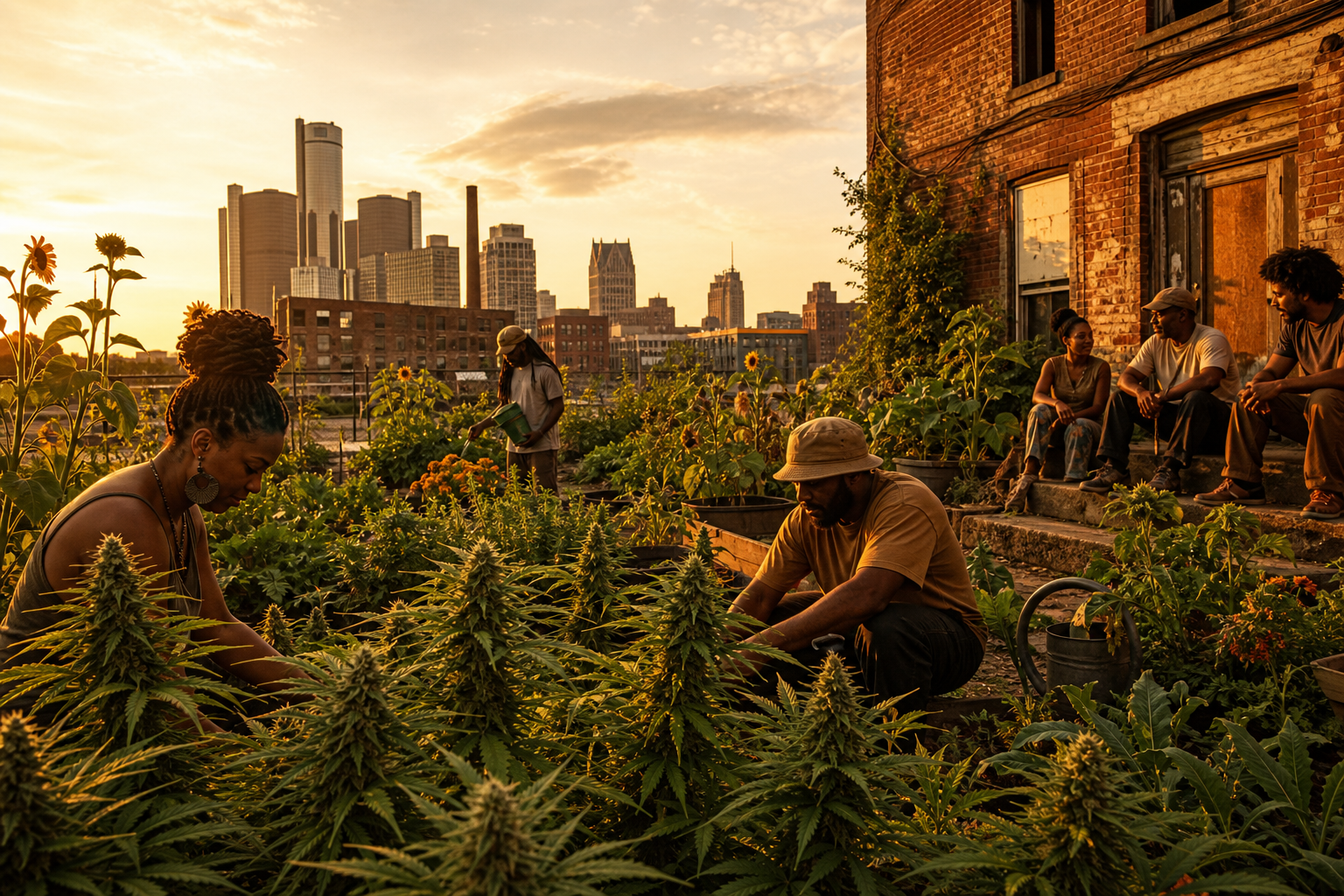
- Home cultivation — Legal home growing (up to 12 plants per adult) keeps a DIY growing culture alive in Detroit neighborhoods, where people grow their own the same way someone might tend a vegetable garden.
- Locally owned storefronts — A number of Detroit dispensaries are small, neighborhood-anchored shops rather than chain locations, with staff who actually know the growers they source from.
- Behind-the-scenes access — Michigan Marijuana Tours launched in May 2026 offering guided behind-the-scenes access to licensed cannabis cultivation facilities across Michigan, connecting consumers directly to the growing process.
At Divine Toke, our sun-grown organic approach sits squarely in this tradition — sun-drenched, soil-fed, farmer-grown. It's the opposite of what you get from anonymous bulk production, and Detroit consumers can feel the difference.
The craft movement is also a response to a real concern: as larger chains expand into Detroit, locally owned operators are getting squeezed on financing and real estate. Supporting craft and local matters for the same reason supporting any local maker matters — it keeps money and knowledge in the neighborhood.
Social Equity in Detroit: Who Gets to Own the Legal Market? #
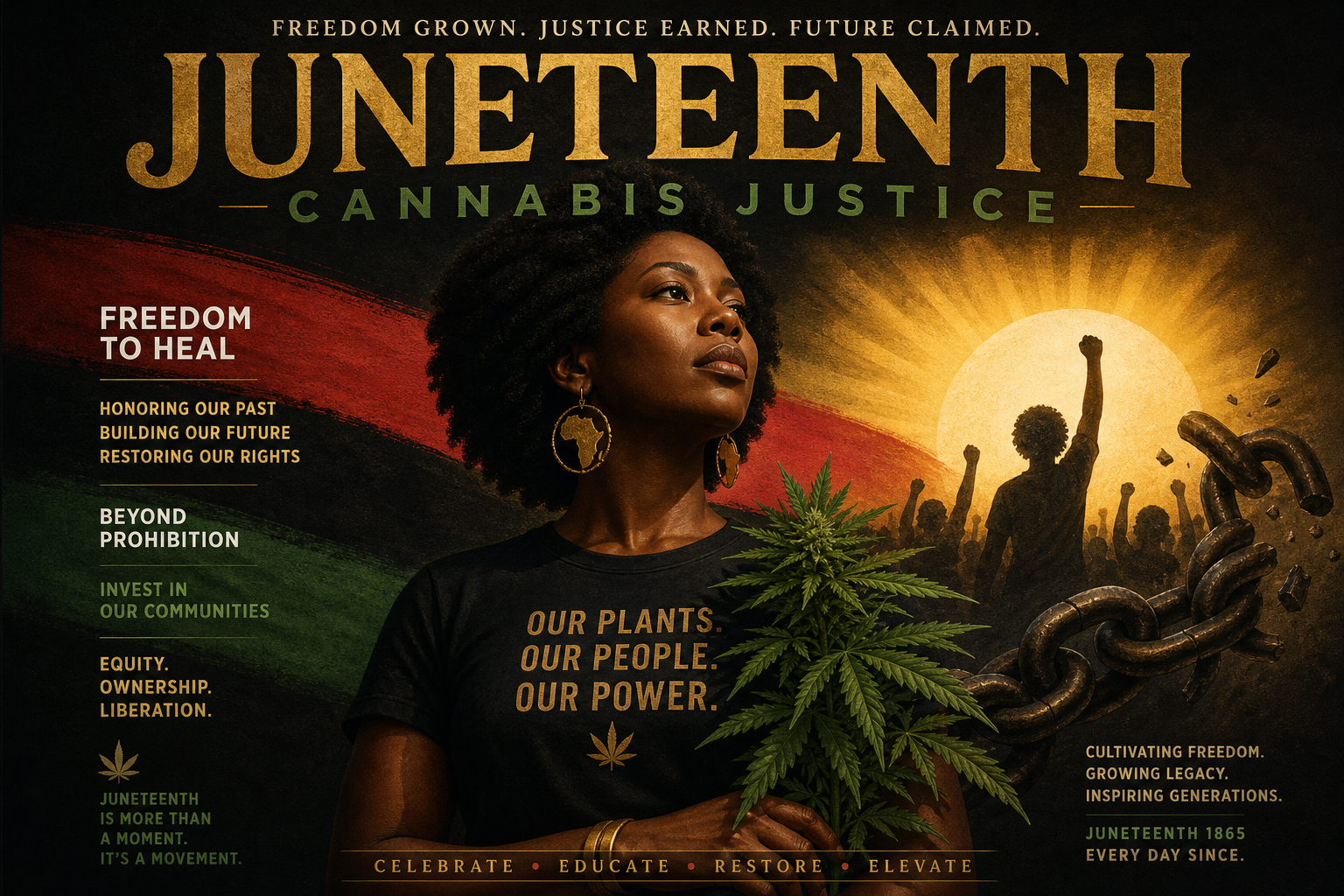
The biggest ongoing story in Detroit cannabis culture is about ownership, access, and whether legalization is actually helping the communities that paid the highest price during prohibition. Black Detroiters were arrested for cannabis at disproportionately high rates before legalization. The question now is whether they can own meaningful pieces of the legal industry — or whether outside capital will capture those gains.
Outlier Media reporting from April 2025 found that Black dispensary owners in Detroit still face real barriers: difficulty getting bank financing, limited access to commercial real estate, and competition from well-capitalized chains with existing infrastructure. Legal didn't level the playing field automatically.
The Detroit Legacy License Program #
Detroit created its own equity licensing framework to address this. The City of Detroit Cannabis Social Equity License FAQ describes two primary pathways:
- Disproportionately Impacted Individual (DII): Applicants from communities with heavy enforcement histories receive technical assistance, workshops, a business plan immersive, and access to a cannabis business incubator.
- Detroit Legacy: Residents who have lived in Detroit for at least 10 years receive mentoring, business education, networking, and access to the city's Land Lottery if they need a compliant location.
The Office of Marijuana Ventures and Entrepreneurship (OMVE) provides technical assistance to Detroit Legacy program participants. Equity applicants must own at least 51% of the applicant entity to qualify under the city's rules.
Michigan CRA Social Equity Grants: 18 Detroit Winners in 2025 #
At the state level, the Michigan Cannabis Regulatory Agency (CRA) runs a Social Equity Grant Program that put $1 million on the table for eligible licensees in 2025. Cannabis Business Times reported in January 2025 that 103 social equity licensees were named as eligible grantees — 18 of them from Detroit.
Those Detroit grantees included businesses like Utopia Gardens, Legacy Greens, Total Essence, MJK Pharms, Khronic Queen, The House of Mary Jane, Granny Farm, and Altered State Cannabis, among others. The Michigan CRA Social Equity Grant Program grantee list is public record.
Michigan's CRA also provides fee reductions ranging from 10–40% for social equity program participants, per the WNJ CRA Social Equity Program overview. The equity debate in Detroit is far from over, but these programs represent real, documented steps toward a more inclusive industry.
Cannabis and the Detroit Worker: Blue-Collar Roots of a Plant-Based Culture #
Cannabis in Detroit has always had a strong connection to the city's working-class identity. This isn't incidental — Detroit is a union city, a maker city, and a place where the work itself is physical and the days are long. Cannabis fits into that culture the same way a cold one after a shift does, except without the morning headache.
For autoworkers, tradespeople, construction crews, and warehouse workers in Detroit, cannabis tends to serve a few specific functions:
- Pain and soreness. Physical work beats up the body. People who stand, lift, weld, or operate machinery for 8–12 hours don't want to chase ibuprofen all day. Cannabis, especially CBD-forward or balanced products, has become part of how a lot of workers manage daily discomfort.
- Sleep. Shift work destroys sleep patterns. Afternoon shifts, overnight rotations, and variable schedules mean the body never fully adjusts. Cannabis — particularly flower or tinctures with myrcene-rich profiles — helps people fall asleep at unusual hours and stay asleep.
- Mental reset. The stress of a physical job isn't just physical. Assembly line monotony, pressure from foremen, workplace injuries, and economic anxiety are real. Cannabis as a decompression tool after work is something millions of Detroit workers have used quietly for decades.
The legal market didn't invent these use cases. It just made them safer (clean products, lab testing), less risky (no arrest), and easier to talk about openly. Workers who used to buy from someone they knew can now walk into a dispensary and ask questions about terpenes and cannabinoid ratios.
One thing that matters for workers specifically: drug testing. Many Detroit employers — especially in manufacturing and transportation — still drug test for THC, even as Michigan law protects adult use outside of work. That's a real tension that the cannabis industry is still navigating, and it's a legitimate concern for workers who want the benefits but can't afford to lose their jobs.
The legal landscape around cannabis and employment drug testing in Michigan is still evolving. Some employers have updated policies to reflect legalization; others haven't. The honest advice for any worker in a safety-sensitive job: know your employer's policy before you consume, and understand that legal doesn't automatically mean work-safe.
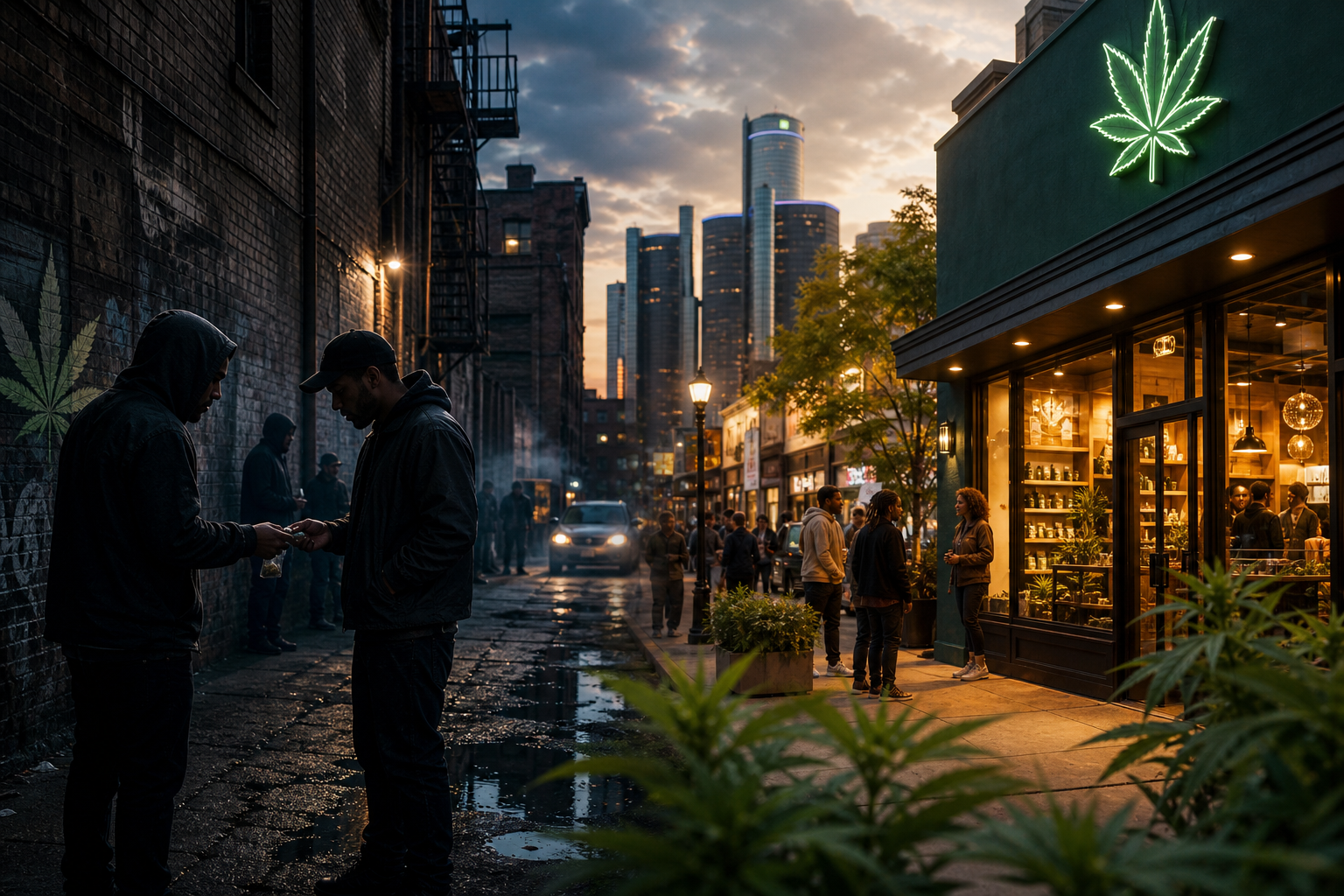
Before Michigan legalized adult-use cannabis in 2018, Detroit had a decades-long underground cannabis culture — and that culture didn't disappear when dispensaries opened. It transformed.
The underground era shaped Detroit's cannabis identity in a few specific ways:
- Caregivers built the knowledge base. Michigan's 2008 Medical Marijuana Act allowed licensed caregivers to grow for patients, creating a network of serious, skilled growers who knew cannabis deeply long before retail existed. Many of today's best Detroit producers came up through that system.
- Enforcement fell unevenly. Cannabis prohibition in Detroit — like in most American cities — was enforced more heavily in Black and brown neighborhoods. The legal era inherited that history, which is why Detroit's equity ordinance and the OMVE exist: not as charity, but as acknowledgment of something the city did wrong.
- Informal networks stayed. Home cultivation (now legal), caregiver relationships, and community sharing practices that existed underground didn't stop when dispensaries opened. They merged with the legal market and created a more diverse, community-anchored industry than you'd find in a purely top-down rollout.
- The culture predates retail by decades. Detroit's techno scene, hip-hop community, and working-class neighborhoods all had their own relationship with cannabis before any dispensary opened. That history is part of why Detroit's cannabis culture feels deeper and more lived-in than cities where legal cannabis arrived as a blank slate.
The City of Detroit's own history materials on cannabis go back much further than just legalization — the city has formally acknowledged the deep roots of cannabis use and its complicated relationship with enforcement and community life. That's not something you see everywhere.
What Changed When Sales Went Legal #
When adult-use retail launched in December 2019, Detroit saw a rapid build-out of dispensaries. But the rollout didn't always look the way equity advocates had hoped. Large multistate operators with existing capital and legal teams moved quickly to acquire real estate and licenses, while local entrepreneurs — many of whom had deeper community roots but less capital — often moved slower or got shut out.
Here's a basic comparison of what the two eras looked like for everyday Detroit cannabis consumers:
| Era | Where You Got It | Who Benefited | Risks |
|---|---|---|---|
| Pre-2019 underground | Caregivers, personal networks, informal sales | Underground growers, personal networks | Arrest, no product testing, no label info |
| Post-2019 legal retail | Licensed dispensaries, delivery services | Operators with capital, large chains | Higher prices, equity gaps, chain dominance |
| Today's craft movement | Local operators, farm-direct, small shops | Community growers, equity licensees | Still competing against chains |
Understanding the underground era matters because it explains why equity is such a live issue. The people who built Detroit's cannabis knowledge, absorbed the legal risk, and kept the culture alive during prohibition years deserve a real seat in the legal market — not just a $5 fine reduced to a footnote.
Detroit Cannabis Events Beyond the Dispensary Counter #
Detroit's cannabis calendar in 2026 goes well beyond grand openings and sales. The city and state host industry conferences, advocacy events, cultivation tours, and cultural gatherings that connect consumers, growers, advocates, and policymakers.
Key events in Detroit's cannabis ecosystem this year:
| Event | When | What It Is |
|---|---|---|
| Hash Bash (Ann Arbor) | April 4, 2026 | 55th annual cannabis rally, speakers, culture — 1 hour from Detroit |
| MiCIA Lobby Day | June 2, 2026 | Michigan Cannabis Industry Association industry day at the state capitol |
| REFORM Conference (Detroit) | TBD 2025/2026 | Drug Policy Alliance reform conference, hosted in Detroit |
| MiCIA Summer Conference | Aug 12–14, 2026 | Multi-day industry conference |
| Michigan Marijuana Tours | Year-round 2026 | Behind-the-scenes licensed cultivation facility visits |
The Michigan Cannabis Industry Association (MiCIA) is the most organized industry voice in the state and hosts regular events focused on policy, equity, and business. Their Lobby Day (June 2, 2026) is specifically about influencing state-level cannabis legislation — a direct continuation of the activist spirit that started at Hash Bash in 1972. The MiCIA Summer Conference on August 12–14, 2026, is the bigger multi-day gathering for operators, advocates, and policy watchers.
Michigan Marijuana Tours is a newer development that reflects how the culture is evolving: people don't just want to buy cannabis, they want to understand where it comes from and how it's grown. That's a direct bridge between the craft growing culture and everyday consumers.
The Drug Policy Alliance's REFORM conference being held in Detroit is a significant signal. It places Detroit in the national conversation about cannabis as a justice issue, not just a market category — which is exactly where most Detroit cannabis advocates would say it belongs.
Beyond the formal events, Detroit's cannabis culture is active in everyday community spaces: neighborhood pop-ups, social media communities for Michigan growers, caregiver meetups, and conversations at locally owned dispensaries where the staff actually know the people who grew what you're buying. That ground-level scene doesn't make the press releases, but it's where the culture lives.
How Cannabis Connects to Detroit's Music and Art Identity #
Cannabis has been woven into Detroit's music scene for as long as the music has existed. This isn't a marketing angle — it's cultural history. Detroit's two signature contributions to global music, Motown and techno, both emerged from working-class Black Detroit, where cannabis was part of the social fabric of rehearsal rooms, late nights, and community spaces.
Detroit techno — built by producers like Juan Atkins, Derrick May, and Kevin Saunderson in the mid-1980s — is the city's most globally influential music export. Cannabis was part of that underground creative culture the same way it was part of creative underground scenes everywhere: as something that helped people decompress, focus, and connect after long shifts or late studio sessions.
Detroit's hip-hop community has its own deep connection. The city produced artists like Big Sean, Danny Brown, and Royce da 5'9" who have talked openly about cannabis as part of creative and personal life. That visibility helped normalize cannabis in public conversation during years when legalization still felt far off.
Visit Detroit now explicitly frames cannabis as part of the city's creative economy — an acknowledgment that the culture already existed and legalization made it visible, not that legalization created the culture.
Cannabis and Detroit's identity overlap in a few practical ways for everyday people:
| Connection | What It Means Day-to-Day |
|---|---|
| Music and nightlife | Cannabis has been socially present in Detroit's club, concert, and studio culture for decades |
| Working after a shift | Blue-collar workers — autoworkers, tradespeople, construction crews — have long used cannabis to decompress without the hangover of alcohol |
| Creative community | Artists, designers, and musicians treat cannabis as part of a broader creative-lifestyle identity |
| Cultural tourism | Detroit is now attracting cannabis-curious visitors who come specifically for the craft scene and local culture |
What this connection means for consumers:
- Cannabis in Detroit isn't a trend imported from California or Colorado. It has a local identity and history.
- Dispensaries and brands that understand that history tend to serve the community better than those that treat Detroit as just another market to enter.
- When you buy from a locally owned, community-anchored operation in Detroit, you're supporting a business that grew from that same cultural soil — not a chain following a playbook from somewhere else.
What Legalization Means for People with Past Convictions #
Michigan legalization didn't just open dispensaries — it created pathways for people with cannabis convictions to clear their records. That's one of the most consequential parts of the law that rarely gets covered on a menu board.
Under the Michigan Regulation and Taxation of Marijuana Act and subsequent state legislation, people with certain past cannabis convictions can petition for record expungement — meaning the conviction can be set aside, removed from public criminal records, and no longer affect applications for housing, jobs, or licenses.
What this matters for in Detroit specifically:
- Cannabis industry licensing. A cleared record can allow someone who was previously convicted under prohibition-era laws to now apply for a cannabis business license — including under Detroit's equity program.
- Employment. Many employers run background checks. An expunged cannabis conviction can no longer show up in those checks, opening jobs that were previously blocked.
- Housing. Landlords often screen for criminal records. Expungement removes a common barrier to stable housing.
- Dignity. Being convicted for something that's now perfectly legal is an injustice. Michigan's expungement process is one attempt to address that — though it requires navigating paperwork and sometimes legal assistance, rather than happening automatically.
The City of Detroit's equity licensing framework is directly tied to this history. The fact that Detroit built a dedicated equity license program is an acknowledgment that prohibition-era enforcement created a debt to certain communities — and that the legal industry owes those communities more than just the right to shop at a nice dispensary.
This is still unfinished work. Not every eligible person has pursued expungement, legal help isn't equally available across neighborhoods, and record-clearing doesn't undo years of lost income, housing instability, or family separation that past arrests caused. But it's real, it's available, and Detroit advocates continue pushing to make the process more accessible.
Closing: Where Detroit's Cannabis Culture Is Heading #
Detroit's cannabis culture in 2026 is moving toward community ownership, craft quality, and deeper equity — but it's not there yet. The dispensary boom brought visibility and tax revenue. The harder work is making sure the neighborhoods and people who built the culture from the ground up are part of what the industry becomes.
The signs are encouraging. Detroit has its own equity licensing structure. The state handed $1 million to 103 social equity grantees including 18 Detroit businesses in 2025. Craft growers and local operators are finding their footing. Events like Hash Bash, the REFORM conference, and MiCIA's summer conference keep advocacy and culture alive as public acts — not just private consumption.
At Divine Toke, we believe cannabis is a community crop. Sun-grown, organic, and farmer-connected — that's the opposite of anonymous bulk production. If you're curious about the difference clean cannabis makes, browse our current menu. And if you want to dig deeper into the equity and culture side of Detroit's scene, the community is out there — at events, in local businesses, and in the ongoing conversation about what legalization is supposed to mean.
Related reading:
- Detroit Cannabis Equity: Who Actually Benefits from Legalization?
- Growing in Detroit: Urban Cannabis and Neighborhood Revival
- Detroit Cannabis Cultural Shift: Underground to Main Street
Frequently Asked Questions #
Q: What is Hash Bash, and does it happen in Detroit? #
Hash Bash is Michigan's longest-running cannabis protest event, held every year since 1972 on the University of Michigan Diag in Ann Arbor — about 45 minutes from Detroit. It started as a response to the imprisonment of activist John Sinclair for possessing two joints, and it has run continuously since April 1, 1972. The 55th annual Hash Bash took place on April 4, 2026, drawing advocates, speakers, and attendees from across Michigan including Detroit. It's the cultural center of gravity for Michigan cannabis activism and most Detroit cannabis advocates have attended at least once.
Q: How does Detroit's cannabis social equity program work? #
Detroit created its own equity licensing framework with two main tracks: one for people from disproportionately impacted communities, and a Detroit Legacy path for long-time residents. The City of Detroit Cannabis Social Equity License FAQ describes resources including technical assistance, workshops, a business plan immersive, a cannabis business incubator, and access to a Land Lottery for Detroit Legacy applicants. The Office of Marijuana Ventures and Entrepreneurship (OMVE) provides direct technical support. Equity applicants must own at least 51% of their business entity.
Q: Are there cannabis events in Detroit beyond store grand openings? #
Yes — Detroit and Michigan host a full calendar of cannabis events beyond retail promotions. These include Hash Bash in Ann Arbor each April, the MiCIA Lobby Day each June, the Drug Policy Alliance's REFORM conference hosted in Detroit, and the MiCIA Summer Conference in August. Michigan Marijuana Tours also launched in 2026 offering guided facility tours year-round, connecting consumers to the growing side of the industry.
Q: Can I consume cannabis in public in Michigan? #
No — Michigan law prohibits cannabis consumption in public places. The Michigan Regulation and Taxation of Marijuana Act allows possession and use for adults 21+, but restricts consumption to private spaces or specially designated areas that are not accessible to people under 21. There is no established cannabis lounge licensing framework operating at scale in Michigan as of 2026. Consuming in a car, on a sidewalk, or in a public park is still illegal and can result in civil fines.
Q: How has Detroit's cannabis scene changed since legalization in 2018? #
Detroit went from an underground, caregiver-and-patient network to a licensed retail industry — but the cultural roots didn't change, the legal layer was added on top. Michigan voters approved Proposal 1 in November 2018 by 56% to 44%, and retail sales launched December 2019. Since then, dozens of dispensaries have opened, the city created an equity licensing structure, and the state has distributed social equity grants. The biggest ongoing change is the equity debate: legalization created wealth, and who captures that wealth is still being contested.
Q: What does Detroit's craft cannabis movement look like? #
Detroit's craft cannabis movement is built around small-batch growers, local ownership, and quality-first cultivation rather than high-volume chain production. Visit Detroit describes an artisanal cannabis identity in the city where producers emphasize hands-on growing and connection to the plant. Michigan's legal home cultivation allowance (up to 12 plants per adult) keeps a DIY growing culture alive in Detroit neighborhoods. The caregiver network that operated during the medical era built deep growing knowledge that now powers some of the city's best legal producers.
Q: How are Black-owned cannabis businesses doing in Detroit? #
Black-owned cannabis businesses in Detroit face real, ongoing barriers even within the legal market. Outlier Media's April 2025 investigation found that Black dispensary owners in Detroit still struggle with access to financing and commercial real estate compared to larger, better-capitalized chains. The Detroit equity licensing program and the Michigan CRA's 2025 Social Equity Grant Program — which included 18 Detroit grantees sharing $1 million — are partial responses to this gap. But structural barriers in banking and real estate haven't been fully addressed.
Q: Can people with past cannabis convictions get involved in the Detroit industry? #
Yes — Michigan law created pathways for people with certain past cannabis convictions to petition for expungement and, once records are cleared, apply for cannabis business licenses. The City of Detroit's equity licensing framework specifically includes disproportionately impacted individuals as a priority group for technical assistance and licensing support. Expungement doesn't happen automatically — it requires a petition and sometimes legal help — but an expunged record removes the barrier to licensing, employment, and housing applications.
Q: What is the Detroit Legacy cannabis license? #
The Detroit Legacy license is a local equity pathway for people who have lived in Detroit for at least 10 years. According to the City of Detroit Cannabis Social Equity License FAQ, Legacy participants receive mentoring, business education, networking, access to the city's Land Lottery to find a compliant business location, and technical assistance from the OMVE. It's designed to help longtime Detroiters who may not have the capital or connections of outside investors but have deep roots in the community and a long-term stake in how the industry develops.
Q: Does cannabis culture in Detroit connect to the city's music history? #
Yes — cannabis has been part of Detroit's music culture for decades, from Motown-era social scenes to the underground techno movement of the 1980s and the hip-hop scene that followed. Detroit's two most globally influential music exports — techno and hip-hop — both came from working-class Black Detroit communities where cannabis was part of the cultural fabric. Visit Detroit now explicitly includes cannabis in its creative economy coverage, acknowledging what was already true: legalization made Detroit's cannabis culture visible, it didn't create it.
Grown in Detroit. Shipped to your door.
Small-batch, sun-grown cannabis cultivated in living soil. Mail-order shipping to all 50 states.