Vape Cartridge Buying Guide: Clean Oil vs. Cut Product

Jamie
Head Cultivator
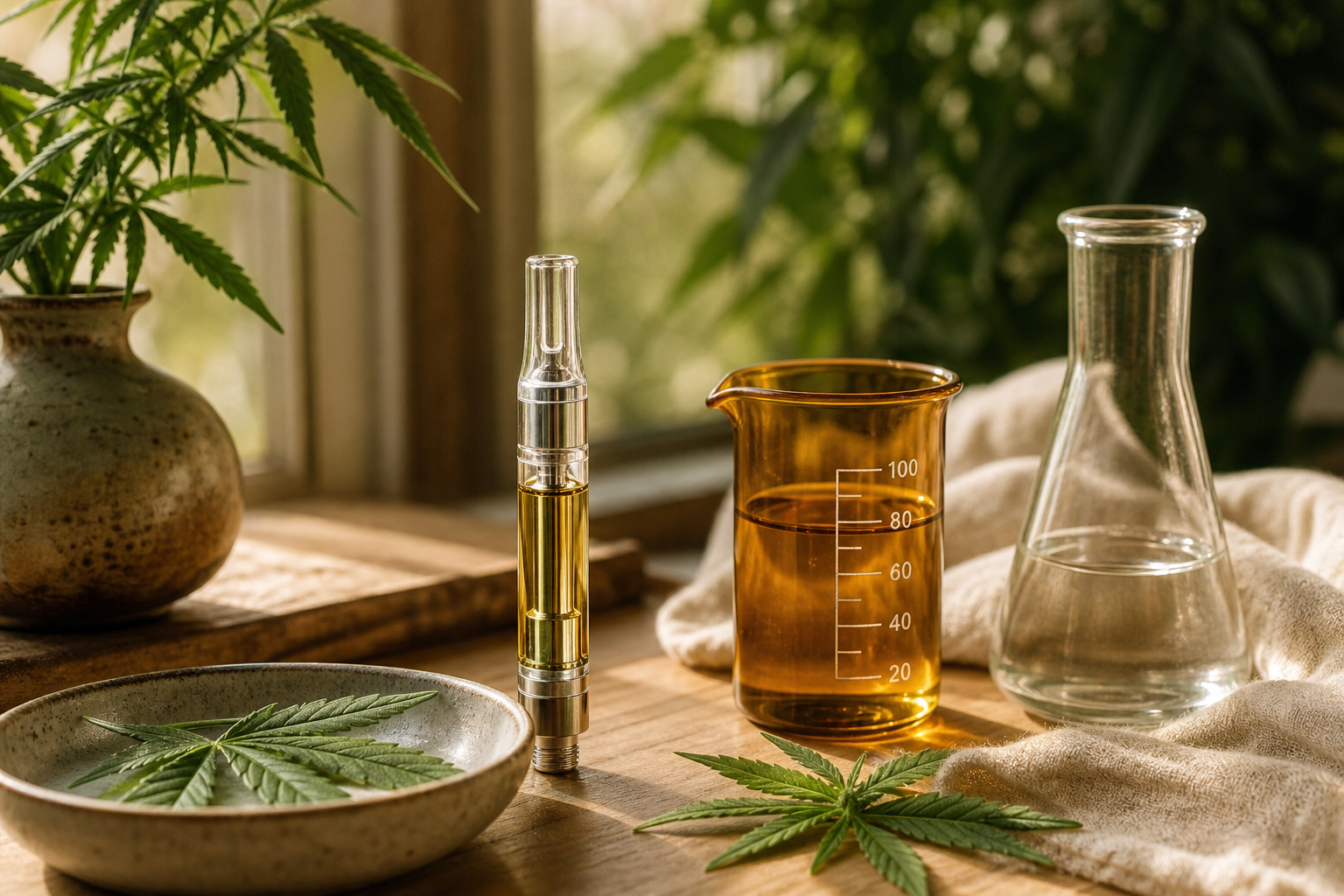
You cannot tell a clean cannabis cart from a cut one by color, thickness, or fancy packaging alone. The only reliable path is a licensed Michigan product with a batch-matched Certificate of Analysis (COA) that passes residual solvents, heavy metals, pesticides, and — for vapes — shows no vitamin E acetate or other cutting agents.
What Is Clean Cannabis Oil vs. Cut Product? #
Clean cannabis oil is cannabis extract plus (at most) terpenes meant for that product — nothing else. Cut product is oil thinned or thickened with fillers like vitamin E acetate, MCT oil, propylene glycol (PG), or polyethylene glycol (PEG) so a seller can stretch inventory or fake viscosity.
Think of it like cooking oil. Real olive oil is olives. "Extended" olive oil can look the same in the bottle and still be diluted with cheaper fat. Cart oil works the same way. You usually cannot spot the cut with your eyes.
| Feature | Clean oil | Cut product |
|---|---|---|
| Ingredients | Cannabis extract ± terpenes | Extract plus fillers / thickeners |
| Why it exists | Dose and flavor from plant compounds | Stretch volume, fake thickness, cut cost |
| Common add-ins | None, or labeled cannabis-derived / botanical terpenes | Vitamin E acetate, MCT, PG, PEG, mystery "flavor oils" |
| How you verify | Batch COA from a licensed lab | Often none — or a fake QR / wrong batch |
| Where you find it | Licensed Michigan dispensary supply chain | Street, social media, unlicensed shops |
Thick oil is not proof of quality. Vitamin E acetate was popular with illicit makers in part because it made thin distillate look richer. A watery cart is not automatically clean either. Viscosity is a marketing cue, not a safety test.
Common cutting agents (and why they show up) #
| Agent | What it is | Why sellers use it | Inhalation concern |
|---|---|---|---|
| Vitamin E acetate | Oil-soluble vitamin E form | Thickens thin distillate; cheap volume stretch | Strongly linked to EVALI lung injury |
| MCT oil | Medium-chain triglyceride (often coconut-derived) | Thins / carries oil; common in edibles | Food-safe does not mean lung-safe |
| PG / PEG | Propylene glycol / polyethylene glycol | Carrier solvents in some nicotine / gray-market liquids | Heating can create harsh byproducts; not a clean cannabis standard |
| Mystery "flavor oil" | Undisclosed blend | Candy taste, brand imitation | You cannot audit what you cannot name |
A useful rule: if the ingredient story needs a chemistry degree, put the cart down. Clean labels are short. Cannabis oil. Terpenes. Done.
If you want the bigger picture on how concentrates are made without junk inputs, start with our concentrate guide to rosin, hash, and clean inputs. For the Michigan testing system behind a real pass/fail label, see what "lab-tested" means in Michigan.
Why Vitamin E Acetate Made Carts Dangerous #
Vitamin E acetate (also called tocopheryl acetate) is a thickener that does not belong in anything you inhale — and it was the main chemical of concern in the EVALI lung-injury outbreak. It is fine in skin cream. It is not fine in lung tissue.
What Happened During the EVALI Outbreak #
In late 2019, U.S. health agencies tracked a wave of severe lung injuries tied to vaping products. Doctors called the syndrome EVALI — e-cigarette or vaping product use–associated lung injury.
The smoking-gun lab work looked at fluid washed from patients' lungs (bronchoalveolar lavage, or BAL). According to the CDC MMWR report and a linked New England Journal of Medicine study:
- Vitamin E acetate showed up in 48 of 51 EVALI patients (94%)
- It showed up in 0 of 99 healthy comparison samples
- Most hospitalized patients reported using THC-containing products (often from informal sources)
By early 2020, the CDC's EVALI outbreak summary counted roughly 2,800+ cases and dozens of deaths nationwide. The takeaway for consumers was blunt: unverified carts were not a bargain — they were a lung risk.
Why thickeners became a street-cart tool:
- Distillate can look thin in a glass tank
- Buyers were trained to associate thick oil with "fire"
- Vitamin E acetate was cheap, oil-soluble, and hard to spot by eye
- Informal sellers had no batch testing forcing them to stop
That combo is why "it looks like a real brand" was never enough. Packaging got better. Chemistry did not.
What Michigan Did Afterward #
Michigan moved fast on the legal market side:
- The state banned vitamin E acetate in cannabis vaping products in November 2019, as reported by Metro Times
- Regulators updated testing and labeling rules for vape products so banned additives could not hide in the supply chain — see MLive's February 2020 coverage
- The Cannabis Regulatory Agency (then under earlier agency branding) issued public advisories and recalls when problem carts appeared, including a March 2020 vape-cart recall bulletin
That history matters in 2026 for one practical reason: the illicit market never got the same memo. Licensed Michigan carts must clear batch testing. Street carts do not. Our guide to Michigan's illicit cannabis market covers why "cheap and easy" still usually means untested.
What licensed Michigan cart testing is for #
Michigan's Cannabis Regulatory Agency requires licensed products to clear safety panels before retail sale. For carts and other extracts, the practical buyer checklist maps to those panels:
| Required safety idea | What it catches | Why carts care |
|---|---|---|
| Potency | THC / CBD and related cannabinoids | Stops fake strength claims |
| Residual solvents | Leftover extraction chemicals | Distillate and hydrocarbon oils need a clean purge |
| Heavy metals | Lead, arsenic, cadmium, mercury (and related screens) | Inputs + hardware risk |
| Pesticides | Farm chemicals that can concentrate in oil | Flower problems become oil problems |
| Microbials | Mold / pathogens | Basic inhalable hygiene |
| Banned additives / VEA rules | Thickener scams after 2019 | Direct EVALI lesson |
You do not need to memorize agency rule numbers. You need to demand the report that proves those boxes were checked for your batch. For a deeper walkthrough of Michigan's lab system, use what lab-tested means in Michigan.
Live Resin vs. Distillate Carts: What Changes (and What Doesn't) #
Live resin and distillate describe how the oil was made — not whether the cart is cut. Either format can be clean. Either format can be dirty if someone adds fillers or skips testing.
| Factor | Live resin cart | Distillate cart |
|---|---|---|
| Starting material | Fresh-frozen flower/trim (frozen soon after harvest) | Often dried biomass, trim, or already-extracted oil |
| What you keep | More of the plant's original terpene mix | Mostly purified cannabinoids (often very high THC) |
| Typical feel | Strain-forward flavor; broader "whole plant" character | Strong, consistent THC hit; flavor often re-added |
| Terpenes | Usually native cannabis terpenes retained | Often stripped, then botanical or cannabis-derived terpenes added back |
| Safety signal | Still needs a full COA | Still needs a full COA |
Live resin is made from cannabis frozen right after harvest so aromatic oils (terpenes) do not cook off as much during drying. That is why it often tastes closer to the flower you remember.
Distillate is oil run through further purification until cannabinoids are highly concentrated. Think of it like refining sugar: you get a strong, consistent product, but you lose a lot of the plant's original flavor chemistry unless someone puts terpenes back in.
Cannabis-derived vs botanical terpenes #
After distillation, brands often add terpenes back so the cart is not flavorless. Two common paths:
- Cannabis-derived terpenes (CDT): pulled from cannabis. Usually taste closer to flower.
- Botanical terpenes: same named molecules from other plants (limonene from citrus peels, for example). Can taste bright or candy-like.
Botanical terpenes are not the same thing as vitamin E acetate. They are flavor chemistry, not a thickener scam by default. The problem is when "flavor" becomes a fog machine for undisclosed junk — or when a brand will not say what is in the tank.
Who might prefer which #
| You want… | Lean toward… | Still require… |
|---|---|---|
| Strain-true taste | Live resin / high-CDT oil | Matching COA |
| Strong, simple THC | Distillate | Matching COA |
| Whole-plant feel | Live resin or full-spectrum style oil | Matching COA |
| Budget daily driver | Often distillate on sale | Matching COA — never skip |
Neither format is "safer" by name alone. What matters:
- Licensed batch testing passed
- No cutting agents on the COA / ingredient story
- Honest terpene labeling — cannabis-derived vs botanical is a quality preference, not a free pass on safety
If you care about whole-plant chemistry (multiple cannabinoids + terpenes working together), read our entourage effect guide and full-spectrum vs isolate breakdown. Those ideas apply to carts the same way they apply to flower and edibles.
Hardware Matters: Metals, Coils, and Cheap Carts #
Even clean oil can pick up heavy metals from cheap hardware when heat and acidic oil sit against the wrong metals. That is a separate problem from cutting agents — and Michigan regulators flagged it early.
In April 2019, Michigan issued a public health and safety advisory on lead contamination in vape cartridges. The lesson for buyers was not "panic about every cart." It was "hardware quality is part of product safety."
Peer-reviewed work backs the concern. A study in PMC9713800 discusses how cannabis vape liquids and device parts can contribute metal exposure (nickel, chromium, lead, copper, and related metals) under heating conditions. A 2025 analysis in Scientific Reports (Nature portfolio) also found that simply labeling a cart "ceramic" does not automatically mean lower total metal content — other parts of the device (mouthpiece, posts, alloys) still matter.
| Hardware choice | What it usually means | Buyer takeaway |
|---|---|---|
| Cheap metal coil + mystery alloy path | Higher chance metals dissolve into oil over heat/storage | Skip no-name hardware with no COA |
| Quality ceramic core | Lower direct coil-to-oil metal contact when built well | Better baseline — still verify metals panel on COA |
| Metal mouthpiece / center post | Can still leach even if the coil is ceramic | Ask brands / check full metals results |
| Licensed MI product + metals PASS | Batch was screened for lead, arsenic, cadmium, mercury (and related panels per rules) | This is the floor, not a luxury upgrade |
Practical rule: buy the oil and the hardware as one tested product from a licensed shop. Do not refill mystery empty carts with oil from a baggie and call it "clean." Refills can undo every safety step the lab already paid for.
Battery and temperature habits that help #
Hardware risk is not only about metals in the cart body. How you run the battery matters too:
- Start on a lower voltage if your battery is adjustable. Scorched oil tastes burnt and hits harsher.
- Avoid empty-tank hits. Dry ceramic or coil overheating is rough on the device and on your throat.
- Do not leave carts in a hot car. Heat thins oil, raises leak risk, and can stress seals and metals.
- Replace carts that rattle, leak, or taste metallic from the first pull. That is not "breaking in."
None of these habits replace a metals PASS on the COA. They just stop you from turning a decent cart into a burnt mess.
How to Read a Vape Cartridge COA #
A Certificate of Analysis (COA) is the lab report for one specific batch. If the batch number on the package does not match the COA, treat the paper (or QR page) as useless marketing.
For a plain-English walkthrough of Michigan's testing system, pair this section with what lab-tested means for cannabis in Michigan. State consumer guides like New Jersey's How to Read a COA PDF follow the same basic logic most regulated markets use: match the sample, then read pass/fail panels.
Match the Batch, Then Read Pass/Fail #
Do this in order:
- Find the batch / lot / METRC ID on the package
- Open the QR or URL and confirm it lands on a real lab report (not a brand homepage)
- Match the ID on the COA to the package exactly
- Check the test date — recent enough that the stock still matches that batch
- Confirm the lab is a licensed cannabis testing lab for the market where you bought it
- Scan every safety panel for PASS / ND / values under action limits
If a budtender cannot produce a matching COA, walk. That is not awkward — that is the job.
Residual Solvents, Metals, Pesticides, and Cutting Agents #
| Panel | Why it matters for carts | What you want to see |
|---|---|---|
| Cannabinoid potency | Tells you THC/CBD strength so dosing is honest | Numbers that match the label (within normal lab variance) |
| Residual solvents | Extraction leftovers (butane, propane, hexane, etc.) can remain in oil | ND, <LOQ, or well under action limits — never "not tested" on solvent extracts |
| Heavy metals | Lead, arsenic, cadmium, mercury (and related metals) can come from inputs or hardware | PASS |
| Pesticides | Concentrates can concentrate farm chemicals too | PASS |
| Microbials | Mold/pathogen screen | PASS |
| Cutting agents / VEA (when listed) | Vitamin E acetate and similar thickeners drove EVALI risk | ND / absence — any hit is a hard no for inhalation |
"ND" means not detected at the lab's reporting limit. "<LOQ" means below the limit of quantitation — basically too low to measure accurately, not a free-for-all. "Not tested" on a solvent panel for a distillate cart is a red flag, not a loophole.
Also watch for ingredient honesty. Clean labels read like cannabis oil and terpenes. Long lists of mystery thickeners, "food-grade" oils meant for eating (not lungs), or vague "proprietary blend" language deserve a hard pass — same instinct as our edible buying guide when ingredient lists get weird.
Quick COA scam check #
| What you see | Likely meaning | Move |
|---|---|---|
| QR opens brand Instagram | Not a lab report | Walk |
| COA batch ≠ package batch | Wrong report / counterfeit kit | Walk |
| Solvents "not tested" on distillate | Incomplete safety story | Walk |
| Potency only, no contaminant panels | Marketing PDF, not full compliance | Walk |
| Real lab URL + matching ID + PASS panels | Usable verification | Buy if the oil style fits you |
Michigan's CRA framework exists so you do not have to become a chemist. Use it. If a shop acts annoyed when you ask for the COA, that is information too.
Red Flags That Usually Mean Skip the Cart #
If you have to talk yourself into trusting the source, skip it. Most cut carts fail the boring checks before they fail a lab test.
- Sold outside a licensed Michigan dispensary — apartment deals, group chats, gas stations, "online shipping" THC carts with no state tracking
- No COA, broken QR, or QR that opens a generic Instagram page — real reports show batch IDs and panels
- Batch ID on the box does not match the COA — classic counterfeit move
- Price that makes no sense for the market — rock-bottom "half grams" often mean diluted oil or stolen/diverted stock
- Packaging that looks like a famous brand but feels off — misspelled logos, wrong fonts, loose seals, no METRC/state tag where required
- Ingredient list with thickeners — vitamin E acetate, MCT oil, PEG, PG, "cutting oil," or unnamed viscosity agents
- Seller says "lab tested" but cannot show the report — words are free; PDFs are not
- Harsh chemical taste, heavy coughing from day one, or oily film that feels wrong — stop using it; lungs are not a troubleshooting tool
| Red flag | Why it matters | Safer move |
|---|---|---|
| Unlicensed source | No required contaminant testing | Buy only from licensed retail |
| Fake / mismatched COA | You are reading someone else's batch | Match IDs or walk away |
| Mystery thickeners | Inhalation risk (EVALI history) | Cannabis oil ± terpenes only |
| Too-cheap pricing | Dilution and diversion incentives | Pay market rate for tested oil |
| Counterfeit packaging | Brand look-alikes are common on the illicit market | Verify state tracking + COA |
Street sellers will say the oil "looks fire." Looking fire is not a contaminant panel. The CDC EVALI findings exist because people trusted vibes over paperwork.
Myths That Keep Cut Carts in Circulation #
Most cart myths sound reasonable until you put them next to a COA. Here are the ones Detroit shoppers still repeat — and why they fail.
| Myth | Reality |
|---|---|
| "Thick oil means clean oil." | Thickeners can fake thickness. Viscosity ≠ purity. |
| "If it has a QR code, it's legit." | Counterfeit packs use dead or generic QR codes. Match the batch. |
| "Live resin can't be cut." | Any oil format can be adulterated before filling. |
| "Ceramic coil = metal-free." | Other hardware parts can still leach; check the metals panel. |
| "Dispensary stuff is overpriced fear marketing." | Licensed testing is the main reason EVALI-style thickeners got pushed out of legal shelves in Michigan. |
| "I know my guy." | Your guy does not run residual solvent GC-MS in his kitchen. |
If a claim cannot survive the sentence "show me the matching COA," it is not a buying strategy — it is hope.
How to Buy a Safer Cart in Michigan (Step-by-Step) #
Buy licensed, verify the batch, then choose the oil style that matches how you like to feel — not the other way around. Safety first. Flavor second. Percent THC last.
- Start at a licensed Michigan dispensary. Adult-use and medical retail both sit inside the CRA tracking system. That is the main firewall against the worst cutters. Background: Michigan illicit market risks.
- Ask for the COA before you pay. Match batch ID. Confirm PASS on solvents, metals, pesticides, and microbials. Details: Michigan lab testing explained.
- Pick live resin if you want strain-true flavor. Pick distillate if you want a strong, simple THC hit. Neither choice replaces step 2.
- Read the terpene story. Cannabis-derived terpenes usually taste more like flower. Botanical terpenes can still be fine when disclosed — they are not a cutting agent by themselves, but candy-bomb flavors can hide weak oil quality.
- Prefer sealed hardware from the same brand/batch. Do not refill random empty carts.
- Start low on dose. Cart oil is concentrated. One long pull can overshoot what a joint would have given you. Go slow, especially if you are new or coming back from a break.
- Store upright, cool, and out of hot cars. Heat thins oil, can worsen leaking, and is rough on terpenes. Same storage instinct as flower — keep it out of heat and sunlight.
- Stop if something feels wrong. Chest pain, severe shortness of breath, or fever after vaping is a medical issue, not a "harsh cart" joke. Seek care.
| Step | Action | Pass condition |
|---|---|---|
| 1 | Licensed shop only | Product in state tracking |
| 2 | Open COA | Batch match + safety PASS |
| 3 | Choose oil type | Live resin or distillate on purpose |
| 4 | Check ingredients | No thickeners / cutters |
| 5 | Dose carefully | Short pulls; wait between hits |
Divine Toke's lane is clean, sun-grown cannabis education and product integrity — not inventing cart SKUs or fake lab numbers. If you are shopping concentrates more broadly, use the clean-inputs concentrate guide alongside this cart checklist.
A simple in-store script #
If asking for paperwork feels awkward, use plain language:
- "Can I see the COA for this batch?"
- "Does the lot number match the package?"
- "Did residual solvents and heavy metals pass?"
- "Any additives besides cannabis oil and terpenes?"
A good budtender will answer without drama. If the vibe turns defensive, that is your answer. Licensed retail exists so you can ask boring safety questions out loud.
FAQ #
Q: Can I tell if a cart has vitamin E acetate just by looking at the oil? #
No — you usually cannot see vitamin E acetate. It was used partly because it can thicken thin oil without an obvious "wrong" color. The reliable check is a licensed product with a batch-matched COA showing the additive is absent / not detected, plus buying only from regulated retail. Visual vibes failed people during the EVALI outbreak documented by the CDC.
Q: Are live resin carts safer than distillate carts? #
Not automatically. Live resin keeps more native terpenes; distillate is usually higher in purified THC. Safety depends on licensed testing and the absence of cutting agents, not the marketing name on the box. Either format can be clean when it passes Michigan contaminant panels.
Q: What does "ND" mean on a cannabis COA? #
"ND" means not detected at the lab's reporting limit. For solvents, metals, pesticides, and banned thickeners, ND (or PASS under the action limit) is what you want. It is not a guarantee the whole universe of chemicals was scanned — it means those listed analytes were below detection for that test method.
Q: Are gas station or smoke shop THC carts safe in Michigan? #
Treat unlicensed THC carts as high risk. Licensed Michigan dispensary products must go through required batch testing; informal and out-of-channel products do not. If there is no state tracking package and no matching COA, you are guessing with your lungs. See our illicit market overview.
Q: Do ceramic coils mean zero heavy metals? #
No. Ceramic cores can reduce direct coil-to-oil metal contact when built well, but mouthpieces, posts, and other alloys can still contribute metals. Michigan's 2019 lead advisory and later research such as PMC9713800 are why the metals panel on the COA still matters.
Q: Why do some carts taste like candy or perfume? #
Often because botanical or formulated terpenes (or flavor additives) were blended in after distillation. That can be intentional and disclosed. It can also mask thin or cut oil. Candy flavor alone is not proof of cutting agents — but mystery "flavor oil" plus no COA is a hard no.
Q: How fresh does a COA need to be? #
Fresh enough that it still describes the batch you are holding. Match the lot/batch ID first. Then prefer a recent test date on stock that has been stored reasonably. An old PDF for a different lot is worthless even if the brand name matches.
Q: What residual solvents should I check on a cart COA? #
Look for the residual solvents panel and confirm PASS / ND for common extraction solvents such as butane, propane, hexane, and related analytes your lab lists. Distillate and hydrocarbon extracts need this panel. "Not tested" on solvents for a solvent-made oil is a red flag. Pair with Michigan lab-testing basics.
Q: Is a cheap dispensary cart automatically cut? #
No. Licensed shops run sales, house brands, and smaller hardware. Cheap becomes a problem when it comes with missing COAs, mismatched batch IDs, or ingredient lists that include thickeners. Price is a clue, not a lab result.
Q: Should I buy vape carts from out-of-state friends or online sellers? #
Skip informal shipping and handoff carts. Crossing state lines with cannabis can break federal and state rules, and you lose Michigan's testing trail. Buy local licensed product, verify the COA, and leave the gray-market shipping pitches alone.
The Bottom Line #
Clean cart oil is verified oil — not thick oil, not pretty packaging, not a friend's assurance. Buy from a licensed Michigan dispensary, match the batch COA, confirm contaminant panels pass, and skip anything with thickeners or a broken paper trail.
If you are building a broader product IQ:
- What lab-tested means in Michigan
- Concentrate guide: rosin, hash, and clean inputs
- Edible buying guide
- Illicit cannabis market risks
At Divine Toke we care about clean inputs and honest education. Ask for the paperwork every time. Your lungs only get one set of filters.
This article is for educational purposes only and is not medical advice. Always consult your healthcare provider before starting any new wellness routine. If you develop severe breathing problems after vaping, seek medical care.