Concentrate Guide: Rosin, Hash, and Why Clean Inputs Matter

Jamie
Head Cultivator
Concentrates get a bad rap as "hardcore head" stuff. They're not. A concentrate is just cannabis with most of the plant matter removed — leaving the resin that holds THC, CBD, and terpenes. That same process also concentrates whatever was on the plant: pesticides, mold, heavy metals. This guide breaks down rosin, hash, and the rest in plain language — and explains why clean inputs matter more here than anywhere else in cannabis.
What Is a Cannabis Concentrate? #
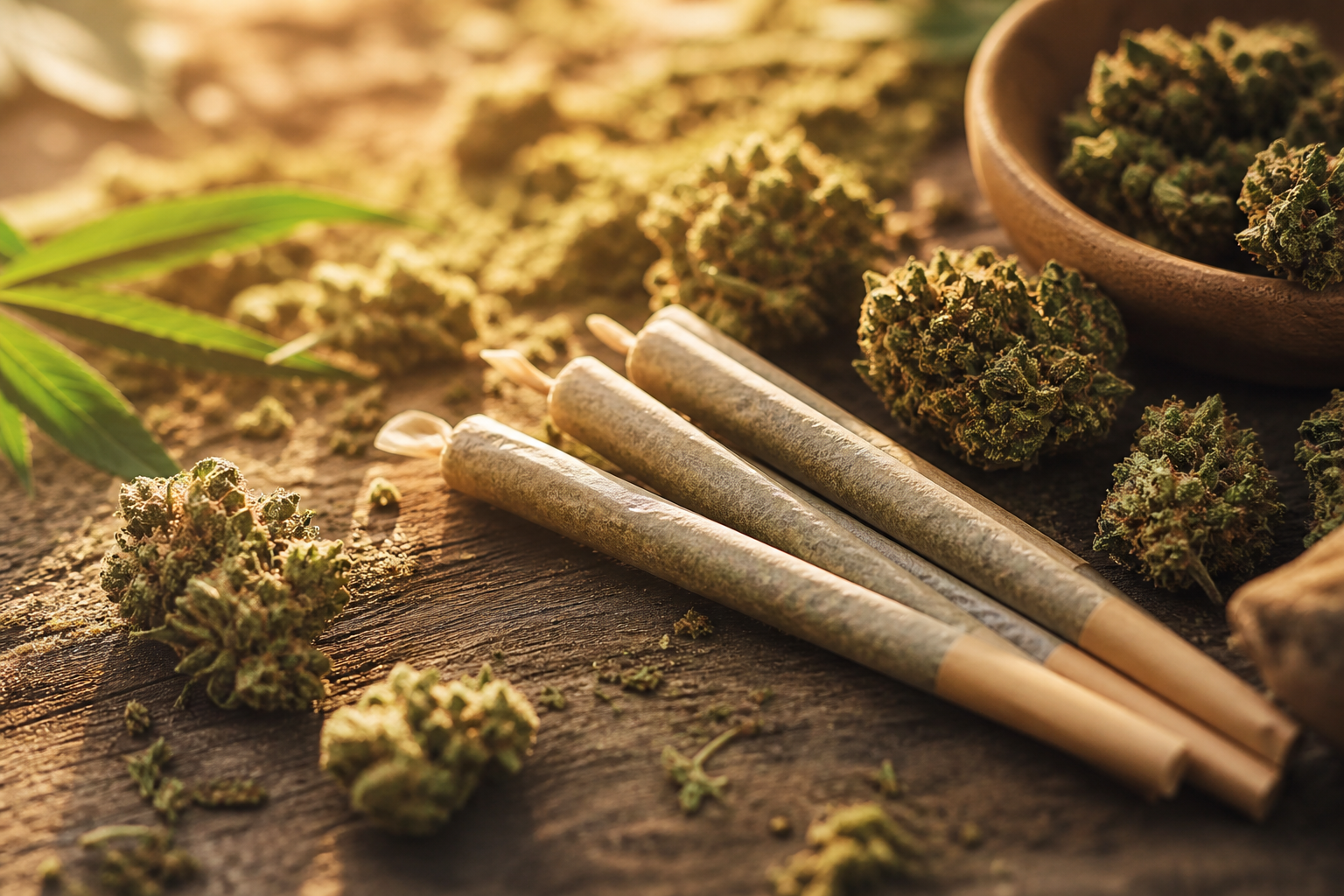
A cannabis concentrate is a product where the resin — the sticky stuff on the buds that holds THC, CBD, and terpenes — gets separated from most of the plant leaf and stem. Think of it like reducing a sauce on the stove: same flavor compounds, less filler. Concentrates go by many names — rosin, hash, wax, shatter — but they all start from the same idea.
The resin lives in trichomes — tiny crystal-like hairs on the flower surface. When you grind weed, the powder that collects at the bottom of your grinder is kief — trichomes that broke loose. Concentrates take that concept further and pull out much more resin per gram.
| Term | Plain-English Meaning |
|---|---|
| Concentrate | Any cannabis product with resin separated from plant matter |
| Trichome | The tiny crystal on a bud where THC and terpenes live |
| Kief | Loose trichomes collected from grinding or sifting |
| Extract | Another word for concentrate — often used for solvent-made products |
| Dab | A small amount of concentrate vaporized on a hot surface and inhaled |
Concentrates typically test 60%–90%+ THC by weight, compared to 15%–30% for most flower. That does not mean you need less care — it means you need more. A tiny dab can hit harder than a full joint if you are not used to it.
The National Institute on Drug Abuse notes that concentrates can contain several times more THC than flower from the same plant. That potency is the main reason people choose them — faster relief, less smoke, smaller doses. It is also why quality control matters so much.
Concentrates come in two big families:
- Solventless — made with heat, pressure, water, or sifting only (rosin, hash, kief)
- Solvent-based — made with chemicals like butane or CO₂ that get purged out (BHO, wax, distillate)
Both can be excellent. Both can be garbage. The difference usually starts with what went into the machine — not what came out of it.
Solventless vs Solvent-Based: What's the Real Difference? #
Solventless concentrates use only mechanical force — heat, pressure, water, or sifting — to pull resin from the plant. Solvent-based concentrates use chemicals like butane or CO₂ to dissolve resin, then purge those chemicals out before sale. The end product can look similar. The process, safety profile, and what can go wrong are very different.
A 2020 review in the Journal of Medical Toxicology found that home butane extraction carries real risks — fires, explosions, and leftover solvent in the final product. Licensed labs use closed-loop systems to manage that. Solventless methods skip the chemical step entirely.
| Factor | Solventless (Rosin, Hash, Kief) | Solvent-Based (BHO, Wax, Distillate) |
|---|---|---|
| How it works | Heat + pressure, ice water, or dry sifting | Chemical solvents dissolve resin, then get purged |
| Chemicals used | None | Butane, propane, ethanol, or CO₂ |
| Residual solvent risk | None — no solvents involved | Low when lab-tested; fails if purge is incomplete |
| Typical THC range | 40%–75% (rosin); varies by type | 70%–90%+ (distillate can exceed 90%) |
| Terpene retention | High — especially live rosin | Varies; high-terp "live resin" retains more |
| Production safety | Low hazard (burn risk from hot plates) | High hazard without proper equipment |
| Main quality risk | Bad starting flower = bad concentrate | Bad starting flower + incomplete purge |
Neither category is automatically "better." A clean, lab-tested BHO from quality flower can be excellent. A rosin pressed from moldy, pesticide-sprayed biomass is still dangerous — just without solvent residue.
What Counts as Solventless? #
Solventless means no chemical solvents touch the plant at any point. The main types:
- Kief — trichomes sifted through fine screens
- Dry sift hash — kief collected and pressed into a patty
- Bubble hash (ice water hash) — trichomes knocked off in ice-cold water, then dried
- Rosin — hash, kief, or flower pressed between heated plates to squeeze out oil
- Live rosin — rosin pressed from bubble hash made with flash-frozen (never dried) flower
The Press Club breaks down the naming clearly: "solventless" and "solvent-free" are not always the same label in marketing, but for consumers, look for products that never used chemical extraction.
What Counts as Solvent-Based? #
Solvent-based extracts use a chemical to pull resin out, then remove that chemical before the product is sold. Common types:
- BHO (butane hash oil) — butane or propane dissolves resin; vacuum purge removes solvent
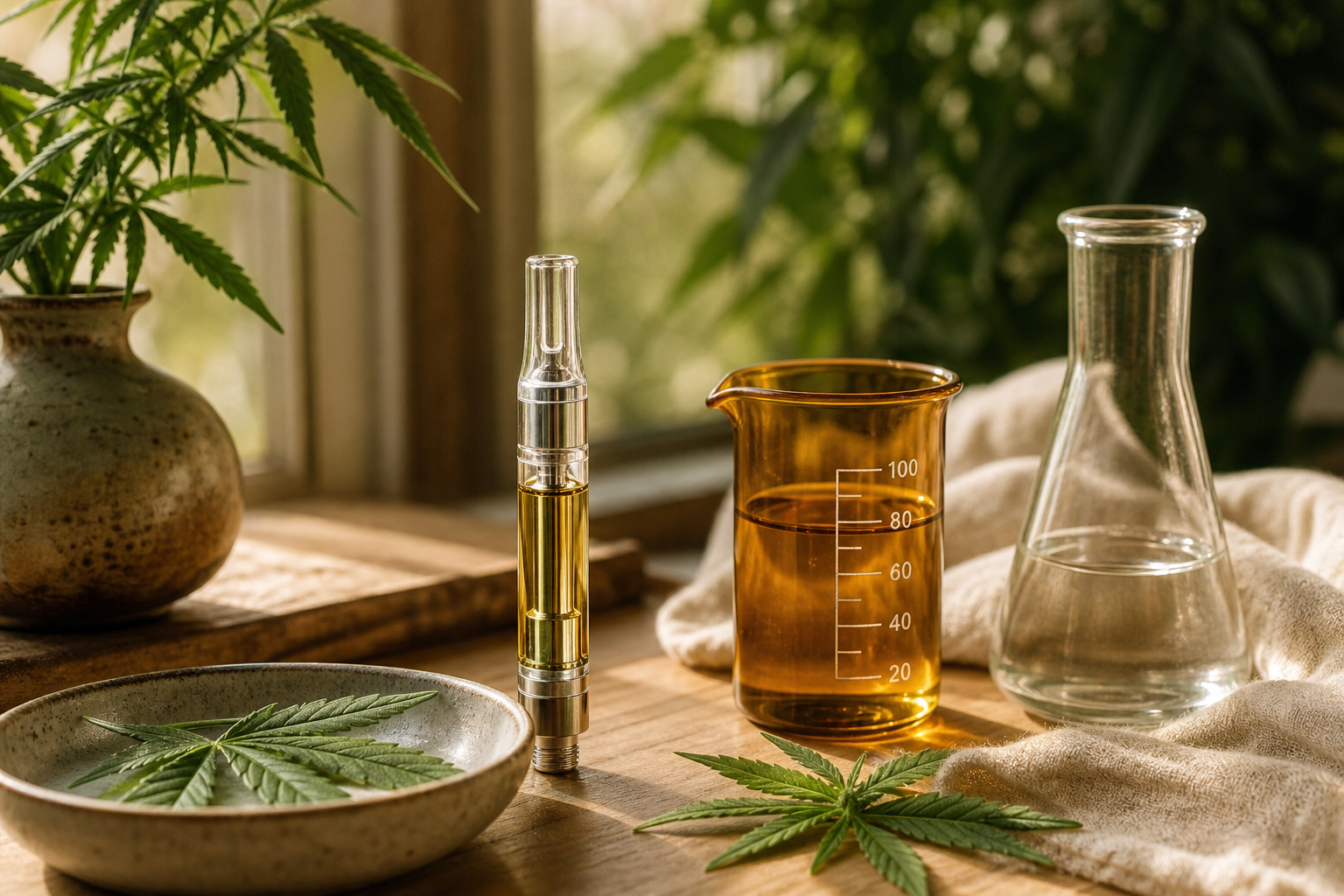
- CO₂ oil — supercritical CO₂ extraction; common in vape cartridges
- Distillate — highly refined oil, often 85%–95% THC, with terpenes added back
- Live resin — solvent extract from flash-frozen flower (not the same as live rosin)
Michigan requires residual solvent testing on all inhaled concentrate products before they can be sold. The Michigan CRA Sampling and Testing Technical Guidance sets action limits for butane, propane, ethanol, and other solvents. Products above those limits fail and cannot reach store shelves.
For example, the butane action limit for inhaled concentrates in Michigan is 800 parts per million (ppm). That number comes from workplace exposure standards — not a direct "safe to dab" study — but it is the legal line your product must cross to be sold.
How Is Rosin Made? (Heat and Pressure, No Chemicals) #
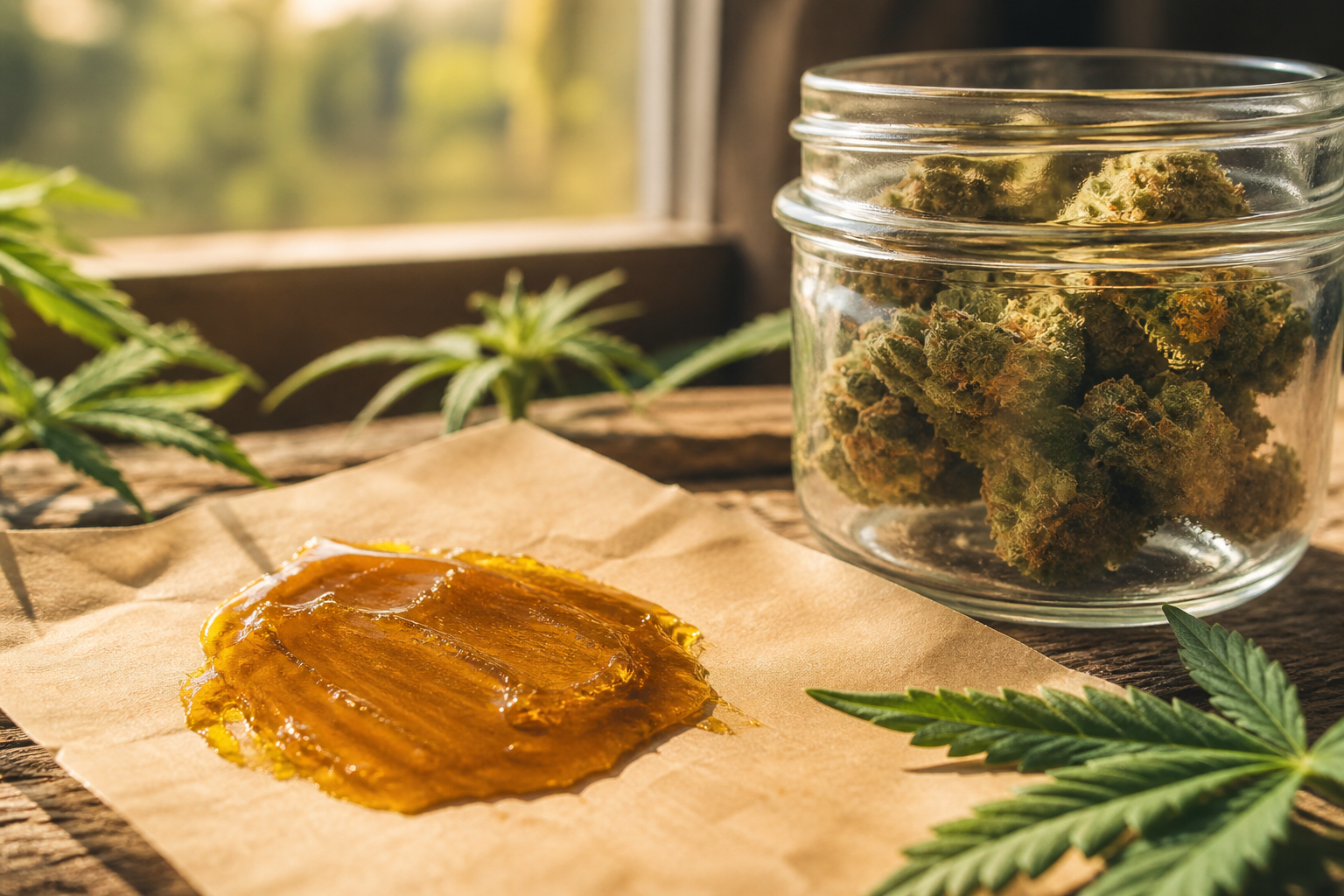
Rosin is made by squeezing cannabis between heated metal plates — the heat melts the trichomes and the pressure pushes the oil out onto parchment paper. No butane. No CO₂. No purge step. What you press is what you get.
The basic steps:
- Load the material — flower, hash, or kief goes into a fine mesh bag (called a micron bag) or between parchment sheets
- Apply heat — plates typically run 180°F–220°F for flower, 140°F–200°F for already-separated hash
- Apply pressure — usually 500–2,000 psi, applied slowly to avoid a "blowout" (bag rupture that lets plant matter into the oil)
- Collect the oil — golden to amber sap flows onto parchment; scrape and store
Heat liquefies the resin. Pressure forces it through the filter while plant matter stays behind. That is the whole process.
| Material Pressed | Typical Temp Range | What You Get |
|---|---|---|
| Dried flower | 180°F–220°F | Flower rosin — good yield, darker color possible |
| Dry sift / kief | 160°F–200°F | Hash rosin — cleaner, higher terpene retention |
| Bubble hash (fresh-frozen) | 140°F–180°F | Live rosin — lightest color, richest terp profile |
A rosin press temperature guide from The Press Club notes that lower temps preserve more terpenes but give lower yields. Higher temps push more oil out but can burn off delicate aroma compounds. Skilled pressers balance both.
Rosin typically tests 40%–75% THC, lower than high-purity distillate but with a fuller cannabinoid and terpene profile. Many consumers prefer that "full spectrum" feel over a single-compound distillate hit.
Flower Rosin vs Hash Rosin vs Live Rosin #
All three are rosin — the difference is what gets pressed and whether the plant was frozen fresh.
| Type | Starting Material | Color | Terpene Level | Price Tier |
|---|---|---|---|---|
| Flower rosin | Whole dried buds | Medium to dark amber | Good | $ |
| Hash rosin | Dry sift or bubble hash | Light to medium amber | Very good | $$ |
| Live rosin | Bubble hash from flash-frozen flower | Pale gold to cream | Excellent | $$$ |
Live rosin is the premium tier. The flower gets harvested and immediately frozen — never dried. That locks in terpenes that normally evaporate during curing. The frozen material gets washed into bubble hash, dried, then pressed. The result is a light, terp-rich oil that smells like the living plant.
Live rosin costs more because the process takes longer, yields less, and requires fresh-frozen starting material. If you want to understand why terpenes matter so much in concentrates, our terpene guide breaks it down in plain language.
Hash, Kief, and Bubble Hash Explained #
Hash is compressed trichomes — the resin glands collected from cannabis and pressed together without solvents. Kief is the loose powder form. Bubble hash is hash made with ice water. All three are solventless. All three can be smoked as-is or pressed into rosin.
Kief — the simplest concentrate. Trichomes fall off buds during handling or get sifted through fine screens. You have probably seen it at the bottom of a grinder. Kief is more potent than flower (often 30%–50% THC) but less refined than hash or rosin.
Dry sift hash — kief collected and pressed into a patty or ball. Hand-rubbed hash from traditional methods falls in this category too. Texture ranges from sandy to putty-like.
Bubble hash (ice water hash) — fresh or dried flower goes into ice-cold water. Agitation knocks frozen trichome heads off the plant. The mixture gets filtered through stacked micron bags. The trichomes sink; plant matter floats. What you collect is wet hash that must be dried before use.
| Hash Type | Method | Texture | Typical Use |
|---|---|---|---|
| Kief | Dry sifting or grinder collection | Fine powder | Sprinkle on bowls, press into rosin |
| Dry sift hash | Screen sifting + pressing | Sandy to soft patty | Smoke, vape, or press into rosin |
| Bubble hash | Ice water + agitation + filtration | Wet paste → dried crumbles | Smoke, press into live rosin |
| Pressed hash rosin | Bubble or dry hash + heat/pressure | Sticky oil on parchment | Dab or vape |
From Kief to Pressed Hash to Bubble Hash #
The quality ladder for solventless products usually looks like this:
- Kief — loose trichomes, easiest to make, lowest refinement
- Hash — trichomes collected and compressed, more potent per gram
- Rosin — hash or flower pressed under heat, highest purity and terpene retention
Each step removes more plant matter and concentrates the resin further. Each step also concentrates whatever contaminants were in the starting material — pesticides, mold spores, heavy metals. That is why hash and rosin from clean, organic flower is not just a taste preference. It is a safety issue.
Bubble hash quality gets graded by micron size and melt quality:
- Full melt — dissolves completely on a hot nail with no residue; top tier
- Half melt — mostly melts, small amount of residue left
- Cooking grade — more plant matter; better for pressing into rosin than dabbing directly
The Realm of Caring concentrates overview explains that ice water extraction preserves terpenes well because no heat or solvents touch the material during separation — only cold water and gentle agitation.
Solvent Extracts: BHO, Wax, Shatter, and Distillate #
Solvent extracts use a chemical — usually butane, propane, or CO₂ — to dissolve cannabis resin, then remove that chemical before the product is sold. When done right in a licensed lab, the result is a potent, clean oil. When done wrong — especially in unregulated home setups — leftover solvent and contaminants can remain.
Common solvent extract types:
| Product | Texture | How It Is Made | Typical THC |
|---|---|---|---|
| Shatter | Hard, glass-like sheet | BHO extraction + vacuum purge | 70%–90% |
| Wax / Budder | Soft, waxy, creamy | Same as shatter, different purge temps | 70%–85% |
| Live resin | Saucy, terp-rich | Solvent extract from flash-frozen flower | 65%–85% |
| Distillate | Clear, runny oil | Multi-stage refinement; terpenes often re-added | 85%–95%+ |
| CO₂ oil | Viscous oil | Supercritical CO₂ extraction | 60%–80% |
Shatter gets its name from the texture — it snaps like glass. Lower terpene content than live products, but very stable and easy to handle.
Wax and budder start the same way as shatter. Different purge temperatures and agitation create a softer, creamier texture. Some people find wax easier to dose because it does not shatter into flying pieces.
Live resin uses flash-frozen flower (like live rosin) but with solvent extraction instead of pressing. It captures more terpenes than standard BHO from dried flower. Do not confuse live resin (solvent) with live rosin (solventless) — the names sound alike but the processes are completely different.
Distillate is the most refined form. It goes through multiple distillation passes that strip everything except THC (or CBD). Producers often add terpenes back for flavor. Distillate powers most vape cartridges and infused edibles.
A 2022 study in PMC reviewed residual solvent risks in cannabis products and found that proper lab testing and purge protocols are essential for consumer safety. Michigan requires residual solvent panels on all inhaled concentrates — but passing a solvent test does not mean the starting flower was clean. It only means the chemical extraction step finished properly.
Never buy unregulated solvent extracts. Home BHO carries fire, explosion, and contamination risks. The Journal of Medical Toxicology review documented cases of cardiac and nervous system effects linked to residual butane in poorly purged products. Licensed Michigan products must pass CRA solvent limits before sale.
Why Clean Starting Material Matters Most for Concentrates #
When you concentrate cannabis, you concentrate everything in it — the good compounds and the bad ones. Pesticides, mold, heavy metals, and microbials that were barely detectable in flower can end up at much higher levels in the final extract. Clean inputs are not a luxury for concentrates. They are the whole game.
Think of it like making apple juice from bruised, sprayed fruit. You can filter and pasteurize all you want — you started with a bad apple. Concentrate production works the same way. Extraction pulls cannabinoids and terpenes into a smaller volume. Anything else on the plant comes along for the ride.
The NIDA marijuana concentrates fact sheet notes that concentrate production amplifies both potency and contamination risk. Research surveys have found significant rates of pesticide and solvent contamination in unregulated concentrate samples — a reminder that lab testing exists for a reason.
Why this hits harder with concentrates than flower:
| Contaminant | In Flower (typical) | In Concentrate (same batch) |
|---|---|---|
| Pesticides | Trace levels, spread across plant weight | Concentrated into resin — higher ppm per gram |
| Heavy metals | Absorbed from soil, low levels | Accumulate in extracted oil |
| Mold / yeast | May pass visual inspection | Spores and toxins concentrated in extract |
| Residual solvents | Not applicable (no solvents used on flower) | Must test below CRA action limits |
Michigan tests all cannabis products for pesticides, heavy metals, microbials, and mycotoxins before sale. But the test measures what is in the final product — not what the starting flower looked like. A concentrate made from heavily sprayed outdoor biomass can still pass if the pesticide levels fall below action limits after dilution or processing. That is why starting material quality matters beyond the pass/fail line on a COA.
Pesticides and Contaminants Get Concentrated Too #
You cannot wash pesticides out of trichomes the way you wash dirt off a tomato. Trichomes are the target of extraction. If pesticides bonded to those glands or got absorbed into the plant tissue, they end up in your rosin, hash, or BHO.
Some processors use color remediation — filtering extracts through activated carbon to lighten dark oil. This can remove some impurities and improve appearance. But as Veriheal's color remediation explainer notes, carbon filtration can mask poor starting material rather than fix it — and low-quality filter media can introduce new contaminants like silica.
What to look for instead:
- Organic or pesticide-free cultivation — fewer chemicals on the plant from the start
- Sun-grown, living-soil flower — healthier plants with less need for chemical intervention (see our sun-grown vs indoor guide)
- Full COA with passing pesticide panel — not just potency numbers
- Transparent sourcing — brands that name the farm or growing method
At Divine Toke, we grow sun-grown organic flower without synthetic pesticides. That matters for everything we sell — but it matters most for anything that gets concentrated. If you would not smoke the flower, you should not dab what came from it.
For a deeper look at why we skip pesticides entirely, read why we don't use pesticides on our cannabis.
How Potent Are Concentrates? Dabbing Basics for Newcomers #
Most concentrates test between 60% and 90%+ THC — roughly 3 to 6 times stronger than typical flower. That does not mean concentrates are only for experienced users. It means you start small, go slow, and respect the dose.
Quick potency comparison:
| Product Type | Typical THC Range | Equivalent Starting Dose |
|---|---|---|
| Flower | 15%–30% | 1–2 hits from a pipe or joint |
| Kief | 30%–50% | Small sprinkle on a bowl |
| Hash / Rosin | 40%–75% | Rice-grain-sized dab |
| BHO / Wax | 70%–90% | Half-rice-grain dab for beginners |
| Distillate | 85%–95%+ | Tiny dot on a tool — less is more |
Dabbing is the most common way to use concentrates. You heat a small surface (a "nail" or "banger"), apply a tiny amount of concentrate, and inhale the vapor. No flower involved. Fast onset — usually within minutes.
What you need to dab:
- Dab rig — a water pipe with a nail instead of a bowl
- Torch or e-nail — heats the nail to vaporization temp
- Dab tool — small metal or glass stick to pick up sticky concentrate
- Concentrate — rosin, wax, hash, or whatever you chose
E-rigs and electronic devices (Puffco-style vaporizers) remove the torch and set a consistent temperature. Good option for beginners who want control without an open flame.
The NIDA concentrates fact sheet warns that high-THC products carry a higher risk of overconsumption, anxiety, and rapid tolerance buildup. Start with the smallest dab you can manage. Wait 15–20 minutes before taking more.
Other ways to use concentrates without a rig:
- Twaxing — roll a small amount into a joint or place on a bowl
- Vape pen — pre-filled cartridges (usually distillate or live resin)
- Edibles made from concentrate — only from licensed products with known dosing; do not guess at home
If you are comparing delivery methods more broadly, our tincture vs flower vs edible guide walks through onset time, duration, and dosing for each format.
Dab Temperatures and First-Timer Tips #
Lower temps (350°F–450°F) preserve terpenes and taste smoother. Higher temps (500°F–700°F+) hit harder but can burn off flavor and irritate your throat.
| Temp Range | What Happens | Best For |
|---|---|---|
| 350°F–450°F (low) | Smooth vapor, full terp flavor | Live rosin, high-terp hash rosin |
| 450°F–550°F (medium) | Balanced vapor and potency | Most wax, budder, and flower rosin |
| 550°F+ (high) | Thick vapor, harsh hit, faster onset | Distillate, shatter (not recommended for beginners) |
First-timer rules:
- Start with a dot the size of a grain of rice — or smaller
- Use low temp if your device allows temperature control
- Sit down — the first dab can hit fast
- Do not mix with alcohol — both slow your reaction time
- Know your job's drug testing policy — concentrates can trigger tests at lower use levels than flower because THC levels are so much higher
Concentrates are not a race. A small, clean dab of quality rosin beats a huge glob of mystery wax every time.
How to Read a COA for Concentrates #
A COA (Certificate of Analysis) is the lab report that tells you what's actually in your concentrate — potency, terpenes, pesticides, solvents, heavy metals, and mold. Every Michigan cannabis product has one tied to its batch number. Learning to read it takes five minutes and saves you from bad purchases.
Step-by-step for concentrates:
1. Match the batch number. The lot/batch ID on the COA must match the label on your jar. Different batches = different test results. If they do not match, the COA is not for your product.
2. Check the test date. Cannabis degrades over time. Terpenes evaporate faster than THC. A COA from six months ago may not reflect what is in the jar today. Look for recent test dates — ideally within the last few months.
3. Read the cannabinoid panel. Look for:
| Compound | What It Tells You |
|---|---|
| THC / THCA | Total potency — THCA converts to THC when heated |
| CBD / CBDA | Non-intoxicating content; may modulate the high |
| CBG, CBN, CBC | Minor cannabinoids that shape the overall effect |
| Total cannabinoids | Sum of all detected compounds |
Potency shows as percent (%) or mg/g. Example: 800 mg/g THC = 80% THC. For concentrates, total THC above 60% is normal. Above 90% usually means distillate or highly refined product.
4. Scan the terpene panel (if included). Not all labs test terpenes on every batch, but when they do, look for named compounds — myrcene, limonene, caryophyllene, linalool. Higher numbers mean more aroma and entourage effect. Our terpene guide explains what each one does.
5. Check every safety panel for PASS. This is the most important step for concentrates:
| Panel | What It Tests | Why It Matters for Concentrates |
|---|---|---|
| Pesticides | Chemical residues from cultivation | Amplified in extraction |
| Heavy metals | Lead, arsenic, cadmium, mercury | Accumulate in oil |
| Microbials | Bacteria, yeast, mold | Concentrated in extracts |
| Mycotoxins | Toxins from mold | Health risk even at low flower levels |
| Residual solvents | Butane, propane, ethanol, etc. | Required for all solvent extracts |
One FAIL on any panel means the batch should not have been sold. If your product's COA shows a failure, do not use it — and report it to the dispensary.
The New York Office of Cannabis Management COA guide walks through each section with visual examples. The ACS Laboratory retail COA guide covers the same ground for hemp and cannabis products nationwide.
Michigan dispensaries must provide COAs on request — many post QR codes on packaging that link directly to the lab report. For a full breakdown of Michigan's testing system, see our lab tested guide.
Storage, Price Tiers, and What to Buy First #
Store concentrates cold, dark, and airtight — terpenes evaporate and THC degrades when exposed to heat, light, and air. Buy solventless from clean sources first if you are new. Price usually tracks starting material quality and processing labor, not just THC numbers.
How to Store Rosin, Hash, and Other Concentrates #
| Storage Factor | What to Do | What Happens If You Don't |
|---|---|---|
| Temperature | Refrigerator (35°F–40°F) or cool dark cabinet | Terpenes evaporate; rosin gets dry and crumbly |
| Light | Keep in opaque container or original packaging | UV breaks down cannabinoids |
| Air | Airtight glass jar; minimize opening | Oxidation darkens color and reduces potency |
| Humidity | Low humidity for rosin; avoid moisture for hash | Mold risk on wet products; rosin "budders up" |
| Silicone | Short-term only — silicone can hold onto terpenes | Long-term terpene loss into the container walls |
Rosin stored properly in a fridge can hold quality for 2–3 months. Distillate lasts longer — 6–12 months — because most terpenes were stripped during processing. Hash sits in between. When in doubt, smell it. If the aroma is gone and the texture looks off, it is past its prime.
Take concentrates out of the fridge 10–15 minutes before use so they warm to room temp. Cold rosin is stiff and hard to work with.
Price Tiers and Where to Start #
Concentrate pricing in Michigan typically breaks down like this:
| Tier | Product Examples | Why It Costs More |
|---|---|---|
| Budget ($15–$30/g) | Trim run wax, mid-grade BHO, kief | Lower starting material; higher yield, less labor |
| Mid ($30–$50/g) | Flower rosin, dry sift hash, live resin | Better flower input; more processing time |
| Premium ($50–$80+/g) | Live rosin, full-melt bubble hash | Fresh-frozen input; ice wash + press; low yield |
If you are new to concentrates, start here:
- Mid-grade rosin or hash rosin — solventless, full terp profile, easier to dose than distillate
- Check the COA — confirm passing pesticide and microbial panels
- Ask about the source flower — sun-grown organic beats mystery biomass
- Skip the biggest THC number — 90% distillate is not a better first experience than 65% live rosin
The jump from flower to concentrates is real. You do not need the strongest product on the shelf. You need a clean product from a source you trust.
If you want to understand how full-spectrum products compare to isolated THC, our full spectrum vs broad spectrum vs isolate guide covers the cannabinoid spectrum in plain language.
Frequently Asked Questions #
What is cannabis rosin? #
Rosin is a solventless concentrate made by pressing cannabis flower, hash, or kief between heated plates — no chemicals involved. Heat melts the trichomes and pressure squeezes the oil onto parchment paper. It typically tests 40%–75% THC and keeps a full terpene profile. Live rosin — pressed from bubble hash made with flash-frozen flower — is the premium tier.
What is the difference between rosin and hash? #
Hash is compressed trichomes; rosin is hash (or flower) that has been pressed under heat to extract a liquid oil. You can smoke hash as-is. Rosin is the refined oil that comes out when you press hash or flower. Both are solventless. Rosin is usually cleaner, more potent, and more terp-rich than unpressed hash.
Are solventless concentrates safer than BHO? #
Solventless concentrates carry no residual solvent risk because no chemicals are used in extraction. BHO and other solvent extracts can be safe when made in licensed labs and tested below Michigan CRA action limits — butane fails above 800 ppm for inhaled products. The bigger safety variable for both types is starting material quality, not just the extraction method.
What is live rosin? #
Live rosin is rosin pressed from bubble hash made with flash-frozen cannabis — flower that was frozen immediately after harvest, never dried. That preserves terpenes that normally evaporate during curing. The result is a light-colored, aromatic oil that costs more because the process yields less and takes longer.
How potent are cannabis concentrates compared to flower? #
Concentrates typically test 60%–90%+ THC, compared to 15%–30% for most flower — roughly 3 to 6 times stronger per gram. The NIDA marijuana concentrates page notes that this higher potency means smaller doses go further — but also means overconsumption happens faster if you are not careful.
Why does dirty flower make dirty concentrates? #
Extraction concentrates everything in the plant — cannabinoids, terpenes, pesticides, heavy metals, and mold — into a smaller volume. Pesticides at trace levels in flower can reach much higher concentrations in the final extract. You cannot make a clean concentrate from contaminated starting material. Clean cultivation is the first and most important safety step.
How do I read a COA for concentrates? #
Match the batch number, check the test date, read the THC/CBD potency, then confirm every safety panel shows PASS — especially pesticides, heavy metals, microbials, and residual solvents. Potency shows as percent or mg/g (800 mg/g = 80% THC). The ACS Laboratory COA guide walks through each section. See our full lab tested guide for Michigan-specific rules.
What is kief? #
Kief is the collection of loose trichomes — the powdery crystals that fall off cannabis buds during grinding or sifting. It is the simplest concentrate form. More potent than flower (30%–50% THC typical) but less refined than hash or rosin. You can sprinkle it on a bowl, roll it into a joint, or press it into rosin.
How should I store rosin and hash? #
Keep rosin and hash in an airtight glass container in the refrigerator (35°F–40°F), away from light. Terpenes evaporate with heat and air exposure. Properly stored rosin holds quality for 2–3 months. Take it out 10–15 minutes before use so it warms to room temperature and is easier to handle.
Is rosin worth the extra cost? #
Rosin costs more because it uses more starting material, yields less oil, and requires more labor — but you get a full terpene profile with zero solvent risk. Premium live rosin ($50–$80+/g in Michigan) reflects fresh-frozen input and ice-water hash processing. For many consumers, the flavor and peace of mind justify the price over budget wax.
What temperature should I dab at? #
Start at 350°F–450°F for smooth, flavorful hits — especially with live rosin and hash rosin. Medium temps (450°F–550°F) balance flavor and potency for wax and flower rosin. High temps (550°F+) hit harder but burn terpenes and irritate your throat. Use an e-rig or temperature-controlled device if you want consistent results.
Can beginners use concentrates safely? #
Yes — start with a dot the size of half a grain of rice, use low dab temps, and wait 15–20 minutes before taking more. Choose mid-grade rosin or hash rosin from a licensed dispensary with a clean COA. Avoid jumping straight to high-THC distillate or large dabs. Sit down for your first session. Concentrates are not harder to use — they just require more respect for the dose.
Closing #
Concentrates are not some separate world for "heavy users." They are cannabis with the plant matter stripped away — nothing more. Rosin and hash do it without chemicals. BHO and distillate use solvents that must be fully purged and tested. All of them share one rule that matters more than any processing trick: what goes in is what comes out, just stronger.
If the starting flower was sprayed, moldy, or grown in contaminated soil, the concentrate will carry all of that at higher levels. Clean, sun-grown, organic input is not marketing talk here. It is the difference between a product you can trust and one that just passed a lab threshold.
Want to go deeper?
- What "Lab Tested" Actually Means in Michigan — how to read COAs and what Michigan requires
- Tincture vs Flower vs Edible — compare delivery methods if concentrates feel like too big a jump
- Sun-Grown vs Indoor Cannabis — why how the plant was grown affects what ends up in your jar
- What Are Terpenes? — the aroma compounds that make live rosin worth the price
At Divine Toke, we grow sun-grown organic flower in Michigan without synthetic pesticides. That foundation matters for everything — but it matters most when cannabis gets concentrated. If you are curious to try concentrates, start with solventless products from clean sources and read the COA before you buy.
This article is for educational purposes only and is not medical advice. Always consult your healthcare provider before starting any new wellness routine.
Grown in Detroit. Shipped to your door.
Small-batch, sun-grown cannabis cultivated in living soil. Mail-order shipping to all 50 states.