CBD Isn't Just CBD: Full-Spectrum, Broad-Spectrum, and Isolate Decoded

Jamie
Head Cultivator
Full-spectrum CBD keeps the whole hemp plant — including a tiny legal amount of THC. Broad-spectrum CBD keeps most of the plant but strips out THC. CBD isolate is just pure CBD powder with everything else removed. Same letters on the label. Three very different products. If you get drug tested at work, that difference can cost you your job.
This guide answers the question most shoppers actually ask: What's the difference between full-spectrum, broad-spectrum, and CBD isolate — and which should I buy? By the end, you will know what each type contains, who each one fits, and how to read a label so nobody sells you the wrong spectrum by accident.
Quick Answer: Which CBD Type Should You Buy? #
Pick full-spectrum if you want the fullest plant effects and you are not drug tested. Pick broad-spectrum if you want plant teamwork without THC. Pick isolate if you need pure CBD only — especially for zero-tolerance jobs.
| Your Priority | Buy This | Skip This |
|---|---|---|
| Maximum entourage-style benefits | Full-spectrum | Isolate (too stripped down) |
| Calm, sleep, or pain — no THC exposure | Broad-spectrum (COA verified) | Full-spectrum |
| Union job, DOT, or random urine screens | Isolate or COA-verified broad-spectrum | Full-spectrum |
| Exact milligram tracking | Isolate | Full-spectrum blends |
| First time trying CBD | Broad-spectrum or low-dose full-spectrum | High-dose isolate without a plan |
Still not sure? Read the full breakdown below — each section stands on its own if you want to jump to drug tests, COAs, or the entourage effect.
What Are Full-Spectrum, Broad-Spectrum, and CBD Isolate? #
Full-spectrum CBD is the whole hemp plant in a bottle. Broad-spectrum CBD is the same plant with THC stripped out. CBD isolate — pure CBD powder with everything else removed — is just one ingredient with no backup singers. Think of it like food: full-spectrum is a full home-cooked meal with spices, sides, and sauce. Isolate is a single vitamin pill. Broad-spectrum sits in the middle — most of the meal, but someone removed the one ingredient your boss tests for.
All three products can legally be sold as "CBD." That is why the label matters more than the big letters on the front.
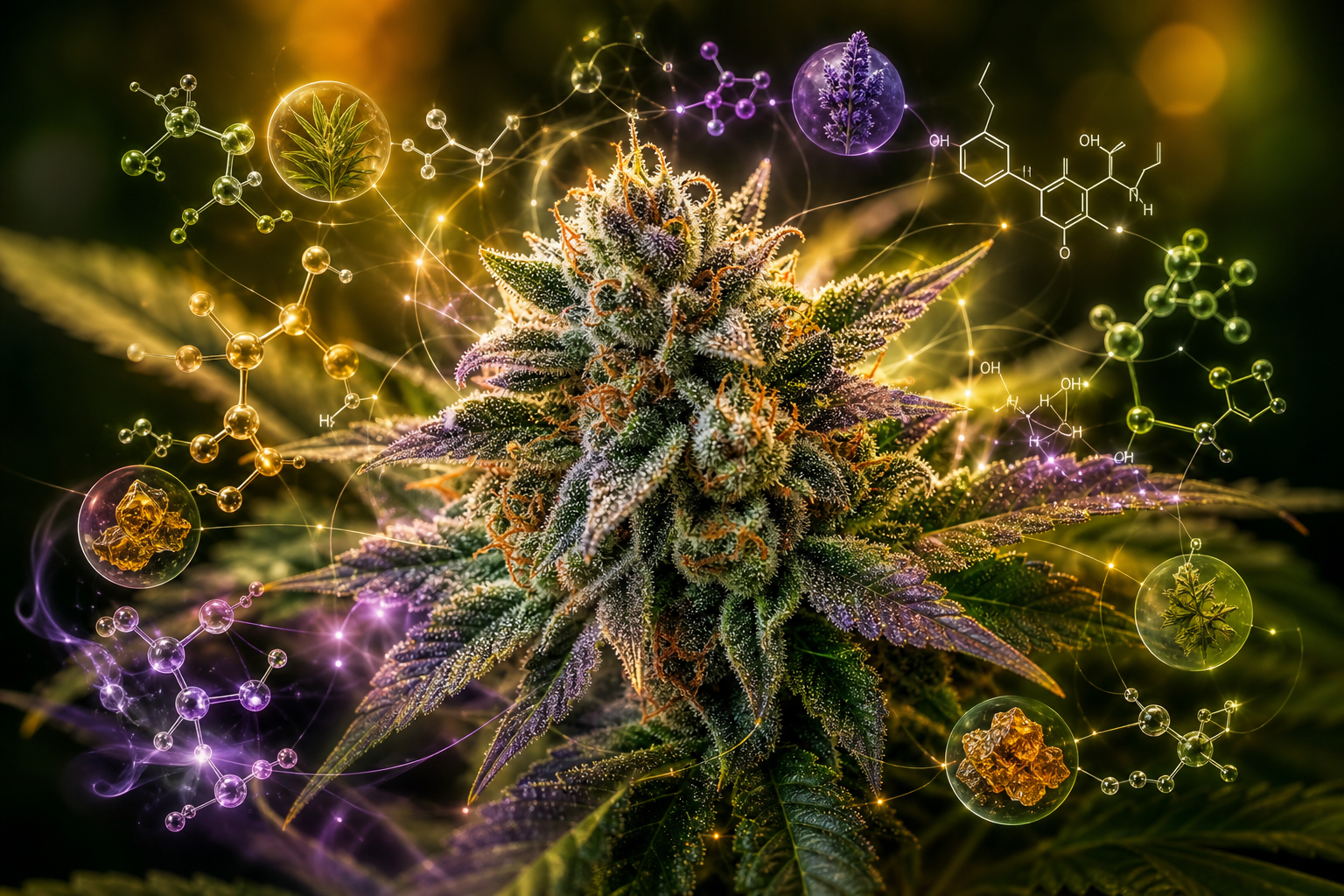
CBD — short for cannabidiol — is a non-intoxicating compound from hemp that may help with pain, sleep, and calm without the strong high of THC. THC — tetrahydrocannabinol — is the compound that gets you high and shows up on most workplace drug screens. Terpenes — the smell compounds in cannabis, like myrcene (earthy, mango-like) and linalool (floral, calming) — shape how CBD and THC feel in your body. Minor cannabinoids — compounds like CBG, CBN, and CBC that appear in small amounts — may add their own effects and team up with CBD through the entourage effect.
The Three-Way Comparison (Side by Side) #
| What to Check | Full-Spectrum CBD | Broad-Spectrum CBD | CBD Isolate |
|---|---|---|---|
| CBD content | Yes — plus many other compounds | Yes — plus other compounds (no THC) | Yes — 99%+ pure CBD only |
| THC content | Up to 0.3% delta-9 THC (legal hemp limit) | Aimed at 0% THC — but verify the COA | 0% THC |
| Other cannabinoids | CBG, CBN, CBC, and more | Usually kept — check the COA | None |
| Terpenes | Yes — full aroma profile | Usually yes | None |
| Entourage effect | Strongest chance of plant teamwork | Partial — no THC in the mix | None — single molecule only |
| Drug-test risk | Highest — trace THC can build up | Lower — but not zero without lab proof | Lowest for THC |
| Best plain-English fit | "Give me everything the plant offers" | "Plant benefits, zero THC on purpose" | "I only want CBD, nothing else" |
| Typical form | Oils, tinctures, softgels, flower | Oils, gummies, topicals | Powder, crystals, some oils |
None of these three is automatically "best." The right pick depends on your body, your goals, and whether a urine screen is part of your job.
Full-Spectrum CBD: The "Full Meal" Option #
Full-spectrum CBD keeps every compound the hemp plant naturally makes — CBD, trace THC, terpenes, flavonoids, and minor cannabinoids — so they can work together as a team. Federal law allows hemp products to contain up to 0.3% delta-9 THC by dry weight, which is not enough to get most people noticeably high, but it is enough to matter for drug tests and for the entourage effect.
Many people find full-spectrum products feel smoother and more complete than isolate. Early research suggests the extra plant compounds may help CBD do its job across a wider dose range — not just at one narrow sweet spot.
What Stays in Full-Spectrum CBD #
A true full-spectrum extract starts with whole hemp flower or biomass, not a lab-made single molecule. What typically stays in the bottle:
- CBD — the main active ingredient you are buying
- Trace THC — legally up to 0.3%, often listed as "total THC" or "delta-9 THC" on a certificate of analysis (COA — a third-party lab report that proves what is actually in the product)
- Minor cannabinoids — CBG (may support focus and calm), CBN (often linked to sleep), CBC (early research ties it to comfort and mood), and dozens more in small amounts
- Terpenes — smell compounds that may shift how relaxed, sleepy, or alert you feel
- Flavonoids — plant pigments with their own antioxidant properties
| Compound Group | What It Does (Plain English) | Why Full-Spectrum Keeps It |
|---|---|---|
| CBD | Main calming, anti-swelling compound | Core of the product |
| Trace THC | Tiny legal amount; may boost pain and sleep relief | Part of the entourage team |
| Terpenes | Shape aroma and may guide effects | Lost when you strip the plant down |
| Minor cannabinoids | Backup players with their own jobs | Isolate removes all of them |
Who Full-Spectrum CBD Is Best For #
Full-spectrum makes the most sense when:
- You are not subject to random drug testing — construction sites, factories, trucking, healthcare, and many union jobs still screen for THC
- You want the fullest plant experience — especially for pain, sleep, or general wellness where the entourage effect may matter
- Lower doses of CBD have not worked for you — a 2015 Hebrew University study found that whole-plant CBD-rich extract worked across a wider dose range than purified CBD alone, which hit a narrow "bell curve" where only one dose helped
- You already use cannabis and tolerate THC well — the trace amount may feel like a gentle boost, not a problem
Why the 0.3% THC Limit Matters #
That 0.3% delta-9 THC figure comes from the federal hemp definition in the 2018 Farm Bill — not from a safety study saying that amount is harmless for drug tests. It is a legal line, not a personal guarantee. A 1 mL dropper of full-spectrum oil labeled 1000 mg CBD can still carry 2–3 mg of THC per day if you take a full serving — enough to accumulate over weeks. Dose, body weight, and how often you use it all change your risk.
| Daily Habit | Full-Spectrum Risk Snapshot |
|---|---|
| One dropper, a few times a week | Lower test risk — not zero |
| Full serving every morning and night | THC builds up — test risk rises fast |
| High-CBD, low-label-THC product with no COA | Unknown — could be mislabeled either direction |
If that table makes you nervous, that is the point. Broad-spectrum or isolate exists for exactly this reason.
Broad-Spectrum CBD: Most of the Plant, No THC #
Broad-spectrum CBD is full-spectrum hemp with the THC removed on purpose — keeping CBD, terpenes, and minor cannabinoids while aiming for zero detectable THC. It is the middle option: more plant teamwork than isolate, less drug-test worry than full-spectrum. But "THC-free" on a label is a marketing claim, not a promise. You still need a lab report to know for sure.
How Broad-Spectrum CBD Is Made #
Manufacturers start with a full-spectrum hemp extract, then remove THC using lab separation methods. The most common approach is chromatography — a process that runs the oil through a medium (often silica) and a solvent so THC sticks while CBD and other compounds pass through. Countercurrent chromatography (CPC) — a two-phase liquid separation method — is another tool some labs use for cleaner THC removal.
Plain-English version: imagine pouring mixed nuts through a sieve that catches only the peanuts (THC) while almonds and cashews (CBD and friends) fall through.
| Step | What Happens | Why It Matters to You |
|---|---|---|
| 1. Full-spectrum extract | Whole plant oil is pulled from hemp | Starts with the full compound profile |
| 2. THC separation | Chromatography or similar removes THC | Gets you closer to "THC-free" |
| 3. Re-testing | Third-party lab runs a new COA | Proves THC is below detectable limits |
| 4. Blending | Oil may be mixed with a carrier (MCT oil, etc.) | Final product matches label strength |
Some broad-spectrum products also add terpenes back after processing. That can help effects, but it is not the same as terpenes that never left the plant. When in doubt, read the COA cannabinoid panel — not just the front label.
Who Broad-Spectrum CBD Is Best For #
Broad-spectrum fits best when:
- You want entourage-style benefits without intentional THC — many people report broad-spectrum feels "fuller" than isolate for anxiety and sleep
- You face drug testing but still want more than pure CBD — risk is lower than full-spectrum, but not zero until a lab confirms it
- Full-spectrum made you uneasy or groggy — removing THC while keeping terpenes and minor cannabinoids may feel cleaner
- You are new to CBD and want a balanced starting point — broad-spectrum is a common middle ground before you commit to one end of the spectrum
Honest caveat: a 2021 Quest Diagnostics review focused on full-spectrum risks, but poorly made or mislabeled "THC-free" products have also triggered positive screens in case reports. Treat "broad-spectrum" as a category to verify, not a guarantee.
CBD Isolate: Pure CBD, Nothing Else #
CBD isolate is 99%+ pure cannabidiol — a white powder or crystal with no THC, no terpenes, and no minor cannabinoids. It is the most stripped-down form of CBD you can buy. That purity has upsides (predictable dosing, lowest THC risk) and downsides (no plant teamwork, tricky dose window).
The Bell-Curve Dose Problem With Isolate #
Here is the science that changed how many researchers think about CBD types. In a 2015 study from Hebrew University of Jerusalem — published in Pharmacology & Pharmacy and indexed on PubMed (PMID 30328956) — researchers compared purified CBD to a whole-plant CBD-rich extract.
What they found:
| CBD Form | Dose Response | What That Means for You |
|---|---|---|
| Purified CBD (isolate) | Bell-shaped curve — worked only in a narrow middle dose | Too little did nothing. Too much did nothing. Only one zone helped. |
| Whole-plant CBD-rich extract | Worked across a wide dose range | More forgiving if your dose is a little off |
The isolate group showed pain and swelling relief only at a specific concentration. Higher and lower doses both failed. The whole-plant extract kept working across a broader range — which is exactly what the entourage effect predicts.
That does not mean isolate is useless. It means you may need more trial and error to find your sweet spot — and you will not get backup from terpenes or minor cannabinoids.
Who CBD Isolate Is Best For #
Isolate makes the most sense when:
- You cannot have any THC exposure — zero-tolerance jobs, probation, medical protocols, or personal preference
- You want to measure exact CBD milligrams — isolate is easy to weigh and mix; no guessing what else is in the scoop
- You react badly to terpenes or other plant compounds — some people get headaches or stomach upset from full oils
- You are making your own products — isolate dissolves into carrier oils, drinks, or topicals without changing flavor much
- You are stacking CBD with other supplements — a single ingredient is easier to track
Many people find isolate milder overall. If full-spectrum and broad-spectrum both fell flat, isolate is worth a structured dose trial — start low, hold steady for a week, then adjust slowly.
Does the Entourage Effect Change Which Type You Should Buy? #
Early research suggests the entourage effect — when cannabinoids, terpenes, and other plant compounds team up for stronger results — favors full-spectrum and broad-spectrum over isolate, but human proof is still catching up. The entourage effect is real enough that scientists keep studying it. It is not strong enough yet to say "always buy full-spectrum" for every person and every condition.
What the Evidence Shows So Far #
| Study or Review | What They Tested | Key Takeaway |
|---|---|---|
| Hebrew University 2015 whole-plant vs. isolate study | Purified CBD vs. CBD-rich extract in mice | Whole-plant extract beat isolate's narrow dose window |
| Drexel / Johns Hopkins 2024 THC + d-limonene trial | 30 mg THC with 15 mg d-limonene (a citrus terpene) vs. THC alone | THC plus terpene cut anxiety and paranoia vs. THC alone — one of the first modern human trials backing entourage-style synergy |
| 2023 Cannabis and Cannabinoid Research review (Sage) | Full-spectrum vs. isolate across conditions | Full-spectrum often outperforms isolate in preclinical work; human data remain limited |
| 2024 PMC review on cannabinoid combinations (PMC11870048) | Multi-compound cannabis extracts | Combined compounds may reduce side effects and broaden benefits — more research needed |
Bottom line for shoppers: if you want the best shot at entourage-style benefits, start with full-spectrum (no drug test) or broad-spectrum (drug test concerns). If you need purity and predictability, isolate is the tool — just expect a narrower dose window.
For a deeper dive on how plant compounds team up, read our guide to the entourage effect and why whole-plant cannabis beats isolates. For the building blocks — what cannabinoids actually are and how they plug into your body's endocannabinoid system (your body's own cannabis-like signaling network) — start there before you buy.
Drug Tests, THC Traces, and What Union Workers Need to Know #
Full-spectrum CBD can make you fail a workplace urine drug test — even if you never feel high. Trace THC (up to 0.3% in legal hemp products) can build up in your body with daily use. Your employer's test is not checking whether you were impaired. It is checking for THC-COOH — a breakdown product of THC — often at a cutoff of 50 ng/mL.
This section is not meant to scare you. It is meant to keep you employed.
How THC From CBD Products Shows Up on Tests #
| CBD Type | Typical THC Exposure | Drug-Test Risk Level |
|---|---|---|
| Full-spectrum | Up to 0.3% delta-9 THC per serving; adds up daily | High with regular use |
| Broad-spectrum | Aimed at 0%; verify on COA | Moderate — depends on lab quality |
| CBD isolate | No intentional THC | Lowest — watch for cross-contamination |
Quest Diagnostics reported in 2021 that full-spectrum hemp CBD products may trigger positive THC results on urine screens because they contain legally permitted THC. Perplexity-cited consumer studies suggest roughly half of consistent full-spectrum users tested positive after several weeks of daily use — individual results vary by dose, body fat, metabolism, and test sensitivity.
What "THC-Free" Labels Actually Guarantee #
Nothing — unless a current third-party COA proves it. Labels lie. Labs do not.
Before you trust any "THC-free" or "non-detect" claim:
- Find the batch-specific COA — match the batch or lot number on your bottle to the report on the company's website
- Check "total THC" and "delta-9 THC" — both should read ND (not detected) or below your test's cutoff
- Confirm the lab is independent — ISO 17025 accreditation is the gold standard for testing labs
- Skip the product if there is no COA — especially if your job depends on a clean screen
If you work a union job, drive commercial, operate heavy machinery, or get random screens, treat full-spectrum CBD as a gamble you probably should not take. Broad-spectrum with a verified COA, or isolate from a trusted source, is the safer lane. When in doubt, talk to your union rep or occupational health office before you start any CBD product — not after a failed test.
Which CBD Type Works Best for Pain, Sleep, and Anxiety? #
No single CBD type wins for every condition — but full-spectrum and broad-spectrum often outperform isolate for pain, sleep, and calm, while isolate is the safest pick when THC must stay at zero. Research has not crowned one type for all three goals. Many people find their best fit through a short, structured trial.
Pain #
Early research and patient reports often favor full-spectrum for discomfort because trace THC and minor cannabinoids like CBG may add their own relief paths. A 2021 review in PMC9429743 noted emerging evidence that multi-compound cannabis extracts may outperform single-molecule CBD for pain — though human trials remain limited.
| If Your Priority Is… | Start Here | Why |
|---|---|---|
| Strongest possible relief, no drug test | Full-spectrum | Widest compound profile |
| Relief without THC exposure | Broad-spectrum | Keeps minor cannabinoids and terpenes |
| Zero THC, predictable dosing | Isolate | Pure CBD — may need dose fine-tuning |
Sleep #
For sleep, full-spectrum or broad-spectrum products with calming terpenes (myrcene, linalool) and minor cannabinoid CBN are common starting points. Trace THC in full-spectrum may help some people fall asleep faster. Others find even tiny THC disruptive — broad-spectrum is the usual backup.
Isolate can help sleep for people who respond well to CBD alone, but many people report it feels weaker than spectrum products for nighttime use.
Anxiety and Stress #
Broad-spectrum is a popular anxiety pick: terpenes like linalool and limonene may support calm without adding THC-related worry. Full-spectrum helps many people too — especially when low-dose THC is tolerated. A 2024 Drexel-highlighted trial showed terpenes reducing THC-driven anxiety — a reminder that plant chemistry cuts both ways.
Isolate works for anxiety when you need zero THC and simple dosing. Expect to hunt for your dose sweet spot because of the bell-curve effect noted in the Hebrew University isolate study.
Quick Pick Guide #
| Your Situation | Best Starting Type |
|---|---|
| Chronic pain, no drug test | Full-spectrum |
| Pain + random drug screens | Broad-spectrum with verified COA |
| Sleep problems, THC-sensitive | Broad-spectrum with CBN-focused formulas |
| Daily anxiety, union job | Broad-spectrum or isolate |
| Need exact mg tracking | Isolate |
| Tried CBD before and felt nothing | Full-spectrum or broad-spectrum (you may have under-dosed isolate) |
None of this replaces medical advice. CBD is not FDA-approved to treat pain, insomnia, or anxiety. Many people find it helpful. Your mileage will vary.
How to Read a CBD Label and Certificate of Analysis (COA) #
The label tells you what the company wants you to believe. The COA — a certificate of analysis from an independent lab — tells you what is actually in the bottle. If you cannot find a batch-matched COA, put the product back. This one step prevents more bad buys than any brand name.
Label Red Flags vs. Green Flags #
| Label Claim | Green Flag | Red Flag |
|---|---|---|
| "Full-spectrum" | COA lists multiple cannabinoids + terpenes | Only CBD on the COA, nothing else |
| "THC-free" / "0% THC" | COA shows ND for total THC | No COA, or COA older than 12 months |
| "1000 mg CBD" | COA potency matches per-bottle or per-serving math | Numbers do not add up |
| "Third-party tested" | Named lab with ISO 17025 (or state-equivalent) accreditation | "Lab tested" with no lab name or report link |
| "Made in USA" | Hemp origin and manufacturer listed | Vague "distributed by" only |
The New Jersey Cannabis Regulatory Commission's COA guide (PDF) — useful even outside New Jersey — walks through the same panels Michigan labs use: cannabinoid potency, pesticides, heavy metals, residual solvents, and microbes.
Five COA Checkpoints (Do This Before Every Purchase) #
- Match the batch number — the lot on your bottle must match the COA header
- Read cannabinoid potency — confirm CBD mg match the label; check delta-9 THC and total THC
- Scan the safety panel — pesticides, heavy metals, solvents, and microbes should show ND (not detected) or pass
- Verify the lab is real — search the lab name; confirm accreditation; beware of photocopied generic reports
- Check the date — tests older than a year may not reflect what you are holding today
In Michigan, cannabis products from licensed dispensaries follow strict state testing rules. Hemp-derived CBD sold outside dispensaries varies widely in quality. Our guide on what lab-tested means for cannabis in Michigan explains how regulated Michigan cannabis testing works — a useful benchmark even when you are buying hemp CBD online or at a health store.
Hemp vs. dispensary cannabis: Michigan adult-use flower and concentrates from licensed shops carry state-mandated COAs. Hemp CBD oils from gas stations and Instagram ads often do not. Treat them differently.
Price, Quality, and Common Buying Mistakes #
Full-spectrum is not always the most expensive option — and a high price tag does not mean a product is full-spectrum, clean, or honest. Processing costs, marketing, and retail markup swing prices more than most shoppers realize. Knowing the common mistakes saves money and bad experiences.
Typical Price Tiers (What You Are Paying For) #
| CBD Type | Why It Costs What It Costs | What to Watch |
|---|---|---|
| Full-spectrum | Less processing — closer to raw extract | Cheap full-spectrum may mean dirty hemp or skipped safety testing |
| Broad-spectrum | Extra chromatography step to remove THC | You pay for the THC-removal step — verify it actually worked on the COA |
| Isolate | Most processing to reach 99%+ purity | Low-cost isolate may come from industrial hemp with heavy-metal risk |
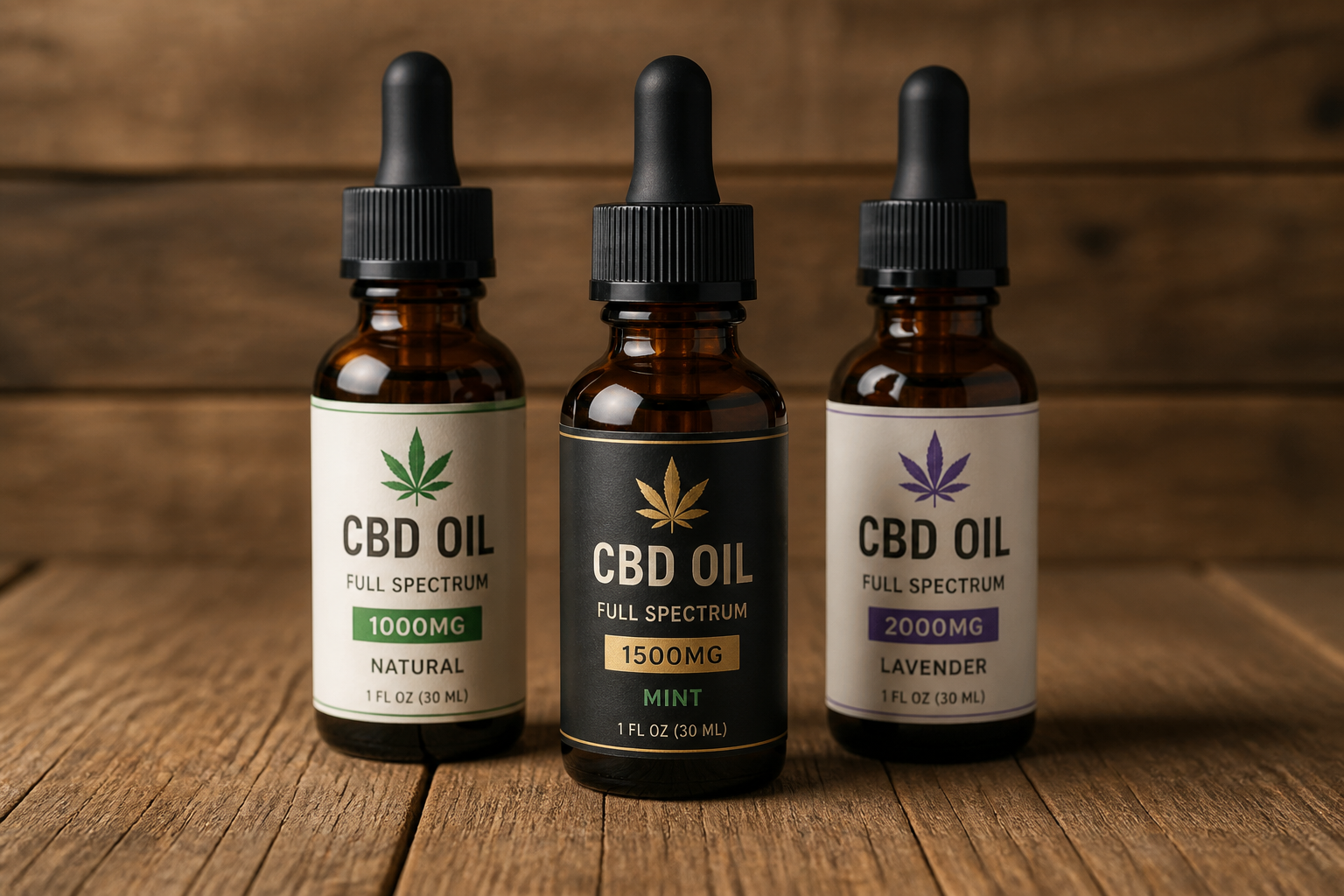
Price per milligram of CBD matters more than bottle size. A 30 mL bottle at 1000 mg CBD and a 30 mL bottle at 300 mg CBD are not the same deal because the second one is mostly carrier oil.
Seven Mistakes Shoppers Make #
- Buying "CBD" without checking the spectrum type — isolate and full-spectrum are not interchangeable
- Trusting "THC-free" without a COA — especially dangerous if you get drug tested
- Assuming more expensive means safer — some premium brands skip full safety panels
- Starting with a huge dose of isolate — bell-curve dosing means more is not always better; the Hebrew University study showed purified CBD failed at both low and high doses
- Ignoring terpenes and minor cannabinoids — then wondering why isolate feels "weak"
- Switching types mid-trial — give each type at least 7–10 days at a steady dose before you judge it
- Buying hemp CBD with no pesticide or heavy-metal panel — your liver and lungs do not need that gamble
Why Clean Source Material Matters #
Organic, sun-grown hemp with transparent farming practices tends to produce cleaner extracts with richer terpene profiles. Pesticide-heavy industrial hemp can pass CBD potency tests while still failing safety panels — or worse, skip testing entirely.
At Divine Toke, we grow sun-grown organic cannabis in Michigan with the full plant profile intact — not because we think everyone needs full-spectrum CBD oil, but because we believe you should know what "whole plant" actually means before you choose a spectrum type. Whether you buy from us or elsewhere, demand the COA.
Frequently Asked Questions #
What's the difference between full-spectrum and broad-spectrum CBD? #
Full-spectrum CBD contains up to 0.3% THC plus the full range of hemp compounds; broad-spectrum CBD removes THC while keeping most other cannabinoids and terpenes. Both aim for entourage-style plant teamwork. Only full-spectrum includes intentional trace THC. If your job drug-tests, that difference is not academic — it is practical.
Is broad-spectrum CBD really THC-free? #
Broad-spectrum CBD is designed to have zero detectable THC, but you must verify that on a batch-specific COA — not the front label. Chromatography removes most THC, but sloppy manufacturing or mislabeling happens. Look for "ND" (not detected) on total THC and delta-9 THC lines before you trust a "THC-free" claim.
Will full-spectrum CBD make me fail a drug test? #
Yes — daily full-spectrum CBD use can trigger a positive urine THC screen, even if you never feel high. Quest Diagnostics warned in 2021 that legal hemp THC (up to 0.3%) accumulates enough to hit common 50 ng/mL cutoffs. If you are union, DOT, healthcare, or any zero-tolerance workplace, assume the risk is real.
What is CBD isolate used for? #
CBD isolate is used when you want pure CBD with no THC, terpenes, or other cannabinoids — common for drug-test-sensitive jobs, DIY mixing, and precise dosing. It is 99%+ pure CBD powder or crystal. Many people use it in homemade oils, topicals, or capsules where flavor and compound count must stay simple.
Which type of CBD is strongest? #
Full-spectrum CBD is often considered the "strongest" for overall effects because it includes trace THC and the widest compound profile — but "strongest" depends on your goal and body. For pure CBD milligrams per dollar, isolate concentrates the most CBD per gram. For felt relief across pain, sleep, and calm, many people report full-spectrum or broad-spectrum outperform isolate.
Can I use CBD isolate if full-spectrum makes me anxious? #
Yes — CBD isolate removes THC and terpenes, both of which can contribute to unease in sensitive people. Start with a low dose (10–25 mg) and hold it steady for a week. Remember the Hebrew University bell-curve finding: isolate may only work in a narrow dose window, so adjust slowly rather than jumping to high doses.
How do I know if a CBD product label is honest? #
Match the product batch number to a current third-party COA from an ISO 17025-accredited lab — if you cannot, the label is unverified. Check that CBD potency, THC levels, and safety panels (pesticides, heavy metals, solvents) all appear on the report. The New Jersey COA reading guide lists the same sections reputable Michigan labs report.
Is full-spectrum CBD legal in Michigan? #
Yes — hemp-derived full-spectrum CBD with up to 0.3% delta-9 THC is federally legal under the 2018 Farm Bill and sold legally in Michigan. Michigan also has a separate licensed cannabis market with its own testing rules. Hemp CBD and dispensary cannabis follow different regulatory paths — both can be legal, but they are not the same product category.
Does the entourage effect mean I should always buy full-spectrum? #
No — the entourage effect suggests full-spectrum and broad-spectrum may work better for many people, but drug tests, THC sensitivity, and personal response still matter. A 2023 review in Cannabis and Cannabinoid Research found full-spectrum often beats isolate in preclinical studies, but human proof is still building. Choose the spectrum type that fits your life first, then optimize for entourage benefits within that lane.
Which CBD type is best for sleep without getting high? #
Broad-spectrum CBD with calming terpenes (myrcene, linalool) and CBN is a common sleep starting point when you want to avoid THC's psychoactive effects. Full-spectrum may work better for some people's sleep but carries trace THC. Isolate can help if you respond to CBD alone — try 25–50 mg about an hour before bed and track results for two weeks.
Why is full-spectrum CBD cheaper than isolate sometimes? #
Full-spectrum requires less processing — manufacturers do not pay for the extra chromatography steps that isolate and broad-spectrum demand. Lower price does not always mean lower quality, but cheap full-spectrum from unknown sources may skip pesticide and heavy-metal testing. Always check the COA, not just the price tag.
Can I switch from one CBD type to another safely? #
Yes — switching CBD spectrum types is generally safe, but start low when moving to full-spectrum (because of trace THC) or when changing doses of isolate (because of its narrow effective window). Hold each new type at a steady dose for 7–10 days before you decide it is not working. Talk to your doctor if you take prescription medications — CBD can interact with some drugs processed by the liver.
The Bottom Line #
Full-spectrum, broad-spectrum, and CBD isolate are three different products — not three marketing names for the same thing. Full-spectrum is the whole plant including trace THC. Broad-spectrum removes THC but keeps most teammates. Isolate is pure CBD alone. Match the type to your body, your goals, and whether a drug test sits between you and your paycheck.
If you are curious to try whole-plant cannabis with its full compound profile intact, Divine Toke grows sun-grown organic flower in Michigan — the kind of full-spectrum experience that no isolate powder can copy. Stop by, ask questions, and read the label together with someone who will tell you the truth about THC traces and testing.
Keep learning:
- The entourage effect: why whole-plant cannabis beats isolates
- What are cannabinoids? A plain-English guide
- Minor cannabinoids explained: CBG, CBN, THCV, and more
- What lab-tested means for cannabis in Michigan
This article is for educational purposes only and is not medical advice. Always consult your healthcare provider before starting any new wellness routine.
Grown in Detroit. Shipped to your door.
Small-batch, sun-grown cannabis cultivated in living soil. Mail-order shipping to all 50 states.