
Terpenes Are the Real MVPs: How to Nose-Shop for Cannabis
Your nose knows more than you think. Learn how to use smell to pick the right cannabis strain for your goals—and why terpenes matter more than THC percentage.

Head Cultivator
On this page
Your nose is a better cannabis shopping tool than any strain name or THC percentage. The smell of cannabis—earthy, citrusy, piney, or floral—is created by terpenes, the aromatic oils that actually determine how a strain makes you feel. If you've been buying weed based on whether the jar says "indica" or "sativa," you've been doing it backwards.
Nose-shopping means using your sense of smell to identify terpene profiles that match your goals. Citrus smells point to limonene for daytime energy. Earthy, musky smells point to myrcene for evening relaxation. Your body often knows what it needs before your brain does—research from County Rd Cannabis and The Library NJ shows that consumers often gravitate toward terpene profiles that align with their goals, even without knowing the science.
What Is Nose-Shopping and Why Does It Work? #
Nose-shopping is the practice of using smell to guide your cannabis selection at the dispensary. It works because terpenes—the compounds that create cannabis aroma—directly interact with your brain and body, shaping the experience more than THC percentage alone, as documented in GoodRx's terpene guide and CannaCon's terpene research.
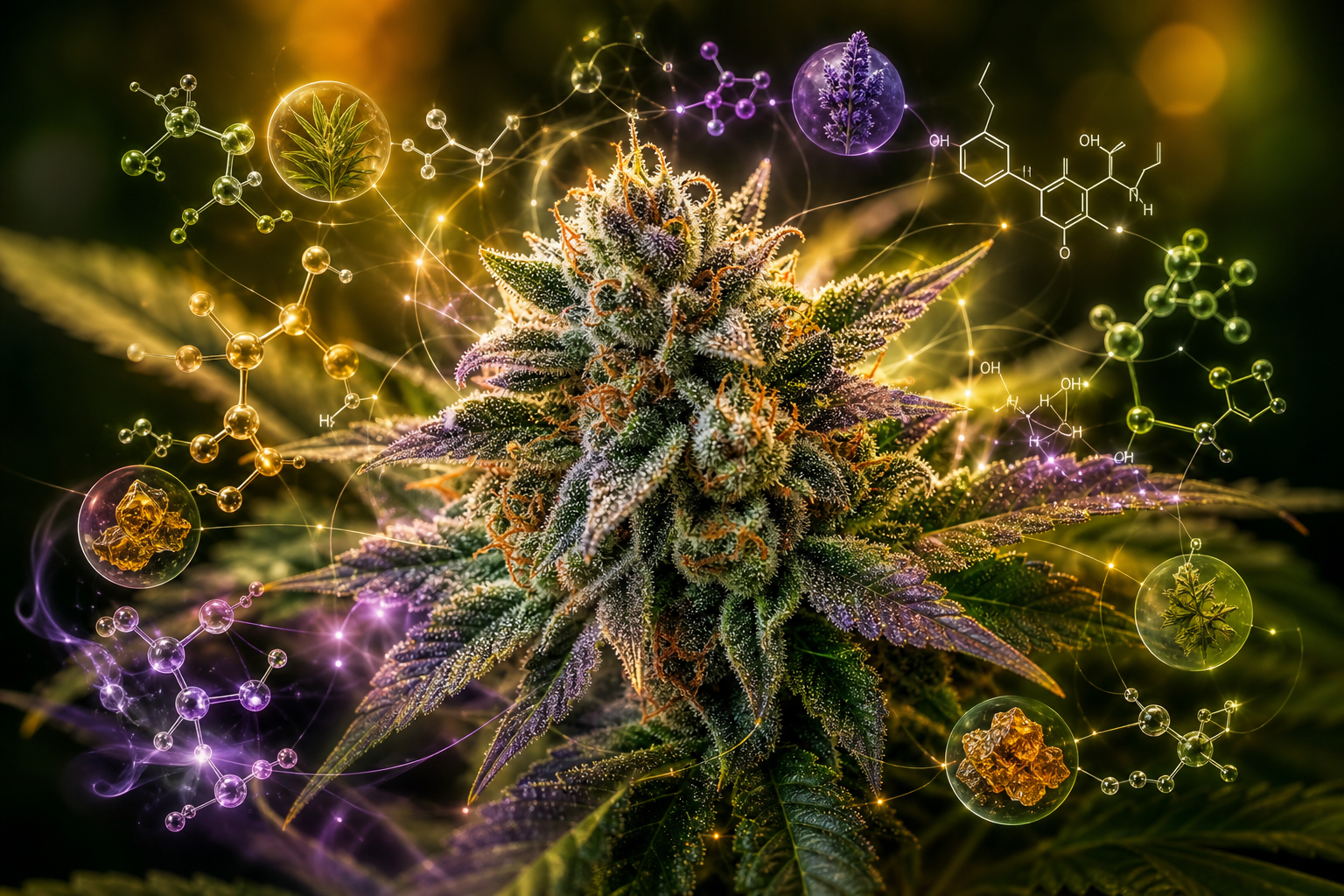
Here's the science in simple terms. Terpenes are aromatic oils produced by cannabis (and thousands of other plants) that create distinct smells and flavors. But they don't just smell nice—they bind to receptors in your brain, influence neurotransmitter activity, and even cross into your bloodstream. A strain with 18% THC and high myrcene will feel completely different from a strain with 18% THC and high limonene. Same potency, opposite effects.
Your sense of smell is also surprisingly intelligent. When you sniff something that smells "right" to you, it's often your body recognizing compounds that align with what it needs. That citrus smell catching your attention might be your brain seeking the mood-lifting properties of limonene. That earthy musk pulling you in might be your body asking for myrcene's relaxing properties.
Nose-shopping works because it bypasses the marketing nonsense—strain names like "Purple Thunder Kush" that tell you nothing—and connects you directly to the chemistry that matters.
The Terpene Smell Chart: Aroma Clues to Effects #
Use this smell chart as your dispensary cheat sheet. Each aroma pattern points to specific terpenes, and those terpenes point to predictable effect directions. This is your translation key between what your nose detects and what your body will feel.
| Smell | Likely Terpene | Common Effect Direction | Best For |
|---|---|---|---|
| Citrus, lemon, orange | Limonene | Uplifting, energizing | Daytime, mood boost |
| Earthy, musky, herbal | Myrcene | Relaxing, sedating | Evening, sleep |
| Pine, forest, fresh | Pinene | Alert, clear-headed | Focus, productivity |
| Floral, lavender, sweet | Linalool | Calming, anti-anxiety | Stress relief, winding down |
| Peppery, spicy, clove | Beta-caryophyllene | Body comfort, grounding | Physical relief, balance |
How to use this chart in the wild:
When you're at the dispensary and they hand you a smell jar, take a quick sniff and ask yourself which column matches. Citrusy and bright? That's limonene territory—probably good for daytime. Heavy and earthy? Myrcene zone—likely better for evening. Fresh like a pine forest? Pinene—potentially helpful for focus.
Remember: this is directional guidance, not a guarantee. A strain might have multiple terpenes competing for your nose's attention. But if one smell dominates, that dominant terpene usually drives the primary character of the experience.
Also worth noting: your personal preference matters. If a smell appeals to you strongly, trust that. According to Stoops NYC's strain selection guide, consumers frequently gravitate toward terpene profiles that align with their goals, even when they don't know the science. Your body is smarter than you think.
How to Actually Smell Test at a Dispensary #
Most dispensaries don't let you open sealed packages, but many offer "smell jars" or display samples you can sniff. As noted by the Ohio Marijuana Card resource on cannabis inspection, regulations vary by state—some require sealed containers until purchase. Here's how to use smell jars effectively without overwhelming your nose or embarrassing yourself.
The 30-Second Dispensary Sniff Protocol #
Ask first. Not every dispensary allows smelling. Some states require sealed containers until purchase. If they have smell jars, great. If not, ask if they have display samples or fresh harvest you can inspect.
Short sniffs win. Don't bury your nose in the jar and inhale for five seconds. Take a short, sharp sniff—like you're smelling wine or coffee. Your nose fatigues quickly. Long sniffs actually give you less information.
Clear your nose between strains. Sniffing three jars back-to-back is useless after the second one. Take a breath of fresh air, walk around, or sniff the inside of your elbow (weird but effective) between samples.
Don't touch the flower. If you're using a smell jar with actual bud (not just a scented card), resist the urge to poke or handle it. You're not buying that specific nug—you're buying sealed product. Plus, handling contaminates the display.
Take notes. Most people can't remember how Jar #3 smelled after sniffing Jar #6. Use your phone to jot down quick impressions: "#3 = lemony, energizing" or "#7 = earthy, sleepy vibes."
Dispensary Etiquette for Smell Testing #
- Don't hog the jars. Other customers are waiting. Sniff, decide, move on.
- Don't comment loudly about quality. "This smells like hay" within earshot of staff is rude—and unnecessary.
- Ask the budtender what they recommend for your goal. "I need something for focus" or "I want evening relaxation" gets better guidance than "what's strong?"
- Request the COA if you're serious. A good dispensary has lab reports available for every product.
What If They Don't Let You Smell Anything? #
Some states (like Ohio historically) have strict rules against pre-purchase inspection. In that case:
- Ask about recent customer feedback. "What do people say about this batch?"
- Request terpene profiles. Even without smelling, the COA tells the story.
- Buy small amounts first. Get a gram or a pre-roll to test before committing to an eighth.
- Find a better dispensary. If transparency isn't part of their business model, shop elsewhere.
The 5 Terpenes Your Nose Should Know #
Myrcene: The Sleep Terpene (Earthy, Musky, Mango) #
Myrcene is the most common terpene in cannabis and the one most associated with relaxation and sedation, according to The Healing Clinics' terpene research. When you smell something earthy, musky, or vaguely mango-like, you're probably detecting myrcene.
| Myrcene Facts | Details |
|---|---|
| Also found in | Mangoes, hops, lemongrass, thyme |
| Typical smell | Earthy, musky, herbal, clove-like |
| Effect direction | Relaxing, sedating, body-heavy |
| Best time | Evening, nighttime |
| Common associations | "Couch-lock," deep relaxation |
Why it matters: Myrcene is often what makes strains feel physically heavy and mentally quiet. High myrcene content is the signal you're looking for if sleep or deep relaxation is the goal. It's the terpene that tells your body to slow down.
What to sniff for: That wet-earth smell after rain. Cloves. Overripe mangoes. Thyme. If the jar smells like it belongs in a spice cabinet or a fruit bowl, myrcene is likely dominant.
Limonene: The Daytime Terpene (Citrus, Lemon, Bright) #
Limonene is the citrus terpene that dispensaries associate with uplifted mood and daytime energy. When a strain smells like fresh lemon peel or orange zest, limonene is doing the work.
| Limonene Facts | Details |
|---|---|
| Also found in | Citrus rinds, juniper, peppermint |
| Typical smell | Citrus, lemon, orange, bright, zesty |
| Effect direction | Uplifting, energizing, mood-brightening |
| Best time | Morning, afternoon, social situations |
| Common associations | "Sunny," cheerful, stress relief |
Why it matters: Limonene counterbalances the heaviness of myrcene. It's the terpene that makes some strains feel mentally light and socially easy. Many people find limonene-dominant strains helpful for daytime use when they need to stay functional and positive.
What to sniff for: Lemonhead candy. Fresh orange peel. Lemon balm. Bergamot. If it smells like you could clean your kitchen with it, that's limonene talking.
Beta-Caryophyllene: The Body Comfort Terpene (Peppery, Spicy, Woody) #
Beta-caryophyllene (BCP) is unique among terpenes because it directly binds to CB2 receptors—making it function almost like a cannabinoid itself, as confirmed by PMC peer-reviewed research (PMC8489319). When you catch a peppery, spicy note, that's BCP.
| Beta-Caryophyllene Facts | Details |
|---|---|
| Also found in | Black pepper, cloves, cinnamon, oregano |
| Typical smell | Peppery, spicy, woody, clove-like |
| Effect direction | Body comfort, grounding, anti-inflammatory |
| Best time | Anytime physical relief is needed |
| Unique feature | Only terpene that activates CB2 receptors |
Why it matters: CB2 receptors are concentrated in your immune system and gut tissue. When BCP activates them, it can help calm inflammation and provide body-level comfort without necessarily clouding your mind. It's the terpene for people who want relief without being glued to the couch.
What to sniff for: Fresh cracked pepper. Clove cigarettes. Cinnamon bark. Woody incense. If it smells like a spice market or your grandmother's baking, BCP is present.
Linalool: The Calm Terpene (Floral, Lavender, Sweet) #
Linalool is the lavender terpene—floral, soft, and commonly associated with calm and anxiety relief, as described by Zen Leaf's terpene education resources. When a strain smells like flowers or perfume, linalool is usually involved.
| Linalool Facts | Details |
|---|---|
| Also found in | Lavender, birch bark, rosewood |
| Typical smell | Floral, lavender, sweet, soft |
| Effect direction | Calming, anti-anxiety, relaxing |
| Best time | Evening, stress relief, winding down |
| Common associations | Spa-like, gentle, soothing |
Why it matters: Linalool is why lavender essential oil is used for sleep and relaxation. In cannabis, it adds a layer of mental calm that pairs well with myrcene's physical heaviness. High linalool strains are often favorites for people managing stress or seeking peaceful evenings.
What to sniff for: Lavender fields. Rose petals. Fancy soap. Bergamot. If it smells like something you'd find in a spa product, linalool is likely present.
Pinene: The Focus Terpene (Pine, Forest, Fresh) #
Pinene is the pine forest terpene—sharp, fresh, and often associated with alertness and clear-headedness. When a strain smells like walking through evergreen woods, that's pinene.
| Pinene Facts | Details |
|---|---|
| Also found in | Pine trees, rosemary, basil, parsley |
| Typical smell | Pine, fresh, sharp, evergreen, woody |
| Effect direction | Alert, clear-headed, focusing |
| Best time | Daytime, work, creative projects |
| Common associations | "Fresh," awake, outdoor energy |
Why it matters: Pinene is what makes some strains feel mentally sharp rather than foggy. It's popular among people who want cannabis's benefits without losing productivity. Pinene-heavy strains are often described as "functional"—you can use them and still get things done.
What to sniff for: Fresh pine needles. Rosemary. Eucalyptus. Forest after rain. If it smells like the cleaning aisle or a camping trip, pinene is dominant.
How to Read Terpene Percentages on a COA #
A Certificate of Analysis (COA) is the lab report that tells you exactly what's in your cannabis. Learning to read the terpene section takes 30 seconds and transforms you from a guesser into an informed shopper.
What a COA Looks Like #
Most dispensaries provide COAs as printed sheets or QR codes you can scan. The terpene section usually appears after the cannabinoid section and lists individual terpenes with their percentages or milligrams-per-gram (mg/g).
Key numbers to look for:
| Metric | What It Means | Typical Range for Flower |
|---|---|---|
| Total terpenes | Combined percentage of all terpenes | 1% to 4% (higher = more aromatic) |
| Top 3 terpenes | The dominant drivers of smell and effect | Usually make up 70%+ of total terpenes |
| Myrcene % | The "sleepiness" signal | 0.3% to 1.5%+ is significant |
| Limonene % | The "brightness" signal | 0.2% to 1%+ is notable |
| B-Caryophyllene % | The "body comfort" signal | 0.2% to 0.8%+ is meaningful |
How to Interpret the Numbers #
Step 1: Check the total terpene content. Flower with less than 1% total terpenes might smell weak or stale. According to The Hidden Grove's terpene guide, flower with 2-4% total terpenes usually has strong, distinct aroma. Some exceptional sun-grown batches reach 5%+ total terpenes.
Step 2: Identify the top 3 terpenes. These drive 90% of the experience. A COA showing Myrcene 1.2%, Limonene 0.3%, and B-Caryophyllene 0.4% tells a clear story: this is relaxation-dominant with some body comfort and a hint of brightness.
Step 3: Match to your goal.
- High myrcene + high linalool = evening/sleep candidate
- High limonene + high pinene = daytime/focus candidate
- High B-caryophyllene = physical relief candidate
- Balanced mix of 3-4 terpenes = versatile all-around strain
The "Terpene Triangle" Quick Assessment #
Imagine each major terpene as a corner of a triangle:
- Myrcene corner = relaxation/heavy
- Limonene corner = energy/bright
- B-Caryophyllene corner = body comfort/grounded
Where the percentages cluster tells you the character. All three balanced? Versatile. Heavy myrcene, light others? Nighttime strain. Heavy limonene and pinene, light myrcene? Daytime strain.
Red Flags on a COA #
- No terpene data at all. Some cheap products skip terpene testing. Skip those products.
- Total terpenes under 0.5%. This suggests poor storage, old product, or low-quality cultivation.
- Testing date over 12 months old. Terpenes degrade with time and heat. Fresh COA matters.
- Residual solvents detected. In concentrates, this means poor extraction. Avoid.
Why THC Percentage Lies (and Terpenes Tell the Truth) #
THC percentage is the most misleading number in cannabis retail, as Terpene Belt Farms' effects chart documents. A 30% THC strain can feel gentler than an 18% THC strain because of terpene differences. Here's why the percentage on the label doesn't predict your experience.
The "THC Is Everything" Myth #
Dispensaries often sort flower by THC percentage, implying higher is better. This is like sorting wine by alcohol content—it misses the point entirely. A 12% alcohol Burgundy can be more complex and enjoyable than a 16% alcohol bulk red. Same with cannabis.
What THC percentage actually tells you:
- Maximum potential potency under perfect conditions
- Rough intensity ceiling for that batch
- What to expect if you consume a large amount
What THC percentage cannot tell you:
- How the high will feel (energetic vs. sleepy vs. creative)
- How long it will last
- Whether it will cause anxiety or relaxation
- Whether it's suitable for daytime or evening
The Terpene Modifier Effect #
Terpenes change how THC works in your body. This is called the "entourage effect"—cannabinoids and terpenes working together. Here are real examples:
| THC Level | Dominant Terpene | Likely Experience |
|---|---|---|
| 25% | High myrcene | Heavy, sedating, "couch-lock" |
| 25% | High limonene | Uplifting, energetic, social |
| 18% | High myrcene | Moderate but sleepy, good for evening |
| 18% | High limonene + pinene | Functional, clear, productive |
| 15% | High B-caryophyllene | Gentle body relief, minimal head change |
Notice how the same 25% THC can feel completely different based on terpenes. The 18% with energizing terpenes might feel "stronger" for daytime use than the 25% with sedating terpenes.
Shopping by THC: A Common Mistake #
New consumers often ask "what's your strongest?" and get pointed to the highest THC number. This frequently leads to bad experiences—paranoia, anxiety, overwhelming sedation—because the terpene profile didn't match their goal or tolerance.
Better approach:
- Define your goal (sleep, focus, social, relief)
- Find strains with terpene profiles that match
- Then check THC to gauge appropriate dose
- Start low regardless of percentage
At Divine Toke, our sun-grown organic flower typically tests between 18-24% THC but with rich, complex terpene profiles (3-5% total) that create nuanced, balanced experiences. We'd rather sell you the right 19% strain than the wrong 28% one.
The "Indica/Sativa" Problem: Why Smell Beats Labels #
The "indica" and "sativa" labels on cannabis products are basically meaningless. They originally described plant structure (short vs. tall), not effects. Modern cannabis is so crossbred that nearly everything is a hybrid. What matters is chemistry—terpenes and cannabinoids—not botanical family tree.
Where the Labels Came From #
In the 18th century, botanists categorized cannabis by physical appearance:
- Sativa: Tall, narrow leaves, from equatorial regions
- Indica: Short, broad leaves, from mountainous regions
These were geographic and structural categories. They said nothing about how the plants made people feel.
How the Meaning Got Corrupted #
Sometime in the 1980s and 90s, underground cannabis culture started using "indica" and "sativa" to describe effects:
- Indica = "in da couch" = sedating
- Sativa = stimulating = energizing
The problem? There's no scientific basis for this. A "pure indica" can have energizing terpenes. A "pure sativa" can knock you out. The effect comes from the chemical profile, not the plant's shape or heritage.
Real-World Examples of Label Failure #
| Marketed As | Typical Terpene Profile | Actual Effect Direction |
|---|---|---|
| "Indica" | High limonene, high pinene | Energizing, not sedating |
| "Sativa" | High myrcene, high linalool | Sleepy, not stimulating |
| "Hybrid" | Balanced terpenes | Could go either way |
We've seen "indica" strains that feel like drinking espresso. We've seen "sativa" strains that feel like taking a sleeping pill. The label didn't predict the experience—the terpenes did.
Why Dispensaries Still Use These Labels #
Three reasons:
- Consumer familiarity. People know the words and think they understand them.
- Simple sorting. It's easier to organize shelves by indica/sativa/hybrid than by chemical complexity.
- Marketing tradition. The industry built itself on these terms and changing is hard.
But informed consumers are moving past them. The best dispensaries now organize by effect ("relax," "energize," "relieve," "create") or by dominant terpenes instead of outdated botanical labels.
The Smell Alternative #
Your nose doesn't lie about heritage or marketing. It detects actual chemistry. That earthy smell means myrcene whether the label says indica or sativa. That citrus smell means limonene regardless of plant genetics.
Trust your nose over the label. The nose detects what's actually in the jar. The label might just be a guess from whoever grew it.
Practical Scenarios: Nose-Shopping by Goal #
Use these scenario guides to nose-shop with purpose. Each section shows you exactly what to sniff for and what to ask for at the dispensary.
For Sleep and Evening Wind-Down #
What to sniff for: Earthy, musky, mango-like, herbal, or floral notes.
Target terpenes: Myrcene dominant, linalool secondary.
At the dispensary:
- Ask: "What do you have that's heavy in myrcene?"
- Request the COA and look for myrcene over 0.5%
- Smell for that wet-earth, clove, or overripe fruit aroma
- Avoid strains that smell sharp, citrusy, or pine-dominant
What you're looking for: Total terpenes 2%+, myrcene as #1 or #2, linalool present if possible. THC level is secondary—15% with the right terpenes beats 25% with the wrong ones for sleep purposes.
For Daytime Energy and Mood #
What to sniff for: Bright citrus, lemon, orange, or grapefruit.
Target terpenes: Limonene dominant, pinene secondary.
At the dispensary:
- Ask: "What's your most citrus-smelling strain?"
- Request strains high in limonene and pinene
- Smell for zest, brightness, freshness
- Avoid anything smelling heavy, earthy, or skunky-dense
What you're looking for: Limonene 0.4%+, pinene 0.2%+, myrcene under 0.3%. These strains typically feel mentally light and socially easy. Good for errands, creative projects, or when you need to stay functional.
For Focus and Productivity #
What to sniff for: Pine forest, rosemary, sharp freshness, eucalyptus.
Target terpenes: Pinene dominant, limonene secondary, low myrcene.
At the dispensary:
- Ask: "What smells like pine or rosemary?"
- Look for pinene over 0.3% on the COA
- Request samples with "clear-headed" customer feedback
- Avoid heavy, musky, or floral-dominant profiles
What you're looking for: Pinene as a top-3 terpene, limonene present for mood, myrcene low enough not to drag you down. These are your "functional" strains—cannabis you can use while working, studying, or problem-solving.
For Physical Comfort and Recovery #
What to sniff for: Pepper, spice, cloves, woody incense, black pepper.
Target terpenes: Beta-caryophyllene dominant, myrcene secondary.
At the dispensary:
- Ask: "What has the most beta-caryophyllene?"
- Look for spicy, peppery aromas
- Request strains marketed for body relief or recovery
- Check COA for B-caryophyllene over 0.3%
What you're looking for: B-caryophyllene as a top terpene (rarely #1 but often #2 or #3), moderate myrcene for relaxation, balanced THC (not necessarily high—sometimes lower THC with high BCP works better). These strains are popular among athletes, people with physically demanding jobs, and those seeking body-level relief.
For Social Situations #
What to sniff for: Complex, balanced, appealing to your personal preference.
Target terpenes: Balanced mix with limonene present.
At the dispensary:
- Ask: "What do people buy for hanging out with friends?"
- Trust your gut—if it smells good to you, it probably fits
- Look for moderate THC (not the highest on the menu)
- Avoid anything labeled "heavy" or "couch-lock"
What you're looking for: Social cannabis should feel enhancing, not overwhelming. Look for strains with 2-4 terpenes in decent balance, limonene for mood elevation, and moderate THC (15-20%). The best social strain is one that makes you feel like a slightly better version of yourself, not someone who can't follow conversation.
Red Flags: Smells That Mean "Skip This" #
Not every smell is a good smell. Your nose can also warn you about problems. Here are the red flags that should make you put the jar down and walk away.
| Smell | What It Probably Means | Action |
|---|---|---|
| Ammonia, cat pee, sharp chemical | Improper curing or storage | Skip it |
| Hay, dried grass, cardboard | Old product, degraded terpenes | Skip it |
| Musty, basement, wet socks | Possible mold or mildew | Definitely skip it |
| Perfume, incense, artificial | Added synthetic terpenes | Ask questions |
| Nothing at all | Degraded or low-terpene product | Probably skip it |
The Ammonia Warning #
Fresh, properly cured cannabis should never smell like ammonia or urine. This usually means the grower rushed the curing process and trapped nitrogen compounds in the flower. It might not be dangerous, but it won't taste good or provide a quality experience.
The Hay Problem #
Cannabis that smells like hay, dried grass, or nothing at all has lost its terpenes. This happens through:
- Age (terpenes evaporate over time)
- Heat exposure (terpenes break down above room temperature)
- Poor storage (light and air destroy terpenes)
- Low-quality cultivation (never developed terpenes in the first place)
Hay-smelling cannabis isn't dangerous—it's just disappointing. You're paying for chemistry that's no longer there.
The Mold Alert #
Musty, basement-like smells can indicate mold contamination. This is a health risk, especially for people with allergies, asthma, or compromised immune systems. Moldy cannabis should never be consumed.
Signs of possible mold:
- Musty or mildew smell
- Visible white, gray, or black fuzz (inspect carefully with light)
- Brittle, crumbly texture with odd discoloration
If you suspect mold, don't buy it. If you find mold after purchase, don't consume it.
The Synthetic Warning #
Overly perfume-like smells that don't match natural cannabis profiles might indicate added synthetic terpenes. While not necessarily harmful, they represent a departure from the natural plant profile you're paying for.
Ask if the terpenes are cannabis-derived or added. Quality operations will be transparent about this.
Why Sun-Grown Organic Smells Better #
At Divine Toke, we grow outdoors in living soil under real Michigan sun. This stress-free environment (sunlight, natural pest pressure, soil diversity) produces richer, more complex terpene profiles than indoor factory farms. When you smell our flower, you're smelling the difference that organic, sun-grown cultivation makes—no synthetic shortcuts, no artificial enhancement needed.
FAQ: Nose-Shopping and Terpenes #
Q: Can I really trust my nose to choose cannabis? #
Yes, your nose is a surprisingly reliable guide. When you smell something appealing, your body is often detecting terpene profiles that align with your needs. Studies and dispensary data show that consumers frequently gravitate toward scents that match their goals—citrus for energy seekers, earthiness for relaxation seekers—even without knowing the science. Your nose detects actual chemistry, not marketing stories.
That said, smell alone isn't perfect. A strain can smell amazing but have low potency or poor effects from other factors. Use your nose as the first filter, then confirm with COA data and budtender feedback.
Q: What if the dispensary doesn't let me smell anything? #
Some states require sealed packaging until purchase, blocking smell tests. If you can't sniff:
- Ask about terpene profiles. Request the COA for anything you're considering.
- Check recent harvest dates. Fresher flower has more terpenes intact.
- Buy small amounts first. Get a gram or single pre-roll to test before committing to larger quantities.
- Find a transparency-focused dispensary. Shops that value education often find ways to share terpene information even when direct smelling isn't allowed.
Michigan dispensaries generally allow smell jars or display samples, but policies vary by location and license type.
Q: Do all strains with the same smell have the same effects? #
No—similar smells suggest similar effect directions, not identical experiences. Two strains both smelling of citrus (limonene-dominant) can still feel different based on:
- THC percentage differences
- Secondary terpene variations (pinene vs. myrcene as the #2 terpene)
- Minor cannabinoid content (CBG, CBN, etc.)
- Your personal tolerance and body chemistry
Think of terpenes as the bass line of a song—they set the rhythm and mood. But the melody (cannabinoids), harmony (other compounds), and your own ears (personal biology) all affect the final sound.
Q: What's a "good" terpene percentage? #
For flower, 2-4% total terpenes is considered rich and aromatic. Here's the scale:
| Total Terpenes | Quality Level | What to Expect |
|---|---|---|
| Under 1% | Poor | Weak smell, muted effects |
| 1-2% | Average | Some aroma, moderate character |
| 2-3% | Good | Distinct smell, clear effect direction |
| 3-5% | Excellent | Strong aroma, complex effects |
| 5%+ | Exceptional | Intense smell, nuanced experience |
Individual terpene percentages matter too. Myrcene over 0.5% usually drives sedation. Limonene over 0.4% usually brightens the experience. B-caryophyllene over 0.3% adds noticeable body comfort.
Concentrates often show higher terpene percentages (5-15%) because extraction concentrates these compounds along with cannabinoids.
Q: Can I smell mold or contaminants in cannabis? #
Often, yes—musty, basement-like smells can indicate mold. However, you cannot smell all contaminants:
- Mold: Sometimes detectable as musty, mildew, or wet-basement smell
- Pesticides: Generally odorless at dangerous levels
- Heavy metals: Completely odorless
- Residual solvents: May smell chemical or "off" in poorly processed concentrates
Rule: If it smells musty or chemically wrong, skip it. But absence of bad smell doesn't guarantee safety—only lab testing can confirm that. This is why buying from licensed, lab-tested sources matters.
At Divine Toke, our sun-grown organic flower is tested for all contaminants—mold, pesticides, heavy metals, and more. Clean cannabis should smell clean: natural, plant-like, without chemical or musty undertones.
Q: Why does the same strain smell different at different dispensaries? #
Because "strain names" aren't standardized. "Sour Diesel" at Dispensary A might be a completely different plant than "Sour Diesel" at Dispensary B. Here's why:
- Different genetics. Multiple breeders create seeds with the same name.
- Different grows. Cultivation environment (sun vs. indoor, soil vs. hydro) changes terpene development.
- Different harvest times. Early or late harvest affects terpene ratios.
- Different curing. Proper curing preserves terpenes; rushed curing destroys them.
- Storage conditions. Heat, light, and time all degrade terpenes.
The takeaway: Judge by what's in front of you, not by the name on the jar. Your nose detects the actual chemistry of that specific batch, not the marketing story.
Q: Should I choose by smell or by lab numbers? #
Use both—they check each other. Here's the workflow:
- Smell first. Find what appeals to your nose.
- Check the COA. Confirm the terpene profile matches your goal.
- Cross-reference. If it smells citrusy and the COA shows high limonene, you're aligned. If it smells citrusy but shows zero limonene, trust the COA—your nose might be confused by other compounds.
Smell is subjective and can be fooled. Lab numbers don't lie. But numbers without context (knowing what 0.5% myrcene means) are just data. Together, they're powerful.
Q: What if a strain smells good but the COA shows low terpenes? #
Trust the COA over your nose in this case. A few possibilities:
- Your nose is detecting a dominant terpene that happens to be potent at low percentages (some terpenes are detectable at 0.05%)
- The sample you smelled isn't the batch in the COA (common problem with display jars)
- The smell is from added terpenes or other compounds not listed on the standard COA
Low terpene percentages (under 1% total) usually mean weak effects regardless of smell. If the COA shows poor terpene content but you loved the smell, ask about harvest date and storage—freshness might explain the disconnect.
Q: Are synthetic terpenes a problem? #
They change the game, but aren't necessarily dangerous. Here's the breakdown:
- Cannabis-derived terpenes: Come from the actual plant through proper extraction or simply preserved in flower. These are the "natural" option.
- Botanical-derived terpenes: Extracted from other plants (citrus for limonene, pine for pinene). Chemically identical but sourced elsewhere.
- Synthetic terpenes: Lab-created. Chemically identical to natural versions but produced artificially.
The issue: Synthetic or added terpenes can create artificial smell profiles that don't reflect the actual cannabis chemistry. A product might smell amazing but have poor cannabinoid content or harsh effects because the terpenes were added later to mask low quality.
Best practice: Ask your dispensary if terpenes are "cannabis-derived" or "native to the plant." At Divine Toke, our terpenes develop naturally through sun-grown cultivation—no additions needed.
Q: Does organic cannabis smell different? #
Yes—organic, sun-grown cannabis typically develops richer, more complex terpene profiles. Here's why:
| Factor | Organic Sun-Grown | Conventional Indoor |
|---|---|---|
| Terpene diversity | Higher (30+ compounds common) | Lower (10-15 common) |
| Stress signals | Natural environmental stress boosts terpene production | Controlled environment reduces stress |
| Soil biology | Living soil with diverse microbes supports terpene synthesis | Hydroponic or sterile soil limits complexity |
| Pesticide residue | None | Potential odor-masking residues |
Organic cannabis often smells "dirtier" in a good way—more earth, more complexity, more character. It's the difference between a tomato from your garden and one from the grocery store in January.
Q: How do I keep my nose sharp when smelling multiple jars? #
Your olfactory system fatigues quickly—here's how to stay sharp:
- Sniff coffee beans between samples. Many dispensaries have jars available—this resets your nose.
- Take fresh air breaks. Step outside or away from the display area between every 2-3 sniffs.
- Use short sniffs. Long inhalations overwhelm your receptors. Quick sniffs give clearer data.
- Smell your elbow. Sounds weird, but your own skin scent is neutral and can clear residual odors.
- Limit yourself to 5-6 strains max. Beyond that, your nose can't distinguish reliably.
Pro tip: Start with milder scents and work up to stronger ones. If you start with a skunky, powerful strain, everything after will smell weak by comparison.
Q: Can I nose-shop for edibles and concentrates too? #
Sort of—it's different for each format:
Concentrates (dabs, live resin, rosin):
- Yes, you can smell these. Terpenes are often more concentrated (5-15% vs. 2-4% in flower).
- Look for "live" products—they preserve more terpenes than cured-flower extracts.
- Avoid anything smelling artificially perfume-like (may have added terpenes).
Edibles:
- Limited usefulness. Most edibles have flavoring (sugar, chocolate, fruit) that masks or changes the terpene profile.
- Can't smell gummies through packaging anyway.
- For edibles, rely on COA data and product descriptions, not smell.
- "Full-spectrum" or "live resin" edibles are more likely to preserve original terpene effects.
Vape cartridges:
- Can sometimes smell through the mouthpiece, but not reliably.
- Look for "live resin" or "full-spectrum" labeling for terpene preservation.
- Avoid generic "distillate" products—THC-only with added flavors, no real terpene benefits.
For non-flower products, the COA becomes even more important since you can't reliably smell-test.
What to Try First #
If you're curious to experience nose-shopping in practice, here's how to start.
Visit your local Michigan dispensary and ask for their freshest sun-grown organic flower with available COAs. Smell three strains with different aroma profiles—one citrusy, one earthy, one piney. Note which pulls you in strongest. Then check the COA: you'll likely find that your nose gravitated toward the terpene profile that matches what you need that day.
At Divine Toke, our Detroit-area partners carry our organic, sun-grown flower that's rich in the terpenes your nose is hunting for. We don't add synthetic terpenes or rush curing. What you smell is what nature and careful cultivation created—complex, authentic, and uniquely Michigan.
Related reading from our blog:
- What Are Terpenes? The Complete Guide — Deep dive into terpene science
- Best Terpene Profiles for Digestive Comfort — How terpenes interact with your gut
- Indica vs. Sativa vs. Hybrid: What Actually Matters — Why the old labels fail
Disclaimer: This article is for educational purposes only and is not medical advice. Always consult your healthcare provider before starting any new wellness routine. Cannabis affects everyone differently—start low, go slow, and pay attention to how your body responds.
Happy nose-shopping. Trust your senses.
Grown in Detroit. Shipped to your door.
Small-batch, sun-grown cannabis cultivated in living soil. Mail-order shipping to all 50 states.
You Might Also Enjoy
The Entourage Effect Is Real: Why Whole-Plant Cannabis Beats Isolates
May 11, 2026 · 17 min read
Can Cannabis Kill Cancer Cells? What 6 New Lab Studies on CBD and THC Actually Show
August 2, 2026 · 36 min read
July Flower Power: What Michigan Shoppers Are Grabbing Mid-Summer (and Why)
July 27, 2026 · 15 min read