THC Beverages: The Rise of Drinkable Cannabis

Jamie
Head Cultivator
THC beverages are canned or bottled drinks infused with cannabis — usually THC, sometimes CBD — that you sip like a seltzer or soda instead of smoking or eating a gummy. They are one of the fastest-growing product types in cannabis right now, especially for people cutting back on beer and wine. This guide covers how they work, why they hit faster than edibles, how to dose your first one, and what to watch for in 2026.
What Are THC Beverages? #
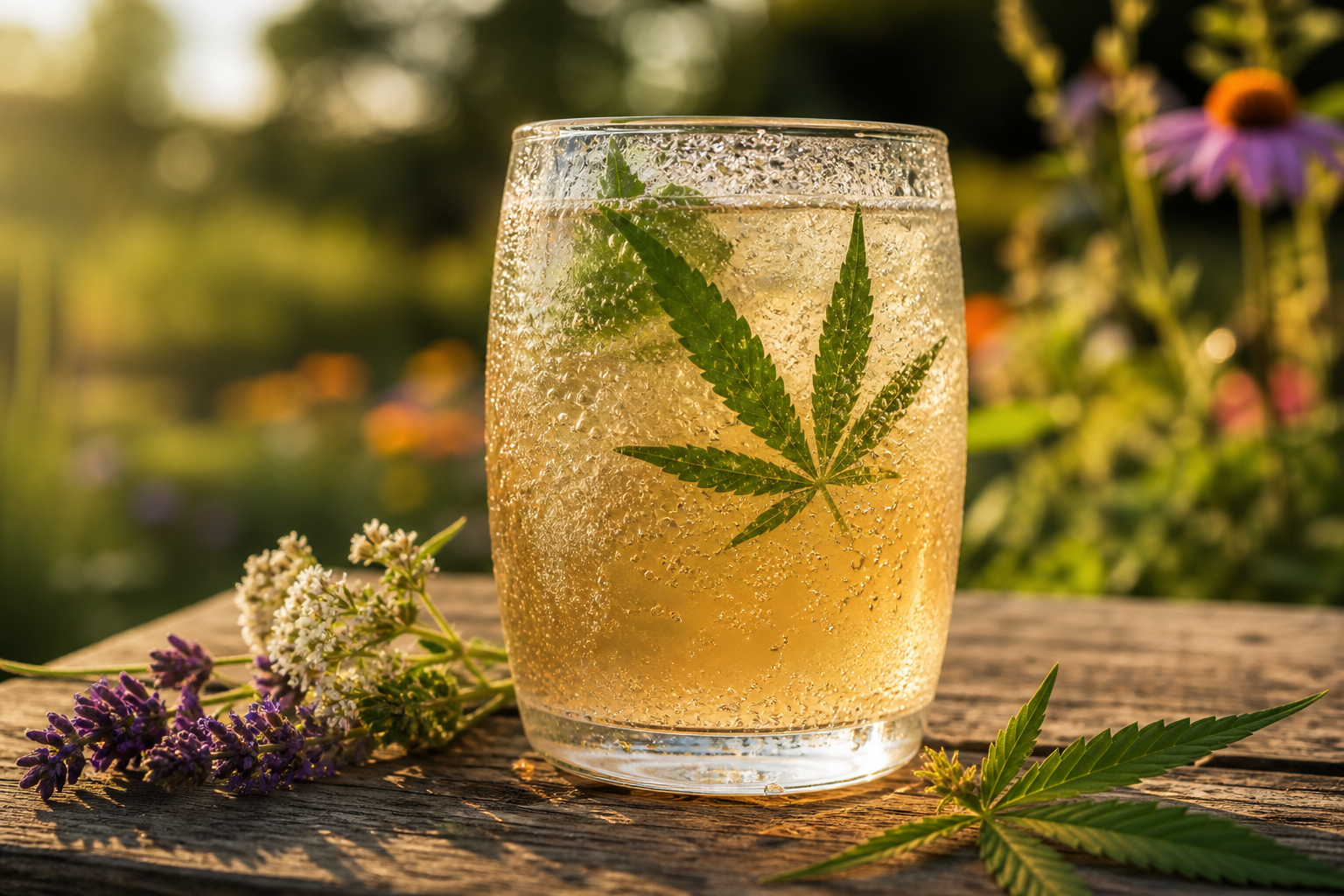
THC beverages are drinkable cannabis products — seltzers, sodas, teas, and lemonades — infused with THC (the compound that gets you high) and sometimes CBD (the compound that calms without a strong high). You open a can, take a sip, and wait. No smoke, no grinder, no brownie crumbs.
Think of them as the middle ground between a beer and a gummy. You hold a cold can at a cookout. You know roughly how many milligrams are in each serving. The ritual feels familiar if you have ever cracked open a seltzer after work.
Most modern THC drinks use nanoemulsion — tiny THC droplets mixed into water so your body can absorb them faster than a regular edible. Without that tech, THC would float on top of the liquid like oil on soup. It would not mix, and it would not hit on time.
| Drink Type | Typical THC Per Serving | Common Format | Where You Buy It |
|---|---|---|---|
| THC seltzer | 2.5–10 mg | 12 oz can | Dispensary or hemp retailer (varies by state) |
| THC soda | 5–10 mg | 12 oz bottle | Mostly dispensaries |
| THC tea / lemonade | 2.5–5 mg | Single-serve bottle | Dispensaries and some hemp shops |
| CBD + THC blend | 1–5 mg THC + 10–25 mg CBD | Can or bottle | Both channels |
The cannabis beverage market passed $1 billion in U.S. sales in 2024 and keeps climbing. Beverages are still a small slice of total cannabis sales — but they are growing faster than flower in many states because they feel normal to people who already drink.
THC beverage is the broad category name. Cannabis drink, THC seltzer, and infused beverage all mean roughly the same thing. Labels matter more than marketing words. Always check the milligram count on the back.
Common THC Beverage Formats You Will See on Shelves #
THC seltzers are the runaway leader — sparkling water with 2.5–10 mg THC per can. They dominate because they are low-calorie, fast-chilling, and easy to split into half-doses.
THC sodas taste like root beer, cola, or ginger ale. They often run 5–10 mg per bottle and appeal to people who want something sweeter than seltzer.
THC teas and lemonades sit in the "slow sip" camp. Some use nanoemulsion; others behave more like traditional edibles in liquid form. Read the label for onset time.
Ratio drinks (THC + CBD) blend both cannabinoids — for example, 2 mg THC and 10 mg CBD. The CBD can soften the THC edge. Many beginners prefer these for a gentler first experience.
| Format | Best For | Typical Drawback |
|---|---|---|
| Seltzer | Beer swap, low calories | Easy to drink too fast |
| Soda | Sweet flavor, nostalgia | Higher sugar |
| Tea / lemonade | Relaxation, evening wind-down | Slower onset (some brands) |
| THC + CBD ratio | Anxiety-prone beginners | Effects vary by ratio |
When a budtender asks "indica or sativa drink?" — take it lightly. Drinks are dosed by milligrams, not strain vibes. The THC number and your tolerance matter more than the label color.
Why Are THC Drinks Booming Right Now? #
THC drinks are booming because millions of Americans want to drink less alcohol but still want something social and relaxing at the end of the day. Cannabis beverages fit that gap — they look like a beer, dose like a supplement, and skip the hangover.
Three forces are pushing sales up at the same time:
- The sober-curious wave. A 2025 Circana survey found nearly 49% of Americans are actively trying to cut back on alcohol. Gen Z leads the pack — about 65% plan to drink less. That is a huge pool of people looking for a swap.
- Better technology. Nanoemulsion fixed the old problem: cannabis drinks used to taste bad and hit unpredictably. New formulas taste like seltzer and kick in on a schedule you can plan around.
- Retail shelf space. Dispensaries and hemp retailers both want low-dose, sessionable products. A 5 mg can is an easy add-on sale — like grabbing a six-pack, but cannabis.
| Trend | Cannabis Beverages | Alcoholic Beverages |
|---|---|---|
| Growth rate (2025–2028) | ~17% CAGR per industry analysis | ~2.4% CAGR; volume declining among adults under 35 |
| Calories per can | Often under 25 | Beer: 100–150+; cocktails: 200+ |
| Next-day effects | No alcohol hangover (THC effects vary) | Headache, dehydration, fatigue common |
| Dosing clarity | Milligrams printed on label | ABV % only; no "effect" label |
The BDSA cannabis beverage report tracks this category as one of the fastest-growing formats in legal cannabis. Projections put the global market above $2.8 billion by 2028.
If you are already thinking about swapping beer for something plant-based, you are not alone. Our cannabis vs alcohol guide walks through what that swap actually feels like week to week — not just on paper.
Why Gen Z and Millennials Lead the Shift #
Younger adults are drinking less alcohol than any generation before them — and THC beverages are filling the gap at happy hour. Industry retail data shows cannabis drink sales climbing while beer and wine volume drops among adults under 35.
Why the shift sticks:
- Wellness framing. Low-calorie, no hangover, "clean" ingredient lists — drinks fit the wellness aisle narrative better than a joint.
- Dose control. A can says "5 mg" on it. A beer says "5% ABV" and leaves the rest to guesswork.
- Social media visibility. THC seltzer brands show up in the same Instagram feeds as craft non-alcoholic beer — normalized, not hidden.
- Workplace reality. Morning shifts, drug tests, and side hustles make hangovers expensive. A 2.5 mg seltzer on a Friday does not destroy a Saturday drywall job.
Women are a fast-growing segment too. Market research on cannabis beverages tracks female buyers choosing THC seltzers over wine for weeknight relaxation — fewer calories, no wine headache, controllable dose.
How Does Nanoemulsion Make Drinks Hit Faster Than Gummies? #
Nanoemulsion breaks THC into droplets smaller than 100 nanometers — about 1/1000th the width of a human hair — so your body absorbs them through your mouth, throat, and stomach lining instead of waiting for full digestion. That is why a THC drink can start working in 10–30 minutes while a gummy might take 45–90 minutes.
Here is the plain-English version of the science:
- Regular edibles: THC is fat-soluble — it dissolves in oil, not water. Your liver converts it before it reaches your bloodstream. That delay is the "first-pass effect" — your liver filters the THC before you feel it.
- Nanoemulsion drinks: Sound waves or high-pressure mixing crush THC into tiny water-compatible droplets. Those droplets absorb through oral mucosa (the soft tissue inside your mouth) and gastric mucosa (your stomach lining) on the way down.
- Result: Faster onset, higher bioavailability — meaning your body uses more of what you swallowed.
| Delivery Method | Particle Size | Typical Onset | Bioavailability | Primary Absorption Route |
|---|---|---|---|---|
| Standard edible (gummy, brownie) | 200 nm+ | 45–90 min | ~6–10% | Liver after digestion |
| Nanoemulsion beverage | 20–100 nm | 10–30 min | Up to 50–85% per formulation research | Mouth, throat, stomach lining |
| Smoking / vaping | N/A (vapor) | 1–5 min | High | Lungs |
A PMC pharmacokinetics study (PMC10629855) on CBD nanoemulsion found orally delivered nano-formulations reached measurable blood levels within 30 minutes — much faster than conventional oil-based CBD. THC nanoemulsion drinks follow the same basic principle.
Nanoemulsion is not magic. It is food-science engineering — the same kind of tech used to keep salad dressing mixed. For cannabis, it solves the two biggest drink problems: bad timing and wasted potency.
One warning: faster absorption also means easier to overdo. A drink that hits in 15 minutes can stack up if you crack open a second can before the first one lands. More on that in the dosing section below.
THC Beverages vs Edibles vs Alcohol: What's the Difference? #
THC beverages hit faster than edibles, feel milder than smoking, and skip the hangover of alcohol — but they can still get you too high if you drink too many too fast. Each format has a different timeline, intensity curve, and social role.
This table is the cheat sheet most people wish they had before their first cannabis drink:
| Factor | THC Beverage | Edible (Gummy/Brownie) | Alcoholic Drink |
|---|---|---|---|
| Onset | 10–30 min (nano); up to 60 min (non-nano) | 30–90 min (sometimes 2 hrs) | 10–20 min |
| Peak effects | ~1 hour | 2–4 hours | 30–60 min |
| Duration | 2–4 hours | 4–8+ hours | 2–4 hours (hangover adds hours) |
| Dosing precision | Milligrams per can — usually labeled | Milligrams per piece — if labeled well | ABV % — no effect prediction |
| Calories | Low (often <25 per can) | Moderate to high (sugar, fat) | High (beer, wine, mixers) |
| Next-day feel | No alcohol dehydration; THC afterglow possible | Can feel groggy at high doses | Hangover common |
| Social ritual | Crack a can, sip slowly | Eat a piece, wait | Pour, cheers, repeat |
| Impairment risk | Yes — do not drive | Yes — do not drive | Yes — do not drive |
Why drinks beat gummies on timing: Liquids start absorbing the moment they touch your mouth. Gummies sit in your stomach until your body breaks them down. Our delivery method guide breaks down all the main routes — flower, tincture, edible, and drink — side by side.
Why drinks compete with alcohol on ritual: You hold a cold can at a barbecue. You sip between conversations. You stop when you feel good. That pacing is harder with a gummy you ate an hour ago and forgot about.
Why drinks are NOT a free pass: THC still impairs reaction time and judgment. A SAMHSA National Helpline resource page reminds us that combining any impairing substance — cannabis or alcohol — raises risk. Treat a THC drink like a beer with a delayed fuse: one at a time, plenty of water, no driving.
How Long Do THC Drinks Take to Kick In? #
Most nanoemulsion THC drinks start working in 10–30 minutes, peak around one hour, and fade within 2–4 hours. Non-nano drinks can take up to 45–60 minutes. Traditional edibles, by comparison, usually need 30–90 minutes — sometimes two full hours.
Your body, your empty stomach, and the specific brand all shift those numbers. Here is what typically happens after you finish a 5 mg THC seltzer:
| Time After Drinking | What You Might Feel |
|---|---|
| 0–10 min | Maybe nothing yet — or a light head change if you sipped slowly |
| 10–30 min | Effects building; mood lift, body relaxation, mild euphoria |
| 30–60 min | Peak zone for most people at low-to-moderate doses |
| 1–3 hours | Gradual fade; still impaired — do not drive |
| 3–4+ hours | Mostly back to baseline at 5 mg for experienced low-dose users |
Factors that speed onset:
- Empty stomach
- Nanoemulsion formula
- Sipping slowly (more mouth absorption)
- Lower body weight or lower cannabis tolerance
Factors that slow onset:
- Full stomach
- Non-nano or oil-based formulation
- Chugging the whole can in 30 seconds (less mouth contact time)
- High edible tolerance (your body may need more to feel the same)
The old rule — "wait two hours before taking more" — still applies, but compressed. With drinks, wait at least 45–60 minutes before opening a second can. The fast onset tricks your brain into thinking you need more when you do not.
If you are used to edibles, reset your clock. A drink is not a gummy with fizz. Check our edibles dosing guide for the full wait-and-see framework — the same patience rules apply, just on a shorter timeline.
What "Fast Onset" Actually Feels Like #
Most people describe THC drink onset as a gradual lift — not a slap. You might notice mood shift before body relaxation. Colors do not melt. The room does not spin (unless you vastly overshot your dose). It feels more like the first beer of the night than the first bong rip.
Timeline in plain terms:
- Minutes 0–15: Subtle. Maybe a little lighter, a little funnier.
- Minutes 15–45: The "sweet spot" for most low-dose sessions.
- Minutes 45–90: Plateau or gentle decline depending on dose.
- Hours 2–4: Back to near-normal for most people at 5 mg.
If you feel nothing at 30 minutes, do not panic. Some bodies need 45–60 minutes — especially on a full stomach or with a non-nano drink. The mistake is opening can two at minute 35. That is how people end up on the couch asking their friend if time is real.
How Should You Dose Your First THC Beverage? #
Start with half a can — or a single 2.5 mg serving — and wait a full hour before having more. THC beverages are easy to overdo because they taste good, go down easy, and hit faster than gummies.
Most dispensary drinks come in 5 mg or 10 mg per can. For a first-timer or someone cutting back from alcohol, that full can is often too much. Half a can at 2.5 mg lets you learn your response without white-knuckling the couch.
First-Timer Dosing Steps #
- Read the label. Find the milligrams per serving AND per container. Some cans are two servings, not one.
- Pour half. Drink 2.5 mg, put the rest in the fridge, set a timer for 60 minutes.
- No second drink on hour one. The fast onset makes you think you need more. You probably do not.
- Have snacks and water ready. Low blood sugar makes THC feel harsher. Water helps with dry mouth.
- Stay home. First session should be on your couch, not at a bar or a bonfire.
| Experience Level | Starting Dose | Max Per Session | Wait Before More |
|---|---|---|---|
| Never tried THC | 2.5 mg (half of a 5 mg can) | 5 mg total | 60–90 min |
| Occasional edible user | 5 mg (one full low-dose can) | 10 mg total | 45–60 min |
| Regular cannabis user | 5–10 mg | 10–15 mg | 30–45 min |
| High tolerance | 10 mg | Personal limit | 30 min minimum |
Microdosing — taking 1–2.5 mg — works well in drinks because the format is already split into small servings. You get a light mood shift without losing your evening.
Red flags that you took too much: racing thoughts, heavy anxiety, nausea, or feeling "stuck" on the couch unable to enjoy anything. If that happens, hydrate, eat something bland, and remember it will pass. THC from a drink typically clears faster than a high-dose edible.
Our edible buying guide covers label-reading skills that apply directly to beverages — milligrams, serving size, and batch testing are the same game.
Are THC Beverages Really Hangover-Free? #
THC beverages skip the alcohol hangover — no dehydration headache, no stomach acid wreckage, no "why did I text my ex" regret fueled by ethanol. That is the main reason sober-curious drinkers reach for them. But "hangover-free" does not mean "consequence-free."
Alcohol hangovers come from dehydration, acetaldehyde buildup, sleep disruption, and inflammation. THC drinks contain zero ethanol. You will not get the classic beer hangover from a THC seltzer.
What you CAN get at higher doses:
- Dry mouth and mild fatigue the next morning
- Grogginess if you drank too much too late
- Anxiety rebound if you are prone to THC paranoia and overshot your dose
- A positive drug test — THC metabolites linger regardless of format
| Next-Day Effect | After Alcohol (3–4 drinks) | After THC Beverage (5–10 mg) |
|---|---|---|
| Headache | Very common | Rare at low doses |
| Dehydration | Common | Uncommon |
| Nausea | Common | Possible at high doses |
| Mental fog | Common ("brain fog") | Mild at moderate doses |
| Sleep quality | Often poor (REM suppression) | Variable — low dose may help; high dose may disrupt |
| Calories consumed | 300–600+ | Usually under 50 |
The Circana sober-curious data shows nearly half of Americans want fewer alcohol consequences — and morning-after misery is the top reason. THC drinks trade one set of risks for another. You lose the hangover. You still get impairment, tolerance, and drug-test exposure.
Honest take: if your goal is "wake up clear-headed for a 6 a.m. shift," a 2.5 mg drink beats a six-pack. If your goal is "feel nothing and function at 100%," water is still the winner.
Hemp-Derived vs Marijuana-Derived Drinks: What Michigan Buyers Should Know #
In Michigan, marijuana-derived THC drinks sold at licensed dispensaries follow state cannabis rules — lab tested, tracked, and legal for adults 21+. Hemp-derived THC seltzers sold outside dispensaries occupy a messier legal zone, and federal law is shifting fast in 2026.
Two sources, two regulatory worlds:
| Feature | Marijuana-Derived (Dispensary) | Hemp-Derived (Non-Dispensary) |
|---|---|---|
| THC source | Cannabis plant above 0.3% delta-9 THC | Hemp plant; often converted from CBD |
| Regulator | Michigan Cannabis Regulatory Agency | FDA + state hemp rules (varies) |
| Testing | Mandatory state lab panels | Varies — not always dispensary-grade |
| Where sold | Licensed dispensaries | Smoke shops, gas stations, online |
| Age gate | 21+ with ID | 21+ in most states — enforcement varies |
The 2026 federal shift: A provision tied to the 2026 Farm Bill process would redefine hemp to exclude products with intoxicating THC levels. Cannabis Business Times reports that most current hemp-THC drinks would not meet the proposed limits — potentially 0.4 mg total THC per container, far below what gets anyone high.
What this means for you in mid-2026:
- Dispensary drinks in Michigan remain the most tested, most transparent option.
- Hemp seltzers at your corner store may disappear or reformulate by late 2026.
- Federal law can override state hemp rules — a product legal in Michigan today may not be federally compliant tomorrow.
When in doubt, buy from a licensed Michigan dispensary, check the COA (certificate of analysis), and ask the budtender whether the drink is marijuana-derived or hemp-derived. Labels should tell you. If they do not, that is a red flag.
Who Are THC Beverages Good For? #
THC beverages work best for people who want a social, sip-able cannabis experience without smoking — especially drinkers cutting back on alcohol, edible users who hate waiting an hour, and anyone who wants precise milligram dosing in a familiar format.
Good fits:
- Sober-curious beer drinkers. You like the ritual of cracking a cold one after a shift. You want something that fits that rhythm without tomorrow's headache.
- Edible-frustrated users. You ate a gummy, waited 90 minutes, felt nothing, ate another, and then got wrecked. Drinks solve the timing problem — if you dose low and wait.
- Smoke-free consumers. Lung issues, apartment rules, or just personal preference — drinks skip combustion entirely.
- Microdosers. A 2.5 mg seltzer is one of the easiest ways to take a tiny, repeatable dose.
- Social settings. BBQs, concerts, backyard hangs — a can looks normal. A joint or pipe does not always.
Maybe not a fit:
- People who need instant relief. Drinks take 10–30 minutes. Flower or a tincture under the tongue is faster for acute pain or sudden anxiety.
- Zero-THC goal seekers. Even low-dose drinks contain THC. CBD-only beverages exist but are a different product category.
- Anyone subject to drug testing. THC is THC — format does not matter to a urine screen.
- Budget shoppers. Per-milligram, drinks often cost more than flower or gummies.
| User Profile | Why Drinks Work | What to Watch |
|---|---|---|
| Union tradesperson cutting back on beer | Familiar format, no hangover, clear mg label | Impairment on the drive home — plan ahead |
| Senior new to cannabis | No smoke, low-dose options, gentle onset | Start at 2.5 mg; check medication interactions with your doctor |
| Weekend edible user | Faster onset, easier to stop mid-session | Easy to drink too many — pour half cans |
| Daily cannabis user | Convenient, portable, discreet | Tolerance builds; drinks get expensive as a primary method |
At Divine Toke, we grow sun-grown organic flower in Michigan — the starting point for everything we believe about clean cannabis. Drinks are not our core product, but they belong in the same conversation: know what you are putting in your body, start low, and buy tested products from sources you trust.
How Should You Store THC Beverages? #
Store THC beverages upright in a cool, dark place — ideally the refrigerator — and consume before the expiration date on the label. Heat, light, and oxygen degrade THC over time, just like they degrade beer flavor.
Storage basics:
- Refrigerate after opening. Oxygen and warmth break down cannabinoids. A half-finished can goes in the fridge, not on the counter overnight.
- Keep them upright. Carbonated seltzers lose fizz on their side. Flat THC seltzer still works — it just tastes sad.
- Avoid the hot car. A drink left in a July dashboard can lose potency and taste like canned regret.
- Check the date. Most infused beverages have a best-by date 6–12 months from production. Old stock sits on shelves — read the label.
- Do not freeze. Ice crystals can break emulsion stability in nano-formulas, leading to separation or uneven dosing.
| Storage Condition | Effect on Potency | Effect on Taste |
|---|---|---|
| Fridge (unopened) | Stable until expiration | Best — cold and crisp |
| Room temp (unopened, cool pantry) | Gradual decline over months | Fine short-term |
| Hot car / direct sun | Faster THC degradation | Flat, cooked flavor |
| Opened, refrigerated 24 hrs | Minimal loss | Good — drink soon |
| Opened, room temp 8+ hrs | Some loss; emulsion may separate | Stale; possibly uneven dose |
Emulsion separation looks like cloudy wisps or an oily ring at the top. Shake gently before drinking if the label says to. If a drink separated badly or smells off, skip it — uneven dosing means you cannot trust the milligram count.
Buy what you will drink within a few weeks. THC beverages are session products, not cellar aging projects.
Frequently Asked Questions #
How do THC beverages work? #
THC beverages deliver cannabis through a drinkable liquid — usually a nanoemulsion formula that lets THC absorb through your mouth and stomach lining. You sip, the THC enters your bloodstream, and effects build over 10–30 minutes. No smoke, no digestion delay like a brownie.
How are THC drinks different from edibles? #
Drinks hit faster (10–30 min vs 30–90 min) and fade sooner (2–4 hrs vs 4–8+ hrs) because liquids absorb before full digestion. Gummies must break down in your stomach first. A PMC nanoemulsion study (PMC10629855) showed nano-formulas reach blood levels in roughly 30 minutes — edibles typically need 45–90.
How long does it take for a THC drink to kick in? #
Most nanoemulsion THC drinks kick in within 10–30 minutes. Non-nano drinks may take up to 45–60 minutes. Empty stomach, slow sipping, and low dose all speed things up. Wait at least 45 minutes before opening a second can.
How much THC should be in a cannabis drink? #
Most sessionable THC drinks contain 2.5–10 mg per serving — with 5 mg being the most common "one can" dose. Beginners should start at 2.5 mg (half a 5 mg can). Regular users often cap a session at 10 mg total.
Can THC beverages get you too high? #
Yes — especially if you drink multiple cans before the first one peaks. Nanoemulsion drinks hit fast, which tricks people into stacking doses. One 5 mg can is plenty for most beginners. Two 10 mg cans back-to-back can overwhelm even experienced users.
Are THC drinks legal in Michigan? #
Marijuana-derived THC drinks are legal for adults 21+ at licensed Michigan dispensaries. They follow Michigan CRA testing and tracking rules. Hemp-derived drinks exist in a separate legal channel — and federal rules are tightening in 2026.
Do THC beverages show up on a drug test? #
Yes. THC beverages produce the same metabolites as flower, edibles, or vapes. Format does not matter to a standard urine screen. If your job tests, abstinence is the only safe option — not switching from beer to THC seltzer.
Can you mix THC drinks with alcohol? #
Do not mix THC drinks with alcohol. Both impair judgment and coordination. Combined, they increase nausea, anxiety, and accident risk. Pick one or the other for the night — not both.
Do THC drinks taste like weed? #
Most modern THC seltzers taste like regular seltzer — citrus, berry, or plain — with little to no cannabis flavor. Nanoemulsion masks the earthy taste that older infused drinks had. If you want zero cannabis taste, look for brands that use natural flavoring and low terpene load.
How long do the effects of a THC beverage last? #
Effects typically last 2–4 hours at low-to-moderate doses (2.5–10 mg). Peak hits around one hour. Higher doses or lower tolerance can extend the window. You will usually feel clear sooner than with a comparable edible.
Are hemp THC seltzers the same as dispensary drinks? #
No. Hemp seltzers and dispensary drinks use different THC sources, testing standards, and legal frameworks. Dispensary drinks are marijuana-derived and state-tested. Hemp seltzers may not meet the same standards — and federal hemp rules are changing in 2026.
What should I do if I took too much THC from a drink? #
Stop drinking, hydrate, eat something bland, and find a calm spot. Effects will pass — usually within a few hours for drinks. Do not drive. If someone shows severe confusion, vomiting, or chest pain, seek medical help. THC overdose is not typically fatal, but it can be deeply uncomfortable.
Closing Thoughts #
THC beverages earned their spot on the shelf for a simple reason: they feel like something you already know. Crack a can. Sip slow. Stop when you feel good. No smoke in your lungs. No hour-long edible wait. No beer hangover waiting at 6 a.m.
They are not foolproof. The fast onset makes it easy to grab a second can too soon. Drug tests do not care that you chose a seltzer over a joint. And the hemp-vs-dispensary legal line is shifting under our feet in 2026.
If you are curious to try drinkable cannabis, start with half a can, stay home, and read the label like you mean it. For the bigger picture on swapping alcohol for cannabis, read our cannabis vs alcohol guide. For timing and patience rules that apply to any edible-format product, keep our edibles dosing guide handy. And if you want to compare drinks against flower and tinctures, our delivery method guide lays it all out.
At Divine Toke, we believe clean, tested cannabis starts at the farm — sun-grown, organic, and honest about what is in the jar. Drinks or flower, the rule is the same: know your dose, trust your source, and take it slow.
This article is for educational purposes only and is not medical advice. Always consult your healthcare provider before starting any new wellness routine.
Grown in Detroit. Shipped to your door.
Small-batch, sun-grown cannabis cultivated in living soil. Mail-order shipping to all 50 states.