Pre-Roll Breakdown: Why Ours Are Different (And Better)

Jamie
Head Cultivator
Most pre-rolls look the same on the shelf. A tube, a label, a price tag. But what's inside varies wildly — and that difference is the whole game. This guide breaks down what actually goes into pre-rolls, how to spot quality before you buy, and what separates a smoke worth your money from one you'll regret.
What's Actually Inside Most Dispensary Pre-Rolls? #
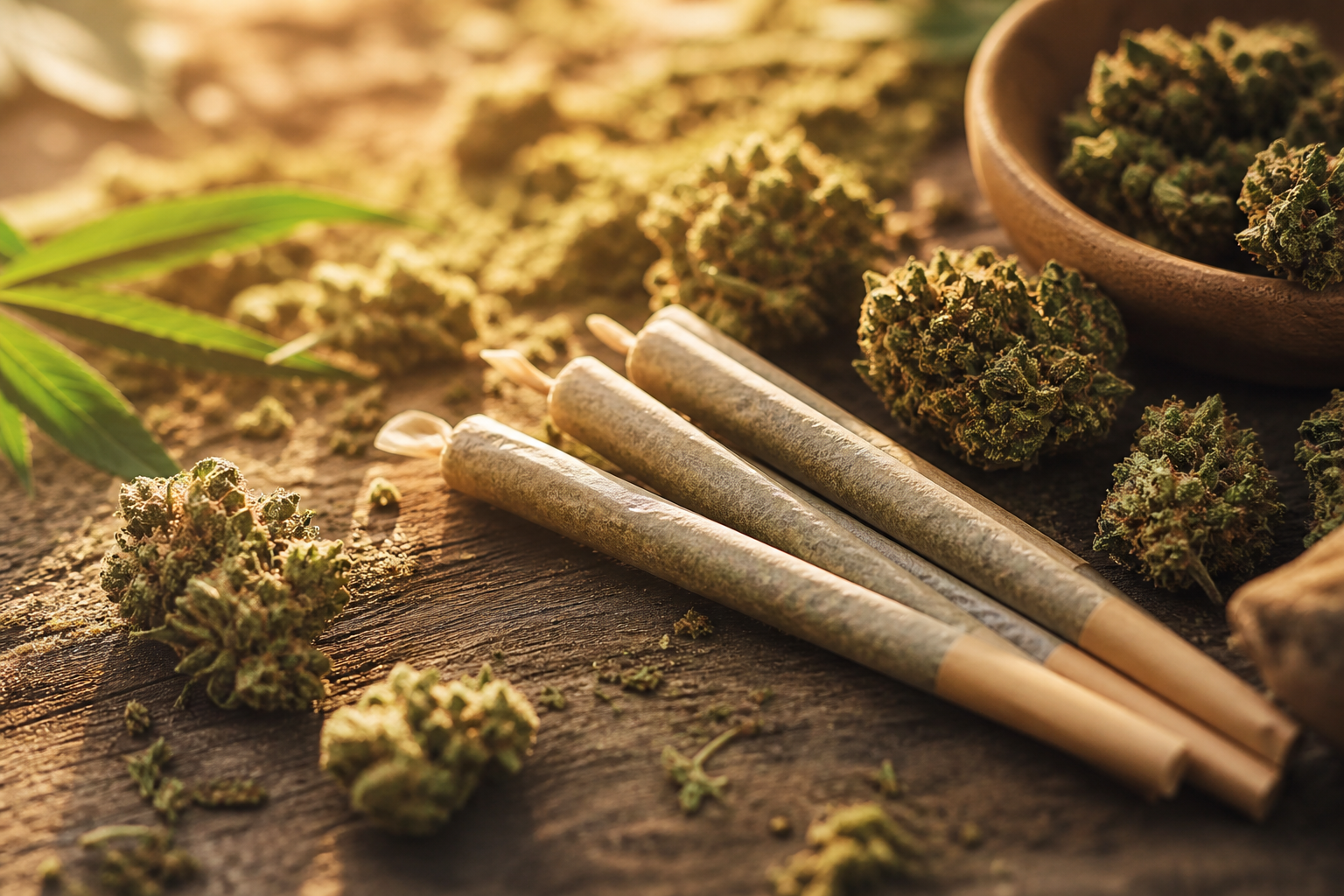
Most dispensary pre-rolls are filled with shake (small broken flower bits) or trim (leaves and stems) — not the big buds you see in jars. Budget pre-rolls often use trim because it's the cheapest leftover material from harvest. Premium pre-rolls use whole ground flower.
Pre-rolls are the fastest-growing major cannabis product in the U.S. — they passed traditional flower in unit sales for the first time in 2025. That growth means more brands rushing to fill tubes fast and cheap. Knowing what's inside helps you avoid paying top-shelf prices for bottom-shelf fill.
| Fill Type | What It Is | Potency & Flavor | Common Price Tier |
|---|---|---|---|
| Trim | Fan leaves, sugar leaves, and stems clipped during harvest | Low to moderate; harsh, leafy taste | Budget ($3–$8 each) |
| Shake | Small flower pieces that break off buds during handling | Moderate to high if fresh; loses terpenes when dry | Mid-range ($8–$15) |
| Smalls | Undersized buds from lower branches of the same plant | Good; same genetics as top buds, smaller size | Mid-range ($10–$18) |
| Whole flower | Intentionally ground whole buds, not leftovers | Highest; full terpene profile, smooth burn | Premium ($15–$25+) |
Trim is the bottom of the barrel. It's mostly plant matter with fewer trichomes — the tiny crystals that hold THC and terpenes. Trim pre-rolls burn hot, taste like hay, and often leave you wondering why you bothered.
Shake is better than trim because it's still actual flower — just broken into small pieces. Fresh shake from a recent harvest can smoke fine. Old, dry shake that's sat in a bin for weeks loses its smell and potency fast.
Whole flower pre-rolls use buds that were ground on purpose, not swept off the floor. The label should say "whole flower," "bud only," or name a specific strain. If the label just says "indica" or "hybrid" with no strain name, assume shake or trim inside.
The 2025 U.S. pre-roll market moved 383.2 million units — and multi-packs made up 48.5% of those sales. Volume brands have a strong reason to use the cheapest fill that still passes lab tests. That's not illegal. It's just not what most buyers think they're getting.
Why Whole-Flower Pre-Rolls Smoke Better Than Shake or Trim #
Whole-flower pre-rolls keep more trichomes, terpenes, and cannabinoids intact — so they taste better, burn smoother, and hit more consistently than shake or trim fills. The difference comes down to what part of the plant you're smoking and how much handling it went through before rolling.
Trichomes are the frosty crystals on cannabis buds. They hold THC, CBD, and terpenes — the compounds that give each strain its smell and effect. When buds get broken, trimmed, and shuffled around, trichomes fall off. That material — called kief when collected — is the most potent part of the plant. Shake and trim pre-rolls often lost those crystals before they ever reached the tube.
| Factor | Whole Flower | Shake | Trim |
|---|---|---|---|
| Trichome density | High — ground fresh from intact buds | Moderate — some crystals already lost | Low — mostly leaf material |
| Terpene profile | Full — all aroma compounds present | Faded if stored too long | Weak — leafy, not floral |
| Burn quality | Even, slow, smooth | Can be uneven if too dry | Hot, harsh, fast |
| Flavor | Strain-specific, rich | Generic, sometimes dusty | Grassy, bitter |
| Best use case | Premium single-strain experience | Budget daily smoke if fresh | Avoid unless price is the only factor |
Whole-flower pre-rolls also pack more evenly. Shake varies in particle size — fine dust mixed with small chunks creates air pockets that cause uneven burns. Trim has stem pieces that poke through the paper and create hard spots.
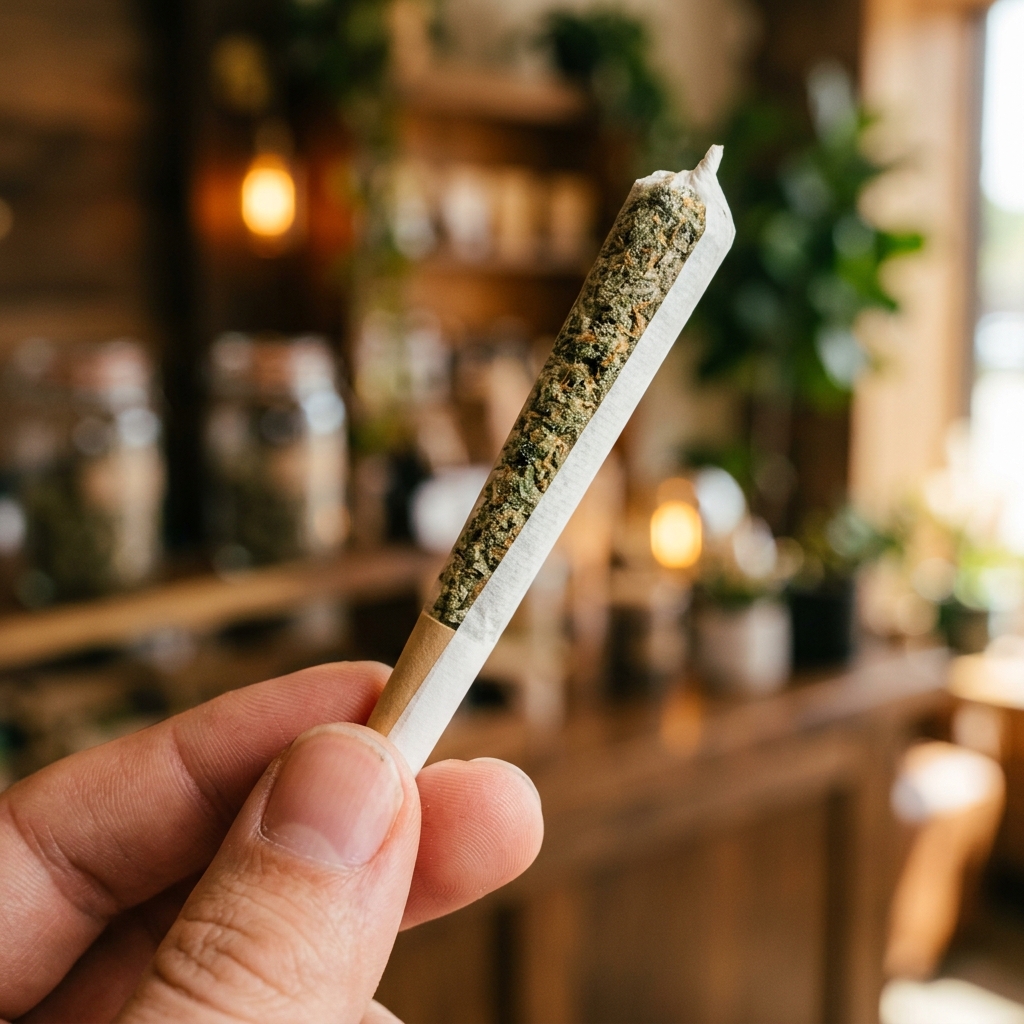
If you want to see the difference yourself, open one pre-roll from a multi-pack and look at what's inside. Whole-flower fill looks like evenly ground green bud with visible crystal structure. Shake looks dusty and dry. Trim shows flat leaf pieces with visible veins.
For a deeper dive on spotting quality before you buy, see our pre-roll quality guide.
How Pre-Rolls Get Made: Machine-Rolled vs. Hand-Packed #
Machine-rolled pre-rolls are more consistent in density and burn than hand-rolled ones — but the rolling method matters less than the flower quality inside. A perfectly packed trim pre-roll still tastes like trim. A slightly uneven whole-flower joint still smokes great.
Commercial pre-roll production uses machines that weigh, grind, pack, and roll flower at high speed. The process applies even pressure along the entire length of the joint. That means fewer air pockets, fewer "canoes" (when one side burns faster), and more reliable dosing from one pre-roll to the next.
| Feature | Machine-Rolled | Hand-Packed |
|---|---|---|
| Density | Uniform along the full length | Varies — tight spots and loose spots common |
| Burn consistency | Even, predictable | Depends on the roller's skill |
| Dose accuracy | Weighed to exact specs each time | Hard to match unit to unit |
| Production speed | Hundreds per hour | Dozens per hour |
| Best for | Consistent retail product at scale | Small-batch craft, custom blends |
Hand-packed pre-rolls have a place — especially in craft operations where a human checks each one. But for most dispensary shelves, machine rolling is the standard because it removes the biggest variable: human error.
Here's the catch most buyers miss: machine consistency does not fix bad flower. Some of the cheapest pre-rolls on the market are machine-rolled to perfection — filled with trim, packed tight, wrapped in decent paper. They look great. They smoke terrible.
The quality marker to look for isn't "hand-rolled" vs. "machine-rolled." It's whether the fill is whole flower from a single strain or a leftover blend. Ask your budtender what's inside before you ask how it was rolled.
If you roll your own and want to match dispensary consistency, our guide to rolling the perfect joint covers packing density and airflow in detail.
The Paper and the Crutch: Small Details That Change Everything #
The rolling paper and filter tip (crutch) affect how a pre-roll burns, tastes, and feels in your throat — and cheap materials can ruin even good flower. Unbleached hemp or rice papers burn cleaner than bleached or thick papers that leave a chemical taste.
Most quality pre-rolls use one of three paper types:
| Paper Type | Burn Speed | Flavor Impact | Best For |
|---|---|---|---|
| Hemp | Slow, even | Slight earthy note; lets terpenes shine | Full-flavor whole-flower pre-rolls |
| Rice | Very slow, clean | Almost zero paper taste | Terpene-forward strains |
| Wood pulp (bleached) | Fast, uneven | Chemical aftertaste possible | Budget pre-rolls (avoid if you can) |
Unbleached papers skip the chlorine whitening process. Bleached papers can add a harsh edge to the smoke — especially noticeable with delicate terpene profiles.
The crutch (also called a filter or tip) is the cardboard mouthpiece at the end. It serves three jobs:
- Keeps flower out of your mouth — no one wants a mouthful of ground bud
- Stabilizes airflow — a well-placed crutch prevents collapse at the mouth end
- Protects your fingers — lets you smoke down closer to the end without burning yourself
Some premium pre-rolls use glass or ceramic tips. They cool the smoke slightly and feel more like a cigar. They're reusable but add cost.
Red flags on paper and crutch:
- Thick, glossy paper that looks like printer paper
- No crutch at all — just a twisted paper end
- Crutch placed crooked, creating a blocked airflow channel
- Paper that smells like bleach or chemicals before you light it
These details won't save a trim-filled pre-roll. But on a whole-flower product, the right paper and crutch let the flower do its job instead of fighting against the wrap.
How to Inspect a Pre-Roll Before You Buy #
You can judge a pre-roll's quality in about 30 seconds using your eyes, hands, and nose — before you spend a dime. Look at the label, squeeze the tube, and smell the product. These three checks catch most bad pre-rolls on the shelf.
Step 1: Read the Label #
Look for these markers on the packaging:
| Label Says | What It Likely Means |
|---|---|
| "Whole flower" or "bud only" | Ground from intact buds — best quality tier |
| Specific strain name (e.g., "Blue Dream") | Single-strain fill from one batch |
| "Infused" or "diamond," "kief-coated" | Flower plus added concentrate — check potency |
| Just "indica," "sativa," or "hybrid" | Generic blend — often shake or trim |
| "House blend" or "mixed" | Leftover material from multiple strains |
| THC percentage listed | Required in Michigan — compare across options |
| Batch number and test date | Shows lab testing was done — ask for the COA |
Michigan requires potency testing on all cannabis products before sale. If there's no THC percentage on the label, that's a problem. Learn more about what those numbers mean in our Michigan lab testing guide.
Step 2: The Squeeze Test #
Hold the pre-roll between your thumb and finger. Gently squeeze at three points — top, middle, and bottom.
- Even resistance all the way down = well-packed, good sign
- Soft spots or crunches = air pockets or stem pieces inside
- Rock hard with zero give = over-packed; will be hard to draw smoke through
- Loose and floppy = under-packed; will burn too fast and uneven
Step 3: The Smell Test #
Bring the pre-roll to your nose (don't light it yet). A quality pre-roll should smell strong, fresh, and strain-specific — earthy, fruity, diesel, pine, whatever that strain is known for.
Weak or dusty smell = old product or low-quality fill. No smell at all = dried-out shake that's lost its terpenes. Musty or moldy smell = do not buy; possible microbial issue.
You can also squeeze the crutch end gently and sniff — trapped terpenes release through the filter paper.
Step 4: Visual Check Through the Tube #
Many pre-rolls come in clear tubes. Look for:
- Consistent green color along the full length
- Visible crystal frost on the ground flower
- No brown or yellow leaf material mixed in
- Even diameter — no lumps or thin spots
- Clean twist or fold at the open end
If the tube is opaque, you're trusting the label. That's fine — but the squeeze and smell tests matter even more.
What a Good Burn Looks Like (And What "Canoeing" Means) #
A quality pre-roll burns slow and even from light to finish — no racing flames, no going out, and no "canoeing" where one side burns faster than the other. Bad burns usually mean bad packing, bad flower, or both.
Signs of a Good Burn #
- Cherry stays centered as you smoke — the glowing ember moves straight down the middle
- Ash is light gray and holds its shape — falls off in a clean tap, not messy crumbs
- Draw feels smooth — slight resistance, not like sucking through a straw or a clogged pipe
- Smoke is white to light gray — not dark, thick, or harsh on the throat
- Burns to the crutch without needing constant relighting
What "Canoeing" Means #
Canoeing happens when one side of the pre-roll burns faster than the other. The burning edge curves like a canoe hull — hence the name. It's the most common complaint about pre-rolls, and it wastes flower.
Common causes of canoeing:
| Cause | Why It Happens | How to Prevent |
|---|---|---|
| Uneven packing | Air pockets on one side burn faster | Buy better-packed pre-rolls; check with squeeze test |
| Moisture imbalance | One section drier than the rest | Store pre-rolls properly; avoid old stock |
| Wind or angle | External air pushes the flame sideways | Shield the flame; rotate as you smoke |
| Stem pieces | Hard spots burn at different rates than flower | Choose whole-flower fills with no stems |
| Wet flower | Too much moisture prevents even ignition | Check for spongy feel during squeeze test |
If a pre-roll starts canoeing mid-smoke, you can sometimes fix it by moistening the fast-burning side with a tiny drop of saliva on your finger and running it along the paper. It's not elegant, but it works.
The Dry-Puff Test (Before You Light) #
Before lighting, put the pre-roll to your lips and draw air through it without a flame. You should feel slight resistance — like drinking a milkshake through a straw, not like breathing through an empty tube. Completely blocked airflow means over-packing or a stem jammed against the crutch. Zero resistance means it's too loose and will burn in five minutes flat.
Infused Pre-Rolls Explained: Worth It or Overhyped? #
Infused pre-rolls add concentrate — distillate, kief, or live resin — to the outside or inside of the flower, pushing THC well above standard pre-roll levels. They accounted for 47% of all U.S. pre-roll revenue in 2025 — nearly half the category. They're popular. They're also not the same product as a classic flower pre-roll.
Types of Infused Pre-Rolls #
| Type | What's Added | Typical THC | Experience |
|---|---|---|---|
| Kief-coated | Trichome dust rolled on the outside | 25–35% | Boosted potency, same flower base |
| Distillate-infused | THC oil injected inside or coated outside | 30–45%+ | Very strong, sometimes harsh |
| Live resin-infused | Fresh-frozen extract added to flower | 30–40% | Richer flavor, higher price |
| Moonrock / Caviar | Flower dipped in oil, rolled in kief | 40–50%+ | Maximum potency, not for beginners |
Safety and Testing Differences #
Standard flower pre-rolls mainly need testing for microbials, mold, pesticides, and potency. Infused pre-rolls add another layer — they must also pass tests for residual solvents, heavy metals, and additional potency verification because of the added concentrates.
The Oregon OLCC pre-roll testing guidance — one of the most detailed state frameworks — treats infused and non-infused pre-rolls under different testing rules. Michigan follows a similar split: infused products require testing in their final form with the added concentrate included.
Legitimate concerns with infused pre-rolls:
- Residual solvents from poorly purged distillate (butane, ethanol) — always check the COA
- Synthetic terpenes added for flavor — not the same as cannabis-derived terpenes; combustion safety is less studied
- Over-intoxication — a 40% THC infused pre-roll hits very differently than a 20% flower joint
- Harsher smoke — added oils burn at higher temperatures and can irritate the throat
When infused pre-rolls make sense:
- You have high tolerance and want more potency per puff
- You're treating severe pain and need stronger delivery
- You want a special-occasion smoke, not a daily driver
When a classic whole-flower pre-roll is the better call:
- You're newer to cannabis or prefer lower doses
- You care about terpene flavor over raw THC numbers
- You want a clean, simple product with fewer processing steps
For most everyday buyers grabbing something on the way home from a shift, a well-made whole-flower pre-roll delivers a better experience than a distillate-loaded rocket you'll half-finish and regret.
Why Sun-Grown Organic Flower Matters in a Pre-Roll #
Sun-grown organic flower carries more terpenes and a wider flavor range than indoor-grown fill — and that difference shows up in every puff of a pre-roll. When the starting material is better, the pre-roll smokes better. No amount of fancy packaging fixes weak flower.
A peer-reviewed study published in PMC compared sun-grown and indoor cannabis samples and found that outdoor flower showed greater terpene diversity — especially sesquiterpenes, the compounds behind deep earthy and "dank" aromas. Indoor flower tended toward lighter, simpler profiles with fewer total terpene compounds.
| Factor | Sun-Grown Organic | Indoor Conventional |
|---|---|---|
| Terpene diversity | Higher — more compound variety | Lower — fewer sesquiterpenes |
| Cannabinoid stability | Less oxidation over time | More degradation without terpene shield |
| Pesticide exposure | Zero if certified organic | Depends on grower's IPM program |
| Environmental impact | Lower energy use per gram | High — artificial lights, HVAC, dehumidifiers |
| Pre-roll flavor | Richer, more complex smoke | Can taste flat or "green" |
Why does this matter in a pre-roll specifically? Pre-rolls go through more handling than jarred flower — grinding, packing, rolling, sitting in a tube for weeks. Every step is a chance to lose terpenes. Starting with flower that has more terpenes to begin with means the final product still smells and tastes like something worth smoking.
Organic certification adds another layer. Pesticide-free flower means you're not inhaling chemical residues burned at 800+ degrees. For anyone using cannabis for wellness — pain, sleep, anxiety — clean starting material isn't a luxury. It's the baseline.
At Divine Toke, we grow sun-grown organic flower in Michigan. We don't put trim or shake in our pre-rolls — whole flower, lab tested, from the same plants we'd sell in a jar. That's the standard we hold ourselves to, and it's the standard we'd tell any friend to look for on any shelf.
For the full breakdown of sun-grown vs. indoor growing methods, read our sun-grown vs. indoor cannabis guide.
Price vs. Quality: What You're Really Paying For #
Pre-roll prices range from $3 to $25+ per joint in Michigan — and the price tag mostly reflects what's inside the paper, not the paper itself. Cheap pre-rolls exist because trim is essentially free for producers. Expensive ones cost more because whole flower is worth more before it ever gets ground.
What Drives Pre-Roll Pricing #
| Price Range | Typical Fill | What You Get | What You Don't Get |
|---|---|---|---|
| $3–$7 | Trim or old shake | A smoke, technically | Flavor, potency, smooth burn |
| $8–$14 | Fresh shake or smalls | Decent daily driver if fresh | Strain-specific experience |
| $15–$20 | Whole flower, single strain | Full terpene profile, even burn | Infused potency boost |
| $20–$30+ | Whole flower + kief/resin | Premium experience, high potency | Nothing — this is top tier |
Michigan's pre-roll market share hit roughly 19.4% of total cannabis sales in 2025 — one of the highest rates in the country. That volume creates fierce price competition. Some brands compete by going cheaper. Others compete by going better. The tube looks the same either way.
Red Flags on "Too Good to Be True" Pricing #
- Five pre-rolls for $15 labeled as "premium" — the math doesn't work with whole flower
- No strain name on a mid-price product — you're paying for a mystery blend
- THC percentage below 15% at a premium price point — you're overpaying for weak fill
- "Infused" at the same price as regular — check whether it's actually distillate or just kief dust
- Old test dates on the COA — cannabis degrades; a pre-roll tested eight months ago is not the same product today
The Value Equation #
A $15 whole-flower pre-roll that burns clean and delivers a full session beats a $5 trim joint you relight three times and throw away half of. Price per puff — not price per tube — is how experienced buyers think about it.
Multi-packs can offer real savings if the fill quality is honest. A 5-pack of whole-flower pre-rolls at $60 ($12 each) is a fair deal. A 10-pack at $30 ($3 each) is almost certainly trim — and you'll feel it by the second puff.
How to Store Pre-Rolls So They Stay Fresh #
Store pre-rolls in a cool, dark place inside an airtight container — ideally with a humidity pack — and they'll stay fresh for two to four weeks. Heat, light, and dry air destroy terpenes fast. A pre-roll left in a hot car or open ashtray turns into a dusty disappointment.
Storage Basics #
| Condition | Effect on Pre-Rolls | What to Do |
|---|---|---|
| Heat (above 75°F) | Terpenes evaporate, THC degrades to CBN | Keep away from windows, cars, radiators |
| Direct sunlight | UV breaks down cannabinoids | Store in a drawer, tin, or opaque tube |
| Low humidity (below 55%) | Flower dries out, burn becomes harsh | Add a 58–62% RH humidity pack |
| High humidity (above 65%) | Mold risk increases | Don't store in bathroom or near kitchen |
| Open air | Terpenes escape within days | Always reseal the tube or jar |
Best Storage Options (Ranked) #
- Original sealed tube — if you haven't opened it yet, leave it sealed until you're ready
- Airtight glass jar with humidity pack — best for opened multi-packs
- Metal tin with humidity pack — portable, light-proof, good for travel
- Re-sealable bag with humidity pack — works in a pinch, less durable
- Open tray on a coffee table — worst option; do not do this
How Long Do Pre-Rolls Last? #
- Sealed in original packaging: 2–4 months (quality slowly declines)
- Opened, properly stored: 2–4 weeks before noticeable terpene loss
- Opened, improperly stored: 3–7 days before they taste stale
- Left in a hot car: Ruined in hours — don't bother saving it
If you're not going to smoke a pre-roll within a week of opening, put it back in an airtight container with a humidity pack the moment you're done. Treat it like coffee beans — exposure to air is the enemy.
What Michigan Lab Testing Requires for Pre-Rolls #
Every pre-roll sold in a Michigan dispensary must pass lab testing in its final form before it reaches the shelf — covering potency, mold, pesticides, heavy metals, and more. The Michigan Cannabis Regulatory Agency (CRA) sets the rules, and licensed labs run the tests.
No product hits the retail floor without a passing Certificate of Analysis (COA). That applies whether the pre-roll is a $5 trim joint or a $25 whole-flower single.
Required Test Panels for Standard Pre-Rolls #
According to Michigan's sampling and testing guidance, pre-rolls classified as raw plant material must pass:
| Test Category | What It Checks | Why It Matters for You |
|---|---|---|
| Potency | THC, THCA, CBD, CBDA levels | Tells you how strong the pre-roll actually is |
| Moisture / water activity | Max 0.65 Aw (water activity) | Prevents mold growth inside the tube |
| Microbials | E. coli, Salmonella, Aspergillus, yeast, mold | Inhaled mold can cause serious lung problems |
| Mycotoxins | Aflatoxins, ochratoxin A (limit: <20 ppb) | Toxic compounds produced by certain molds |
| Heavy metals | Lead, arsenic, cadmium, mercury | Contamination from soil or processing equipment |
| Pesticides | 58+ prohibited chemicals | Residues you do not want to inhale at burn temperature |
| Foreign matter | Insects, hair, non-cannabis plant material | Basic cleanliness check |
Labs must hold ISO/IEC 17025:2017 accreditation to test Michigan cannabis products. That international standard means their equipment and methods meet strict quality benchmarks.
Infused Pre-Rolls: Extra Testing #
If a pre-roll has distillate, kief, or other concentrates added, it may fall under a different testing category — inhalable compound concentrate (ICC) — with additional requirements for residual solvents and combined potency. The CRA's best practices bulletin clarifies that adding non-marijuana terpenes also triggers a category change.
As MCIA's analysis of Michigan's pre-roll market notes, the state's pre-roll category is booming — and regulators are paying closer attention to how these products are tested and labeled.
How to Read a Pre-Roll COA #
Most Michigan dispensaries can pull up the COA if you ask. Look for:
- Test date — within the last six months is ideal
- Pass/fail status on every panel — all green, no exceptions
- THC total — matches what's on the retail label
- Batch number — matches the number on your pre-roll tube
Passing lab tests is the floor, not the ceiling. A trim pre-roll can pass every test and still taste terrible. Testing proves safety. It doesn't prove quality fill.
What Makes a Quality Pre-Roll Different (The Honest Checklist) #
A quality pre-roll uses whole flower from a named strain, passes Michigan lab testing, burns even, and smells like fresh cannabis — not dusty hay. Everything else is packaging. Use this checklist before you buy, regardless of brand.
The Quality Pre-Roll Checklist #
| Check | Pass | Fail |
|---|---|---|
| Label says "whole flower" or names a specific strain | ✅ | ❌ Generic "indica/sativa" only |
| THC percentage listed on packaging | ✅ | ❌ Missing potency info |
| Batch number and test date visible | ✅ | ❌ No traceability |
| Smells strong and strain-specific | ✅ | ❌ Weak, dusty, or no smell |
| Even density when squeezed (no soft spots) | ✅ | ❌ Lumps, crunches, or floppy |
| Natural unbleached paper | ✅ | ❌ Thick bleached or glossy paper |
| Crutch/filter included and straight | ✅ | ❌ Twisted paper end, no filter |
| COA available on request | ✅ | ❌ Budtender can't find test results |
| Price matches fill quality | ✅ | ❌ "Premium" label at budget price |
| Sun-grown or organic if that's your priority | ✅ | ❌ No grow method disclosed |
What We Look for at Divine Toke #
We don't expect you to take our word for it. Here's what we commit to — and what we'd tell you to look for anywhere:
- Whole flower only — no trim, no shake, no mystery blends
- Sun-grown organic — grown under Michigan sun, no synthetic pesticides
- Lab tested — every batch, final form, full panel per Michigan CRA requirements
- Named strains — you know exactly what you're smoking
- Honest packaging — what's on the label matches what's in the tube
We're a farm first. That means the flower in our pre-rolls comes from the same plants we cultivate, harvest, cure, and stand behind. We don't buy bulk trim from a broker and call it premium. The difference isn't a secret process or a fancy machine. It's starting with better flower and refusing to cut corners on what goes inside the paper.
That's the whole breakdown. The pre-roll category is huge — 15.9% of the entire U.S. cannabis market and growing. Most of those tubes contain leftovers. The ones worth your money contain flower someone actually cared about growing.
FAQ #
Are most pre-rolls made with shake or trim? #
Yes — the majority of budget and mid-range pre-rolls use shake or trim, not whole buds. Trim (leaves and stems) is the cheapest fill and dominates the lowest price tier. Shake (small flower pieces) is common in mid-range products. Whole-flower pre-rolls exist but cost more because they use material that could be sold as jarred flower instead. The 2025 U.S. pre-roll market sold 383.2 million units — volume that incentivizes cheaper fills.
What's the difference between a whole-flower pre-roll and a shake pre-roll? #
A whole-flower pre-roll is ground from intact buds on purpose. A shake pre-roll uses leftover small pieces that broke off during handling. Whole flower keeps more trichomes and terpenes, burns smoother, and tastes like the actual strain. Shake can smoke fine if it's fresh, but it loses quality quickly and often lacks the flavor depth of whole-flower fill.
How can I tell if a pre-roll is fresh? #
Smell it — a fresh pre-roll has a strong, strain-specific aroma. A stale one smells faint, dusty, or like nothing at all. Also check the test date on the COA (within six months is best), squeeze for even density (no dry crunching), and look for visible crystal frost through clear packaging. Pre-rolls stored in airtight tubes with humidity control stay fresh longest.
Why does my pre-roll burn uneven on one side? #
Uneven burning — called "canoeing" — usually means the pre-roll was packed inconsistently or contains stem pieces. Air pockets on one side burn faster than dense spots on the other. Cheap trim fills are the worst offenders because leaf and stem material burn at different rates. Whole-flower pre-rolls with even machine packing canoe far less often.
Are infused pre-rolls stronger than regular pre-rolls? #
Yes — infused pre-rolls typically contain 30–45%+ THC compared to 15–25% in standard flower pre-rolls. The infused segment accounted for 47% of pre-roll revenue in 2025. Added distillate, kief, or live resin pushes potency well above flower alone. That extra strength comes with harsher smoke and a higher risk of over-intoxication for newer users.
Are infused pre-rolls safe to smoke? #
Infused pre-rolls are safe when they pass full lab testing — but they require more test panels than regular pre-rolls. Michigan and other states require additional checks for residual solvents and heavy metals on infused products. Always verify the COA. Avoid infused pre-rolls with no test results, added synthetic terpenes, or suspiciously low prices. The Oregon OLCC testing guidance outlines the extra requirements infused products face.
What should a quality pre-roll smell like? #
A quality pre-roll should smell pungent, fresh, and specific to its strain — earthy, fruity, diesel, pine, or whatever that genetics are known for. If you can't smell anything, the terpenes have evaporated and the product is stale. Musty or moldy smells mean do not smoke it. Squeeze the crutch end and sniff for trapped aroma as a quick freshness check.
Does the paper type really matter? #
Yes — unbleached hemp or rice papers burn cleaner and add less flavor interference than bleached wood-pulp papers. Hemp burns slow and even with a slight earthy note. Rice paper is nearly tasteless. Bleached papers can add a chemical edge, especially with delicate terpene profiles. The paper won't fix bad flower, but it can enhance or ruin good flower.
How long do pre-rolls stay fresh? #
Sealed pre-rolls stay fresh for two to four months. Opened pre-rolls last two to four weeks in proper storage. Keep them in an airtight container with a 58–62% humidity pack, away from heat and light. An opened pre-roll left on a table loses terpenes within days. Never store pre-rolls in a hot car — heat destroys cannabinoids in hours.
What does Michigan require for pre-roll lab testing? #
Michigan requires potency, moisture, microbial, mycotoxin, heavy metal, pesticide, and foreign matter testing on all pre-rolls before sale. The CRA's testing guidance sets moisture limits at 0.65 water activity max and mycotoxin limits below 20 ppb. Infused pre-rolls face additional solvent and potency testing requirements.
Is machine-rolled or hand-rolled better? #
Machine-rolled pre-rolls are more consistent in density and burn, but hand-rolled ones can be excellent in small-batch craft settings. The rolling method matters less than the flower quality inside. A machine-rolled trim pre-roll will always lose to a hand-rolled whole-flower joint. Focus on the fill, not the production method.
Why are some pre-rolls so much cheaper than others? #
Cheap pre-rolls use trim — the leftover leaves and stems from harvest — which costs producers almost nothing. A $5 pre-roll and a $20 pre-roll may look identical in the tube. The price difference reflects fill quality: trim vs. shake vs. whole flower, plus brand, testing, and packaging costs. Michigan's pre-roll market share of 19.4% means fierce price competition — and some of that competition cuts corners on what's inside.
Closing #
Pre-rolls are the most convenient way to smoke — grab one, light it, done. But convenience only works when what's inside the tube matches what you expect. Most don't. Now you know how to tell the difference.
If you're looking for pre-rolls made with whole sun-grown organic flower — the kind that pass every Michigan lab test and smoke the way the strain is supposed to — that's what we grow at Divine Toke. No trim. No shake. No mystery blends. Just flower we grew, ground, rolled, and tested ourselves.
Keep learning:
- Pre-Roll Quality Guide — deeper look at what's inside and how to spot red flags
- How to Roll the Perfect Joint — if you'd rather roll your own with the same standards
- What Lab Tested Means in Michigan — how to read a COA before you buy
Stop guessing. Start checking. Your lungs and your wallet will thank you.
Grown in Detroit. Shipped to your door.
Small-batch, sun-grown cannabis cultivated in living soil. Mail-order shipping to all 50 states.