Limonene: The Citrus Terpene That Lifts Your Mood

Jamie
Head Cultivator
Limonene is the bright citrus terpene shoppers chase when they want a clearer, less heavy head. For Detroit-area adults reading Michigan lab sheets after a long shift, the real skill is pairing that lemon-orange nose with a COA rank — not trusting strain-name folklore.
What Is Limonene and How Does It Smell? #
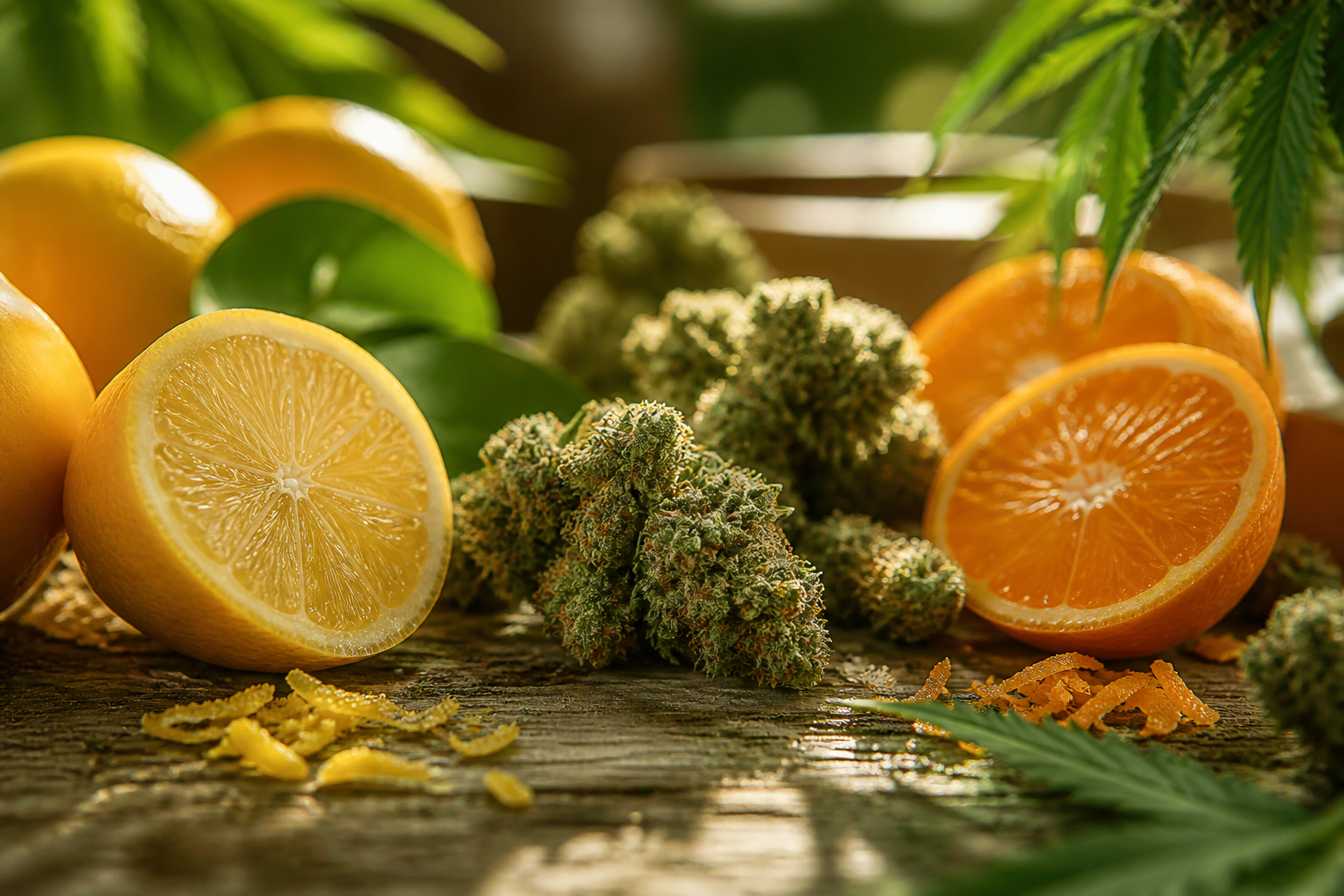
Limonene is a common plant oil molecule — a terpene — that smells like fresh citrus peel: lemon, orange, lime, or grapefruit zest. It does not get you high by itself. It helps shape how a batch smells and can nudge how bright or heavy the session feels.
If you already read our what are terpenes guide, think of terpenes as the spices in the plant’s recipe. THC and CBD are the main meal. Limonene is more like the lemon-zest finish that makes the dish feel cleaner and less muddy.
A few plain facts to lock in:
- Chemical family: It is a monoterpene — a lighter oil molecule famous in citrus peels and many kitchen oils.
- Smell cue: Bright lemon candy, orange peel, grapefruit pith, or sweet citrus cleaner (without the harsh bleach edge).
- Cannabis role: Often shows up as Dominant or Strong on daytime, citrus-forward flower panels; also appears as Moderate or Trace under earthier night jars.
- Honesty check: Consumer guides love the “mood lift” nickname. That story is partly aroma lore and partly early research — not a promise that limonene is a happiness drug.
You do not need a chemistry degree to use this. If a jar smells like orange rind and lemon zest more than mango earth or lavender soap, limonene is a fair bet on the Michigan lab sheet.
How Limonene Smells and Tastes #
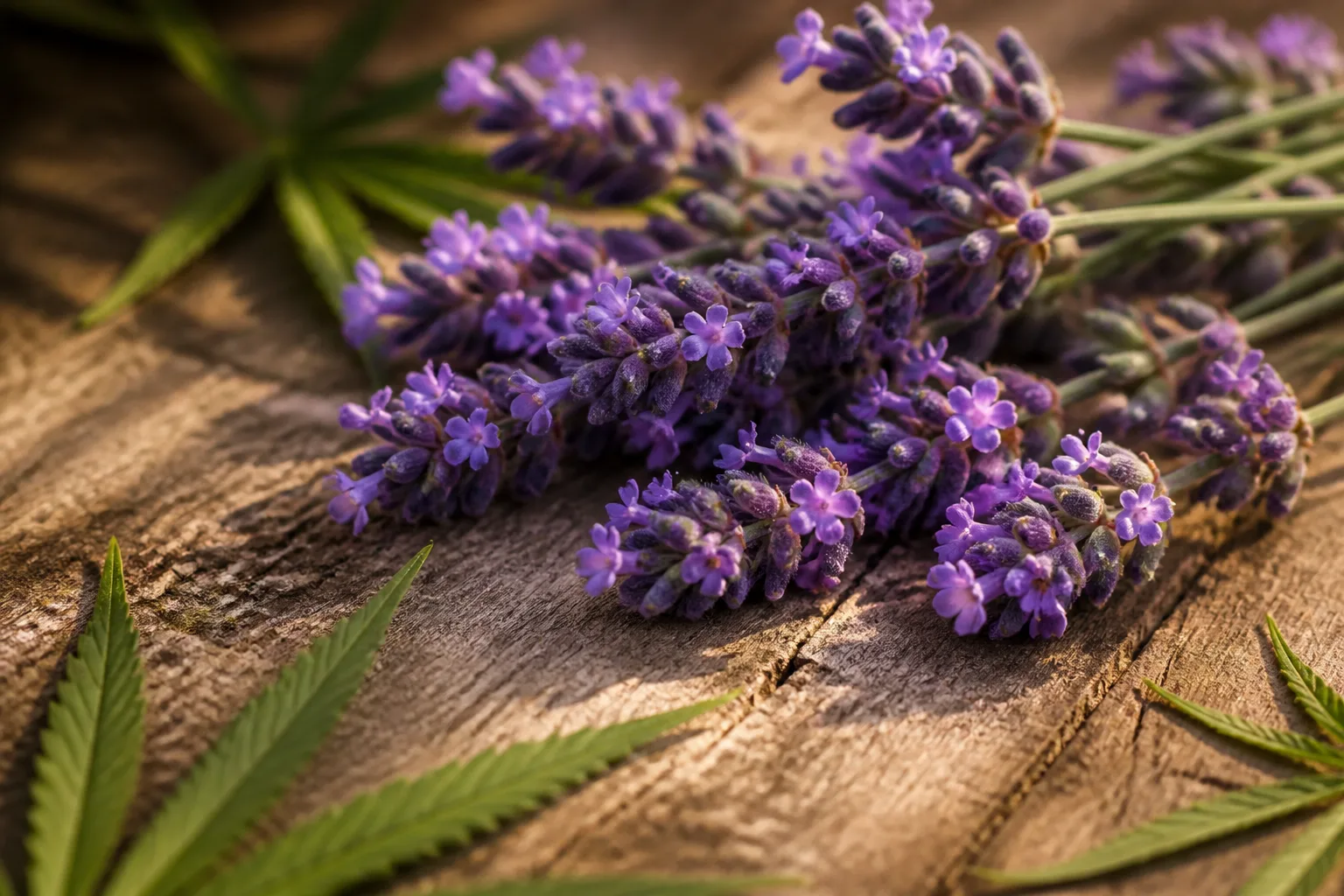
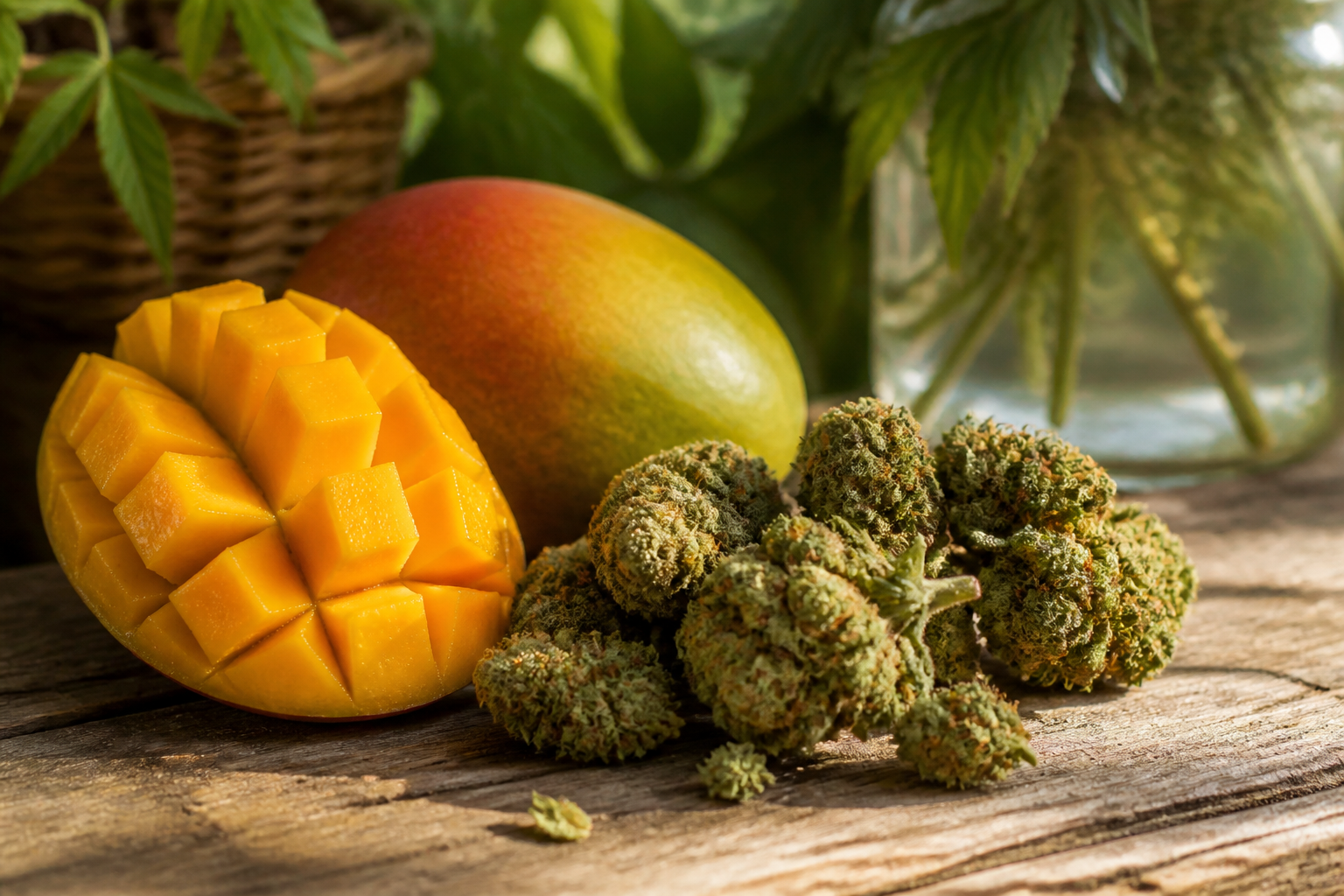
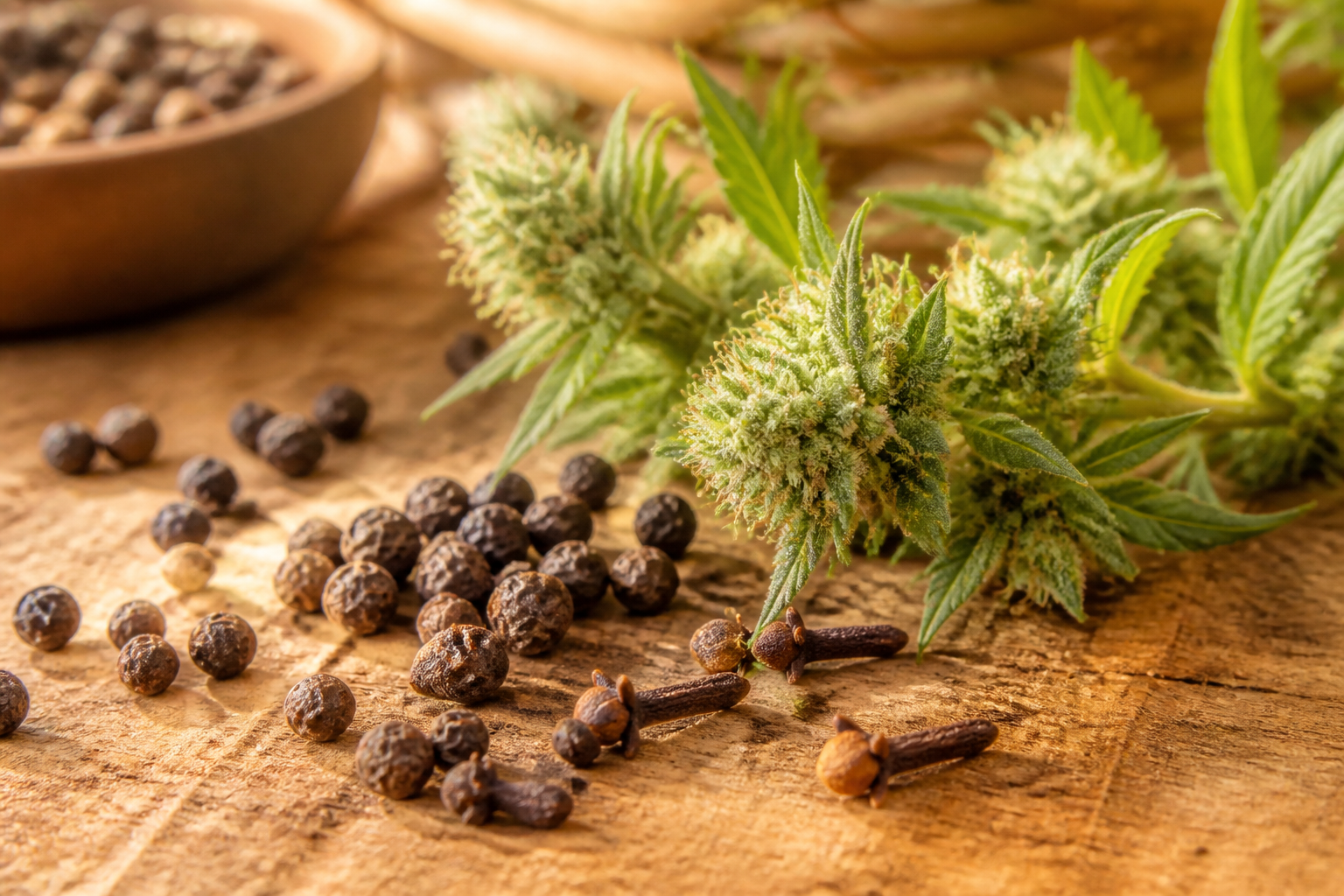
On the nose, limonene reads as bright citrus — not hoppy mango earth, not lavender soap, not cracked black pepper alone. Seasoned Michigan shoppers call it “lemon jar,” “orange peel weed,” or “citrus gas” when fuel notes ride along.
Use these kitchen analogies when you shop:
- Fresh lemon zest — the sharp top note people remember first
- Sweet orange peel — softer, juicier citrus (often the d-limonene story)
- Grapefruit pith — bitter-bright edge on some batches
- Lime candy / lemon cleaner — loud citrus that cuts through earthy base notes
Smell is a clue, not a lab test. Two batches can smell citrusy for different reasons — limonene, other citrus terpenes, or curing quirks. Pair your nose with the COA — more on that below, and in our nose-shopping terpene guide.
Where Else Nature Puts Limonene #
Limonene shows up across the citrus aisle and cleaning cabinet, not only in cannabis. Orange and lemon peels are the famous sources. Many kitchen spices and essential oils carry it too.
| Source | Typical limonene story | Kitchen takeaway |
|---|---|---|
| Orange / lemon peel | Often the star oil in cold-pressed citrus peel | Why “lemon weed” smells familiar |
| Grapefruit / lime | Related citrus oils; amounts vary | Same bright family, different edge |
| Household citrus cleaners | Often use d-limonene as a scent / solvent note | Your nose already knows the molecule |
| Cannabis flower | Often Dominant or Strong on citrus-forward panels | Shop by panel rank, not strain name |
Those oil stories describe concentrated plant oils — not a glass of OJ, and not a dosing plan. Still, they explain the smell match: when cannabis leans lemon-orange, your brain is recognizing a note you already know from the fruit bowl.
d-Limonene vs l-Limonene #
“Limonene” on a cannabis COA usually means the citrus-leaning form shoppers care about — most often discussed as d-limonene (also written (+)-limonene). The mirror-image form, l-limonene, smells more piney or turpentine-like and is less central to the lemon-jar story.
Plain-English version:
- Enantiomers — two molecules that are mirror images, like left and right hands
- d-Limonene — the sweet orange / citrus form tied to most cannabis uplift talk
- l-Limonene — more pine-solvent; not what most “citrus terpene” marketing means
- On the label — Michigan lab sheets usually just say limonene; they rarely split the mirror forms for retail shoppers
For Divine Toke readers in Detroit and across Michigan, you can treat “limonene” on the terpene panel as the citrus shopping flag. You do not need to decode left-hand vs right-hand chemistry at the counter.
Limonene Is Not a Cannabinoid #
Limonene is a terpene (aroma oil), not a cannabinoid like THC, CBD, or CBN. That distinction matters when a menu or influencer talks like limonene is “the happy cannabinoid.”
Quick entity check:
- Cannabinoids — plant compounds that mainly talk to your endocannabinoid system (THC → intoxication; CBD → different, milder pathways)
- Terpenes — smell-and-spice molecules that shape aroma and may nudge how the session feels
- Entourage effect — the idea that the mix matters more than any single number (see entourage effect guide)
So if someone says “just take limonene for mood,” ask what they mean. Isolated citrus oil is not the same as Michigan flower with Dominant limonene next to real THC. Whole-plant shopping still wins for most Divine Toke readers.
Does Limonene Lift Your Mood? #
Early research and shop-floor experience associate limonene with a brighter, less anxious feel — but limonene is not a proven stand-alone mood medicine or antidepressant. The best human evidence so far shows vaporized d-limonene can dial down THC-induced anxiety, which many people experience as a cleaner, more positive high.
Here is what the evidence stack looks like:
- A 2024 controlled human study published in Drug and Alcohol Dependence (PMC11031290) found that adding vaporized d-limonene to THC reduced ratings of anxious, nervous, and paranoid feelings versus THC alone.
- The Drexel Medical Cannabis Research Center summary of that work (April 10, 2024) notes researchers framed it as clinical support for the entourage effect — terpenes changing how cannabinoids feel.
- Older terpene pharmacology, including Ethan Russo’s 2011 review in the British Journal of Pharmacology (PMC3165946), already discussed limonene among citrus terpenes linked to mood and stress talk in the cannabis literature.
- Broader reviews of cannabis anxiety and terpenes (for example PMC7324885 and PMC8426550) still treat most terpene “effect maps” as early + incomplete, not prescription charts.
| Claim you hear | What evidence supports | Better wording |
|---|---|---|
| “Limonene makes you happy” | Stronger human signal for less THC anxiety than for pure happiness | May brighten the feel by lowering anxious edges |
| “Limonene is an antidepressant” | No solid 2024–2026 human trial proving depression treatment | Not proven as a depression drug |
| “Limonene alone lifts mood like coffee” | d-limonene alone looked like placebo in the 2024 THC study arms | Works in the mix, not as a solo stimulant |
For metro Detroit adults who want a daytime citrus jar after a rough commute — not a couch-lock night — limonene-forward flower is a reasonable shopping signal. Pair it with honest dose control from our cannabis anxiety sweet spot guide. It is not a substitute for therapy, meds, or a Michigan winter mental-health plan.
What the 2024 THC + Limonene Study Actually Found #
The headline finding: vaporized d-limonene reduced THC-related anxiety in a dose-dependent way in healthy adults who use cannabis sometimes — and limonene alone did not act like a drug in that setup. That is a big deal for “entourage effect” talk. It is still a narrow lab design, not a depression clinic trial.
Key details from the PMC11031290 study and the Drexel center write-up:
| Study detail | What happened |
|---|---|
| Design | Double-blind, placebo-controlled crossover; vaporized compounds |
| Who finished analysis | 20 adults (10 men, 10 women) of 38 randomized |
| THC doses tested | 15 mg and 30 mg vaporized THC |
| Limonene doses tested | 1 mg and 5 mg d-limonene; optional higher combo of 30 mg THC + 15 mg d-limonene |
| Limonene alone | Did not differ much from placebo on the acute measures studied |
| THC + limonene | Lower anxious / nervous / paranoid ratings vs THC alone; stronger at higher limonene |
| Other THC effects | Combination did not broadly rewrite THC’s other subjective, cognitive, or body effects in that sample |
Practical translation for Michigan shoppers:
- Limonene looks more like a THC anxiety buffer than a happiness switch.
- The study used controlled vapor doses, not a random pre-roll on a Detroit porch.
- Results were acute (same-session feelings), not weeks of mood tracking.
- People with diagnosed anxiety or depression disorders were not the study’s treatment goal.
So when a budtender says “this limonene jar will fix your mood,” translate it to: “This citrus panel may feel less edgy for some people at a given THC dose.” That is useful. It is not a medical claim.
Why “Uplift” Is Not the Same as a Happy Pill #
If a citrus session feels brighter, limonene may be one reason — but food, sleep, dose, and expectation still run the show. “Uplift” on a menu usually means “less heavy / less anxious / more social,” not “clinical mood repair.”
Common reasons a limonene-forward jar feels better:
- Less anxious edge from THC — the 2024 human finding above
- Aroma expectancy — citrus smells “daytime” to many brains before the first hit
- Supporting terpenes — pinene, terpinolene, or light myrcene change the blend
- Lower total dose — people often sip citrus jars instead of stacking night indica
- Set and setting — sunny porch vs dark bedroom after a 12-hour shift
Michigan winter darkness already messes with mood for a lot of people around Detroit. A lemon-smelling jar can be one small tool in a larger routine — light, movement, sleep, and talking to a real clinician when you need one. Cannabis is not a stand-in for depression care.
How Does Limonene Work With THC? #
Early research suggests limonene can change how THC feels — especially the anxious edge — without acting like a second intoxicating cannabinoid. Think of it as a spice that softens one part of the dish, not a second main course.
Shop-floor version of the chemistry:
- THC mainly talks to CB1 receptors and drives the high.
- Limonene is not a classic CB1 “get-you-high” molecule the way THC is.
- The 2024 human vapor study (PMC11031290) showed a selective drop in anxious / paranoid ratings when d-limonene rode along with THC — a real-world example of the entourage effect.
- Reviews such as PMC3165946 and later terpene surveys discuss possible serotonin-, GABA-, and other non-CB1 pathways for limonene in animal models. Those are mechanism ideas, not proof that citrus flower raises serotonin like a prescription.
- Some experimental work questions whether common terpenes strongly hit CB1/CB2 the way cannabinoids do — see discussion in the broader pharmacology literature summarized around papers like PMC10452568. Practical takeaway: shop the whole panel, not one receptor slogan.
| Pathway / idea | Plain-English job | Evidence strength |
|---|---|---|
| THC anxiety buffer | Makes a strong THC session feel less nervous / paranoid | Strongest human signal (2024 vapor study) |
| “Energizing” feel | Daytime brightness people report with citrus jars | Mostly consumer pattern + aroma lore |
| Serotonin / GABA talk | Proposed calm-mood routes in animals | Preclinical / indirect |
| Getting you high alone | Psychoactive intoxication | No — that is mainly THC |
| Treating clinical depression | Antidepressant medicine | Not established |
Important nuance for Divine Toke readers: lab studies use measured milligrams of purified d-limonene. Your Michigan flower session delivers a mix at messier real-world levels. That is why Dominant / Strong ranks on a fresh COA beat chasing a meme percentage from another state.
If anxiety is your main worry with THC, limonene is a useful flag — then still respect dose, setting, and the sweet-spot advice in cannabis anxiety sweet spot guide.
How Do You Spot Limonene on a Michigan COA? #
Ask for the batch Certificate of Analysis (COA), find the terpene panel, and look for “limonene” near the top of the list. On Michigan products regulated by the Michigan Cannabis Regulatory Agency (CRA), potency and safety testing are the compliance backbone; terpene panels are the shopper’s effect cheat sheet when the lab includes them.
Michigan-specific shopping notes:
- The CRA publishes Sampling and Testing Technical Guidance for marijuana products. Use it as the reminder that lab paperwork is batch-specific — you want the sheet for this jar, not last month’s cousin.
- Terpene results may appear on a COA even when they are not the main Metrc-matching required safety/potency story. If the budtender only quotes THC %, politely ask for the full batch COA.
- Labels and menus can summarize. The PDF or QR COA is where limonene rank actually lives.
- Compare the top three terpenes, not limonene in a vacuum. Dominant limonene next to myrcene is a different day than dominant limonene next to pinene.
One-minute Michigan COA checklist:
- Match the batch / package ID on the label to the COA
- Find the terpene table (sometimes called “terpenoids”)
- Locate limonene
- Note its rank — #1 Dominant, high on the list Strong, mid-pack Moderate, bottom Trace
- Smell the jar — lemon-orange zest should roughly agree with a high limonene rank
- Ignore strain-name nostalgia if the panel disagrees
For more panel literacy beyond limonene alone, keep our shop by terpene panel Michigan guide and nose-shopping guide open on your phone in the dispensary line.
Dominant, Strong, Moderate, Trace — Skip the Strain-Name Numbers #
Do not memorize a magic limonene percentage for “Super Lemon Haze,” “Tangie,” or any other name. Batches swing. Grow, cure, storage, and lab method all move the number. Use directional ranks instead.
| Rank word | What it means on a COA | Shopper translation |
|---|---|---|
| Dominant | Limonene is #1 on the terpene panel | Strongest citrus signal; often brighter daytime feel |
| Strong | Near the top, clearly a lead supporting note | Likely to shape the aroma and feel |
| Moderate | Mid-list presence | Part of the blend, not the boss |
| Trace | Low on the list or barely reported | Smell/effect contribution is small |
You will still see industry lore about “half a percent” or “around one percent” limonene feeling loud. Treat that as directional chatter, not a clinical dosing standard — the same honesty rule we use for myrcene in the myrcene mango sleepy guide. For Detroit-area buyers, Dominant / Strong / Moderate / Trace beats chasing a decimal from a Leafly screenshot.
Freshness warning: Southeast Michigan summers are humid and winters are dry furnace air. Terpenes are volatile. A limonene-Dominant COA from a poorly stored jar can smell flat. Buy fresh, store cool and dark, and re-check the nose every time.
What If the COA Has No Terpene Panel? #
If the batch paperwork skips terpenes, treat the product as incomplete information — not automatically bad, just harder to shop for mood and daytime feel. Michigan compliance testing centers on safety and cannabinoid potency under the CRA. Terpene panels are the bonus sheet smart shops and careful brands still provide.
What to do when terpenes are missing:
- Ask out loud — “Do you have a terpene COA for this batch?”
- Lean harder on the nose — lemon zest and orange peel are still useful clues
- Prefer a different jar that publishes the full panel if citrus uplift is the mission
- Do not invent numbers from out-of-state menus or old harvests
Divine Toke’s education bias is simple: Detroit-area shoppers deserve the same transparency on aroma oils that they already expect on THC %. A citrus nickname without a panel is just a story.
Limonene vs Myrcene vs Linalool vs Caryophyllene #
For cannabis shopping, limonene is the bright citrus / lower-anxiety flag, myrcene is the heavy body flag, linalool is the calm-nerves flag, and beta-caryophyllene is the pain/swelling helper. Many good jars carry more than one — that is a feature, not a bug.
| Terpene | Smell cue | Day / night job | Best when… | Sibling deep-dive |
|---|---|---|---|---|
| Limonene | Lemon, orange, grapefruit zest | Brighter head; may soften THC anxiety | You want daytime clarity, not couch-lock | This guide |
| Myrcene | Mango earth, hops, musk | Heavy body / sleepy association | You want physical melt after a hard shift | Myrcene guide |
| Linalool | Lavender, soft floral | Calm busy thoughts; gentler wind-down | Racing mind or social nerves | Linalool guide |
| Beta-caryophyllene | Black pepper, spice | CB2-linked comfort; less direct “mood” | Aches or swelling steal the day | Caryophyllene guide |
Evidence honesty in one breath:
- Limonene’s strongest human cannabis signal is THC anxiety buffering (PMC11031290).
- Myrcene’s sleep reputation is mostly preclinical + consumer pattern matching (PMC3165946, PMC8326332).
- Linalool’s calm story often borrows from lavender oil pharmacology, with cannabis flower usually carrying less of it — see the nuance in our linalool post and reviews like PMC8426550.
- Caryophyllene is special because it can engage CB2 pathways tied to immune calm — not because it is the brightest citrus note on the sheet.
Simple Michigan day stack:
- Want brighter / less edgy → prioritize Dominant or Strong limonene
- Mind spinning at night → look for linalool in the top tier (often with myrcene)
- Body locked / tense → prioritize myrcene, not limonene
- Aches stealing focus → want caryophyllene present with whichever head terpene you prefer
Divine Toke’s lane — Detroit-area Michigan sun-grown organic cannabis — is about preserving those volatile oils so the panel you smell matches the panel you read. The molecules only help if they survive the jar.
How to Shop Limonene at a Michigan Dispensary #
Shop limonene with your nose first, the Michigan batch COA second, and the strain name last. That order protects you from menus that recycle “happy sativa” folklore while the actual panel changed.
Step-by-step for metro Detroit and statewide adult-use stores:
- Tell the budtender the job: “I want a bright citrus daytime jar, not a heavy night melt.”
- Smell two or three jars — hunt lemon zest, orange peel, grapefruit. Skip jars that only scream mango-earth if uplift is the goal.
- Ask for each batch COA under Michigan CRA rules of the road — match package ID to paperwork.
- Check limonene rank — Dominant or Strong for citrus-forward days; Moderate if you only want a nudge.
- Read the supporting cast — pinene for alertness cues; myrcene if the jar might still put you on the couch; linalool if nerves are the main issue.
- Start low on dose — especially before a drive, a job site, or parenting duty. Adult-use possession and purchase limits still apply under CRA rules.
- Journal one line the next day — “Dominant limonene + Strong pinene = clear / chatty / still anxious.” Patterns beat strain myths.
Quick decision table:
| What you notice | Likely limonene story | Move |
|---|---|---|
| Lemon-orange nose + limonene #1 on COA | Dominant | Good daytime-shopping candidate |
| Soft citrus nose, limonene mid-list | Moderate | Fine if you want a lighter citrus accent |
| Loud mango-earth, limonene Trace | Trace | Probably not your uplift jar |
| Famous “sativa” name, flat smell, no terp panel | Unknown | Pass or demand the COA |
Common citrus-forward names you may see on Michigan menus — Tangie, Super Lemon Haze, Mimosa-style crosses — are clues, not guarantees. The COA still wins. For a fuller panel-shopping walkthrough, use shop by terpene panel Michigan dispensary.
Who Should Look for Limonene — and Who Should Skip It? #
Look for Dominant or Strong limonene when you want a brighter, less heavy head; skip it when you need deep body sedation. The molecule is a preference flag, not a personality test.
Good fit for limonene-forward flower:
- Metro Detroit trades, hospital, logistics, and plant workers who want a daytime reset without couch-lock
- People who get edgy or paranoid on high-THC night jars and want a softer citrus buffer
- Shoppers who like lemon-orange aromas and dislike heavy mango-earth nights
- Anyone building a day stack with pinene or light supporting terpenes while keeping anxiety dosing honest
Think twice, or keep limonene Moderate/Trace, when:
- You need lights-out body melt — prioritize myrcene instead
- Citrus jars make you feel wired, chatty, or restless
- You are new to THC and still finding a low dose that does not overshoot
- Your main goal is deep sleep after Michigan winter darkness and a double shift
Michigan adult-use reality check: impairment is impairment whether the jar smells like lemon or lavender. Plan tomorrow’s drive and workplace testing rules before you chase “uplift” tonight. For employment questions, start with clear local rules — do not assume legal adult-use use means your job is protected.
| Goal | Limonene target | Pair with |
|---|---|---|
| Daytime bright / social | Dominant / Strong | Moderate THC you already tolerate |
| Less THC anxiety edge | Strong+ limonene | Careful dose + calm setting |
| Soft citrus accent only | Moderate | Whatever base panel fits your night/day |
| Deep sleep / body melt | Trace / low | Myrcene + linalool-forward panels |
Common Limonene Mistakes to Avoid #
The biggest limonene mistakes are treating it like a happiness pill, trusting lemon strain names over COAs, and ignoring dose because the jar “smells daytime.” Avoid those and you are already ahead of most menu marketing.
Mistakes to cut out:
- Chasing a strain name without a panel — “Lemon” genetics can still test Dominant myrcene after a different grow or cure.
- Assuming citrus smell = Dominant limonene — other terpenes and curing quirks can fake a lemon note; confirm on the COA.
- Calling limonene an antidepressant — the 2024 human data support a THC anxiety buffer, not depression treatment.
- Thinking limonene alone will lift mood — in that study, d-limonene alone looked like placebo on the acute measures.
- Memorizing precise percentages for named strains — use Dominant / Strong / Moderate / Trace instead.
- Buying stale citrus flower — limonene is volatile; flat nose means the spice left the jar.
- Overdosing because it “feels light” — bright aroma does not cancel THC impairment for driving or work.
- Skipping the rest of the panel — Dominant limonene + Dominant myrcene can still feel heavier than you expect.
Safety side note: food-level d-limonene has a long low-toxicity reputation in toxicology summaries such as the NCBI Bookshelf limonene review and the Health Canada d-limonene assessment. That does not mean blasting concentrated terpene oils is smart. Stick to regulated Michigan cannabis products, not random essential-oil experiments.
Quick myth table:
| Myth | Reality |
|---|---|
| “Lemon strain = mood cure” | Panel + dose decide more than the name |
| “Limonene is caffeine” | Not a proven stimulant; bright feel is often less anxiety + aroma |
| “More limonene % always better” | Rank + freshness + your biology matter more |
| “No COA needed if it smells citrus” | Nose helps; paperwork confirms |
Frequently Asked Questions #
These are the limonene questions Detroit-area shoppers ask most — short answers first, then the useful detail.
Does limonene make you happy? #
Not as a proven stand-alone happiness drug — but many people experience citrus-forward cannabis as brighter or less heavy. The strongest human cannabis evidence shows d-limonene can reduce THC-related anxiety (PMC11031290), which can feel like a better mood. That is not the same as treating clinical depression.
Does limonene reduce THC anxiety? #
Yes — in a 2024 controlled vapor study, adding d-limonene to THC lowered anxious, nervous, and paranoid ratings versus THC alone. The effect was stronger at higher limonene doses in that Johns Hopkins / University of Colorado design summarized by Drexel. It was an acute lab finding in intermittent cannabis users, not a long-term anxiety disorder trial.
What does limonene smell like in cannabis? #
Limonene usually smells like lemon zest, sweet orange peel, lime, or grapefruit. Michigan shoppers often call Dominant limonene jars “lemon” or “orange peel” weed. Confirm with the COA — citrus aroma is a clue, not a lab result.
Is d-limonene the same as limonene on a COA? #
For practical shopping, yes — “limonene” on a cannabis COA usually points to the citrus-leaning form people mean when they say d-limonene. Labs rarely split d- vs l-limonene on retail Michigan sheets. Shop the limonene row and the citrus nose together.
Does a lemon strain name guarantee high limonene? #
No. Strain names are marketing shorthand; batches change. A “Lemon” or “Tangie-style” menu name can still show Moderate or Trace limonene after a different grow, cure, or storage run. Always match the batch COA under Michigan CRA testing reality.
How do I find limonene on a Michigan COA? #
Open the terpene (or terpenoid) table and look for “limonene,” then note whether it is Dominant, Strong, Moderate, or Trace. Match the package ID to the paperwork first. For a full walkthrough, use shop by terpene panel Michigan dispensary.
Is limonene better for day or night? #
Most people shop Dominant or Strong limonene for daytime brightness and keep heavy myrcene for night. Your biology can disagree — if citrus jars keep you wired at bedtime, save them for earlier. Journal one line after each session instead of trusting the menu clock.
Is limonene safe to inhale in cannabis flower? #
At the levels found in regulated flower, limonene has a long low-toxicity reputation in food and toxicology summaries, but concentrated terpene oils are a different risk. Reviews such as NBK513608 and the Health Canada d-limonene page discuss general low systemic toxicity at ordinary exposures. Stick to licensed Michigan products; do not vape random citrus essential oil.
Can limonene help with digestion or gut comfort? #
Early lab work suggests limonene may support gut barrier and calm some inflammation markers — but that is not proven as a cannabis dosing plan for IBS or Crohn’s. Preclinical papers such as PubMed 39143845 explore barrier effects; human limonene-alone gut trials are thin. If gut health is your main goal, start with our broader gut guides and talk to a clinician.
Limonene vs myrcene — which should I pick? #
Pick limonene for brighter citrus daytime feel; pick myrcene for heavier body wind-down. Many jars have both — read the top three terpenes. Deep dives: limonene (this guide) and myrcene mango sleepy guide.
Will limonene keep me from getting high? #
No. Limonene does not cancel THC intoxication. In the 2024 study, it selectively softened anxious ratings without broadly erasing other THC effects (PMC11031290). You can still be impaired — plan driving and work accordingly.
Does Divine Toke grow limonene-forward flower? #
Divine Toke grows sun-grown organic cannabis in the Detroit / Michigan lane and teaches shoppers to read terpene panels batch by batch — we do not invent permanent “house limonene strains” in this guide. Ask for the current COA, smell the jar, and shop Dominant or Strong limonene when citrus uplift is the job. Panels change with harvest and cure.
Closing Thoughts #
Shop limonene by citrus nose plus Michigan COA rank — Dominant or Strong when you want a brighter day, not a lemon strain nickname. If you are curious to try a brighter citrus session, keep the dose honest and notice whether the anxious edge softens for you.
Related Divine Toke reads to keep on your phone in line:
- What are terpenes guide
- Shop by terpene panel at a Michigan dispensary
- Nose-shopping terpene guide
- Myrcene: the mango terpene that makes you sleepy
- Linalool lavender terpene guide
- Beta-caryophyllene CB2 guide
- Cannabis anxiety sweet spot guide
- Entourage effect: why whole-plant beats isolates
At Divine Toke — a Detroit-area Michigan sun-grown organic cannabis farm — we care about the oils that make flower smell alive. Citrus terpenes only help if they are still in the jar when you open it.
This article is for educational purposes only and is not medical advice. Always consult your healthcare provider before starting any new wellness routine.
Grown in Detroit. Shipped to your door.
Small-batch, sun-grown cannabis cultivated in living soil. Mail-order shipping to all 50 states.