Cannabis and Anxiety: Finding the Sweet Spot Between Calm and Paranoia

Jamie
Head Cultivator
Many people turn to cannabis hoping to quiet their anxious mind, only to find their heart racing and thoughts spiraling instead. The difference between calm and paranoia often comes down to one thing: finding your sweet spot. Low doses of THC can ease anxiety, while higher doses frequently trigger it. According to PMC research on cannabis and anxiety, this biphasic effect is well-documented in clinical literature. This guide explains the science behind cannabis and anxiety, helps you understand your unique risk factors, and gives you practical tools to use cannabis as an ally rather than an enemy.
How the Endocannabinoid System Controls Anxiety #
Your body has a built-in system that acts like a thermostat for stress and anxiety. The endocannabinoid system (ECS) uses natural chemicals and receptors to calm overactive brain circuits when anxiety spikes. Understanding how it works is the first step to using cannabis effectively.
CB1 Receptors: The Brain's Anxiety Brake #
CB1 receptors are the main "brakes" on anxiety in your brain. They're concentrated in areas that handle fear, memory, and emotional processing — the amygdala, hippocampus, and prefrontal cortex.
When you're stressed, your brain releases endocannabinoids (your body's homemade cannabis-like chemicals). These bind to CB1 receptors and slow down the release of excitatory signals. Think of it like turning down the volume on a blaring alarm. This process prevents anxiety from escalating and helps your nervous system return to baseline.
Research from Frontiers in Molecular Neuroscience 2024 confirmed what scientists suspected: when chronic stress reduces CB1 receptor levels in the cortex, anxiety-like behaviors increase. Giving compounds that activate these receptors reversed both the behavioral changes and the stress hormone spikes. PMC research on the ECS in fear and anxiety modulation provides the biological basis for why cannabis can help — and why the dose matters so much.
CB2 Receptors: The Immune Connection to Mood #
CB2 receptors work more in your immune system and gut, but they still influence anxiety. Unlike CB1, which is everywhere in the brain, CB2 is mostly found in immune cells and microglia (the brain's cleanup crew).
During chronic stress, CB2 receptors become more active in response to inflammation. Since inflammation and anxiety are deeply connected — anxious people often have higher inflammatory markers — activating CB2 may help by reducing the immune system's overactivity. Beta-caryophyllene, a terpene found in cannabis and black pepper, is unique because it directly activates CB2 receptors, offering a non-intoxicating pathway to calm.
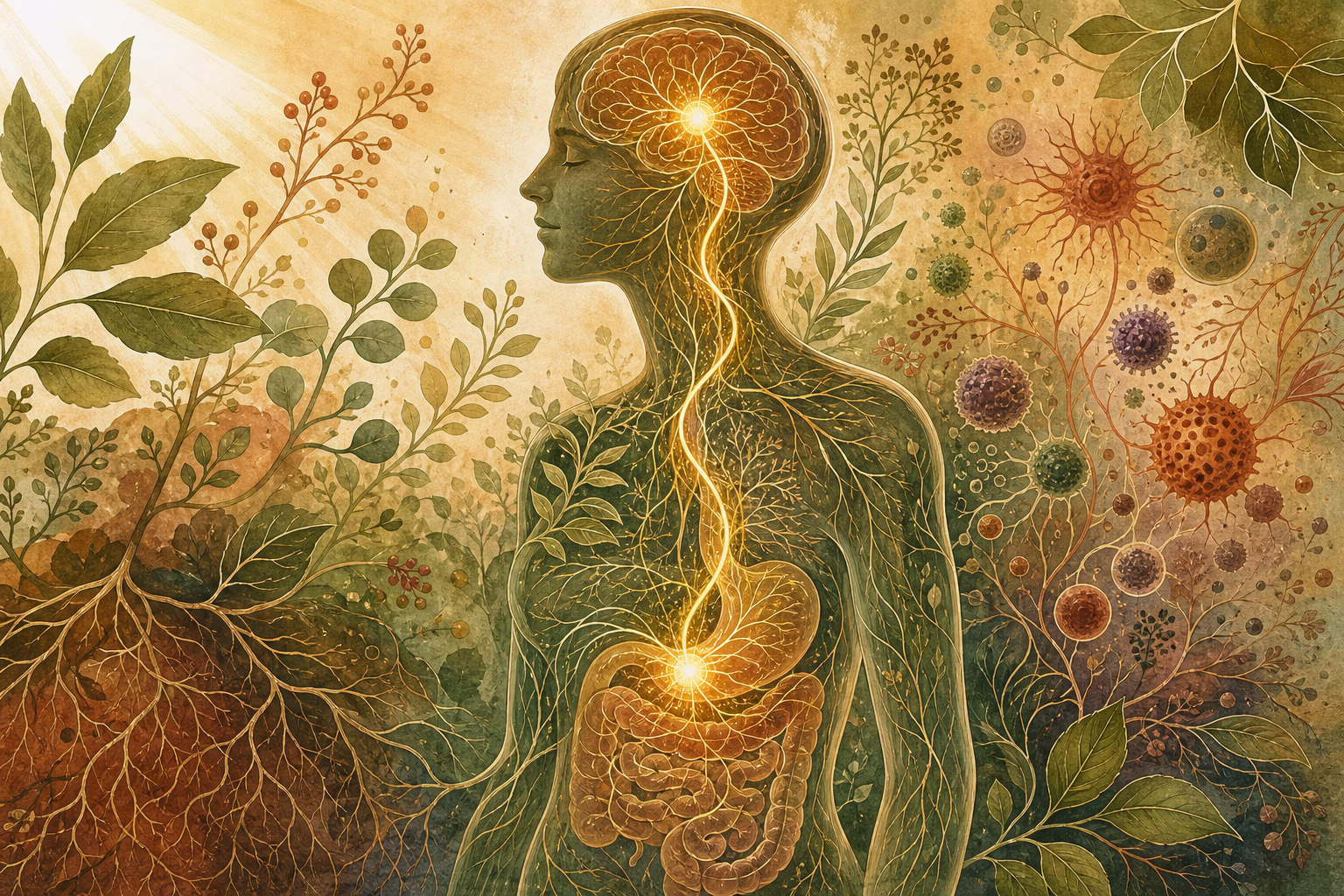
The gut-brain axis plays a key role here. Your digestive system contains massive numbers of CB2 receptors. When gut inflammation occurs — whether from poor diet, stress, or conditions like IBS — signals travel to the brain via the vagus nerve, contributing to anxiety. CB2 activation in the gut may interrupt this inflammatory signaling, providing anxiety relief through a gut-first mechanism. This is one reason why some people with anxiety and digestive issues find particular benefit from beta-caryophyllene-rich cannabis or dietary sources like black pepper.
Your Natural Endocannabinoids: Anandamide and 2-AG #
Your body makes its own cannabis-like molecules called endocannabinoids. The two main ones are anandamide (nicknamed the "bliss molecule") and 2-AG (2-arachidonoylglycerol).
Anandamide generally promotes calm and helps with fear extinction — letting go of anxious associations. 2-AG is more abundant and acts as the workhorse for moment-to-moment stress regulation. Some research suggests people with chronic anxiety or PTSD may have disrupted endocannabinoid levels, which could explain why cannabis helps some people more than others.
FAAH and MAGL are the enzymes that break down these endocannabinoids. CBD indirectly raises anandamide levels by blocking FAAH, which may be one mechanism for its anti-anxiety effects. This is different from THC, which directly replaces your natural endocannabinoids at receptors. The distinction matters: CBD enhances your body's own regulatory system, while THC hijacks it. Both can be useful, but the gentler mechanism of CBD explains its wider safety margin for anxiety.
The THC Biphasic Effect: Why Dose Makes All the Difference #
THC has a split personality when it comes to anxiety. The same compound can calm you at one dose and panic you at another. Scientists call this the biphasic effect.
Low-Dose THC: Anxiolytic (Anxiety-Reducing) #
Small amounts of THC can reduce anxiety by gently activating CB1 receptors. In a landmark 2017 University of Chicago study, participants who received 7.5 mg of THC before a stress test reported feeling less stressed and had lower cortisol levels compared to placebo. Their stress response was blunted in a helpful way.
At low doses, THC mimics your natural endocannabinoids. It provides a slight boost to the system that keeps you calm without overwhelming it. This is the sweet spot many anxiety sufferers are looking for — just enough to take the edge off, not enough to feel high or out of control.
This anxiolytic window typically falls between 0.5 mg and 7.5 mg of THC, depending on your tolerance, body weight, and individual sensitivity. For many people, the ideal microdose for anxiety sits between 1 and 3 mg — enough to engage the endocannabinoid system without producing noticeable intoxication. Some users describe this as "background relaxation" — they feel more at ease without being aware of the drug's presence.
High-Dose THC: Anxiogenic (Anxiety-Producing) #
Cross the threshold, and THC becomes an anxiety trigger. In that same University of Chicago study, participants who got 12.5 mg of THC reported more anxiety, more negative mood, and found the stress task more challenging. Their heart rates went up. They felt worse.
Why? Because higher doses flood CB1 receptors. Instead of gently modulating the anxiety circuits, high THC overactivates them. The amygdala — your brain's threat detector — becomes hypersensitive. Normal sensations get tagged as dangerous. The result is racing thoughts, paranoia, and that classic "I'm dying" feeling that sends people to the ER.
| THC Dose | Typical Effect on Anxiety | Best For |
|---|---|---|
| 0.5–2.5 mg | Mild relaxation, minimal psychoactivity | Highly sensitive users, daytime anxiety |
| 2.5–5 mg | Noticeable calm, light mood lift | General anxiety, microdosing protocol |
| 5–7.5 mg | Stronger relaxation, possible mild high | Evening use, moderate tolerance |
| 7.5–10 mg | Intoxication likely for most | Tolerant users only |
| 10+ mg | High risk of anxiety/paranoia | Not recommended for anxiety purposes |
What Happens in Your Brain When THC Turns on You #
THC-induced paranoia follows a predictable pattern. First, the drug alters perception — sounds seem louder, time feels weird, your heart beats faster. These are neutral physical sensations. But an anxious mind interprets them as threats.
PMC research on how cannabis causes paranoia using intravenous THC found that the rise in paranoia was fully explained by increases in negative affect (feeling anxious, worried, down) and anomalous experiences (perceptual distortions). Once your brain labels those sensations as dangerous, the paranoia feedback loop begins. You notice more threat. You feel more fear. You become convinced something bad is happening.
This explains why the same dose can produce different results on different days. If you're already stressed, sleep-deprived, or in an uncomfortable setting, your brain is primed to interpret THC's effects negatively.
The King's College London Cannabis & Me study 2024-2025 — the largest survey of its kind — confirmed this pattern in the general population. Researchers found that people who first used cannabis to self-medicate pain, anxiety, or depression reported significantly higher paranoia scores than those who started using recreationally. Childhood trauma, especially physical and emotional abuse, amplified the link between cannabis use and paranoia. CDC guidance on cannabis and mental health notes that individual factors significantly shape cannabis experiences. This doesn't mean cannabis causes paranoia in everyone — rather, it reveals that your psychological history and reasons for using shape your experience as much as the chemical itself.
CBD vs THC: Which Works Better for Anxiety? #
For anxiety, CBD is generally the safer and more reliable option. While THC can help in careful doses, CBD reduces anxiety across a much wider range of doses without the risk of tipping into paranoia.
CBD's Mechanism: Serotonin, GABA, and Fear Extinction #
CBD doesn't directly bind to CB1 or CB2 receptors like THC does. Instead, it works through multiple pathways that all point toward calm:
- Serotonin signaling: CBD interacts with 5-HT1A receptors, the same target as many antidepressants and anti-anxiety medications. This boosts serotonin activity, which stabilizes mood.
- Fear extinction: CBD helps your brain unlearn anxious associations. In animal studies, it speeds up how quickly conditioned fear fades.
- Indirect ECS support: CBD may increase natural anandamide levels by blocking the enzyme (FAAH) that breaks it down. More bliss molecule equals more calm.
- GABA enhancement: CBD may enhance the brain's main inhibitory system, similar to how anti-anxiety meds work but much more gently.
Clinical trials have used single doses of 300–600 mg CBD for acute anxiety (like public speaking), while daily regimens often start at 25–50 mg and go up from there. Unlike THC, higher CBD doses don't typically backfire.
The 300–600 mg doses used in research are far higher than most people take daily. At those levels, cost becomes a practical barrier for many consumers. The good news is that lower daily doses (25–100 mg) appear effective for many people, particularly when combined with the microdose amounts of THC discussed earlier. A 20:1 tincture delivering 30 mg CBD and 1.5 mg THC twice daily provides meaningful support without the expense of research-level CBD dosing.
Why THC Alone Is Risky for Anxious Brains #
THC's CB1 activation is powerful but blunt. It floods the receptor, which is great for some conditions (pain, nausea, appetite) but dicey for anxiety. Your brain's anxiety circuits get a strong, somewhat chaotic signal.
People with pre-existing anxiety are often more sensitive to this effect. Their threat-detection systems are already set to "high alert." Adding THC is like throwing gasoline on a smoldering fire. This is why the same 10 mg edible that relaxes your friend can send you into a panic spiral.
The Power of Combining CBD with THC #
CBD acts as THC's babysitter. When taken together, CBD reduces many of THC's negative effects — including anxiety, racing heart, and cognitive impairment. It does this partly by blocking THC from binding as strongly to CB1 receptors.
A 2024 terpene study on limonene and THC found that adding limonene (a citrus terpene) to THC also reduced THC-induced anxiety dose-dependently. But the fundamental principle is the same: balancing THC with compounds that counteract its more chaotic effects creates a calmer, more controllable experience.
| Compound | Primary Target | Anxiety Risk at Higher Doses | Best Use Case |
|---|---|---|---|
| CBD | Multiple (serotonin, FAAH, GABA) | Low — rarely worsens anxiety | Daily baseline anxiety, panic-prone users |
| THC | CB1 receptors directly | High — biphasic effect | Occasional use, pain with anxiety, sleep |
| CBD + THC | Combined | Moderate — CBD buffers THC | Balanced relief with some psychoactivity |
Finding Your Optimal CBD:THC Ratio #
The ratio of CBD to THC is more important than the total milligrams. A small amount of THC in a sea of CBD behaves very differently than the same amount of THC alone.
Understanding Ratio Notation #
Ratios describe how much of each compound is present. A 10:1 CBD:THC ratio means 10 parts CBD for every 1 part THC. A 1:1 ratio means equal amounts.
Different sources use different conventions. Some say "CBD:THC," others flip it to "THC:CBD." A "1:10 THC:CBD" product is the same as "10:1 CBD:THC." Always check which number comes first.
20:1 CBD:THC — The Anxiety-Safe Starting Point #
This is where most anxiety sufferers should begin. With 20 parts CBD to 1 part THC, you get the calming benefits of both with minimal chance of feeling high or anxious. PrestoDoctor guidance on CBD:THC ratios recommends starting with CBD-dominant ratios for anxiety-prone patients.
For example, a 20:1 tincture might deliver 20 mg CBD and 1 mg THC per dropper. That's enough THC to potentially boost CBD's effects through the entourage effect, but not enough to trigger paranoia in most people.
This ratio is ideal for:
- First-time cannabis users
- People with a history of THC-induced anxiety
- Daytime use when you need to stay clear-headed
- Building a baseline of calm before experimenting with more THC
10:1 CBD:THC — The Balanced Middle Ground #
The 10:1 ratio is the sweet spot for many regular users. You get noticeable effects from both compounds. The CBD is still dominant enough to keep anxiety at bay, but the THC contributes more to mood elevation and physical relaxation.
A typical dose might be 10–20 mg CBD paired with 1–2 mg THC. Many medical cannabis patients find this ratio provides the best relief for generalized anxiety without significant impairment.
5:1 CBD:THC — For Those Who Tolerate Mild THC Effects #
Moving toward a 5:1 ratio, you start to feel the THC more. This is for people who have some cannabis experience, know they tolerate small amounts of THC well, and want stronger effects than higher-CBD ratios provide.
At 5:1, a 10 mg dose delivers 2 mg THC. For occasional users, that's enough to feel a light buzz. For regular users, it's still fairly subtle. The CBD continues to buffer against anxiety, but the protection isn't as strong as at 20:1.
1:1 CBD:THC — Balanced But Potentially Intoxicating #
Equal parts CBD and THC create a full cannabis experience. The CBD definitely takes some edge off the THC, but you'll still feel noticeably high. For anxiety sufferers, this ratio is best reserved for evening use when you don't need to function at full capacity.
Some people love 1:1 for sleep or severe anxiety episodes where stronger medicine is needed. Others find even this balanced ratio can trigger anxious thoughts. There's no universal rule — it's deeply individual.
| Ratio | CBD:THC | Typical Starting Dose | Best For | Anxiety Risk |
|---|---|---|---|---|
| 20:1 | 20 mg:1 mg | 20–40 mg CBD (1–2 mg THC) | First-timers, daytime, high sensitivity | Very Low |
| 10:1 | 10 mg:1 mg | 20–30 mg CBD (2–3 mg THC) | Most anxiety users, balanced relief | Low |
| 5:1 | 5 mg:1 mg | 15–25 mg CBD (3–5 mg THC) | Some tolerance, stronger relief needed | Moderate |
| 1:1 | Equal | 5–10 mg each | Evening use, severe symptoms, experienced users | Moderate-High |
Terpenes That Calm: Beyond CBD and THC #
The smell of cannabis isn't just flavor — it's medicine. Terpenes are aromatic compounds that give different strains their distinctive scents. Several terpenes have specific anti-anxiety properties that can enhance your cannabis experience.
Limonene: The Citrus Mood Lifter #
Limonene smells like citrus and works like a gentle antidepressant. Found in lemon peel, orange rind, and some cannabis strains, this terpene boosts serotonin and dopamine levels in the brain according to Mamedica's review of terpenes for anxiety.
A 2024 PMC terpene review on pinene and linalool found that when limonene was added to THC, it reduced THC-induced anxiety in a dose-dependent way. More limonene meant less anxiety from the same amount of THC. This makes limonene-rich strains or products excellent choices if you want some THC but worry about paranoia.
Look for strains described as citrusy, lemony, or with "bright" or "clean" aromas. Lab reports showing limonene at 0.3% or higher suggest meaningful presence.
Linalool: The Lavender Sedative #
Linalool is the main calming compound in lavender. It smells floral and spicy, and it works through your GABA system — the same pathway targeted by benzodiazepines like Xanax, but much more gently.
PMC research on terpenes including linalool shows linalool reduces anxiety-like behavior in animal studies through GABA receptor modulation. The Higher Path's terpene guide confirms it may also reduce glutamate, the brain's main excitatory chemical. The result is physical and mental relaxation without the risk profile of pharmaceutical sedatives.
Linalool is best for evening anxiety, racing thoughts at bedtime, and physical tension. Strains with floral, lavender, or "spa-like" aromas often contain this terpene.
The aromatherapeutic aspect of linalool deserves emphasis. Studies using lavender essential oil — rich in linalool and linalyl acetate — show anxiety reduction through inhalation alone. This suggests that smelling linalool-rich cannabis may provide some benefit even before the cannabinoids take effect. For anxious users, the ritual of preparing and smelling their medicine may be part of the therapeutic experience, not just a prelude to it.
Beta-Caryophyllene: The Peppery CB2 Activator #
Beta-caryophyllene is unique among terpenes because it directly activates CB2 receptors. This makes it function more like a cannabinoid than just an aromatic compound, as explained by Terpene Belt Farms research on terpenes for anxiety. It smells peppery, spicy, and woody — think black pepper or cloves.
Because it targets CB2 rather than CB1, beta-caryophyllene won't get you high. It reduces inflammation and appears to have anti-anxiety effects through immune modulation. For people whose anxiety is tied to physical discomfort, gut issues, or chronic inflammation, this terpene is especially valuable.
Some users report that chewing black peppercorns during an uncomfortable cannabis experience helps calm the anxiety. The beta-caryophyllene in pepper may be part of why this old trick works.
Beyond cannabis, beta-caryophyllene is abundant in black pepper, cloves, cinnamon, and hops. This means dietary sources can complement cannabis therapy. A diet rich in these spices may provide low-level CB2 activation that supports the endocannabinoid system's anti-inflammatory functions. For anxiety sufferers with digestive inflammation — a common comorbidity — this dietary approach combined with beta-caryophyllene-rich cannabis creates a multi-pronged strategy.
Myrcene: The Earthy Relaxant #
Myrcene is the most common terpene in cannabis and has classic sedative properties. It smells earthy, musky, and sometimes like mangoes. While not as specifically anti-anxiety as limonene or linalool, myrcene promotes full-body relaxation that can help with anxiety-related physical tension.
Myrcene may also help THC cross the blood-brain barrier more easily, which could enhance effects. For anxiety sufferers, this means strains high in both myrcene and THC might hit harder — something to be aware of when dosing.
The "couch-lock" reputation of many indica strains is largely due to myrcene content. For anxiety that manifests as physical restlessness — pacing, muscle tension, inability to sit still — this heavy relaxation can be therapeutic. However, for people whose anxiety includes low motivation or depression, high-myrcene strains might worsen those symptoms. Matching the terpene profile to your specific anxiety presentation matters. If your anxiety comes with agitation, myrcene helps. If it comes with fatigue, limonene might be a better choice.
| Terpene | Aroma | Primary Mechanism | Best For | Look For |
|---|---|---|---|---|
| Limonene | Citrus, lemon | Serotonin boost, buffers THC | Daytime anxiety, mood lift, THC anxiety | Citrus, "bright" strains |
| Linalool | Floral, lavender | GABA enhancement | Evening anxiety, sleep, racing thoughts | Floral, "kush" scents |
| Beta-Caryophyllene | Peppery, spicy | CB2 activation | Anxiety with pain/inflammation, clear-headed calm | Peppery, hashy aromas |
| Myrcene | Earthy, musky, mango | Sedation, muscle relaxation | Physical tension, sleep | Indica-leaning strains |
Microdosing Cannabis for Anxiety: The Less-Is-More Approach #
Microdosing means taking amounts so small you barely feel them. For anxiety, this is often the most sustainable and effective approach.
What Constitutes a Microdose? #
For THC, a microdose is typically 0.5–2.5 mg. For CBD, it might be 2.5–10 mg. The goal isn't to get high or even feel obviously different — it's to find the threshold where symptoms improve without noticeable psychoactivity.
Microdosing works because of the biphasic effect we discussed earlier. You're intentionally staying in the low-dose, anxiety-reducing range of the curve. You get the therapeutic benefits without crossing into the territory where THC works against you.
The Microdosing Protocol for Anxiety #
Start lower than you think you need. Here's a conservative protocol:
Week 1: Start with 1–2.5 mg THC or 5–10 mg CBD, taken once daily in the evening. Use a tincture or precisely dosed edible for accuracy.
Week 2: If no benefit and no side effects, increase by 1 mg THC or 5 mg CBD. Continue daily dosing.
Weeks 3–4: Continue gradual titration every 3–4 days until you find relief or reach your comfort limit. For most anxiety sufferers, this will be 2.5–5 mg THC or 15–30 mg CBD.
Maintenance: Once you find your dose, you can stay there. Some people take breaks periodically to prevent tolerance buildup.
| Week | THC Microdose | CBD Microdose | Frequency | Notes |
|---|---|---|---|---|
| 1 | 1–2.5 mg | 5–10 mg | Once daily PM | Baseline, no pressure |
| 2 | 2.5–3.5 mg | 10–15 mg | Once daily | Increase if tolerated |
| 3 | 3.5–5 mg | 15–25 mg | 1–2× daily | May split AM/PM |
| 4+ | 2.5–5 mg | 20–30 mg | 1–2× daily | Maintenance dose |
Why Edibles Work Better for Microdosing Anxiety #
Smoking and vaping make precise dosing difficult. One puff might deliver 1 mg THC or it might deliver 5 mg. The variability makes finding your sweet spot harder.
Edibles and tinctures let you measure exact milligrams. Start with a 2.5 mg THC gummy or a dropper delivering 5 mg CBD. You know exactly what you took and can adjust systematically.
The downside is delayed onset — 30–90 minutes for edibles. This actually helps with anxiety once you adjust. The gradual come-up is less jarring than the rapid onset of smoking, which can itself trigger anxiety in sensitive people.
When using edibles for microdosing, consider cutting standard products into smaller pieces. A 10 mg gummy can be quartered into 2.5 mg portions. Tinctures offer even more flexibility — you can adjust by the drop. Keep a journal noting time of dose, amount, and effects. Over a few weeks, patterns emerge that reveal your personal optimal dose. Many microdosers find they get the best results from consistent low daily dosing rather than occasional larger amounts.
Who Should and Shouldn't Use Cannabis for Anxiety #
Cannabis isn't for everyone. Knowing whether you're a good candidate can save you from bad experiences.
Good Candidates for Cannabis Anxiety Treatment #
You might benefit from cannabis for anxiety if:
- Your anxiety is mild to moderate and hasn't fully responded to lifestyle changes
- You've tried CBD alone and want to explore adding small amounts of THC
- You experience anxiety with physical symptoms (muscle tension, nausea, pain)
- Traditional anxiety medications haven't worked or cause unacceptable side effects
- You're looking for occasional relief rather than daily dependence
- You have good self-awareness and can honestly track how different doses affect you
- You're willing to start low, go slow, and respect the dose-response relationship
Many people at Divine Toke in Detroit fit this profile. Working folks dealing with job stress, union members with physical jobs that also tax the mind, parents juggling a thousand things. Cannabis can be a tool in the toolbox when used thoughtfully.
The blue-collar workers who make up much of Detroit's cannabis community often face unique anxiety challenges — physically demanding work, shift schedules that disrupt sleep, economic uncertainty, and limited time for traditional self-care. For these folks, a simple evening microdose that quiets the mind without impairing next-day function can be more sustainable than weekly therapy appointments or medications that cause grogginess. The key is finding approaches that fit real lives rather than demanding lives conform to idealized treatment plans.
Age and life stage matter too. People in their 30s, 40s, and beyond often respond differently to cannabis than younger users. With age typically comes better self-knowledge, more stable life circumstances, and often more patience for gradual titration. Older adults also face higher risks from pharmaceutical alternatives — benzodiazepines cause falls and cognitive impairment in seniors, while SSRIs may have sexual side effects that matter less at 25 than at 55. For this demographic, careful cannabis use sometimes offers a risk profile that compares favorably to standard medical options, provided they follow the low-dose principles outlined in this guide.
Red Flags: Who Should Avoid or Be Extra Cautious #
Think twice about using cannabis for anxiety if:
- You have a personal or family history of psychosis, schizophrenia, or bipolar disorder
- You've had severe panic attacks from cannabis in the past
- You're under 25 (brain development makes THC riskier)
- You're currently in an acute anxiety crisis or having suicidal thoughts
- You have a history of substance use disorder
- You're taking multiple other psychoactive medications without medical supervision
- You lack a stable, safe environment where you can use without external stress
Specific conditions that warrant extra caution:
- Panic disorder: THC can trigger panic attacks even at moderate doses
- PTSD: Some people find cannabis helps; others find it worsens re-experiencing symptoms
- Social anxiety disorder: The self-consciousness from THC can amplify social fears
- Generalized anxiety disorder: May respond better to CBD-dominant approaches
When to See a Doctor Instead #
Cannabis is not a replacement for professional mental health care. You should see a clinician if:
- Your anxiety interferes with work, relationships, or daily functioning
- You experience physical symptoms like chest pain, shortness of breath, or dizziness
- You have thoughts of harming yourself
- You've tried self-medicating with cannabis and your anxiety is getting worse
- You're using cannabis daily just to function and it's affecting other areas of life
A doctor or therapist can provide evidence-based treatments like cognitive behavioral therapy (CBT), which has stronger long-term evidence for anxiety disorders than cannabis. Some people use cannabis to manage symptoms while doing the deeper work in therapy — that's a reasonable harm-reduction approach if it doesn't become the only tool.
Cannabis vs. Prescription Anxiety Medications #
How does cannabis stack up against pharmaceutical options? The honest answer is complicated and depends on which medication you're comparing.
Cannabis vs. Benzodiazepines (Xanax, Ativan, Klonopin) #
Benzodiazepines work faster and more reliably for acute anxiety than cannabis. They directly activate GABA receptors, producing rapid calm. However, they carry serious risks: dependence, withdrawal, memory impairment, and overdose potential (especially when mixed with alcohol or opioids).
A 2025 longitudinal cohort study on cannabis and benzodiazepine use found that cannabis use was not associated with reduced benzodiazepine use. This suggests cannabis isn't effectively replacing benzos for most people who take them. If you're on benzos and considering cannabis, this is a conversation for your doctor — the combination can cause dangerous oversedation. Leafwell analysis of cannabis vs benzodiazepines provides additional guidance on this interaction.
The reality is more nuanced than simple substitution. Some people successfully transition from daily benzodiazepine use to occasional cannabis use, but this typically requires medical supervision and a gradual taper. Abruptly stopping benzodiazepines can cause seizures and death — never attempt this on your own. The 2025 data simply suggests that most people who add cannabis to their regimen don't automatically reduce their benzodiazepine dose. Effective substitution requires intention, planning, and often professional support.
| Factor | Benzodiazepines | Cannabis |
|---|---|---|
| Onset | 15–30 minutes | 15–90 minutes (varies by route) |
| Reliability | High — works for most people | Variable — can help or worsen anxiety |
| Addiction risk | High — physical dependence common | Lower — psychological dependence possible |
| Cognitive impact | Significant — memory, coordination | Mild to moderate — dose dependent |
| Withdrawal | Severe — can be life-threatening | Uncomfortable but not dangerous |
| Long-term safety | Poor — not meant for chronic use | Unclear — more research needed |
Cannabis vs. SSRIs (Prozac, Zoloft, Lexapro) #
SSRIs are the first-line treatment for chronic anxiety disorders. They take 4–6 weeks to work but have strong evidence for long-term symptom reduction. Side effects (sexual dysfunction, weight gain, emotional blunting) lead some people to seek alternatives.
Cannabis works immediately but lacks the same long-term track record. There's also concern that regular THC use might interfere with serotonin systems in ways that could complicate underlying anxiety. CBD, which affects serotonin receptors directly, might be more compatible with SSRI mechanisms.
If you're considering replacing an SSRI with cannabis, do so under medical supervision. Stopping SSRIs abruptly can cause discontinuation syndrome. A gradual transition with professional monitoring is essential.
What the 2026 Research Actually Shows #
A major 2026 Lancet review on medicinal cannabis for mental health found no evidence that medicinal cannabis effectively treats anxiety, depression, or PTSD at the population level. This doesn't mean it doesn't help individual people — many report real benefits. But the clinical trial evidence is weaker than for established treatments.
The takeaway: cannabis can be a useful tool for some people with anxiety, but it's not a proven treatment in the same category as CBT or SSRIs. Approach it as harm reduction or adjunctive support, not a cure-all.
This evidence gap reflects several research challenges. First, standardized cannabis products suitable for clinical trials are scarce — every strain differs in cannabinoid and terpene content. Second, the biphasic nature of THC makes dosing studies complex; the same dose that helps some participants may worsen symptoms in others. Third, the pharmaceutical industry has little incentive to fund trials on a plant that can't be patented. Until these barriers shift, consumers must rely on mechanistic understanding, observational data, and careful self-experimentation rather than robust clinical trial evidence.
Choosing the Right Product Format for Anxiety Relief #
How you consume cannabis matters as much as what you consume. Different delivery methods have different onset times, durations, and controllability — all crucial factors for anxiety management.
Tinctures and Sublingual Oils: Most Recommended #
Tinctures are the anxiety sufferer's best friend. You can measure exact milligrams with a dropper. Effects begin in 15–45 minutes and last 4–6 hours — fast enough for acute anxiety but long enough for sustained relief.
Sublingual absorption (holding the oil under your tongue) bypasses the digestive system, giving more consistent results than edibles. If anxiety hits, you can take a small dose and know exactly what you got. This predictability reduces the anxiety-about-taking-cannabis that many beginners feel.
When shopping for tinctures, look for products that clearly state both the total cannabinoid content per bottle and the amount per dropper or milliliter. A 30ml bottle with 300mg CBD contains 10mg per ml — about one dropper. This makes dosing calculations simple. Avoid products that only list total bottle content without serving size information.
Edibles: Long-Lasting but Tricky #
Edibles provide the longest relief but the least control. Onset takes 30–120 minutes, and effects last 6–8 hours. This is great if you want all-day relief but terrible if you overshoot your dose.
The classic edible horror story — taking more because "it's not working," then being overwhelmed when it all hits — is especially risky for anxiety sufferers. Start with 1–2.5 mg THC or 5–10 mg CBD. Wait a full two hours before even considering more. Use edibles when you have time and a safe environment, not before work or social obligations.
Vaporized Flower: Fast but Variable #
Inhaled cannabis works in 1–5 minutes, making it useful for sudden panic. But dosing is imprecise. One small puff from a strain with 20% THC might deliver 2 mg THC. Two deep puffs might deliver 10 mg. That's the difference between calm and chaos.
If you use flower for anxiety, choose strains with moderate THC (10–15%) and some CBD. Take one small puff. Wait 10–15 minutes. Assess before taking more. Keep a CBD-only product nearby — a few drops of CBD tincture can help counteract if you overshoot.
Temperature control matters with vaporization. Lower temperatures (350–370°F) release more terpenes and less THC, producing a milder, more nuanced effect that many find better for anxiety. Higher temperatures (380–420°F) vaporize more cannabinoids including THC, creating stronger effects that may cross into anxiety territory for sensitive users. Start low and work up if needed.
| Format | Onset | Duration | Dosing Precision | Best Use Case | Anxiety Risk |
|---|---|---|---|---|---|
| Tinctures/Oils | 15–45 min | 4–6 hours | High | Daily anxiety, microdosing | Low |
| Edibles | 30–120 min | 6–8 hours | Medium | Long-lasting relief, sleep | Medium-High |
| Vaporized Flower | 1–5 min | 2–3 hours | Low | Acute panic, breakthrough anxiety | High |
| Smoking | 1–5 min | 2–3 hours | Very Low | Not recommended for anxiety | High |
Topicals: Limited Use for Anxiety #
Topical cannabis products (creams, balms) don't effectively treat anxiety. They work locally on the skin and muscles where applied. While relieving physical tension might indirectly help anxiety, topicals won't address the mental and emotional components.
Reading Cannabis Labels for Anxiety Relief #
Knowing how to read a Certificate of Analysis (COA) or product label puts you in control. Here's what anxiety sufferers should look for.
Understanding THC and CBD Percentages #
Flower potency is listed as a percentage of total weight. A strain with 18% THC and 1% CBD delivers roughly 180 mg THC and 10 mg CBD per gram. A typical 0.3g bowl would contain about 54 mg THC — way too much for anxiety purposes unless you're microdosing with tiny amounts.
For anxiety, look for flower with:
- THC below 15% (ideally 10–12%)
- Some CBD present (0.5–3%)
- Terpene content listed, with limonene, linalool, or beta-caryophyllene prominent
High-THC flower (20%+) requires such tiny amounts for microdosing that accuracy becomes difficult. A one-gram joint of 25% THC flower contains 250 mg THC — one hundred times a typical microdose. While experienced users can take tiny puffs, beginners often overshoot. Lower-potency flower allows more margin for error. You can consume a small but visible amount and still stay in the therapeutic range.
Tinctures and edibles list total milligrams per serving and per container. A "10 mg THC per gummy" product gives you exact numbers to work with.
Identifying Terpenes on Lab Reports
Most consumers ignore terpene data, but it's crucial for anxiety. Look for COAs that list:
- Total terpene percentage: Higher is generally better (2%+ is excellent)
- Individual terpenes: Look for limonene, linalool, and beta-caryophyllene
- Terpene ratios: A balanced profile is often better than one dominant terpene
If a lab report shows myrcene at 1% but no detectable limonene or linalool, that strain will probably be sedating but not specifically anti-anxiety in the way a limonene-rich strain might be.
Practical terpene thresholds for anxiety-focused shopping:
- Limonene: 0.3–1.0% provides meaningful presence; above 0.5% is strong
- Linalool: 0.2–0.5% is typical for anxiety-targeted strains; above 0.4% is high
- Beta-caryophyllene: 0.2–0.8% is common in peppery strains; above 0.5% is notable
- Myrcene: Often the dominant terpene in cannabis; 0.5–2.0% is standard; above 1.5% suggests strong sedation
Remember that these percentages are of total weight, not of total terpenes. A strain with 0.4% limonene and 0.3% linalool alongside 1.2% myrcene may still be calming if the CBD content is adequate. The interplay between cannabinoids and terpenes matters more than any single number.
Red Flags to Avoid #
Certain product characteristics increase anxiety risk:
- THC-only products with no CBD: No buffering against THC's anxiogenic effects
- Very high THC (25%+) flower: Easy to overdo, especially for beginners
- Products with no lab testing: Unknown potency increases overdose risk
- "Sativa" strains with high terpinolene: Some find this terpene anxiety-inducing
- Untested Delta-8 or synthetic cannabinoid products: Unknown safety profile
The hemp-derived cannabinoid market (Delta-8, Delta-10, HHC, THC-O) deserves specific warning. These compounds are often produced through chemical conversion of CBD using harsh reagents. Testing has revealed residual solvents, heavy metals, and unknown byproducts in many products. While some users report anxiety relief, others experience stronger and more unpredictable effects than from natural cannabis. For anxiety sufferers already sensitive to psychoactive substances, these uncertainties present unnecessary risk. Stick to lab-tested cannabis from licensed dispensaries where regulatory oversight exists.
Building a Complete Anxiety Management Plan #
Cannabis works best as part of a broader approach. Here are complementary strategies that enhance its benefits and reduce the amount you need.
Combining Cannabis with Breathwork and Meditation #
Controlled breathing directly activates your parasympathetic nervous system. The 4-7-8 technique (inhale 4 counts, hold 7, exhale 8) can stop a rising panic attack in its tracks. Cannabis can make this easier by reducing the baseline anxiety that makes breathwork feel impossible when you're wound up.
Meditation, even 10 minutes daily, reduces amygdala reactivity over time. Some people find low-dose cannabis before meditation helps them sit with uncomfortable thoughts rather than running from them. Others find it distracting. Experiment to find your sweet spot.
Progressive muscle relaxation pairs particularly well with cannabis for physical anxiety. Starting with your toes and working up to your face, tense each muscle group for 5 seconds then release. The body awareness from cannabis can enhance this practice, helping you notice where you hold tension. Many users report this combination more effective than either practice alone for releasing physical manifestations of anxiety.
Exercise and Movement as Anxiety Management #
Physical activity is one of the most effective anxiety treatments available. It burns off stress hormones, releases endorphins, and increases natural endocannabinoid levels. Regular exercisers often find they need less cannabis for anxiety management.
If THC makes exercise feel better and gets you moving, that's a net positive. But be cautious — cannabis can impair coordination and judgment. Don't use before activities where safety matters.
Walking deserves special mention as an anxiety intervention. A 20-minute walk, especially outdoors in green spaces, measurably reduces cortisol and rumination. Many people find that low-dose cannabis taken before a walk creates a synergistic calm — the movement processes the body's stress energy while the cannabis quiets the mental chatter. This "walking meditation" approach works well for people who find sitting still for traditional meditation too activating when anxious.
Sleep Hygiene and Anxiety #
Poor sleep and anxiety create a vicious cycle. Cannabis helps some people fall asleep, especially products with myrcene and linalool. But regular high-THC use can reduce REM sleep, potentially worsening anxiety over time.
For anxiety-related insomnia, consider:
- CBD-dominant products rather than high-THC
- Using cannabis 1–2 hours before bed rather than right at bedtime
- Taking periodic breaks to assess baseline sleep quality
- Combining with non-cannabis sleep hygiene (cool room, no screens, consistent schedule)
For more on using cannabis specifically for sleep, see our complete guide to cannabis and sleep.
FAQ: Common Questions About Cannabis and Anxiety #
What's the best THC:CBD ratio for anxiety? #
Most anxiety sufferers do best with CBD-dominant ratios of 10:1 to 20:1 (CBD:THC). A 20:1 product delivers 20 mg CBD for every 1 mg THC, providing significant calm with minimal psychoactivity. Dr. Green Relief's THC:CBD ratios guide recommends 10:1–20:1 ratios for anxiety-prone patients. ElevatedMT's guide on CBD:THC ratios for relaxation confirms CBD-dominant products starting with 5-20 mg CBD and ≤1-2 mg THC. If you tolerate THC well and want stronger effects, a 5:1 ratio offers more THC influence while maintaining CBD's protective buffer. Start at 20:1 and only move toward more THC if needed and well-tolerated.
Can weed make my anxiety worse? #
Yes, especially at higher doses. THC has a biphasic effect: low doses can reduce anxiety, but higher doses often increase it. Research from the University of Chicago 2017 study shows that while 7.5 mg THC reduced stress, 12.5 mg increased anxiety and negative mood. New Jersey's cannabis guidance notes that individual factors matter too — people with pre-existing anxiety, childhood trauma, or self-medication patterns are more prone to THC-induced anxiety and paranoia.
How much THC is too much for anxiety? #
For most anxiety sufferers, anything above 5–7.5 mg THC is pushing into risky territory. Beginners should start with 1–2.5 mg. Regular users might tolerate 5–10 mg. The key is finding your personal threshold, which can vary based on set (your mental state) and setting (your environment). When in doubt, take less. You can always take more tomorrow.
Is CBD alone enough for anxiety? #
For many people, yes. CBD has anxiolytic effects without the biphasic risk of THC. Healthline's review of high-CBD strains for anxiety notes that clinical trials have used 300–600 mg for acute anxiety, while daily regimens often start at 25–50 mg. MyRapidCard's guide on understanding THC and CBD ratios explains that CBD works through serotonin receptors, fear extinction mechanisms, and natural endocannabinoid enhancement. If you haven't tried CBD alone, start there before adding THC.
What terpenes help with anxiety? #
Limonene, linalool, and beta-caryophyllene are the big three for anxiety. Limonene (citrus aroma) boosts serotonin and can buffer THC-induced anxiety. Linalool (lavender/floral) works through GABA receptors for calm. Beta-caryophyllene (peppery) activates CB2 receptors for anti-inflammatory and grounding effects without intoxication. Look for strains or products with these terpenes prominent in lab reports.
Can I use cannabis if I have panic disorder? #
Extra caution is warranted. THC can trigger panic attacks even at moderate doses in panic-prone individuals. If you want to try cannabis, start with CBD-only products. If adding THC, use the lowest possible doses (0.5–1 mg) and avoid inhalation methods that cause rapid onset. Consider whether you're seeking cannabis because other treatments haven't worked — panic disorder has effective therapies like CBT and SSRIs with stronger evidence bases.
What's the difference between sativa and indica for anxiety? #
These labels are marketing, not medicine. What matters is the chemical profile: THC percentage, CBD content, and terpene composition. A "sativa" with 8% THC and 2% CBD might be calming, while an "indica" with 25% THC and no CBD could cause paranoia. Learn to read lab reports rather than relying on strain names. For anxiety specifically, look for moderate THC, some CBD, and calming terpenes regardless of the indica/sativa label.
Should I smoke, vape, or eat edibles for anxiety? #
Tinctures and sublingual oils are generally best for anxiety. They offer precise dosing, reasonable onset (15–45 minutes), and 4–6 hour duration. Edibles last longer (6–8 hours) but have delayed onset that makes dosing tricky. Smoking and vaping work fast (1–5 minutes) but make precise dosing difficult. For daily anxiety management, the control and predictability of tinctures usually wins.
Can I become dependent on cannabis for anxiety relief? #
Yes, psychological dependence is possible. Unlike benzodiazepines or alcohol, cannabis withdrawal isn't medically dangerous, but it can be uncomfortable: irritability, sleep disruption, anxiety rebound. To minimize dependence risk: use the minimum effective dose, take regular breaks (e.g., one week off per month), and build non-cannabis coping skills. If you find you can't function without cannabis, that's a sign to reassess with professional help.
Is cannabis safer than Xanax for anxiety? #
The answer depends on what you mean by "safer." Xanax works more reliably for acute anxiety but carries higher risks of dependence, withdrawal, and dangerous interactions. Cannabis has lower addiction potential but less predictable effects — it can help or worsen anxiety depending on dose and individual factors. For occasional use, cannabis may be safer. For severe, chronic anxiety, Xanax has stronger evidence but should be short-term. Neither is ideal for long-term daily anxiety management compared to therapy and lifestyle approaches.
Why do some people get paranoid while others feel calm from the same cannabis? #
Multiple factors determine your response. Dose is primary — the same product can calm at 2 mg THC and panic at 10 mg. Individual neurochemistry matters, as does your current mental state (tired and stressed versus relaxed and happy). History of childhood trauma increases paranoia risk. Your reason for using matters too — people using cannabis to self-medicate distress have more negative experiences than recreational users. Set and setting (your mindset and environment) play huge roles.
How long should I wait between doses? #
For edibles, wait at least two hours before redosing. They take 30–120 minutes to peak, and impatience leads to overconsumption. For tinctures, wait 45–60 minutes. For inhaled cannabis, wait 10–15 minutes between puffs. The goal with anxiety management isn't to get high — it's to find the subtle point where symptoms improve without impairment. Rushing the process increases the chance of overshooting into anxiety territory.
Finding Your Personal Sweet Spot #
There's no universal perfect dose — only the dose that works for you. This guide gives you the science, the starting points, and the warning signs. The real work is experimentation within safe boundaries.
Start with CBD. Add tiny amounts of THC only if needed. Pay attention to terpenes. Keep a journal of what you take, when, and how you feel. Over time, patterns emerge. You'll learn which contexts, doses, and products help, and which to avoid.
If you're curious to explore low-dose, anxiety-friendly cannabis options, Divine Toke offers sun-grown, lab-tested flower and tinctures with detailed cannabinoid and terpene profiles. Our staff can help you find products with the CBD:THC ratios and calming terpenes discussed in this guide.
For more on managing stress with cannabis, check out our guide to the top sun-grown strains for stress and anxiety. If you're new to cannabis or need a refresher on dosing fundamentals, our microdosing guide offers step-by-step protocols. And for a deeper dive into how cannabis works in your body, explore our endocannabinoid system guide.
This article is for educational purposes only and is not medical advice. Always consult your healthcare provider before starting any new wellness routine, especially if you have a history of anxiety disorders, are taking medications, or have concerns about substance interactions.