Top 5 Sun-Grown Strains for Stress and Anxiety

Jamie
Head Cultivator
The best cannabis strains for anxiety share three traits: dominant myrcene or linalool terpenes, a balanced or CBD-forward cannabinoid ratio, and sun-grown cultivation that preserves the full terpene profile. The strain names don't matter as much as the chemistry — Granddaddy Purple at one Michigan dispensary might hit different than Granddaddy Purple at another. What matters is reading the lab panel and knowing what to ask for.
Here's your no-nonsense guide to five strain archetypes that work for stress and anxiety, what makes each one tick, and how Detroit-area shoppers can find them (or something equivalent) at a licensed counter without getting talked into expensive products you don't need.
Michigan access note: stress and anxiety are not listed as their own named MMMP qualifying conditions on the CRA eligibility list. Adults 21+ usually shop the adult-use channel. Talk with a doctor first if you have an anxiety disorder, take other meds, or are weighing a medical pathway for a different qualifying condition.
How to Shop for Anxiety Strains Without Getting Upsold #
Walk in knowing what to ask for — dominant terpenes and CBD ratios — and you'll get what you need instead of what they're pushing. Dispensaries make more margin on high-THC concentrates and exotic hype strains. That's not what you want for anxiety. Here's how to stay in control.
What to Say (and Not Say) #
Don't say: "I need something for anxiety." Why: This opens the door to upsells. They'll hand you the priciest CBD product or the latest hyped strain with no anxiety-friendly chemistry.
Do say: "Show me your highest-myrcene flower, and what do you have with at least some CBD in the mix?" Why: You're asking for chemistry, not marketing. Myrcene is the terpene that actually calms you down. CBD moderates THC's edge. This question shows you know what matters.
Red Flags at the Counter #
| What They Say | What It Means | Your Response |
|---|---|---|
| "This one's 30% THC — it's the strongest we have" | They're pushing potency, not anxiety relief | "I'm looking for balance, not strength. What has lower THC with good myrcene?" |
| "Indicas are always best for anxiety" | Outdated category thinking | "I'll check the terpene panel. High myrcene works for me regardless of label." |
| "You need this special CBD tincture" | Upselling to expensive isolate products | "Let me see the flower options first. I prefer whole-plant effects." |
| "This exotic strain just came in" | Hype marketing, no proven track record | "What's been consistently testing high in linalool or myrcene?" |
The Information You Need #
On a licensed Michigan package, CRA labeling rule R 420.504 requires lab-reported THC and CBD (with the 10% variance note), activation time, lab name/test date, and the other identity fields — not a full terpene menu. Terpene detail often lives on the batch Certificate of Analysis (COA), not the jar sticker. Ask your Detroit-area budtender for the COA before you buy:
- The Certificate of Analysis (COA) — the lab test showing cannabinoids and, when run, terpenes
- Dominant terpene percentages — you want myrcene, linalool, or beta-caryophyllene at 0.4% or higher when listed
- CBD content — even 2-5% CBD helps moderate THC for anxiety
- Total terpenes — above 1.5% means it's terpene-rich; above 2% is excellent
Price Reality Check #
Good anxiety strains don't cost more than any other flower. You don't need:
- "Craft" or "small batch" labels (marketing terms)
- Exotic genetics with trademarked names
- Pre-rolls unless you're in a hurry (markups are 50-100%)
You do need:
- Recent lab testing (within 6 months)
- Proper storage (ask when it was packaged)
- Transparent terpene data
The Calming Terpenes: What to Look For on Lab Panels #
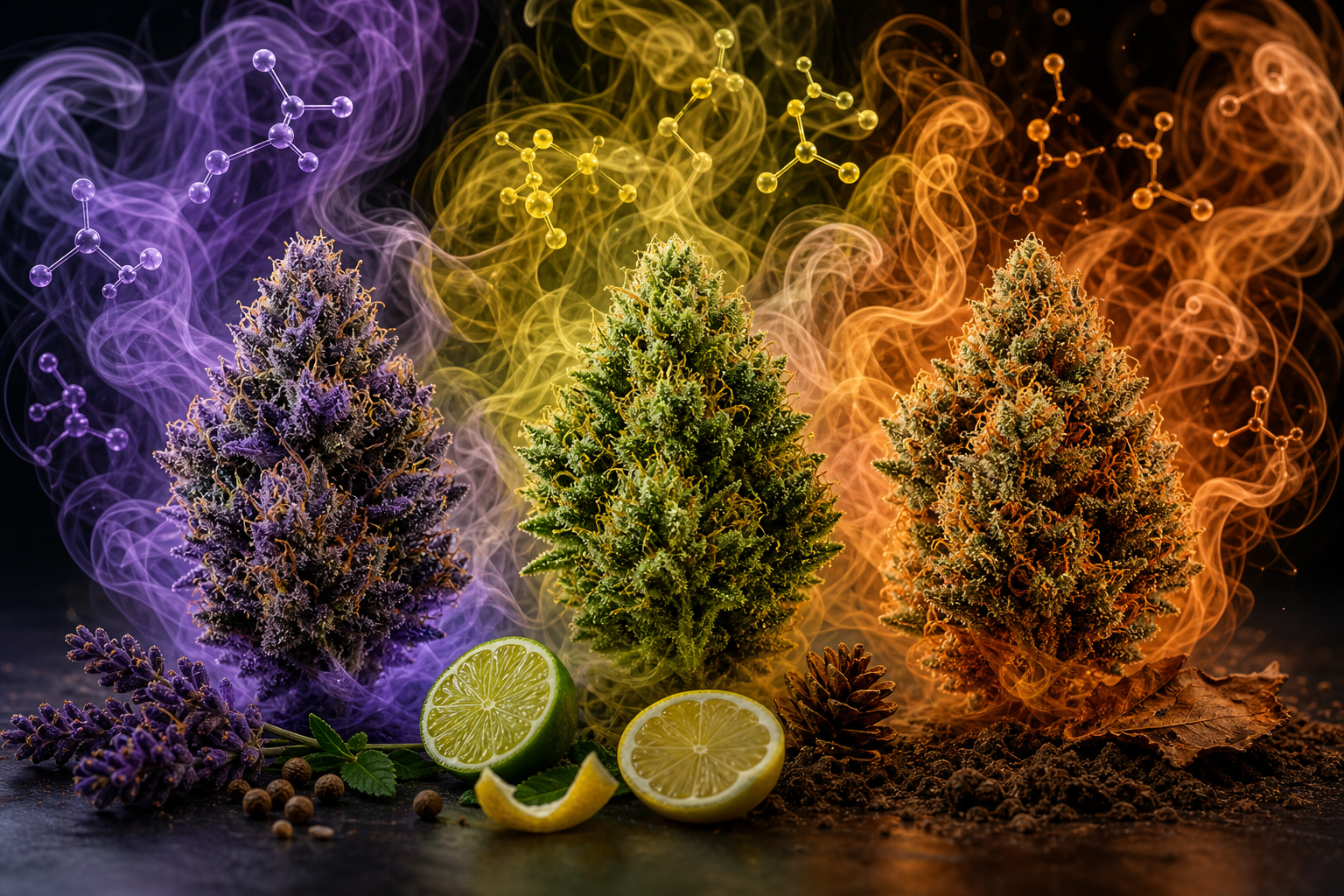
Myrcene, linalool, beta-caryophyllene, and limonene are the four terpenes that actually reduce anxiety. They work through different mechanisms — some relax muscles, some calm racing thoughts, some lift mood without stimulation. Here's what each one does and why it matters.
Myrcene: The Muscle Relaxer #
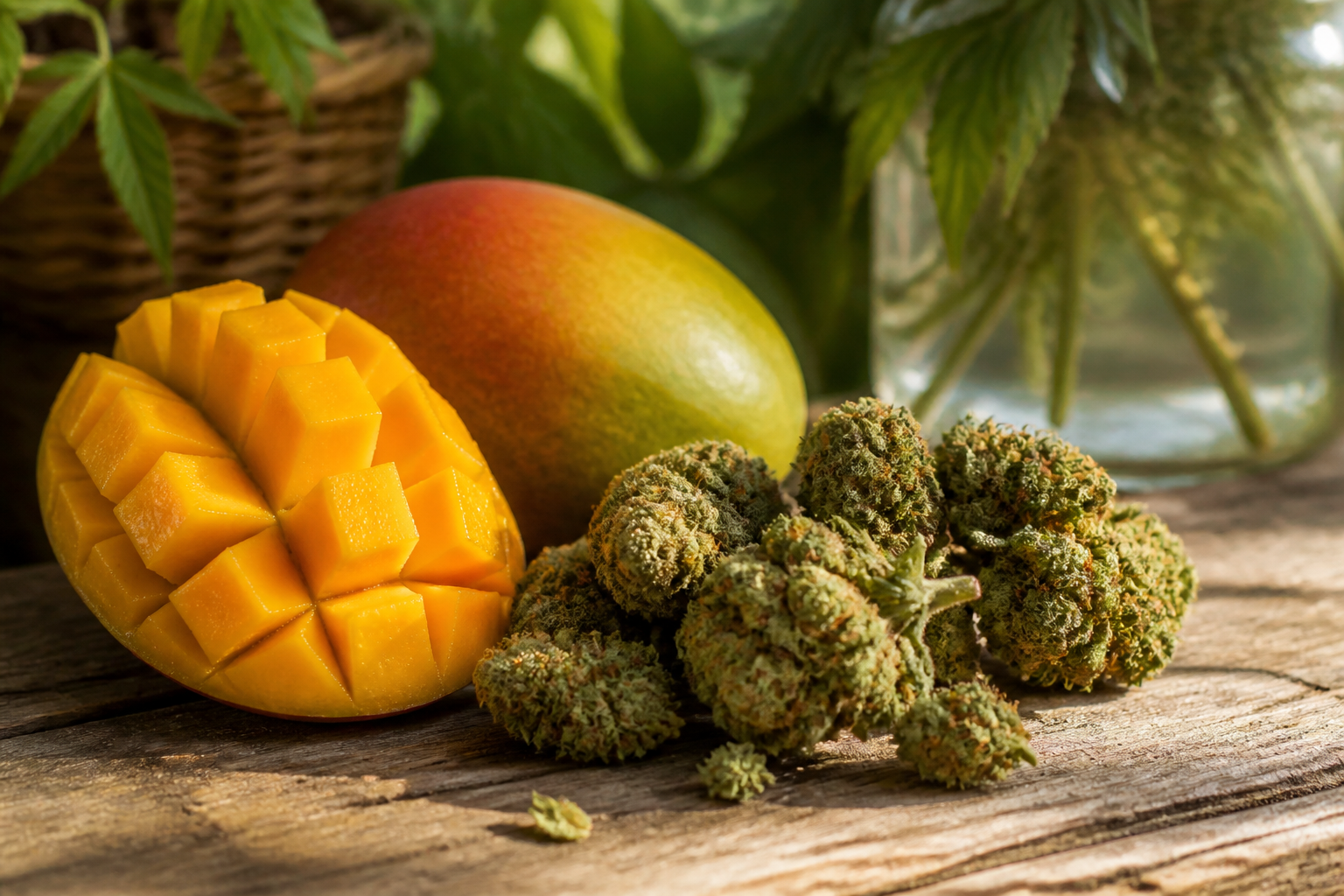
Myrcene is the most important terpene for anxiety relief. It's the same compound that gives mangoes their smell and makes hops relaxing. In cannabis, myrcene:
- Relaxes muscles and releases physical tension
- Enhances the sedative effects of THC
- Promotes deeper, slower breathing
- Often correlates with "indica" effects, though the terpene matters more than the label
Look for: 0.5% myrcene or higher on the lab panel. The higher the myrcene, the more body relaxation you'll feel.
Linalool: The Mental Calmer #
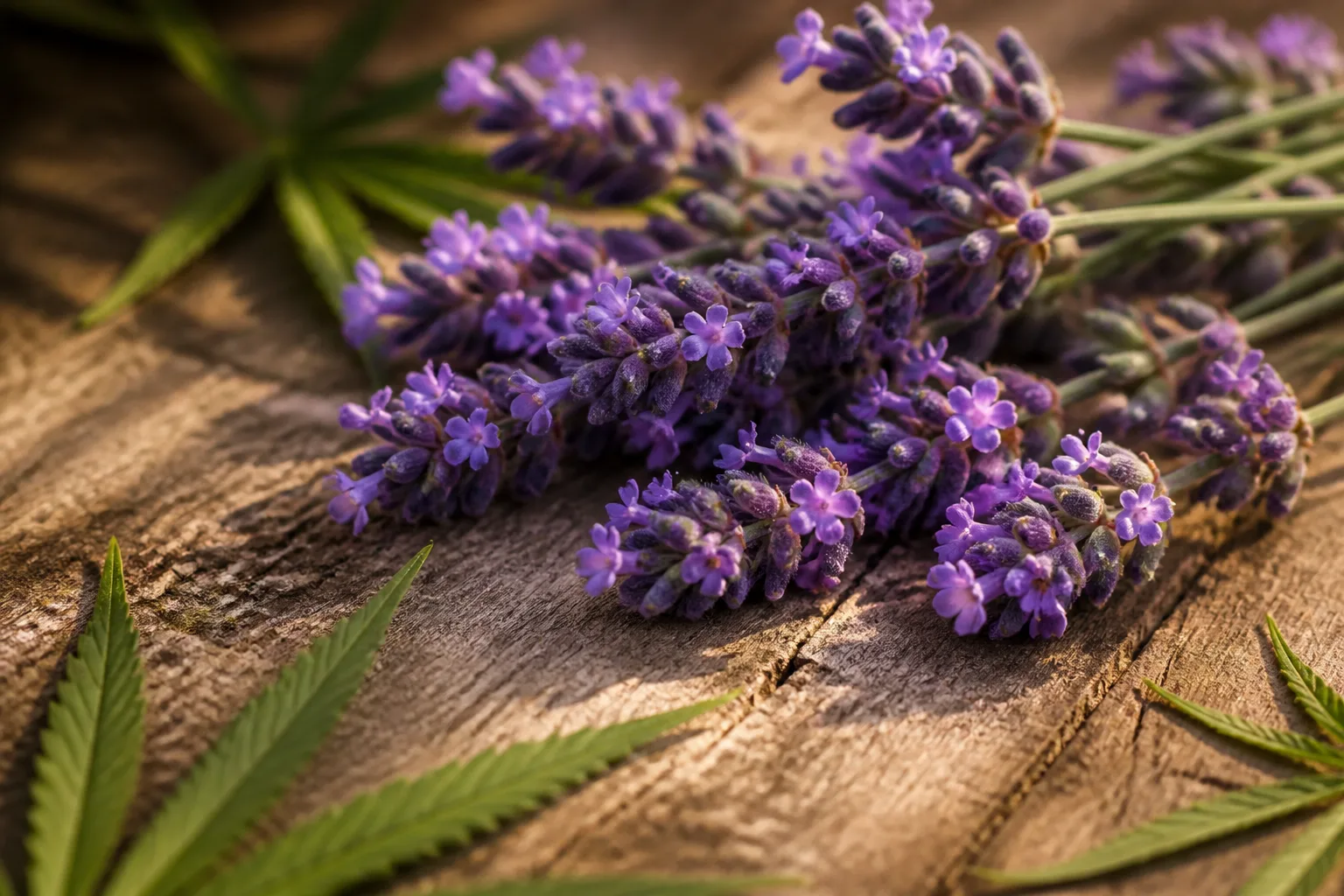
Linalool is what makes lavender calming, and it works the same way in cannabis. This floral terpene:
- Reduces mental chatter and racing thoughts
- Activates GABA receptors (your brain's natural brake pedal)
- Lowers cortisol levels (the stress hormone)
- Works synergistically with CBD for anxiety
Look for: 0.1% linalool minimum. It's rarely the dominant terpene, but even small amounts add meaningful calm.
Beta-Caryophyllene: The Grounding Terpene #
Beta-caryophyllene is unique — it's the only terpene that directly activates cannabinoid receptors (CB2), and per 2025-2026 research it has the strongest mechanistic case for anxiety relief of any terpene. A study in Physiology & Behavior (Bahi et al., 2014, supported by Frontiers in Pharmacology reviews through 2021 and a PMC meta-review in 2024) found that BCP's anxiety-reducing effects were blocked when CB2 receptors were shut down — direct pharmacology evidence that the CB2 pathway is the mechanism. Note: the existing research is mostly preclinical (animal models); human clinical trials are still in progress. That gives it:
- Anti-anxiety effects through CB2 activation in the nervous system
- Anti-inflammatory properties that reduce physical stress symptoms
- A grounding, centering quality that helps with social anxiety
- A peppery, spicy aroma that's easy to identify
Look for: 0.2% or higher. It's common in many strains but works best when paired with myrcene or linalool.
Limonene: The Mood Lifter #
Limonene adds a bright, uplifted quality to anxiety relief. It's the citrus terpene that:
- Elevates mood without overstimulation
- Reduces stress-related depression symptoms
- Counterbalances heavy myrcene sedation (keeps you functional)
- Works well for daytime anxiety
Look for: 0.3% or higher for noticeable effects. Too much limonene with too little myrcene can feel racey — you want balance.
Quick Terpene Reference for Anxiety #
| Terpene | Smells Like | Primary Effect | Ideal For | Minimum Effective % |
|---|---|---|---|---|
| Myrcene | Earthy, mango, cloves | Physical relaxation, sedation | Evening stress, muscle tension | 0.5% |
| Linalool | Floral, lavender | Mental calm, reduced worry | Racing thoughts, social anxiety | 0.1% |
| Beta-caryophyllene | Peppery, spicy | Grounding, anti-inflammatory | Physical anxiety symptoms | 0.2% |
| Limonene | Citrus, lemon | Mood elevation, uplift | Daytime stress, low mood | 0.3% |
The Nose Knows (When You Can't See Lab Data) #
If your dispensary doesn't show terpene panels, use your nose:
- Earthy, musky, mango-like = myrcene dominant (good for physical relaxation)
- Floral, lavender, perfume-like = linalool present (good for mental calm)
- Peppery, spicy, woody = beta-caryophyllene present (grounding)
- Citrus, lemon, orange = limonene present (mood lift)
The stronger and more complex the smell, the higher the terpene content. Weak-smelling flower is often old, poorly cured, or low in the compounds that actually help anxiety.
Strain 1: Granddaddy Purple — The Evening Wind-Down Classic #
Granddaddy Purple (GDP) is the archetypal evening strain for stress relief — heavy in myrcene and linalool, with enough THC to quiet the mind without launching you into orbit. It's been a staple on "best strains for anxiety" lists since the early 2000s for good reason: it works predictably, reliably, and gently.
The Chemistry #
| Component | Typical Range | What It Means |
|---|---|---|
| THC | 17-27% (some phenotypes reach 24-27%) | Moderate to strong — enough for relaxation without being overwhelming |
| CBD | <1% | Trace amounts — not a CBD strain, but the terpenes do the heavy lifting |
| Dominant Terpene | Myrcene (Dominant) | The muscle-relaxing, sedating terpene that defines the experience |
| Secondary Terpenes | Pinene, beta-caryophyllene | Add mental clarity and grounding to balance the heaviness |
| Total Terpenes | 2-3.5% | Rich, complex profile typical of well-grown GDP |
The Experience #
GDP comes on slowly. First, you notice your shoulders drop. Then your jaw unclenches. The mental chatter that was running all day starts to fade into background noise. It's not a "head high" — it's a full-body release. Most people describe it as "melting into the couch" in the best way possible.
This is not a functional strain. Don't plan to work, drive, or handle complex tasks. This is for when the day is done and you need to fully let go.
Who It's For #
- People with physical stress symptoms (tight shoulders, clenched jaw, tension headaches)
- Those who struggle to transition from work mode to rest mode
- Anyone whose anxiety manifests as racing thoughts at bedtime
- THC-tolerant users who find CBD-only products too subtle
Best Time of Day #
Evening only. GDP is a sunset-to-sleep strain. Start 2-3 hours before your target bedtime. The peak relaxation lasts 2-4 hours, followed by gentle sedation that transitions well into sleep.
What It Pairs Well With #
- A warm bath — the myrcene enhances hot water's muscle-relaxing effects
- Gentle stretching or yoga — releases physical tension GDP has loosened
- Herbal tea — chamomile or passionflower complement the linalool
- Journal writing — the quiet mental space GDP creates is good for processing the day
- Avoid: Caffeine, heavy exercise, or mentally demanding tasks
Shopping Notes #
GDP is widely available at most dispensaries, but quality varies enormously. Look for:
- Dense, purple-tinged buds (the "granddaddy" purple color)
- Strong grape/berry aroma with earthy undertones
- Recent harvest date (within 6 months)
- Terpene panel showing myrcene above 0.5%
If your dispensary doesn't have GDP, ask for "anything with similar myrcene levels and heavy indica effects."
Strain 2: Cannatonic — The Balanced CBD Powerhouse #
Cannatonic is the strain that proved CBD could be the star of the show — ranging from 1:1 balanced to 20:1 CBD-dominant depending on phenotype, it's the gold standard for functional anxiety relief. You get the calming benefits of cannabis without the mental fog or impairment. It's been a medical patient favorite for over a decade.
The Chemistry #
| Component | Typical Range | What It Means |
|---|---|---|
| THC | ~2-6% | Low enough to avoid intoxication for most users |
| CBD | ~6-17% | High enough to deliver clear anxiolytic effects |
| CBD:THC Ratio | 1:1 to 20:1 (varies by phenotype) | Balanced to strongly CBD-forward — ratio shifts depending on the phenotype |
| Dominant Terpene | Myrcene (Strong) | Provides physical relaxation alongside mental calm |
| Secondary Terpenes | Beta-caryophyllene, linalool | Grounding and mood-stabilizing support |
| Total Terpenes | 1.5-2.5% | Moderate to rich terpene profile |
The Experience #
Cannatonic feels like someone turned down the volume on your anxiety. The mental chatter quiets. Your shoulders loosen. But unlike GDP, you stay clear-headed and functional. You could work, socialize, or handle responsibilities — you just feel less stressed doing it.
The CBD moderates the THC so effectively that many people report feeling "normal, just better" rather than "high." It's the strain that converts skeptics who think cannabis is only about getting stoned.
Who It's For #
- CBD-curious THC users who want to explore higher CBD ratios
- People who need daytime anxiety relief without impairment
- Anyone whose anxiety is moderate but persistent (generalized anxiety, work stress)
- Those who find high-THC strains make them anxious or paranoid
- Medical cannabis patients seeking functional relief
Best Time of Day #
Anytime. Cannatonic is versatile enough for morning, afternoon, or evening use. Many people dose it 2-3 times throughout the day to maintain steady anxiety relief.
Typical dosing:
- Morning: 5-10mg CBD / 2.5-5mg THC
- Afternoon: Repeat as needed
- Evening: Can combine with a higher-THC strain for sleep support
What It Pairs Well With #
- Work tasks — the clarity allows productivity
- Social situations — reduces social anxiety without making you feel "out of it"
- Exercise — some find it enhances the stress-relief benefits of cardio
- Mindfulness practice — the calm supports meditation without distraction
- CBD tinctures — can boost the CBD ratio even higher if desired
Shopping Notes #
True Cannatonic is widely available but sometimes labeled under different names (look for "balanced" or "1:1" ratios). When shopping:
- Ask for "high-CBD flower with around 1:1 ratio"
- Check for at least 8% CBD content
- Look for myrcene above 0.3%
- Expect to pay similar prices to regular THC flower (don't let them upsell "CBD flower" at premium prices)
Note: Divine Toke focuses on full-spectrum sun-grown flower. While we don't specifically stock Cannatonic, our Blueberry Mojito offers a calming indica-hybrid experience with relaxing effects. Ask our team about current high-CBD options or complementary CBD products.
Strain 3: Harlequin — The Clear-Headed Daytime Option #
Harlequin delivers sativa-leaning clarity alongside meaningful CBD content — recent labs average around 9% THC and 6.4% CBD, making it a balanced option rather than a heavily CBD-dominant strain. It's still the strain for people who need calm without couch-lock — the productive person's anxiety medicine.
The Chemistry #
| Component | Typical Range | What It Means |
|---|---|---|
| THC | ~9% (recent lab averages) | Moderate — start low and check your COA before dosing |
| CBD | ~6.4% (recent lab averages) | CBD-present and meaningful, though ratios vary widely |
| CBD:THC Ratio | 1:1 to 2:1 (variable) | More balanced than older descriptions suggest — verify the label |
| Dominant Terpene | Myrcene (Moderate) | Adds physical relaxation to the clear mental effect |
| Secondary Terpenes | Pinene, beta-caryophyllene, humulene | Mental alertness, grounding, appetite control |
| Total Terpenes | 1.5-2.5% | Good diversity for a balanced experience |
The Experience #
Harlequin feels like anxiety relief with the lights left on. Your mind calms, but it doesn't get foggy. You feel capable of handling your to-do list, engaging in conversation, or diving into creative work — just without the underlying current of stress that was there before.
The sativa genetics keep the experience uplifting rather than sedating. This isn't "chill out and watch a movie" cannabis — it's "get stuff done without the anxiety" cannabis.
Who It's For #
- Professionals who need anxiety relief during work hours
- Creative workers who want calm without losing inspiration
- People with social anxiety who still want to engage socially
- Those who find pure indicas too sedating for daytime use
- Anyone who needs to stay sharp while managing stress
Best Time of Day #
Morning through late afternoon. Harlequin is ideal for starting your day with less anxiety or managing midday stress. Most users avoid it within 3-4 hours of bedtime since the alertness can interfere with sleep.
Typical dosing:
- Morning: 5-10mg CBD / 2.5-5mg THC to start the day calm
- Midday: 5mg CBD / 2.5mg THC for stress spikes
- Avoid: Evening unless you specifically need to stay awake and productive
What It Pairs Well With #
- Coffee or tea — the alertness complements caffeine nicely
- Work projects — the clarity supports focus and creative problem-solving
- Social gatherings — reduces social anxiety while keeping you engaged
- Exercise — particularly good for pre-workout stress reduction
- Creative hobbies — painting, writing, music-making without mental blocks
Shopping Notes #
Harlequin is less common than some other strains on this list, but 1:1 and 2:1 CBD:THC alternatives are increasingly available. When shopping:
- Ask for "1:1 or 2:1 CBD:THC with sativa-leaning effects"
- Look for pinene content above 0.1% (the "clear-headed" signal)
- Smell for mango/earthy (myrcene) plus pine (pinene)
- Check harvest dates — Harlequin's terpene profile degrades faster than some strains
Strain 4: Northern Lights — The Heavy Relaxation Indica #
Northern Lights is the legendary indica that defined what "heavy" relaxation means — a classic indica-dominant hybrid (Afghani × Thai-derived) that's been putting anxious minds to bed since the 1980s. If your stress lives in your body as much as your mind, this is the strain that finds it and melts it.
The Chemistry #
| Component | Typical Range | What It Means |
|---|---|---|
| THC | 16-21% | Moderate-high — respect this strain's potency |
| CBD | <1% | Minimal CBD — the terpenes do the work |
| Dominant Terpene | Myrcene (Dominant) | High myrcene drives the heavy, body-first effects |
| Secondary Terpenes | Limonene, caryophyllene, pinene | Add complexity and prevent total mental fog |
| Total Terpenes | 2.5-4% | Very high terpene content in well-grown batches |
The Experience #
Northern Lights doesn't ask if you're ready to relax — it tells you. The myrcene hits fast and deep. Physical tension dissolves. Mental loops slow down and eventually stop. Many people describe it as "being wrapped in a weighted blanket" or "sinking into warm sand."
This is the strain for when anxiety has you physically wound up — tight chest, clenched muscles, shallow breathing. Northern Lights interrupts that pattern at the body level first, then the mind follows.
Who It's For #
- People with severe physical anxiety symptoms (chest tightness, muscle knots, tension headaches)
- Those whose stress manifests as insomnia or inability to "turn off"
- Anyone needing a hard reset after high-stress periods
- THC-experienced users (beginners should start very low)
- Those who haven't found relief from lighter strains
Best Time of Day #
Evening and night only. Northern Lights is a sledgehammer, not a scalpel. Reserve it for when you have nowhere to be and nothing to do but rest.
Typical dosing:
- Experienced users: 5-10mg THC
- Beginners: 2.5mg THC maximum (this strain is potent)
- Best consumed 2-3 hours before desired sleep time
What It Pairs Well With #
- A warm bed — you'll want to be horizontal
- Progressive muscle relaxation — the myrcene enhances the technique
- Binaural beats or ambient music — supports the mental quiet
- Dark, quiet room — overstimulation counters the effects
- Avoid: Plans, obligations, driving, or anything requiring coordination
Shopping Notes #
Northern Lights is widely available but varies enormously in quality. The real thing should:
- Smell intensely earthy/pungent with sweet undertones
- Show dense, frosty buds with pale green coloring
- Look for myrcene listed as dominant on the terpene panel — ask the budtender which batches test highest in myrcene
- Be properly cured (not crispy, not wet)
This strain archetype is what many people picture when they think "medical cannabis for anxiety." It's not subtle, but it works when subtler options haven't.
Strain 5: ACDC — The High-CBD Medical Favorite #
ACDC is the strain that proved you don't need THC to get anxiety relief — with ratios often reaching 20:1 CBD:THC, it's essentially non-intoxicating while delivering powerful calm. Named after the rock band but delivering the opposite of a high-energy experience, ACDC is the go-to for THC-sensitive patients and those who need relief without any mental alteration.
The Chemistry #
| Component | Typical Range | What It Means |
|---|---|---|
| THC | typically sub-1% (0.3-1.2%) | Barely perceptible — won't produce a "high" |
| CBD | 15-20% | Very high — delivers robust anxiety relief |
| CBD:THC Ratio | 15:1 to 25:1 | Extreme CBD dominance |
| Dominant Terpene | Myrcene (Moderate) | Adds gentle physical relaxation |
| Secondary Terpenes | Pinene, beta-caryophyllene, bisabolol | Mental clarity, grounding, subtle floral calm |
| Total Terpenes | 1.5-2.5% | Moderate but effective terpene profile |
The Experience #
ACDC feels like anxiety relief that nobody else can detect. You don't act different. You don't think different. You just feel less anxious. The 20:1 ratio means THC's effects are essentially absent for most users — no euphoria, no impairment, no "stoned" feeling whatsoever.
What you do feel: Your shoulders drop. Your stomach unclenches. The background hum of worry gets quieter. It's subtle but undeniable — like turning down the volume on a radio you didn't realize was playing.
Who It's For #
- THC-intolerant individuals who get anxious or paranoid from any THC
- People who need daytime anxiety relief without any impairment
- Medical cannabis patients seeking functional, consistent relief
- Those in recovery who want cannabis benefits without intoxication
- Anyone who needs to pass drug tests (though trace THC can still be detectable)
- Parents or caregivers who need to stay fully present
Best Time of Day #
Anytime — this is the most versatile strain on the list. ACDC works morning, noon, or night without disrupting sleep patterns or energy levels.
Typical dosing:
- Standard dose: 15-25mg CBD (about 1-2 typical inhalations or a few mg of concentrate)
- Can dose multiple times daily without building tolerance rapidly
- No "too late in the day" concern — won't interfere with sleep
What It Pairs Well With #
- Any activity — work, socializing, exercise, driving (legally and responsibly)
- Other wellness practices — therapy, meditation, yoga, journaling
- CBD isolates — can boost the CBD ratio even higher
- Low-THC strains — some mix a little ACDC with a mild THC strain for balanced evenings
- Absolutely everything — that's the point of this strain
Shopping Notes #
True ACDC can be hard to find, but the "ACDC phenotype" — very high CBD, minimal THC — is increasingly available under various names. When shopping:
- Ask specifically for "high-CBD hemp flower" or "type 3 cannabis" (the legal/regulatory term)
- Look for 15%+ CBD and under 1% THC on the label
- Expect to smell earthy, woody, slightly sweet — not pungent/skunky
- Price should be comparable to mid-tier THC flower, not premium
Note: Because ACDC is nearly THC-free, some dispensaries stock it in different sections or under "hemp flower" classifications. Ask your budtender if you don't see it on the main menu.
At-a-Glance: All Five Strains Compared #
Here's how all five anxiety strains stack up side-by-side. Use this to match the right strain to your specific situation.
| Feature | Granddaddy Purple | Cannatonic | Harlequin | Northern Lights | ACDC |
|---|---|---|---|---|---|
| THC % | 17-27% | 2-6% | ~9% | 16-21% | sub-1% (0.3-1.2%) |
| CBD % | <1% | 6-17% | ~6.4% | <1% | 15-20% |
| CBD:THC Ratio | THC-dominant | 1:1 to 20:1 (phenotype-dependent) | 1:1 to 2:1 (variable) | THC-dominant | 15:1 to 25:1 |
| Dominant Terpene | Myrcene (Dominant) | Myrcene (Strong) | Myrcene (Moderate) | Myrcene (Dominant) | Myrcene (Moderate) |
| Secondary Terpenes | Pinene, caryophyllene | Caryophyllene, linalool | Pinene, caryophyllene | Limonene, caryophyllene | Pinene, bisabolol |
| Best Time | Evening | Anytime | Daytime | Evening/Night | Anytime |
| Mental Effect | Sedated, calm | Clear, mellow | Alert, calm | Heavy, quiet | Barely perceptible |
| Physical Effect | Deep relaxation | Mild relaxation | Mild relaxation | Heavy sedation | Very mild |
| Impairment Level | Moderate-High | Low | Low-Moderate | Moderate-High | Minimal |
| Ideal For | Physical tension, insomnia | Daily anxiety, function | Work stress, social anxiety | Severe anxiety, sleep | THC-sensitive, medical |
| Avoid If | You need to function | You want THC effects | You need deep sedation | You have low tolerance | You want any "high" |
Quick Decision Guide #
Choose Granddaddy Purple if: Your anxiety lives in your muscles and you need to physically unwind at night.
Choose Cannatonic if: You want balanced relief that lets you live your life normally.
Choose Harlequin if: You need to stay sharp while calming your nerves.
Choose Northern Lights if: Nothing else has worked and you need a heavy reset.
Choose ACDC if: You want relief without any alteration to your consciousness.
A note on 2026 strain trends: Newer cultivars like Biscotti Mintz and Animal Face are showing up on anxiety-relief lists in 2026 dispensary guides. That doesn't mean you need them — it means the market keeps renaming the same terpene profiles. Biscotti Mintz leans myrcene-heavy and indica-forward; Animal Face is a balanced hybrid with notable caryophyllene. If you see these at your dispensary, ask for the terpene panel and compare it to the profiles above. The chemistry is what matters, not the name on the jar.
Sun-Grown vs. Indoor: Why Cultivation Method Matters for Anxiety #
Michigan outdoor and greenhouse sun-grown flower faces real UV, day/night temperature swings, and Great Lakes weather the plant has to answer — the same environmental stress that tends to push richer terpene expression than a sealed indoor room tuned mainly for bulk THC. Menus and harvest windows still rotate; when a Michigan COA lists terpenes, sun-grown batches often look more chemically complex side by side.
Sun-grown cannabis often shows richer sesquiterpene profiles and higher total terpene diversity than indoor-grown flower, and those extra terpenes can make a real difference for anxiety relief — though the actual difference varies by cultivar and grow conditions. The UV stress from natural sunlight, temperature swings, and environmental challenges all push the plant to produce more of the aromatic compounds that calm your nervous system.
Why Sun-Grown Has More Terpenes #
Cannabis makes terpenes partly as a stress response to its environment. Indoor grows control everything — temperature, humidity, light spectrum, CO2 — which makes for consistent yields but removes the environmental stressors that trigger terpene production.
Sun-grown plants deal with:
- Real UV radiation from the sun — triggers protective terpene production
- Temperature swings between day and night — stress response = more terpenes
- Wind and weather — mechanical stress increases aromatic compound production
- Natural pest pressure — terpenes are part of the plant's immune defense
The result: sun-grown cannabis routinely shows 30+ terpene compounds versus 10-15 in indoor, and total terpene levels of 2-4% versus 0.8-1.5%.
What That Means for Anxiety #
Remember that you need specific terpenes for anxiety relief — myrcene, linalool, beta-caryophyllene. An indoor strain might have 0.2% myrcene while a sun-grown equivalent has 0.8%. That's the difference between feeling "meh" and feeling "ahh."
The entourage effect also matters here. More terpene diversity means more pathways for the plant to interact with your nervous system. Sun-grown's 30+ terpenes create a fuller, more nuanced experience than indoor's limited profile.
The Divine Toke Difference #
At Divine Toke, our Detroit-based cultivation facility grows sun-grown organic cannabis using living soil and natural methods. We don't just grow outside — we grow in a way that maximizes terpene production:
- Living soil rich with microbiology — plants take up more complex nutrients
- Full spectrum sunlight — no LED can match the sun's UV output
- Organic cultivation — no synthetic nutrients that mute terpene expression
- Proper curing — we preserve the terpenes the plant worked hard to produce
When you shop our menu, you're getting the terpene diversity that actually works for anxiety. Ask our team about current strains testing high in myrcene and linalool — we'll show you the lab panels so you can verify what you're getting.
Research note (2026): The DEA's final Schedule III rescheduling rule (April 2026) is a meaningful shift — it opens the door to federally funded clinical trials that were previously blocked. For consumers, it means better cannabis + anxiety research is coming. For now, the terpene-shopping approach in this article is still your best practical guide until that clinical data matures.
FAQ: Strains, Terpenes, and Anxiety Relief #
Q: Can I use high-THC strains for anxiety? #
A: Yes, but carefully. High-THC strains (20%+) can work for anxiety if they're rich in myrcene and linalool and you keep doses low (2.5-5mg THC). The risk: too much THC without enough CBD or calming terpenes can trigger paranoia and worsen anxiety. If you're THC-sensitive, stick to balanced or CBD-dominant ratios instead.
Q: What if my dispensary doesn't have these exact strains? #
A: Shop by terpene profile instead of name. Ask for "high-myrcene flower with at least some CBD content" — this gets you the same chemistry regardless of brand name. GDP at one shop might be chemically identical to "Purple Relax" at another. The terpene panel tells the truth; the strain name is just marketing.
Q: How do I read a terpene panel at the dispensary? #
A: Start with the Michigan sticker for THC/CBD under R 420.504, then ask for the batch COA for terpenes — those percentages are optional on the package, not a guaranteed line item. Your targets when listed: myrcene above 0.5% for physical relaxation, linalool above 0.1% for mental calm, beta-caryophyllene above 0.2% for grounding. Total terpenes above 1.5% means the flower is terpene-rich. If a Detroit shop can't show a terpene panel, use your nose — earthy/mango smells mean myrcene; floral means linalool.
Q: What's the best CBD:THC ratio for anxiety? #
A: Most people do best with a 1:1 to 5:1 CBD:THC ratio for anxiety. The CBD moderates THC's edge while still providing relief. Beginners or THC-sensitive users should start at 10:1 or 20:1. Only experienced users with high tolerance should try THC-dominant strains for anxiety — and even then, dose carefully.
Q: Can cannabis make anxiety worse? #
A: Yes. Too much THC is the #1 cause of cannabis-induced anxiety. This happens most often with high-THC strains (25%+) dosed too aggressively, or when using cannabis in unfamiliar or stressful settings. If cannabis makes your anxiety worse, try: lower doses, adding CBD, switching to high-myrcene strains, or using it only in comfortable environments.
Q: How much should I expect to pay for anxiety-friendly strains? #
A: You shouldn't pay more for anxiety strains than any other quality flower. Expect $30-50 per eighth ($10-15 per gram) for sun-grown, terpene-rich flower in most markets. Don't let them upsell you on "craft" labels, exotic names, or concentrate products — regular flower with the right terpenes works better than fancy marketing.
Q: Should I smoke, vape, or use edibles for anxiety? #
A: For immediate relief, vaporizing flower at low temperatures preserves terpenes and provides fastest onset (2-5 minutes). Smoking works but degrades some terpenes with high heat. Edibles take 45-90 minutes to kick in but last longer — good for sustained relief, not acute anxiety moments. Tinctures offer middle-ground speed (15-30 minutes) with precise dosing.
Q: Can I mix different strains for anxiety? #
A: Yes, and it's often effective. Mixing a high-CBD strain (like ACDC or Cannatonic) with a small amount of THC-dominant flower gives you the entourage effect with less risk. Many people keep two strains: one for daytime (Harlequin-type, clear-headed), one for evening (GDP-type, sedating). Start with single strains to understand each one, then experiment with combinations.
Q: How quickly does cannabis work for acute anxiety? #
A: Inhaled cannabis works within 2-5 minutes — fast enough to interrupt a panic attack or acute stress spike. Tinctures under the tongue take 15-30 minutes. Edibles take 45-90 minutes — too slow for acute moments but useful for preventing anxiety. For fastest relief, use a low-temperature vaporizer to preserve anxiety-reducing terpenes like linalool that degrade with high heat.
Q: Are there any strains I should avoid if I have anxiety? #
A: Avoid strains marketed as "energizing," "racey," or high in pure THC without CBD. Many sativa-leaning strains with high limonene but low myrcene can feel stimulating in ways that worsen anxiety. Also avoid strains with no terpene information — you don't know what you're getting. When in doubt, ask for lab-tested options with clear myrcene and CBD content.
Finding Your Calm (and Ours) #
The right strain for your anxiety is the one with the right terpenes — not the fanciest name or the highest price. Walk into a licensed Michigan dispensary knowing what to ask for: high myrcene, balanced or CBD-forward ratios, and sun-grown cultivation that preserves the full spectrum of calming compounds.
At Divine Toke, we grow sun-grown organic cannabis in Detroit using living soil and natural methods. Our Blueberry Mojito offers that same calming indica-hybrid experience with berry-rich aromatics and soothing body effects. While strain names rotate with harvests and seasons, we always prioritize terpene-rich flower worth checking against the COA.
When you visit, ask our team: "What's testing high in myrcene right now?" or "Show me your best options for stress relief." We'll pull the lab panels, explain the terpene profiles, and help you match chemistry to how you want to feel — not what costs the most.
Related Reading:
- Cannabis for Stress: Finding Calm Without the Couch Lock — deeper dive into mechanisms and dosing
- What Are Terpenes? The Oils That Make Your Weed Work — full terpene reference guide
- Indica vs. Sativa: Why Terpenes Matter More — why strain categories don't predict effects
- Microdosing Cannabis: Less Weed, Better Results — subtle anxiety relief without impairment
This article is for educational purposes only and is not medical advice. Always consult your healthcare provider before starting any new wellness routine, especially if you have anxiety disorders or are taking medications. Cannabis affects everyone differently — start low, go slow, and pay attention to how your body responds.
Try Blueberry Mojito — sun-grown in Detroit
Small-batch, living-soil flower cultivated in our Detroit sun-houses. Ships to all 50 states.