Cannabis and Crohn's Disease: What the Clinical Trials Show

Jamie
Head Cultivator
Living with Crohn's disease means dealing with pain, unpredictable flare-ups, and a gut that can turn against you at any moment. It's no surprise that a lot of people with Crohn's have started wondering whether cannabis could help. And a small but real body of clinical research has actually tried to answer that question. The results are honest — and more nuanced than you might expect.
What Is Crohn's Disease, and Why Is It So Hard to Live With? #
Crohn's disease is a long-term condition where the immune system attacks the gut, causing inflammation, pain, and damage that can affect any part of the digestive tract. Unlike a stomach bug that clears up in a few days, Crohn's is chronic — meaning it sticks around for life and tends to cycle between flares (when symptoms get bad) and remission (when things calm down).
The symptoms hit hard: cramping abdominal pain, urgent diarrhea, bloody stools, fatigue, nausea, and weight loss. Some people deal with mild, manageable symptoms. Others face severe flares that land them in the hospital. According to the Crohn's & Colitis Foundation, more than 3 million Americans live with inflammatory bowel disease (IBD), which includes both Crohn's and ulcerative colitis.
| Crohn's vs Ulcerative Colitis | |
|---|---|
| Crohn's disease | Can affect any part of the digestive tract; full-thickness inflammation |
| Ulcerative colitis | Affects only the colon; surface-level inflammation |
| What they share | Both are IBD; both involve an overactive immune response; both cause chronic gut inflammation |
What makes Crohn's especially hard to treat is that it involves full-thickness inflammation — the damage goes deep into the gut wall, not just the surface layer. Conventional treatments (steroids, biologics, immunosuppressants) work for many people, but they don't work for everyone, they come with side effects, and some people stop responding to them over time. That's part of why patients are looking elsewhere — including cannabis.
How Your Gut Has Its Own Cannabis System #
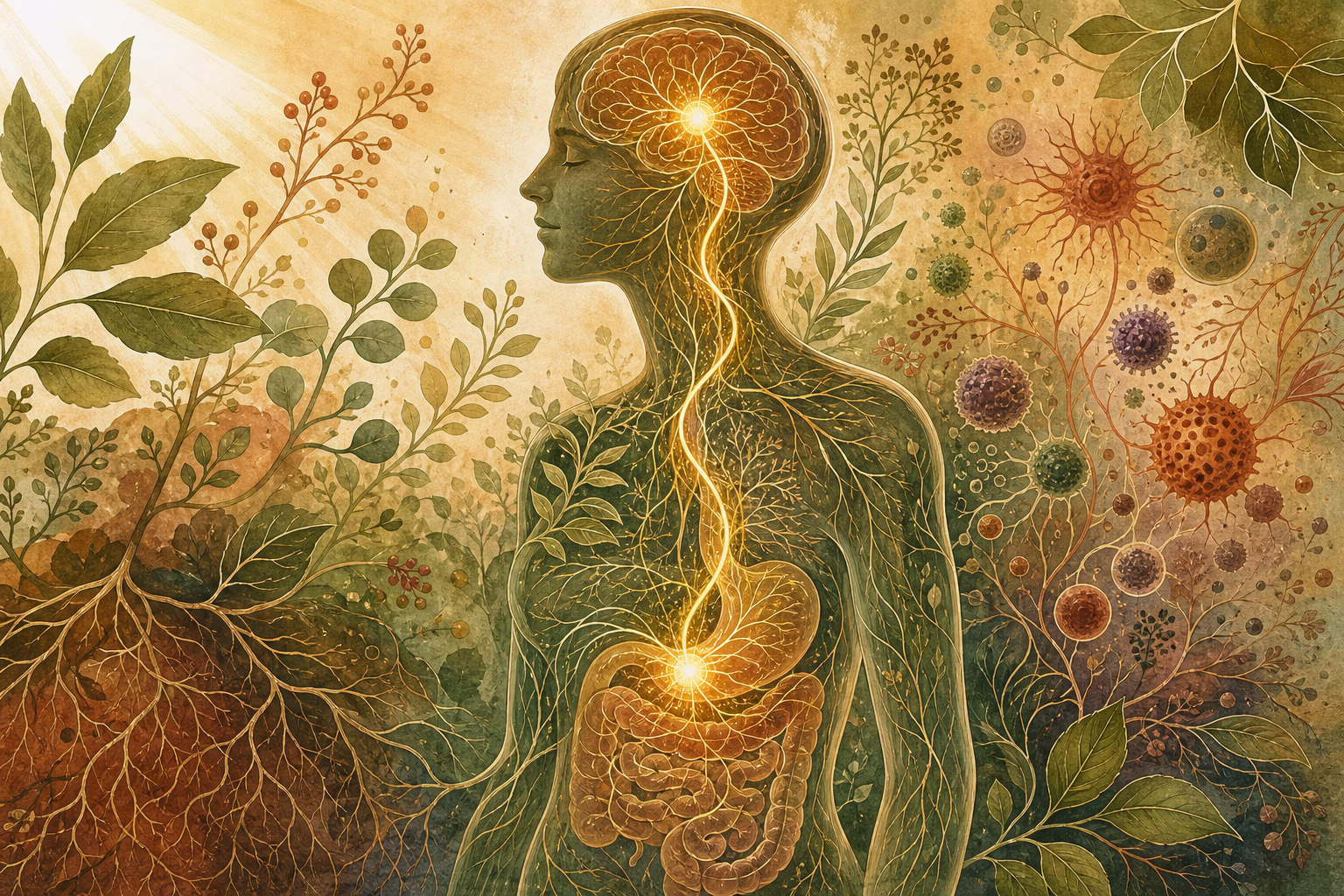
Your gut already has receptors designed to respond to cannabinoids — and this is why cannabis can affect digestion at all. It's not a hack or a coincidence. The human body makes its own cannabinoid-like chemicals, and the gut is packed with the receptors they bind to.
This is called the endocannabinoid system (ECS) — your body's built-in signaling network that helps regulate everything from mood to pain to gut motility. You can read more about it in our guide to the endocannabinoid system and digestion.
In the gut specifically, two receptors do most of the work:
| Receptor | Where It Lives in the Gut | What It Controls |
|---|---|---|
| CB1 | Myenteric and submucosal nerve networks (the gut's own nervous system) | Motility, cramping, secretion, pain signaling |
| CB2 | Immune cells (macrophages, plasma cells) in the gut lining | Inflammation, immune response, tissue protection |
According to a review published in Digestive Diseases and Sciences, CB1 receptors in the gut help slow peristalsis (the muscle contractions that move food along) and reduce cramping. CB2 receptors, found mainly on immune cells in the gut's lining, play a role in controlling how aggressively the immune system attacks.
The main natural cannabinoid your body makes for the gut is called anandamide — sometimes called the "bliss molecule." Its levels shift during inflammation, which is part of why researchers got interested in whether plant-based cannabinoids like THC and CBD could support these same pathways.
What the Clinical Trials on Cannabis and Crohn's Actually Found #
The trials show that cannabis can significantly reduce Crohn's symptoms and improve quality of life — but they do NOT show that it heals the gut or reduces the underlying inflammation. This is the most important sentence in this whole article, so let's sit with it for a moment.
The most cited study is the 2013 randomized controlled trial by Naftali et al., published in Clinical Gastroenterology and Hepatology. It was small (21 patients), but it was well-designed — placebo-controlled, with patients randomized to either THC-rich cannabis cigarettes or placebo for 8 weeks.
What the 2013 Naftali Trial Found #
| Outcome | Cannabis Group | Placebo Group | Significance |
|---|---|---|---|
| Clinical response (CDAI drop > 100 points) | 90% | 40% | P = 0.028 ✅ |
| Clinical remission (CDAI < 150) | 45% | 10% | P = 0.43 ❌ (not significant) |
| CRP (C-reactive protein) — inflammation marker | No significant change | No significant change | No improvement |
| Endoscopic score — gut appearance via scope | No significant change | No significant change | No improvement |
| Quality of life | Improved | Minimal change | ✅ |
That 90% vs 40% clinical response rate is striking. People in the cannabis group felt significantly better. Three patients in the cannabis group were even able to stop taking steroids they had been depending on. But here's the catch: when the researchers scoped these patients and checked their blood for inflammation markers, the gut looked about the same. The inflammation itself didn't clearly improve.
The researchers noted that the symptom improvement "may not be related to the anti-inflammatory properties" of cannabinoids — meaning cannabis might be helping people feel better through pain relief, appetite stimulation, and calming the gut's nerve signals, rather than actually cooling down the immune attack.
The Critical Difference: Feeling Better vs. Healing the Gut #
Cannabis can help you feel better — but feeling better is not the same as the gut getting better. This distinction matters a lot, especially if you have Crohn's and are wondering whether cannabis could replace your other treatments.
In Crohn's disease, doctors use two main ways to track the disease:
- Symptoms (how you feel): Pain, frequency of diarrhea, appetite, energy, overall wellbeing. This is captured by scores like the CDAI (Crohn's Disease Activity Index).
- Objective inflammation markers: Things a scope or blood test can measure — endoscopic scores, CRP, fecal calprotectin. These tell doctors whether the gut tissue is actually healing.
Cannabis improved the symptom side in the 2013 Naftali trial. It did not improve the inflammation markers. And that gap matters because Crohn's can silently worsen even when you feel fine — this is called "silent progression," and it's a real concern when patients stop conventional treatment based on symptom relief alone.
Think of it this way: if you have a broken bone, a painkiller can make you feel better. But the bone still needs to heal. Cannabis may be acting like a very good painkiller for Crohn's — reducing the suffering without repairing the underlying damage.
What Changed (and What Didn't) Across the Trials #
| Outcome Category | Cannabis Effect in Trials |
|---|---|
| Abdominal pain | ✅ Improved in most studies |
| Appetite | ✅ Improved |
| Sleep quality | ✅ Improved |
| Overall quality of life | ✅ Improved |
| Clinical response (CDAI score) | ✅ Improved significantly |
| C-reactive protein (CRP) | ❌ No consistent improvement |
| Fecal calprotectin | ❌ No consistent improvement |
| Endoscopic scores (mucosal healing) | ❌ No significant improvement |
| True clinical remission | ❌ Not statistically significant |
Does CBD Alone Help Crohn's Disease? #
CBD alone did not show clear benefit for Crohn's disease in the clinical trials. This is a finding that surprises a lot of people, since CBD gets so much attention as an anti-inflammatory compound.
In the 2017 Naftali RCT, published in Digestive Diseases and Sciences, patients with moderately active Crohn's were given either low-dose CBD oil or a placebo. The CBD group did not achieve statistically significant improvements in Crohn's disease activity.
This aligns with other evidence pointing to the entourage effect — the idea that cannabinoids work better together than in isolation. The trials that showed the strongest symptom benefit used THC-containing, full-spectrum cannabis, not isolated CBD.
That said, CBD-rich preparations may offer some quality-of-life benefit that the studies weren't powered to detect — the trials were small. What we can say confidently is that if you're looking to a high-CBD isolate product as a Crohn's treatment, the current evidence doesn't support that as a reliable approach.
What the Cochrane Review Concluded #
The Cochrane Collaboration — the gold standard for evaluating medical evidence — reviewed the clinical trials on cannabis for IBD and concluded the evidence is too limited and low quality to recommend cannabis as treatment. This is not a dismissal of cannabis as potentially helpful; it's an honest statement about how small and short the trials have been.
The Cochrane review on cannabis for Crohn's disease found that:
- Studies were too small (most had fewer than 25 participants) to draw firm conclusions
- Trials were short-term (typically 8 weeks), so we don't know long-term effects
- The quality of evidence was low to very low
- Cannabis cannot be recommended as a substitute for proven Crohn's therapies
This doesn't mean cannabis is useless for people with Crohn's. It means the science hasn't caught up with the patient experience yet. Larger, longer, better-funded trials are needed.
How Many People With Crohn's Are Already Using Cannabis? #
A lot of people with Crohn's are already using cannabis — often without telling their doctor. Research suggests this is more common than the medical system realizes.
According to a survey-based study on IBD and cannabis use, approximately 15–20% of IBD patients are current cannabis users, with some Canadian cohorts reporting rates as high as 41% among Crohn's patients specifically. The most common reasons people use it:
- Abdominal pain — cited by 53% of cannabis users in one survey
- Poor appetite — 33%
- Nausea and vomiting — 26%
- Sleep problems — 26%
Here's a concerning finding: in one study, only 46% of cannabis users had ever discussed their cannabis use with their physician. That's a communication gap that could lead to missed interactions with medications or a doctor not knowing the full picture of what's going on with your gut.
If you're using cannabis and you have Crohn's, it's worth having that honest conversation with your gastroenterologist. Many GI doctors now expect it and want to know.
What Are the Safety Risks? #
Cannabis is not risk-free for people with Crohn's, and there are a few safety considerations worth knowing. The trials reported mostly mild side effects, but the observational data raises some flags worth discussing.
Short-Term Side Effects (from Clinical Trials) #
| Side Effect | How Common |
|---|---|
| Dizziness | Common |
| Drowsiness / fatigue | Common |
| Decreased attention / concentration | Common |
| Headache | Occasional |
| Anxiety or "high" feeling | Occasional |
| Nausea | Occasional |
Longer-Term Concerns (from Observational Studies) #
- Higher surgical rates: Some observational studies have found that Crohn's patients who use cannabis long-term have a higher likelihood of needing surgery. This may mean their disease is more severe to begin with (which is why they turned to cannabis), but it's a flag that doctors monitor.
- Cannabinoid hyperemesis syndrome (CHS): Chronic heavy cannabis use can cause a condition that mimics an IBD flare — repeated vomiting, nausea, and abdominal pain. If you're using cannabis heavily and having new gut symptoms, this is worth knowing about.
- Psychiatric effects: Higher-potency THC carries a risk of anxiety and paranoia, especially at higher doses.
The bottom line on safety: moderate, mindful use appears relatively safe in the short term, but cannabis is not a consequence-free option, especially if you're immunocompromised or on other medications.
Should You Talk to Your Doctor About Using Cannabis? #
Yes — your gastroenterologist should know if you're using cannabis for Crohn's. This isn't about judgment; it's about safety and making sure your overall treatment plan makes sense.
A review on cannabis use in IBD specifically recommends that gastroenterologists ask about cannabis use as part of routine care, because many patients are using it but not volunteering the information.
Here's why the conversation matters:
- Cannabis may interact with certain Crohn's medications
- If cannabis is controlling your pain, your doctor needs to know that when assessing how well your treatment is working
- Silent inflammation can be missed if you feel better but the gut is still actively damaged
- Your doctor may have thoughts on dosing, timing, and which forms are safer for you
If you live in a state where cannabis is legal, this conversation is easier than it used to be. Most GI docs today have had it many times.
Frequently Asked Questions #
Does cannabis help Crohn's disease? #
Cannabis helps many Crohn's patients feel better — but "feeling better" is not the same as "getting better." Clinical trials, including the 2013 Naftali RCT, found that 90% of patients using THC-rich cannabis experienced a clinical response (significant reduction in symptoms) compared to 40% on placebo. However, the same trials found no significant improvement in inflammation markers like CRP or in endoscopic scores measuring actual gut healing.
What do clinical trials actually show about cannabis and Crohn's? #
Trials consistently show symptom and quality-of-life improvement, but not confirmed mucosal healing or reduction in gut inflammation markers. The most rigorous evidence comes from small RCTs. In the Naftali 2013 trial, cannabis produced a 90% clinical response rate vs 40% for placebo — real, meaningful symptom relief. But inflammation markers stayed the same, and full statistical remission was not achieved.
Does CBD alone work for Crohn's? #
No — CBD alone did not show clear benefit in Crohn's clinical trials. The 2017 Naftali CBD RCT found that low-dose CBD was not effective for active Crohn's disease. The better results came from THC-containing, full-spectrum cannabis. This suggests the entourage effect — the synergy of multiple cannabinoids — may be important.
Can cannabis replace my Crohn's medication? #
No — cannabis should not replace proven Crohn's treatments like biologics, steroids, or immunomodulators. The Cochrane review on cannabis for IBD concluded that evidence is too limited to recommend it as a primary treatment. Because Crohn's can silently worsen even when symptoms improve, stopping conventional therapy based on feeling better could allow the disease to progress undetected.
What is the difference between symptom relief and mucosal healing? #
Symptom relief means you feel less pain and discomfort. Mucosal healing means the tissue inside your gut is actually recovering. In Crohn's, you can feel better while your gut is still inflamed — this is called a disconnect between symptoms and disease activity. The clinical trials on cannabis showed symptom relief, but endoscopic examinations and blood tests did not show consistent mucosal healing. Doctors track both, and mucosal healing is the gold standard for long-term remission.
How much cannabis was used in the clinical trials? #
The 2013 Naftali trial used smoked cannabis cigarettes containing 115mg of THC per day for 8 weeks. This is much higher THC than many cannabis products on the market today. The 2017 CBD trial used a low-dose oral CBD oil (about 10mg twice daily). There is no established "Crohn's dose" — trials used different products, routes, and quantities, so there's no single number to give.
What are the risks of using cannabis if I have Crohn's? #
Short-term side effects are mostly mild — dizziness, drowsiness, anxiety, and cognitive fogginess. More concerning is long-term observational data linking heavy cannabis use to higher surgical rates in Crohn's patients. There is also a risk of cannabinoid hyperemesis syndrome with chronic heavy use, which can cause vomiting and gut pain that mimics a flare. People who are immunocompromised may also be more sensitive to certain cannabis contaminants — another reason why clean, pesticide-free flower matters.
What is the CB2 receptor and does it help gut inflammation? #
CB2 is a receptor found mainly on immune cells inside the gut's lining, and it plays a role in regulating inflammation. When CB2 is activated, it can calm the immune cells (macrophages and plasma cells) that drive gut inflammation in Crohn's. According to a review on the endocannabinoid system in digestive disease, CB2 receptor activation in the gut can reduce inflammatory signaling and provide some protection to gut tissue. This is the theoretical basis for why cannabis might have anti-inflammatory properties in the gut — though so far, clinical trials haven't confirmed this translates into measurable mucosal healing.
How many people with Crohn's use cannabis? #
Studies suggest 15–20% of IBD patients are currently using cannabis, with some surveys reporting up to 41% of Crohn's patients in Canadian cohorts. According to a survey study on IBD cannabis use, the top reasons are abdominal pain (53%), poor appetite (33%), and nausea/vomiting (26%). What's notable is that only 46% of these users had ever discussed cannabis use with their doctor — a gap that can affect both safety and treatment planning.
Should I tell my gastroenterologist I'm using cannabis? #
Yes — and most GI doctors want to know. A 2021 systematic review on cannabis and IBD specifically recommended that gastroenterologists ask about cannabis as part of routine care. Cannabis can interact with some Crohn's medications, and if it's controlling your pain, your doctor needs that context when evaluating how well your treatment plan is working. The conversation is easier now than it used to be, especially in legal states.
Does organic, clean cannabis matter more for people with gut disease? #
For anyone with a compromised or sensitive gut, the quality of cannabis matters more, not less. Pesticides, mold, and chemical residues that healthy people might not notice can be harder on a gut that's already inflamed or immunocompromised. If you're using cannabis for gut-related symptoms, choosing clean, lab-tested, pesticide-free flower is a reasonable precaution.
Is cannabis a cure for Crohn's disease? #
No — cannabis is not a cure for Crohn's disease, and no clinical trial has shown it to be one. The trials show it can reduce symptoms meaningfully for some patients. They do not show it heals the gut, puts Crohn's into lasting remission, or addresses the immune system dysfunction at the root of the disease. Think of it as a tool that may help you feel better day-to-day — not a replacement for a treatment that actually slows the disease.
The Bottom Line: Hope Without Hype #
The honest answer to "does cannabis help Crohn's disease?" is: it might help you feel better, but it hasn't been proven to heal your gut.
That's not nothing. If you're dealing with chronic abdominal pain, appetite loss, and exhaustion from flares, symptom relief is real and valuable. A lot of people with Crohn's use cannabis and report that it genuinely improves their quality of life — and the 2013 Naftali trial backs that up with a 90% clinical response rate.
But the distinction matters: feeling better is not the same as the disease slowing down. The clinical trials did not show cannabis reducing inflammation markers or healing the gut tissue. The Cochrane review on cannabis for IBD is clear that current evidence is too limited to recommend it as a primary treatment.
The most responsible approach for anyone with Crohn's: talk to your gastroenterologist before using cannabis, don't stop conventional treatment based on feeling better, and if you do use cannabis, choose the cleanest product you can find.
At Divine Toke, we believe clean, organic cannabis matters — especially for people dealing with gut issues or immune system challenges. Our sun-grown flower is grown without pesticides and tested for purity. If you're curious about trying cannabis as a complement to your Crohn's care — not a replacement — that conversation starts with your doctor and with knowing what you're putting in your body.
For a broader look at how cannabis interacts with digestion, read our cannabis and gut health guide. And if you want to understand which terpenes may support digestive comfort, our terpene profiles for digestive comfort guide breaks it down in plain language.
This article is for educational purposes only and is not medical advice. Always consult your healthcare provider before starting any new wellness routine, especially if you have a chronic medical condition like Crohn's disease or are taking prescription medications.
Grown in Detroit. Shipped to your door.
Small-batch, sun-grown cannabis cultivated in living soil. Mail-order shipping to all 50 states.