CB1 and CB2 Receptors: Where They Are and What They Control

Jamie
Head Cultivator
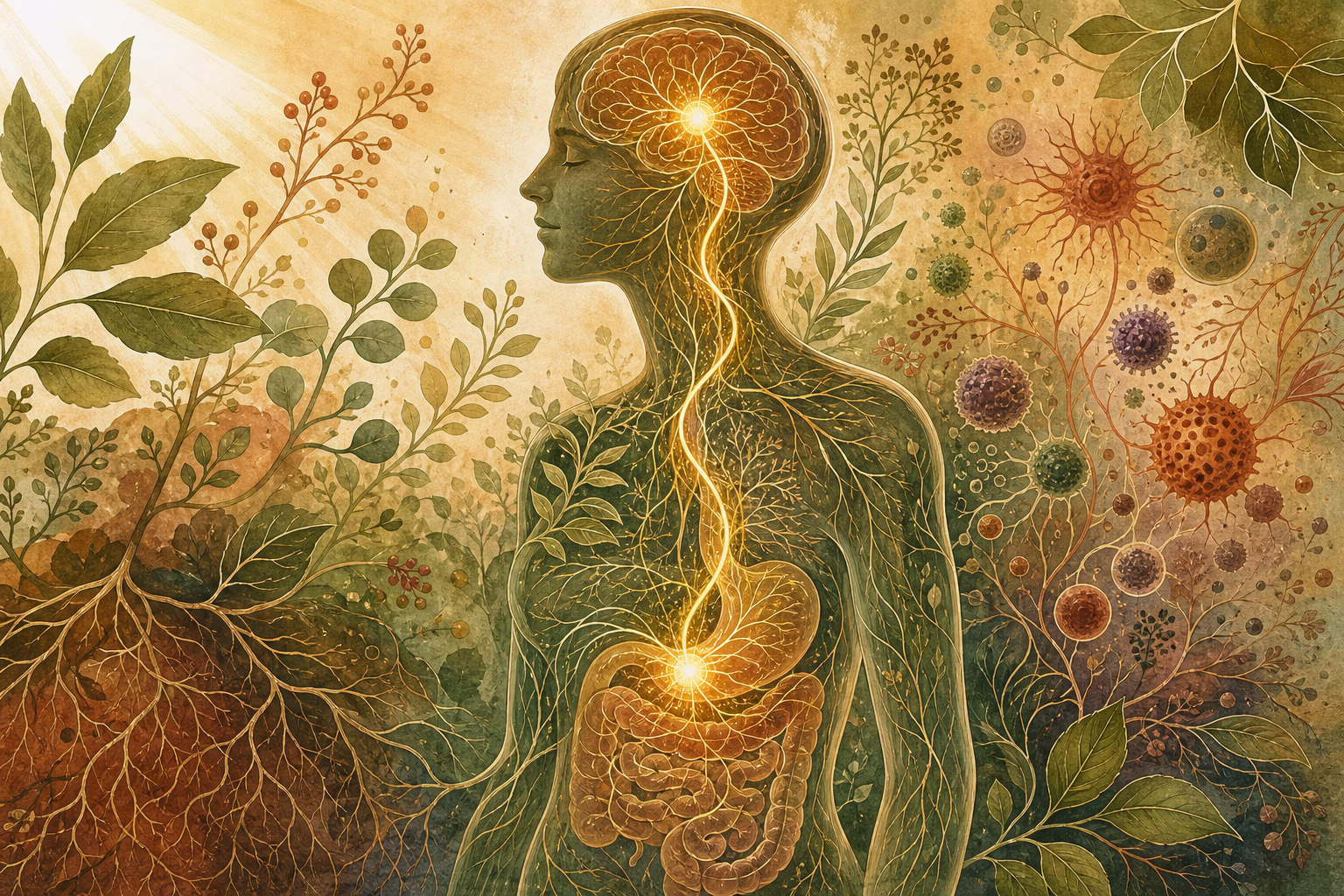
Your body already has two built-in docking ports for cannabis — and they were there long before anyone grew the first cannabis plant. They're called CB1 and CB2 receptors, and they're part of a bigger network your body uses to stay balanced. Understanding the difference between these two tells you a lot about why cannabis does what it does.
CB1 is the brain receptor. It controls mood, memory, hunger, and pain. When THC hits it, that's where the "high" comes from. CB2 is the body receptor — mostly in your immune system and gut — and it handles inflammation and immune balance. Neither receptor is "the cannabis receptor." They were there before cannabis, waiting for your own natural chemicals to use them. THC and CBD work because they happen to fit.
What Are Cannabinoid Receptors? (The Lock-and-Key Idea) #
Cannabinoid receptors are tiny proteins on your cells that act like locks — and cannabinoids, including THC and your own body's natural chemicals, are the keys. When the right molecule fits the lock and turns it, the cell gets a signal to do something different: slow down, calm down, or send a message.
Your body makes its own cannabinoid-like chemicals — the main ones are called anandamide and 2-AG (short for 2-arachidonoylglycerol). These are your homemade keys. THC, the main active compound in cannabis, works because it's shaped close enough to fit those same locks.
According to a 2018 review in PMC, the endocannabinoid system (ECS) is a lipid-signaling network made up of endocannabinoids, receptors, and the enzymes that make and break down those chemicals. The two most important receptors in this network are CB1 and CB2.
There are only two cannabinoid receptors that researchers have fully characterized — CB1 and CB2 — though some others are being studied. Both are G-protein coupled receptors, which is a fancy way of saying they work by linking up with proteins inside the cell to pass a signal along. When a cannabinoid (natural or plant-based) fits the receptor and activates it, that signal travels inward and changes what the cell does next.
Here's the high-level comparison:
| Feature | CB1 | CB2 |
|---|---|---|
| Where it's found | Brain, spinal cord, nervous system | Immune cells, gut, spleen, skin |
| Main job | Mood, memory, appetite, pain, movement | Inflammation control, immune balance |
| THC binding | Yes — strong (this is the "high" receptor) | Yes — weaker |
| CBD binding | No strong direct activation | Some direct activity, mostly indirect |
| Psychoactive effects | Yes | No |
| Discovered | 1988 | 1993 |
Scientists discovered CB1 first, in 1988, and CB2 followed in 1993. Before that, nobody knew why the brain had receptors for a plant compound in the first place. The answer turned out to be that the receptors weren't made for cannabis — cannabis just happens to produce chemicals close enough to our own to fit the locks.
If you want the full picture of how this system works before diving into receptors, check out our deep dive on the endocannabinoid system.
Where Is CB1 Found — and What Does It Control? #
CB1 receptors are found mostly in your brain and nervous system, and they control things like mood, memory, appetite, pain, and movement. They are so common in the brain that Harvard Health describes them as outnumbering many other receptor types. Think of them as the brain's most popular lock.
Here's the breakdown by brain region:
| Brain Region | What It Does | What CB1 Controls There |
|---|---|---|
| Hippocampus | Learning and memory | Why THC can make short-term recall fuzzy |
| Amygdala | Fear, emotions, stress responses | Why cannabis can calm anxiety or, at high doses, spark it |
| Hypothalamus | Hunger, body temperature, hormones | Why the munchies are a real thing |
| Basal ganglia | Movement, reward, habit-forming | Why cannabis affects coordination and why it can feel rewarding |
| Cerebellum | Physical coordination | Why high doses can make you feel wobbly |
| Prefrontal cortex | Decision-making, focus | Why THC can slow your thinking at high doses |
| Brainstem | Pain signaling, basic functions | Why cannabis can take the edge off pain signals |
According to a 2025 Frontiers in Neuroscience article, the basal ganglia, hippocampus, and cerebellum show the highest CB1 expression — which maps directly to the effects people report when they use cannabis.
CB1 receptors are also found — in smaller numbers — in the lungs, liver, and kidneys. But the brain is where the action is.
How CB1 Actually Works at the Cell Level #
Here's a simpler way to picture it: most receptors in your brain sit on the receiving end of a signal. CB1 is different. It sits on the sending end — the presynaptic terminal — and acts like a dimmer switch. When something activates CB1, it tells that cell to slow down how much signal it's pumping out.
This dimmer-switch effect is why cannabis can quiet pain signals, reduce anxiety, and slow racing thoughts. It's also why too much THC can dim things too far and cause side effects.
The cell-level mechanics look like this: CB1 activates Gi/o proteins, which in turn reduce cAMP (a cellular messenger), lower calcium entry, and increase potassium flow out of the cell. That whole chain of events slows neurotransmitter release — pulling on the brakes of the nerve cell. This is the core pharmacological action that drives most of what you experience when you use THC-containing cannabis.
What's interesting is that CB1 sits almost exclusively on presynaptic neurons — the cells sending a signal — not the receiving end. This means the signal being quieted is often one of two key neurotransmitters: glutamate (which excites) or GABA (which inhibits). Depending on which of those gets dimmed, the downstream effect can be either more relaxation or, in some cases, more agitation — which is part of why cannabis can feel very different depending on dose and the person taking it.
This also explains a common question: why does a little bit of THC feel calming but a lot can feel anxious or overwhelming? At low doses, THC may quiet GABA-releasing cells and allow more relaxation. At higher doses, the dimming effect becomes less predictable across more brain circuits.
Where Is CB2 Found — and What Does It Control? #
CB2 receptors live mainly in your immune system and gut, and their primary job is to calm down inflammation and regulate immune responses. Unlike CB1, CB2 doesn't sit in the parts of your brain that cause a high. That's why targeting CB2 doesn't make you feel stoned.
Per a PMC review on CB2 and immune regulation, CB2 is highly expressed in:
- B cells and T cells (the immune system's decision-makers)
- Macrophages (your clean-up crew for damaged and infected tissue)
- Neutrophils (first responders to injury or infection)
- Natural killer cells (cells that attack abnormal or infected cells)
- Spleen, thymus, tonsils, and bone marrow (immune tissue hotspots)
- The gut's enteric nervous system (your belly's own mini-brain)
- Skin (where local immune responses happen)
Think of CB2 as the immune system's volume knob. When something in your body is on fire — literally inflamed — CB2 helps turn the volume down.
CB2 and the Gut #
The gut connection is huge. According to a study published in the British Journal of Pharmacology and indexed on PMC, CB2 receptors "represent a braking system and a pathophysiological mechanism for the resolution of inflammation and many of its symptoms" in the gastrointestinal tract.
In plain terms: when your gut is inflamed, CB2 acts like a set of brakes. It slows down the immune response so tissue can start to heal instead of keep getting attacked.
Research published in Frontiers in Immunology also found that both CB1 and CB2 agonists (chemicals that activate those receptors) reduced experimentally induced intestinal inflammation — a sign that cannabinoid receptors play a real role in gut health.
Another important detail: CB2 expression in gut tissue tends to be higher when inflammation is active and lower when the gut is healthy. This suggests your body upregulates CB2 on demand — ramping it up when it's needed as part of the immune response. In people with conditions like Crohn's disease or ulcerative colitis, CB2 expression in the affected tissue is often elevated compared to healthy tissue, which is why researchers see CB2 as a target for future IBD therapies.
CB2 also appears in the enteric nervous system — the network of nerve cells that line the gut wall and manage digestion on their own. This "belly brain" connection means CB2 isn't just about immune cells; it may influence how the gut communicates discomfort and coordinates its own movements when inflamed.
| CB2's Role in the Gut | What It Means For You |
|---|---|
| Reduces pro-inflammatory cytokines | Less immune "fire" in the gut lining |
| Expressed on enteric nerve cells | May reduce gut pain and cramping signals |
| Upregulated during active inflammation | More braking power when you need it |
| Found in IBD colonic tissue | Potential target for Crohn's and colitis |
How THC Hits CB1 (And Why That's the "High") #
THC gets you high because it acts as a partial agonist at CB1 receptors in the brain — meaning it fits the lock, turns it, and activates a signal. That signal changes how your brain's nerve cells communicate, altering mood, perception, and time sense.
According to research on cannabis mechanisms of action from PMC, THC binds both CB1 and CB2. But it's the CB1 activation in the brain that drives the psychoactive effects. The more CB1 in a brain region, the more THC affects it — which is why memory, mood, and appetite are all impacted.
THC also mimics your body's own natural chemical, anandamide — sometimes called the "bliss molecule." Both anandamide and THC fit the CB1 lock. The difference? Your body breaks down anandamide quickly. THC sticks around longer, producing stronger and longer-lasting effects. You can read more about anandamide in our post your body makes its own weed.
A 2025 structural study in Nature used cryo-electron microscopy to map exactly how THC analogs bind to CB1 at the molecular level — confirming the partial agonist mechanism that has been theorized for years.
Why THC Also Affects CB2 #
THC hits CB2 too, though not as strongly. This is part of why cannabis can have anti-inflammatory effects alongside psychoactive ones. When THC activates CB2 in the gut, spleen, or immune cells, it can help calm overactive immune responses — separate from the brain effects.
This dual action matters for people using cannabis for conditions that involve both pain (a CB1 story) and inflammation (a CB2 story). Full-spectrum cannabis that contains both THC and CBD may hit more of the relevant targets at once — a key reason why many wellness consumers report better results from whole-plant products than from either cannabinoid alone.
The "Munchies" Explained Through CB1 #
The appetite connection is worth its own moment. The hypothalamus — the region most responsible for hunger signals — is packed with CB1 receptors. When THC activates those CB1 receptors, it doesn't just make you want to eat. It also enhances how pleasurable food tastes and smells in the moment. THC appears to amplify the olfactory (smell) signals your brain receives, making food smell more appealing.
This same mechanism is why THC has been studied and used in medical settings for patients with cancer or HIV who struggle to maintain appetite. It's one of the most clinically documented effects of CB1 activation.
CB1, Memory, and Why This Matters #
The hippocampus is the brain's memory hub, and it has some of the highest CB1 density in the body. When THC activates CB1 in the hippocampus, it disrupts how new short-term memories form — which is why people sometimes have trouble remembering what they were just talking about mid-sesh.
This effect is dose-dependent. A small amount of THC may take the edge off anxiety without significantly affecting memory. A large dose can temporarily impair short-term recall more noticeably. The disruption is temporary and reverses as THC clears the system.
Long-term, heavy adolescent use is where memory concerns are more serious — because the hippocampus is still developing through the mid-20s, and frequent CB1 activation during that window has been studied as a potential risk factor for memory-related outcomes. Adult use in moderation doesn't carry the same developmental risk.
How CBD Interacts With CB1 and CB2 Differently #
CBD does not strongly activate CB1 receptors, which is why it doesn't get you high. Instead of fitting the CB1 lock and turning it, CBD interacts more like someone leaning on the door — it can influence the lock without fully opening it.
According to PMC8803256, both THC and CBD bind cannabinoid receptors, but they behave very differently once they do. CBD is described in research as a multitarget modulator — it acts on serotonin receptors (5-HT1A), glycine receptors, TRPA1 channels, and others, not just CB1 and CB2.
| Compound | CB1 Effect | CB2 Effect | Gets You High? |
|---|---|---|---|
| THC | Strong partial agonist (activates it) | Moderate agonist | Yes |
| CBD | Weak or no direct activation | Some direct activity | No |
| Anandamide | High-affinity partial agonist | Nearly inactive | Mild / brief |
| 2-AG | Full agonist | Full agonist | Mild / brief |
For CB2, CBD does have some direct activity — and researchers think CBD may help modulate inflammatory responses through CB2, even if the mechanism isn't as clean as THC's. This is one reason CBD products are marketed for things like sore muscles, gut discomfort, and general inflammation. That said, more human trials are still needed.
For a closer look at how other cannabinoids interact with these receptors, see our breakdown of minor cannabinoids explained.
What This Means When You Choose a Product #
Understanding CB1 vs CB2 can help you think more clearly about what you're looking for:
- If you want mood, stress relief, or sleep support → CB1 effects → look for products with THC, ideally at a dose that works for you without overactivating CB1 and triggering anxiety
- If you want inflammation support, gut comfort, or immune balance → CB2 effects → CBD, full-spectrum products, and even beta-caryophyllene-rich terpene profiles may help
- If you want both → full-spectrum cannabis engages CB1, CB2, and several other receptors at once, which is why many people find it more effective than isolated compounds
This isn't a one-size-fits-all situation. CB1 activation from THC is dose-sensitive, strain-sensitive, and individual-sensitive. The same 5mg THC edible feels very different to a first-timer versus someone who's been a daily user for years. CB2 activation is generally milder and doesn't produce intoxication, so CBD products and terpene-rich options tend to have a wider "safe zone" for most adults.
The Thermostat Analogy: How CB1 and CB2 Keep Your Body Balanced #
Think of your endocannabinoid system like a thermostat. CB1 and CB2 are the sensors in different rooms of your house — one in the main living space (the brain), one in the utility area (the immune system and gut). When something gets too hot, the thermostat turns on the AC. When something gets too cold, it kicks on the heat.
CB1 sensors in your brain notice when your mood, pain levels, or appetite are out of range and send signals to adjust. CB2 sensors in your immune tissue notice when inflammation is running too hot and help pump the brakes.
THC essentially hacks both thermostats at once — but it hits the brain thermostat (CB1) much harder, which is why the mental effects dominate.
CBD tends to nudge things more gently, often working on the utility area (CB2 and other receptors) without spiking the brain thermostat.
Why the System Works Retrograde (Backward) #
Here's a detail that surprises most people: the endocannabinoid system is one of the few signaling systems in the body that works backwards.
Most neurotransmitters flow from a sending cell to a receiving cell. Endocannabinoids — and THC when it mimics them — flow the other direction. The receiving cell produces anandamide or 2-AG and sends the signal back to the cell that sent the original message, essentially telling it to dial down.
According to the PMC5877694 cannabinoid receptor review, 2-AG "readily crosses the membrane and travels in a retrograde fashion to activate CB1Rs located in the presynaptic terminals." This backward signaling is what allows the ECS to function as a feedback regulator — it only kicks in after a signal has already been sent, giving the system precision the brain couldn't have if it worked the other direction.
This retrograde flow is part of why THC can feel so different from other substances. It's not just adding a new signal to the brain; it's amplifying a natural feedback loop that already exists.
Both Receptors Work Together #
CB1 and CB2 aren't completely isolated from each other. In the gut, both are active — CB1 helping regulate motility (the physical movement of food through your system) while CB2 manages the immune response around the gut lining. In the brain's immune cells (called microglia), CB2 is also present and becomes active during inflammation or injury, working alongside CB1.
The overlap between the two systems is part of what makes cannabis such a complex plant medicine. A single cannabinoid can hit multiple receptors, trigger multiple feedback loops, and produce effects that depend heavily on the state of the person using it — inflamed vs. calm, tolerant vs. naive, high-stress vs. rested.
Can You Have Too Few — or Too Many — Cannabinoid Receptors? #
Yes, receptor density matters, and several factors — including cannabis use habits, stress, sleep, and diet — affect how many active CB1 and CB2 receptors you have at any given time. Understanding this helps make sense of tolerance, withdrawal, and why cannabis affects different people so differently.
What Happens With Heavy THC Use #
Research suggests that chronic, heavy THC use can reduce the number of CB1 receptors available over time — a process called downregulation. The brain essentially responds to constant CB1 activation by pulling back on receptor numbers and sensitivity. This is the main driver of cannabis tolerance.
The good news: most CB1 receptors recover after a few weeks of reduced or no use. This is why many regular cannabis users find that taking a break for two to four weeks restores their sensitivity and lets them use much less to get the same effect. This is also the science behind tolerance breaks.
Endocannabinoid Deficiency — The Theory #
The opposite idea — clinical endocannabinoid deficiency (CECD) — is a theory suggesting some people may naturally have lower ECS activity, potentially contributing to conditions like migraines, fibromyalgia, and irritable bowel syndrome. While still debated and not a formal clinical diagnosis, it's an active research area that touches directly on CB1 and CB2 density and function.
The concept is that just as some people have naturally lower serotonin levels (associated with depression), some people may have systems that under-produce anandamide or have fewer active cannabinoid receptors — and chronic conditions may result from that imbalance.
CB2 Upregulation in Inflamed Tissue #
CB2 doesn't behave like CB1 here. Instead of getting downregulated with overuse, CB2 expression tends to increase in inflamed tissue. Your body upregulates CB2 when it needs more braking power. In active Crohn's disease, inflamed joints, or injured skin, CB2 is often more abundant than in the same healthy tissue.
| Scenario | CB1 Effect | CB2 Effect |
|---|---|---|
| Heavy daily THC use | Downregulates (fewer receptors, more tolerance) | Minor changes |
| Active gut inflammation | Minor changes | Upregulates (body calls for more braking) |
| Tolerance break (2–4 weeks) | Receptors largely recover | Stable |
| Endocannabinoid deficiency (theory) | Lower baseline activity | Lower baseline activity |
What Other Cannabinoids Do to CB1 and CB2 #
Beyond THC and CBD, several minor cannabinoids interact with CB1 and CB2 in their own ways — and understanding their receptor activity helps explain why different cannabis products feel different.
Cannabis produces over 100 cannabinoids. Most are present in small amounts, but they're not irrelevant. Here's a quick look at some of the most relevant ones for everyday consumers:
| Cannabinoid | CB1 Activity | CB2 Activity | What You Feel |
|---|---|---|---|
| THC | Strong partial agonist (gets you high) | Moderate | Euphoria, pain relief, appetite, sedation |
| CBD | Weak/indirect (no high) | Some direct activity | Calm, anti-inflammatory, no impairment |
| CBN | Weak partial agonist (mild sedation) | Weak | Sleepiness, mild pain relief |
| CBG | Partial agonist (low potency) | Partial agonist | Clear-headed, anti-inflammatory |
| CBC | Little to no activity | Minimal | May work via other receptors |
| THCV | Low doses: blocks CB1; high doses: activates it | Minor CB2 | Appetite suppression (low dose), may reduce panic |
| Beta-caryophyllene (terpene) | None | Full agonist | Anti-inflammatory, gut comfort |
A few things worth noting from this table:
CBN is often marketed as a sleep cannabinoid. Its mild CB1 agonism (much weaker than THC) may contribute to sedation without strong intoxication — which is why CBN products are popular for nighttime use.
THCV is one of the most interesting: at low doses it blocks CB1 rather than activating it. This is why THCV is sometimes associated with reduced appetite and potentially reduced anxiety spikes. At higher doses, it can activate CB1 like THC but less potently.
Beta-caryophyllene is the only terpene known to activate CB2 directly. It's found in black pepper, cloves, and many cannabis strains. If you've ever noticed that cannabis with a spicy or peppery smell seems to ease discomfort more effectively, beta-caryophyllene may be part of why. Its CB2 activity is a key piece of the entourage effect argument — whole-plant cannabis engages not just THC and CBD but also terpene-based CB2 activation.
For a deeper breakdown of these minor players, read our guide to minor cannabinoids explained.
Frequently Asked Questions #
Q: What's the difference between CB1 and CB2 receptors? #
CB1 receptors live mainly in your brain and spinal cord; CB2 receptors live mainly in your immune cells, gut, and peripheral tissues. CB1 controls things like mood, memory, appetite, pain, and coordination. CB2 controls inflammation and immune responses. THC activates both, but CB1 activation in the brain is what produces the psychoactive "high." CB2 activation generally has no intoxicating effects.
Q: Why does THC get you high but CBD doesn't? #
THC strongly activates CB1 receptors in the brain — that's the mechanism behind the "high." CBD doesn't strongly activate CB1, so it doesn't produce intoxication. According to PMC research on cannabis pharmacokinetics, CBD has a different receptor profile and works more broadly across multiple signaling systems rather than targeting CB1 the same way THC does. This is why you can take CBD daily without impairment.
Q: Where exactly are CB1 receptors in the brain? #
CB1 receptors are most concentrated in the hippocampus, basal ganglia, cerebellum, amygdala, hypothalamus, and prefrontal cortex. According to the Frontiers in Neuroscience 2025 review, the basal ganglia, hippocampus, and cerebellum show the highest CB1 expression. These are the regions that govern memory, movement, reward, and coordination — which explains the range of cannabis effects.
Q: Do CB2 receptors affect inflammation? #
Yes. CB2 receptors are one of the body's main tools for regulating inflammation. Research published in PMC2219529 describes CB2 as a "braking system" for gut inflammation. When CB2 is activated, it tends to reduce pro-inflammatory cytokines (chemical signals that tell the body to keep inflaming) and promote resolution of the inflammatory response.
Q: Does CBD activate CB1 or CB2? #
CBD has weak or no direct activation of CB1 and some direct activity at CB2, but its effects are largely indirect across multiple receptor systems. Per PMC8803256, CBD is better understood as a multitarget modulator — it influences serotonin, glycine, and TRP channels in addition to cannabinoid receptors. That broad profile is why CBD may help with things like anxiety and pain without causing a high.
Q: Are there cannabinoid receptors outside the brain? #
Yes. CB2 receptors are found throughout the body, especially in immune tissue and the gut. CB1 receptors also appear in smaller amounts in the liver, kidneys, and lungs. The gut, in particular, has both CB1 and CB2 receptors, and they play a role in digestive motility, pain signaling, and inflammation. This gut-brain connection through the ECS is one of the most exciting areas of current cannabis research.
Q: What happens to CB1 receptors with heavy cannabis use? #
Heavy, long-term THC use can reduce the number of available CB1 receptors through a process called downregulation, which contributes to tolerance. The brain essentially responds to the constant signal by pulling back on the number of locks available. Research suggests most CB1 receptors recover after a few weeks of abstinence — which is part of why tolerance breaks work.
Q: Can beta-caryophyllene activate CB2 receptors? #
Yes — beta-caryophyllene, a terpene found in cannabis, black pepper, and cloves, is the only known dietary compound that directly activates CB2 receptors. This makes it unique among terpenes. CB2 activation by beta-caryophyllene is linked to anti-inflammatory effects, which may be one reason high-terpene cannabis products are often associated with reduced discomfort. It's a great example of how the plant's non-cannabinoid compounds can still interact with your endocannabinoid system.
Q: Is there a "natural" way to support CB1 and CB2 function without cannabis? #
Exercise, sleep, and diet all support healthy endocannabinoid tone. Aerobic exercise has been shown to increase anandamide levels (your natural CB1 agonist) — sometimes called the "runner's high." Omega-3 fatty acids support endocannabinoid production. Stress and poor sleep both deplete ECS function. Cannabis can supplement this system, but keeping the underlying system healthy matters too.
Q: How do CB1 and CB2 relate to the entourage effect? #
The entourage effect is the idea that cannabinoids and terpenes work better together than in isolation, partly because different compounds affect CB1 and CB2 in complementary ways. THC hits CB1 hard. CBD modulates other pathways. Beta-caryophyllene adds CB2 activation. Terpenes like myrcene and linalool may influence how easily compounds cross into the brain. Full-spectrum products that include all these compounds engage CB1, CB2, and other receptors together — which is why whole-plant extracts often feel different from isolated CBD or isolated THC.
How to Read Your Cannabis Experience Through the CB1/CB2 Lens #
Once you know which receptor does what, you can start to decode what you feel when you use cannabis — and troubleshoot experiences that don't go the way you wanted.
Here's a practical guide:
When You Feel It in Your Head #
Memory fog, altered time perception, heightened creativity, increased appetite, or anxiety at high doses — these are CB1 effects. You're feeling the hippocampus, prefrontal cortex, and amygdala being modulated.
If these effects are too strong, common adjustments include:
- Lower the dose — CB1 is dose-sensitive; even a small reduction can change the experience significantly
- Try a higher CBD ratio — CBD's indirect dampening effect on CB1 can blunt some of THC's more intense mental effects
- Choose strains with higher terpene complexity — a full terpene profile may help balance CB1 activation through the entourage effect
When You Feel It in Your Body #
Muscle relaxation, reduced joint soreness, gut calm, or reduced inflammation-related discomfort — these are more likely CB2 effects, especially if you're using a CBD-dominant or full-spectrum product.
CB2-related relief is typically:
- Less immediate than CB1 effects (inflammation takes time to resolve)
- Non-intoxicating (no CB2 high, ever)
- Cumulative with consistent use — many people report better results from daily CBD use than from occasional high-dose use
When Nothing Is Happening #
If you feel very little, a few things might be going on:
- Your CB1 receptors may be downregulated from frequent use — a tolerance break might help
- The product may not have enough THC to meaningfully activate CB1, or enough bioavailable CBD to reach CB2 in relevant tissues
- Your individual ECS may be different — receptor density varies person to person, which is why cannabis affects people so differently
The Bottom Line — and What It Means for Your Cannabis Experience #
Your body has two main cannabis docking ports. CB1 is the brain receptor — it controls mood, memory, hunger, pain, and coordination. When THC hits CB1, you feel the "high." CB2 is the immune and gut receptor — it regulates inflammation and immune response. When cannabinoids hit CB2, swelling goes down and immune activity cools off.
Cannabis plants produce THC, CBD, and dozens of other compounds that engage these two receptors (and others) in different combinations. That's why the experience varies depending on what you consume: a high-THC flower hits CB1 hard; a CBD tincture nudges CB2 and other systems more gently; a full-spectrum product activates multiple pathways at once.
At Divine Toke, we grow sun-grown, organic cannabis that preserves the full range of cannabinoids and terpenes — so all those docking ports get the signals they're designed to receive. Clean, whole-plant cannabis means the CB1 and CB2 story doesn't get cut short by processing or by stripping out the minor cannabinoids and terpenes that round out the experience. If you're curious to explore how full-spectrum cannabis interacts with your CB1 and CB2 receptors, our team is always here to help you find the right fit for your goals.
Knowing the difference between these two receptors isn't just science trivia. It's a practical tool for being a more informed consumer. You now know why THC hits your brain so directly, why CBD doesn't make you high, why your gut responds to cannabinoids, and why the plant works better as a team than as isolated parts.
For more on the system behind these receptors, explore our endocannabinoid system deep dive. And if you want to understand the natural chemicals your body already uses to activate CB1, read about anandamide — your body's own bliss molecule.
This article is for educational purposes only and is not medical advice. Always consult your healthcare provider before starting any new wellness routine.
Grown in Detroit. Shipped to your door.
Small-batch, sun-grown cannabis cultivated in living soil. Mail-order shipping to all 50 states.