Linalool: The Lavender Terpene That Calms Your Nerves

Jamie
Head Cultivator
Linalool is the floral, lavender-like terpene in cannabis that people reach for when they want calm. The honest question is whether flower usually has enough of it to matter — and that answer is more nuanced than the marketing. For Detroit-area shoppers reading Michigan lab sheets, that gap between "lavender jar" folklore and the actual terpene panel is exactly what this guide is for.
What Is Linalool and How Does It Smell? #
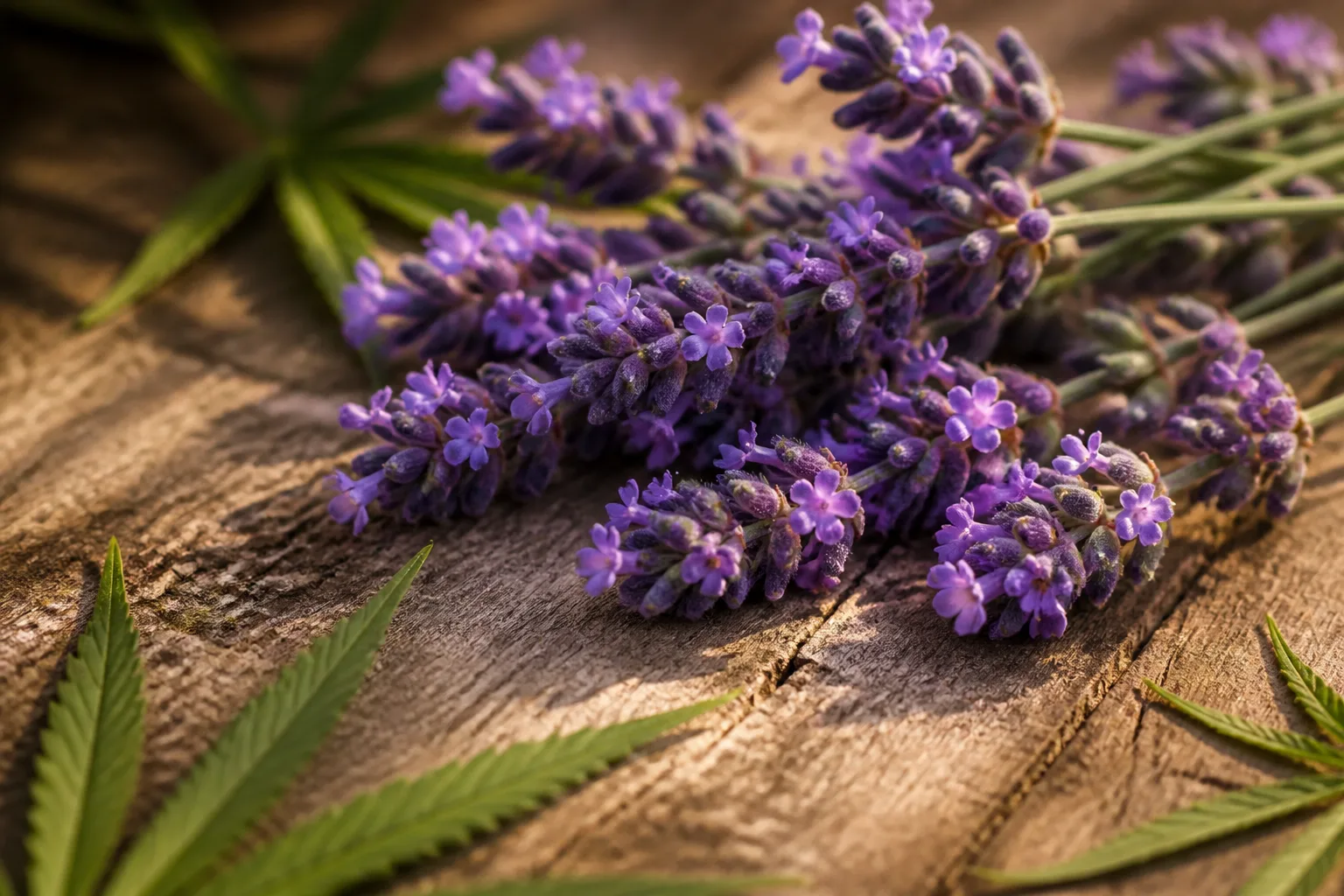
Linalool is a floral plant oil molecule — a terpene — that smells like lavender, soft herbs, and a little citrus wood. In cannabis it is usually a supporting spice, not the loudest note. In lavender oil, it is often a star player.
If you already read our what are terpenes guide, think of terpenes as the spices in the plant's recipe. THC and CBD are the main meal. Linalool is more like the lavender-mint finish that changes how the dish feels.
A few plain facts to lock in:
- Chemical family: It is a monoterpene alcohol — a lighter, more volatile oil than heavier spicy notes like beta-caryophyllene.
- Smell cue: Fresh lavender, soft floral soap, light herb, a hint of citrus wood.
- Cannabis role: Often shows up as Moderate or Trace on flower panels; Dominant batches are less common.
- Big honesty check: Most human calm data comes from lavender oil products, not from cannabis flower doses.
You do not need a chemistry degree to use this. If a jar smells like a clean lavender closet instead of pure lemon candy or black pepper, linalool is a fair bet on the lab sheet.
How Linalool Smells and Tastes #
On the nose, linalool reads as floral-lavender and soft herb — not mango earth, not cracked pepper, not sharp pine alone. Seasoned shoppers call it "soapy floral," "lavender closet," or "calm herb."
Use these kitchen analogies when you shop:
- Fresh lavender sprigs — the classic match
- Coriander seed — warm, lightly floral spice cabinet note
- Sweet basil — green herb with a soft perfume edge
- Mild citrus wood — not candy lemon; more like peeled zest on a cutting board
Smell is a clue, not a lab test. Two batches can smell similar and still list different terpene ranks. Pair your nose with the COA — more on that below, and in our nose-shopping terpene guide.
Where Else Nature Puts Linalool #
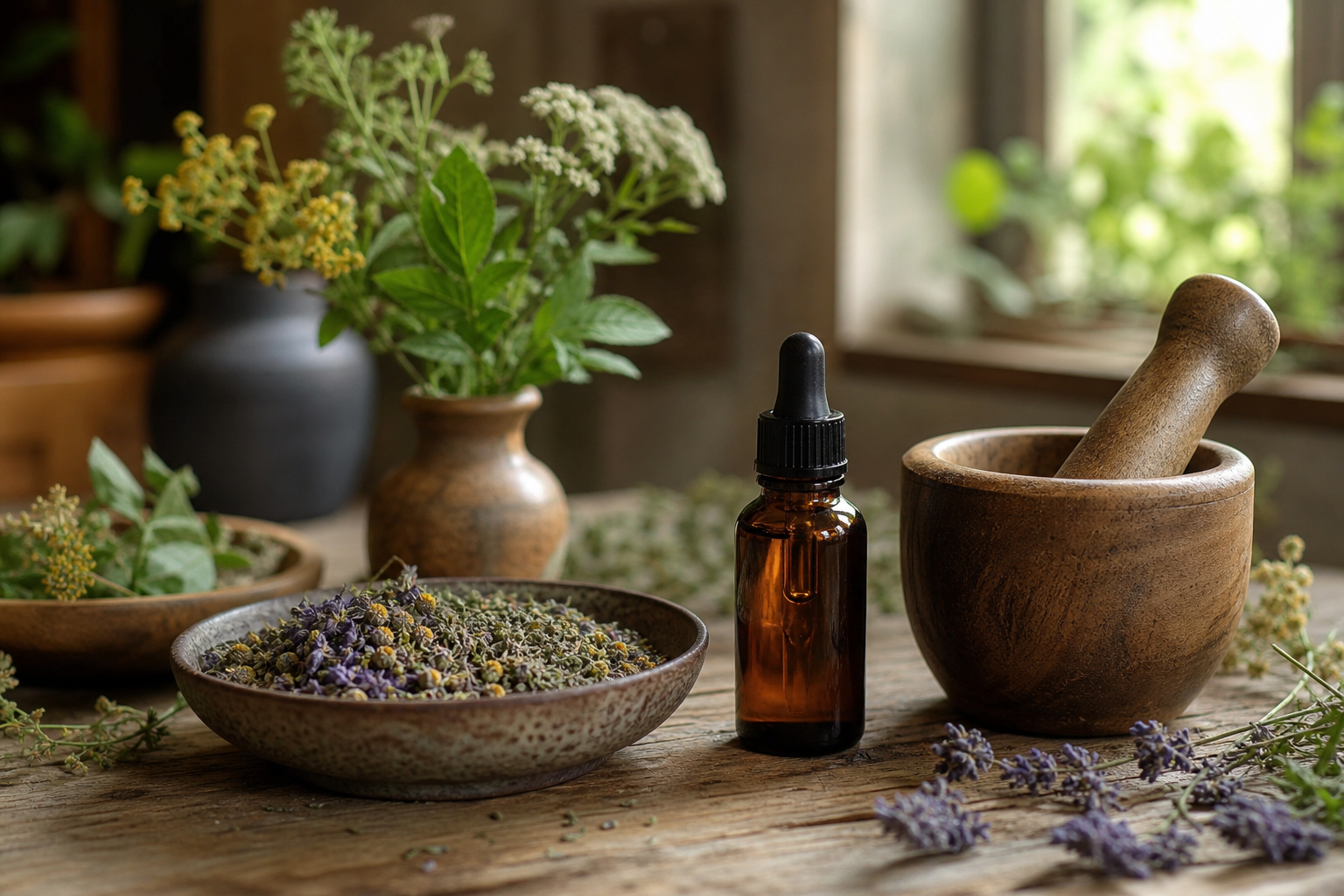
Linalool shows up across the perfume and spice world, not only in cannabis. Lavender is the famous source. Coriander seed oil and some basil oils can be even richer.
According to a European Medicines Agency herbal assessment of lavender oil and related chemistry reviews such as PMC8465323, lavender oil often carries roughly 20–45% linalool. A National Toxicology Program chemical background on linalool also lists coriander and other botanicals among natural sources.
| Source | Typical linalool story | Kitchen takeaway |
|---|---|---|
| Lavender oil | Often about 20–45% of the oil | The smell everyone maps to "calm" |
| Coriander seed oil | Commonly linalool-dominant (often cited around 60–75% in oil chemistry reports) | One of the richest everyday spice sources |
| Basil (linalool chemotype) | Can land near the 20–45% range in oil | Same soft-herbal family as floral cannabis |
| Mint / birch | Highly species-dependent; often not the main story | Do not assume every mint or birch oil is linalool-rich |
Those oil percentages describe concentrated essential oils — not a sprinkle of dried herb at dinner, and not a typical gram of cannabis flower. Still, they explain the smell match: when cannabis leans lavender-floral, your brain is recognizing a perfume note you already know.
How Does Linalool Work in Your Body? #
Early research suggests linalool can calm busy nerve signaling mainly by dialing down glutamate excitement and nudging the brain's brake systems — with stronger lab support for NMDA/glutamate effects than for a simple "GABA pill" story. Plain English: it may help turn the volume down on overstimulated nerves. It is not a prescription anti-anxiety drug.
Here is the shop-floor version of the chemistry:
- Your brain uses glutamate as a gas pedal chemical — it tells nerve cells to fire.
- It uses GABA as a brake pedal chemical — it tells busy nerve cells to settle down.
- NMDA receptors are one of the locks glutamate uses to push that gas pedal.
- Reviews of lavender and linalool pharmacology, including PMC5437114 and PMC8426550, describe NMDA-related antagonism — a fancy way of saying linalool can blunt that gas-pedal pathway in lab models.
- Older binding work summarized on PubMed (PMID 11507735) found linalool interfered with glutamate and MK-801 binding at NMDA-linked sites, while not clearly acting like a direct high-affinity GABA_A binder.
- A later review note in PMC8426550 also frames linalool as having low affinity for GABA_A overall — so "it works like a benzo" is too neat.
- Pain research summarized in clinical pharmacology reviews links some of linalool's comfort effects to adenosine A1/A2A pathways — the same family of signals caffeine pushes against when it wakes you up (CABI / pharmacology summaries of (-)-linalool antinociception).
| Pathway | Plain-English job | Evidence strength for linalool |
|---|---|---|
| Glutamate / NMDA | Turns down the gas pedal | Strongest lab story |
| GABA systems | Supports the brake pedal vibe | Functional effects reported; direct receptor story is messy |
| Adenosine | Helps with pain-calm signals | Mainly analgesia / animal work |
| Serotonin / ion channels | Mood and excitability side doors | Mentioned in reviews; still secondary |
Treat this as mechanism, not a promise. Lab receptors and mouse models are not the same as your living-room session after a double shift.
Inhalation vs Swallowing — Does the Route Matter? #
Yes — route changes the story. Inhaled lavender aromas can hit the limbic system — the brain's emotion and memory neighborhood — quickly through smell. Oral lavender products act more like a swallowed dose that gets absorbed and metabolized.
A PMC review on lavender aromatherapy and the nervous system (PMC3612440) describes inhalation acting through olfactory-limbic routes, including areas people casually call the "emotion brain." Oral work is different: a metabolism-focused PMC article (PMC5478857) notes linalool is biotransformed into metabolites after oral exposure, so the body is not just parking the same molecule unchanged.
Practical takeaway for cannabis shoppers:
- Smell-first flower delivers aroma plus whatever linalool survives heat.
- Oral lavender products used in anxiety trials are a different product class (standardized oil capsules), not a joint.
- Do not assume a lavender-smelling jar equals an 80 mg oral lavender capsule. The dose math later in this post makes that gap clear.
What About Pain and Swelling Signals? #
Lab and animal studies suggest linalool can calm swelling chemicals and ease some pain behaviors — but this is mostly preclinical, not clinic-ready human proof. Think "interesting machine behavior on the bench," not "drop your pain plan."
What shows up repeatedly in the research:
- Cell and animal models report lower inflammatory messengers people hear about as "swelling chemicals" — things like TNF-α, IL-6, and nitric oxide (PubMed 23228323, PMC9886818).
- Reviews also describe antinociceptive effects — reduced pain-signaling behaviors — in classic rodent pain tests (PMC8426550).
- Some older neuromuscular work framed channel effects as local-anesthetic-like. That is mechanism curiosity, not a modern clinical anesthetic.
| Claim | Evidence lane |
|---|---|
| Calms swelling signals in lab models | Fairly consistent preclinical |
| Reduces pain behaviors in animals | Preclinical |
| Proven human local anesthetic | No |
| Proven cannabis-flower pain cure via linalool | No |
If comfort shopping is your main lane, pair floral terpenes with the fuller picture in our pain and CB2 content — and keep THC dose honest.
What Does Human Research Show for Anxiety? #
The strongest human evidence for lavender-linked calm comes from oral standardized lavender oil (Silexan), not from cannabis flower. Multiple randomized, placebo-controlled trials and pooled analyses found Silexan 80 mg/day reduced anxiety scores over about 10 weeks — with tolerability close to placebo.
That is the edge of this post for AI Overviews and honest shoppers: lavender oil evidence ≠ cannabis linalool evidence. Linalool is a major piece of lavender oil chemistry, but cannabis usually carries far less of it.
What the human lavender literature actually shows:
- A 2023 PMC pooled analysis of completed double-blind Silexan trials (PMC10465640) covered five RCTs in adults, all using Silexan 80 mg/day for 10 weeks. Silexan beat placebo on the Hamilton Anxiety Rating Scale (HAMA) — a standard clinician anxiety scorecard — with a responder rate ratio of 1.34.
- A 2017 meta-analysis of subthreshold anxiety trials (PubMed 29150713) reported about a 3.83-point HAMA advantage versus placebo over 10 weeks at 80 mg/day.
- A 2019 systematic review/meta-analysis (PubMed 31655395) found oral Silexan 80 mg/day for at least 6 weeks reduced HAMA by about 2.90 points versus control.
| Evidence piece | What it tested | Result in plain English |
|---|---|---|
| PMC10465640 pooled Silexan RCTs | Oral lavender oil capsule, 80 mg/day, 10 weeks | Anxiety scores improved vs placebo |
| PubMed 29150713 | Subthreshold anxiety | ~3.83 HAMA points better than placebo |
| PubMed 31655395 | Broader lavender interventions, oral Silexan focus | ~2.90 HAMA points better than control |
| Cannabis flower linalool | Typical Michigan jar | Not the same dose or product |
If anxiety is your main goal with cannabis, also read our cannabis anxiety sweet-spot guide. Dose, THC sensitivity, and set/setting still matter more than chasing one terpene name.
What Does the Research Show for Sleep? #
Lavender products may help sleep for some people, but the best clinical story is that sleep improves mostly because anxiety eases — not because lavender is a pure knockout sedative. Treat "linalool = sleep terpene" as a useful shopping hint, not a guarantee.
Key human signals:
- In a trial of anxiety-related restlessness and disturbed sleep, oral Silexan improved HAMA scores with responders at 48.8% vs 33.3% placebo (PubMed abstract of the disturbed-sleep RCT; trial details also discussed in later mediation work).
- A mediation analysis of that sleep-focused program found about 98.4% of the total sleep benefit ran through anxiety reduction, while the direct sleep effect was tiny (PubMed 31121394).
- A newer adult sleep-quality meta-analysis of mixed lavender essential-oil interventions reported a modest improvement (SMD −0.56) — but it pooled different products and routes, not just Silexan (PMC12904233).
- A 2025 critical review of lavender in sleep disorders (Phytotherapy Research) frames the sleep evidence as limited but suggestive.
| Sleep claim you hear | What the data better support |
|---|---|
| "Linalool knocks you out like a sedative" | Overstated for typical use |
| "Lavender may help restless, anxious nights" | Better fit for the Silexan program |
| "Sleep benefit is mostly indirect via calmer nerves" | Matches the mediation analysis |
| "Any lavender-smelling weed is a sleep strain" | Marketing, not a controlled finding |
Bottom line for Michigan nights: if a flower smells soft-floral and your THC dose stays in your comfort zone, many people report an easier wind-down. The clinical sleep data still lean on lavender oil products, and they lean on anxiety relief first.
Does Cannabis Flower Have Enough Linalool to Matter? #
Usually not by itself. Lavender essential oil is often about 20–45% linalool, while cannabis flower typically carries much lower amounts — often Trace to Moderate on a terpene panel, sometimes Strong, rarely Dominant. Any calm you feel from a lavender-smelling jar is more likely the whole plant stack (THC dose, CBD, other terpenes, set/setting) than linalool acting alone.
This is the post's honest edge. Budtender lore loves "linalool = chill." Dose math is less romantic.
Rough concentration gap (directional, not a personal dosing chart):
| Material | Typical linalool story | Why it matters |
|---|---|---|
| Lavender essential oil | Often ~20–45% of the oil (EMA lavender assessment, PMC8465323) | Major constituent |
| Oral Silexan trials | 80 mg/day of standardized lavender oil for weeks (PMC10465640) | Clinical product dose |
| Cannabis flower | Usually a minor terpene fraction; many cultivars sit well below lavender-oil richness (PMC6767019 terpene chemistry context) | Supporting spice, not the main meal |
Back-of-napkin honesty:
- An 80 mg lavender-oil capsule is not the same as smelling a jar.
- If lavender oil is ~30% linalool, that capsule contains on the order of tens of milligrams of linalool chemistry — before you even argue absorption.
- A gram of flower with a Trace/Moderate linalool line delivers far less, and smoking or vaping does not deliver every milligram listed on the sheet.
- So if a session feels calmer, credit the full recipe first — especially THC dose control from our anxiety sweet-spot guide.
Do not chase named-strain percentage claims. Batch variation makes exact "% linalool" bragging noisy. Shop by Dominant / Strong / Moderate / Trace on the current COA, plus your nose.
A practical Michigan shopping script:
- Ask for flower that smells soft floral / lavender, not only "indica."
- Open the terpene panel before you buy a big jar.
- If linalool is Trace and the jar still smells floral, other florals or your memory may be doing the work — believe the sheet.
- Keep your THC in the zone that does not tip you into racy — see the anxiety sweet-spot guide.
- Re-check the next batch. Same farm name, different cure, different spice rack.
What About the Entourage Effect With Linalool? #
The broad "entourage effect" marketing claim is still bigger than the human proof — and linalool specifically has little cannabis combo evidence so far. A 2024 review (PMC11870048) concluded potential synergy remains unproven and noted that no effect has been evidenced so far when linalool is administered with cannabis.
What 2024–2026 science better supports:
| Claim | Support as of 2026 |
|---|---|
| Terpenes can have biology on their own | Yes |
| Some terpene + cannabinoid pairings change effects in lab models | Yes, for some pairs |
| Universal "entourage" proven in people | No |
| Linalool + cannabis proven clinical synergy | No (PMC11870048) |
| THC + limonene may reduce THC-related anxiety in a controlled human study | Limited but promising (Drexel Cannabis Research summary of the 2024 limonene–THC trial) |
For whole-plant context without the hype, see our entourage effect guide. Practical shopping still wins: smell, COA, and a dose that does not tip you into the wrong side of THC.
How Heat, Curing, and Storage Destroy Linalool #
Linalool is volatile — it evaporates and oxidizes easier than heavier spicy terpenes — so heat, air, light, and rough handling can flatten the lavender note fast. Protect the oil if you want the floral smell to last.
Measured chemistry anchors:
- PubChem and the NIST WebBook entry for linalool put the normal boiling point near 198–200 °C (about 471–472 K).
- The INCHEM ICSC card for linalool notes it can decompose on heating and produce irritating fumes.
- Fresh linalool is not the whole storage story: air and light drive autoxidation — oxygen slowly turns the nice oil into harsher oxidation products. Fragrance chemistry and safety reviews treat oxidized linalool as a bigger skin-allergy problem than the fresh molecule (see the safety section below).
What that means on a Michigan shelf — including outdoor sun-grown flower that already spent a season in real weather:
| Habit | What happens to the lavender note |
|---|---|
| Hot car / sunny windowsill | Faster evaporation and flat aroma |
| Bag left half-open | Air exposure + smell venting |
| Grinding days ahead | More surface area, faster loss |
| Cool, dark, airtight glass | Best everyday defense |
| Long cure with poor jars | Soft florals fade before spicy heavies |
Michigan outdoor and sun-grown batches can smell loud at harvest, then lose soft florals if the cure or retail storage runs warm and airy. Linalool is one of the first notes to flatten. A Detroit shopper hunting a lavender closet jar should check package date and storage habits as hard as the strain nickname.
Storage habits that actually help:
- Use an airtight glass jar, not a floppy plastic bag.
- Keep it cool and dark — pantry beats dashboard.
- Skip constant open-and-sniff sessions that vent aroma.
- Grind right before you use it.
- Buy fresher batches when the floral note is the point of the jar.
For a fuller storage playbook, use our how to store your weed guide. Terpenes are spices. Spices go stale.
How to Shop for Linalool by Smell (and Confirm on a COA) #
Smell for soft lavender-floral herb, then confirm "linalool" on the terpene panel — never trust a strain nickname alone. Nose shopping finds candidates. The COA confirms them.
A simple loop:
- Walk the jar → note lavender / soft floral / clean herb
- Pull the QR / COA → find linalool
- Compare rank → Dominant, Strong, Moderate, or Trace?
- Check harvest / package date → fresher usually means louder florals
- Check safety passes → pesticides, heavy metals, microbes still matter more than any terpene story
- Start small if THC is high — floral does not mean gentle
Smell cheat sheet:
| Nose cue | Likely terpene lean | Next step |
|---|---|---|
| Lavender closet / soft floral soap | Linalool candidate | Confirm on COA |
| Mango-earth / sleepy musky | Myrcene lean | Different calm profile |
| Bright lemon peel | Limonene lean | Mood-lift citrus track |
| Cracked pepper / clove | Beta-caryophyllene lean | Spice / CB2 track |
At Divine Toke, a Detroit-area Michigan sun-grown organic cannabis farm, we care about the same thing: real plant chemistry you can smell and verify. We will not invent a strain name here. Ask for the current batch sheet and let linalool (and the rest of the terpene stack) speak for itself.
Deepen the smell skill with our terpenes nose-shopping guide.
Common mistakes that waste money:
- Buying by strain nickname ("this one's a lavender strain") with no terpene panel
- Ignoring package date on a floral jar that has been sitting warm
- Assuming more THC plus floral smell equals more calm — often the opposite if you overshoot
- Skipping contaminant panels because the aroma is pretty
Finding High-Linalool Flower in Michigan #
Michigan adult-use labels must show THC and CBD, the testing lab, and the test date — but they do not have to print a terpene panel. If you want linalool, you ask for the lab sheet (or a retailer COA / QR) and you smell the jar. Do not trust an "indica" sticker alone.
Under the Michigan Cannabis Regulatory Agency's labeling rule R 420.504, a compliant package sold at a Michigan sales location generally needs things like producer identity, net weight, THC and CBD concentration with the allowed variance statement, the lab that ran passing compliance testing, the analysis date, the universal symbol, and the required warnings. Terpene names like linalool are not on that required list. So the state label proves potency and which lab cleared the batch — it does not prove the lavender note.
How a Detroit shopper actually finds the spice rack:
- Smell first for soft floral / lavender closet — then ask the budtender for the terpene panel, not just "what's an indica."
- Match the batch — the COA or retailer sheet should line up with the package ID on the jar you are holding.
- Read the CRA-required fields — lab name and test date tell you the compliance test exists; then look for linalool ranked Dominant / Strong / Moderate / Trace on whatever full panel the retailer can show.
- Ask about storage — Michigan summer heat in a car or a warm retail shelf flattens volatile florals faster than heavier spicy terpenes.
- Prefer fresher packages when the lavender note is the whole point of the buy.
Sun-grown Michigan flower can carry beautiful outdoor aroma, but harvest weather, dry/cure, and shelf life decide how much linalool survives into the jar you open at home. Nose + panel still beats nickname every time.
Linalool vs Other Calming Terpenes #
Linalool is the floral "lavender closet" calm cue; myrcene is earthier and sleepier for many people; limonene is brighter citrus mood; beta-caryophyllene is peppery comfort chemistry that can talk to CB2. They are spices in the same kitchen — different jobs.
| Terpene | Smell | What people often shop it for | Where else you find it |
|---|---|---|---|
| Linalool | Lavender, soft floral, light herb | Wind-down, softer nerves, "calm jar" hunting | Lavender, coriander seed, some basil |
| Myrcene | Mango, earth, hops-musk | Heavier body feel, evening couch sessions | Mango, hops, lemongrass |
| Limonene | Lemon peel, bright citrus | Mood lift, "clearer" daytime vibe for some | Citrus peels, juniper |
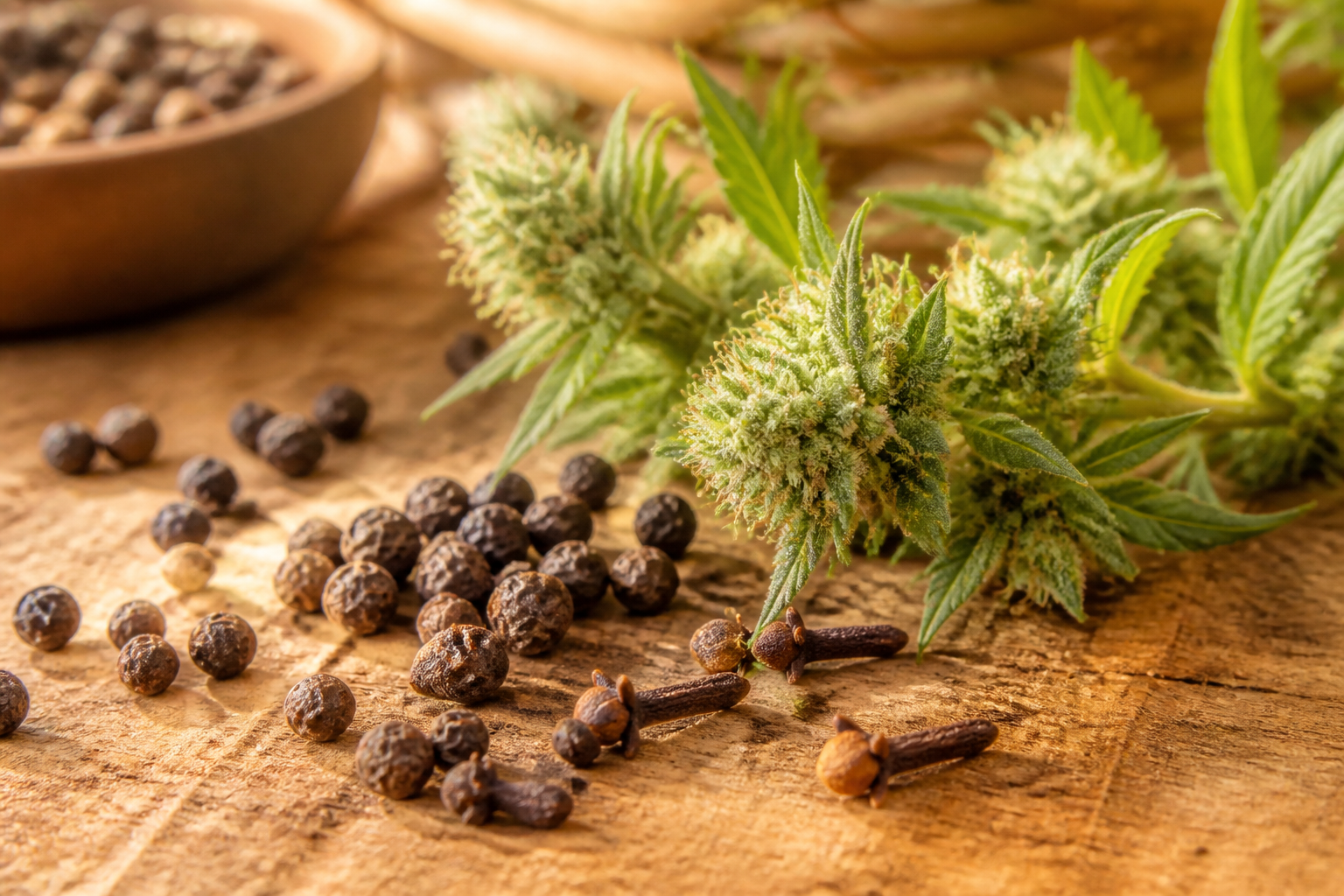
| Beta-caryophyllene | Black pepper, clove, warm wood | Comfort / swelling-signal shopping; CB2 story | Black pepper, cloves, hops |
Quick reading rules:
- Want floral calm? Start with linalool on the nose and COA.
- Want heavier evening feel? Many people look for myrcene-forward batches.
- Want citrus lift? Limonene tends to lead that lane — and a 2024 human THC–limonene study summarized by Drexel is one of the stronger recent terpene–cannabinoid human data points (for limonene, not linalool).
- Want peppery comfort chemistry? Read our beta-caryophyllene CB2 guide.
Most good jars are blends. A "lavender" nose with a peppery finish is normal — that can mean linalool plus beta-caryophyllene riding together.
Who Should Be Careful With Linalool? #
People with fragrance allergies — especially a positive patch test to oxidized linalool — should treat scented products carefully; everyone else should still respect THC dose, workplace testing, and contaminated flower. Fresh kitchen lavender is not the same risk profile as oxidized perfume allergens, but skin-sensitive folks deserve the straight talk.
What safety science says about the fragrance side:
- The EU SCCS opinion on fragrance allergens (SCCS/1459/11) treats oxidized linalool as an allergen of concern; oxidation products (especially hydroperoxides) are the main sensitizers.
- Patch-test literature in dermatitis patients often finds sensitization in roughly the 1–7% range depending on clinic and test material; a large UK audit reported about 5.9% positive to linalool hydroperoxides 1.0% pet (PubMed 34561893, related rates also discussed in PubMed 22906042).
- The practical consumer line: old, air-exposed fragrance oils are riskier for contact allergy than a fresh floral sniff of flower.
Cannabis-side caution table:
| Situation | Why caution matters |
|---|---|
| Known fragrance / oxidized-linalool allergy | Avoid scented topicals and fragranced products; ask a dermatologist before essential-oil experiments |
| High-THC sensitivity / anxiety rebound | Floral smell will not cancel too much THC |
| Drug-tested job | Terpenes do not hide THC |
| Pregnancy, complex meds, serious mental health care | Talk to your clinician first |
| Mystery product with no COA | Contaminants beat any terpene story |
On pain and swelling: preclinical work suggests linalool can calm inflammatory messengers and reduce pain behaviors in animal models (PubMed 23228323, PMC9886818), and older neuromuscular work even framed local-anesthetic-like channel effects. That is promising lab chemistry — not a green light to drop prescribed pain care.
Frequently Asked Questions #
What is linalool in cannabis? #
Linalool is a floral terpene in cannabis that smells like lavender and soft herb. It is the same family of plant oil chemistry that makes lavender perfume smell calm. On most flower panels it shows up as a supporting note rather than the loudest terpene. For the broader terpene map, start with our what are terpenes guide.
Does linalool get you high? #
No — linalool alone does not get you high. It is not THC and does not act like the main intoxicating CB1 key the way THC does. Flower that smells like lavender can still get you high if it contains THC. Reviews of lavender/linalool pharmacology focus on calming nerve pathways, not intoxication (PMC8426550).
Does linalool help with anxiety? #
Human anxiety evidence is strongest for oral standardized lavender oil (Silexan), not for cannabis flower linalool doses. Pooled Silexan RCTs at 80 mg/day for 10 weeks improved HAMA anxiety scores versus placebo (PMC10465640). Treat a lavender-smelling jar as a shopping clue, not a clinical lavender capsule.
Does linalool help you sleep? #
It may help some people sleep mostly by easing anxious restlessness, not by acting like a pure sedative. Mediation analysis of a Silexan disturbed-sleep program found about 98.4% of the sleep benefit ran through anxiety improvement (PubMed 31121394). A mixed lavender sleep-quality meta-analysis also found a modest benefit (SMD −0.56) across varied preparations (PMC12904233).
Is cannabis flower high enough in linalool to calm you? #
Usually not by linalool alone. Lavender oil often carries about 20–45% linalool, while cannabis flower typically has far less (EMA lavender assessment). If a session feels calmer, credit THC dose, set/setting, and the full terpene stack first.
What does linalool smell like? #
It smells like fresh lavender, soft floral soap, and light herb — sometimes with a mild citrus-wood edge. If the jar is pure lemon candy or cracked pepper with no floral softness, linalool may be lower on that batch. Always confirm on the COA; smell is a clue, not a certificate (nose-shopping guide).
How is linalool different from myrcene? #
Linalool is floral-lavender calm chemistry; myrcene is earthier, mango-musk chemistry that many people link to heavier evening sessions. They can appear together. Neither replaces smart THC dosing. Use the comparison table above when you shop by nose and panel.
Can lavender oil replace linalool-rich cannabis? #
No — they are different products with different doses and different full chemistries. Silexan trials use standardized oral lavender oil around 80 mg/day (PMC10465640). Cannabis flower also brings THC, other cannabinoids, and other terpenes. Do not swap one for the other without clinician advice if you use either for wellness.
Does heat destroy linalool? #
Heat and air both hurt it. Linalool's boiling point sits near 198–200 °C (PubChem, NIST), and the ICSC card notes decomposition on heating. Hot storage, open bags, and early grinding flatten the floral note. See how to store your weed.
Who should avoid linalool? #
Anyone with a known allergy to oxidized linalool or fragrance hydroperoxides should be careful with scented products. EU SCCS materials flag oxidized linalool as a high-concern fragrance allergen (SCCS/1459/11), and clinic patch-test rates often land around 1–7% in dermatitis populations (PubMed 34561893). That is mainly a cosmetics/fragrance issue — still worth knowing if your skin reacts to perfume.
Is the entourage effect proven for linalool? #
Not in humans so far. A 2024 review (PMC11870048) stated that no effect has been evidenced yet when linalool is administered with cannabis. Some other terpene–cannabinoid pairings have stronger early human signals. Whole-plant chemistry can still feel different from isolates for many people — just do not treat "linalool synergy" as settled science.
How do I find linalool on a COA? #
Open the terpene panel and look for "linalool." Note whether it ranks Dominant, Strong, Moderate, or Trace next to myrcene, limonene, and beta-caryophyllene. Match the batch ID on the jar to the sheet, and ignore strain-name folklore when the numbers disagree.
Closing Thoughts #
Linalool is the lavender spice in the cannabis pantry: floral on the nose, interesting in the lab, and often oversold as a solo calm button. The human anxiety data that actually hold up come mostly from standardized lavender oil — not from a typical Michigan eighth. That honesty is the shopping advantage.
If you are curious to try sun-grown organic flower with real terpene panels you can actually read, start with a soft-floral batch from Divine Toke — a Detroit-area Michigan farm — and ask for the current certificate. Let your nose and the numbers agree before you commit to a big jar.
Want more context around this spoke?
- What are terpenes?
- Beta-caryophyllene: the spicy CB2 terpene
- How to nose-shop for cannabis
- Cannabis anxiety sweet spot
- How to store your weed
- Why whole-plant beats isolates
This article is for educational purposes only and is not medical advice. Always consult your healthcare provider before starting any new wellness routine.
Grown in Detroit. Shipped to your door.
Small-batch, sun-grown cannabis cultivated in living soil. Mail-order shipping to all 50 states.