When Is Sun-Grown Cannabis Ready? Reading Trichomes, Pistils, and Late-Summer Weather

Jamie
Head Cultivator
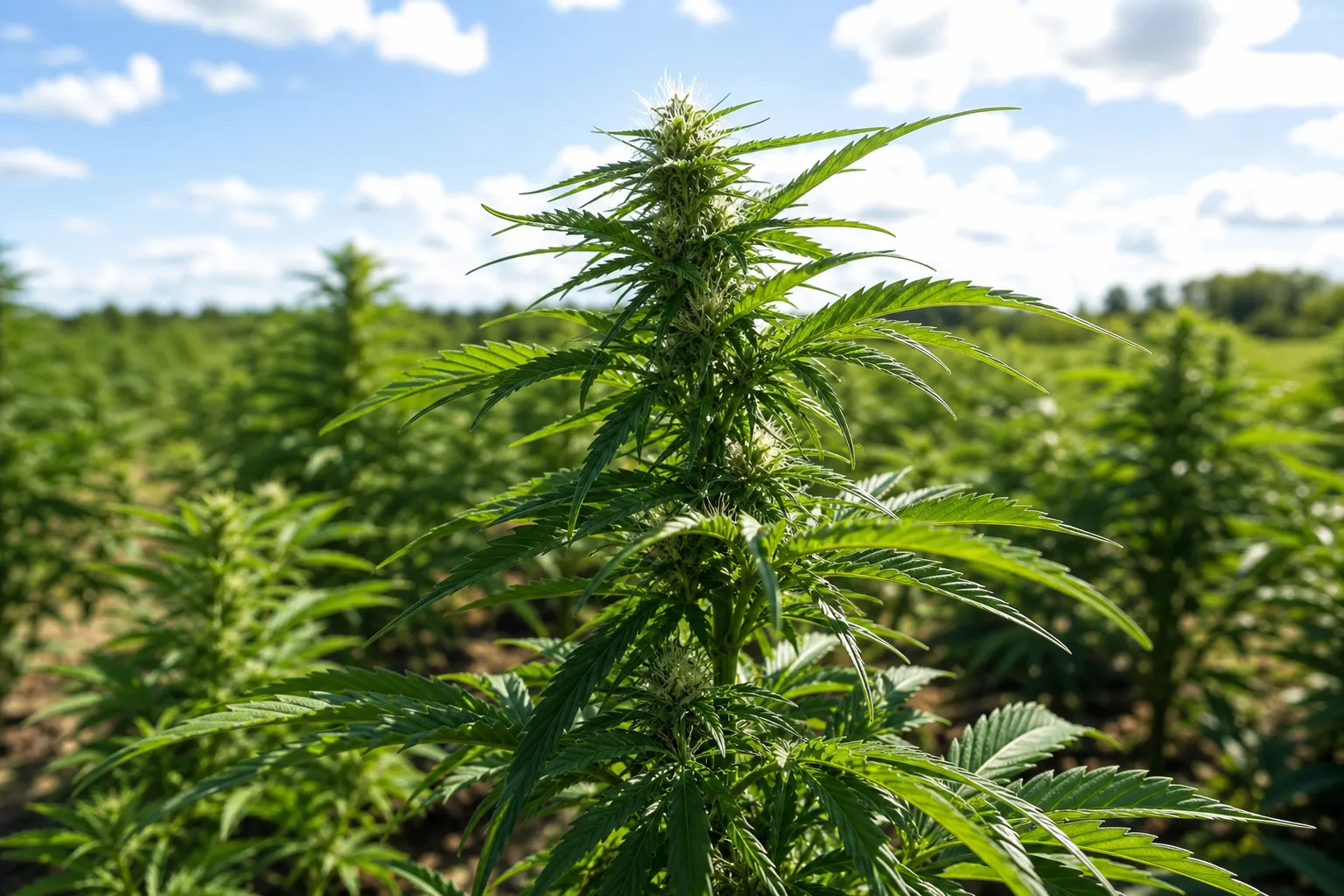
Harvest timing is the biggest call of the whole outdoor season. It is not a date on a wall. It is a judgment call made with a jeweler's loupe and a weather forecast — and a week early or a week late changes how the flower feels when you smoke it.
This guide answers one consumer question: how do growers know when outdoor cannabis is ready to harvest, and why does the timing change how it feels?
Why Harvest Timing Matters More Than the Calendar #
Outdoor harvest timing is a craft call, not a fixed calendar date — and it is one of the highest-leverage decisions of the whole season. A week early or a week late can change potency feel, aroma, and how heavy the smoke sits in your body, even when the bag looks similar on the shelf.
Think of it like deciding when to pull a weld or wait on a pour. The metal can look ready. The schedule can say "today." But the real answer lives in what you see up close and what the weather is about to do.
For consumers, this is why two sun-grown jars from the same farm style can feel different. Genetics matter. Soil matters. So does the exact week scissors hit the stem. Mid-summer field work sets the stage — see our mid-summer harvest preview — but readiness is decided later, under a loupe.
| What people assume | What actually decides readiness |
|---|---|
| "Harvest day is on the calendar" | Trichome color under magnification |
| "Brown hairs mean it's done" | Pistils are a rough cue, not the final test |
| "Later always means stronger" | Later can mean more aged resin, not more THC |
| "Weather can wait" | Rain and humidity can force an early cut |
On a sun-grown farm, the question is not "Is it September yet?" The question is: are the resin glands ripe enough — and can we finish before mold or frost takes the crop?
That matters even if you never grow a plant. Dispensary labels talk about THC percent and strain names. They rarely say "we cut three days early because a front was moving in" or "we waited for 20% amber." Yet those choices show up in your lungs as brighter vs heavier, loud vs flat, smooth vs grassy. Harvest week is invisible on the sticker and loud in the smoke.
A few consumer truths worth keeping:
- Same genetics, different week = different bag. Ripeness is a spectrum, not a switch.
- "Higher THC" is not the same as "better harvest." Peak feel and peak lab number are not always the same day (Realm of Caring chemotype study).
- Outdoor craft includes triage. Clean early flower can beat spoiled late flower every time.
- Post-harvest still counts. A perfect cut can be ruined by a rushed dry — which is why cure posts matter alongside harvest posts.
How Do Growers Know Outdoor Cannabis Is Ready? #
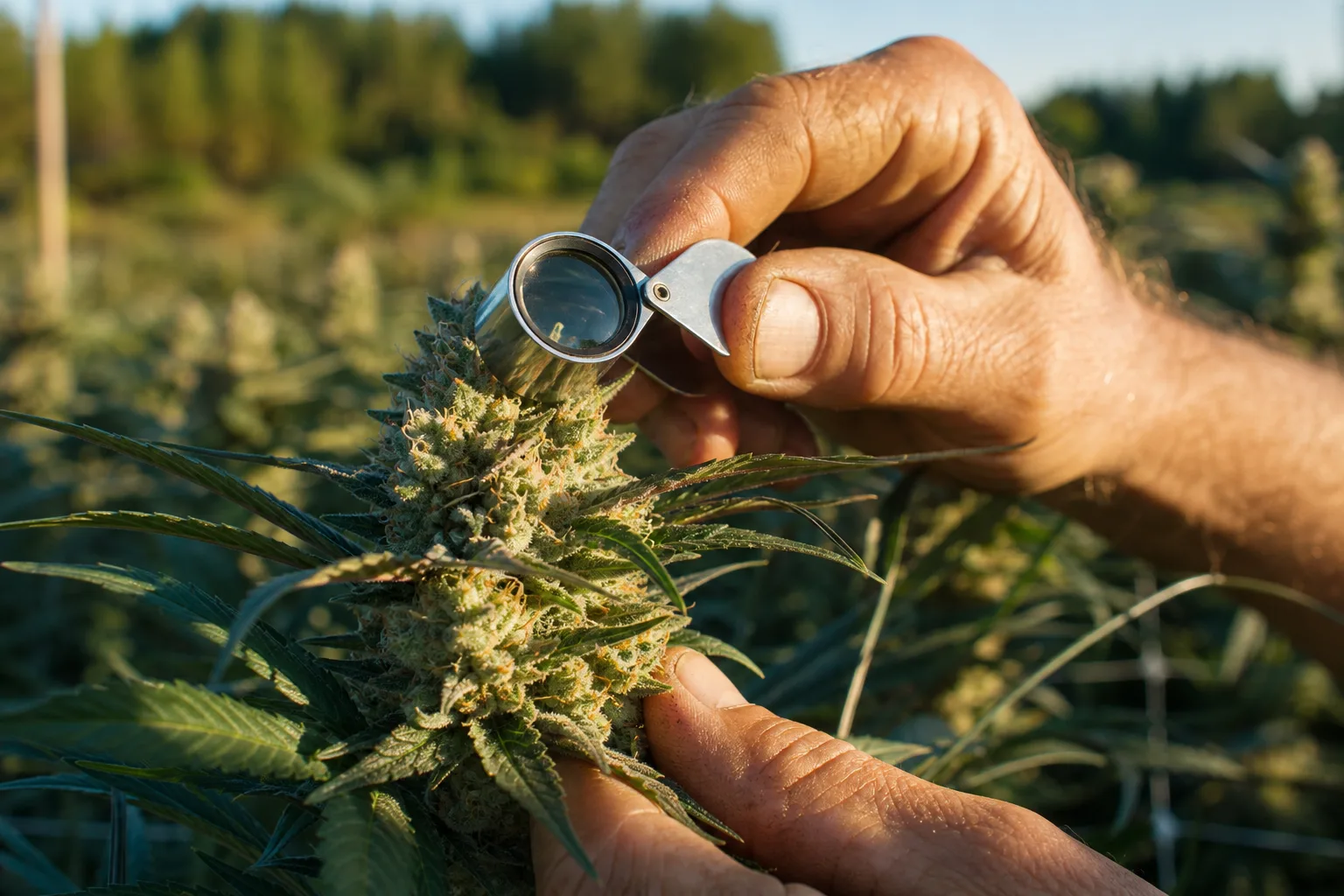
Growers decide outdoor cannabis is ready by reading resin glands (trichomes) under a jeweler's loupe or microscope, then weighing that against the weather forecast — not by picking a calendar day. Pistil color and bud density help them know when to start looking closely. The loupe and the sky make the final call.
Trichomes are the tiny, sticky resin glands that frost the flower. Under 30–60x magnification they look like little mushrooms with clear, cloudy, or amber heads. Grower craft — including long-running guidance from educators like Ed Rosenthal on trichome maturity — treats those heads as the best field proxy for chemical ripeness.
Here is the typical outdoor decision loop:
- Watch pistils darken and curl — a rough "start checking" signal, not a green light to cut
- Sample several bud sites — tops often finish before lower sites; growers check more than one cola
- Read trichome heads — clear = early; mostly cloudy = peak window for many cultivars; rising amber = later profile
- Check the forecast — multi-day rain, high humidity, or an early frost can force a pull before the "perfect" amber count
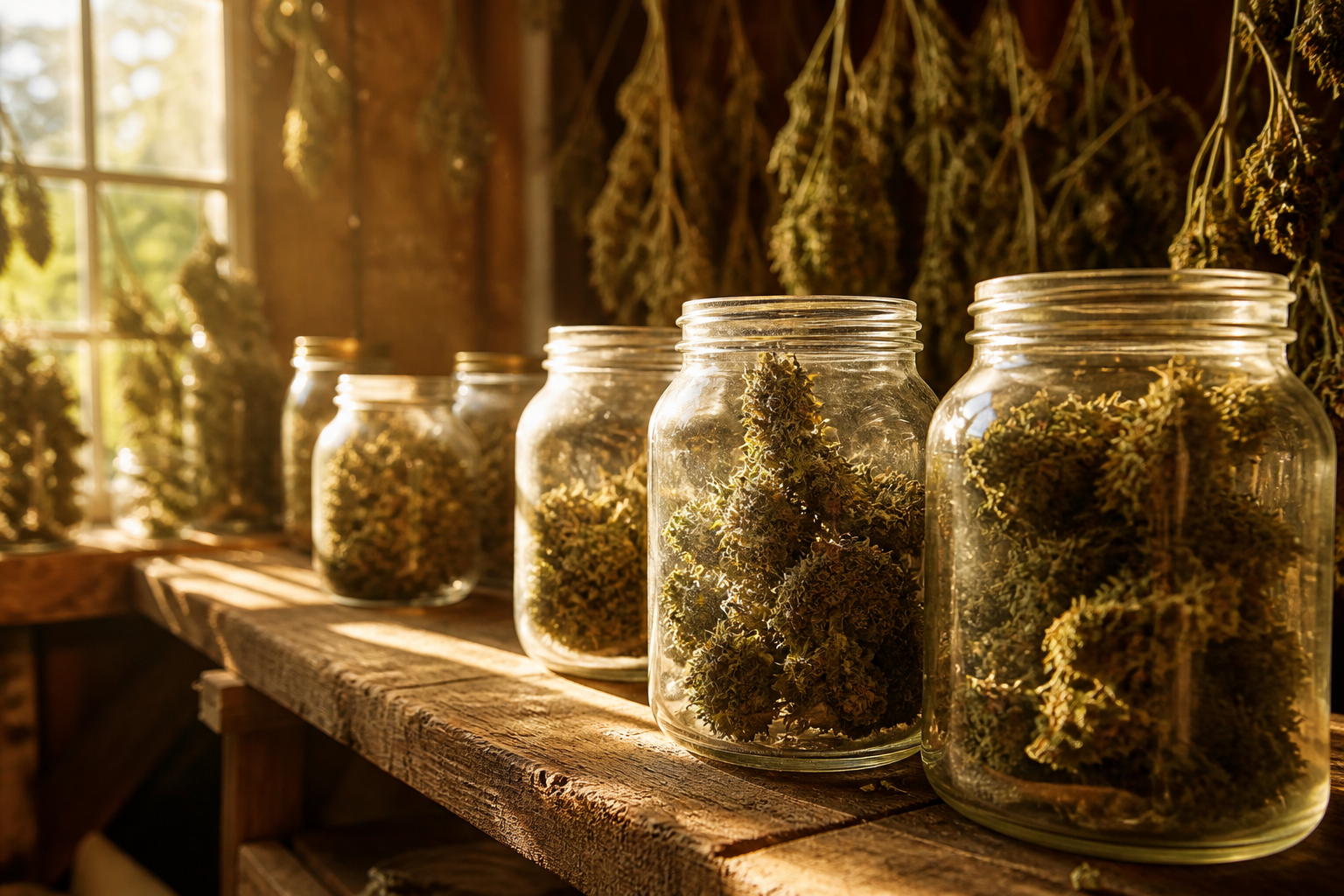
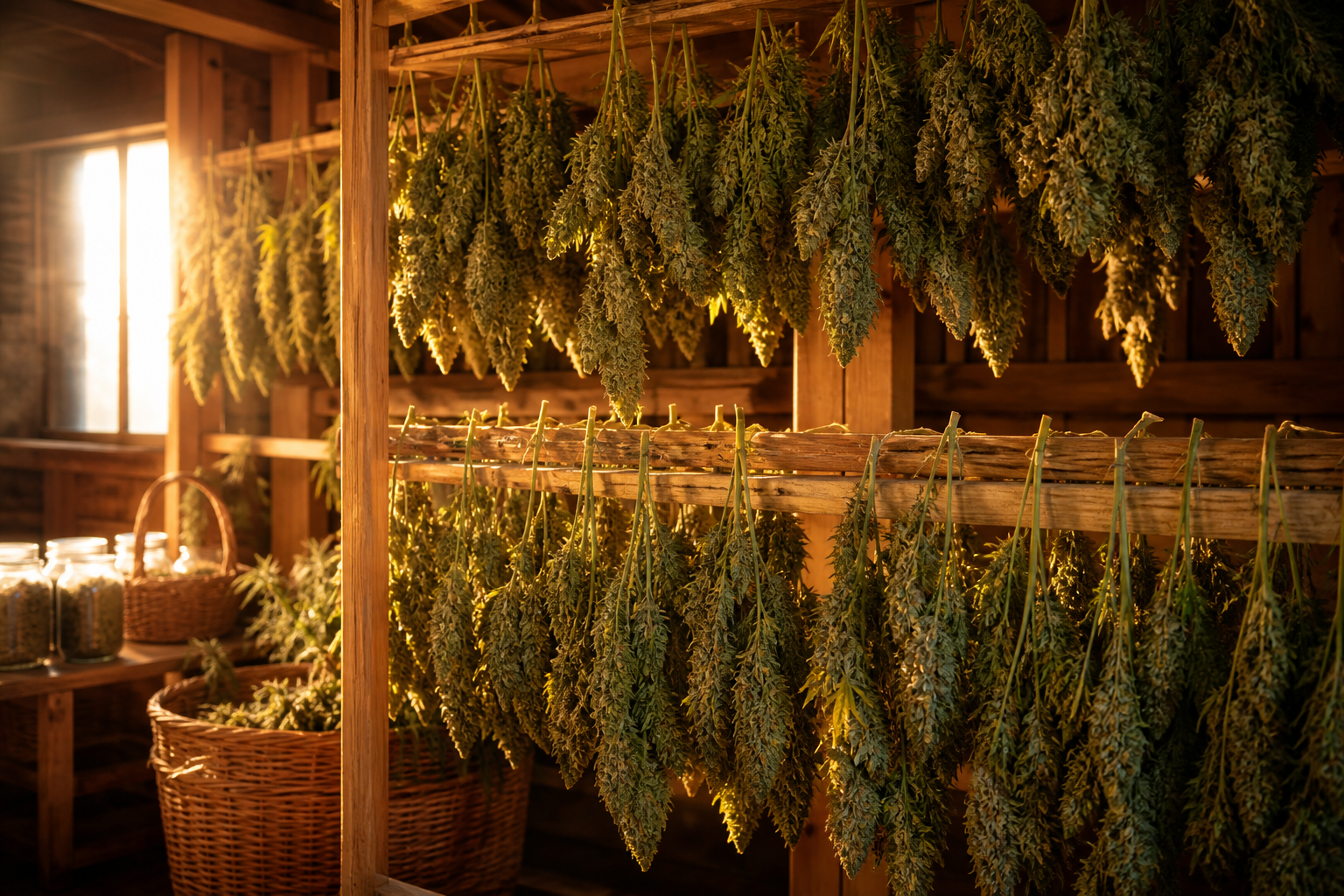
- Cut, dry, and cure — harvest only starts the finish; drying and curing protect what the plant made
At Divine Toke, a Detroit-area Michigan sun-grown organic cannabis farm, that same judgment call is what turns a season of living-soil work into a jar you can trust. The land shapes the flower — more on that in Michigan terroir — but harvest week decides which version of that flower you meet.
What growers actually look at in the field #
Outdoor readiness is multi-signal. No single cue wins alone.
| Cue | Role | Common mistake |
|---|---|---|
| Calendar week | Rough season context | Treating it as a hard deadline |
| Bud size / density | Shows flower is late enough to check | Harvesting because buds "look big" |
| Pistil color | Start-loupe signal | Cutting when hairs turn orange |
| Trichome color | Main ripeness proxy | Checking only one top cola |
| Smell | Supporting cue | Ignoring musty/off notes |
| Forecast | Risk override | Waiting for "perfect amber" into a storm |
A loupe or small USB microscope usually sits in the 30x–60x range for field work. Growers sample sugar leaves near the bud and the calyx surfaces where resin heads are clearest. Tops often finish first. Lower sites can lag. So a fair read means several spots on several plants — not one glamorous cola that looked ready from the truck.
When weather is clean and resin is still clear, waiting is free. When weather is dirty and resin is already cloudy, waiting can cost the crop. That is the whole outdoor math.
What Clear, Cloudy, and Amber Trichomes Mean #
Clear trichomes mean the resin is still immature; cloudy (milky) trichomes mark the main ripe window for many cultivars; amber trichomes mean the glands are aging further — often linked to a heavier, more sedating feel. The color sequence is a maturation cue, not a lab assay. Peer-reviewed work on glandular trichomes describes them as the main site of cannabinoid and terpene buildup as flowers mature (PMC10071647).
| Trichome stage | What it means | How the smoke often feels | Pull now? |
|---|---|---|---|
| Clear | Immature resin; lower cannabinoid buildup | Thin, edgy, unfinished | Usually wait |
| Mostly cloudy | Mature glands; common peak-THC window | Balanced potency; cultivar character shows | Common target |
| Mostly cloudy + some amber | Ripe resin with early aging | Fuller body; still bright for many people | Frequent outdoor sweet spot |
| Heavy amber | Later senescence of gland heads | Heavier, more sedating for many users | Pull if that profile is the goal — or if weather forces it |
Growers rarely wait for "all amber." They chase a ratio — often mostly cloudy with a slice of amber — then adjust for cultivar and risk. A plant can look frosty to the naked eye and still be clear under the loupe. That is why the jeweler's loupe is not optional craft theater. It is the difference between guessing and knowing.
What Actually Changes Chemically as Flower Ages #
As flower ages past peak, Δ9-THC can degrade and cannabinol (CBN) can rise — especially under time, heat, light, and oxygen — while terpene profiles also shift. A kinetics study in cannabis plant material confirmed that Δ9-THC declines while CBN forms as aging proceeds (PMC9418372). That chemistry is clearest in storage studies; standing plants in late flower follow the same aging direction more loosely.
Developmental research also shows cannabinoids and terpenes do not peak on one universal day. In one chemotype study, THCA and monoterpenes peaked around late flowering for some chemotypes, then declined with senescence, while other chemotypes kept rising longer (Realm of Caring chemotype growth study PDF). A hemp flowering study similarly found cannabinoid and essential-oil levels highest around full flowering, then lower by seed maturity (PMC8234299).
Practical translation for the bag you buy:
- Waiting longer is not always "stronger" — THC can plateau or drop while the feel gets heavier
- Amber is not a CBN percentage meter — it signals later maturity; it does not measure milligrams of CBN
- Terpenes (aroma compounds) can move late — some rise late; others fade if you wait through weather stress or overripe senescence (Frontiers in Plant Science review)
A Royal Society Open Science hemp flowering study also tracked how metabolite classes move through reproductive stages — another reminder that "full flowering" and "seed maturity" are different chemical chapters, not one flat plateau.
How to read the loupe without overthinking it #
You do not need a chemistry degree. You need a clear look and an honest ratio.
- Focus on the heads, not the stalks — the bulb tip is what changes from clear to cloudy to amber
- Ignore leaf trichomes if they disagree with bud trichomes — sugar-leaf glands can age on a different schedule
- Estimate percentages roughly — "mostly cloudy, maybe 10–20% amber" is enough craft precision for field work
- Recheck after weather swings — heat spikes, cold nights, and rain stress can move the timeline
- Write it down — good farms track cultivar notes so next season is smarter than this one
If everything is still glass-clear, wait if you can. If most heads are milky and a few are amber, you are in the common harvest band. If amber is racing and a storm is stacking up, cut. Perfect is a luxury. Sound flower is the job.
Are Brown Pistils a Reliable Ripeness Signal? #
No — brown or orange pistils are a rough flowering-stage cue, not a reliable final harvest test compared with trichome inspection. Pistils (also called stigmas) are the hair-like structures on female flowers. They often start white and darken as bloom progresses. That color shift can tell growers "start looking," but it does not prove the resin is ripe.
Ed Rosenthal's trichome harvest guidance is blunt on this point: pistil color can show general flowering progress, but stress, genetics, wind, handling, light, pollination, and nutrients can all darken pistils without matching cannabinoid maturity. A plant can show mostly dark pistils while trichomes are still clear.
A 2025 stigma-color study (PMC12114869) found stigma color can be measured reliably for research purposes, yet still treats traditional "mostly amber pistil" rules as only a useful approximation — optimal harvest still depends on genotype and cannabinoid targets.
| Signal | What it tells you | Reliability for "cut now" |
|---|---|---|
| White pistils, few curls | Early-to-mid flower | Low — usually too early |
| Many pistils darkening / curling | Mid-to-late flower; time to loupe | Medium as a start check cue |
| Trichomes still clear | Chemically immature resin | High — wait if weather allows |
| Trichomes mostly cloudy (+ some amber) | Ripe resin window for many cultivars | High — common harvest call |
Best practice: use pistils to know when to stop guessing from the driveway. Use trichomes to decide when to cut.
Why pistils still earn a spot on the checklist #
Throwing pistils out completely would be a mistake. They are cheap, visible, and fast. From the end of a row, darkened pistils tell a crew "these plants deserve a loupe walk today." That saves time across a full outdoor field.
What pistils cannot do:
- Prove THC has peaked
- Prove terpenes are at their loudest
- Override a wet forecast
- Replace sampling lower bud sites
Think of pistils as the dashboard light. The loupe is the diagnostic scanner. You would not rebuild an engine because a light came on — and you should not cut a crop because the hairs turned orange.
Early Harvest vs Late Harvest: How the Smoke Changes #
A week early often means a brighter, sharper, less full body feel; a week late often means a heavier, more sedating profile — but the "amber = couch-lock" rule is grower craft backed by chemistry, not a large blinded human trial. Early cloudy harvests tend to preserve a livelier edge. Later amber-leaning harvests tend to feel denser. Your own tolerance and terpene profile still matter.
The chemistry story is real: delayed aging can lower Δ9-THC while raising CBN (PMC9418372). CBN is less intoxicating than THC and shows up in discussions of sedation, but there is no strong clinical trial that directly proves "late-amber outdoor flower always feels X" in blinded human tests. Honest framing: the effect shift is widely reported and chemically plausible, not lab-certified for every bag.
| Factor | Harvest early (clear → early cloudy) | Harvest late (heavy amber) |
|---|---|---|
| Resin stage | Immature to early-ripe | Advanced senescence |
| Potency feel | Often thinner / racier | Often heavier / more body |
| Common reported vibe | More uplifting / cerebral | More sedating / "evening" |
| Aroma risk | Can smell "green" or unfinished | Can lose bright top notes if overripe or weather-stressed |
| Field risk | Lower mold risk if pulled before a storm | Higher chance of rain/frost hitting dense buds |
| Tradeoff | Safer crop, less finished character | Deeper feel, higher weather gamble |
What a week really changes for the person smoking:
- Early week: more "daytime" edge for many people; less rounded finish
- On-time week (mostly cloudy, some amber): cultivar character usually shows best
- Late week: more "lights out" body for many people; aroma and THC can drift
Michigan weather often shortens the late option. That tension — ripeness versus rain — is the outdoor story. Living soil and sun build the resin; harvest week decides which chapter of that resin you get. For the soil side of the craft, see living soil isn't dirt.
Why "indica vs sativa" is the wrong story here #
Plenty of bags still lean on old indica/sativa labels to explain sleepy vs energetic. Harvest timing is a quieter, more honest lever. Two cuts of the same cultivar can feel different if one was mostly cloudy and one was heavy amber. Terpenes still steer a lot of the aroma and mood. Cannabinoid ratios still matter. But ripeness stage is part of the effect stack, and it is invisible unless someone tells you how they harvest.
A practical consumer translation:
- Want brighter daytime flower? Ask about earlier, cloudy-leaning cuts and fresh cure.
- Want heavier evening flower? Later amber-leaning cuts are the craft bet — when weather allows.
- Want honesty? Prefer farms that talk about loupes and forecasts over farms that only recite strain folklore.
None of this replaces your own dose sense. Start low. Notice how this jar feels. Harvest craft explains variation; it does not predict your exact night.
Why Michigan Late Summer Makes the Call Harder #
Michigan late summer and early fall keep outdoor flower under humidity and rain pressure just as buds get densest — so growers often choose between perfect trichome ratios and saving the crop. The Great Lakes keep air moist. September still brings meaningful precipitation. Nights cool. Dense colas hold water. That is the outdoor tension — and it hits metro Detroit and the rest of Southeast Michigan hard because harvest week and wet week often overlap.
The NOAA NCEI / NCICS Michigan climate summary documents a humid continental pattern with lake influence — wet enough that mold risk stays real through harvest season. GLISA (Great Lakes Integrated Sciences and Assessments) similarly frames Michigan climatology around lake-moderated moisture and regional season length. For Detroit specifically, NWS Detroit/Pontiac 1991–2020 climate normals put average September precipitation at 3.22 inches — still a wet month right when outdoor buds are densest and slowest to dry after rain.
Frost closes the window from the other side. MSU Extension frost-free date guidance puts average first fall frost earlier in cooler northern zones and later across much of the southern Lower Peninsula — often spanning roughly early September into late October depending on zone. The NWS Detroit/Pontiac first-fall-freeze page is blunt for Southeast Michigan: October is when the growing season ends across the Detroit metro forecast area, and it publishes the average first-freeze and hard-freeze maps growers use when nights start biting.
| Pressure | Why it matters at harvest |
|---|---|
| High humidity / dew | Buds stay wet overnight; mold risk rises |
| Multi-day rain | Interior of dense colas can stay damp after the surface dries |
| Cooling nights | Slower drying after rain; botrytis likes cool, wet tissue |
| First frost | Can damage or kill unharvested flower |
So the Michigan call is rarely "wait for textbook amber." It is often: is the resin ripe enough that cutting now beats gambling on next week's storm?
South vs north: same state, different clock #
Michigan is not one climate. Southern Lower Peninsula farms often get a longer finish window. Northern Lower Peninsula and Upper Peninsula sites cool sooner and meet frost earlier, per MSU Extension frost-free date ranges and MSU garden planning calendars. That changes cultivar choice as much as harvest week.
| Region (broad) | Season pressure | Harvest implication |
|---|---|---|
| Southern Lower Peninsula | Longer warm stretch; still humid | More room to chase cloudy/amber ratios — mold still watches |
| Northern Lower Peninsula | Shorter season; earlier frost risk | Earlier-finishing genetics and earlier cut calls |
| Upper Peninsula | Shortest outdoor window | Aggressive timing; weather overrides "ideal amber" faster |
GLISA's Michigan climatology overview is useful context for why lake-effect moisture and regional season length refuse to leave outdoor growers alone. The plant does not care that your spreadsheet said October 5. The dew point does.
Bud Rot, Powdery Mildew, and the Pull-Early Decision #
Bud rot (Botrytis) and powdery mildew rise when humidity stays high and buds stay wet — and pulling early is often the only way to save clean flower once late-season weather turns. Botrytis cinerea is the gray-mold fungus behind much "bud rot." It thrives with prolonged moisture and cool-to-moderate temperatures. For a Detroit-area outdoor crop, that risk is not abstract: September rain plus Great Lakes humidity is the exact setup that forces loupe-and-radar triage.
Plant-pathology reviews link Botrytis pressure to wetness duration and humid canopies; cannabis-focused disease literature and related crop pathology work place high risk near high relative humidity (often discussed above ~70%) and cool-moderate temps around the upper teens to low 20s °C range (Canadian Journal of Plant Pathology Botrytis review; Canadian Journal of Botany cannabis disease context). MSU Extension plant pathology guidance on Botrytis is just as plain for Michigan growers: frequent precipitation and high humidity enhance Botrytis, and crews should be ready when it rains heavily in the weeks before harvest — the same late-summer window Southeast Michigan outdoor cannabis is finishing in. Powdery mildew is a separate pathogen — it does not need free water on the leaf the same way Botrytis does — but still loves humid, stagnant canopies.
Growers often pull early when:
- A rainy, humid stretch lines up with late flower
- Buds are dense enough that interiors dry slowly
- They find soft spots, gray fuzz, or brown insides in a cola
- Night after night forms heavy dew before sunrise
That is not panic. It is triage. Clean, slightly early flower beats a moldy "perfect" week. After the cut, careful dry and cure still matter — see curing cannabis: the art of patience.
How growers triage a suspect cola:
- Open the bud — surface can look fine while the core browns
- Smell deep — sweet resin is good; musty basement is bad
- Isolate or discard infected material — do not "blend it in"
- Advance harvest on nearby plants if the forecast stays wet
- Prioritize airflow and dry-room readiness before a mass cut
Consumers never see that decision tree. They only meet the result: either a clean jar from a hard early call, or a ruined crop that never made it to the shelf. When outdoor flower smells sharp and burns clean after a humid September, someone made a good triage call.
Why Outdoor Harvest Lands in Fall at Michigan Latitudes #
Outdoor photoperiod cannabis in Michigan usually finishes in September–October because flowering waits for shorter days after midsummer, then still needs roughly eight to ten weeks to ripen. The calendar harvest is a side effect of day length — not a tradition for its own sake.
Cannabis is a short-day plant: after a juvenile phase, many cultivars initiate flower when day length drops below a critical photoperiod. An ASHS HortTechnology review of photoperiod-sensitive hemp notes that after that juvenile stage, many cultivars may flower when day length falls below about 14 to 16 hours. The NCAT Cooperative Extension hemp overview similarly pegs a common critical photoperiod near 14 hours. Peer-reviewed flowering-time work also ties outdoor schedules to photoperiod genetics and latitude (PMC10386198; PMC10004775).
At Michigan latitudes (~42–45°N), that produces a familiar outdoor arc. Metro Detroit sits near the southern end of that band — around 42°N — so day-length cues look more like other Upper Midwest sites than like California's Central Valley or coastal outdoor belts farther south.
- Late June — longest days; plants stay vegetative
- Late July to early August — nights lengthen enough that many photoperiod cultivars tip into flower
- August into September — stretch, bud set, bulking, resin ripening
- September to October — harvest window before frost risk climbs
| Stage | Rough outdoor timing (Michigan) | What growers watch |
|---|---|---|
| Late veg / pre-flower | July | Plant health, pests, early pistils |
| Early–mid flower | August | Bud stacking, airflow, humidity |
| Late flower / ripeness | September | Trichomes, rain forecasts |
| Finish / cut window | Sept–Oct | Frost, mold, loupe ratios |
That is why our mid-summer harvest preview talks about July as "almost there," not "ready." The sun still has weeks of work after the field looks tall and green.
Why a Detroit-area harvest calendar is not a West Coast calendar #
A Detroit-area sun-grown harvest calendar is tighter than a typical West Coast outdoor calendar because Southeast Michigan finishes under earlier frost pressure and wetter September air — not because the loupe math is different. Trichomes still go clear → cloudy → amber the same way. The weather ceiling is what changes.
| Factor | Detroit-area / Southeast Michigan | Typical West Coast outdoor belt |
|---|---|---|
| Latitude / day-length cue | ~42°N Upper Midwest photoperiod | Often farther south; longer warm finish in many microclimates |
| September moisture | Detroit normals average 3.22" rain (NWS Detroit/Pontiac) | Many CA outdoor zones finish drier |
| Frost close | Growing season ends in October across SE Michigan (NWS Detroit/Pontiac freeze maps) | Longer frost-free window in many coastal/inland CA sites |
| Practical cut call | Often "ripe enough before the wet/cold week" | More room to chase heavy amber when weather stays clean |
For consumers buying Michigan sun-grown: ask how the farm handled the wet weeks, not only what the THC sticker says. That weather math is the craft story — not a footnote.
Photoperiod vs autoflower — why this article is about the loupe season #
Most classic outdoor "sun-grown" craft flower in the Upper Midwest is photoperiod — it waits on night length. Autoflower cultivars run more on age than day length and can finish on a different calendar. This piece is about the photoperiod outdoor decision, because that is the one that collides with Michigan September weather.
Indoors, growers can force flower with a hard 12/12 light schedule. Outdoors, nature dims the switch slowly after the summer solstice. The plant keeps reading night length until genetics say go. Then the resin race begins — and so does the mold race. Peer-reviewed flowering-time genetics work (PMC8786113) underlines how much cultivar photoperiod response shapes when that race starts.
For consumers: if a farm says "outdoor sun-grown," ask whether they finished before the wet weeks or got lucky with a dry fall. The answer tells you as much as the THC number.
What Consumers Should Ask About Harvest Timing #
You do not need a loupe in the dispensary — but you can ask questions that reveal whether harvest was a craft call or a rush job. Most shoppers will never walk a field. You still feel harvest week every time you light up.
Useful questions and cues:
- "Was this sun-grown outdoors?" — outdoor flower carries weather-season character; indoor has a different clock
- "How do you decide harvest — trichomes or calendar?" — good farms talk about resin and weather, not just a date
- Smell the jar — loud, clean aroma usually means ripe resin protected through dry and cure; hay/grass often means rushed finish
- Notice the feel — brighter vs heavier can reflect early vs late harvest as much as "indica vs sativa" labels
- Ask about cure — harvest starts quality; curing protects terpenes finishes it
| What you notice | Possible harvest / post-harvest story |
|---|---|
| Sharp, thin, unfinished | Often early cut or poor cure |
| Balanced, loud, cultivar-true | Common on-time cloudy/amber window + good cure |
| Heavy, sleepy, muted top notes | Later harvest and/or aged resin — or flat storage |
| Musty / off smell | Mold risk or bad dry — walk away |
Divine Toke's sun-grown organic flower is built for that craft chain: living soil, outdoor light, hand harvest when the trichomes say so, then patient dry and cure. If you want the land story behind the jar, start with Michigan terroir. If you want the after-harvest chapter, read the art of patience in curing.
A simple ripeness-to-shelf checklist #
You will not see a loupe photo on every label. You can still run a short mental checklist before you buy:
- Season timing — outdoor fall drops often mean recent harvest windows; ask how fresh the batch is
- Aroma test — open (or smell through) and look for loud, clean cultivar notes
- Visual frost — resin should look present, not dull or dusty in a bad way
- Burn / vapor feel after purchase — harsh grass often means dry/cure issues; thin raciness can mean early cut
- Effect notes — brighter vs heavier across the same farm's cultivars can reflect harvest philosophy
| Shopper goal | What to prioritize |
|---|---|
| Daytime clarity | Fresher, cloudy-leaning outdoor batches; lighter dose first |
| Evening wind-down | Later-leaning harvest talk + sedating terpene cues (earthy, herbal) |
| Flavor chase | Farms that protect cure and talk terpenes, not only THC % |
| Trust | Farms that admit weather forced early pulls when it happened |
Honesty about an early pull is a quality signal. Pretending every week was perfect is not. Outdoor farming is weather work. The best operators tell the truth about it.
Frequently Asked Questions #
How do growers know when outdoor cannabis is ready to harvest? #
They use a jeweler's loupe on trichomes and check the weather — not a wall calendar. Mostly cloudy resin heads (sometimes with some amber) mark the common ripe window. Pistils tell them when to start looking. Rain, humidity, and frost can force an earlier cut. Grower craft summaries such as Ed Rosenthal's trichome maturity guide put magnification first for that reason.
What do clear, cloudy, and amber trichomes mean? #
Clear means immature; cloudy means mature for many cultivars; amber means the glands are aging further. Glandular trichomes are where cannabinoids and terpenes build as flowers develop (PMC10071647). Growers usually target mostly cloudy with a slice of amber, not all-clear or all-amber.
Are brown pistils enough to decide harvest? #
No — brown pistils are only a rough cue. Stress and genetics can darken pistils while trichomes are still clear. A stigma-color study (PMC12114869) treats traditional stigma rules as approximations, not universal cut points. Use pistils to know when to loupe; use trichomes to decide.
Does harvesting a week early change how cannabis feels? #
Yes — early cuts often feel thinner, sharper, and less full in the body. The plant had less time at peak resin maturity. You may still get usable flower, especially if weather forced the call, but the bag can feel less rounded than an on-time cloudy harvest.
Does harvesting a week late make flower more sedating? #
Often for many people — heavier, more "evening" — but that is craft consensus plus chemistry, not a large blinded trial. Later aging can lower Δ9-THC and raise CBN (PMC9418372). Expect a directional shift, not a guaranteed couch-lock switch for every cultivar.
Why is late-summer humidity dangerous for outdoor cannabis? #
Dense buds trap moisture, and Botrytis (bud rot) loves prolonged wet, humid conditions. Pathology literature links high humidity and wetness duration to Botrytis pressure (Canadian Journal of Plant Pathology). Michigan's humid continental, lake-influenced climate keeps that risk live into fall (NCICS Michigan climate summary). In the Detroit metro, that shows up as a wet September — 3.22 inches of average rain in the NWS Detroit/Pontiac normals — right when outdoor colas are densest.
When is Michigan outdoor cannabis usually harvested? #
Most photoperiod outdoor flower finishes in September–October. Flowering waits for shorter days after midsummer, then needs weeks to ripen. ASHS HortTechnology photoperiod research and the NCAT hemp overview explain why short-day flowering lands harvest in early fall at Upper Midwest latitudes. Around Detroit, NWS Detroit/Pontiac marks October as the end of the growing season — so the cut window is often a race with frost as much as a race with amber.
Should growers harvest early if rain is coming? #
Often yes, if buds are already near ripe and a long wet stretch is forecast. Clean, slightly early flower beats moldy late flower. MSU Extension frost-date tools and local NWS freeze guidance help growers weigh rain and cold together.
Do terpenes peak at the same time as THC? #
Not always — cannabinoids and terpenes can peak on different schedules by chemotype. Developmental data show some chemotypes peaking late in flower while others keep rising longer (Realm of Caring chemotype study). That is another reason harvest is a judgment call, not a single "peak day."
Can you tell harvest timing from smell alone? #
Smell helps, but it cannot replace a loupe in the field. Loud, clean aroma usually means ripe resin that was protected after cut. Hay or grass often points to early harvest or rushed dry/cure. Off or musty smells are a walk-away signal, not a ripeness debate.
What happens after harvest that still matters for quality? #
Drying and curing decide whether ripe resin stays smooth or turns harsh. Harvest captures the plant's peak. The jar finish protects it. For that chapter, see curing cannabis: the art of patience and how curing protects terpenes.
Why does Divine Toke care about harvest week? #
Because sun-grown organic flower only tastes like the land if you cut it when the resin — and the weather — say so. At Divine Toke, a Detroit-area Michigan sun-grown organic cannabis farm, harvest is hand work guided by trichomes and forecasts, not a random date. That is how outdoor craft shows up in the bag you open.
Closing: The Loupe, the Forecast, and the Bag You Buy #
Harvest timing is the quiet skill behind sun-grown flower. The season builds the plant. Living soil feeds it. Late-summer light finishes the resin. Then someone stands in a Southeast Michigan field with a loupe and a phone full of local weather radar and decides: now, or wait.
If you're curious to try flower grown with that kind of patience, look for Divine Toke's Detroit-area sun-grown organic cannabis — cut by hand when the trichomes tell the story. To see how the season looks before the scissors come out, read our mid-summer harvest preview. To understand what happens after the cut, start with curing cannabis: the art of patience. For the land side of the flavor, wander into Michigan terroir. And if aroma is your north star, how curing protects terpenes shows why the weeks after harvest still decide what you smell.
The takeaway is simple enough for a smoke-break conversation: outdoor readiness is a loupe decision under a weather ceiling. Clear, cloudy, amber. Rain or no rain. Cut or wait. That is how growers know — and that is why one bag can wake you up while another puts the day to bed.
Respect the craft. The calendar is a rumor. The resin and the sky are the truth.
Grown in Detroit. Shipped to your door.
Small-batch, sun-grown cannabis cultivated in living soil. Mail-order shipping to all 50 states.