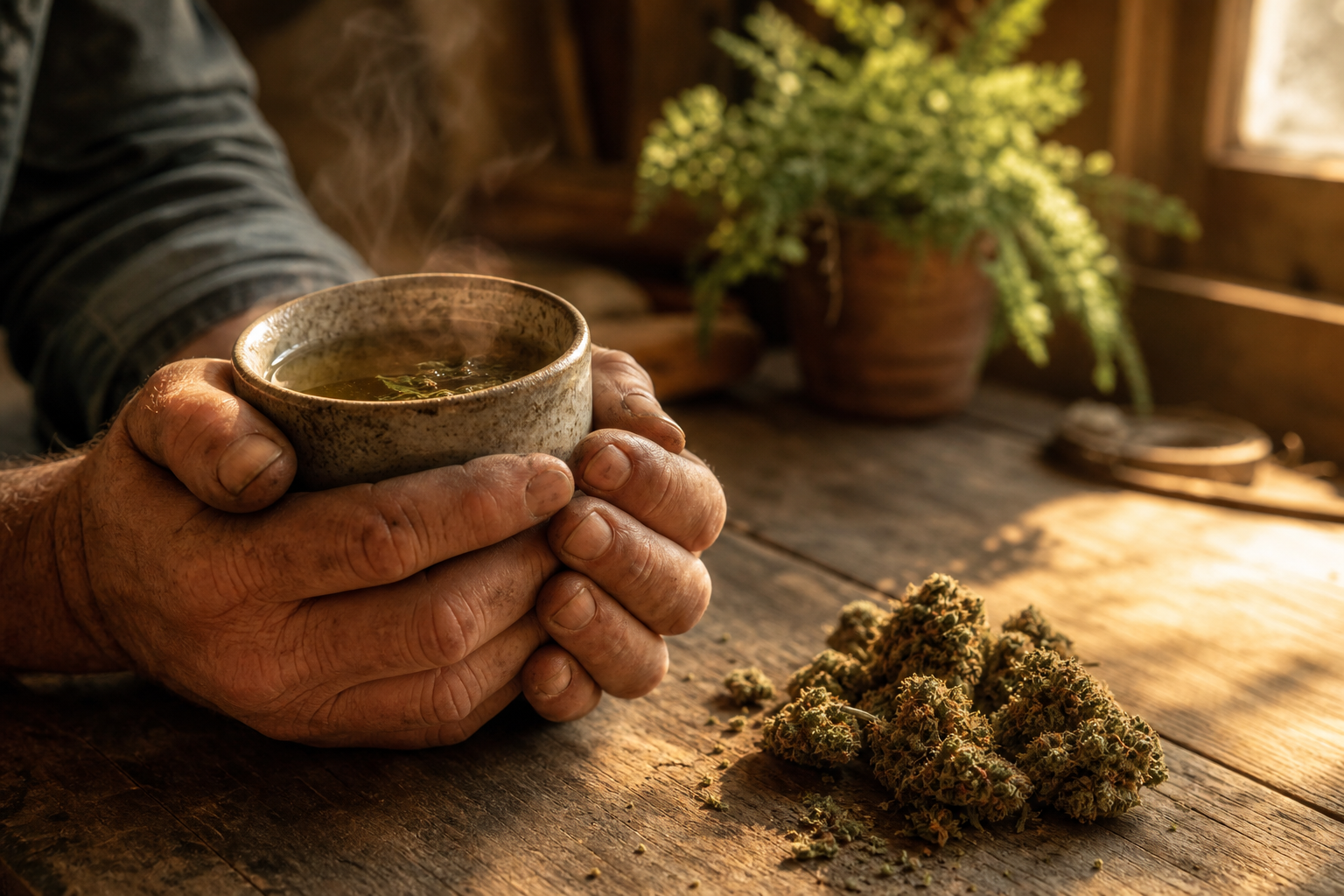
Cannabis and Fibromyalgia: A Complete Guide to Managing Widespread Pain

Jamie
Head Cultivator
Your pain is real. If doctors have shrugged, or three prescriptions made you foggy without quieting the ache, you are not alone — and you are not making it up. This guide answers one question with no hype: does cannabis actually help fibromyalgia pain, and how would I start?
What Is Fibromyalgia, Really? #
Fibromyalgia is a nervous-system pain condition — your body's volume knob for pain gets stuck on high — not a problem of broken bones or torn tissue. The National Institute of Arthritis and Musculoskeletal and Skin Diseases (NIAMS) describes it as widespread musculoskeletal pain with fatigue, sleep problems, and memory issues. The pain is real. The scans often look "normal." That gap is why so many people get dismissed.
About 4 million U.S. adults live with fibromyalgia, per NIAMS. Most are women, but men get it too. Symptoms usually start in mid-adulthood — the same years many Michigan workers are on their feet in plants, hospitals, and trades. Many people wait years for a clear name for what they feel.
Common features include:
- Widespread pain — aching or burning on both sides of the body, above and below the waist
- Unrefreshing sleep — you sleep, but wake up tired
- Fibro fog — trouble with focus, word-finding, or short-term memory
- Fatigue that rest does not fully fix
- Tender points — spots that hurt more when pressed
This is different from arthritis (joint swelling) or a disc injury (a clear structural problem). For those conditions, see our cannabis and arthritis guide and the broader cannabis for pain pillar. Fibromyalgia is about how the nervous system processes signals — not a single torn tendon.
How Doctors Usually Diagnose It #
There is no single blood test that "proves" fibromyalgia. Clinicians use symptom patterns, a physical exam, and tests that mainly rule out look-alikes (thyroid disease, inflammatory arthritis, vitamin deficiencies). The NIAMS fibromyalgia overview stresses that diagnosis rests on widespread pain lasting months plus the fatigue/sleep/fog cluster — not on a glowing MRI.
That diagnostic gap is emotionally loaded. If you have been told "everything looks fine" while your body burns, the problem is the toolset, not your character. Believing patients is step one of good care — including plant-based care.
Central Sensitization Explained Simply #
Central sensitization means your brain and spinal cord amplify pain signals so ordinary touch, pressure, or temperature can feel like a threat. Think of a car stereo where someone turned the gain way up. Soft music starts to distort. Your nerves are not inventing the song — they are playing it too loud.
In practical terms:
| What you feel | What is happening |
|---|---|
| Light touch hurts | Pain pathways fire too easily |
| Cold or weather flares | Sensory filters are over-reactive |
| Pain moves around | The "map" of pain in the brain is unstable |
| Exhaustion after small tasks | The alarm system stays on all day |
Researchers group fibromyalgia with other central sensitivity conditions — including migraine, IBS, and some jaw pain syndromes — because they often travel together. That overlap is not coincidence. It is a shared wiring pattern. (We cover comorbidity rates later in this guide.)
Why This Matters Before You Try Cannabis #
If your pain is mainly nervous-system amplification, tools that only quiet local swelling (many OTC anti-inflammatories) or only blunt acute injury pain (many opioids) often disappoint. Cannabis does not "cure" sensitization. Early research suggests some cannabinoids may turn the volume down a notch for some people — modestly, inconsistently, and with side effects. That is the honest frame for everything below.
Why Regular Painkillers Don't Touch Fibromyalgia #
Most everyday painkillers target tissue injury or short-term swelling — fibromyalgia is mainly a processing problem in the nervous system, so those drugs often miss the mark. That does not mean you failed the medicine. It means the tool was built for a different job.
Here is the mismatch in plain terms:
| Drug type | What it usually targets | Why fibro often shrugs |
|---|---|---|
| NSAIDs (ibuprofen, naproxen) | Local swelling and prostaglandins | Fibro pain is not mainly joint inflammation |
| Acetaminophen | Central pain pathways, mild | Weak effect on widespread sensitization |
| Opioids | Opioid receptors; acute severe pain | Poor long-term fibro evidence; high side-effect cost |
| Muscle relaxers | Muscle spasm | Fibro pain is not just "tight muscles" |
The American College of Rheumatology and major reviews frame fibromyalgia as a central pain processing disorder. Opioids are generally not recommended as first-line fibro care for that reason — they can worsen fatigue, fog, and dependence risk without solving the volume-knob problem.
What does get prescribed more often:
- Nerve-calming drugs (pregabalin / Lyrica)
- SNRI antidepressants that also hit pain pathways (duloxetine / Cymbalta, milnacipran / Savella)
- Low-dose amitriptyline (older antidepressant used off-label for sleep and pain)
- Exercise, sleep work, and cognitive behavioral approaches — still among the most evidence-backed foundations
Even the FDA-approved fibro drugs help only a minority of people in a big way. High-quality summaries report that roughly 1 in 10 adults get ≥50% pain reduction with duloxetine, milnacipran, or pregabalin — real help for some, quiet disappointment for many (AAFP POEMS summary of the evidence).
So when someone asks about cannabis after three failed prescriptions, the fair answer is: you are not chasing a miracle; you are looking for another lever on a hard-to-treat system. Cannabis sits in that same "may help some people some of the time" bucket — not above it.
What "Response" Looks Like in Real Life #
Clinicians often define a meaningful pain response as a ≥30% drop on a pain scale — not zero pain. A ≥50% drop is a bigger win and rarer (AAFP POEMS summary). If cannabis (or any drug) moves you from an 8 to a 5 and restores two hours of sleep, that can be life-changing even if you still hurt. Perfection is the wrong scoreboard for fibromyalgia.
The Endocannabinoid Deficiency Idea — How Solid Is It? #
Clinical endocannabinoid deficiency (CECD) is a research hypothesis — not a proven diagnosis — that may help explain why migraine, IBS, and fibromyalgia sometimes respond to cannabis. It is discussable science, not fringe magic, and not settled fact.
Dr. Ethan Russo proposed CECD in the early 2000s: if your body runs low on its own cannabis-like chemicals (anandamide and 2-AG), pain, gut, and migraine systems might stay over-reactive. He revisited the idea in a peer-reviewed paper available as PMC5576607. Fibromyalgia sits in that proposed triad with migraine and IBS.
What the 2024–2026 literature actually supports:
| Claim | Standing |
|---|---|
| The endocannabinoid system (ECS) helps regulate pain, sleep, and mood | Well established |
| Fibromyalgia involves ECS-related biology | Plausible; under study (PMC12025820) |
| Fibromyalgia is caused by a measurable endocannabinoid shortage | Not proven |
| CECD is a recognized disease you can test for at the clinic | No |
A careful review of cannabinoids and the ECS in fibromyalgia notes that human data are mixed — some measures look elevated rather than deficient — so you cannot treat CECD as the settled cause (ScienceDirect review on cannabinoids and the ECS in fibromyalgia).
Bottom line for readers: CECD is a useful story frame — "maybe my thermostat is off" — not a lab result you will get next Tuesday. For a deeper ECS walkthrough, see our endocannabinoid deficiency guide. Cannabis may still help some fibro symptoms even if CECD is incomplete. Helping a symptom is not the same as proving a theory.
A 2025 open-access review on the ECS in fibromyalgia (PMC12025820) keeps the same cautious tone: the system is involved; a neat "deficiency diagnosis" is not ready for clinic stamps. That restraint is a feature, not a bug.
What the Studies Actually Found #
Early research suggests cannabinoids can modestly reduce fibromyalgia pain and improve sleep for some people — but evidence quality is often low, samples are small, and CBD alone has failed recent placebo trials. Honesty is the point of this section. Fibromyalgia patients get sold miracles online. You deserve the real numbers.
The Big Picture From Reviews #
A 2023 systematic review of cannabis for fibromyalgia (PMC10295750) pooled 4 randomized trials and 5 observational studies (N = 564). Authors found low-quality evidence for short-term pain reduction. Some nabilone trials looked helpful; one RCT found no difference vs placebo on pain responses.
A 2024 meta-analysis of analgesic effects (PubMed 42013320) pooled 12 studies (N = 1,248) and reported a large pooled pain effect (standardized mean difference around −1.41). That sounds dramatic — until you read the fine print: GRADE quality stayed low, most data were observational, and heterogeneity was high. Large effects in messy data often shrink when better trials arrive.
An earlier Cochrane-style review of cannabinoids for fibromyalgia (PMC6457965) also stressed limited, low-quality evidence and common side effects like dizziness and drowsiness.
| Source | What it covered | Honest takeaway |
|---|---|---|
| PMC10295750 (2023 SR) | 9 studies, N=564 | Possible short-term pain help; low-quality evidence |
| PubMed 42013320 (2024 MA) | 12 studies, N=1,248 | Big pooled effect; still low GRADE |
| PMC6457965 | Cannabinoids for fibro | Limited evidence; AEs common |
Nabilone and Early Trials #
Nabilone is a synthetic drug that mimics THC. It is not the same as flower from a dispensary, but it shows up in fibro research because doctors can dose it precisely.
- Early nabilone trials in fibromyalgia reported pain and sleep improvements for some participants, with side effects (dizziness, sedation) driving dropouts (PMC10295750).
- A Brazilian randomized trial of a THC-rich cannabis oil found symptom benefits vs placebo for some measures, using a start-low approach near ~1 mg THC per drop (PMC7593796).
- Across trials, non-serious adverse events are common; dropouts in the 15–25% range appear repeatedly in reviews when side effects or lack of benefit push people out (PubMed 42013320).
Observational Cohorts and Real-World Data #
Israel and the UK have published real-world fibro cohorts. These are useful — and biased.
- An open-label Israeli case series of medical cannabis in treatment-resistant fibromyalgia reported improvements in symptom severity and widespread pain index over months (PMC7890993). No placebo arm. People who stay in the study are often the ones who felt better.
- Analysis from the UK Medical Cannabis Registry found improvements in pain and patient-reported outcomes among fibro patients on prescribed products (PMC10338741). Again: observational, not a blinded trial.
How to read this: "Many people report improvement" is fair. "Proven cure" is not. Observational wins often shrink under placebo control.
CBD Alone: What Recent Trials Say #
This is the part marketing skips.
- A randomized trial of cannabidiol versus placebo in fibromyalgia did not show a clear win for CBD alone on primary pain outcomes (PubMed 40846590).
- The CANNFIB trial is one of several modern efforts testing CBD carefully in fibro — the direction of recent high-quality work is skepticism toward isolate CBD as a standalone fibro analgesic.
Practical translation: If someone sells you "CBD-only cures fibro," walk away. Combinations that include THC (or prescription nabilone) show more signal in the literature than CBD isolate — and even those signals are modest.
How to Read a Fibromyalgia Cannabis Headline #
Use this filter whenever a study hits your feed:
- Was there a placebo group? If not, optimism bias is huge in pain research.
- How many people finished? High dropout (15–25% is common) means the "success story" may exclude people who quit from side effects (PubMed 42013320).
- What product was studied? Nabilone ≠ your dispensary gummy. Oil mg ≠ flower mg.
- How long did benefits last? Short-term wins may fade; few fibro cannabis trials are long and rigorous.
- Who funded it? Industry-funded work is not automatically false — but it deserves a sharper eye.
If a headline cannot survive those five questions, treat it as marketing with a PubMed costume.
Cannabis vs. Standard Fibromyalgia Prescriptions #
FDA-approved fibro drugs help roughly 1 in 10 people reach big (≥50%) pain cuts — cannabis evidence is thinner and lower quality, so a fair comparison is "another imperfect option," not a proven upgrade. Talk to your doctor before changing anything. This table is education, not a taper plan.
Three drugs are classically FDA-approved for fibromyalgia: pregabalin (Lyrica), duloxetine (Cymbalta), and milnacipran (Savella). Amitriptyline is widely used off-label. Evidence summaries report that about 1 in 10 adults get ≥50% pain relief with the three approved agents (AAFP POEMS). For a ≥30% pain drop, duloxetine trials have shown roughly up to ~49% responders vs ~32% on placebo in some analyses — still modest absolute benefit (Pain and Therapy / effect-size discussion; OHSU drug class evidence tables).
| Option | Role | Rough response picture | Common downsides |
|---|---|---|---|
| Pregabalin | Nerve-calming (gabapentinoid) | ~1 in 10 get ≥50% relief in summaries | Dizziness, weight gain, fog, swelling |
| Duloxetine | SNRI (mood + pain) | NNT near ~10 for ≥50%; better for ≥30% | Nausea, dry mouth, sleep changes, sexual side effects; serotonin risk |
| Milnacipran | SNRI | Similar "about 1 in 10" for big relief | Nausea, heart-rate/BP rise, sweating |
| Amitriptyline | Older antidepressant (off-label) | Often stronger sleep help; tolerability varies | Morning hangover, dry mouth, weight gain |
| Cannabis / cannabinoids | Plant THC/CBD or nabilone | Low-quality evidence of modest short-term help | Dizziness, dry mouth, impairment; dropouts 15–25% in many trials |
A 2025 pharmacologic update on fibromyalgia treatment continues to place approved drugs and non-drug care (exercise, sleep, CBT-style approaches) ahead of cannabis in guideline thinking (PMC12549291).
How to use this comparison:
- If a prescription already helps enough, cannabis is an add-on conversation — not a replacement order from a blog.
- If prescriptions failed or side effects were worse than the pain, cannabis is a reasonable research-backed experiment for some adults in legal states — with the same honesty about odds.
- Neither path "proves" your pain was imaginary when it fails. Fibromyalgia is hard. Multiple tools often still leave residual pain.
For general (non-fibro-specific) pain mechanics, see the cannabis for pain natural relief guide. This pillar stays fibro-specific on purpose.
The Sleep Connection: Unrefreshing Rest and the Pain Loop #
Unrefreshing sleep is not a side quest in fibromyalgia — it feeds the pain, and pain feeds the bad sleep. Cannabis often makes people feel they sleep better; objective sleep-stage studies are far more mixed. Manage expectations.
Fibromyalgia sleep is often:
- Light and broken
- Short on deep (slow-wave) sleep
- Full of arousals even when the clock says you "slept eight hours"
That pattern raises next-day pain sensitivity. More pain then wrecks the next night. The loop is vicious and well described in pain–sleep research.
What Cannabis Does to Sleep (Honest Version) #
| Finding | Source signal |
|---|---|
| Many pain/fibro patients report better sleep on cannabis | Fibro reviews and registries (PMC10295750, PMC10338741) |
| Acute THC can shorten time to fall asleep for some people | Sleep mechanism reviews (PMC11011314) |
| Cannabis often suppresses REM and may change deep sleep | Architecture reviews (PubMed 40967124) |
| Feeling rested ≠ normalized sleep stages on a lab study | Systematic reviews of dosing/admin for sleep (Sleep 2022 review) |
| Chronic heavy use can link to more fragmented sleep in some clinic samples | Cross-sectional PSG work on chronic use (Sleep journal study) |
Practical takeaways for fibro nights:
- Night-leaning, low-dose THC (or balanced THC:CBD) is what many people try first for the sleep–pain loop — start low.
- Do not chase knock-out doses. Heavy nightly THC can trade tonight's sedation for next-day fog and, over time, lighter sleep.
- Pair cannabis with boring sleep basics: same bedtime, dark room, no doomscrolling in bed. Plant chemistry cannot outrun a phone at 1 a.m.
Breaking the Loop Without Heroics #
A realistic sleep-pain plan for fibro nights:
- Same wind-down time even when pain is loud — consistency trains the nervous system.
- Cannabis earlier than midnight if you use an edible; late redosing wrecks the next day.
- Protect the morning: if night THC leaves you fogged, cut the night dose before you abandon the experiment.
- Track three numbers for two weeks: pain on waking, hours in bed, freshness 0–10. Patterns beat vibes.
For a full sleep deep-dive (CBN, routines, REM), see our cannabis and sleep complete guide.
Fibro Fog: Does Cannabis Help or Harm Cognition? #
No fibromyalgia clinical trial has proven that cannabis clears fibro fog — and THC often worsens attention and working memory in the hours after use. If fog is your worst symptom, treat cannabis as a pain/sleep tool that might cost clarity, not a brain tonic.
Fibro fog means trouble focusing, finding words, or holding short-term details. It is part of the illness for many people — not laziness, not "just depression."
What the evidence actually says:
- Fibromyalgia cannabis studies usually measure pain, sleep, and quality of life — not formal thinking tests (PMC10295750; PMC10338741).
- Across medical cannabis research, many studies find little lasting cognitive change at low–moderate doses, while others show impairments — especially in attention and memory (PMC7259587).
- CBD alone generally looks cognitively neutral compared with THC (PMC7259587).
- Large brain-function research on cannabis use continues to flag working memory as a vulnerable domain when THC exposure is recent or heavy (JAMA Network Open cannabis brain function study).
| Goal | Safer starting bias |
|---|---|
| Daytime function + less fog risk | CBD-forward or microdose THC; avoid driving |
| Night pain + sleep | Low-dose THC after responsibilities are done |
| "I want my brain back by noon" | Skip morning THC; keep doses tiny |
Many people report that better sleep indirectly helps next-day fog. That is plausible — sleep debt worsens cognition — but it is not the same as cannabis "treating" fibro fog. If a product makes you more confused than the pain was worth, that product failed for you, even if a friend swears by it.
THC:CBD Ratios and Starting Doses Used in Studies #
Fibromyalgia studies that report numbers usually start THC very low — around 1 mg — and titrate slowly; real-world Israeli data show median daily THC intakes from under 10 mg (oils) into the tens of milligrams (flower). Do not invent a "standard fibro dose." There isn't one. These figures are what published protocols used — not a prescription.
Start-Low Patterns From Trials #
A randomized THC-rich oil trial in fibromyalgia started patients at about 1 drop/day (~1.22 mg THC) of an oil assayed at 24.44 mg/mL THC and 0.51 mg/mL CBD (~48:1 THC:CBD), then increased by symptoms (PMC7593796). Authors explicitly advised starting near ~1 mg THC and climbing only as needed.
Real-World Ranges (Israeli Case Series) #
An open-label Israeli series (PMC7890993) reported medians after titration:
| Product style | Median-ish daily picture at ~3 months |
|---|---|
| THC-dominant flower | Median flower ~200 mg/day; median THC ~46.2 mg/day from dominant cultivars |
| Hybrid flower (THC+CBD) | ~23.6 mg THC + 38 mg CBD/day |
| THC-dominant oil | Median ~9.7 mg THC/day |
| Hybrid oil | ~1.8 mg THC + 2.0 mg CBD/day |
Flower amounts ranged widely (50–600 mg/day of milled flower in that series) — a reminder that "what worked for someone online" may be five times your tolerable dose.
Ratio Cheat Sheet (Research-Informed, Not Gospel) #
| Approach | When people try it | Evidence note |
|---|---|---|
| THC-forward oil | Night pain, sleep | Stronger signal than CBD-only in fibro literature |
| ~1:1 THC:CBD | Balance relief vs. intensity | Feasibility/pilot work continues (PubMed 42142029) |
| CBD-forward / CBD-only | Daytime, low-impairment goals | Recent placebo trials for CBD alone are disappointing |
A cautious beginner pattern many clinicians discuss (still: ask yours):
- Start ~1–2.5 mg THC (or a CBD-forward product with trace THC if you are THC-naive).
- Hold 2–3 days before increasing.
- Increase by 1–2.5 mg THC steps.
- Stop escalating when side effects (anxiety, hard fog, heart race) outweigh relief.
- Keep a simple log: dose, time, pain 0–10, sleep quality, fog next morning.
Reviews of cannabis for fibro still rate overall evidence low quality even when dosing looks careful (PMC10295750). Slow beats brave.
Delivery Methods for Fibromyalgia #
Match the method to the flare: inhaled flower or vapor for fast spikes, tinctures for steadier control, edibles for long nights — and topicals only for local hot spots, not whole-body fibro. Onset and duration matter more than strain nicknames.
| Method | Typical onset | Typical duration | Best fibro use-case | Watch-outs |
|---|---|---|---|---|
| Inhaled flower / vapor | Minutes | 1–3 hours | Breakthrough flares, bedtime wind-down | Lung irritation if combusted; easy to overshoot |
| Tincture / oil (under tongue) | 15–45 minutes | 3–6 hours | Daily titration, study-like dosing | Taste; swallowing too fast slows onset |
| Edible / capsule | 45–120 minutes | 4–8+ hours | Overnight coverage | Delayed peak → accidental redosing |
| Topical balm / salve | Local, variable | Local, hours | Shoulders, jaw, one angry hip | Won't fix widespread central pain alone |
How to Choose Without Overthinking #
- Need relief before a short window (shower, appointment)? Inhale tiny amounts. Wait 10–15 minutes before more.
- Building a daily baseline? Tinctures match how several fibro oil trials dosed (PMC7593796).
- Pain wrecks the second half of the night? A small edible early evening — not at 1 a.m. after an edible already failed.
- One joint screams louder than the rest? A topical can help that spot. It will not rewrite central sensitization. Details: topicals deep dive.
Combustion vs. vapor: Vaporizing heated flower without smoke is gentler on lungs for many people. If you smoke, know the tradeoff. Fibromyalgia already taxes energy; coughing fits do not help.
Label literacy beats budtender folklore: check mg THC / mg CBD per serving, not just "indica for pain."
Microdosing vs. "Medicate Hard" on Bad Days #
Fibromyalgia flares tempt heroic dosing. Resist it.
- Microdose days: 1–2.5 mg THC (or CBD-forward) spaced out — aim to stay functional.
- Breakthrough window: one small inhaled dose, then a hard 15-minute wait.
- Fail-safe: if two breakthrough attempts fail, switch to non-cannabis tools (heat, rest, prescribed rescue plan) instead of a third edible.
Israeli observational medians show some patients land near ~10 mg THC/day in oil or higher with flower (PMC7890993) — those are titrated endpoints, not day-one targets. Jumping straight to someone else's median is how people spend a Saturday on the bathroom floor.
Terpenes Worth Looking For #
Terpenes are aroma compounds that may nudge how a cannabis product feels — useful as a shopping filter, not as a guaranteed fibro fix. Look for lab panels with directional strength (Dominant / Strong / Moderate / Trace). Skip fantasy percentages for named strains; batches vary.
| Terpene | Smells like | Why fibro shoppers ask | Directional note |
|---|---|---|---|
| Myrcene | Earthy, mango, hops | Sedation / body heaviness | Often Dominant or Strong in night products |
| Beta-caryophyllene | Black pepper, clove | Engages CB2 pathways; "inflammatory calm" talk | Strong in many full-spectrum products |
| Linalool | Lavender | Calm, sleep-adjacent vibe | Moderate–Strong in some evening cultivars |
| Limonene | Citrus peel | Mood lift for some | Can feel activating — test daytime carefully |
| Humlene | Woody, hops | Sometimes paired with caryophyllene | Support role, not a solo act |
Shopping rules that keep you honest:
- Ask for a COA (certificate of analysis) with terpene and cannabinoid numbers.
- Prefer full-spectrum products if your doctor is fine with THC — isolates strip the supporting cast.
- Use terpenes to pick among products at your dose, not to justify megadoses.
- If a cultivar's myrcene is Dominant and still leaves you wired, your THC dose or timing is the issue — not a conspiracy.
Divine Toke grows sun-grown organic flower in the Detroit area with an eye toward clean, full-plant chemistry. We will not invent strain recipes here. Smell the jar, read the panel, start low.
Drug Interactions and Safety for Fibro Patients #
Cannabis can stack sedation with gabapentinoids and opioids, and CBD can change how some antidepressants are metabolized — serotonin-related risk is uncommon but real enough to respect. Never stop or cut a prescription because of a blog. Tell your clinician what you plan to add.
Fibromyalgia polypharmacy is common: an SNRI + a gabapentinoid + a sleep aid is not unusual. Cannabis becomes a fourth CNS-active piece.
| Combo | Main risk | What to watch |
|---|---|---|
| Cannabis + pregabalin / gabapentin | Additive dizziness, sleepiness, slow thinking | Falls, driving impairment (IJPP medicinal cannabis + chronic pain) |
| Cannabis + opioids | Sedation stacking; coordination loss | Breathing risk if opioids are strong; do not mix casually (PMC9880924; Health Canada HCP cannabis info) |
| CBD + SSRIs / SNRIs (e.g. duloxetine) | CBD can inhibit CYP enzymes (including CYP2D6 pathways) and raise drug levels | More side effects from the antidepressant (PMC8298645; PMC7443220) |
| THC/CBD + serotonergic drugs | Theoretical / rare serotonin syndrome concern when serotonergic load is high | Agitation, fever, tremor, rapid heart rate — emergency care if suspected (PMC11124308) |
| Cannabis + amitriptyline | Extra sedation; metabolic caution noted in some monographs | Morning hangover amplified (Health Canada HCP info) |
Safety checklist before you start:
- Bring a full med list (including tramadol and other opioids) to your doctor or pharmacist.
- Start cannabis on a day you can stay home — no driving.
- Avoid alcohol on titration days.
- If you take duloxetine, milnacipran, or an SSRI, flag CBD dose increases specifically.
- Read our fuller interaction guide: cannabis medication interactions safety guide.
Pregnancy, breastfeeding, under-21 use, personal or family psychosis history, and uncontrolled heart disease are separate "talk to a specialist first" zones — often "don't" zones depending on your clinician.
When Cannabis Is the Wrong Answer #
Cannabis is the wrong tool when safety risk outweighs uncertain benefit — psychosis history, pregnancy, unsafe workplace drug testing, or using it to avoid medical care are clear stop signs. Saying no is a valid wellness choice.
Skip or pause cannabis (or get specialty clearance first) if:
- You have a personal history of psychosis or bipolar mania triggered by THC
- You are pregnant, trying, or breastfeeding
- Your job uses unannounced drug testing and a failed test costs housing or custody
- You cannot store products away from kids or pets
- You are chasing cannabis as a solo cure while ignoring sleep, movement, and follow-up care
- Every trial ends in panic, vomiting, or blackout even at microdoses
- You are mixing with high-dose opioids or heavy sedatives without clinical oversight
Also rethink the plan if:
| Pattern | Why it fails |
|---|---|
| Doubling the edible every hour | Delayed onset → dangerous stacking |
| "Only shatter at 2 a.m." | Sleep architecture + next-day fog tax |
| Replacing physical therapy with the couch | Deconditioning worsens fibro long-term |
| Buying untested gray-market gummies | Dose roulette |
Evidence for cannabinoids in fibro remains low quality overall (PMC10295750). When the upside is modest and the downside is sharp for you personally, walking away is rational — not defeat.
Getting a Michigan Medical Marijuana Card for Fibromyalgia #
Fibromyalgia is not named line-by-line on Michigan's list, but chronic pain and severe chronic pain are qualifying — so many fibro patients certify under those categories with a Michigan physician. Adult-use stores exist too; a medical card still matters for taxes, purchase limits, age access (18+ vs 21+), and caregiver setups. For a Detroit-area patient dosing daily for chronic pain, those differences add up in a real budget and a real week.
Does Fibromyalgia Qualify? #
The Michigan Cannabis Regulatory Agency (CRA) qualifying-conditions FAQ lists conditions including Chronic Pain, plus a catch-all for chronic/debilitating disease that produces Severe and Chronic Pain, severe nausea, seizures, or severe muscle spasms. Arthritis and IBD appear by name; fibromyalgia does not. In practice, physicians commonly certify fibro patients under the chronic / severe chronic pain pathway after reviewing history and prior treatments. The physician attests that you have a listed qualifying condition — they are not inventing a separate "fibromyalgia checkbox" on the state form.
Adult Steps to Register (Over 18) #
Per the CRA patient registration FAQ and MMMP online application resources:
- See an active Michigan-licensed physician (M.D. or D.O.) for a medical evaluation within the last six months.
- Get a physician certification for medical marijuana (online physician account or the form in the application packet). The certifying doctor attests that you meet a qualifying condition — for many fibro patients, that is Chronic Pain or the Severe and Chronic Pain catch-all (CRA eligible-conditions FAQ).
- Apply online as a patient without a caregiver, or use the paper packet if you designate a caregiver (CRA registration FAQ).
- Provide Michigan residency / identity documentation: a valid Michigan driver license, Michigan personal ID card, or Michigan voter registration (voter registration also needs a separate government ID with name and date of birth) (CRA registration FAQ).
- Pay the $40 state application fee — check or money order for paper filings, or credit card / e-check online (CRA application-fee FAQ). That is the state MMMP fee only; private certification clinics charge their own visit fees on top, and those clinic prices vary widely across Metro Detroit.
- Wait for your registry identification card. Per the CRA expiration FAQ, the card is valid for two years; the expiration date is printed on the card. Renew with a new physician certification before it lapses.
Portal info lives at michigan.gov/mmp (CRA MMMP pages). Rules and fees can change — always confirm on the official site before you drive across town for a certification visit.
Caregiver Option #
You do not have to designate a caregiver if you are 18 or older (CRA caregiver FAQ). If you want one — for help obtaining product when fog or a flare keeps you home — caregiver applications go through the paper packet, not the online-only patient path (CRA registration FAQ). There is no separate state caregiver fee; the same $40 covers the application with or without a designated caregiver (CRA caregiver-fee FAQ). Caregiver cards expire on the same date as the linked patient card (CRA expiration FAQ).
Why a Michigan Medical Card Still Matters #
Michigan has adult-use shops for adults 21+. A card is still practical for many chronic-pain patients:
| Difference | Medical (MMMP) | Adult-use |
|---|---|---|
| Age | Qualifying patients 18+ can register (CRA registration path) | Retail purchases require 21+ under the Michigan Regulation and Taxation of Marihuana Act |
| Tax at the counter | Medical retail is generally subject to 6% sales tax only; medical sales are not subject to the adult-use 10% marihuana retailers excise tax (CRA cannabis-taxation overview, Aug 2025; CRA medical sales-tax FAQ) | Adult-use retail faces the 10% excise tax plus 6% sales tax (MRTMA overview) |
| Daily / monthly purchase caps | Up to 2.5 oz per day and 10 oz per month to a qualifying patient (directly or through their registered caregiver) (CRA MMFLA patient FAQ; Marihuana Sale or Transfer Rule R 420.506) | A single adult-use transaction may not exceed 2.5 oz, with no more than 15 grams as concentrate (R 420.506) |
| Caregiver / home grow | Registered patients may grow up to 12 plants themselves or have a connected caregiver grow that amount (CRA MMFLA patient FAQ) | Adult-use personal grow exists under MRTMA, but without MMMP patient/caregiver registry protections |
Federal Schedule III status for state-licensed medical cannabis does not rewrite Michigan's counter rules. For a Michigan fibro patient buying every week, the medical tax lane and the monthly 10-oz medical purchase ceiling are planning tools — not a cure claim.
Michigan Purchase Limits for Daily Chronic-Pain Dosing #
If you microdose by day and use a night dose for sleep, weekly grams add up. Michigan medical patients can purchase up to 2.5 ounces per day and 10 ounces per month from a licensed provisioning center (or through a registered caregiver), and may possess up to 2.5 ounces of product plus up to 12 plants when not connected to a caregiver (CRA MMFLA patient FAQ; R 420.506). That monthly medical cap is the number to plan around if you are stocking flower and edibles for a full fibro month — not a suggestion to max out every cycle.
Divine Toke is a Detroit-area Michigan sun-grown organic cannabis farm and brand — we educate; we do not issue cards. Your physician and the CRA own that process.
What to Bring to the Doctor Visit #
A short packet beats a foggy memory — especially before a Metro Detroit certification appointment you scheduled around a shift:
- Symptom timeline (when widespread pain started; what flares it)
- List of tried meds and why they stopped (side effects vs. no benefit)
- Sleep notes (unrefreshing? night pain?)
- Work/safety constraints (CDL, random testing, caregiving duties, plant or hospital schedules)
- Specific ask: "I'm exploring medical cannabis under Michigan's chronic pain pathway — can we discuss certification and interactions with my current meds?"
Physicians are not required to certify anyone. A respectful, organized visit gives them what they need to say yes — or to explain a no without a brush-off. Availability of certifying physicians and private visit prices vary by clinic across the Detroit region — confirm the doctor is an active Michigan-licensed M.D. or D.O. and that the evaluation will meet the MMMP six-month window before you pay.
IBS, Migraine, TMJ, Anxiety: The Comorbidity Cluster #
Fibromyalgia rarely shows up alone — IBS, migraine, jaw pain, anxiety, and depression overlap at high rates because they share central sensitivity wiring. Cannabis conversations should account for the whole cluster, not only "muscle pain."
Representative ranges from epidemiology and reviews:
| Condition overlapping with fibro | Rough prevalence in FM cohorts | Source anchor |
|---|---|---|
| IBS | Often ~30–70%; classic cohorts cite ~50–70% | PMC10296515 |
| Migraine / chronic headache | Community sample ~62%; many reports >50% migraine | BMJ Open Olmsted County |
| Anxiety / depression | Very common; psychiatric comorbidity is the rule more than the exception | PubMed 33383293 |
| TMJ / TMD | Elevated vs general population (study estimates vary widely) | Central sensitivity comorbidity literature |
Why this matters for cannabis users:
- A product that helps pain but worsens anxiety is a net loss on a migraine week.
- Gut-sensitive patients may prefer tinctures/oils over sugary edibles.
- Jaw-dominant flares may justify a topical plus a systemic microdose — not one or the other.
- CECD theory (see earlier) groups fibro with migraine and IBS on purpose (PMC5576607) — even if the deficiency story is unproven, the clinical clustering is real.
Treat comorbidities as part of the same nervous-system story. That is not "it's all in your head." It is "your head's alarm system is loud in more than one room."
Building a Realistic Flare-Day Plan #
A flare-day plan is a short checklist that protects sleep, limits dose stacking, and keeps you from white-knuckling alone — not a protocol that ends fibromyalgia. Write it on a calm day. Follow it on a brutal one.
Fibromyalgia often hits working-age adults hardest. In Metro Detroit that can mean second-shift factory runs, long I-75 or Lodge commutes, warehouse floors, or twelve-hour healthcare rotations — days when standing still hurts and sitting still does too. Plan the cannabis piece around the job you actually have: microdose only when you are off the clock and not driving, keep a labeled night dose ready after the commute, and never stack edibles in the parking lot before a shift.
Morning (or whenever you wake hurting) #
- Rate pain, fog, and sleep 0–10 in a notes app — thirty seconds, no essays.
- Take prescribed meds exactly as directed. Do not skip duloxetine or pregabalin because you "have cannabis now."
- Hydrate and eat something small before any THC.
- If using cannabis daytime: microdose only (often 1–2.5 mg THC or CBD-forward). No driving.
Midday #
- Heat pad or warm shower for the loudest regions.
- Five to ten minutes of the gentlest movement you can tolerate (even hallway laps). Total rest for days often worsens stiffness.
- If a breakthrough dose is needed, prefer inhaled tiny puffs or a measured tincture — wait the full onset window before redosing.
Evening / Night #
- Dim lights early. Phone down.
- If sleep is the main failure point, consider your night dose earlier than you think — edibles need a head start.
- Cap THC for the night. Write the cap down ("no more than X mg after 8 p.m.").
- If anxiety spikes, stop escalating THC. More THC rarely fixes panic.
Flare Kit (keep it stocked) #
| Item | Why |
|---|---|
| Labeled tincture with known mg/mL | Removes guessing |
| Heating pad / microwave wrap | Local comfort without more drugs |
| Electrolyte drink + easy food | Low blood sugar mimics flares |
| Printed med list for ER visits | Fog destroys memory |
| One trusted human to text | Isolation amplifies pain |
Comorbidity Reality Check #
Fibromyalgia rarely travels alone. Reviews and cohorts report IBS in roughly 30–70% of fibro patients (PMC10296515), migraine/chronic headache often above 50% in community samples (BMJ Open Olmsted County study), plus high anxiety and depression overlap (PubMed 33383293). A flare day that also includes gut cramps or a migraine may need those plans too — cannabis is only one lever.
Frequently Asked Questions #
These are the questions fibro patients ask most when they are tired of hype and want numbers. Short answers first; details live in the sections above.
Does cannabis actually help fibromyalgia pain? #
Sometimes, modestly — for some people — with low-quality evidence overall. A 2023 systematic review found low-quality support for short-term pain reduction across 564 patients (PMC10295750). A 2024 meta-analysis reported larger pooled effects but still graded evidence as low (PubMed 42013320). Expect a chance of help, not a guarantee.
Is CBD alone enough for fibromyalgia? #
Usually not, based on recent placebo-controlled work. A randomized CBD-versus-placebo fibromyalgia trial did not deliver a clear primary-pain win for CBD alone (PubMed 40846590). Many people still use CBD for daytime calm, but the stronger fibro signals in the literature involve THC-containing products or nabilone — with more impairment risk.
What THC:CBD ratio do fibromyalgia studies use? #
Both THC-forward oils and balanced THC:CBD products appear; there is no single winning ratio. One RCT started ~1.22 mg THC per drop of a ~48:1 THC:CBD oil (PMC7593796). Israeli real-world data included hybrid intakes near ~24 mg THC + 38 mg CBD/day from flower for some patients (PMC7890993). Start low and individualize with your clinician.
Will cannabis make fibro fog worse? #
THC often worsens attention and working memory acutely; no fibro trial proves cannabis clears fog. Medical-cannabis cognition reviews show mixed but real impairment signals at intoxicating doses (PMC7259587). If fog is your top complaint, favor CBD-forward daytime options and keep THC for night.
Can I use cannabis with Lyrica or Cymbalta? #
Often people do, but only with clinician oversight — sedation stacking and drug-level changes are the risks. Gabapentinoids plus cannabis can increase dizziness and sleepiness (IJPP review). CBD can inhibit CYP enzymes that process some antidepressants (PMC8298645). Do not change prescription doses on your own.
Does cannabis fix the sleep problems in fibromyalgia? #
It may improve how sleep feels for some people; it does not reliably normalize sleep stages. Subjective sleep gains show up in fibro cannabis literature (PMC10295750), while architecture meta-analyses find inconsistent objective stage changes (PubMed 40967124). Treat it as a sleep aid experiment, not a PSG cure.
Is fibromyalgia a qualifying condition for a Michigan medical card? #
Not by exact name — chronic pain and severe chronic pain are listed, and fibro often certifies under those. See the Michigan CRA eligible-conditions FAQ. You still need a Michigan physician certification, a $40 state fee (CRA fee FAQ), and MMMP registration; the card lasts two years (CRA expiration FAQ). Full steps are in the Michigan medical-card section above (CRA registration steps).
How should a beginner start cannabis for fibromyalgia? #
Start around 1–2.5 mg THC (or CBD-forward), wait days between increases, and log pain/sleep/fog. That mirrors start-low guidance from THC-oil trial authors (~1 mg THC) (PMC7593796). Avoid driving while titrating. Talk with your doctor first if you take SNRIs, gabapentinoids, or opioids.
Are topicals useful for widespread fibromyalgia pain? #
They can soothe local hot spots; they will not fix whole-body central sensitization alone. Use balms on the loudest joints or the jaw while systemic methods (tincture/flower) address the wider volume-knob problem. See our topicals guide for product forms.
When should I skip cannabis for fibromyalgia? #
Skip it for psychosis risk, pregnancy/breastfeeding, unsafe drug-testing jobs, or if every THC trial causes panic. Evidence quality is already low (PMC10295750) — if your personal risk is high, the math fails. Choosing not to use cannabis is a valid medical decision.
How does cannabis compare to FDA-approved fibro drugs? #
Approved drugs have clearer trial pedigrees; about 1 in 10 people get ≥50% pain relief with duloxetine, milnacipran, or pregabalin in evidence summaries (AAFP POEMS). Cannabis evidence is thinner and lower quality. Neither is a slam dunk. Compare side-effect tradeoffs with your clinician, not with Instagram.
Can cannabis replace my fibromyalgia prescriptions? #
No blog can authorize that — only your prescriber can redesign your regimen. Suddenly stopping SNRIs or other meds can be dangerous. If you hope to reduce pills someday, bring cannabis results (dose, benefits, side effects) to a scheduled visit and decide together. Educational content is not a taper plan.
Where to Go From Here #
If you take one thing from this guide: your pain is real, cannabis is a maybe — not a miracle — and starting low with a clinician in the loop is how adults do this safely. Fibromyalgia is a central sensitization condition. Everyday painkillers often miss it. Standard fibro drugs help only a minority in a big way. Cannabinoid studies show modest, low-quality signals with real side effects and real dropouts. That honesty is the competitive advantage — not another cure story.
If you're curious to try cannabis as one tool among many, look for clean, full-spectrum products with clear lab labels. At Divine Toke — a Detroit-area Michigan sun-grown organic cannabis farm and brand — we care about plant quality you can smell and verify, without inventing miracle strain claims. Bring your questions to a Michigan-licensed clinician, especially if you already take SNRIs, gabapentinoids, or opioids. For local program details, use the Michigan CRA MMMP portal, not a blog, as the final checklist.
Keep learning in the same cluster:
- Cannabis for pain: natural relief guide — broader pain pillar (non-fibro deep dive)
- Cannabis and sleep complete guide — sleep architecture and nighttime routines
- Endocannabinoid deficiency: running low — CECD hypothesis in plain English
- Cannabis medication interactions safety guide — drug-interaction detail
This article is for educational purposes only and is not medical advice. Always consult your healthcare provider before starting any new wellness routine.
Grown in Detroit. Shipped to your door.
Small-batch, sun-grown cannabis cultivated in living soil. Mail-order shipping to all 50 states.