Cannabis for Pain: A Complete Guide to Natural Relief

Jamie
Head Cultivator
If you're dealing with daily pain — a bad back from twenty years of Detroit trades work, knees that ache in cold weather, nerve pain that keeps you up at night — you've probably heard that cannabis might help. And you've probably also wondered whether that means you have to be high all day to get any relief.
The short answer: no. Cannabis contains dozens of compounds beyond THC, and many of them offer real, measurable pain relief without making you feel impaired. This guide breaks down exactly what the science says, which products to look for, how to dose safely, and what to watch out for — including how Michigan's medical-card pathway and adult-use market differ when you're shopping for pain support.
Can Cannabis Actually Help with Chronic Pain? #
Yes — and the evidence is stronger than most people expect. In 2017, the National Academies of Sciences reviewed over 10,000 studies and concluded there is "conclusive or substantial evidence" that cannabis is effective for treating chronic pain in adults. That's the highest confidence level in scientific language.
A 2022 meta-analysis published in JAMA Network Open looked at 32 randomized controlled trials covering 5,174 patients and found that medical cannabis significantly reduced chronic pain scores compared to placebo — with CBD and THC combinations showing the strongest results for nerve pain. A larger review covering roughly 104 studies and about 10,000 participants found that about 29% of cannabis users got meaningful pain relief, compared to about 26% on placebo — a real advantage, though a modest one. Neuropathic (nerve) pain remains the best-supported use case.
To be straight with you: the American College of Physicians updated its Best Practice Advice in 2025 to note that no cannabinoid is FDA-approved for chronic pain, and that cannabis works best as an add-on to standard care — not a first-line replacement. That doesn't make it useless. It means setting realistic expectations matters as much as finding the right product.
What Kind of Pain Does Cannabis Work Best For? #
- Neuropathic (nerve) pain — strongest clinical evidence, especially for conditions like diabetic neuropathy and MS-related pain
- Inflammatory pain — arthritis, joint pain, conditions where swelling drives the hurt
- Musculoskeletal pain — back pain, muscle soreness, fibromyalgia
- Pain that disrupts sleep — cannabis helps break the pain → no sleep → more pain cycle
What Kind of Pain Has Less Evidence? #
- Acute post-surgical pain (limited studies in this population)
- Headache/migraine (some evidence, covered in a separate guide)
- Cancer-related pain (evidence growing, especially for chemotherapy nausea side effects)
Michigan Medical Card, Chronic Pain, and Adult-Use Access #
In Michigan, chronic pain is one of the most common pathways onto a medical cannabis card. A qualifying physician certifies you under state medical rules overseen through the Cannabis Regulatory Agency (CRA) and Licensing and Regulatory Affairs (LARA) — this article is not a how-to for the application, and it is not medical advice. Talk to a Michigan clinician who understands both your pain history and cannabis before you change anything about prescriptions you already take.
Medical vs adult-use matters for pain shoppers. Medical patients can often buy higher-potency infused products and may see different purchase limits and tax treatment than adult-use (21+) buyers at the same licensed dispensary. Adult-use is still a legal option for many people managing discomfort without a card — it just is not the same channel. Cannabis can support pain management for some adults; it does not cure arthritis, neuropathy, or structural back injury, and you should never stop or change opioid or other pain prescriptions on your own.
For Detroit-area tradespeople — construction, auto, warehousing, physical labor — the goal is usually the same: enough relief to sleep and work without staying impaired on the job. Low-dose, full-spectrum products and topicals are where most people start.
How Your Body Feels Pain — and Where Cannabis Enters #
Your body has a built-in pain management system called the endocannabinoid system (ECS). Cannabis works by plugging into this system. Think of the ECS like a dimmer switch for your nervous system — it regulates how loudly pain signals get broadcast from your body to your brain.
The ECS in Plain English #
Your body already makes its own cannabis-like chemicals — two main ones are called anandamide (named after the Sanskrit word for bliss) and 2-AG. These molecules float around your nervous system and immune cells and help regulate pain, inflammation, mood, sleep, and appetite.
They attach to two main receptors:
| Receptor | Where It Lives | What It Does for Pain |
|---|---|---|
| CB1 | Brain, spinal cord, central nervous system | Controls how loudly pain signals reach your brain — the "volume knob" for pain perception |
| CB2 | Immune cells, peripheral tissues, gut | Controls inflammation and tissue-level pain — the "fire suppressor" at the source |
When cannabis enters your system, the cannabinoids (THC, CBD, CBN, CBG) mimic or support your natural endocannabinoids and interact with these receptors.
Why Chronic Pain Drains the ECS #
Here's the thing: chronic pain depletes your ECS over time. Long-term pain conditions appear to lower natural anandamide levels — your body's own pain buffer. This is sometimes called clinical endocannabinoid deficiency (CECD). Cannabis may help refill that deficit.
CBD vs. THC vs. CBN vs. CBG for Pain: What's the Difference? #
Each cannabinoid hits pain through a different mechanism — knowing which one does what helps you pick the right product. Most full-spectrum cannabis contains all four, which is why whole-plant products tend to outperform isolates for pain. (More on that in our Entourage Effect guide.)
Quick Comparison Table #
| Cannabinoid | How It Helps Pain | Gets You High? | Best Use Case |
|---|---|---|---|
| THC | Binds CB1 in brain + spinal cord; reduces pain signal intensity | Yes (dose-dependent) | Severe pain, overnight relief, nerve pain |
| CBD | Raises your natural anandamide by blocking the enzyme that breaks it down | No | Daytime pain, inflammation, anxiety around pain |
| CBN | CB1 partial agonist; mild sedative; possible TRPV1 activity | Very mildly | Pain that wrecks sleep; nighttime use |
| CBG | CB1/CB2 partial agonist; anti-inflammatory; strongest Nav1.8 sodium channel inhibitor of all cannabinoids (Yale 2025) | No | Inflammation-driven pain; daytime use without impairment |
THC for Pain #
THC is the most powerful cannabinoid for acute pain relief — it acts directly on CB1 receptors in your brain and spinal cord, essentially turning down how loud pain signals register. A 2012 study in the Journal of Pain found even low-dose vaporized THC (1.29%) significantly reduced neuropathic pain over 5 days.
The catch: too much THC causes anxiety, paranoia, and impairment — and these effects can actually make pain worse by increasing tension and stress. The sweet spot is almost always a low dose. More is rarely better.
CBD for Pain #
CBD doesn't bind directly to pain receptors the way THC does — it works through several different pathways at once. One well-known route: it blocks the enzyme (FAAH) that breaks down anandamide, your body's own painkiller, letting it build up naturally. It also has direct anti-inflammatory effects and modulates serotonin receptors, which affects how emotionally you experience pain.
A January 2025 study from Yale University (published in PNAS by Ghovanloo et al.) identified another important pathway: CBD inhibits Nav1.8 sodium channels in peripheral sensory neurons — the nerve fibers that carry pain signals from your body to your spine. Blocking Nav1.8 quiets those pain signals before they even reach the brain. This finding puts FAAH inhibition in context: it's one piece of how CBD works, not the whole picture.
CBD won't get you high at any dose. It's the go-to for people who need to function at work while managing pain.
CBN and CBG for Pain #
CBN is the "sleepy cannabinoid" — it forms naturally as THC ages. It's a mild CB1 agonist that won't get you high but does promote relaxation and sleep. If pain is keeping you awake, a product with CBN in it can help break the cycle. (Learn more: Minor Cannabinoids Explained.)
CBG is getting more attention fast. It acts on both CB1 and CB2 without strong psychoactivity, and that same 2025 Yale PNAS study (Ghovanloo et al.) found that CBG produced the strongest Nav1.8 sodium channel inhibition of all the cannabinoids tested — stronger than CBD or CBN. That's a specific, identifiable mechanism for blocking pain signals. There are still no large human trials for CBG specifically, but the early science is pointing in a clear direction. This is no longer just "promising animal data" territory.
The Best Terpenes for Pain Relief #
Terpenes are the aromatic compounds in cannabis — they're why different strains smell different, and they do a lot more than smell good. Several terpenes directly interact with your pain and inflammation systems. Think of them like spices in a dish: each one adds something, and the combination is what makes the meal.
Top 4 Pain Terpenes #
| Terpene | Smells Like | Pain Mechanism | Also Found In |
|---|---|---|---|
| Beta-Caryophyllene | Black pepper, cloves, spicy | Directly activates CB2 receptors — only terpene that does this | Black pepper, hops, cloves, rosemary |
| Myrcene | Earthy, mango, musky | Desensitizes TRPV1 (the "pain temperature" receptor); relaxes muscles | Mangoes, hops, lemongrass |
| Linalool | Lavender, floral | Reduces glutamate (the brain's "excitatory" signal); local anesthetic properties | Lavender, basil, coriander |
| Alpha-Pinene | Pine needles, forest air | Bronchodilator; counteracts some THC memory effects; anti-inflammatory | Pine trees, rosemary, eucalyptus |
Beta-Caryophyllene: The Star of the Show #
Beta-caryophyllene (BCP) deserves its own spotlight. In 2008, scientists at the Institute of Pharmaceutical Sciences in Switzerland published research in the journal PNAS proving that BCP directly binds to CB2 receptors. This makes it the only known terpene that functions as a dietary cannabinoid — it's found in common foods, it's safe to eat, and it specifically targets the inflammation receptor.
When you pick up a cannabis product for pain, smell for black pepper and clove notes. That spicy, slightly sharp aroma is beta-caryophyllene doing its job.
Topicals, Tinctures, Edibles, and Flower: Which One Is Right for Your Pain? #
The delivery method matters as much as what's in the product. Different ways of taking cannabis reach different parts of your body, kick in at different speeds, and last different amounts of time.
Delivery Method Comparison #
| Method | Onset Time | Peak Effect | Duration | Gets You High? | Best For |
|---|---|---|---|---|---|
| Topical (cream, balm) | 15–60 min | 1–2 hrs | 2–6 hrs | No | Localized joint/muscle pain, arthritis hands/knees |
| Sublingual tincture | 15–45 min | 1–2 hrs | 4–6 hrs | Depends on THC content | Consistent daily dosing, versatile |
| Inhaled flower/vape | 5–15 min | 30 min | 2–3 hrs | Yes (THC-containing) | Breakthrough pain, fastest relief |
| Edible | 30–120 min | 2–4 hrs | 6–8 hrs | Yes (THC-containing) | Overnight pain, sustained daytime coverage |
| Transdermal patch | 45–90 min | 3–4 hrs | 8–12 hrs | Possible (low-level) | Continuous dosing, steady blood levels |
For Localized Pain (Sore Knees, Arthritic Hands, Muscle Knots) #
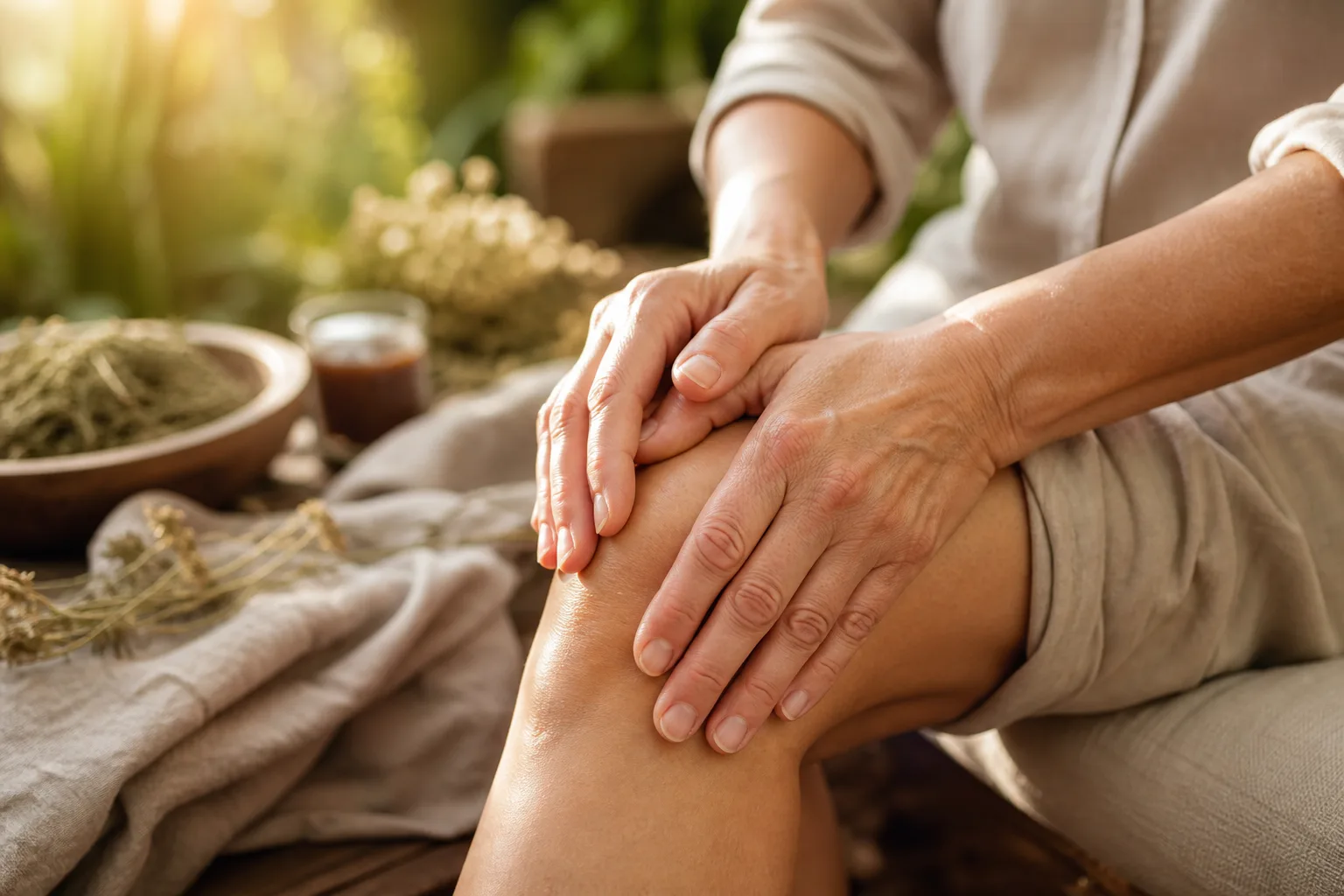
Start with topicals. A good CBD balm or salve applied directly to the sore spot delivers cannabinoids right where you need them, bypasses the bloodstream entirely, and won't get you high at all. Rub it in, wait 30–45 minutes, and check in.
For Whole-Body or Nerve Pain #
Tinctures or sublingual drops are the most practical for daily management. You can dose precisely (count your drops), know what you're taking, and adjust gradually. Place it under your tongue for 60–90 seconds before swallowing to maximize absorption through the mouth's blood vessels.
For Pain That Wakes You Up at Night #
Edibles shine here. Yes, they take longer to kick in — which is why you take them 1–2 hours before bed, not when you're already awake hurting. The longer duration means they carry you through the night. Watch THC doses carefully here; start with 2.5–5mg and never exceed 10mg until you know how it hits you.
For Breakthrough Pain #
Inhaled cannabis is the fastest. Flower (smoked or vaporized) hits in under 15 minutes. Vaporizing at lower temperatures (around 356°F/180°C) preserves more terpenes and is easier on the lungs than combustion. This is the method of last resort when pain is acute and you need relief now.
Microdosing Cannabis for Daily Pain Management #
Microdosing means taking the smallest amount that gives you relief — often much less than you'd expect. The goal is to manage pain without impairment. You can go to work. You can drive. You stay clear.
Why Less Is Often More #
Here's the surprising science: THC works on a bell-shaped dose-response curve for pain. That means low doses reduce pain, but higher doses can actually increase pain sensitivity (called hyperalgesia) in some people. A 2012 study in the Journal of Pain found that 1.29% THC vaporized cannabis reduced neuropathic pain significantly — a dose far lower than what most recreational products contain.
A Practical Microdosing Starting Protocol #
- Start with 1–2.5mg of THC (for THC-containing products) or 10–25mg CBD (for non-intoxicating)
- Take your dose at a consistent time — morning for daytime pain, 2 hours before bed for sleep-disrupted pain
- Wait 3–5 days before evaluating whether it's working. Cannabis pain relief builds with consistent use.
- Increase by 1–2.5mg increments only if needed after 5 days at the same dose
- Keep a pain journal — rate your pain on a 1–10 scale each day, note the dose, note how you feel
Many people find their sweet spot between 2.5–5mg THC (if using THC at all) or 25–50mg CBD for daily pain maintenance.
Cannabis for Arthritis: What the Research Shows #
Cannabis — especially CBD and beta-caryophyllene-rich strains — is one of the most promising plant-based options for arthritis pain. In 2021, the Arthritis Foundation surveyed thousands of arthritis patients and found 79% had used or currently used CBD. Among those using it, 55% reported better physical function and 50% reported reduced stiffness.
Why Arthritis Responds Well #
Arthritis pain is primarily inflammatory — your immune system attacking your joints. CB2 receptors live on immune cells, and activating them reduces the production of inflammatory chemicals (called cytokines) that damage cartilage and cause pain. This is why beta-caryophyllene is particularly interesting for arthritis — it's a dietary CB2 activator that doesn't require any THC to work.
What to Use for Arthritis #
- Topicals for affected joints — apply CBD balm directly to affected knuckles, knees, wrists
- Oral CBD or full-spectrum tincture for whole-body inflammation
- Look for high beta-caryophyllene content — spicy, peppery-smelling flower or oil
- Avoid high-THC products during the day if you need to drive or operate machinery
A Note for Rheumatoid vs. Osteoarthritis #
Both types respond to cannabis, but slightly differently:
- Rheumatoid arthritis (RA) — an autoimmune condition, so CB2's anti-inflammatory action is the main target
- Osteoarthritis (OA) — cartilage wear with some inflammation; both CB1 (pain perception) and CB2 (local inflammation) are relevant
Cannabis for Back Pain: What Works and What Doesn't #
Back pain is one of the most common reasons people turn to cannabis, and the results are real but depend heavily on the type of back pain you have. Metro Detroit physical labor — lifts, ladders, long shifts on concrete — shows up in this category every week. Cannabis may ease the signal; it does not repair a disc or replace physical therapy when you need it.
The Two Types of Back Pain and How Cannabis Fits #
| Type | Description | Cannabis Fit |
|---|---|---|
| Muscle-related | Spasms, tension, strain — the "pulled it wrong" kind | Good fit: myrcene-rich cannabis for muscle relaxation, CBD for inflammation |
| Structural/nerve | Disc herniation, sciatica, nerve compression | Moderate fit: THC + CBD for nerve pain; may not fix the root cause but manages the pain signal |
For Muscle Spasms and Back Tension #
Cannabis acts as a natural muscle relaxant — this is well-established. Myrcene and linalool are the key terpenes here. They work on GABA receptors (your nervous system's calm-down signal) and TRPV1 receptors to reduce muscle tension. Products high in these terpenes, combined with CBD and low-dose THC, can provide meaningful relief for acute back spasms.
For Sciatica and Nerve Root Pain #
This is where THC earns its place. Sciatica (pain radiating from the lower back down the leg, caused by nerve compression) responds better to cannabinoids that work centrally — meaning at the brain and spinal cord level where pain signals process. THC and CBD together, taken consistently, can reduce the subjective intensity of sciatic pain.
Important: Cannabis won't fix a herniated disc. If you have structural back damage, cannabis manages the pain while the underlying problem heals (or while you decide on treatment). Talk to your doctor about what's actually causing your back pain before leaning solely on plant medicine.
Cannabis for Fibromyalgia: Why the Numbers Are Surprising #
Fibromyalgia is where cannabis research gets particularly interesting. A 2019 survey of fibromyalgia patients published in the Journal of Clinical Rheumatology found that 62% of cannabis users rated it as "very effective" for pain — the highest effectiveness rating of any treatment in the survey, outpacing opioids, anti-seizure drugs, and antidepressants that are commonly prescribed off-label.
Why Fibromyalgia Responds to Cannabis #
Fibromyalgia is increasingly understood as a central sensitization syndrome — the brain and spinal cord have their pain amplifiers turned up too high. This makes it extremely hard to treat with drugs that target peripheral inflammation, because the problem isn't inflammation in the joints or muscles — it's in the nervous system's processing.
This is exactly where cannabis shines: THC and CBD work centrally, modulating how the nervous system processes pain signals. The endocannabinoid system literally regulates the "volume" of pain perception, and fibromyalgia patients appear to have dysregulated ECS function (lower anandamide levels, impaired endocannabinoid signaling).
Practical Approach for Fibromyalgia #
- CBD-rich, full-spectrum products for baseline daily pain management (no impairment)
- Low-dose THC (2.5–5mg) for evening/overnight when pain peaks
- Sleep is critical — fibromyalgia pain is dramatically worsened by poor sleep. Cannabis that helps sleep (see our Cannabis and Sleep guide) may break the cycle
- Terpene focus: beta-caryophyllene (anti-inflammatory), linalool (GABA modulation, reduces central excitability), myrcene (TRPV1 desensitization)
- 33% of fibromyalgia patients in that 2019 study stopped using opioid pain medications after starting cannabis — don't do this without medical supervision, but it's a real, documented phenomenon
Cannabis for Nerve Pain (Neuropathy): The Best Evidence We Have #
Neuropathic pain — the burning, shooting, electrical type caused by nerve damage — has the strongest clinical evidence for cannabis treatment of any pain category. The National Academies 2017 report gave neuropathic pain a "conclusive" evidence grade.
What Causes Nerve Pain #
Nerve pain comes from damaged or misfiring nerves sending pain signals when there's no actual tissue injury. Common causes include:
- Diabetic neuropathy — high blood sugar damaging peripheral nerves (legs, feet)
- Chemotherapy-induced neuropathy — chemo drugs that damage nerve fibers
- Post-herpetic neuralgia — nerve pain after a shingles outbreak
- Spinal injury neuropathy — nerve compression or injury from back damage
Why Cannabis Works for Nerve Pain #
Standard pain medications (NSAIDs, acetaminophen) work on inflammation. Nerve pain often doesn't involve significant inflammation — so these drugs don't work well. THC and CBD work directly on the nervous system itself, modulating how damaged nerves fire and how the brain interprets those signals.
THC in particular reduces wind-up — the phenomenon where repeated nerve stimulation causes pain to amplify over time. CBD reduces neuroinflammation (inflammation around nerve tissue) through CB2 and other receptor mechanisms.
Dosing for Nerve Pain #
- Inhalation is fastest for breakthrough nerve pain (vaporizer preferred over smoking for lung health)
- Consistent oral dosing (tincture or capsule) is better for maintenance
- CBD:THC ratios of 1:1 or 2:1 appear to work best for neuropathic pain based on clinical trial data
- Low THC is still effective — don't push doses high assuming more helps more
Using Cannabis to Step Down from Opioids #
Cannabis is not a replacement for opioids — but the data suggests it can help some people reduce opioid doses, and in some cases, stop using them. Research in this area keeps building. A 2019 study in JAMA Internal Medicine found that states with medical cannabis programs had a 6.38% lower opioid prescribing rate per physician among Medicare patients. More recent work goes further: a November 2025 University of Georgia study found that opening a dispensary reduced opioid prescribing significantly — and that an open dispensary had a bigger effect than just having a law on the books. A separate December 2025 paper in JAMA Internal Medicine specifically on adults with chronic pain confirmed the opioid-sparing association. Across updated analyses, reductions in opioid prescribing rates range from 6–16% when medical cannabis is accessible.
To be fair: a February 2026 study in Pain Medicine looked at real-world data and found that most patients who got a cannabis authorization did not dramatically cut their opioid dose. The research picture is mixed. Cannabis is a helpful tool for many — not a guaranteed off-ramp for everyone.
The Important Safety Warning #
Never stop opioids cold turkey, and never start substituting cannabis without telling your doctor. Opioid dependence is physical — your body adapts to the drug and stopping suddenly can cause withdrawal that is genuinely dangerous, especially with fentanyl-class opioids. The responsible use of cannabis here is as a complementary tool that, with medical guidance, may allow a supervised, gradual reduction.
How Cannabis Can Support Opioid Step-Down #
- Reduces the intensity of pain so that lower opioid doses become adequate
- Helps with opioid withdrawal symptoms — particularly anxiety, insomnia, nausea, and restlessness (areas where cannabis has documented benefit)
- Addresses the sleep disruption that drives people to take more opioids at night
- Provides non-opioid pain coverage during dose reduction windows
Who This Conversation Is For #
If you're managing chronic pain on opioids and considering cannabis, have an honest conversation with your prescribing physician. More doctors are now familiar with cannabis as a complementary option. If your doctor isn't open to the conversation, ask for a referral to a pain specialist or an integrative medicine practitioner who is.
Federal Rescheduling: What Schedule III Means for Medical Cannabis Patients #
Cannabis for medical use has officially moved from Schedule I to Schedule III under federal law — as of April 2026, this is done, not pending. On April 28, 2026, the U.S. Department of Justice and DEA published the final rule in the Federal Register (91 Fed. Reg. 31245), placing FDA-approved marijuana-containing drugs and marijuana regulated under state medical cannabis licenses into Schedule III of the Controlled Substances Act.
Here's what that means in plain English, and what it doesn't mean:
| What Changed | What Stayed the Same |
|---|---|
| State-licensed medical cannabis is now Schedule III at the federal level | Recreational/adult-use cannabis remains Schedule I for now |
| Medical cannabis operators no longer subject to Section 280E tax restrictions (tax year 2026 forward) | Employment drug testing policies are unchanged |
| Federal criminal risk for state-compliant medical patients is further reduced | Access for patients looks the same day-to-day — state dispensaries still operate under state law |
| Research barriers for Schedule I substances no longer apply to medical cannabis | Broad rescheduling of all marijuana is still pending; a hearing is scheduled for later in 2026 |
What this means if you're a Michigan medical cannabis patient: your day-to-day access and the products you can buy haven't changed. You still shop at licensed state dispensaries. The bigger shifts are on the business and research side — more research funding will flow into cannabis, and medical dispensaries get real tax relief. Over time, that means more clinical data and potentially lower prices.
The symbolic weight matters too. Schedule I means "no accepted medical use." Schedule III means the federal government now officially acknowledges that cannabis has legitimate medical applications. That's a long time coming.
What to Look for in Clean Cannabis (and Why It Matters More for Chronic Users) #
If you're using cannabis daily for pain, what's IN the product matters more than it does for occasional recreational use. Chronic exposure means any contaminants — pesticides, mold, heavy metals — are hitting your system consistently.
What to Look for on a Lab Report #
Every legitimate cannabis product sold in Michigan has a Certificate of Analysis (COA) from an independent lab. Here's what to check:
| Test | What It Means | What You Want |
|---|---|---|
| Potency (cannabinoid profile) | THC, CBD, CBG, CBN percentages | Accurate to what's labeled |
| Terpene profile | What terpenes and how much | Present — especially if you're choosing for pain terpenes |
| Pesticide residue | 60+ pesticide compounds tested | "Pass" / Not detected |
| Heavy metals | Lead, arsenic, mercury, cadmium | "Pass" / Below limits |
| Microbials | Mold, yeast, E. coli, salmonella | "Pass" |
| Residual solvents | Leftover extraction chemicals (extracts only) | "Pass" / Not detected |
Why Organic and Sun-Grown Matters #
Cannabis grown outdoors in living soil with natural inputs tends to have richer terpene profiles than indoor conventionally grown flower. Sunlight drives terpene production — it's the plant's natural defense against UV and pests. More terpenes means more of the pain-relevant compounds like beta-caryophyllene, myrcene, and linalool.
Conventionally grown cannabis, especially indoor operations using heavy nutrients and synthetic pesticides, may test cleaner for microbes but often has thinner terpene profiles. For pain management, you want the full chemical complexity of the plant — not a neutered version of it.
At Divine Toke, our sun-grown organic flower is grown in living soil without synthetic pesticides, and every batch is independently lab-tested. That's not marketing — it's a baseline commitment to the people using our plant every day for their health.
Dosing Guidance and Common Mistakes #
The most common mistake with cannabis for pain is either starting too high and having a bad experience, or giving up too early because the effect didn't show up fast enough. Here's the practical breakdown.
Starting Dose Guide by Method #
| Method | Starting Dose | Wait Before Re-dosing | Increase Schedule |
|---|---|---|---|
| CBD tincture | 10–25mg | 2 hours | Add 10mg after 5 days if needed |
| THC tincture | 2.5mg | 2 hours | Add 1–2.5mg after 5 days if needed |
| Edible (THC) | 2.5–5mg | 2+ hours (edibles are slow) | Add 2.5mg after 5–7 days |
| Inhaled flower | 1–2 small puffs | 15 min | Adjust by puff count |
| Topical | Apply a grape-sized amount | 45–60 min | Can apply every 4–6 hours |
The 7 Most Common Dosing Mistakes #
- Eating an edible and redosing because "nothing happened" — the most classic error. Edibles take 45–120 minutes. People eat twice, then it hits hard and they panic.
- Starting with high-THC recreational products — 20–30% THC flower is not pain medicine. Start low, use medical ratios.
- Expecting immediate relief from oral products — CBD tinctures and edibles need 2–4 weeks of consistent use to build up and stabilize ECS function.
- Using the same product for years without tolerance breaks — tolerance builds. Every 4–8 weeks, take 2–3 days off.
- Ignoring terpene profiles — buying purely based on THC percentage misses most of the therapeutic value.
- Using cannabis for pain while heavily caffeinated — caffeine is a vasoconstrictor and stimulant that can antagonize the relaxation response.
- Not tracking doses and effects — keep a simple journal. Pain rating, dose, time, and notes. You'll spot patterns fast.
Drug Interactions and When to Talk to Your Doctor #
Cannabis is not risk-free, and it does interact with several common medications. If you're on any prescription drugs, this section is important.
Key Drug Interactions #
| Medication Type | Examples | The Interaction | What to Watch |
|---|---|---|---|
| Blood thinners | Warfarin (Coumadin) | Both CBD and THC inhibit CYP2C9, raising warfarin blood levels; effect is dose-dependent — low doses may have minimal impact, higher doses can raise INR significantly | Increased bleeding risk — monitor INR closely, especially when changing doses |
| Blood pressure meds | Beta-blockers, ACE inhibitors | Cannabis lowers blood pressure; additive effect | Dizziness, fainting on standing |
| Sedatives | Benzodiazepines, sleep aids | Additive CNS depression | Over-sedation, breathing depression (rare but real) |
| Seizure medications | Clobazam (Onfi) | CBD raises clobazam blood levels | Increased sedation, monitor with neurologist |
| Diabetes medications | Metformin, insulin | THC affects glucose metabolism | Blood sugar fluctuations |
| Antidepressants | SSRIs, SNRIs | Limited interaction but serotonin activity overlap | Discuss with psychiatrist |
When You Must Talk to Your Doctor First #
- You're on warfarin or any blood thinner
- You have heart disease or arrhythmia
- You're pregnant or breastfeeding
- You have a history of psychosis or schizophrenia (THC may be contraindicated)
- You're under 25 years old (brain development concerns with heavy THC use)
- You're currently on opioids and want to reduce (this needs medical supervision)
How to Start the Conversation #
Many people feel awkward bringing up cannabis with their doctor. Keep it simple: "I'm interested in exploring cannabis for pain management. Can we talk about whether it's appropriate given my current medications?" Most physicians in Michigan are increasingly familiar with this conversation.
Delta-8, HHC, and Synthetic Cannabinoids for Pain — What You Need to Know #
Short answer: skip them. Delta-8 THC, HHC (hexahydrocannabinol), THC-O, THCP, and similar compounds get marketed for pain relief because they sound like THC but are sold in states where cannabis is restricted. There are real problems with all of them.
What These Products Are #
Delta-8 THC is a naturally occurring cannabinoid, but it exists in hemp plants at tiny concentrations. The delta-8 in most products is chemically converted from CBD using acids — a process that can leave behind harmful byproducts if not done under controlled lab conditions. HHC and other analogs are fully synthetic or semi-synthetic. They are not natural compounds you'd find in a well-grown cannabis plant.
Why They're a Pain-Relief Gamble #
| Concern | Details |
|---|---|
| No clinical evidence for pain | Zero published RCTs or clinical trials on delta-8, HHC, or THC-O specifically for chronic pain |
| Contamination risk | Unregulated synthesis can leave acid residues, heavy metal catalysts, and unknown byproducts — the FDA documented 2,362 adverse event reports for delta-8 in one 14-month period alone |
| No COA standards | These products aren't sold through licensed dispensaries in most cases — no mandatory independent lab testing |
| Increasingly restricted | States including Wisconsin, and others, have banned or restricted delta-8, HHC, THC-O, and THCP. The regulatory ground keeps shifting |
| Pediatric exposure spike | The FDA's adverse event data: 41% of reported delta-8 cases involved children; 70% of all cases required healthcare evaluation |
The Bottom Line #
If you're looking for real pain relief and you have access to a licensed dispensary — in Michigan or any legal state — you have actual full-spectrum flower, tested tinctures, and quality topicals available to you. Those products have evidence behind them, known cannabinoid profiles, and mandatory lab testing.
Delta-8 and its cousins fill a gap for people in restricted states. If you're in a state with licensed cannabis, there's no good reason to use unregulated chemically-converted products for pain.
Frequently Asked Questions #
Q: Can I use cannabis for pain without getting high? #
Yes — and this is one of the most important things to understand about cannabis for pain. CBD and CBG have no intoxicating effects at any dose. Topicals applied to the skin don't enter the bloodstream meaningfully. Even low-dose THC products (2.5mg or less) cause little to no perceptible impairment in most adults. The key is choosing the right product — not all cannabis gets you high, and the ones that help most with inflammation and daily pain often have very low or zero THC.
Q: How long does it take for cannabis to work for chronic pain? #
For acute pain, inhaled cannabis works in 5–15 minutes. For chronic pain as a long-term treatment, expect 2–4 weeks of consistent use before you see significant change. Chronic pain rewires your nervous system over time, and the endocannabinoid system needs consistent support to recalibrate. Don't judge cannabis after one or two doses — give it at least 3 weeks at a consistent dose before deciding if it works.
Q: What's better for pain: CBD or THC? #
Both, used together in the right ratio. CBD works best for inflammation and daytime pain without impairment. THC is more powerful for severe pain and nerve pain, but comes with psychoactive effects above certain doses. Full-spectrum products containing both, along with minor cannabinoids and terpenes, consistently outperform isolates in pain research. For most people managing daily chronic pain, a CBD-dominant product with a small amount of THC (like 20:1 or 10:1 CBD:THC) is a practical starting place.
Q: Will cannabis show up on a drug test if I use it for pain? #
Yes — standard workplace drug tests detect THC metabolites, and they don't distinguish between medical and recreational use. Even CBD-dominant products made from cannabis (not hemp) may contain trace THC that accumulates with daily use. If drug testing is a concern in your job, this is a real consideration to factor in. Hemp-derived CBD isolate is less likely to cause a positive test, but the research on this is still incomplete. Talk to your employer or HR department before starting cannabis use if testing is a factor.
Q: Is there a cannabis product that helps with pain but lets me still drive and work? #
Yes — CBD topicals and CBD-dominant oral products (10:1 ratio or higher CBD:THC) are the most practical for people who need to stay fully functional. Topicals have zero systemic effect. Oral CBD at typical doses (25–50mg) does not impair driving ability. Low-dose full-spectrum tinctures (under 5mg THC) may cause mild effects in some people but not in others. The honest answer: don't drive right after starting a new product until you know how you respond.
Q: Can cannabis help me get off opioids? #
Some people have been able to reduce or stop opioid use with cannabis support, but this must always be done under medical supervision. Multiple studies now show the link: the 2019 JAMA Internal Medicine study found 6.38% lower opioid prescribing rates in medical cannabis states; a November 2025 University of Georgia study found opening dispensaries produced stronger prescribing reductions than passing a law alone; and a December 2025 JAMA Internal Medicine paper confirmed the opioid-sparing association specifically in adults with chronic pain. Updated analyses put the range at roughly 6–16% reductions in opioid prescribing. That said, a 2026 real-world study found many individual patients didn't dramatically cut their doses after getting a cannabis authorization — so it works for some, not all. Opioid withdrawal can be physically dangerous — never stop suddenly. Cannabis can help manage some withdrawal symptoms and reduce the pain intensity that's driving opioid use. Talk to your prescribing physician, or seek out a pain management specialist who integrates cannabis into treatment planning.
Q: Is cannabis safe for seniors with arthritis? #
Yes, with appropriate caution about dose and drug interactions. Seniors are one of the fastest-growing demographics using cannabis for pain, and the Arthritis Foundation has taken a formal supportive position on CBD for arthritis. Key considerations for seniors: start with very low doses (1–2.5mg THC, 10mg CBD), be extra careful with fall risk (THC can cause dizziness), check for interactions with existing medications, and prioritize topicals and CBD-dominant products to minimize any impairment risk.
Q: Does smoking cannabis help with pain, or is it bad for you? #
Inhaled cannabis does provide fast, real pain relief — but combustion (burning plant material) produces some of the same harmful byproducts as cigarette smoke. If you need inhalation for speed of relief, a dry herb vaporizer at lower temperatures (around 356–392°F / 180–200°C) preserves most cannabinoids and terpenes while dramatically reducing combustion products. For chronic daily use, oral or topical methods are gentler on the lungs.
Q: What's the difference between hemp CBD and cannabis CBD for pain? #
Chemically, CBD is CBD — the molecule is identical whether it comes from hemp or cannabis. The practical difference is in what accompanies it. Hemp-derived CBD products are federally legal, widely available, but often contain minimal terpenes and minor cannabinoids. Cannabis-derived CBD products (from dispensaries) can be full-spectrum with a richer terpene and minor cannabinoid profile — which is why they often work better. For mild to moderate pain, hemp CBD can be a good starting point. For serious chronic pain, a full-spectrum cannabis product from a reputable dispensary is likely to outperform hemp isolate.
Q: Can cannabis cause pain to get worse? #
In some cases, yes — especially with high doses of THC. High-THC use can cause a phenomenon called cannabinoid hyperalgesia (increased pain sensitivity) in regular heavy users. Cannabis-induced anxiety can also heighten pain perception — anxiety and pain are deeply linked neurologically. This is why starting low and staying low matters. If you find cannabis is increasing your anxiety or pain, lower the dose, switch to a CBD-dominant product, or take a short break.
Q: How do I know if a cannabis product is actually good quality for pain? #
Three things: a third-party lab Certificate of Analysis (COA), a meaningful terpene profile, and honest ingredient lists. A COA shows you what's actually in the product — potency, pesticides, heavy metals, microbials. A terpene profile shows you which pain-relevant terpenes are present and at what levels. Honest ingredient lists mean no mystery additives, cutting agents, or artificial terpenes. At Divine Toke, every batch comes with a full COA, and our sun-grown organic flower preserves the natural terpene complexity the plant produces when it's grown right.
Ready to Try Cannabis for Pain? #
If you've been dealing with pain that's eating into your quality of life, cannabis is worth an honest conversation — with yourself, and with your healthcare provider. It's not a miracle. It won't fix structural damage or replace all medications for everyone. But the evidence for real, meaningful pain reduction is substantial, and the risk profile — especially for topicals and CBD-dominant products — is very low.
At Divine Toke, we grow sun-grown, organic cannabis in Michigan's natural light for people shopping Michigan's licensed market — including Detroit-area adults managing day-to-day pain. Our flower is full-spectrum by nature, rich in the terpenes and minor cannabinoids that matter most for wellness. If you're curious to explore what's in your medicine cabinet, we'd be honored to be part of that conversation.
Dive deeper:
- The Entourage Effect: Why Whole-Plant Cannabis Beats Isolates
- Minor Cannabinoids Explained: CBG, CBN, THCV, CBC
- Cannabis and Sleep: How CBN, THC, and Terpenes Help You Rest
This article is for educational purposes only and is not medical advice. Always consult your healthcare provider before starting any new wellness routine, especially if you are on prescription medications or managing a chronic health condition.
Grown in Detroit. Shipped to your door.
Small-batch, sun-grown cannabis cultivated in living soil. Mail-order shipping to all 50 states.