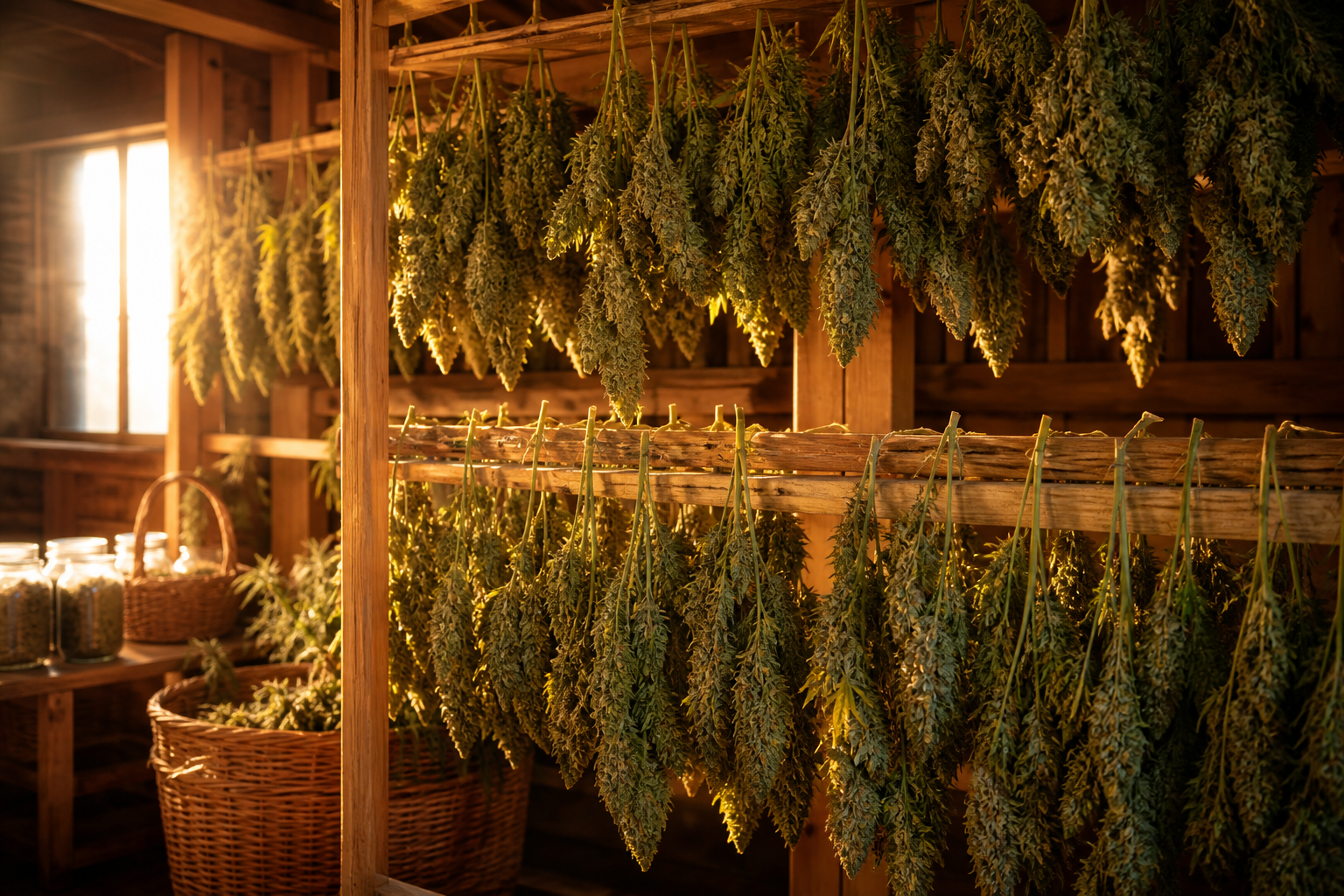
Curing Cannabis: The Art of Patience That Makes Great Flower
Cannabis curing is the slow jar stage after drying. Learn why patience smooths smoke, how to judge a good cure, and what Michigan farms watch for.
Questions this article answers
- what is cannabis curing
- why does curing make weed smoother
- how to tell if cannabis was cured well
- drying vs curing cannabis
- how long to cure cannabis

Head Cultivator
On this page
Great flower is not finished at harvest. The last quiet weeks — drying, then curing — decide whether the smoke is smooth or harsh, rich or grassy. Patience is the craft.
At Divine Toke, a Detroit, Michigan sun-grown organic cannabis farm, that last stretch is part of the same regenerative story as living soil and outdoor light. The regenerative cannabis process does not end when scissors hit the stem. This guide answers one consumer question: what is cannabis curing, why does patience matter, and how can you tell flower was cured well?
For the deep terpene chemistry angle — why rushed dry flattens aroma — see our sibling post on how curing protects terpenes. Here we stay on the craft: dry versus cure, moisture targets, burping, chlorophyll fade, smoke feel, and Michigan harvest timing.
What Is Cannabis Curing? #
Cannabis curing is the slow, sealed stage after drying when flower sits in airtight containers so leftover moisture equalizes and harsh plant notes soften over weeks. Drying removes most of the water. Curing finishes the job gently so buds keep structure, smell, and a smoother burn.
Leafly's drying and curing guide (updated May 2025) frames it this way: drying is the open-air moisture drop; curing stops that rapid loss inside jars so flavor can develop while chlorophyll's grassy character fades. Grow Weed Easy's drying and curing tutorial adds the practical payoff — denser feel, cleaner smell, and less harsh smoke after weeks in jars.
Curing is not a magic machine. It is time plus controlled humidity. Think of it like resting dough after kneading, or aging a whiskey barrel: the hard work already happened; the quiet wait is what rounds the edges.
| Stage | What it is | Typical length | Main goal |
|---|---|---|---|
| Harvest | Cut mature plants | One window | Capture ripe resin |
| Dry | Hang or rack in controlled air | About 2–7 days (setup-dependent) | Remove bulk water safely |
| Cure | Seal in jars / airtight vessels | 2–4 weeks minimum; often longer | Equalize moisture, soften harshness |
| Store | Cool, dark, stable humidity | Months to years if done right | Hold quality |
A 2026 Journal of Cannabis Research review on crop-to-shop stability puts post-harvest handling — drying, moisture, oxygen, light, and packaging — at the center of chemical stability and product quality. Patience is not romance. It is quality control.
What curing does *not* mean #
- It does not mean baking, microwaving, or sun-cooking flower to "finish" it faster
- It does not replace a careful dry — wet flower in a sealed jar is a mold risk, not a cure
- It does not invent new cannabinoids from nothing — it finishes what the plant already made
- It does not fix genetics or a bad grow — cure improves a good harvest; it cannot invent one
Why consumers should care even if they never grow #
Most people reading this will never hang a branch. You still pay for the cure — or for its absence — every time you open a jar. Dispensary flower that smells loud and burns clean usually spent real time in controlled dry and cure rooms. Flower that smells like a hay bale usually did not. Asking "how long did this cure?" is as fair as asking "was this tested?"
That is the Divine Toke lens: sun-grown organic cannabis in Michigan is not only about outdoor light. It is about refusing to shortchange the last quiet weeks. Generic farm craft, not a secret schedule — patience you can smell.
Drying vs Curing: What's the Difference? #
Drying removes the bulk water from freshly cut plants so stems snap and outsides feel dry; curing then locks flower in airtight containers so remaining moisture moves from the core outward and quality settles. Skip or rush either step and you feel it in the throat.
Leafly notes freshly harvested plants can lose a large share of their weight as water leaves, plus trim weight from leaves and stems. A dry that is too fast leaves a dry shell with a wet core. A dry that is too slow invites mold. The classic check: bend a small stem — if it snaps, you are closer to jar time; if it bends, give it another day.
| Factor | Drying | Curing |
|---|---|---|
| Environment | Open air / hang / rack | Sealed jar or vessel |
| Moisture move | Bulk water leaves the plant | Residual moisture equalizes inside the bud |
| Typical time | Days | Weeks (often 2–8+) |
| Main risk | Mold if too wet/slow; harshness if too hot/fast | Mold if jar RH stays too high; cardboard feel if too dry |
| Consumer feel | Flower becomes smokable at all | Flower becomes smoother and more "itself" |
The stem-snap handoff #
- Hang branches or rack trimmed buds in a dark space
- Keep air gentle — circulate the room, not blast the buds
- Check small stems daily after day two
- When stems snap and buds feel dry outside, trim (if needed) and jar
- Start the cure — do not wait until flower is bone-dry dust
Grow Weed Easy targets roughly 60–70°F and 50–60% relative humidity for drying, then about 55–62% humidity inside jars for curing. Leafly's band is similar: 60–70°F and 55–65% RH in the dry room, then the same humidity band inside curing containers.
That handoff matters for sun-grown Michigan flower too. Outdoor plants finish with weather pressure — our mid-summer harvest preview covers when outdoor crops usually land. Once cut, the dry room has to be calmer than a humid October barn.
Wet trim vs dry trim (quick plain-English note) #
Wet trim means cutting sugar leaves off while the plant is still fresh, then drying individual buds on racks. Dry trim means hanging bigger branches first, then trimming after the dry. Leafly notes wet trim often dries faster because less plant material hangs on. Neither path skips curing. Both still need the jar stage if you want smooth smoke.
Compare the two like woodworking: you can plane a board green or after it seasons. Timing changes the workflow. It does not cancel the need for a careful finish.
Why Patience Matters for Smooth Smoke #
Patience matters because curing gives chlorophyll and other "green plant" compounds time to break down while moisture equalizes — so smoke tastes less like cut grass and hits the throat more gently. Rush the dry with heat, and you lock in harshness. Skip the jar weeks, and you often keep that hay note.
Chlorophyll is the green pigment plants use to capture light. Freshly cut flower still carries that lawn-mower character. Leafly's curing section is blunt: without curing, weed can taste like a freshly cut lawn; curing keeps chlorophyll breakdown going so flower smokes smoother. Grow Weed Easy lists the same craft wins — less harshness, better smell, and a more pleasant session after a real cure.
A 2025 Plants study on hemp postharvest drying and curing measured color and moisture through dry and cure. Curing raised moisture a bit as interiors equalized (about 3.3% to 13.6% depending on setup), and drying/curing reduced greenness — a lab echo of what your nose already knows when the grassy edge fades.
What patience buys you #
- Smoother inhale — less scratch from unfinished green plant matter
- Cleaner burn feel — moisture balanced instead of wet core / dry shell
- Deeper aroma — room for the flower's real scent to show (terpene detail in how curing protects terpenes)
- Safer storage — water activity in a mold-safe band (more below)
| Rush path | Patient path |
|---|---|
| Hot dry / oven / sun bake | Cool, dark, moderate RH dry |
| Jar too early while wet | Stem snap first, then jar |
| Smoke after 3 days dry | Smoke after weeks of cure |
| Hay / ammonia / harsh hit | Strain-true smell, softer throat |
Patience is not about waiting forever for a miracle. Most of the everyday improvement shows in the first two to four weeks in jars, with many growers preferring four to eight weeks for fuller flavor, per Leafly. Some batches keep improving for months. The point for a Detroit shopper is simpler: if flower smells like a lawn bag, someone skipped the wait.
Chlorophyll fade in everyday language #
Think of a cut bouquet left in a vase. Day one smells green and sharp. A week later the sharp green softens — for better or worse. Cannabis cure is a controlled version of that change, aimed at keeping resin quality while the grassy edge backs off. Grow Weed Easy ties that breakdown to better taste and less harshness. You are not waiting for the plant to "grow more THC in the jar." You are waiting for the harsh green story to quiet down.
A 2024 drying study in Plants also showed drying method can change mold risk and how well aroma compounds hold — another reason "any dry will do" is bad advice. Slow and controlled beats fast and hot for craft flower.
Moisture Targets for a Safe, Quality Cure #
Aim for cool temps, jar humidity near 55–65% RH, and water activity in the industry sweet spot of about 0.55–0.65 — wet enough to keep flower from turning to dust, dry enough that mold has a hard time growing. Numbers beat vibes when mold is the alternative.
ASTM International's cannabis committee published two water-activity standards that still shape industry talk:
- ASTM D8196 — practice for measuring water activity ((a_w)) in cannabis flower
- ASTM D8197 — specification for keeping dry cannabis flower in an acceptable (a_w) range of 0.55 to 0.65
Water activity measures free water available for microbes — not the same as "how wet it feels." ASTM messaging notes that about 0.65 is widely treated as a ceiling before mold risk climbs hard, while going too dry (below roughly 0.50) can flatten aroma as volatile oils dry out. In jar language, that maps to roughly 55–65% relative humidity inside the sealed space — the same band Leafly and Grow Weed Easy teach for curing containers.
| Target | Typical range | Why it matters |
|---|---|---|
| Dry-room temp | 60–70°F | Slow, even dry without cooking terps |
| Dry-room RH | ~50–65% | Fast enough to beat mold, slow enough for quality |
| Jar RH during cure | ~55–65% (many aim 58–62%) | Mold-safe zone that still feels alive |
| Water activity ((a_w)) | 0.55–0.65 (ASTM D8197) | Industry mold/quality band |
| Jar fill | ~⅔ to ¾ full | Air space + no crushed buds |
Practical moisture checks without a lab #
- Hygrometer in the jar — cheapest truth-teller for RH
- Squeeze test — slight spring back, not mush, not powder
- Nose test — clean flower smell; ammonia means too wet
- Humidity pack — many growers use 58% or 62% packs once the cure is in range (optional tool, not magic)
The 2025 hemp drying and curing study also reported that hot-air drying dropped moisture to a safe-storage level (~6% moisture) quickly and cut yeast and mold counts, while ambient drying took about a week. Commercial farms mix tools; home growers usually stick to slow ambient dry + glass jars. Either way, the consumer lesson is the same: moisture control is the difference between craft and compost.
Moisture content vs water activity (one careful distinction) #
Moisture content is how much water is in the flower by weight. Water activity is how much of that water is available for mold and microbes. Two jars can feel similar in the hand and still differ in risk if free water differs. That is why ASTM pushed water activity standards for flower in the first place — safety, quality, and fair weight all touch moisture.
You do not need a lab meter at home to benefit from the idea. A jar hygrometer in the 55–65% band is the craft proxy. Labs and serious producers use (a_w) because it predicts microbial risk better than "kinda dry."
A 2026 crop-to-shop stability review also flags water activity and packaging permeability as decisive for keeping chemical profiles stable after harvest. Dry room → jar → package is one continuous moisture story.
How Burping Jars Works During the Cure #
Burping means opening curing jars on a schedule to release extra moisture and refresh the air, then sealing them again — daily at first, then less often as humidity stabilizes. Without burps, wet flower can turn anaerobic (low-oxygen) and smell like ammonia. With smart burps, the cure stays in the safe RH band.
Leafly recommends opening containers once or twice a day for a couple of minutes during the first week, then about once every few days after that. If you smell ammonia, leave the lid off longer — the flower was still too wet. Grower education sites such as Royal Queen Seeds' burping guide and FloraFlex's burping overview echo the same pattern: frequent early exchanges, then taper.
Week-by-week burp rhythm (common craft schedule) #
| Week | How often | Rough open time | What you're watching |
|---|---|---|---|
| Week 1 | 1–2× daily | A few minutes | RH spike, ammonia, soft buds |
| Week 2 | Every 2–3 days | 5–15 minutes if RH high | Stabilizing mid-50s to mid-60s RH |
| Weeks 3–4 | Every few days → weekly | Brief | Steady RH, richer smell |
| Week 5+ | Weekly or less | Brief / as needed | Long cure / storage |
Burping steps that actually help #
- Open the jar fully — do not just crack the lid for a second
- Smell — clean flower good; ammonia or musty = too wet
- If RH is high, leave open longer or pour buds onto a tray briefly
- Gently rotate buds so moisture equalizes (no crushing)
- Reseal and store cool and dark
Glass mason jars win for a reason. Plastic bags are not airtight the same way and can lend off-flavors — Leafly calls plastic bags a poor curing vessel. Dark cabinets beat sunny windowsills. UV and heat chew quality during the same weeks you are trying to protect it.
Burping is farm craft you can also "taste" as a buyer. Flower that spent real time in managed jars rarely smells like a damp gym bag. Flower that was sealed wet and forgotten often does.
Why farms burp (and why shops still care) #
During early cure, moisture leaves the bud core and raises humidity in the sealed headspace. Fresh air exchange dumps that spike before mold gets a runway. It also refreshes oxygen so the jar does not sit in a stale, wet pocket. Commercial rooms may use larger vessels, humidity packs, or climate control instead of hand-burping every quart jar — the job is the same: keep free water in the safe band while chemistry settles.
If a brand brags about "same-week harvest to shelf," ask what that means for dry and cure time. Speed can be honest logistics. Speed can also be a harsh jar with a pretty label.
How to Tell Flower Was Cured Well #
Well-cured flower smells like itself — pine, citrus, gas, earth — not hay or ammonia; feels springy, not mushy or dusty; and smokes smoother than rush-dried weed with the same genetics. You do not need a lab badge. You need a nose, fingers, and an honest first hit.
Buyer guides and grower education (including Leafly's drying/curing FAQ and cure-check roundups such as Mood's cure-done checklist) converge on the same sensory checklist. Use it at the jar, at the counter, or at home.
The 60-second cure check #
| Sense | Good cure | Weak / rushed cure |
|---|---|---|
| Smell | Loud, strain-true aroma | Hay, grass, ammonia, must |
| Touch | Dry outside, slight bounce | Spongy wet or crispy dust |
| Stem | Small stems snap | Stems bend like soft twig |
| Look | Color settled, not neon-lawn wet | Overly bright green + wet shine |
| Smoke | Smoother throat, cleaner flavor | Scratchy, grassy, uneven burn |
Step-by-step judgment #
- Open the jar and wait one breath — first smell tells truth
- Squeeze gently — should rebound slowly; wet sponge = problem
- Check a small stem — snap beats bend for finished dry/cure
- Look for mold — white fuzz, spider webbing, or black spots means stop
- Taste a small amount — harsh grass often means incomplete cure
Color alone is a weak signal. Cure can mute the "fresh cut" green look as chlorophyll fades — something the 2025 Plants postharvest paper also tracked as reduced greenness after dry and cure. Trust aroma and smoke more than Instagram greens.
If you care about why the smell blooms after a patient cure, that is the terpene story in how curing protects terpenes. If you care about whether the jar was finished with craft, use the checklist above. Both questions matter. They are not the same question.
What "well cured" feels like in a session #
- First inhale is flavor-forward, not lawn-forward
- Throat scratch is lower than the same genetics smoked green
- Ash and burn behave more evenly when moisture is balanced (not a perfect science, but a useful clue)
- Effects often feel "cleaner" subjectively — smoother delivery changes the whole experience even when lab totals barely move
That last point matches the 2025 postharvest finding that total cannabinoids stayed largely stable through dry and cure while other quality markers changed. Potency theater on a label is not the same as a finished jar.
Common Cannabis Curing Mistakes #
The most common curing mistakes are rushing the dry with heat, jarring flower that is still too wet, overdrying until buds turn to cardboard, curing in plastic, and leaving jars in light or heat. Each one trades weeks of plant work for a worse session.
Industry grow guides and mistake roundups — including Leafly, Grow Weed Easy, and cultivation troubleshooting pieces such as FloraFlex on curing challenges — keep hitting the same failure modes.
| Mistake | What goes wrong | Better move |
|---|---|---|
| Oven / microwave / hot attic dry | Harsh smoke, flat smell | Cool dark dry, 60–70°F band |
| Jar while stems still bend | Mold, ammonia smell | Wait for stem snap |
| Never burp week one | Trapped moisture, anaerobic funk | Daily burps early |
| Overdry to dust before jars | Cardboard feel, hard to revive fully | Jar when outside dry, core still has a little life |
| Cure in plastic bags | Oxygen leak + plastic taste risk | Glass (or true airtight vessel) |
| Bright light / warm shelf | Faster quality fade | Cool, dark cabinet |
| Ignore RH above ~65% | Mold risk climbs | Longer open time / more dry time |
| Skip cure entirely | Grassy harsh smoke | Minimum 2–4 weeks in jars |
Mold and ammonia — red flags, not "character" #
Leafly is clear: an ammonia odor when you open a jar means buds were not dry enough and anaerobic bacteria are at work. That is not "funky craft." That is a stop sign. Leave lids off, dry further, and never normalize musty jars.
A 2024 Plants paper on cultivar-specific drying also showed traditional drying can leave flower vulnerable to molds such as Alternaria and Botrytis when conditions slip — another reason slow and controlled beats "set it and forget it" in a humid room.
Buyer-side mistakes #
- Judging only by loud THC percentage on the label
- Assuming bright green always means fresher or better
- Confusing wet sticky with "well cured" (sticky can be resin — or unfinished moisture)
- Skipping the smell test because the bag looks pretty
Sun-grown organic flower from a farm that cares about living soil still needs this finish. Soil craft and cure craft are teammates — see our living soil cannabis guide for the root-zone half of that story.
Quick recovery notes (not miracles) #
- Slightly overdry: a 58–62% humidity pack can help softens texture; aroma may not fully return
- Slightly too wet: longer open time, tray time, or more dry days before resealing
- Ammonia / mold: do not "burp it better" into your lungs — that jar failed safety, not just flavor
- Hay smell after two weeks: keep curing if RH is safe; if it never changes, the dry was likely too hot/fast
Recovery has limits. Heat-blasted flower rarely becomes connoisseur flower later. Prevention beats rescue.
Michigan Harvest Timing and the Fall Cure Window #
Most Michigan outdoor sun-grown cannabis finishes in a late-September to mid-October window — and that same cool, humid fall weather is exactly why careful drying and curing matter so much here. Harvest timing sets the clock. Fall air tries to ruin the finish.
Our mid-summer harvest preview walks the July-to-October arc in detail. The short version for curing: outdoor photoperiod plants usually land near first frost risk, and MSU Extension frost tables put typical first fall frost roughly around late September into October depending on USDA zone (earlier up north, later in warmer southern Lower Peninsula zones). That is a range, not a Divine Toke promise for any single cultivar or year.
| Month (typical MI outdoor) | Farm focus | Cure implication |
|---|---|---|
| July | Mid-season build / early flower | Cure rooms get prepped, not filled |
| August | Flower fill | Watch mildew pressure rising |
| September | Ripen + weather calls | Harvest windows open; dry space must be ready |
| Late Sept–mid Oct | Peak outdoor chop window | High humidity + cool nights = mold risk if dry is sloppy |
| Oct–Nov | Dry + cure + store | Jar patience while outdoor weather gets wetter |
Why Michigan air fights a lazy cure #
- Cool nights raise relative humidity around dense outdoor buds
- Wet stretches invite Botrytis (bud rot) before and after chop
- Rushing a hot dry to "beat the weather" often creates harsh flower
- Patient farms move cut plants into controlled dry space — not a damp shed hope
NCAT's hemp life-cycle materials treat flowering and harvest maturity as distinct stages — useful framing even when you are talking adult-use flower, not fiber hemp. Maturity first. Then dry. Then cure. Calendar panic is how grassy jars happen.
Michigan terroir — soil, season, lake-effect weather — shapes how flower finishes in the field. We cover that land story in Michigan terroir: how the land shapes flower. Curing is the indoor half of the same honesty: the plant did its outdoor work; the jar has to respect it.
At Divine Toke in Detroit, that means treating post-harvest like part of regenerative farming, not an afterthought. We will not invent fake room specs or secret day counts here. The principle is public and plain: slow dry, smart moisture, real time in the jar.
A simple Michigan harvest → cure mental model #
- Watch the plant and the forecast — resin maturity plus a workable dry window
- Cut when both say yes — not because July felt long
- Move into controlled dry space — do not gamble on a wet barn
- Jar on stem snap — not on panic
- Burp and wait — weeks, not a weekend
Compare outdoor sun-grown and indoor factory timelines in our sun-grown vs indoor cannabis guide if you want the bigger farming contrast. Indoor rooms can fake seasons. Michigan outdoor farms cannot fake October humidity. Cure discipline is how outdoor quality survives the weather that grew it.
Frequently Asked Questions #
How long should cannabis cure before it smokes well? #
Most flower needs at least two to four weeks in jars after a proper dry before it smokes at its best. Leafly notes many people prefer four to eight weeks, and some cultivars keep improving for months. The first weeks deliver most of the everyday smoothness gain.
What's the difference between drying and curing cannabis? #
Drying removes bulk water in open air until stems snap; curing seals that flower so leftover moisture equalizes and harsh green notes soften. They are sequential, not synonyms. Skip the dry and jars mold. Skip the cure and smoke stays grassy.
Why does under-cured weed taste like hay or grass? #
That lawn taste is unfinished chlorophyll and rushed moisture work showing up in the inhale. Leafly compares uncured weed to a freshly cut lawn. Time in the right humidity band lets that green edge fade.
What humidity should curing jars stay at? #
Keep jar relative humidity roughly between 55% and 65%, with many growers aiming near 58–62%. That lines up with grower guides and with ASTM D8197's water-activity band of 0.55–0.65 for dry cannabis flower. Above the high end, mold risk rises.
How often should you burp cannabis jars? #
Burp once or twice daily in week one, then every few days, then weekly as RH stabilizes. Leafly's burping guidance matches that taper. If you smell ammonia, open longer — the flower is still too wet.
How can you tell if cannabis was cured well? #
Smell for strain-true aroma (not hay or ammonia), feel a slight spring without mush, and notice a smoother smoke than rush-dried flower. Small stems that snap and a clean jar nose are strong field tests. Bright green alone is not proof of a good cure.
Can you over-cure cannabis? #
Long cures rarely "ruin" stable flower the way wet mold does, but endless open-air aging, heat, light, or bone-dry storage will fade quality. Leafly says well-cured flower can store a long time in cool, dark, airtight conditions. The enemy is abuse, not calendar months in a good jar.
What happens if cannabis is cured too wet? #
Too-wet jars risk ammonia smells, anaerobic bacteria, and mold — and that flower should not be forced as "craft." Water activity above roughly 0.65 is the industry danger zone discussed with ASTM D8197. Dry further before you resume a sealed cure.
Does curing increase THC potency? #
Curing does not magically mint large new THC from nothing; lab work on hemp postharvest found total cannabinoids largely stable while decarboxylation and color changed. A 2025 Plants drying/curing study reported drying and curing did not significantly change total cannabinoid contents, though chemistry still shifts. Many smokers feel cured flower as stronger because it is smoother and more aromatic — that is quality, not a free THC printer.
Why does Michigan outdoor flower need careful curing? #
Michigan's late-September to mid-October harvest window often lines up with cool, humid fall air — perfect weather to grow mold if dry rooms and jars are sloppy. Frost windows from MSU Extension calendars explain the outdoor finish line. Controlled dry + patient cure is how sun-grown flower keeps its outdoor work intact.
Should you cure cannabis in plastic bags? #
No — glass jars (or other true airtight, neutral vessels) are the standard; plastic bags breathe and can add off-flavors. Leafly specifically warns against plastic bags for curing. Save plastic for short transport, not the cure.
How does curing relate to terpene smell? #
A slow cure helps keep aroma compounds from getting cooked off and gives flower time to smell like itself instead of hay. For the full terpene mechanism — volatility, hay notes, and storage — read how curing protects terpenes. This article stays on process and how to judge the finish.
Closing Thoughts: Patience You Can Taste #
Curing is the unglamorous half of great flower — cool air, honest humidity, and weeks that let chlorophyll fade while moisture settles. No neon lights. No flex photos. Just craft you can smell when you crack the jar.
If you are shopping sun-grown organic cannabis from Divine Toke in Detroit, ask the craft question out loud: was this flower given time after the cut? Pair that with how it was grown — living soil, outdoor light, regenerative habits outlined in our regenerative cannabis process and sun-grown vs indoor guides. Field work and jar work belong together.
Curious to try flower that was finished with patience instead of a rush? Explore what is available from Divine Toke and trust your nose first. For aroma chemistry, keep how curing protects terpenes open next. For the season clock, revisit the mid-summer harvest preview.
What to ask at the counter #
- How long does this batch typically cure after dry?
- Was it hung slow or rushed with heat?
- Can I smell the jar before I buy?
- How is it stored on the shelf (cool/dark vs hot case lights)?
Those four questions beat a THC horse race every time.
This article is for educational purposes only and is not medical advice. Always consult your healthcare provider before starting any new wellness routine.
Grown in Detroit. Shipped to your door.
Small-batch, sun-grown cannabis cultivated in living soil. Mail-order shipping to all 50 states.
You Might Also Enjoy
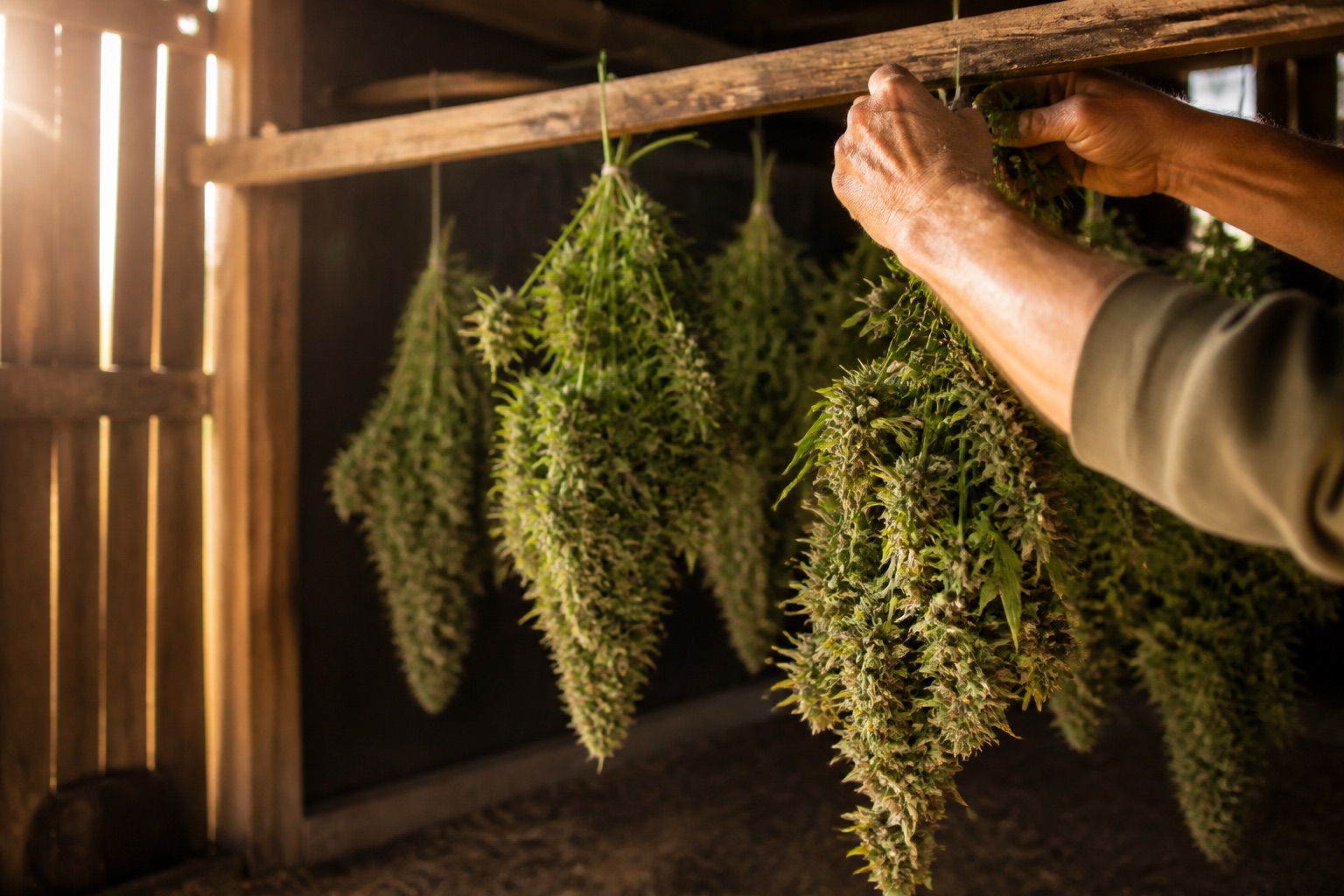
Drying Cannabis Flower: The Step Between Harvest and Cure That Saves Terpenes
August 27, 2026 · 30 min read
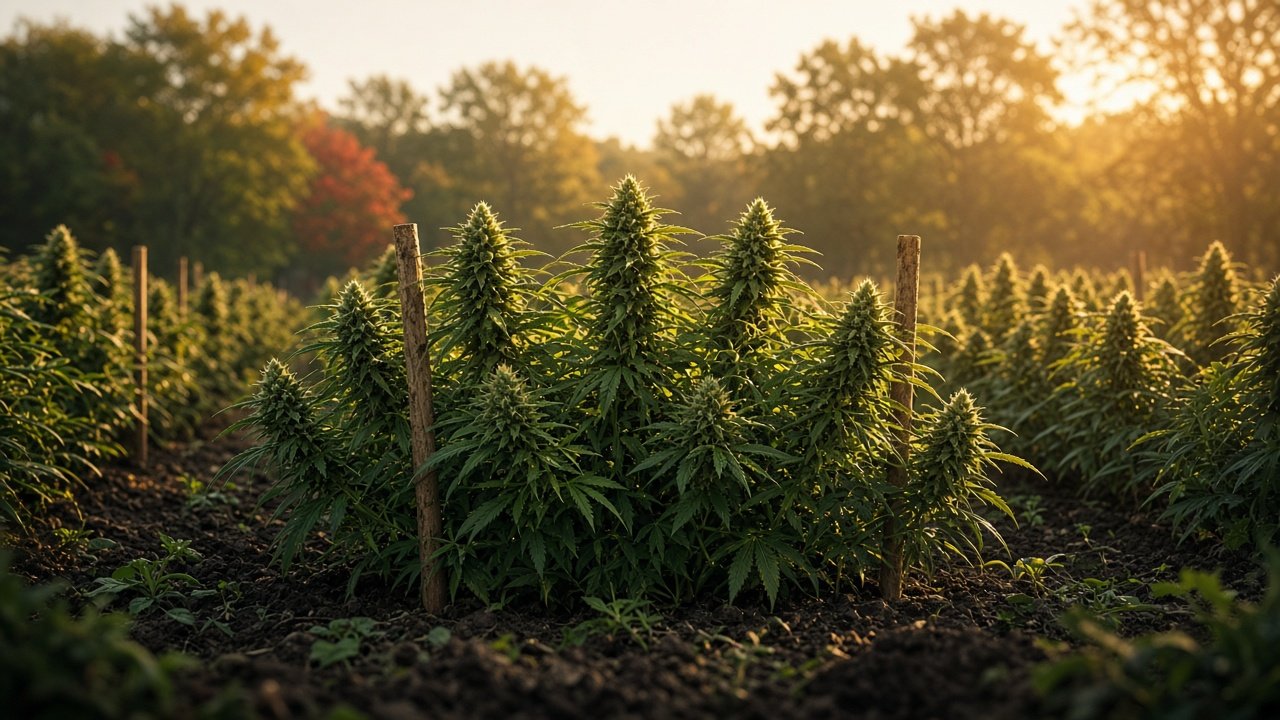
September Harvest on a Detroit Menu: Why Cut Week Is Not Jar Week
September 3, 2026 · 22 min read
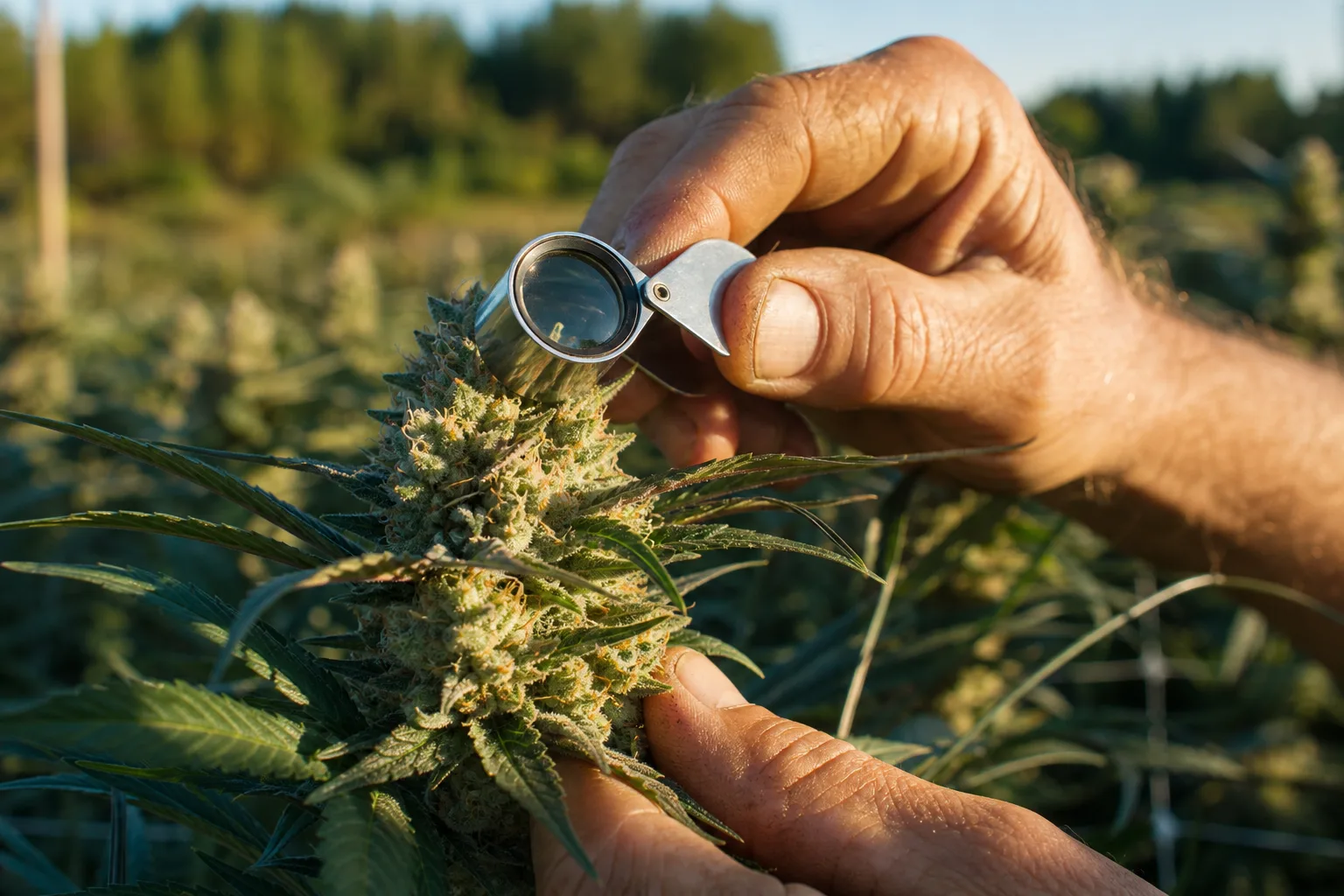
When Is Sun-Grown Cannabis Ready? Reading Trichomes, Pistils, and Late-Summer Weather
August 5, 2026 · 29 min read