How Curing Protects Terpenes: Why Patient Flower Smells and Feels Better

Jamie
Head Cultivator
Curing is the quiet step that decides whether flower smells loud or flat. Rush it, and those bright citrus, pine, and spice notes vanish before you ever crack the jar. Take your time, and the same plant can smell richer, burn smoother, and feel more like itself.
What Are Terpenes — and Why Curing Matters for Them? #
Terpenes are the aromatic oils that give cannabis its smell and taste — and curing is one of the main ways growers keep those oils from escaping after harvest. Think of them like spices in a stew. THC may be the main ingredient, but terpenes decide whether the bowl tastes bright, earthy, spicy, or flat.
Terpenes Are the Plant's Aroma Spices #
Terpenes are natural compounds found in many plants — pine trees, citrus peels, lavender, hops, and cannabis. In flower, they sit mainly in sticky resin glands called trichomes (the tiny crystals on the bud). If you want the full primer, start with our what are terpenes guide. For shopping by nose instead of indica/sativa labels, see our terpenes nose-shopping guide.
Common cannabis terpenes include:
| Terpene | Everyday smell | Plain-English vibe many people notice |
|---|---|---|
| Myrcene | Mango, earth, hops | Often linked with "heavy" or sleepy flower |
| Limonene | Lemon peel, citrus cleaner | Bright, uplifting aroma |
| Pinene | Pine needles, forest | Sharp, fresh, "outdoor" smell |
| Linalool | Lavender, floral soap | Soft, calming perfume notes |
| Beta-caryophyllene | Black pepper, clove | Spicy, warm, peppery finish |
These oils are volatile — they evaporate easily. That is why a warm car, a sunny windowsill, or a rushed dry room can strip aroma long before the flower reaches a Michigan dispensary jar.
Why Growers Protect Them After Harvest #
The clock starts the moment plants are cut. From that point, terpenes face heat, light, air, and time. According to coverage of Cannabis Research Coalition post-harvest work summarized by Marijuana Moment, how flower is dried and cured can change terpene retention and trichome condition in measurable ways.
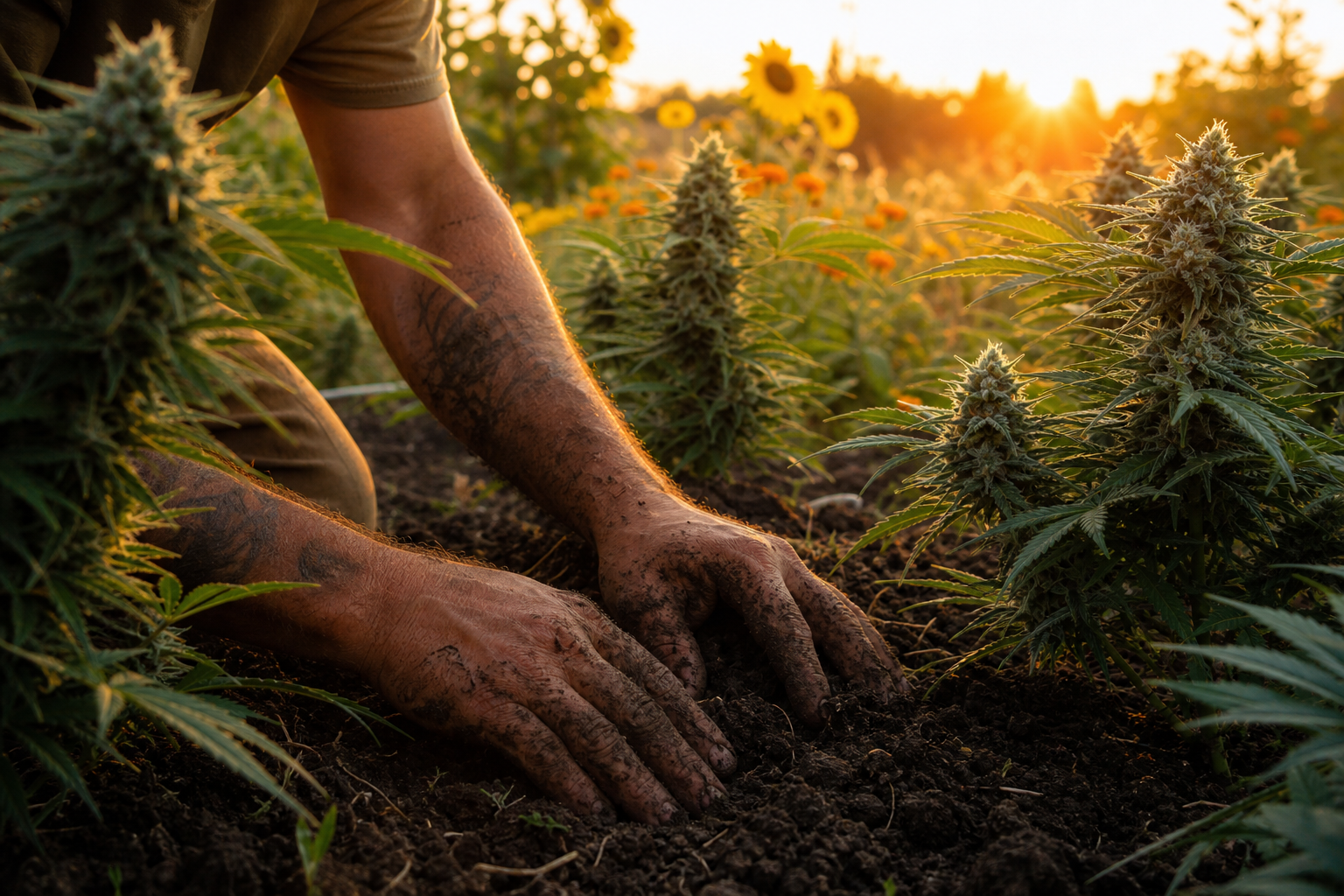
At Divine Toke, a Detroit / Michigan sun-grown organic cannabis farm, we talk about cure the same way bakers talk about resting dough. The grow builds the flavor. The cure protects it. Living soil and careful farming set the stage — more on that in our living soil cannabis guide — but post-harvest patience decides what you smell when you open the bag.
How Do Heat, Light, Oxygen, and Time Break Terpenes Down? #
Heat, light, oxygen, and time degrade cannabis terpenes by evaporating them, oxidizing them into new compounds, or both. A 2024–2025 Phytochemical Analysis study (PMC11742972) found that cannabis terpenes form unique degradation patterns under UV and heat stress, and that different terpenes break down at different rates even when they look chemically similar.
| Stress | What it does | What you notice |
|---|---|---|
| Heat | Speeds evaporation of light aroma oils | Smell gets quieter; citrus/pine notes fade first |
| Light / UV | Drives photooxidation and chemical change | Aroma shifts; profile gets duller or "off" |
| Oxygen | Oxidizes terpenes into new byproducts | Peppery/aged notes can rise; bright notes fall |
| Time | Lets all of the above stack up | Flower smells flatter weeks or months later |
Heat Evaporates the Lightest Aromas First #
Monoterpenes — lighter terpenes such as myrcene, pinene, and limonene — escape first because they vaporize at lower temperatures. Heavier sesquiterpenes such as beta-caryophyllene hang on longer, but they are not immortal. Cannabis Industry Journal notes that terpenes and other volatile metabolites degrade quickly when exposed to light, oxygen, heat, and time, which can change both aroma and the balance people associate with an entourage-style experience.
A simple kitchen analogy: leave chopped herbs on a hot stove, and the room fills with smell for a minute — then the herbs taste washed out. The aroma left the food. Cannabis works the same way in a hot dry room or a dashboard in July.
Light and Oxygen Change the Chemistry #
Evaporation is only half the story. Oxygen and UV light also chemically rewrite terpenes. The same PMC11742972 terpene stability analysis reported that each terpene creates its own pattern of oxidation and cyclization products, with p-cymene showing up as a major aging marker. In plain English: the flower does not just lose scent. The scent that remains can change character.
That is why "sealed" is not enough if the jar still sits in bright light or warm air. Air leaks, clear plastic, and repeated jar openings all invite oxidation. Good curing and storage aim to keep those stressors low while moisture finishes equalizing inside the bud.
What Is the Difference Between Drying and Curing Cannabis? #
Drying removes free water from freshly harvested flower; curing is the slower jar phase that equalizes leftover moisture and lets harsh "green" notes fade while protecting aroma. People often mash the two words together. They are related, but they do different jobs.
| Step | Main job | Typical setting | What goes wrong if rushed |
|---|---|---|---|
| Drying | Bring flower from wet plant to shelf-stable outside dryness | Cool, dark room with steady airflow | Terps flash off; outsides case-harden; hay smell locks in |
| Curing | Equalize moisture inside buds; finish flavor chemistry | Sealed jars at stable humidity | Flat smell, harsh smoke, uneven burn |
Industry guidance collected by educators such as Ed Rosenthal's Ask Ed drying and curing overview and trade roundups like Cannabis Science and Technology's harvest/dry/cure options piece converge on the same idea: slow and cool beats fast and hot.
Drying Removes Free Water #
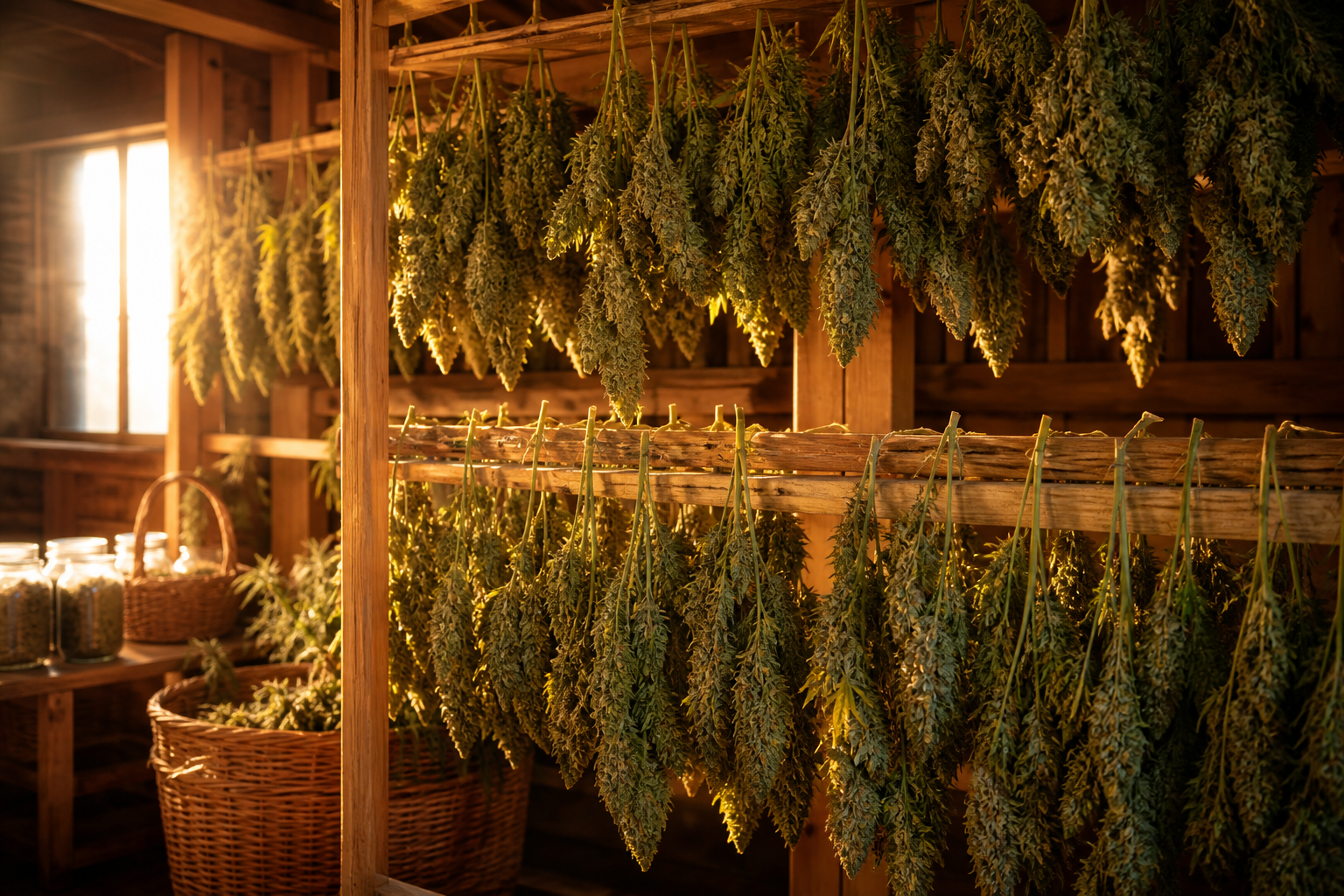
Right after harvest, buds are full of water. Drying is the stage that pulls that free water out so mold risk drops and the flower can be handled. Growers often hang whole plants or branches, or use controlled rooms and racks. The target is flower that feels dry on the outside but not dusty-brittle.
If drying runs too warm or too dry:
- Light terpenes evaporate with the water vapor
- Outer layers harden while the center stays wet (case hardening)
- Later jars can smell grassy, musty, or uneven
Water science matters here too. A post-harvest review in PMC9404914 frames water activity — how much water is available for microbes and reactions — as a better control metric than "feels dry" alone. In practice, many cultivators aim for a shelf-stable water-activity band that keeps mold down without turning buds into sawdust.
Curing Finishes Moisture and Flavor Chemistry #
Curing starts once flower is dry enough to jar. Inside a sealed container, moisture slowly redistributes from the wetter core to the drier outer layers. At the same time, chlorophyll-related "fresh cut grass" notes have more time to fade. Grower-facing sources commonly describe this as the period when harsh green taste softens and the cultivar's true nose gets clearer.
Curing is not magic spice added to the bud. It is patience with humidity. Done well, it protects what the plant already made. Done poorly — or skipped — you get hay, harshness, and a muted bag appeal that no sticker THC percentage can fix.
How Does Curing Protect Terpenes? #
Curing protects terpenes by slowing moisture loss, limiting heat and oxygen swings, and giving flower time to equalize without flashing aroma into the air. In other words, a good cure is controlled patience: cool temperature, stable humidity, darkness, and less rough handling of trichomes.
A 2024 PMC drying study (PMC11013261) looking at cultivar-specific post-harvest approaches found that oxygen-reduced / nitrogen-rich drying atmospheres better preserved monoterpenes and sesquiterpenes than ordinary air conditions. That result supports a broader rule consumers can understand: less oxidative stress means more aroma left in the jar.
Humidity and Jar Science in Plain English #
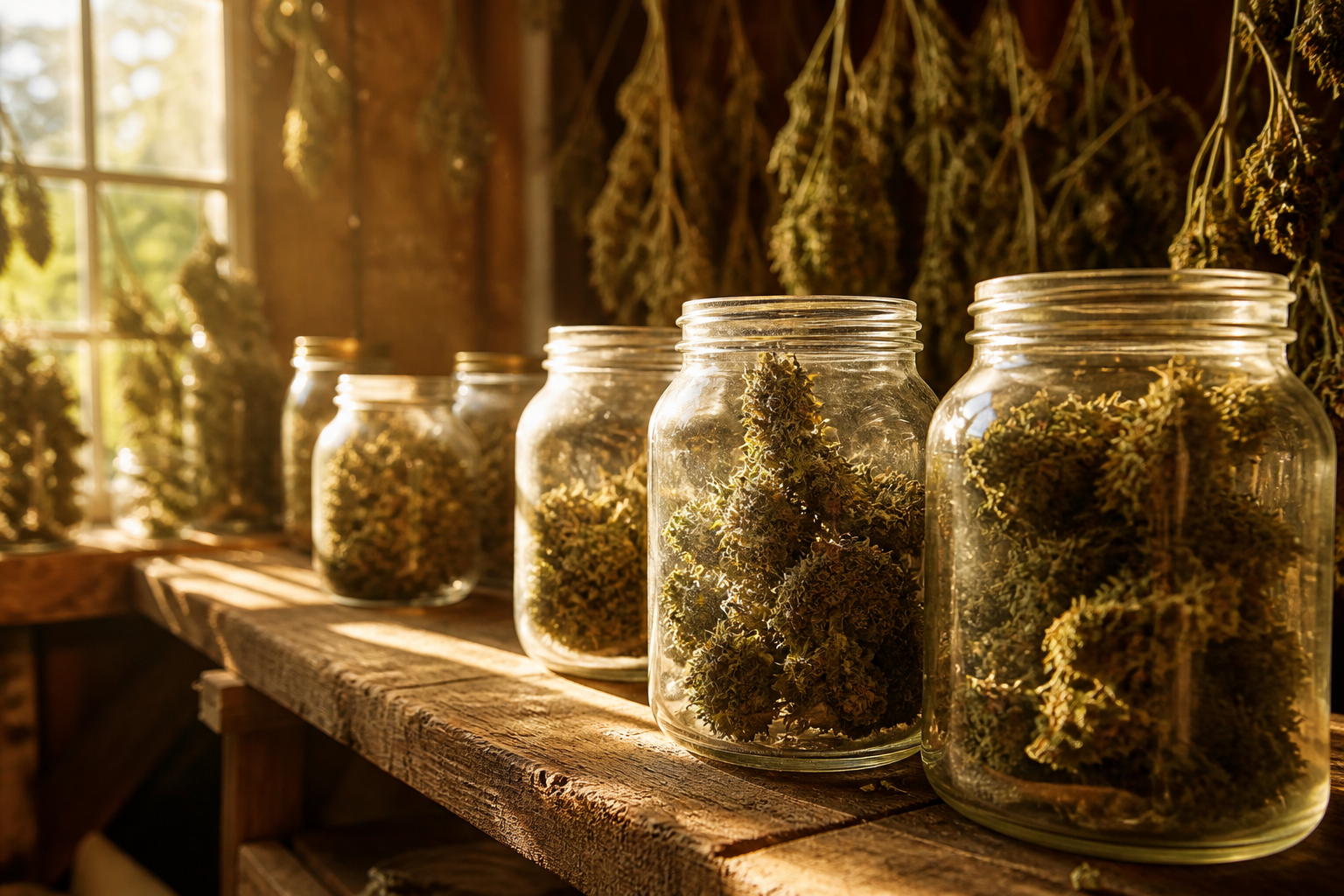
Once flower goes into jars, growers watch relative humidity (RH) — how "full" the air inside the jar is with water vapor.
Most common curing guidance lands here:
- Target jar RH around 58–62% for finished flower
- Keep jars cool, often around 60–65°F when possible
- Burp early, then leave it alone — short openings in week one to release moisture and stale air, then fewer openings as RH stabilizes
- Use humidity packs as a steadying tool once flower is near the target range
Why that RH band? Too wet, and mold risk climbs. Too dry, and buds turn brittle while terpenes keep escaping. Water-activity research summarized around cannabis flower quality — including work discussed alongside PMC9404914 and industry water-activity reporting — often points to a practical sweet spot near 0.55–0.65 a_w. That range is about keeping available water low enough for safety while not turning the flower into cardboard.
Think of the jar like a lunchbox for aroma. You want the sandwich moist enough to taste good, not soggy enough to spoil, and not dried out like a cracker.
Cool, Dark, and Stable Beats Fast and Hot #
Stability matters as much as the setpoint. Marijuana Moment's report on Cannabis Research Coalition post-harvest testing described flower dried and cured under more stable vapor-pressure conditions retaining about 16% more terpenes on average, with better trichome integrity, than flower handled in a conventional AC-and-dehumidifier room with bigger swings.
For a Michigan consumer, the takeaway is simple:
- Stable cool beats warm and swinging
- Dark beats sunny
- Gentle handling beats smashed bags
- Time in the jar beats "dry it hard and ship it tomorrow"
Curing does not invent new terpenes. It protects the ones the plant already made in the sun and soil.
Why Does Rushed Flower Smell Flat or Like Hay? #
Rushed flower usually smells flat or like hay because drying was too fast or too warm, curing was too short, or both — so grassy plant notes remain while the brightest terpenes already escaped. That "fresh cut lawn" bag is not a mystery strain. It is often a post-harvest miss.
The Hay Smell Usually Means Incomplete Cure #
Freshly harvested cannabis can smell green. That is normal early on. A proper dry-and-cure should move the nose from grass toward the cultivar's real profile — citrus, pine, gas, fruit, spice, earth. When the hay smell sticks around, common causes include:
- Drying too hot (terps leave with the moisture)
- Drying too fast (outsides harden; chemistry never finishes evenly)
- Skipping or shortening the cure (green notes never fade)
- Overdrying before jars (no moisture left to equalize gently)
Grower and consumer guides repeatedly link hay/grass aroma to incomplete drying or curing rather than genetics alone. As of 2026, that remains one of the most common "People Also Ask" complaints around flower quality: why does my weed smell like hay?
| Smell | Likely story | What to do as a buyer |
|---|---|---|
| Hay / grass | Rushed dry or unfinished cure | Skip it; ask for a fresher, better-cured batch |
| Musty / basement | Too much moisture or storage problem | Put it down — mold risk is not worth it |
| Loud and layered | Better dry + cure + storage | This is the bag you want |
| Almost no smell | Overdried, old, heat-damaged, or poor storage | Expect flat flavor and a thinner experience |
Flat Smell Often Means Terpenes Already Left #
Hay and flat are cousins, but they are not identical.
- Hay / grass often means green chemistry is still loud because the cure never finished.
- Flat / mute often means the aroma compounds already left through heat, oxygen, light, age, or overdrying.
Cannabis Industry Journal's last-mile preservation feature stresses that the degradation clock starts at harvest and keeps ticking through packaging, transport, and retail display. So a rushed cure can create the problem — and a hot dispensary case or clear plastic bag can finish the job.
If you crack a jar in Michigan and get nothing but faint cardboard, the plant may have been good in the field. The post-harvest path likely was not.
How Does Terpene Loss Change Effects and Flavor? #
Terpene loss almost always dulls aroma and flavor first; it may also thin out the "full plant" feel many people call the entourage effect, though human evidence for exact effect changes is still early. Smell is the clear signal. Effect changes are plausible, but harder to prove in a lab for every batch.
Aroma and Taste Change First #
When monoterpenes fade, flower loses the bright top notes — citrus, pine, sweet fruit, sharp freshness. What remains can taste more generic: woody, peppery, dusty, or just quiet. That matches what the PMC11742972 stability work shows chemically: different terpenes degrade at different rates and leave their own oxidation fingerprints.
Consumers usually notice this order:
- Nose gets quieter when you open the jar
- Flavor gets thinner on the inhale
- Aftertaste gets flatter or harsher
- The "character" of the cultivar feels less distinct
THC percentage on the label can stay high while the experience still feels one-note. Numbers do not smell.
The Entourage Effect Needs a Full Profile #
The entourage effect is the idea that cannabinoids, terpenes, and other plant compounds work better together than alone. A peer-reviewed review in PMC7324885 discusses this synergy as an important framing for whole-plant cannabis, while also making clear that not every claimed interaction is settled clinical fact. For a plain-English deep dive, read our entourage effect guide.
What we can say honestly:
- Terpenes help define aroma and may shape how a cultivar feels
- Losing them changes the chemical balance the plant had at harvest
- Early research and clinical commentary treat synergy as plausible, not as a guaranteed dose-for-dose map
- Consumers still report that loud, well-cured flower "hits differently" than mute, overdried flower with the same THC number
So if curing protects terpenes, it also protects the chance of a fuller plant experience. That is why farms that care about sun-grown character treat cure as part of farming — not as a warehouse afterthought.
How Can You Tell Well-Cured Flower by Nose and Feel? #
Well-cured flower usually smells loud and strain-specific, and feels slightly sticky with a slow spring-back; poorly cured flower smells grassy, musty, or flat, and feels either brittle-dusty or damp-spongy. You do not need a lab coat. Nose and fingers tell most of the story.
Smell Checks That Matter #
Use this quick dispensary checklist:
| Check | Good cure signal | Warning signal |
|---|---|---|
| First sniff | Clear, inviting, cultivar-like | Hay, grass, chemical, or almost nothing |
| After a gentle break | Smell gets louder and more layered | Smell stays mute or turns musty |
| Nose character | Citrus, pine, spice, fruit, gas, earth | Wet basement, ammonia, old socks |
| Consistency across buds | Same family of aromas | One bud loud, next bud dead |
A well-cured jar should make you lean in. If you have to argue yourself into liking the smell, keep shopping. Nose-shopping habits from our terpenes nose-shopping guide apply here too: trust aroma over marketing names.
Feel Checks That Matter #
Gently squeeze one bud (when the shop allows it):
- Well cured: slight stickiness, dense but not rock-hard, soft spring-back
- Overdried: crispy, dusty, crumbly, snaps with little resin tack
- Too wet / underfinished: spongy, damp, soft in a wet way
Overdried flower often burns hot and harsh. Too-wet flower raises mold concern and can smell off. The sweet spot feels alive in the hand without feeling wet.
One more Michigan tip: ask when the batch was packaged and how it was stored on the shelf. Even a great cure can get ruined under bright lights or in a hot case. Post-harvest quality is a chain, not a single moment.
How Do You Store Cannabis to Keep Terpenes Alive After Purchase? #
Store cannabis in airtight glass, in the dark, at a cool stable temperature, with humidity around 58–62% RH — and open the jar only when you need it. Cure protects terpenes on the farm. Storage protects them in your kitchen.
For a full walkthrough, see our how to store your weed guide. The short version below is the terpene-first checklist.
Simple Home Setup That Works in Michigan #
Michigan summers get humid. Michigan winters get dry furnace air. Both can wreck aroma if flower sits in a thin plastic bag.
A simple setup:
- Transfer flower into a clean glass jar soon after purchase
- Add a 58–62% humidity pack sized for the jar
- Park the jar in a cool, dark cupboard or drawer
- Keep it away from windows, stoves, radiators, and cars
- Open only when you use it — no daily "burping" of finished flower
| Do | Don't |
|---|---|
| Use airtight glass | Leave flower in flimsy plastic long-term |
| Keep jars dark | Store on a sunny sill |
| Aim for cool room temps (~60–70°F) | Leave a jar in a hot car |
| Hold ~58–62% RH | Overdry buds into dust |
| Buy what you'll finish in a reasonable window | Stockpile open bags for months |
Cannabis Industry Journal warns that retail handling and packaging can undo careful cultivation. Your home storage is the last mile you control.
Mistakes That Kill Aroma Fast #
These habits erase cure work in days:
- Dashboard storage — summer heat volatilizes monoterpenes fast
- Fridge / freezer for everyday flower — moisture swings and condensation can hurt texture and invite problems
- Constant jar opening to "check the smell" — each open adds oxygen and humidity swings
- Clear containers in bright rooms — light drives photodegradation described in terpene stability research such as PMC11742972
- Grinding the whole stash — more surface area means faster aroma loss; grind what you'll use
If the farm spent weeks protecting terpenes, don't erase that work in one hot afternoon on the passenger seat.
Frequently Asked Questions #
Q: How does curing cannabis protect terpenes? #
Curing protects terpenes by keeping flower cool, dark, and at stable humidity so aroma oils evaporate and oxidize more slowly. Sealed jars also give moisture time to equalize inside the bud instead of flashing off in a hot dry room. Research on controlled post-harvest environments — including work summarized by Marijuana Moment — links more stable drying/curing conditions with higher terpene retention.
Q: Why does rushed cannabis smell flat? #
Rushed cannabis smells flat because the lightest, brightest terpenes leave early when drying is too warm, too fast, or too rough on trichomes. The remaining flower can still test high in THC while smelling mute. Cannabis Industry Journal notes that heat, oxygen, light, and time degrade volatile metabolites quickly after harvest.
Q: Why does weed smell like hay? #
Hay smell usually means the flower was dried too fast, dried too warm, or not cured long enough for grassy plant notes to fade. Fresh-cut cannabis can smell green at first; a proper cure should move it toward the cultivar's real aroma. If it still smells like a lawn bag after weeks, post-harvest handling is the prime suspect.
Q: What is the difference between drying and curing cannabis? #
Drying removes free water after harvest; curing is the slower jar phase that equalizes leftover moisture and finishes flavor chemistry. Drying makes flower handleable and safer from mold. Curing protects smoothness and aroma once the flower is jarred. Skipping cure is like serving bread the second it leaves the oven — technically cooked, not finished.
Q: How long should cannabis cure? #
Many growers and quality-focused guides talk about roughly 2–4 weeks of curing for a clear quality jump, with some flower improving further with more time under stable conditions. Exact timing depends on cultivar, dryness at jar time, and storage environment. The useful consumer signal is not a calendar date — it is nose and feel: loud aroma, no hay, springy sticky buds.
Q: What humidity is best for curing cannabis jars? #
Most practical curing guidance targets about 58–62% relative humidity inside the jar. That band helps buds stay resilient without drifting into mold-friendly wetness. Water-activity science discussed in sources such as PMC9404914 supports watching available water, not just "feels dry," as the real control metric.
Q: Does curing make cannabis stronger? #
Curing does not reliably "add THC" the way people mean by stronger; it mainly protects aroma, smoothness, and the full plant profile. Some chemistry continues after harvest, but the big consumer win is better smell, better burn, and a more complete terpene balance. A mute 28% jar can feel thinner than a loud, well-cured jar with a lower number.
Q: How can I tell if flower is well cured? #
Smell for a loud, strain-specific nose and feel for slight stickiness with a slow spring-back. Hay, must, damp sponginess, or dusty brittleness are warning signs. Break one bud gently if allowed — good flower usually gets louder, not flatter, when opened.
Q: Can I fix hay-smelling weed by curing longer at home? #
Sometimes a little jar time at 58–62% RH helps unfinished flower, but it cannot replace terpenes that already evaporated. If the hay smell comes from a rushed hot dry, those bright oils may already be gone. Home "recure" can improve harshness a bit; it cannot rebuild a lost nose from scratch.
Q: How should I store cannabis to preserve terpenes? #
Use airtight glass, keep it dark and cool, hold humidity near 58–62%, and open the jar only when you need flower. Avoid hot cars, sunny windows, and long-term thin plastic. Full step-by-step tips live in our how to store your weed guide.
Closing Thoughts: Patience Is Part of the Grow #
If you remember one thing, remember this: curing is how good flower keeps its terpenes — and rushed flower smells flat because those oils left early. Heat, light, oxygen, and time are the thieves. Cool jars, steady humidity, and patience are the lock.
At Divine Toke, a Detroit-rooted Michigan sun-grown organic cannabis farm, we treat post-harvest care as part of farming, not as a race to the shelf. Sun and living soil build character in the field. A careful cure helps that character survive the jar. We will not pretend every batch is magic — but we will keep saying that aroma and feel matter as much as a THC number.
Want to go deeper?
- Learn the aroma compounds themselves in our what are terpenes guide
- Shop with your nose using our terpenes nose-shopping guide
- Protect the jar after purchase with our how to store your weed guide
- See why whole-plant chemistry matters in our entourage effect guide
- Understand the soil side of flavor in our living soil cannabis guide
If you're curious to try sun-grown flower grown with that full-plant mindset, start with what smells alive when you open it — not just what looks frosty on Instagram.
This article is for educational purposes only and is not medical advice. Always consult your healthcare provider before starting any new wellness routine.
Grown in Detroit. Shipped to your door.
Small-batch, sun-grown cannabis cultivated in living soil. Mail-order shipping to all 50 states.