Late-Summer Harvest in Michigan: What Outdoor Flower Season Means for Detroit Consumers

Jamie
Head Cultivator
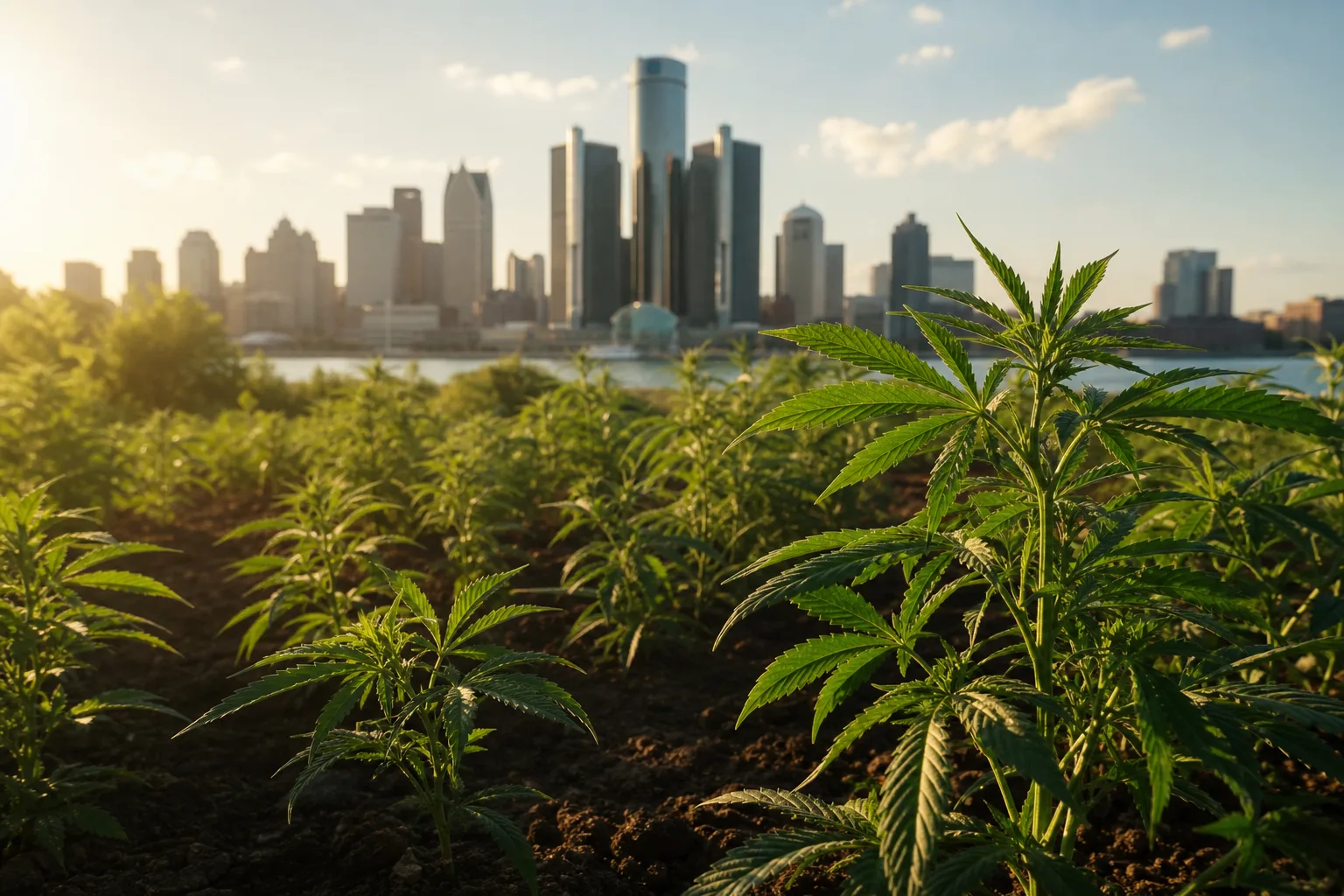
Late summer in Michigan feels like the finish line is close. Farms are watching night temps. Buds are packing on weight. Group chats start whispering “Croptober.” For Detroit shoppers, that energy is real — and it is also easy to misread.
Late summer does not always mean new outdoor flower is already in every jar. This guide answers one practical question: what Michigan’s late-summer outdoor harvest season means for flower quality, freshness, and how you shop.
If you already read our grower-facing piece on harvest timing and trichomes, this post is the consumer half of the same season: what lands on the shelf, when, and how to judge it without guessing.
When Is Outdoor Cannabis Harvested in Michigan? #
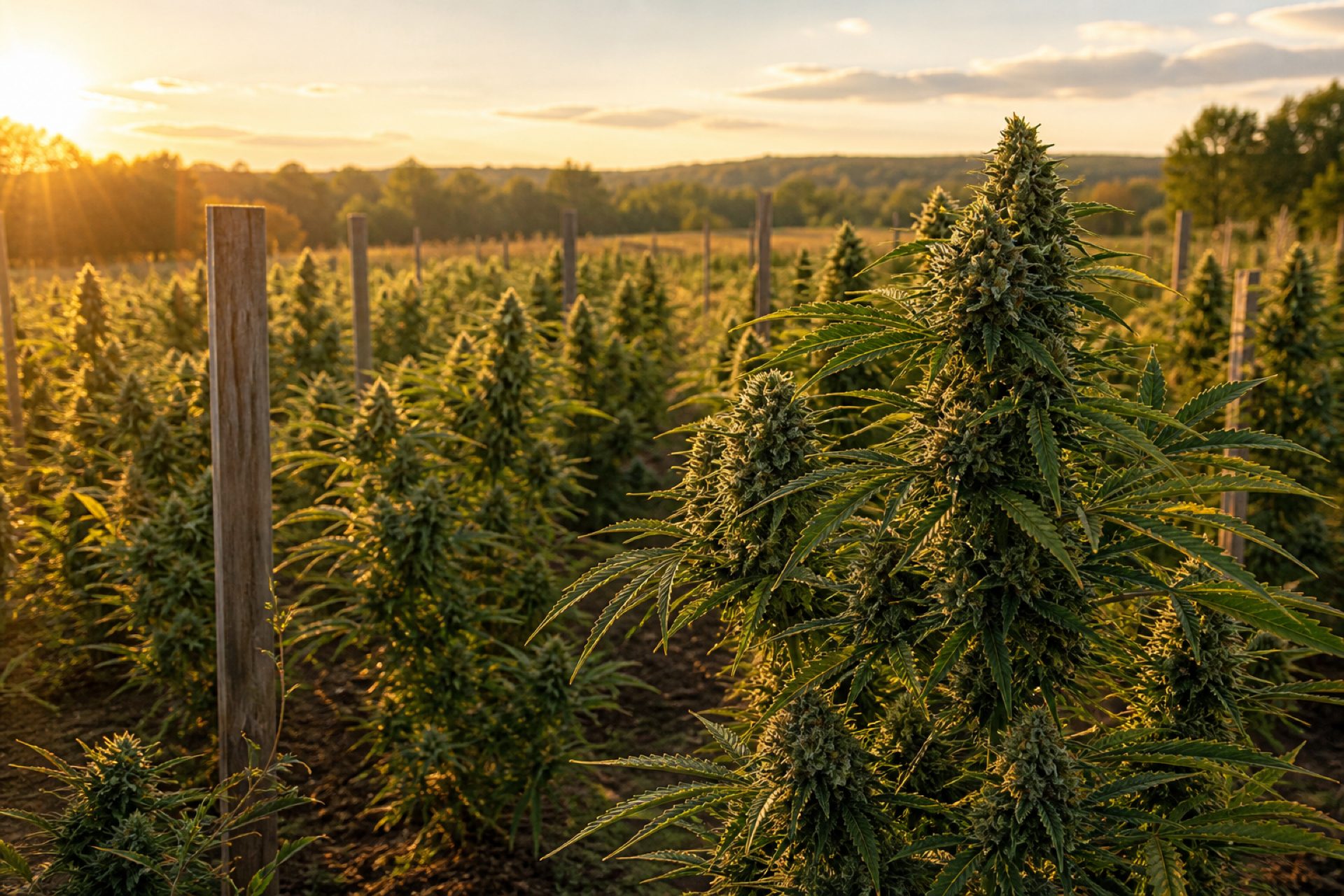
Most Michigan outdoor photoperiod cannabis is harvested from late September through mid-to-late October — not mid-August. Late summer is when growers feel harvest pressure from weather. Peak outdoor flower on Detroit shelves usually follows that cut, plus drying and curing time.
Think of outdoor cannabis like Michigan apples. The trees work all summer. The pick is a fall job. You can find early fruit. The main crop still lands later.
Outdoor plants that follow the sun (photoperiod plants) start flowering after nights get longer past the summer solstice. They need weeks of bloom to finish. Grower guides aimed at Michigan outdoor seasons commonly put the finish window in late September into October, with cultivar speed and local frost deciding the exact week.
| Region vibe | Typical outdoor finish pressure | Why it matters for shoppers |
|---|---|---|
| Northern / inland colder zones | Earlier — often September into early October | Outdoor drops may arrive sooner, but frost risk hits first |
| Central Lower Peninsula | Mid-September to early October | Classic “Croptober” timing |
| Southeast Michigan / Detroit metro | Often late September through October | Later average frost = more runway for full finish |
Southeast Michigan Frost Timing vs. Northern Michigan #
Southeast Michigan gets a later average first freeze than much of the state, and that gives outdoor flower more calendar room. According to MSU Extension frost climatology (1981–2018 data), Detroit’s median first 32°F freeze is October 18. Ann Arbor’s median is October 14. Flint’s median is October 9. Cadillac’s median is September 21.
The National Weather Service Detroit/Pontiac office frames it simply: October is when the growing season ends across Southeast Michigan. They publish average first dates for both a freeze (32°F) and a hard/killing freeze (28°F).
What that means in plain English:
- Detroit-area outdoor crops often have a longer finish window than northern Michigan grows.
- Lakes Erie, St. Clair, and Huron help keep Southeast Michigan’s first freezes among the latest in the state, per the same MSU Extension analysis.
- A freeze is still a short-range call. MSU notes you cannot reliably forecast first freeze more than a few days out — growers watch the actual forecast, not just the average date.
For consumers, frost is not a trivia fact. It is why outdoor farms race the calendar. A grower may cut a week early if a cold, wet stretch is coming. That choice shows up in your jar as brighter, greener, or less “finished” aroma — even when the bag looks fine. For the grower-side readiness cues (trichomes and pistils), see our guide on when sun-grown cannabis is ready.
Why “Late Summer” Is Not the Same as Peak Shelf Season #
Late summer is when the outdoor season gets serious — but for most Detroit shoppers, peak new-crop outdoor flower still lands after the fall cut. Mid-August menus often still lean on indoor or older outdoor stock while plants finish in the field.
A simple shopper calendar:
- August – early September: Watch for early-finishing outdoor or greenhouse lots. Do not assume every “sun-grown” jar is this year’s main crop.
- Late September – October: Main outdoor harvest window for many Michigan photoperiod grows.
- After harvest: Drying and curing add time before flower is ready to sell well. “Cut yesterday” is not the same as “smokes great today.”
As of the 2025 season wrap-up, the NWS Detroit/Pontiac end-of-growing-season notice marked Southeast Lower Michigan’s growing season closed in mid-October. That is the real outdoor clock Detroit consumers should keep in mind — not a marketing “harvest vibes” post in early August.
Bottom line for shoppers: late summer is when the outdoor story gets loud. Fall is when the best new chapters usually hit the shelf.
Keep that split in mind and August hype gets a lot quieter.
What Late-Summer Harvest Means for Flower Freshness #
For Detroit consumers, “fresh” outdoor flower means recently harvested and properly dried and cured — not just cut last week. A late-summer or fall harvest can put newer local flower into the market. Rushing that flower onto a shelf before it settles can still leave you with a grassy, harsh smoke.
Freshness has three clocks:
| Clock | What it measures | Why shoppers care |
|---|---|---|
| Field clock | When scissors hit the plant | Newer crop vs last year’s leftovers |
| Dry/cure clock | How the flower was handled after cut | Smell, smoothness, shelf stability |
| Jar clock | How it was stored after packaging | Terpenes fade with heat, light, and air |
Late-summer harvest season mainly resets the field clock. Your nose and the smoke still depend on the other two. Michigan’s terroir — soil, latitude, and Great Lakes weather — shapes what the plant can become. Post-harvest work decides whether that potential survives the jar.
Harvest Date on a Michigan Label #
On Michigan adult-use flower, the harvest date is one of the most useful freshness clues a shopper can read. Guidance tied to the Michigan Cannabis Regulatory Agency (CRA) packaging and best-practice materials treats date of harvest as a key product detail when it applies, along with producer identity, net weight, and tracking info.
When you pick up a jar in a Detroit-area dispensary, look for:
- Harvest date — newer is not always better, but it tells you which crop year you are in
- Producer / license info — who grew or processed it
- Net weight and strain name (if listed) — basic identity checks
- Lab results / COA access — potency and safety testing still matter more than vibe marketing
Do not confuse harvest date with “perfect ripeness.” A grower can cut early for weather and still put an honest harvest date on the label. The date answers when, not how ready.
Fresh-Cut vs. Well-Cured — What Smokes Better #
Well-cured flower often smokes smoother and smells clearer than freshly cut flower that skipped a real cure. Drying removes enough water so the buds can be handled. Curing continues afterward so moisture settles and harsh green notes fade.
In plain English:
- Too wet / under-dried: mold risk, uneven burn, “wet grass” smell
- Too fast / under-cured: sharp chlorophyll bite, thin aroma, rough smoke
- Stable cure: pliable buds, louder terpene smell, cleaner finish
Industry and research summaries commonly describe curing as a multi-week process after the dry — often in the 2–4 week range or longer, depending on method. Peer-reviewed postharvest work also shows that drying and curing conditions change cannabinoid outcomes and microbial risk — see PMC9404914 on postharvest drying and curing effects.
So if a budtender says “this just came off the farm,” ask one follow-up: has it been cured, or only dried? For Detroit shoppers hunting late-summer and fall outdoor drops, that question matters more than the calendar alone. Our deeper cure walkthrough lives in the art of curing cannabis.
How Great Lakes Humidity and Bud Rot Shape Quality #
Great Lakes humidity and cool, wet late-season nights raise bud-rot risk, and that pressure can force Michigan outdoor growers to cut before a “perfect” calendar finish. For consumers, that means some outdoor jars from a stormy year can smell flatter or feel cut early — even when the farm did the right thing to protect the crop.
Bud rot is usually Botrytis cinerea, a gray mold that loves dense, nearly finished flowers. Grower and pathology guidance consistently flags the danger zone when relative humidity stays high (often cited around 55–70% and up), nights are cool, and buds stay wet from rain or dew. Dense colas near harvest are the worst case: moisture sits inside the flower, and rot can start in the middle before you see it on the outside.
Michigan’s late-summer and early-fall pattern stacks those risks:
- Humid air off the Great Lakes keeps nights sticky longer than a dry inland climate would
- September rain fronts can soak canopies right when buds are heaviest
- Cool nights + warm days create morning dew that wets the flower again and again
| Weather pattern | What growers worry about | What shoppers may notice later |
|---|---|---|
| Long humid stretch | Bud rot starting inside dense tops | Grower cuts early; lighter “green” aroma |
| Heavy rain near finish | Wet harvest, harder dry | Harsh smoke if dry/cure was rushed |
| Early cold snap | Frost damage risk | Outdoor season ends sooner than hoped |
| Dry, clear finish week | Cleaner cut window | Louder smell, cleaner burn (if cured well) |
This is not a reason to fear outdoor flower. It is a reason to respect the season. A farm that harvests a few days early to beat a moldy week is protecting you. A farm that ignores humidity can lose quality in ways no THC number can fix.
Practical consumer takeaways for metro Detroit:
- Ask about grow style — outdoor, greenhouse, or indoor
- Smell before you buy when the shop allows it — dead hay or musty notes are red flags
- Prefer clean, loud aroma over max THC — weather stress hits terpenes hard
- Remember: lab-tested legal flower still goes through safety screening under Michigan CRA rules — moldy consumer product is not the goal of the regulated market
What Shoppers Can (and Cannot) Control #
You cannot control September dew. You can control which jar you take home. That is the consumer half of the humidity story.
What you control:
- Buying from the legal market with CRA-required testing and labeling (Michigan CRA)
- Rejecting musty or hay-flat aroma even if the THC number is big
- Storing flower cool, dark, and sealed so leftover terpenes do not cook off in a hot car
- Buying smaller amounts first when a brand-new outdoor lot hits the shelf
What you do not control:
- Whether last week’s rain forced an early cut
- Whether a farm’s dry room kept up with a humid harvest week
- Whether a cultivar finished dense and mold-prone or airy and safer
Humidity is also why regenerative practices and certifications matter at the farm level. Farms that care about living soil and outdoor integrity — including Sun+Earth certified approaches — still have to win against Michigan weather. The seal does not cancel September rain. It tells you the grow philosophy behind the jar.
Sun-Grown vs. Indoor Flower in Late Summer #
In late summer, indoor flower is usually the more consistent shelf option, while new sun-grown outdoor flower is the seasonal bet for aroma complexity — once harvest and cure are done. Outdoor is not automatically “better” in August. It is more seasonal.
A Columbia University chemistry comparison of commercial cannabis from natural (outdoor/ecological) versus artificial (indoor) cultivation found outdoor samples had greater terpene diversity and higher levels of several key aroma compounds, including limonene, β-myrcene, β-caryophyllene, and α-humulene (PMC9861703). The outdoor samples in that study also showed a greater share of sesquiterpenes — the heavier, spicy/woody aroma compounds — and less oxidized cannabinoid content than the indoor set they tested.
Translate that for a Detroit shopper:
| What you want | Lean sun-grown / outdoor | Lean indoor |
|---|---|---|
| Loud, layered smell | Often yes, when finish + cure are clean | Cleaner, more uniform, sometimes less complex |
| Same jar every month | Harder — season and weather matter | Easier — rooms stay controlled |
| Peak late-summer menu | Early outdoor lots only; main crop still finishing | Indoor keeps flowing |
| Fall “new crop” hunt | Best window after outdoor harvest + cure | Still available, less seasonal story |
Sun-grown flower is cannabis grown under real sunlight — outdoors or in sun-fed greenhouse systems — instead of only artificial lamps. That full-spectrum light is part of why outdoor chemistry can look different in studies like PMC9861703. Michigan’s latitude and lakeshore climate then add a regional fingerprint; more on that in how Michigan land shapes flower.
Late-summer shopping rule of thumb:
- If you want reliable everyday flower right now: indoor (or well-cured prior outdoor) is the safer bet.
- If you want this year’s outdoor story: watch late September into fall, then judge with your nose.
- If a jar claims sun-grown in mid-August: it may be early genetics, greenhouse, or leftover stock — ask which.
Questions Worth Asking Before You Buy “Sun-Grown” #
If the menu says sun-grown, ask what that means for this jar — outdoor field, greenhouse, or mixed light. The word sells a feeling. Your job is to buy a specific product.
Good questions in a Detroit dispensary:
- Was this grown fully outdoors or in a greenhouse?
- Is this year’s crop, or older inventory?
- What is the harvest date on the package?
- Has it had a full cure, or did it just finish drying?
- Anything unique about this weather year — wet finish, dry finish, early cut?
You do not need a grow diary. You need honest answers. A budtender who can talk weather and cure is usually a better guide than one who only repeats THC numbers.
Divine Toke is a Detroit-rooted, sun-grown organic cannabis brand. We talk about outdoor seasons because that is how real Michigan flower works — not because every August week is harvest week. For a fuller indoor vs outdoor breakdown, see sun-grown vs indoor cannabis.
A Detroit Shopper’s August–October Outdoor Flower Calendar #
For Detroit consumers, August is mostly a watch-and-learn month; late September through October is when new Michigan outdoor flower is most likely to move from field to shelf. Use this as a buyer calendar, not a promise that every farm finishes on the same Tuesday.
| Time window | What is happening on outdoor farms | What Detroit shoppers should do |
|---|---|---|
| Early–mid August | Photoperiod plants deep in flower; finish still weeks away for many cultivars | Shop indoor or proven cured lots; ask if any “outdoor” is early-finishing or greenhouse |
| Late August – early September | Harvest pressure rises if storms or early cold threaten | Watch menus; sample early outdoor only if smell and cure check out |
| Late September – mid October | Main outdoor cut window for much of Michigan | Start hunting new sun-grown drops; check harvest dates |
| Mid–late October | SE Michigan frost risk climbs; season wind-down | Expect more outdoor packages after dry/cure; quality varies by weather year |
| November+ | Field season over; cure and inventory management | Best jars are often the well-cured survivors, not the rushed first cuts |
Why this calendar fits Southeast Michigan:
- MSU Extension puts Detroit’s median first 32°F freeze around October 18
- NWS Detroit/Pontiac treats October as the end of the growing season across Southeast Michigan
- Mid-summer farm work (late veg and pre-flower) sets the crop up — see the mid-summer harvest preview — but shoppers feel the result in fall
Shift workers, trades crews, and hospital staff in metro Detroit often buy flower on a weekly rhythm, not a farm calendar. That is fine. Just know the outdoor aisle has a season. Indoor can fill the gaps. Outdoor rewards patience.
A quick “Croptober” checklist for Michigan shoppers:
- Mark late September on your phone as the start of new outdoor hunting
- Read harvest dates before you chase strain names
- Smell for loud, clean aroma — not just “new crop” hype
- Buy a small amount first when trying a brand-new outdoor lot
- Store it right at home — heat and open air kill terpenes fast after you leave the shop
How This Fits a Normal Detroit Week #
You do not need to rearrange your life around a farm calendar — just know which weeks reward attention. If you work afternoons at a plant, nights at a hospital, or weekends on a job site, shop when you already shop. Use the calendar as a filter, not a second job.
Practical patterns that work for metro Detroit:
- One intentional fall trip beats three August impulse buys if outdoor is your goal
- Split a first outdoor purchase with a friend so you can compare lots without overspending
- Keep a notes app entry — harvest date, smell, how it felt — so next year’s Croptober is smarter
- Pair outdoor hunting with indoor backups so you are never stuck buying a rushed jar just because the menu said “new”
Community tip: Michigan harvest season is when group chats light up with “did you try the new outdoor yet?” That energy is fun. It is also how people buy loud packaging instead of loud flower. Slow down for sixty seconds at the counter. Your future self with a good jar will thank you.
How to Judge New Outdoor Flower at the Dispensary #
Judge new outdoor flower by grow style, harvest date, smell, and moisture feel — not by THC percentage alone. Late-summer and fall drops can be excellent. They can also be rushed. Your senses and the label beat the menu font size.
Use this dispensary checklist:
Confirm grow style
- Outdoor / sun-grown
- Greenhouse / mixed light
- Indoor
- If staff cannot say, treat “sun-kissed vibes” marketing as noise
Read the harvest date
- Newer crop year is useful context
- Very recent dates can mean under-cured flower
- Very old dates with flat smell can mean tired terpenes
- Michigan CRA-linked packaging guidance highlights harvest date as a core flower detail when applicable (Michigan CRA)
Smell with intent
- Good: clear pine, citrus, fuel, spice, flower, or earth — loud and clean
- Bad: musty basement, wet hay, sour trash, or almost no smell
- Remember: outdoor can smell more layered when chemistry is rich (PMC9861703)
Check moisture with your eyes (and fingers if allowed)
- Too wet: spongy, dark, heavy for size
- Too dry: dusty, crumbly, harsh
- Just right: sticky or springy, not soggy
Ask one post-harvest question
- “Has this been fully cured, or did it just finish drying?”
- A short, honest answer beats a long sales pitch
| Signal | Green light | Yellow light | Red light |
|---|---|---|---|
| Smell | Loud and clean | Mild but clean | Musty, hay, or dead |
| Harvest date | Matches the season story | Very new or oddly old | Missing with no explanation |
| Moisture | Springy | Slightly dry | Wet or powder-dry |
| Grow style | Clearly labeled | Vague “craft” language | Contradictory claims |
| THC % | Secondary to smell | Only selling point | Used to hide bad aroma |
Metro Detroit tip: if you buy after a night shift or on a quick lunch break, do not let the budtender rush you past the nose test. One extra minute at the counter saves a bad jar in the glove box.
Also keep expectations honest. Outdoor flower can look fox-tailed or less “golf-ball dense” than indoor. Density is not the same as quality. Aroma and how it makes you feel matter more than Instagram bud shape.
A 60-Second Counter Routine #
If you only remember one shopping habit for harvest season, make it this 60-second routine. It works on a lunch break and it works after a long shift.
- Read grow style + harvest date (10 seconds)
- Smell — clean and loud, or pass (20 seconds)
- Ask about cure — dried only, or cured (15 seconds)
- Decide small or pass — do not force a full eighth of a maybe (15 seconds)
That routine protects you from FOMO better than any blog checklist you screenshot and forget. Michigan outdoor season rewards people who stay curious and stay picky.
Common Mistakes Detroit Consumers Make Around Harvest Season #
The biggest harvest-season mistake is treating “new outdoor” as automatic quality — freshness, cure, and weather year decide the jar more than the hype. Detroit shoppers who avoid a few common traps get better flower and waste less money.
| Mistake | Why it happens | Better move |
|---|---|---|
| Assuming August menus are full of new outdoor | “Late summer harvest” sounds like “ready now” | Treat August as watch season; hunt harder in late Sept–Oct |
| Chasing the highest THC % | Labels make potency the scoreboard | Smell first; use THC as a secondary check |
| Ignoring harvest date | Packaging feels like fine print | Read harvest date every time |
| Buying the first “just dropped” outdoor without a cure check | FOMO on Croptober | Ask if it was cured; buy small first |
| Thinking frost averages guarantee a finish date | Calendar feels certain | Frost is a short-range weather call (MSU Extension) |
| Storing new flower badly at home | Hot car, open bag, bright window | Jar it cool, dark, and sealed after you leave the shop |
| Comparing outdoor to indoor by bud density only | Indoor looks “prettier” in photos | Judge aroma and effect, not golf-ball shape |
A few Michigan-specific reminders:
- Southeast Michigan’s later freeze window (Detroit median ~Oct 18) does not mean every plant waits until mid-October. Humidity and rain can still force an earlier cut.
- Legal market flower is tested under Michigan CRA rules — that is your safety floor. It is not a guarantee the jar smells amazing.
- Union shift schedules and weekend runs make it easy to grab whatever is on sale. If outdoor is your goal, make one intentional trip in peak season instead of three impulse grabs in August.
Harvest season is a community moment in Michigan cannabis. Farms finish. Shops restock. Friends text about new drops. Enjoy that. Just shop like an adult who reads the label — not like someone buying concert merch because the font looks exciting.
One last honesty check: a wet, moldy finish year can still produce great jars from farms that cut smart and cure well. A dry, easy finish year can still produce tired flower if storage is sloppy. Season sets the odds. Handling decides the outcome. Your nose is the final vote.
Frequently Asked Questions #
When is outdoor cannabis usually harvested in Michigan? #
Most Michigan outdoor photoperiod cannabis is harvested from late September through mid-to-late October. Exact timing depends on cultivar speed, local frost risk, and humidity. Southeast Michigan often has a later frost window than northern parts of the state, with Detroit’s median first 32°F freeze around October 18 per MSU Extension climatology.
Does late summer mean outdoor flower is already on Detroit shelves? #
Not for most photoperiod outdoor crops. Late summer is when plants are finishing and growers feel weather pressure. Peak new outdoor inventory for Detroit shoppers usually shows up after the fall cut, plus drying and curing. Early August “outdoor” jars may be early genetics, greenhouse, or prior stock — ask before you assume.
What should I check on a Michigan flower label for freshness? #
Start with the harvest date, then confirm producer info and that the product is properly labeled under Michigan rules. Michigan CRA packaging guidance treats harvest date as a key flower detail when applicable. Pair that date with your nose: a recent harvest that smells grassy may still need cure time.
Is sun-grown always fresher than indoor in August? #
No. Indoor flower can be fresher on an August shelf because it is produced year-round. Sun-grown outdoor is seasonal. When outdoor finishes well, chemistry studies such as PMC9861703 support richer terpene diversity in outdoor samples — but that advantage only shows up if harvest and cure are clean.
Why do outdoor growers sometimes cut before peak ripeness? #
Because frost, rain, and bud-rot risk can destroy a crop faster than waiting for a perfect trichome chart. NWS Detroit/Pontiac notes that October ends the growing season across Southeast Michigan, and mold pressure rises in cool, humid stretches. An early cut can protect quality even if ripeness is not textbook perfect.
What is bud rot, and can it show up in store flower? #
Bud rot is usually gray mold (Botrytis) that attacks dense, wet flowers near harvest. Regulated Michigan flower is safety-tested under CRA rules, so moldy product is not supposed to reach consumers. What shoppers do feel is the upstream effect: growers may harvest early or lose top colas, which can change aroma and availability.
Does a higher THC percentage mean a better outdoor harvest? #
No. THC is one number on a label. Harvest week, terpene survival, and cure quality shape how the flower smells and feels. Outdoor samples in PMC9861703 stood out for terpene diversity — not simply for max THC. Shop smell and effect first.
How long after harvest before flower is ready to buy? #
Often weeks, not days. Drying comes first. Curing commonly continues for about 2–4 weeks or longer after that, depending on method. Postharvest research such as PMC9404914 shows drying and curing conditions change cannabinoid outcomes and microbial risk. “Just cut” is a farm milestone, not an automatic green light for your lungs.
What’s the difference between outdoor and greenhouse flower? #
Outdoor flower finishes under open sky; greenhouse flower uses a structure that can add weather protection and sometimes supplemental light. Both can be sun-fed. Greenhouse lots may hit shelves earlier or look more uniform because the canopy is shielded from storms. Ask which one you are buying — the word “sun-grown” can cover both.
When should Detroit shoppers start looking for new outdoor drops? #
Start watching menus in late September, then buy with your nose through October. That lines up with Michigan’s main outdoor harvest window and Southeast Michigan’s October season end noted by NWS Detroit/Pontiac. If you want early samples, try small amounts in late August — but treat peak Croptober as the real hunt.
Closing Thoughts for Detroit Shoppers #
Late-summer harvest season in Michigan is a weather story first and a menu story second — Detroit shoppers who know the outdoor clock buy fresher, better flower with less FOMO. Outdoor plants finish under real sun, real humidity, and a real frost deadline. Understanding that timing means you stop expecting every August jar to be this year’s main crop, and you stop confusing a harvest date with a finished cure.
If you are curious to try sun-grown organic flower from a Detroit-rooted farm brand, start with what smells clean and loud — then let the season teach you. Keep a simple habit: read the harvest date, trust your nose, ask about cure, and buy small the first time a new outdoor lot lands.
For grower readiness cues, read when sun-grown cannabis is ready. For place and soil context, see Michigan terroir. For why regenerative outdoor standards matter, visit Sun+Earth certified cannabis farming. And if you want the summer-light setup that starts this whole race, revisit summer solstice and sun-grown cannabis.
Community harvest season should feel like a shared Michigan moment, not a panic buy. The farms are racing weather. You get to shop with patience.
This article is for educational purposes only and is not medical advice. Always consult your healthcare provider before starting any new wellness routine.
Grown in Detroit. Shipped to your door.
Small-batch, sun-grown cannabis cultivated in living soil. Mail-order shipping to all 50 states.