Summer Solstice and Sun-Grown Cannabis: Why Today Matters to Our Farm

Jamie
Head Cultivator
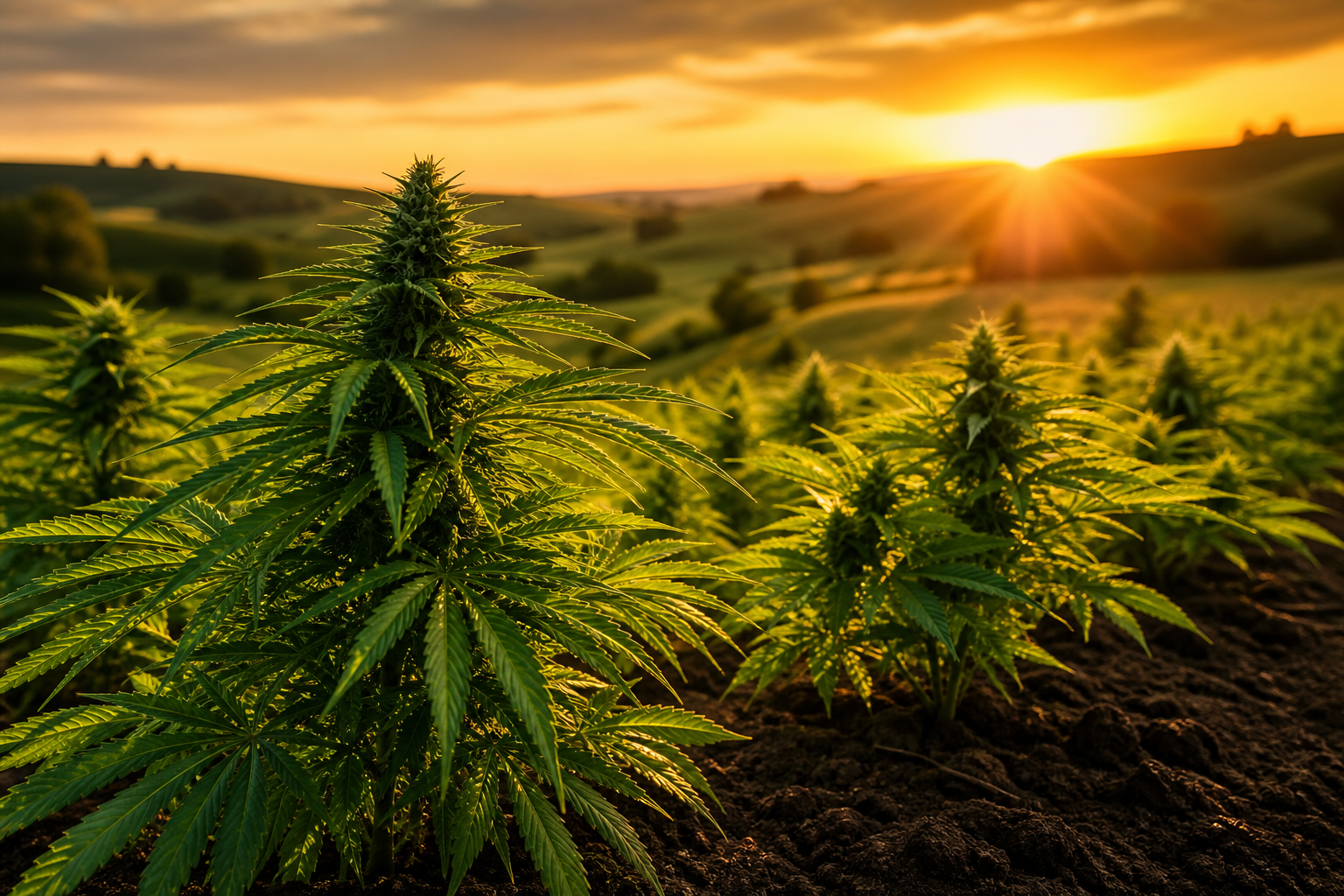
The summer solstice is the longest day of the year—and for sun-grown cannabis, it is the hinge the whole outdoor season swings on. Today marks peak daylight, the last big push of vegetative growth, and the quiet start of the countdown to harvest.
What Is the Summer Solstice—and Why Should You Care? #
The summer solstice is the longest day of the year in the Northern Hemisphere—when the sun sits highest in the sky and daylight hits its peak before slowly shrinking each night. For sun-grown cannabis, that matters because the plant's whole life cycle is tied to how long the sun stays up.
According to the National Weather Service, the solstice usually lands around June 20–21 each year. In 2026, June 21 is that peak day. After it passes, nights get a little longer every single evening. Cannabis outdoors feels that shift before most people notice it on a clock.
| Solstice Fact | What It Means for Cannabis |
|---|---|
| Longest daylight of the year | Maximum solar energy for leaf and stem growth |
| Sun highest in the sky | Stronger light intensity across the canopy |
| Days shrink after the solstice | Night length grows—the plant's flowering signal |
| Marks mid-summer | Rough halfway point of the outdoor grow season |
You do not need to be a farmer to care about this date. If you buy sun-grown organic flower from Michigan—like what we grow at Divine Toke—the solstice shaped when that plant grew, when it started making buds, and when it was ready to pick.
Think of the solstice like the top of a hill on a bike ride. You have been climbing all spring. You crest the hill on the longest day. After that, you coast toward fall—and for cannabis, that coast is flowering and harvest.
How Cannabis Reads Daylight to Know When to Flower #
Most cannabis grown outdoors is photoperiod-sensitive—it flowers when nights get long enough, not when the plant hits a certain age. The solstice is the turning point because it is the last day of the year's longest nights-were-short pattern.
A 2024 review in PMC (PMC10857075) describes cannabis as a short-day plant. That name sounds backward, but it means the plant needs long nights to switch from making leaves to making flowers. More darkness—not more sunshine—starts the bloom.
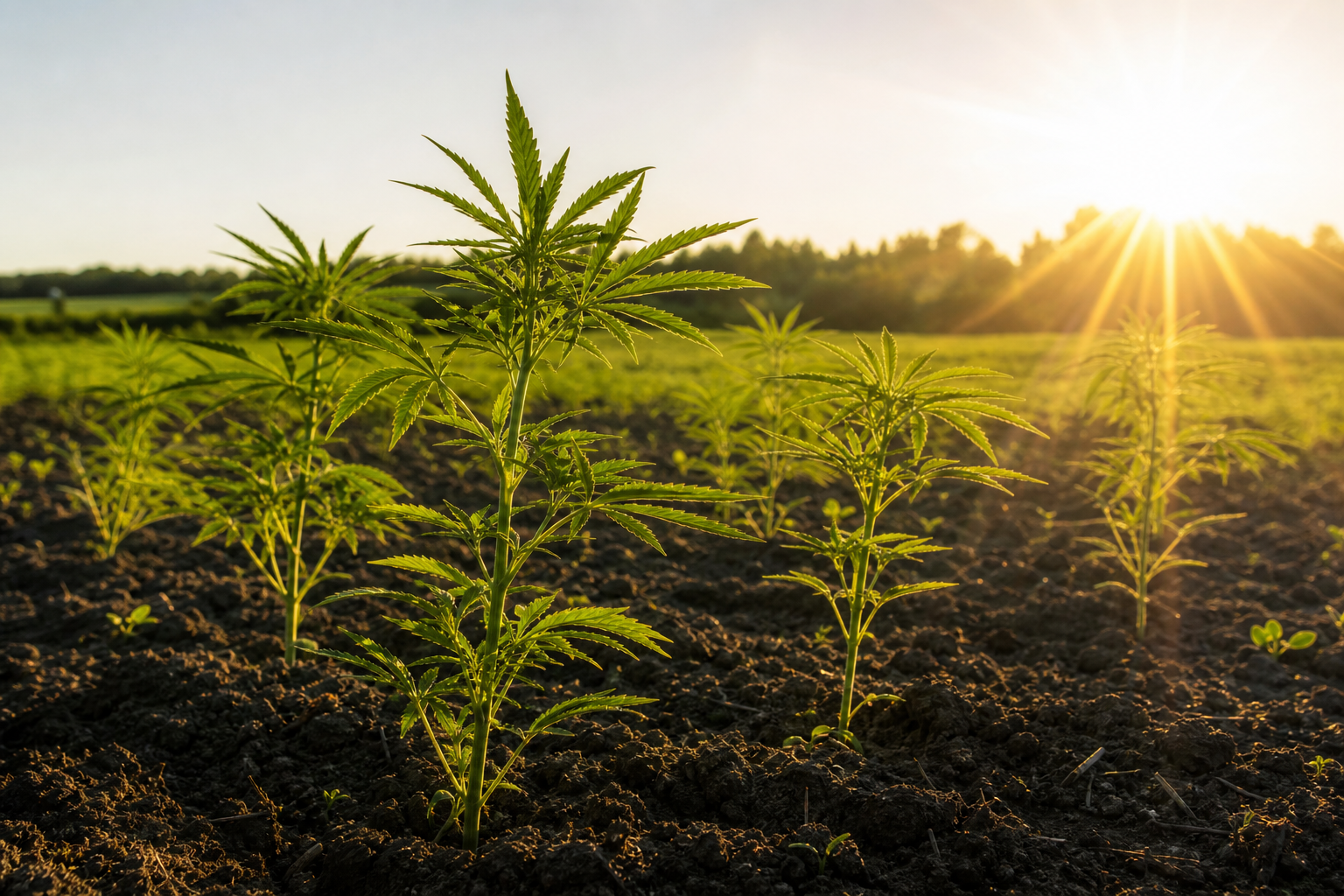
Outdoor growers watch this closely. Before the solstice, the goal is size and strength. After the solstice, the same plant starts redirecting energy toward buds. That handoff is why the longest day matters so much on a sun-grown farm.
What Photoperiod Means in Plain English #
Photoperiod just means "how long the light lasts each day." Cannabis tracks that day-length signal the way you track a work shift ending—when the pattern changes, behavior changes.
Photoperiod strains fall into a few simple buckets:
- Short-day (most outdoor cannabis): Flowers when daylight drops below roughly 12–14 hours, depending on genetics.
- Long-day plants (not cannabis): Flower when days stretch longer—think summer vegetables like spinach going to seed.
- Day-neutral (autoflowers): Flower on a timer built into the seed, not the sun. They still benefit from summer light, but the solstice is less of a hard switch.
If you have ever heard a grower talk about flipping to 12/12 indoors—12 hours of light, 12 of dark—that is them faking autumn to force photoperiod plants to flower on a schedule. Outdoors, the sky does that job for free after the solstice.
The Night-Length Clock Inside the Plant #
Cannabis does not measure daylight alone—it measures uninterrupted darkness, using light-sensing proteins called phytochromes. A long, unbroken night tells the plant winter is coming; time to reproduce.
Hort Americas' photoperiod science overview explains the basic switch: phytochrome absorbs red light and toggles between forms (Pr and Pfr). During a long dark period, active Pfr drops low enough that flowering genes can turn on. Flash a red headlamp at the plants mid-night and you can reset that clock—outdoor moonlight usually is not bright enough to matter, but porch lights can be.
Cannabis Business Times notes that modern cultivators are re-examining how finely cannabis reads these cues—some strains flip earlier or later than the old rules of thumb.
| Signal | Before Solstice | After Solstice |
|---|---|---|
| Day length | Still growing longer or at peak | Shrinks a few minutes daily |
| Night length | Short | Slowly lengthening |
| Plant mode | Vegetative—leaves and stems | Transition toward flowering |
| Farmer focus | Size, structure, health | Bud set, ripening, weather windows |
That internal clock is why two plants in the same field can behave differently if one sits near a security light and one does not. Light leaks are an indoor problem—but outdoor growers still watch for them.
Why Full-Spectrum Sun Builds Richer Terpenes and Cannabinoids #
Sun-grown cannabis develops under the full natural light spectrum—including UV bands that indoor lamps often trim away—and that light stress helps the plant produce a wider mix of terpenes and cannabinoids. The solstice delivers the year's strongest dose of that power before flowering shifts the plant's priorities.
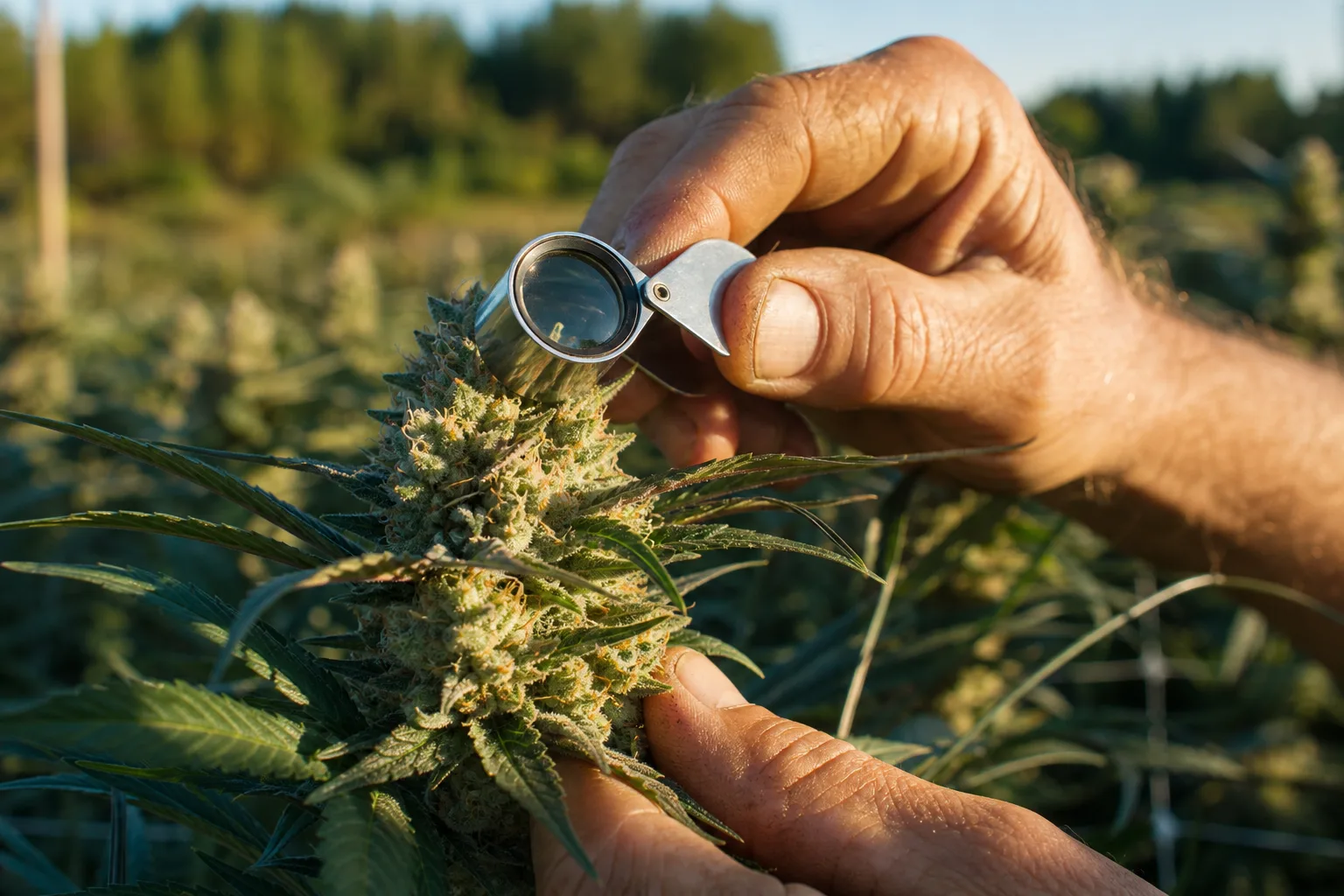
Terpenes are the aromatic oils that give cannabis its smell—pine, citrus, pepper, mango. Cannabinoids like THC and CBD are the active compounds in the resin. Both live mostly in trichomes, the tiny crystal-like glands on the flower. Sunlight drives photosynthesis that feeds those glands; UV can push the plant to make more of them as protection.
UV Light and the Plant's Stress Response #
Ultraviolet light (UV)—especially UVA and a careful slice of UVB—can act like a gym workout for cannabis, triggering defense compounds that include cannabinoids and terpenes. It is stress, but the good kind, in the right dose.
Research summarized by Royal Queen Seeds' light-spectrum guide notes that UVA (about 315–400 nm) makes up most of the UV that reaches Earth and may support higher THC during late flower. UVB is harsher—only a small fraction of outdoor UV—but in controlled amounts late in bloom it can bump terpene production. Too much UVB burns leaves, so the plant outdoors gets a naturally balanced ration the sky adjusts through the season.
On the solstice, UV intensity and day length both peak. The plant is still in vegetative mode but already stacking energy it will spend on resin later. That is one reason sun-grown farmers talk about this date with a little awe—it is the sun doing work no lamp fully copies.
What Sun-Grown Flower Gets That Indoor Often Misses #
Side-by-side testing shows outdoor flower often carries higher levels of several major terpenes than indoor flower grown under standard artificial light. The difference is real enough to measure, not just taste.
A 2023 PMC study (PMC9861703) compared sun-grown and indoor cannabis samples. Outdoor flower showed significantly higher levels of sesquiterpenes including β-caryophyllene (pepper/spice), α-humulene, limonene (citrus), and β-myrcene (earthy/mango). Those are the compounds tied to flavor, aroma, and the entourage effect—the idea that the full plant profile feels different from isolated THC.
| Compound Class | Sun-Grown Tendency | Why Sun Helps |
|---|---|---|
| Sesquiterpenes | Often higher outdoors | UV + full spectrum boost resin diversity |
| THC / cannabinoids | Competitive or higher outdoor | Light intensity + seasonal stress cues |
| Visual bag appeal | Indoor sometimes wins | Controlled rooms grow uniform, tight nugs |
| Flavor complexity | Sun-grown often richer | Broader terpene panel from natural light |
Indoor flower can look perfect under LED. Sun-grown flower can smell like the field it came from. Neither is "wrong"—but if you want the plant the way nature built it, the solstice sun is part of that story. For a deeper breakdown, see our /blog/sun-grown-vs-indoor-cannabis guide.
The Michigan Outdoor Season: Solstice to Harvest #
In Michigan, the summer solstice kicks off the back half of the outdoor calendar—flowering usually starts in mid to late July, and harvest lands in late September through early October before frost ends the party. The longest day is not harvest day; it is the starting gun for the bloom race.
Michigan sits in the northern tier of U.S. cannabis states. We get real winters. That means our outdoor season is shorter than California's—but the long summer days around the solstice pack a punch. Plants that are healthy on June 21 have the best shot at finishing before cold nights and mold pressure arrive.
Key Dates on a Michigan Sun-Grown Calendar #
Think of the Michigan outdoor year in four chunks: plant after frost risk, grow hard until the solstice, flower through August and September, harvest before the first hard freeze.
| Phase | Typical Michigan Timing | What the Plant Is Doing |
|---|---|---|
| Transplant / direct sow | Late May – early June | Rooting in, early vegetative growth |
| Pre-solstice push | June 1 – June 21 | Maximum leaf and stem development |
| Post-solstice transition | Late June – mid-July | Photoperiod cue begins; pre-flower stretch |
| Active flowering | Mid-July – September | Bud formation and ripening |
| Harvest window | Late September – early October | Peak resin; beat frost and heavy rain |
Outdoor guides for northern states—including Michigan-focused grow calendars from ILGM's outdoor calendar—place flowering onset around mid to late July for many photoperiod strains, once daylight slips below roughly 14 hours. That is weeks after the solstice, not on it. Genetics matter: faster "finishing" strains help Upper Peninsula growers; longer bloomers suit southern Michigan's slightly milder fall.
The fall equinox around September 22 is another sky marker—equal day and night. Many outdoor growers aim to have flower mostly ripe by then, though Michigan often harvests a bit earlier because first frost can hit before October ends in the north.
Frost, Mold, and Why Timing Matters Up North #
Michigan harvest is a race against frost and humidity—not just a waiting game for trichomes to cloud up. The solstice helps you know how much runway is left.
Late-season risks up here include:
- Early frost: Can destroy an entire field overnight. Northern counties may see frost risk by late September.
- Botrytis (bud rot): Cool, wet nights plus dense buds = trouble. Good airflow and timing matter more than hype strains.
- Shortened ripening window: A plant that starts flowering too late in July may not finish before weather turns.
That is why the solstice is a planning date, not a party trick. Farmers count backward from average frost to pick varieties that can finish. Consumers benefit too—you get flower that actually ripened outdoors instead of getting rushed inside under heaters.
If you are picking summer strains for daytime use while you wait on fall harvest, our /blog/summer-strain-guide-light-bright-michigan breaks down bright, limonene-forward options for hot Michigan days.
Why Sun-Grown Is More Sustainable Than Indoor #
Sun-grown cannabis uses free sunlight instead of round-the-clock electric lamps and industrial HVAC—so it typically carries a much lower energy footprint than indoor warehouse grows. The solstice is the day that free fuel source peaks.
Project CBD's sungrown vs. indoor analysis lays out the core trade: indoor rooms can control every variable, but that control burns coal and gas on the grid. Outdoor farms let the sun do the heavy lifting for photosynthesis. Fans, dehumidifiers, and supplemental lighting in mega-indoor facilities add up fast.
| Factor | Sun-Grown Outdoor | Indoor Warehouse |
|---|---|---|
| Primary light source | Sun (free, full spectrum) | High-intensity LEDs / HPS |
| Climate control | Natural air + season | HVAC 24/7 |
| Typical energy use | Lower | Much higher |
| Carbon footprint | Lower per pound (general trend) | Higher per pound |
| Season | Spring through fall | Year-round |
That does not mean outdoor is effortless. You still need clean water, healthy soil, labor, and compliance testing. But on the longest day of the year, it is worth saying plainly: the sun is the most efficient grow light humanity will ever get.
Organic and regenerative practices stretch the benefit further—living soil stores carbon, cover crops feed microbes, and chemical inputs drop. Certifications like Sun+Earth (which we cover in /blog/sun-earth-certified-cannabis-farming) add third-party proof that the farm is not just greenwashing.
Choosing sun-grown flower is a small climate vote you can cast with your wallet. It is also a flavor vote—but on solstice day, the sustainability angle feels especially honest.
What the Solstice Means for Divine Toke's Sun-Grown Philosophy #
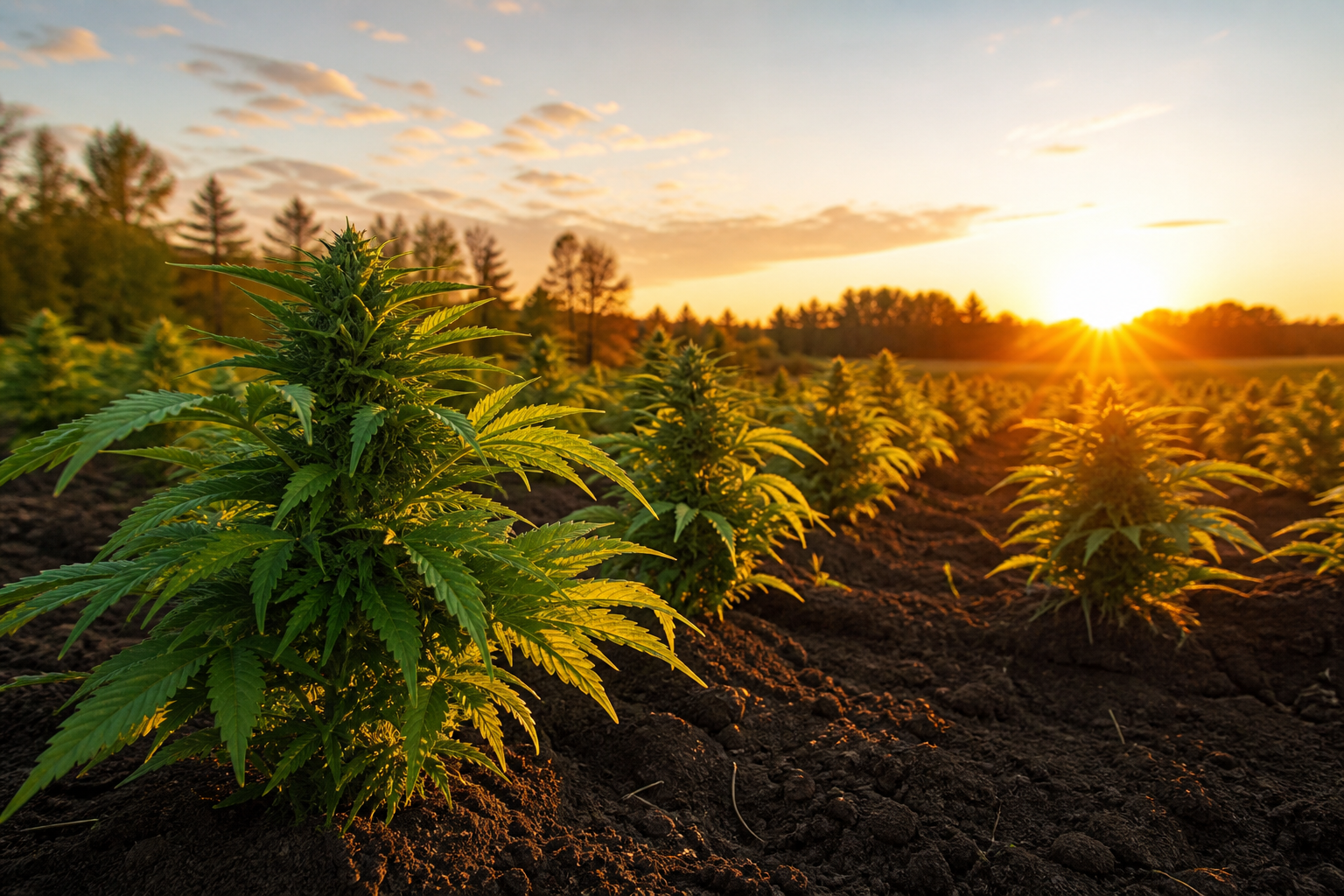
At Divine Toke, the solstice is a checkpoint—we grow cannabis under Michigan sun and organic soil, and this date confirms the plants had enough long-day runway to build the structure that carries our fall flower. We do not fight the sky; we work with it.
We are a sun-grown organic cannabis farm in Michigan. That means photoperiod plants, real seasons, and flower shaped by daylight—not a dial on a timer in a sealed room. The solstice is when we pause, walk the rows, and ask the simple questions: Are plants healthy? On pace? Getting enough water through the heat?
Our philosophy in plain terms:
- Let the sun lead. Full-spectrum light builds the terpene profile we want without shortcutting the plant.
- Feed the soil, not just the plant. Organic matter and microbes do slow work all spring; the solstice shows that work paying off in green, vigorous plants.
- Plan for Michigan reality. Short summers, real frost, honest harvest windows—no fantasy California timelines.
- Stay transparent. You should know how sun-grown flower differs from indoor. We would rather educate than buzzword.
We will not invent farm stats here—no made-up acreage counts or harvest tonnage. What we will say is this: the people growing your flower pay attention to the sky. Today matters because the plant does.
If you want a ground-level look at what a day on a sun-grown farm feels like, read /blog/seed-to-smoke-day-in-life-divine-toke-farm. Spoiler: a lot of it is dirt under fingernails and coffee before sunrise.
What Solstice Means for the Harvest Ahead #
After the solstice, every outdoor grower is counting days—not to the next holiday, but to frost, lab tests, and the moment trichomes go cloudy. The longest day is the pivot from "grow big" to "grow buds."
Here is what happens on a typical sun-grown timeline after June 21:
- Late June – July: Nights lengthen. Photoperiod plants show pre-flower signs—stretching, early pistils. Farmers scout for pests and mold risk as humidity swings.
- Mid-July – August: Full flowering. Nutrient needs shift. UV and heat stress resin production. This is when terpene decisions get locked in.
- September: Ripening. Trichomes shift from clear to cloudy (peak THC for many) to amber (more sedative lean). Weather watching intensifies.
- Late September – October: Harvest, hang-dry, cure. Michigan crews often work in layers—pick what is ready, leave what needs another week if the forecast allows.
The PMC photoperiod review (PMC10857075) reminds us flowering is an evolutionary hedge: the plant races to finish seed (or resin, in our case) before conditions turn hostile. Michigan's hostile season arrives faster than Oregon's. That pressure is why solstice planning is not optional here.
For you as a consumer, harvest ahead means fresh sun-grown drops later in fall—flower with a full outdoor season in it. Store it cool and dark through summer if you are holding last year's crop; heat and light steal terpenes faster than you think.
Frequently Asked Questions #
What is the summer solstice? #
The summer solstice is the longest day of the year in the Northern Hemisphere—the day when daylight hours peak before nights slowly grow longer. The National Weather Service places it around June 20–21 each year. For sun-grown cannabis, it marks the end of maximum vegetative light and the start of the flowering countdown.
When is the summer solstice in 2026? #
In 2026, the summer solstice falls on Sunday, June 21—the publish date of this post and the peak daylight day for Michigan sun-grown farms. After June 21, each night gains a few more minutes of darkness, which photoperiod cannabis eventually reads as a bloom signal.
What is photoperiod cannabis? #
Photoperiod cannabis flowers when night length crosses a strain-specific threshold—usually once daylight drops to roughly 12–14 hours outdoors. It is the opposite of autoflowering plants that bloom on an internal clock. A 2024 PMC review (PMC10857075) classifies most drug-type cannabis as short-day / long-night sensitive.
When do outdoor cannabis plants start flowering after the solstice? #
Most outdoor photoperiod plants begin flowering several weeks after the solstice—often mid to late July in Michigan—not on the solstice itself. Flowering starts when nights are long enough for the phytochrome clock to flip. Some strains show pre-flower signs earlier; fast-finishing genetics help northern growers beat frost.
Why does sunlight produce better terpenes than grow lights? #
Full-spectrum sunlight—including UV bands—stimulates broader terpene production than many indoor lamps, according to controlled comparisons. A PMC study (PMC9861703) found higher levels of β-caryophyllene, limonene, and myrcene in sun-grown samples versus indoor. Indoor can still produce great flower, but the sun's spectrum is the original template.
When is Michigan outdoor cannabis harvest season? #
Most Michigan outdoor cannabis is harvested between late September and early October—before the first hard frost. Flowering often begins mid to late July after daylight shortens. Upper Peninsula grows may finish earlier than southern Michigan because frost arrives sooner.
Is sun-grown cannabis more eco-friendly than indoor? #
Yes—sun-grown cannabis typically uses far less electricity because the sun replaces artificial lighting and much of the climate control indoor facilities need. Project CBD's sungrown analysis notes outdoor cultivation's lower energy intensity. Organic soil practices can reduce inputs further.
Does UV light increase THC and terpenes in cannabis? #
Moderate UV—especially UVA and limited UVB—can boost cannabinoid and terpene production as a plant stress response, though too much UVB damages tissue. Research summaries such as Royal Queen Seeds' light-spectrum guide describe UVA's role in late-flower THC and careful UVB use for resin. Outdoor plants get a naturally balanced ration.
What happens to cannabis plants before the solstice vs after? #
Before the solstice, photoperiod plants focus on vegetative growth—leaves, stems, and root mass under long days. After the solstice, lengthening nights trigger the shift toward flowering and bud production. Energy stored during the long-day phase supports the heavier flower structure that develops in fall.
Why do sun-grown farms treat the solstice like a holiday? #
Because it is the year's turning point—peak sunlight for growth and the start of the bloom clock that determines harvest success. Miss the pre-solstice vegetative window and yields shrink. Ignore post-solstice weather and frost can wipe out months of work. It is part science, part tradition, and all respect for the season.
Closing Thoughts #
The summer solstice is not magic. It is astronomy—and for sun-grown cannabis, astronomy is agronomy. Today the sun gives us the most daylight we will see all year. Tomorrow the nights start winning a little more ground, and our photoperiod plants take notice.
If you have never tried sun-grown organic flower, fall is when Michigan outdoor season pays off. That is when you taste what a full summer of real light did for the terpene jar. If you are curious to explore the difference side by side, start with our /blog/sun-grown-vs-indoor-cannabis breakdown and look for Sun+Earth certified options like ours described in /blog/sun-earth-certified-cannabis-farming.
We will be out in the rows today—not because of folklore, but because healthy plants on the longest day make better flower on the shortest ones. That is the whole job.
This article is for educational purposes only and is not medical advice. Always consult your healthcare provider before starting any new wellness routine.
Grown in Detroit. Shipped to your door.
Small-batch, sun-grown cannabis cultivated in living soil. Mail-order shipping to all 50 states.