Composting for Cannabis: How We Turn Waste Into Medicine

Jamie
Head Cultivator
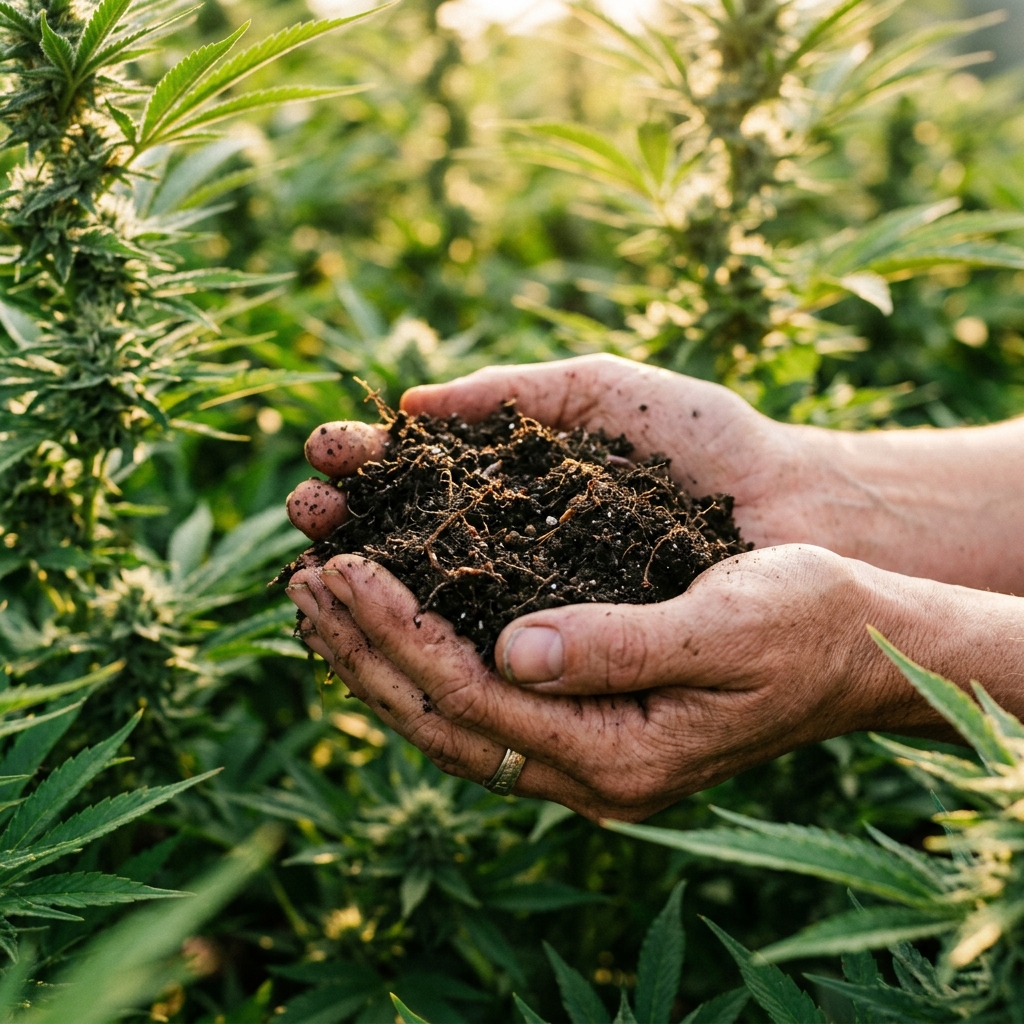
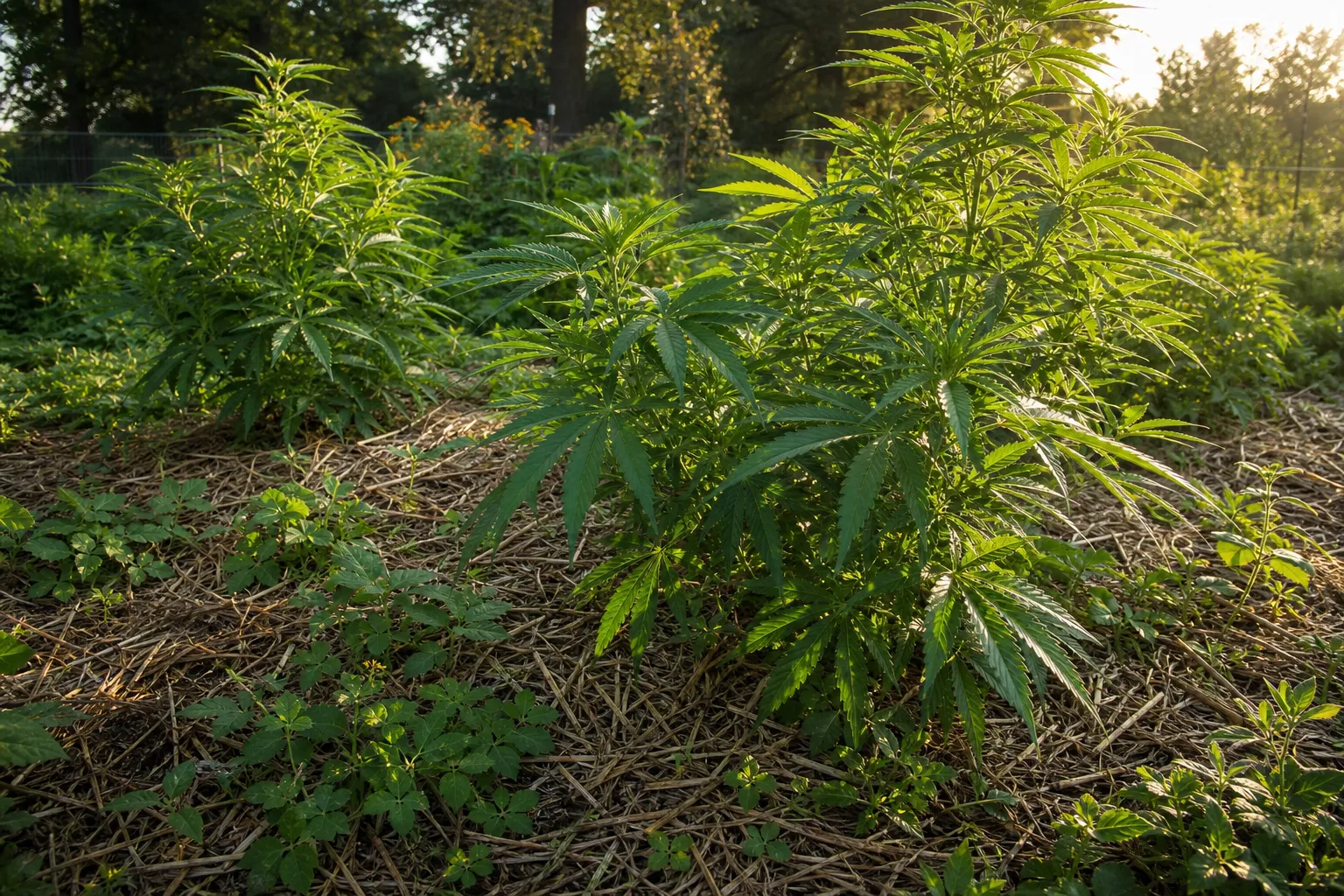
Composting is the foundation of organic cannabis nutrition. Instead of feeding plants with synthetic fertilizer salts dissolved in water, we build living soil ecosystems that feed themselves — using decomposed plant matter, worm castings, and microbially-rich compost tea. The result is flower with richer terpene profiles, cleaner smoke, and zero synthetic residue.
At Divine Toke in Detroit, composting isn't a side project — it's the entire fertility system. Here's how it works.
Why Compost Instead of Bottled Nutrients? #
Most commercial cannabis operations feed plants with synthetic liquid fertilizers — concentrated mineral salts dissolved in water, delivered directly to the root zone. It works. Plants grow fast. But it creates problems:
| Factor | Synthetic Nutrients | Compost-Based Nutrition |
|---|---|---|
| Nutrient availability | Instant, plant-dependent | Slow-release, microbe-mediated |
| Soil biology | Gradually killed (salt accumulation) | Strengthened and diversified |
| Terpene production | Lower diversity (plants under-stressed) | Higher diversity (complex soil signals) |
| Salt buildup | Accumulates, requires flushing | None |
| Environmental runoff | Pollutes water systems | Minimal — nutrients bound in organic matter |
| Flavor/smoke quality | Can taste harsh or chemical | Clean, smooth, complex |
The key insight: synthetic nutrients bypass the soil food web. Compost works WITH it. When microorganisms break down organic matter into plant-available nutrients, they also produce secondary metabolites that signal the plant to produce more terpenes and cannabinoids.
The Three Pillars of Cannabis Composting #
1. Thermal Composting (Hot Compost) #
We build large compost piles using a balanced mix of:
- Carbon-rich materials ("browns"): dried leaves, straw, shredded cardboard
- Nitrogen-rich materials ("greens"): food scraps, fresh plant trimmings, cannabis stalks and fan leaves
- Activators: finished compost, garden soil, or microbial inoculant
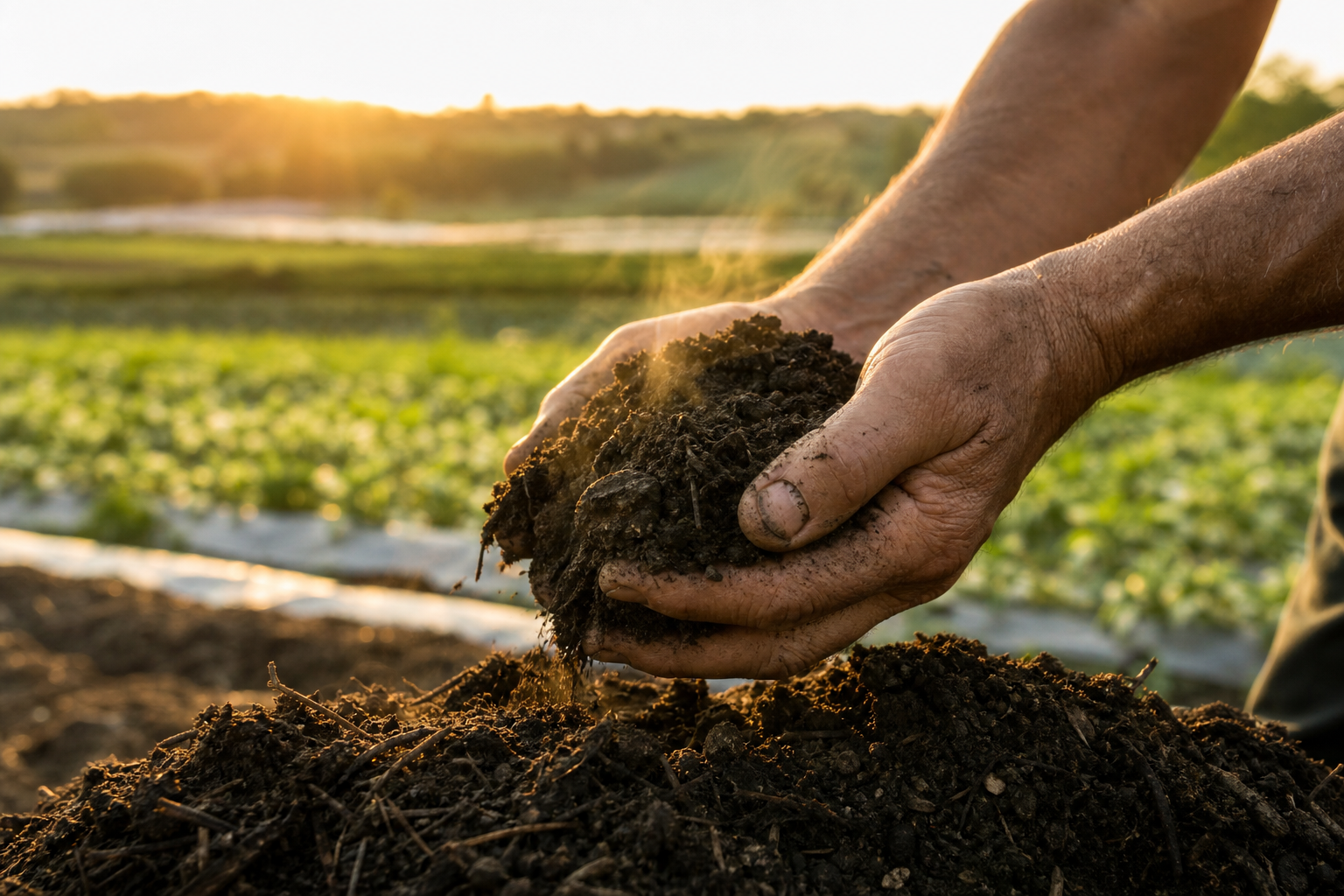
The pile heats to 130-160°F internally — hot enough to kill weed seeds, pathogens, and harmful bacteria. We turn the pile every 7-10 days to maintain oxygen flow. After 6-12 weeks, the material transforms into dark, crumbly, earthy-smelling finished compost.
2. Vermicomposting (Worm Castings) #
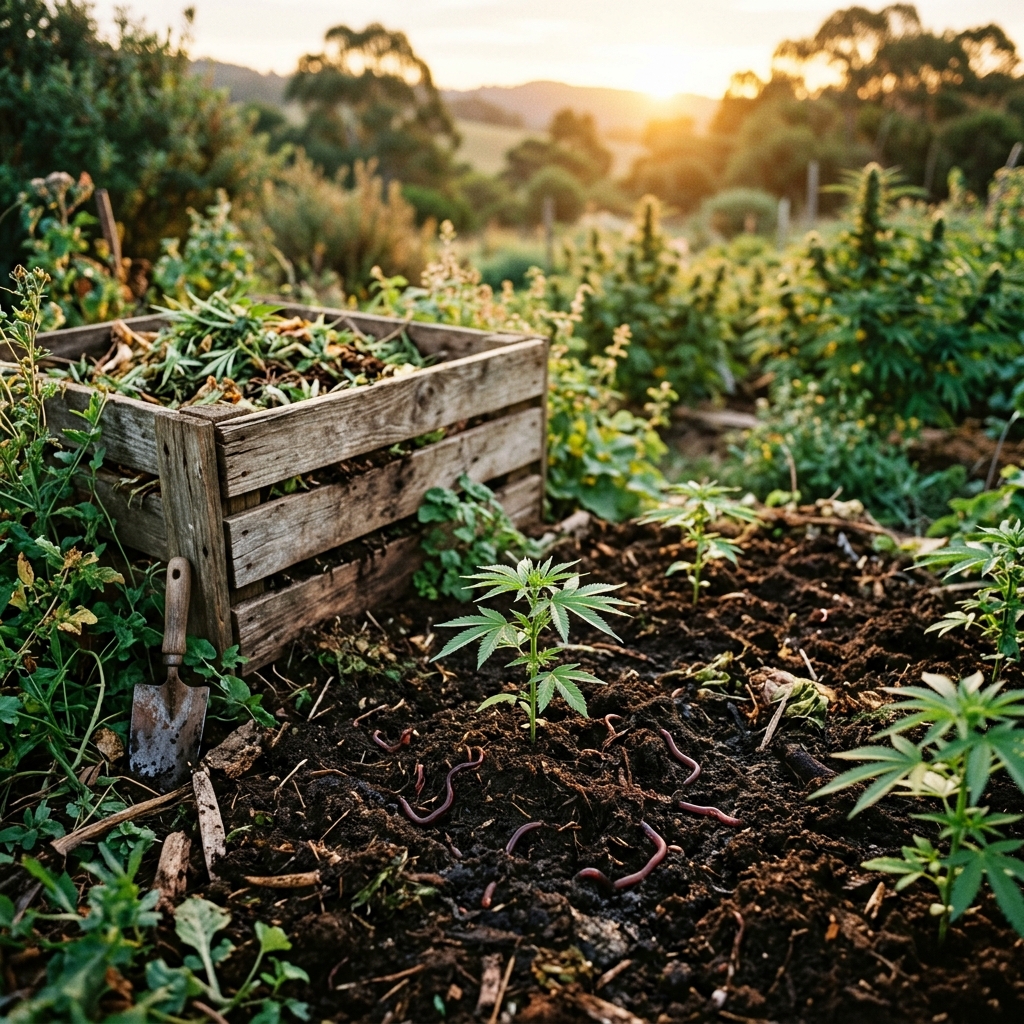
Red wiggler worms process organic matter into worm castings — one of the most nutrient-dense and biologically active soil amendments available. Worm castings contain:
- Beneficial microbes in concentrations 10-20x higher than the source material
- Humic acids that improve nutrient uptake
- Slow-release NPK (nitrogen, phosphorus, potassium) in plant-available forms
- Natural growth hormones that promote root development
We maintain continuous vermicompost bins fed with kitchen scraps and cannabis trimmings. The castings are mixed into our soil blend and used in compost tea.
3. Compost Tea #
Compost tea is a liquid extract brewed by aerating finished compost in water for 24-48 hours. The aeration process multiplies the beneficial microbial populations in the compost by providing oxygen and food sources.
Our brewing process:
- Fill a mesh bag with finished compost and worm castings
- Suspend in a 5-gallon bucket of dechlorinated water
- Add microbial food sources: unsulfured molasses, kelp meal, fish hydrolysate
- Aerate continuously with an air pump for 24-36 hours
- Apply immediately (living microbes die without oxygen)
Compost tea is applied as a root drench and foliar spray — feeding both the soil and the plant surfaces with beneficial microorganisms that outcompete harmful pathogens.
What Goes Into Our Compost #
| Input | Source | What It Provides |
|---|---|---|
| Cannabis stalks and fan leaves | Post-harvest waste | Carbon, trace minerals, organic matter |
| Kitchen scraps | Farm kitchen | Nitrogen, microbial diversity |
| Cover crop trimmings | Field management | Fresh nitrogen, root exudates |
| Wood chips | Local tree services | Long-lasting carbon, fungal habitat |
| Straw | Local farms | Carbon structure, aeration |
| Rock dust | Glacial or basalt sources | Trace minerals (calcium, magnesium, iron, zinc) |
| Kelp meal | Sustainably harvested seaweed | Potassium, growth hormones, trace minerals |
Nothing synthetic enters our compost system. Every input is naturally sourced, and the cannabis waste from each harvest cycle feeds the next one. It's a closed loop.
The Flavor Connection #
Why does compost-grown cannabis taste and smoke different from synthetically-fed flower?
When plants receive nutrients through biological soil processes:
- They produce more diverse secondary metabolites (terpenes and flavonoids)
- Root-microbe interactions trigger stress-response pathways that enhance resin production
- The absence of salt buildup means no harsh chemical taste in the final product
- Slow-release nutrition creates balanced, sustained growth instead of rapid, watery expansion
This is why wine has the concept of terroir — the taste of the place. Cannabis grown in living, composted soil tastes like the ecosystem it grew in. Cannabis grown in synthetic solutions tastes like... synthetic solutions.
FAQ: Cannabis Composting #
Q: Can I compost cannabis plant waste at home? #
A: Yes. Cannabis stalks, fan leaves, and root balls are excellent compost inputs. Don't compost buds or trim with visible mold — the mold may survive and contaminate your soil. Chop stalks into small pieces to accelerate decomposition.
Q: What is compost tea and does it work for cannabis? #
A: Compost tea is a liquid microbial extract brewed by aerating finished compost in water for 24-48 hours. Applied to soil and foliage, it introduces beneficial bacteria and fungi that improve nutrient cycling, suppress pathogens, and enhance plant health.
Q: How long does cannabis composting take? #
A: Thermal composting takes 6-12 weeks with regular turning. Vermicomposting produces usable castings in 2-3 months. Compost tea is ready in 24-36 hours but requires active aeration equipment.
Q: Does organic compost produce higher THC? #
A: Compost-based growing doesn't necessarily increase THC percentage, but it consistently produces richer terpene profiles and more complex cannabinoid expression. Since terpenes shape the quality of the experience (not just THC), compost-grown flower often feels more potent and nuanced despite similar THC numbers.
Q: Why don't more cannabis farms compost? #
A: Composting requires time, space, labor, and knowledge — inputs that commercial indoor operations minimize to maximize throughput. Synthetic nutrients are faster and more predictable, which appeals to high-volume producers focused on weight rather than quality.
Q: Is composted cannabis safer to consume? #
A: Yes. Cannabis grown in compost-based systems avoids synthetic fertilizer salt residues, which can contribute to harsh smoke and irritation. Combined with organic pest management (no synthetic pesticides), compost-grown cannabis is the cleanest available.
Q: Can I use store-bought compost for growing cannabis? #
A: You can, but quality varies enormously. Look for compost that's fully finished (no ammonia smell), from a reputable source, and free of herbicide contamination. Better yet, build your own from known inputs to guarantee purity.
Q: What does Divine Toke do with cannabis waste after harvest? #
A: Everything goes back into the system. Stalks, fan leaves, root balls, and unsaleable trim are composted and returned to the soil that grew them. It's a closed-loop cycle — each harvest feeds the next one.
The best fertilizer is the one the soil makes itself. We just help it along.
Living Dirt: How Good Soil Makes Better Weed → · The Regenerative Process →
Grown in Detroit. Shipped to your door.
Small-batch, sun-grown cannabis cultivated in living soil. Mail-order shipping to all 50 states.