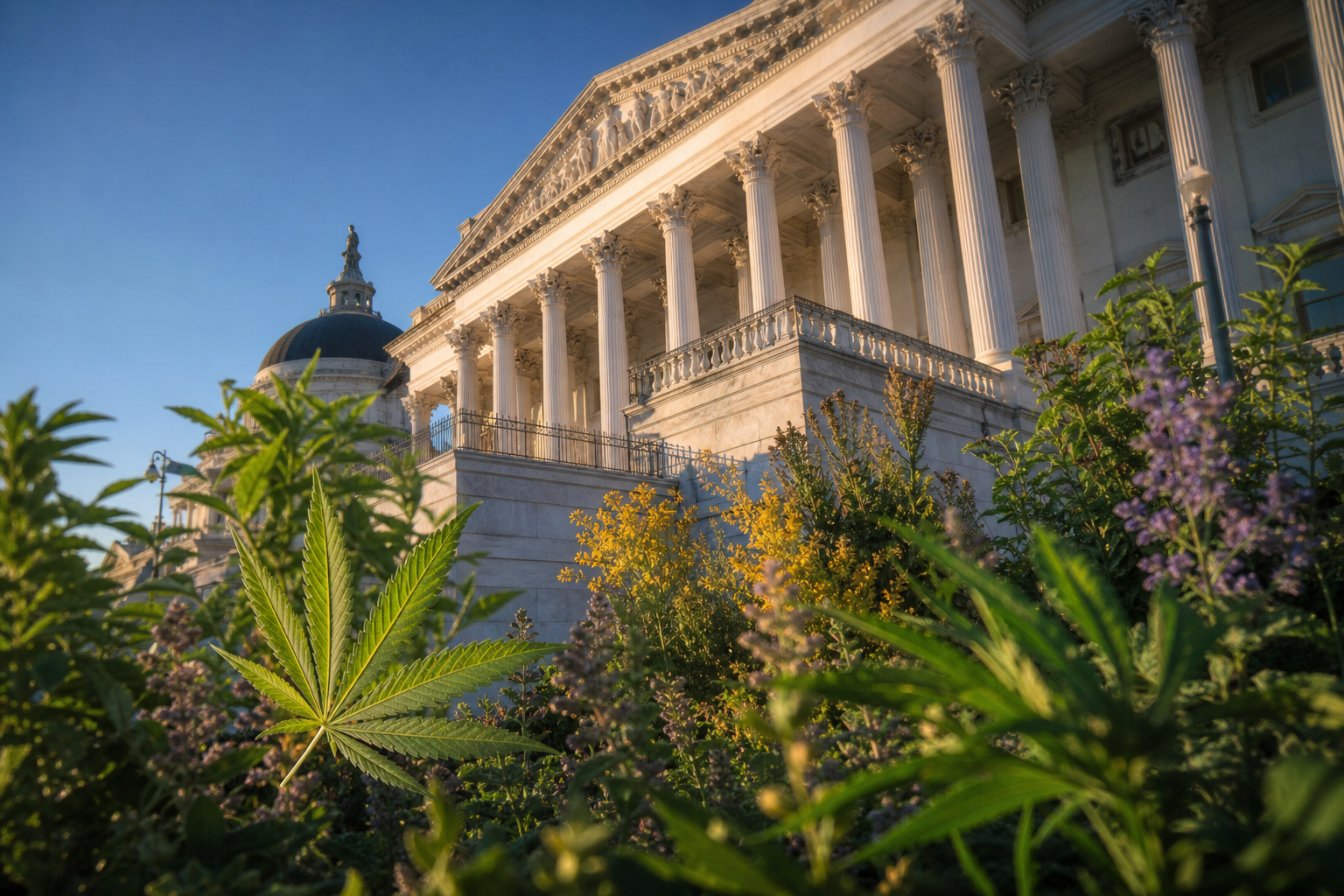
Monthly Policy Roundup: Cannabis Law Changes in July 2026

Jamie
Head Cultivator
July 2026 did not make adult-use weed illegal again in Michigan. It also did not magically drop your shelf price overnight. The real story is quieter: the 24% wholesale tax is still being collected, the DEA hearing ended without a final recreational Schedule III rule, the CRA held a second rules hearing, and the Michigan Supreme Court told judges they cannot blanket-ban legal cannabis on probation just because federal law still says no. For a Metro Detroit shopper, that reads as process in Lansing and D.C. — not a sudden rewrite of the jar on a Detroit shelf.
Primary question this post answers: What cannabis laws changed in July 2026, and how does it affect what I pay and buy in Michigan — especially if I shop in Detroit?
July 2026 at a Glance: What Changed and What It Means for You #
Short answer: adult-use cannabis stayed legal in Michigan, the 24% wholesale tax stayed in force, and the big DEA hearing ended without a final recreational Schedule III rule — so your jar is still a state-legal adult-use product under federal Schedule I.
Here is the month in one pass — read the middle column as a Metro Detroit buyer standing at a licensed counter:
| Change | What It Means For a Detroit-Area Buyer | Effective / Key Date |
|---|---|---|
| 24% wholesale tax still collected | Growers/processors still pay; Detroit shops may absorb or pass costs. Your shelf price is driven more by oversupply than by a new July hike. | In effect since Jan. 1, 2026; Q2 payments due July 20, 2026 |
| DEA broader rescheduling hearing ends | No new federal green light for recreational sales. Medical Schedule III from April still stands; adult-use stays Schedule I for now. | Hearing closed July 15, 2026; briefs due Aug. 17, 2026 |
| Michigan Supreme Court — People v. Hess | Judges cannot blanket-ban state-legal cannabis on probation just because federal law still bans it. | Ruling dated July 6, 2026 |
| CRA second public hearing on rule set 2023-25 LR | Rule language is still moving through process — not a same-day shelf change in Detroit. Watch for final adoption later. | Hearing July 23, 2026 (announced after LARA's May 14 update) |
| June sales & price data released in July | Adult-use flower averaged $58.18/oz statewide in June — a record low in recent CRA-based reporting — even with the wholesale tax in place. Detroit-area menus still sit inside that crowded-market price war. | June 2026 CRA data via The Marijuana Herald |
| Hemp / Delta-8 status unchanged in Michigan | Delta-8 sold outside licensed cannabis shops is still not lawful under Michigan rules — including gas-station shortcuts in Detroit. | Longstanding CRA position (Delta-8 information) |
If you only remember three things from July:
- Nothing banned adult-use flower at licensed shops.
- The tax fight is in court — not over.
- Federal recreational rescheduling is still paperwork, not a final rule.
For deeper dives on the two biggest threads, see our posts on the Michigan 24% wholesale cannabis tax and the DEA hearing wrap from mid-July.
Is My Weed About to Cost More Because of the 24% Tax? #
No sudden July price spike hit the whole state — the 24% wholesale tax has been in effect since January 1, 2026, and June flower prices actually fell to about $58.18 per ounce even while the tax was being collected.
The Michigan Department of Treasury administers a 24% tax on the wholesale price of certain adult-use marijuana sales and transfers. Revenue is supposed to go into the neighborhood road fund. That is separate from Michigan's long-standing 10% retail excise tax plus regular sales tax.
What July actually clarified, per MLive's July 24, 2026 report:
| Fact | Number / detail |
|---|---|
| First-quarter wholesale tax collected | About $34 million |
| Annual road-funding projection used to sell the tax | About $420 million |
| Q2 filing period ended | June 30, 2026 |
| Q2 payments due | July 20, 2026 |
| When Treasury expects to release Q2 receipt data | August 2026 |
| Adult-use flower price trend (H1 2026 vs H1 2025) | Flower retail prices down about 1.5% |
| Adult-use sales revenue (H1 2026 vs H1 2025) | Down about 5.3% |
So if you are standing at a Detroit counter asking "is my weed about to get more expensive because July changed something?" — July itself did not invent a new tax. The tax was already there. What July did was show:
- The state is still collecting it.
- Q2 money was due mid-month.
- Retail flower prices kept falling anyway in a crowded market — including the competitive Detroit retail corridor, where oversupply still does more to the sticker than any single Lansing headline.
Industry voices and lawmakers disagree on what that means. Michigan Cannabis Industry Association Director Robin Schneider told MLive that competition among licensed shops has kept retail prices essentially flat while growers and processors absorb the tax. Sen. Jeff Irwin (D-Ann Arbor), who opposed the tax, told MLive he expects some customers — especially out-of-state buyers — to leave or shift toward the illicit market. The Senate Fiscal Agency had forecast up to about 14.4% lower consumption if the tax fully passed through to customers; CRA-based numbers through June show a smaller shift so far.
Who Is Fighting the Tax — and What Each Side Says #
The tax is still in force. Two industry lawsuits are unresolved. A repeal bill exists, but sponsors and opponents both say a repeal this year looks unlikely.
| Side | Core argument | Status as of late July 2026 |
|---|---|---|
| Michigan Cannabis Industry Association (MiCIA) + business plaintiffs | Lawsuit 1: the tax effectively changed the voter-passed 2018 law and needed a three-fourths legislative vote. Lawsuit 2: the wholesale tax is a disguised sales tax that creates tax pyramiding. | Both cases still open — one at the Court of Appeals (expedited after the Michigan Supreme Court April order), one in the Court of Claims (MLive July 24) |
| State / tax supporters | The tax is a separate road-funding law. Court of Claims Judge Sima G. Patel earlier declined to block it and rejected key industry arguments before the appeal path. | Tax collection continues under Treasury guidance |
| Repeal sponsors (e.g. Sen. Jonathan Lindsey, R-Coldwater; Irwin as co-sponsor on repeal) | Argue the tax hurts legal operators and helps the illicit market. | Irwin told MLive he does not see a universe where this Legislature repeals the tax it just passed |
Plain English for shoppers: you may still feel price pressure over time, but July's data shows the legal market fighting oversupply with low retail prices — not a clean statewide jump to "$420 million worth of sticker shock" overnight. For the longer tax deep-dive, see our 24% tax explainer.
Did the DEA July Hearing Change Anything at Michigan Counters? #
No. The DEA's broader marijuana rescheduling hearing closed on July 15, 2026, but closing the hearing is not the same as issuing a final rule for recreational cannabis — your adult-use jar is still federally Schedule I.
Think of it like a long grievance hearing at work. People testified. Then everyone goes write papers. The final call comes later.
According to Marijuana Moment's July 16, 2026 report and the DEA hearing announcement:
| Step | Status |
|---|---|
| Live hearing at DEA HQ (Arlington, VA) | Ran June 29 – July 15, 2026 |
| Post-hearing briefs from parties | Due August 17, 2026 (optional, max 50 pages) |
| ALJ Derek Julius recommendation | Comes after briefs — no public deadline yet |
| DEA Administrator final decision | Still ahead — can accept, reject, or modify the recommendation |
| Final recreational Schedule III rule | Not issued as of this July wrap |
Two federal lanes you must keep separate:
- Already done (April 2026): The Justice Department moved FDA-approved marijuana medicines and state-licensed medical marijuana products to Schedule III.
- Still in process (summer 2026 hearing): Broader rescheduling that would cover adult-use / recreational marijuana. Until a final rule says otherwise, recreational remains Schedule I.
What that means at a Michigan counter in plain English — including a Detroit dispensary:
- You can still buy adult-use flower from a licensed shop under Michigan law.
- Crossing state lines with it is still a federal problem.
- Medical Schedule III does not automatically turn your recreational eighth into a Schedule III product.
- Banking and tax relief tied to Schedule III help licensed medical channels first; recreational benefits wait on the broader rule.
For the full hearing timeline and next steps, read DEA Rescheduling Hearing Ends: What July's Broader Schedule III Fight Means for You.
Can Michigan Judges Still Ban Legal Cannabis on Probation? #
Not with a blanket "federal law says no" reason. On July 6, 2026, the Michigan Supreme Court held in People v. Hess that trial courts cannot ban state-legal marijuana use on probation solely because cannabis remains illegal under federal law.
That is a big deal for people on state probation who use cannabis the same way other adults do under Michigan's voter-passed adult-use law. It is not a free pass for every case.
According to reporting on the unanimous ruling (MyCannabis summary of People v. Hess; also covered in contemporaneous local reporting including the Detroit Free Press):
| What the court said | What it did not say |
|---|---|
| Judges may not impose a probation ban only because federal law still criminalizes marijuana | That every probationer must be allowed to use cannabis |
| Michigan's adult-use law (MRTMA) controls over conflicting state probation practice on this point | That federal probation or federal sentences changed |
| The April medical Schedule III move does not decide the recreational probation question | That impaired driving or illegal use suddenly became protected |
Practical takeaways:
- If you are on state probation in Michigan and your only "reason" for a cannabis ban was federal prohibition, that order is on shaky ground after Hess.
- A judge may still try to restrict cannabis with an individual reason tied to your case (rehab plan, substance-use risk, etc.). The court left that door open.
- This does not change workplace drug tests, CDL rules, or federal supervision.
For tradespeople and folks bouncing between jobs and court dates: this ruling is about state probation conditions, not about your boss, your union randoms, or crossing into Ohio with a jar in the cupholder.
What Did the CRA Do in July — Rules Hearing and Enforcement? #
The Cannabis Regulatory Agency's biggest July consumer-facing move was process, not a surprise ban: a second public hearing on proposed marijuana administrative rules (rule set 2023-25 LR) on July 23, while monthly disciplinary reports kept showing tracking and compliance issues at licensed businesses.
LARA and the CRA already flagged the need for a second hearing in a May 14, 2026 news release. The first comment round (April–May 2025) drew more than 700 suggested changes. The CRA then made more than 120 revisions — enough that a second public comment period was required before the rules could finish the promulgation path.
July's hearing details, as reported in the Michigan cannabis retail July 2026 update and CRA public notices:
| Item | Detail |
|---|---|
| Rule set | 2023-25 LR — Marihuana administrative rules |
| Hearing date | Thursday, July 23, 2026, 9:00 AM |
| Location | CRA building, 2407 N Grand River Ave, Lansing |
| How to comment | In person, Zoom, or email to CRA-AdminRules@michigan.gov |
| Why it matters to you | Final rules can change testing, labeling, operations, and what shops must do — which can affect product availability and packaging over time |
Enforcement stayed busy too. The CRA publishes a monthly Disciplinary Action Report. MITechNews reporting on the June 2026 DAR said more than 20 licensed businesses were disciplined in June, with METRC (Michigan's seed-to-sale tracking system) non-compliance the most common category. Other frequent issues included surveillance/security, packaging/advertising, and reporting failures.
What that means if you just want a clean jar:
- Enforcement is about licensed operators staying inside the rules, not about making adult-use illegal.
- Tracking violations matter because METRC is how the state tries to keep legal product out of the illicit market.
- A hearing on rules is not the same as new rules taking effect the next morning.
If you are curious how expensive it already is to stay licensed in this market, see Michigan cannabis licensing: the real cost.
Detroit licensing and social equity — what July did *not* rewrite #
July's CRA hearing was a statewide rules process in Lansing. Separately, the City of Detroit still runs local cannabis administration through its Office of Cannabis Affairs, including social equity education and Detroit legacy program information. The state CRA also keeps a Social Equity Program and a Social Equity Grant Program for eligible licensees.
What that means for a Detroit shopper in July: the city rules did not change. No new City Council cannabis ordinance and no Detroit-only price schedule landed this month. Your counter still sits under Michigan CRA rules plus Detroit's local licensing framework. Watch Lansing rulemaking and Detroit's Office of Cannabis Affairs pages for formal changes — not rumor screenshots.
How Much Did Michigan Cannabis Cost and Sell in June 2026? #
June 2026 combined sales were about $253.1 million, and the average retail price of an ounce of adult-use flower fell to $58.18 — so for many shoppers, July's price story was "still cheap," not "suddenly expensive."
Those figures come from CRA data summarized by The Marijuana Herald in July 2026. (Full July 2026 monthly CRA totals were not yet the center of this wrap; June is the last complete month in the mid-summer data drop.)
| Metric | June 2026 figure |
|---|---|
| Combined sales | $253,101,823.51 |
| Adult-use sales | $252,803,635.56 |
| Medical sales | $298,187.95 |
| Avg. adult-use flower price / oz | $58.18 (down from $59.73 in May) |
| Avg. medical flower price / oz | $76.91 |
| Adult-use flower category sales | About $104.2 million |
| First-half 2026 combined sales | About $1.49 billion |
| All-time Michigan regulated sales | About $16.51 billion |
MLive's July 24 analysis adds the year-over-year context:
- Flower sales volume fell about 1.2% in H1 2026 vs H1 2025.
- Vape cartridge volume rose about 12.4%.
- Overall adult-use revenue fell about 5.3%.
- Active retail licenses were down 2 from December to June; active grow licenses were down 29 (about 3%).
Illicit-market dollar totals for June/July 2026 are not published in the CRA monthly sales reports. Those reports cover the legal market. Opponents of the wholesale tax argue some customers will shift underground; supporters point to road funding and legal-market stability. Neither side published a clean statewide illicit sales number for July in the sources reviewed for this wrap.
Bottom line for Detroit shoppers: policy pressure is real, but June's price tag on flower was still near historic lows. Oversupply and store competition are doing as much to your receipt as Lansing headlines. Treasury's Q3 2026 average wholesale price guidance (effective July 1–September 30, 2026) still prices adult-use flower at $641.41 per pound for tax purposes — a statewide wholesale benchmark, not a Detroit menu list. Retail menus in Detroit still move with local competition inside that broader Michigan price war.
Hemp and Intoxicating Products: What Still Holds in Michigan? #
July did not reopen the gas-station Delta-8 loophole in Michigan. The state still treats delta-8 THC as marijuana, so only CRA-licensed cannabis businesses may legally manufacture or sell it.
That rule has been Michigan's baseline since October 11, 2021, when the state closed the hemp-derived intoxicating channel for ordinary retail. The Michigan CRA's Delta-8 consumer page is still the clearest official guidance: delta-8 sold outside the licensed marijuana system is not a lawful hemp loophole here.
| Product path | Legal in Michigan? | Why |
|---|---|---|
| Delta-8 / intoxicating hemp at gas stations, smoke shops, unlicensed online sellers | No (under Michigan rules) | State classifies those THC isomers as marijuana for sales |
| Same products through a CRA-licensed dispensary | Yes, if compliant | Treated like other marijuana products under CRA rules |
| Non-intoxicating hemp (true low-THC fiber/food products meeting law) | Different category | Not the same as intoxicating "hemp" gummies that get you high |
Federal Farm Bill / hemp definition fights continue in the background. Trade and policy summaries in mid-2026 discuss tighter total-THC standards and finished-product caps with a possible late-2026 effective date, but Michigan consumers should treat those as watch items, not as a July shelf flip. Michigan already regulates intoxicating hemp more tightly than the old federal "0.3% delta-9 only" loophole.
If you want the longer gray-area breakdown, read hemp-derived vs. marijuana-derived: the legal gray area.
Practical rule of thumb for July and beyond: if it gets you high and it is not from a licensed Michigan cannabis shop, treat it as a risk — not a bargain.
What to Watch in August and September 2026 #
Watch three clocks: Treasury's Q2 wholesale-tax receipt release (expected in August), DEA post-hearing briefs due August 17, and the CRA's next steps after the July 23 rules hearing.
This section intentionally reaches a few days past the July 31 publish date so you know what is coming next — not because August already rewrote July.
| Watch item | Why it matters at the counter | Timing |
|---|---|---|
| Q2 24% tax receipts | Shows whether wholesale collections are ramping toward the state's road-funding target or staying soft after the Q1 $34M haul | Treasury expects August release after July 20 payment deadline |
| DEA post-hearing briefs | Next written step before the ALJ recommendation on broader Schedule III | Due August 17, 2026 |
| ALJ recommendation + Administrator decision | The actual federal call on recreational Schedule III — still after briefs | No public deadline yet (Marijuana Moment) |
| CRA rule set 2023-25 LR after the July 23 hearing | Could change compliance, testing, and operations that affect product flow | Next promulgation steps after hearing (LARA rules update) |
| 24% tax lawsuits | A court win for industry could eventually change costs; a state win keeps the status quo | Ongoing at Court of Appeals / Court of Claims (MLive; MiCIA) |
| Federal hemp definition changes | Could shrink intoxicating hemp interstate commerce later in 2026 | Implementation talk points to a late-2026 window — plan, don't panic |
What you do not need to do on August 1:
- Throw out legal flower from a licensed shop.
- Assume recreational cannabis just became Schedule III.
- Assume the 24% tax vanished because a lawsuit exists.
Stay tuned the same way you watch overtime: one clock at a time, no rumor mill.
Frequently Asked Questions #
Q: Did any July 2026 law make recreational cannabis illegal again in Michigan? #
No. Adult-use cannabis stayed legal for adults 21+ at licensed Michigan shops throughout July 2026. Voters legalized recreational marijuana in 2018, and July's news was about tax collection, federal hearing process, CRA rulemaking, and a probation ruling — not a repeal of adult-use sales. Possession limits (including 2.5 ounces in public under state law) and licensed retail rules still frame what you can buy and carry.
Q: Is the 24% wholesale cannabis tax still in effect? #
Yes. The 24% wholesale tax remains in force and is still being administered by the Michigan Treasury. It took effect January 1, 2026. First-quarter collections were about $34 million, and second-quarter payments were due July 20, 2026, with receipt data expected in August per MLive. Lawsuits challenge it; they have not paused collection.
Q: Will the DEA hearing lower Detroit dispensary prices this summer? #
Not by itself. Ending the hearing on July 15 does not change recreational Schedule I status or automatically cut Detroit or statewide shelf prices. Marijuana Moment reports post-hearing briefs are due August 17, 2026, then the judge writes a recommendation for the DEA Administrator. Medical Schedule III from April is already law for covered medical products; recreational is still waiting on a separate final rule. Metro Detroit shoppers should watch local competition and June's $58.18/oz statewide flower average (The Marijuana Herald) more than the hearing calendar.
Q: Why did flower prices fall even after the new tax? #
Because Michigan's legal market is oversupplied and highly competitive, so many operators absorbed the tax instead of fully passing it through. CRA-based June data showed adult-use flower averaging $58.18 per ounce, down from $59.73 in May (The Marijuana Herald). MLive reported flower retail prices down about 1.5% in the first half of 2026 versus 2025 even with the wholesale tax live.
Q: What did the Michigan Supreme Court say about cannabis and probation? #
Judges cannot ban state-legal cannabis on probation solely because federal law still treats marijuana as illegal. The unanimous People v. Hess decision landed July 6, 2026 (case summary). Courts may still try individualized restrictions based on a person's own risks. The ruling does not rewrite federal probation, workplace tests, or impaired-driving rules.
Q: What was the CRA July 23 hearing about? #
It was a second public hearing on proposed marijuana administrative rules — rule set 2023-25 LR — not a same-day ban or tax change. LARA said the CRA received 700+ comments in the first round and made 120+ revisions, requiring another hearing. The July 23 session collected more public input before the rules continue toward final adoption.
Q: Can I still buy Delta-8 at a gas station in Michigan? #
No — not lawfully under Michigan's rules. Delta-8 is treated as marijuana and belongs in the licensed cannabis system. The Michigan CRA Delta-8 guidance has been clear for years: intoxicating delta-8 sales outside CRA-licensed businesses are not a legal hemp shortcut. July's federal Farm Bill chatter did not reopen that channel in Michigan.
Q: Do I need to change how I shop because of July's federal news? #
For day-to-day adult-use shopping in Michigan, no major July federal change rewrote the counter experience. Keep buying from licensed shops, keep product in state, and do not assume recreational cannabis is Schedule III yet. The DOJ's April medical Schedule III action and the summer hearing on broader rescheduling are related but not the same thing.
Q: When will we know if the 24% tax gets struck down? #
When a court issues a final ruling that sticks — and that had not happened by late July / early August 2026. MiCIA's two lawsuits remain open (MLive; MiCIA on the Supreme Court expedite order). Until then, Treasury still collects the tax under published wholesale-tax guidance.
Q: What should Michigan consumers watch first in August? #
Start with Treasury's Q2 wholesale-tax receipt numbers and the August 17 DEA brief deadline. Receipts tell you whether the tax is filling the road fund as promised after the Q1 $34 million start (MLive). The DEA brief date tells you the next concrete step after the July 15 hearing close. CRA rule follow-through after July 23 is the third watch item.
The Bottom Line for Michigan Shoppers #
July 2026 was a process month, not a panic month. The 24% wholesale tax stayed live. The DEA hearing ended without flipping recreational cannabis to Schedule III. The CRA kept grinding on rules and enforcement. The Michigan Supreme Court gave probationers clearer protection for state-legal use. And June's price data showed adult-use flower still near $58 an ounce in a crowded market — the same price pressure Detroit-area buyers feel when shops compete for foot traffic.
If you are buying for wellness — sleep, sore joints after a long shift, or just a calmer evening — stick with licensed Michigan shops and lab-tested flower. At Divine Toke, we grow sun-grown organic flower for Detroit neighbors who want clean product and straight talk, not rumor-mill policy takes.
Want the deeper threads behind this roundup?
- Michigan's 24% wholesale cannabis tax explained
- DEA rescheduling hearing ends — July 2026 wrap
- Hemp-derived vs. marijuana-derived: the legal gray area
- Michigan cannabis licensing: the real cost
This article is for educational purposes only and is not legal or medical advice. Cannabis laws change. If you have a court, job, or health question, talk to a qualified attorney or healthcare provider.
Grown in Detroit. Shipped to your door.
Small-batch, sun-grown cannabis cultivated in living soil. Mail-order shipping to all 50 states.