Cannabis and Blood Sugar: The Munchies Are Not a Glucose Swing
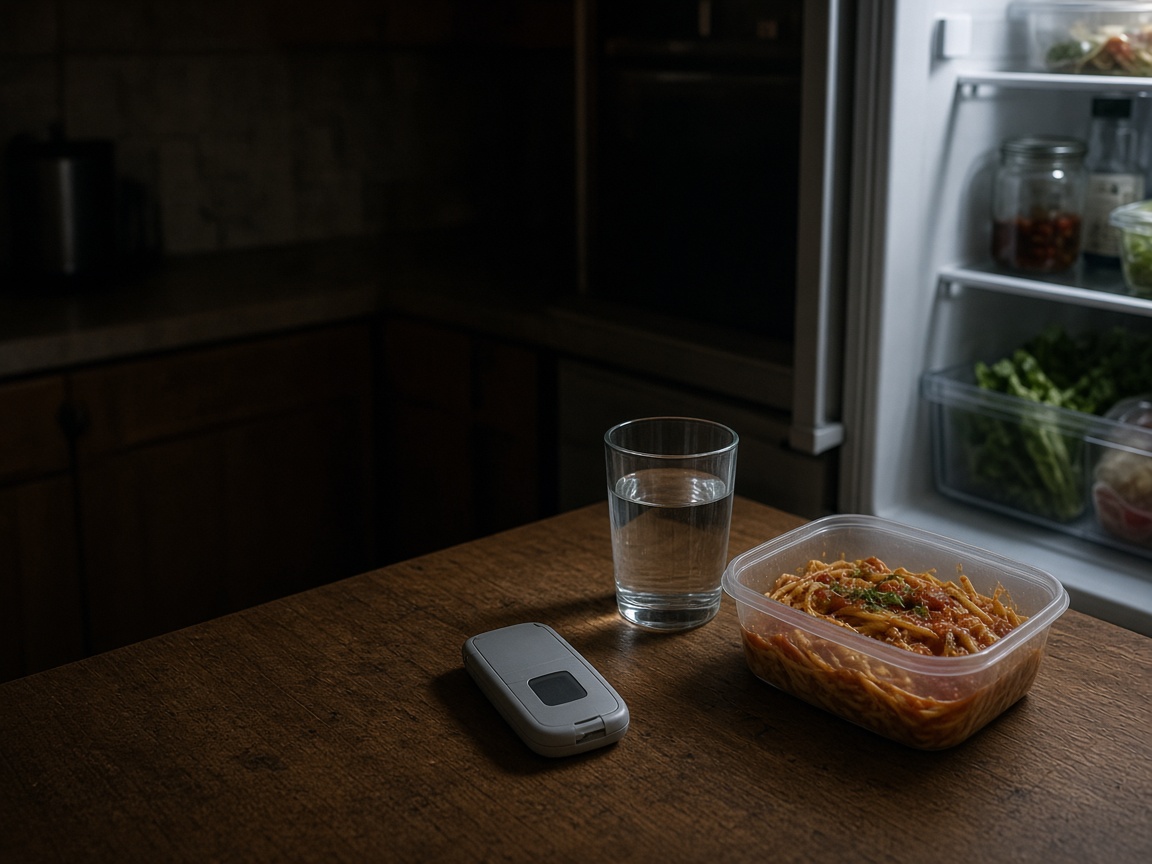
Fridge open, pasta out, meter still face-down. That raid is hunger. A glucose meter reads blood sugar, and studies do not turn the snack attack into a swing.
Questions this article answers
- does cannabis change blood sugar or is it just the munchies
- does weed lower blood sugar
- can the munchies mean my sugar is low
- is cannabis safe if I have type 1 diabetes
- should I stop metformin because of cannabis

Head Cultivator
On this page
The fridge light is the only light on. You told yourself it was water after the joint. The pasta is open anyway, and the glucose meter from this morning is still face-down on the counter.
That raid is hunger. The meter reads sugar in a drop of blood. Cannabis can start the raid. The studies that actually drew blood do not show the raid is a sugar crash.
Divine Toke is a sun-grown cannabis farm in Michigan. We sell flower and 1 gram pre-rolls to adults. We do not sell a blood-sugar plan. A menu in Detroit is not allowed to pretend a jar does that job.
Hunger, weight, and THCV live on other pages. This one stays on glucose: what showed up in a blood tube, what did not, and why a snack attack is a different event from a number.
Does cannabis change blood sugar, or is the munchies just hunger? #
A snack attack after cannabis is hunger. It is not, by itself, a swing in blood sugar. Labs that measured sugar, insulin, or both did not find a simple "weed drops your glucose" switch. Surveys that look kinder on paper are still not a reason to change a diabetes medicine.
Here is the split in one glance.
| What you notice | What it actually is | What a meter still needs |
|---|---|---|
| Fridge open, pasta gone | Hunger. THC can turn the volume up on food. | Nothing. Hunger is not a glucose number. |
| Meter face-down on the counter | A tool that reads sugar in blood when you use it | A fresh drop, a time, and the number it prints |
| Shaky, warm, heart in your collar | Often the high, or worry about the high | A reading, if sugar is the question. A feeling is not the reading. |
| "Lower insulin" in a headline | A survey average across strangers who fasted for a lab | Not your kitchen at 1 a.m. |
| Crackers after the edible lands | Food. Food can move sugar. | A before-and-after only if your clinician already has you checking |
The hunger half of this story already has a home. The appetite and weight pillar covers why THC makes food loud, what surveys say about weight, and where THCV fits. This page will not retell that. If the question is "why am I eating," go there. If the question is "did my sugar move," stay here.
Glucose is the sugar your blood carries so cells can burn it for fuel. A glucose meter, the little device people with diabetes use at home, estimates that sugar from a drop of blood. Insulin is the hormone that helps move sugar out of the blood and into cells. Those are lab words. The night you lived is simpler. You got hungry. The meter did not automatically agree.
Michigan rule R 420.507 bars health-benefit claims on cannabis ads unless a rare FDA path is met. "This eighth steadies blood sugar" is a health claim. If a Detroit board reads like a clinic, treat it as an ad. Ask for the lab sheet on the flower. Do not ask the jar to replace a meter.
What does a fingerstick measure that a fridge raid does not? #
A fingerstick is a number from blood at that minute. A fridge raid is an urge. They can happen on the same night and still not be the same fact.
People mix them up because the body feels loud either way. Low sugar can feel shaky. A strong THC effect can feel shaky too. A racing pulse after cannabis is its own topic. The heart-rate post covers when a fast beat is a stop sign. Do not borrow that page to diagnose sugar, and do not borrow this page to diagnose a heart.
What a meter can tell you, if you already use one:
- Sugar right now, in the unit your meter uses (most U.S. meters print mg/dL)
- Whether this minute is different from the last time you checked
- A number you can write down and show a clinician
What a meter cannot tell you:
- Why you want the pasta
- Whether THC "caused" the number without a check before the joint and a check after
- Whether tomorrow's A1C moved. A1C is the lab test that reflects blood sugar over recent months, not the minute the fridge opened.
A1C is not a fingerstick. If your clinician tracks A1C, that sheet is the long average. The raid is one night. Do not average them in your head and call it medicine.
If you do not have diabetes and you do not own a meter, you do not need to buy one because you got the munchies. Hunger after cannabis is common. It is not a secret low. The appetite pillar is the page for that hunger. Buying a meter to police a snack habit is a different project, and it is a clinician conversation, not a strain pick.
A kitchen log that is not a new dose #
If you already check your sugar, write four fields. Leave the insulin pen alone.
The blank is the point. These are not study results. They are the blanks a clinician can actually use.
| Time | Meter number | What you used | What you ate |
|---|---|---|---|
| Before the session | The number on your screen | Flower, a 1 gram pre-roll, or an edible, and about how much | Nothing yet, or name the meal |
| When the fridge opens | Only if you were already going to check | Same session | What you took out |
| Later, on your usual schedule | Your usual check, not a new schedule invented tonight | Still the same session | What you finished |
A Detroit swing shift makes the "before" easy to skip. You get home from a plant, a hospital, or a job site. The house is quiet. The joint or the gummy happens in the kitchen, next to the raid. If the first number you write is after the pasta, you learned what the pasta did. You did not learn what the cannabis did.
Fasting labs are the opposite clock. Penner's NHANES blood draw came after a 9-hour fast (PMID 23684393). Nine hours without food is not 1 a.m. with the fridge open. Quoting a fasting-insulin percent at the counter mixes those nights.
What to leave off the log:
- A new insulin dose you invented to "cover" the snack
- A skipped metformin you decided on because a headline said weed helps sugar
- A guess that shaky means low, with the meter still face-down
- A strain name as if the cultivar was the glucose result
Divine Toke flower does not belong in the dose column. It can sit in the "what you used" column if that is the truth. The number column is the meter.
What did controlled studies actually measure in blood? #
The human lab work is narrower than the headlines. One matched study ran a sugary-drink test and did not find glucose intolerance in heavy smokers. A later dosing study measured insulin after a brownie and never measured blood glucose at all.
The sugary-drink test in heavy smokers #
Muniyappa and colleagues compared 30 cannabis smokers with 30 people who did not smoke it, matched for age, sex, ethnicity, and body mass index (BMI, a weight-for-height score). The smokers were heavy: a median of 9.5 years of use and a median of 6 joints a day. Median means the middle of the group, not a recommendation.
They drew fasting blood. Fasting glucose was not different. Fasting insulin was not different. They also ran an oral glucose tolerance test, the sugary-drink test labs use to watch how sugar and insulin move after a controlled sugar load. The main insulin-sensitivity score from that drink test did not differ. Measures of beta-cell function (how the pancreas puts out insulin) did not differ. The paper's own conclusion: chronic cannabis smoking lined up with more belly fat packed around the organs, and with a fat-tissue insulin marker, but not with glucose intolerance.
Two numbers from that same paper keep the story honest. Abdominal visceral fat, the deep belly fat, was 18% in the smokers versus 12% in the controls. HDL cholesterol, the fraction people call "good" cholesterol, was lower in the smokers (49 mg/dL versus 55 mg/dL). The smokers also ate a higher share of their calories as carbohydrates. Total calories were not different. Read the abstract on PMC3714514. This is a small matched lab, not a Detroit kitchen, and it does not say heavy use is metabolically free.
So the cleanest "we measured sugar" study in this pile does not show a glucose crash in regular heavy smokers. It also does not show a free pass. More deep belly fat and lower HDL sat next to sugar tests that looked similar. Both sentences are the finding.
The match is the reason this paper is useful. Controls were paired on BMI, so a similar fasting sugar is not "the smokers were just thinner." Hold that next to the Pittsburgh Youth Study, where a link with lower fasting glucose disappeared after adult BMI went into the model (PMC6443484). One design holds weight still and finds no glucose gap. The other finds a glucose link that looks like it rode along with a lower weight. Read them as a pair. Do not let either one pick your dose.
A Michigan shopper hits a third design every week, and it is not a lab. You are not fasting for nine hours. You are not matched to a control. You are in a kitchen. The papers can tell you what a tube showed in their groups. They cannot print a number on a meter you did not use.
The brownie study that skipped the meter #
Farokhnia and colleagues ran a tighter experiment on the hormone side. Twenty cannabis users each did four sessions: oral cannabis, smoked cannabis, vaporized cannabis, or placebo. The active doses were about 50.6 mg THC. They took repeated blood samples for total ghrelin, acyl-ghrelin, leptin, GLP-1, and insulin. Ghrelin is a hunger hormone. Leptin is a fullness hormone tied to body fat. GLP-1 is a gut hormone that shows up around meals. Insulin you already met.
The insulin spike in the placebo session, which the authors tie to the brownie they served, was blunted when cannabis was on board. GLP-1 ran lower under cannabis too. Total ghrelin was higher in the oral session than in the smoked and vaporized sessions. That is not the same sentence as "THC always raises ghrelin against a sober baseline."
Here is the line that matters for this page. In the paper, the authors write that they gave a single dose and did not have blood glucose measurements. The insulin change is real in their data. The glucose change was not measured. A smaller insulin rise after a brownie is not a meter reading. Full text: PMC7031261.
If you remember one table from the lab section, make it this one.
| Study | Who | Blood sugar measured? | What moved |
|---|---|---|---|
| Muniyappa 2013, PMC3714514 | 30 heavy smokers vs 30 matched controls | Yes. Fasting glucose and a sugary-drink test. | Fasting sugar and the main drink-test sensitivity score were not different. Deep belly fat was higher. |
| Farokhnia 2020, PMC7031261 | 20 users, four dosing sessions, about 50.6 mg THC | No. Authors say they did not measure blood glucose. | Insulin spike after the brownie was blunted. Hunger hormones were in the tube. |
| HIV hormone pilot, PMC6200580 | 7 men with HIV | Not a glucose outcome. Insulin was not significantly changed. | Ghrelin and leptin up, PYY down, versus placebo. |
A seven-person hunger-hormone pilot #
A small add-on to a pain trial looked at appetite hormones in men with HIV. Seven men took part. Smoked cannabis, compared with placebo, went with higher ghrelin, higher leptin, and lower PYY. PYY is a gut hormone that usually rises after you eat. Insulin did not change in a significant way. The authors called the pattern consistent with appetite hormones, and they said it looked independent of glucose metabolism. That is their reading of a tiny sample. It is not a fingerstick study, and seven people cannot settle a diabetes question. Cite PMC6200580.
THC fits a lock on nerve cells called a CB1 receptor. A lot of those locks sit in brain circuits that push eating. That is the hunger wiring, in one sentence. The longer map of those locks is the CB1 and CB2 explainer. Fitting a hunger lock is still not a glucose result. The blood tube is the result.
Why do surveys show lower insulin without proving a treatment? #
In one large U.S. survey, current marijuana use lined up with lower fasting insulin and a lower insulin-resistance score. The same pile of surveys does not hand you a glucose treatment.
Penner and colleagues used the National Health and Nutrition Examination Survey (NHANES), the big federal health checkup, from 2005 to 2010. They included 4,657 adults. Blood was drawn after a 9-hour fast. In adjusted models, current marijuana use was associated with 16% lower fasting insulin (95% confidence interval −26 to −6) and 17% lower HOMA-IR (95% confidence interval −27 to −6). Waist size was smaller too. Among people who currently used it, more days of use did not create a clear dose ladder. The paper is PMID 23684393.
HOMA-IR is a score built from fasting insulin and fasting sugar. Researchers use it as a stand-in for insulin resistance, which means the body needs more insulin to do the same sugar job. A lower score in a survey is a clue. It is not a personal lab slip. The Penner abstract leads with insulin, HOMA-IR, and waist. It does not print a percent change for fasting glucose. This page will not invent one.
A second NHANES cut, ages 20 to 59, N=8,478, looked at metabolic syndrome. That is a cluster of risks: high fasting sugar, high triglycerides, low HDL, high blood pressure, and a large waist. Current marijuana use went with a lower odds of that cluster (adjusted odds ratio 0.69, 95% confidence interval 0.47 to 1.00). The unadjusted fasting glucose means in the table were 99.6 mg/dL in never-users, 98.4 in past use, and 97.3 in current use. That is about two points on a meter between never and current. Two points is not a swing. You can see a bigger move from the pasta than from that table. Source: PMC4718895.
Then a follow-up of men in the Pittsburgh Youth Study, n=253, checked a lab panel around age 32. More cannabis exposure tracked with lower fasting glucose and lower HOMA-IR. After the researchers put adult BMI in the model, those links were no longer apparent. The authors say the lower BMI might explain the other lower risk numbers. A link that vanishes when weight is accounted for is not a drug effect you can bank. Paper: PMC6443484.
Hold the Muniyappa lab next to Penner for a second. The survey saw smaller waists. The matched lab, at a similar BMI, saw a higher percent of deep belly fat. Both can be "in the literature." Neither is your body tonight. That clash is why a blog does not get to pick the flattering half and call it care.
How to read the percent without borrowing it #
The range next to a percent is the wobble in the study. It is not a promise for your next fingerstick.
Penner's 16% lower fasting insulin came with a 95% confidence interval from −26 to −6 (PMID 23684393). In plain words, the adjusted estimate landed at 16% lower, and the statistical band around it ran from 26% lower to 6% lower. A band that stays on one side of zero is what researchers treat as a real difference in that dataset. It still describes fasting blood from thousands of adults in a survey. It does not describe the drop of blood on your counter after a joint.
An odds ratio is a different toy. CARDIA's 1.65 for prediabetes means that outcome showed up more often in the current-use group than in the never group, in the authors' adjusted math (PMC4631659). It does not mean 65% of people who smoke will develop prediabetes. Do not turn 1.65 into a personal percentage. The meta-analysis odds ratio of 0.7 is the mirror problem. Lower odds in a stack of surveys is not a shield, and the authors already said the evidence is too weak to call it cause (PMC4801109).
What a survey cannot see on your shift:
- The pasta you eat at 1 a.m. after a joint
- Whether you took metformin that morning
- Whether you skipped dinner on a Detroit swing shift and then raided the fridge
- The difference between a 10 mg edible and a heavy daily smoking habit like the Muniyappa group
Metro Detroit runs on shifts. Auto plants, hospitals, trades, logistics. A fasting lab at 8 a.m. is not the same clock as a night fridge after second shift. If your real life is the night fridge, do not quote a fasting-insulin percent at yourself.
Does cannabis prevent diabetes? #
No. The long study built to watch this found more prediabetes, not protection from diabetes. A meta-analysis that looks protective says its own evidence is too weak to call it cause.
The CARDIA study followed adults from young adulthood and checked marijuana use against prediabetes and diabetes. Prediabetes means blood sugar is high enough to worry a lab and not high enough for a diabetes label. At the year-25 exam, in 3,034 people, current marijuana use carried an odds ratio of 1.65 for prediabetes versus never use (95% confidence interval 1.15 to 2.38). Lifetime use of 100 times or more carried an odds ratio of 1.49 (1.06 to 2.11). There was no association with diabetes at that exam.
Over 18 years, among 3,151 people who were free of prediabetes and diabetes at an earlier exam, lifetime use of 100 or more times carried a hazard ratio of 1.39 for prediabetes (95% confidence interval 1.13 to 1.71). Not for diabetes. Hazard ratio here means the rate of new prediabetes over time, compared with people who never used marijuana. The paper is PMC4631659. An odds ratio above 1 means the outcome showed up more often in that group, after the adjustments the authors reported. It still is not proof that cannabis caused the prediabetes. It is also not proof that cannabis prevented diabetes.
A meta-analysis pooled eight U.S. survey samples from NHANES and the National Survey on Drug Use and Health, 2005 through 2012. Recently active cannabis smoking and diabetes were inversely associated. The summary odds ratio was 0.7 (95% confidence interval 0.6 to 0.8). Inverse means the surveys saw diabetes less often among people who recently smoked cannabis. The authors then write the sentence that should travel with the 0.7: current evidence is too weak for causal inference. Self-report, mixed products, and lives that differ in a dozen other ways sit under that number. Paper: PMC4801109.
Put the two papers in one place so a headline cannot steal the night.
| Paper | What people hope it says | What it actually reports |
|---|---|---|
| CARDIA, PMC4631659 | Weed keeps you out of diabetes | More prediabetes in the using groups. No diabetes link in their models. |
| Eight-survey meta-analysis, PMC4801109 | Weed prevents diabetes | Odds ratio 0.7, and the authors say the evidence is too weak to call it cause. |
| Penner NHANES, PMID 23684393 | Weed fixes insulin | Lower fasting insulin and HOMA-IR in a survey. Not a treatment trial. |
Do not stop metformin because a survey odds ratio looked friendly. Do not start cannabis to "stay ahead of diabetes." Metformin is a prescription. A jar is not a substitute for it. If a clinician started that pill, the stop button is the same clinician.
What if you already live with diabetes? #
If you already have diabetes, the clearer human signal is not a helpful glucose drop. In type 1 diabetes, cannabis use has lined up with more ketoacidosis and a higher A1C. Severe lows were not clearly more common in the clinic survey that measured them.
This is the section to read twice if you use insulin. It is not a dose change. It is a warning label on the research.
Type 1, A1C, and ketoacidosis #
Akturk and colleagues surveyed adults with type 1 diabetes at a large Colorado clinic, in a state where cannabis was already legal. In the full group of 421 people, cannabis use in the prior 12 months was associated with diabetic ketoacidosis (DKA) in that same year. The odds ratio was 1.98 (95% confidence interval 1.01 to 3.91). In a smaller matched comparison of 202 people, the odds ratio was 3.06 (1.03 to 9.19). The matched number is wider and less precise. The direction is the same.
DKA is a dangerous backup of acids that can happen when type 1 diabetes runs short on insulin. It is an emergency, not a snack problem. Vomiting that will not stop, confusion, or trouble staying awake in someone with type 1 diabetes is a reason to get emergency care. Do not wait on a blog to sort that out.
Average A1C in that Colorado survey was 8.4% in the cannabis group versus 7.6% in the non-use group. After adjustment for insulin delivery method, income, and age, the cannabis group still sat about 0.41 A1C points higher. Severe hypoglycemia, a low serious enough to need help from another person, was 15.6% versus 20.3%. The difference was not statistically significant (P=0.17). So this paper is not "cannabis causes dangerous lows." It is also not "cannabis protects you from lows." The DKA and A1C signals are the ones that showed up. Source: PMC6583413.
Why would DKA show up if a direct sugar crash does not? The honest answer from this kind of study is that it cannot prove the path. People talk about missed insulin, a night of vomiting, dehydration, or a high that makes the usual routine slip. Those are plausible. They are not a measured mechanism in that survey. Do not invent a cleaner story than the paper has.
Young people in the SEARCH study #
The SEARCH for Diabetes in Youth study looked at cannabis and clinical outcomes in adolescents and young adults. Of 2,465 respondents with cannabis data, 86% had type 1 diabetes. The main models for A1C were limited to type 1 because the type 2 group was smaller. Current cannabis use was associated with an A1C 0.61 percentage points higher than never-use (95% confidence interval 0.32 to 0.90). Former use lined up with a higher chance of a hospital stay for any cause in the prior year (adjusted odds ratio 1.46, 95% confidence interval 1.03 to 2.07).
The same paper says A1C was not associated with cannabis use in the type 2 group, and the authors say they were likely underpowered to see a difference there. Underpowered means the type 2 sample was too small to trust a "no difference" as a real all-clear. Do not walk a type 2 diagnosis into that sentence and call it safety. Paper: PMC11825399.
What these diabetes papers do not say #
| Claim you might hear | What the studies support | What they do not support |
|---|---|---|
| "Weed lowers my sugar, so I can cut insulin" | Not this. Type 1 data point toward higher A1C and more DKA, not a lower insulin need. | Any change to an insulin dose |
| "Weed causes dangerous lows" | The Colorado survey did not show a clear rise in severe lows. | A promise that lows cannot happen on a night you eat strangely or miss a check |
| "Type 2 is unaffected" | SEARCH did not find an A1C link in a small type 2 group. | An all-clear. The authors say they likely lacked power. |
| "I can pause metformin on smoke days" | No trial in this pile says that. | Stopping metformin |
If you use insulin, the practical risk people describe is indirect. You might eat off your plan, skip a check, or miss a symptom while high. That is a behavior risk. It is not the same as a proven chemical crash, and it is not a reason to "balance" the high by changing a dose on your own.
Do not change insulin because you smoked, vaped, or ate an edible. Do not stop metformin. Do not change any other diabetes pill on your own either. Those medicines are your clinician's job. This article is educational. It is not a care plan.
Why is a Michigan edible a bad clock for guessing sugar? #
An adult-use edible in Michigan is legally built around 10 mg THC per serving, and the effect can show up after you have already opened the fridge. The food is what can move a meter. The THC clock is a separate clock.
The CRA bulletin under R 420.404, revised April 24, 2025, sets the caps licensees have to follow:
- Adult-use infused edibles (gummies, baked goods, and similar): no more than 10 mg THC per serving and 200 mg THC per container
- Medical infused edibles: up to 50 mg THC per serving, same 200 mg per container
- Beverages, adult-use and medical: 10 mg THC per serving and 100 mg per container
A 10 mg square on a Detroit shelf is the legal serving size for adult-use infused edibles. It is not a diabetes dose. A medical 50 mg piece is a legal size for a medical product. It is still not a glucose plan. If you want the longer label walk-through, use the edibles dosing guide. This page only needs the clock.
Swallowed THC takes a different road than smoke. The liver converts a share of it into 11-hydroxy-THC, a form your body makes after you eat it, which is why an edible can feel late and strong. That chemistry is the 11-hydroxy-THC post. The late landing is why people eat "because it has not hit" and then eat again when it does. Both raids are hunger and habit. Neither raid is a meter.
Picture a metro Detroit swing. You leave an auto plant, a hospital, or a job site. You are home after the house is quiet. Maybe you ate a 10 mg gummy in the truck and you are still waiting. The fridge light comes on. By the time the edible feels like something, the container is open. If you use a meter, the number after that pasta is mostly the pasta. Blaming the weed for the number, without a check before the food, mixes two clocks.
Adult use in this state starts at 21 under the Michigan Regulation and Taxation of Marihuana Act. If you are under 21, this page is not your shopping guide. Age does not change the science. It changes who can legally buy the product.
A swing-shift clock #
The edible and the meal run on different timers. The meter, if you use one, only sees the moment you check.
A metro Detroit night often looks like this. None of the times below are a medical schedule. They are the way a late edible fools a hungry person.
- You get home from a hospital, an auto plant, or a trades shift. Dinner was early, or it was a snack in the truck.
- You take one adult-use serving. On a legal infused edible, that serving tops out at 10 mg THC because of the CRA bulletin, not because 10 mg is a sugar dose.
- Forty minutes later you feel ordinary. The fridge opens. This is the same fail the dosing guide already names. The second piece stacks on the first.
- The high arrives after the food is already in you. A fingerstick then mostly reports the food. Blaming the weed, or crediting the weed, skips the before.
Smoke is a shorter clock than a gummy. You feel it while you are still standing at the counter. That does not make the pasta a glucose result either. It just means the hunger and the high overlap in the same half hour. The 11-hydroxy post is why the gummy waits. This page is why the wait is a bad time to guess a meter.
A Michigan medical card changes the legal infused serving to 50 mg, with the same 200 mg container cap, per that CRA bulletin. A bigger legal square is a product rule. It is not permission to skip a check or to edit insulin. If the card is the only reason the piece is that large, treat the size as a reason to go slower, not as a diabetes tool.
A Michigan label is not a glucose test #
The milligrams on a licensed edible are THC. They are not your blood sugar.
The CRA caps how much THC can sit in a serving and in a container. A certificate of analysis, the batch lab sheet a licensed product is supposed to have, tells you what the lab measured in that batch. Cannabinoids. Contaminant checks the state requires. It does not list your fasting glucose, your A1C, or your insulin. If a Detroit counter hands you that sheet, you learned about the product. You did not learn about your blood.
R 420.507 is why nobody gets to staple "for blood sugar" onto that sheet and call it labeling. The hunger page can tell you why the fridge opened. The meter, if you have a reason to use one, tells you the sugar. The label tells you the THC. Three different jobs.
Keep the jobs apart on a tired night. You can want the pasta and still have a sugar number that did not move. You can eat the pasta and watch the number move because of the pasta, while the THC only made the pasta sound like a good idea. You can also have diabetes, skip a check, and learn nothing at all. The third one is the expensive miss. It is not fixed by a tighter story about THC. It is fixed by the check you already know how to do, on the schedule you already have, and by telling your clinician if the night eating became the pattern.
A few edible nights that fool people who are watching sugar:
- Redosing a 10 mg piece at 40 minutes because you "feel nothing." The second piece is still coming. So is the snack.
- Treating a medical 50 mg square like a beginner adult-use piece because both are "one gummy."
- Checking the meter once, after the raid, and deciding the weed raised or lowered you. You missed the before.
- Using the shake of a strong edible as proof of a low, with the meter still face-down.
None of those are a reason to change insulin. They are a reason to separate the high from the food from the number.
What should you bring to a Michigan doctor, and what should you leave alone? #
Bring the log you already keep. Say what you used, when, and what you ate. Do not change insulin. Do not stop metformin because of this page or because of a product.
The visit script, including what a chart note can and cannot do, is the talk-to-your-doctor post. Blood sugar adds three concrete lines to that conversation:
- The last few meter numbers or A1C, if you have them
- Whether the munchies changed what you ate, not how you "felt low"
- Every diabetes medicine by name, including insulin and metformin
A Michigan budtender can read a label. They cannot clear a diabetes plan. R 420.507 is why a shop cannot print a blood-sugar promise on the package. Use that rule as a consumer filter. If the pitch needs the jar to be medicine, walk.
What to say in the room #
Name the time, the product, and the food. Leave the headline percent in the parking lot.
Sentences that give a clinician something to work with:
- "I used cannabis around this time. I ate this afterward."
- "My meter said this before, and this after, on the checks I already do."
- "I did not change my insulin. I did not skip metformin. I want you to know about the night eating."
Sentences that waste the visit:
- "A survey said insulin was 16% lower, so I cut my dose." That 16% is the NHANES finding in PMID 23684393. It is not a unit change on your pen.
- "The munchies means I was low." Hunger is not a fingerstick.
- "The budtender said this eighth is better for sugar." That pitch collides with R 420.507, and the budtender did not see your labs.
The chart note, and what it cannot promise an employer or a court, is already on the doctor post. This page only adds the glucose refuse list. Bring paper. Do not bring a new plan you wrote at the fridge.
Divine Toke grows sun-grown flower in Michigan and sells it as flower and 1 gram pre-rolls. That is a product fact. It is not an effect on glucose. A 1 gram joint is easier to put down than an edible you cannot untake. That is a pacing fact on a snack night. It is still not a diabetes tool, and we will not sell it as one.
THCV gets dragged into this question because a small trial of purified THCV, not whole flower, looked at glucose markers in type 2 diabetes. That molecule and that hedge live on the THCV page. The trial record is PMID 27573936. It is not a reason to swap a prescription for a jar, and it is not the same chemical as the THC that opens the fridge.
Frequently Asked Questions #
Short answers stay on the blood number. None of them is a new diet, a new insulin dose, or a reason to stop metformin.
Does weed lower blood sugar? #
Not in a way you can treat as a yes. In the matched lab of heavy smokers, fasting glucose was not different from controls, and the sugary-drink test did not show glucose intolerance (PMC3714514). A NHANES table shows unadjusted fasting glucose about two points lower in current use than in never-use, 97.3 mg/dL versus 99.6 mg/dL (PMC4718895). Two points is not a treatment.
Does weed raise blood sugar? #
The acute dosing study people cite for hormones did not measure blood glucose at all. Farokhnia and colleagues say they had no blood glucose measurements, even though insulin after a brownie changed (PMC7031261). Food you eat during the munchies can raise sugar. That raise belongs to the food unless a before-and-after check shows something else.
Are the munchies a sign my sugar is low? #
No. The munchies are a hunger signal, and hunger can show up with a normal meter. THC can push eating through brain locks and appetite hormones. The seven-person HIV pilot saw ghrelin rise without a significant insulin change (PMC6200580). If you already check sugar because you have diabetes, use the meter. Do not use the urge for pasta as the test.
Can I use cannabis instead of metformin? #
No. The survey odds ratio of 0.7 for diabetes comes with an author warning that the evidence is too weak to call it cause (PMC4801109). Metformin is a prescribed drug. Stopping it because of a joint is not supported by anything on this page. Talk to the clinician who prescribed it. Do not stop it on your own.
Should I change my insulin because I used cannabis? #
No. Do not change an insulin dose because you smoked or ate an edible. In adults with type 1 diabetes, cannabis use in the prior year was associated with more DKA, odds ratio 1.98, and a higher A1C, not with a demonstrated need for less insulin (PMC6583413). Dose changes belong to your diabetes clinician.
Do edibles change blood sugar more than flower? #
The edible changes the clock and the chance you eat twice. It does not come with a special glucose number in these studies. Michigan adult-use infused edibles are capped at 10 mg THC per serving and 200 mg per container (CRA bulletin, April 24, 2025). The late hit is the 11-hydroxy path, covered in the edible chemistry post. The meter still cares what you ate.
What did the big surveys actually find about insulin? #
Current marijuana use in NHANES 2005–2010 was associated with 16% lower fasting insulin and 17% lower HOMA-IR after adjustment. That was 4,657 adults, with blood drawn after a 9-hour fast (PMID 23684393). A lower survey score is not your fasting insulin tomorrow, and it is not permission to edit a prescription.
Is cannabis safe if I have type 1 diabetes? #
These papers do not call it safe. The Colorado clinic survey linked prior-year cannabis use with nearly double the odds of DKA and with a higher A1C, while severe hypoglycemia was not clearly different (PMC6583413). SEARCH found current use associated with an A1C about 0.61 points higher in young people with type 1 (PMC11825399). If vomiting, confusion, or trouble waking up shows up, get emergency care. Do not ride it out with crackers.
Can a Detroit shop sell weed for blood sugar? #
No. Health-benefit claims on cannabis ads are barred unless a specific FDA path is met. That is R 420.507. A budtender can tell you the milligrams on a Michigan label. They cannot put you on a glucose plan. If the pitch sounds like a clinic, it is marketing.
Does THCV fix blood sugar? #
Purified THCV is a different chemical from the THC that drives a snack raid, and a small diabetes trial of it is not a flower protocol. The walk-through sits on the THCV page, with the trial at PMID 27573936. Do not swap metformin or insulin for a THCV claim on a menu.
What should I write down if I already check a meter? #
Write the time, the number, what you used, and what you ate. Do not write a new insulin dose. A before-food number and an after-food number tell a clinician more than a vibe. Bring that log to the visit described in the Michigan doctor post. The log is information. It is not a self-directed medication change.
When is a snack night an emergency? #
When someone with diabetes is confused, cannot be woken, cannot stop vomiting, or has chest pain or trouble breathing, that is emergency care, not a fridge problem. DKA in type 1 diabetes is the outcome the Colorado survey tied to cannabis use (PMC6583413). A fast pulse with chest pain is the stop sign on the heart-rate page. Call emergency services. Do not wait for the high to fade.
If the pasta is already open #
The raid already happened. Hunger did that. A meter, if you use one, still wants blood. Do not change insulin, and do not stop metformin.
The container is open. THC can assist that hunger if you used cannabis tonight. The urge is not the drop of blood. Write the food down if you are already keeping a log. Leave the pen and the pill bottle on the schedule your clinician set.
If you are curious about flower you can set down, Divine Toke is a Michigan farm. Sun-grown flower and 1 gram pre-rolls are what we sell. We do not sell them as a glucose plan, and R 420.507 would not let us if we wanted to. For the hunger science, read the appetite and weight pillar. For the edible clock on a Detroit shelf, read the dosing guide.
Do not change insulin. Do not stop metformin. If you use those medicines, the person who manages them should hear about the cannabis, the night eating, and the meter log.
This article is for educational purposes only and is not medical advice. Always consult your healthcare provider before starting any new wellness routine.
Grown in Detroit. Shipped to your door.
Small-batch, sun-grown cannabis cultivated in living soil. Mail-order shipping to all 50 states.