A Dog or Cat Ate Cannabis: What to Do
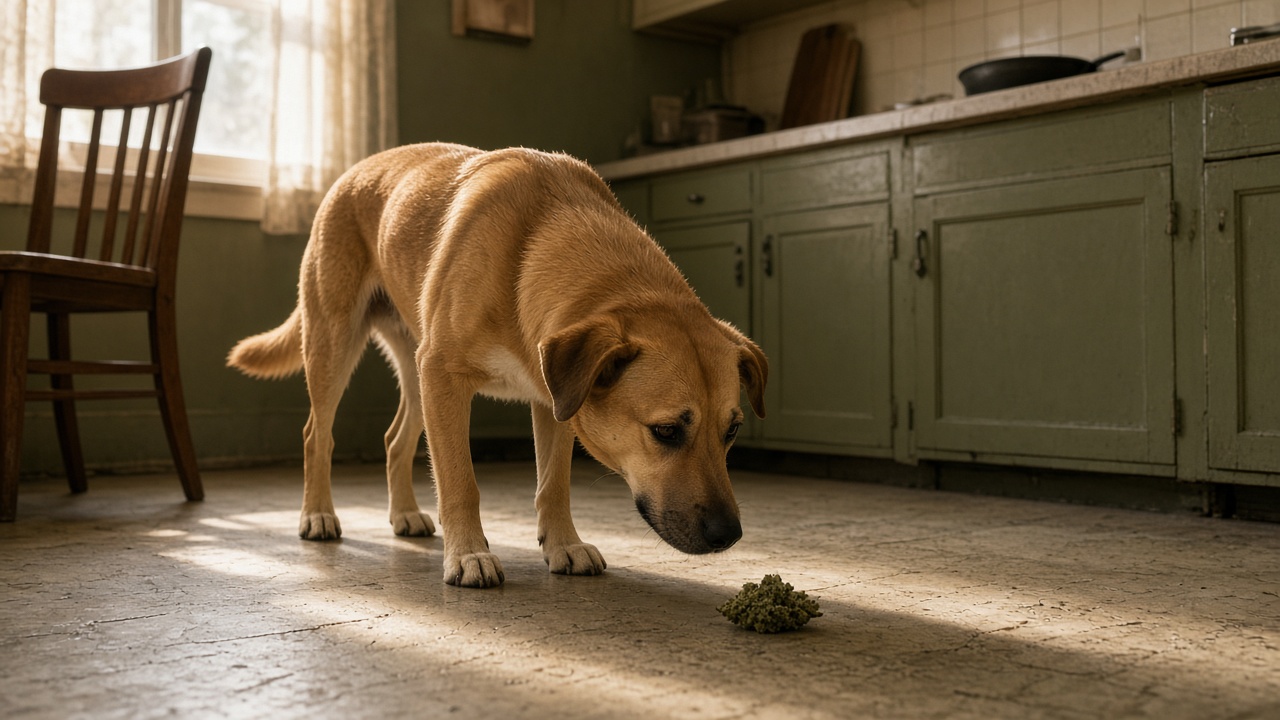
The bud hits the floor and the dog gets there first. THC is toxic to dogs and cats. See the signs, the clock, and which pet poison line to call first.
Questions this article answers
- what happens if a dog eats cannabis
- what to do if my cat eats weed
- ASPCA animal poison control phone number
- signs of THC poisoning in dogs
- is any amount of weed safe for pets
- how long does THC last in a dog

Head Cultivator
On this page
You dropped a bud and the dog got to it first. Take a breath.
Call your vet and a pet poison line now, ASPCA at (888) 426-4435 or Pet Poison Helpline at (855) 764-7661, and read the rest from the car if you need to.
THC, the part of cannabis that makes people high, is toxic to dogs and cats. I smoke, and my tolerance isn't a typical tolerance. That tells you about my body and nothing about your dog's.
I'm Jamie, and I grow for Divine Toke in Michigan. Your veterinarian makes the medical call. This page covers what THC does to a pet, the signs to watch for, and the two poison lines.
Licensed adult-use sales began in Michigan in December 2019, under the Michigan Cannabis Regulatory Agency. A legal jar from a Detroit shop can still poison a dog.
If the pet is wobbly, leaking urine, or hard to wake, head to a clinic and call on the way.
What does THC do inside a dog or a cat? #
THC fits cannabinoid receptors in the brain, and dogs have more of those receptors than people do. A crumb can floor a dog while the person who dropped it still feels ordinary.
Cannabinoid receptors are the tiny locks in the brain that THC fits. The Cornell University College of Veterinary Medicine says dogs are much more sensitive to THC because they have a higher density of those receptors. That canine page was updated December 22, 2025.
The ASPCA marijuana plant page names the poison as delta-9-THC. It lists dogs, cats, and horses. The signs on that page include long sleepiness, vomiting, a wobbly walk, dilated pupils, low blood pressure, and a low body temperature. Seizure, coma, and death are on the list too. Death is marked rare.
Pet Poison Helpline says there is no safe amount of psychoactive marijuana for a companion animal. I won't print a milligram figure and call it fine, because none of the vet-school pages I used give a floor a pet can "handle."
The body can meet the THC twice #
A dog can absorb THC, store it, and meet it again at the next meal. That recycle is one reason the signs outlast a human high.
UC Davis School of Veterinary Medicine puts it in plain steps. THC is absorbed in the gut and stored in bile, the digestive juice. The next meal dumps that bile back into the intestines. The dog is exposed again. Their page is dated November 14, 2019. It says the effects often run 18 to 24 hours in dogs. A human high on that page is about 12 hours.
Why the puddle shows up #
Urine dribbling is one of the classic signs, and the dog-bladder story is still unfinished. The puddle is real, and vets still don't know which receptor in the dog's bladder is behind it.
A 2022 survey of North American veterinarians is the paper Tufts uses for the common-sign list. The authors note that THC can quiet bladder contractions in mice. A drug that hits the same style of receptor did the same in rats. They also write that cannabinoid receptors have not been confirmed in the dog bladder. Treat the puddle as a warning. You don't need the mouse paper to know the dog needs a call.
Cornell says there is no antidote, and the treatment is supportive care. What the clinic does is further down. First, know what you're looking at.
What signs should you watch for? #
The signs you can see at home are a wobbly walk, urine dribbling, heavy sleepiness, and a startle at ordinary sound. Those four show up on vet-school pages and in that 2022 survey.
In the Amissah survey, published April 20, 2022, veterinarians named urinary incontinence most often (195). Then disorientation (182), ataxia (178), lethargy (150), hyperesthesia (134), and bradycardia (112). Ataxia means the wobbly, drunk walk. Hyperesthesia means a startle at sound or touch that would normally be nothing. Bradycardia means a heart rate that is too slow. Those counts are veterinarians reporting a sign they have seen. The survey had 251 participants. 191 of them practiced in Canada.
| What you may see | Clinic word | What it means in the room |
|---|---|---|
| Cannot walk a straight line | Ataxia | Balance is gone. Stairs become a fall. |
| Puddles or constant leaking | Urinary incontinence | A classic THC sign on the survey and on the ASPCA list. |
| Hard to wake, dull, checked out | Depression or sedation | UC Davis lists this with the wobbly walk as the most common pair. |
| Jumpy at a normal hand or noise | Hyperesthesia | Tufts and Washington State both name this. |
| Slow heartbeat | Bradycardia | UC Davis and Tufts list a slower heart. A very slow heart is a severe path. |
| Feels cold | Low body temperature | ASPCA lists low body temperature. The clinic may need to warm them. |
| Big, glassy pupils | Dilated pupils | ASPCA, Cornell, and Washington State all name the eyes. |
| Vomiting or heavy drool | Gut distress | Pet Poison Helpline lists gut distress first on its marijuana page. |
| Seizure, collapse, or coma | Severe toxicosis | ASPCA marks death rare. These signs still mean an emergency clinic. |
Washington State University veterinarians described the walk on April 17, 2023. Dr. Linda Martin said the animal cannot walk a straight line. In a bad case they may not walk at all. They look lost, and they stop answering their name. Urine leaks. Pupils widen.
A stairwell is a bad place for that walk. Cornell says to keep a sick dog away from stairs, and that advice only applies once a vet has cleared home watching. If they can't stand, go to a clinic.
Dogs and cats do not share one route #
Dogs are the pets who usually eat it. Cats get sick too, and smoke is a real route for them. The ASPCA lists both species on the plant page.
The University of Illinois College of Veterinary Medicine published Dr. Caroline Tonozzi on January 10, 2020. She said dogs are more likely to ingest cannabis. Cats are more likely to be sickened by smoke. In dogs she named dribbling urine, swaying, drooling, and being less alert. In cats she described a neurologic look: the cat reacts to sights that are not there, and the pupils may be wide.
UC Davis says dogs are more commonly affected than cats. Dr. Martin at Washington State has still seen cats with the same core signs she sees in dogs. She also said a smaller dog or cat feels it harder than a larger animal. Size matters here: a Chihuahua or a barn cat gets hit harder than a Great Dane.
Pet Poison Helpline says inhalation of psychoactive marijuana smoke can poison a pet. Blowing smoke at a cat on the windowsill counts as an exposure, so call about it.
When the signs mean go now #
Barely breathing, a seizure, or a pet who cannot stand belongs in an emergency clinic. Call on the way.
Pet Poison Helpline lists collapse, seizure, and trouble breathing as severe signs. Tufts says a bad case can be in a coma. The breathing rate can be low. Seizures can start. The gag reflex can be gone. That reflex is what keeps vomit out of the lungs. Illinois says pets can go into a coma within a few hours of ingestion. Dr. Martin described the fatal path as profound sedation, a heart that keeps slowing, and low blood pressure. She said that combination can slow the whole body the way a heavy sedative would.
Most pets survive. The rare deaths still happened, so don't use "usually" as a reason to skip the call.
How soon do signs start, and how long can they last? #
Eaten cannabis often shows within 30 minutes to a few hours, and the signs can last into a third day. Smoke can show in minutes. The schools don't agree on one clock, so here's what each one prints.
| Route | When signs can start | How long the pages allow |
|---|---|---|
| Eaten flower, edible, or butter | UC Davis: often 30 to 60 minutes. Cornell and Tufts: 30 minutes to several hours. | UC Davis: effects often 18 to 24 hours, recovery usually 24 to 36 hours, sometimes 72. Cornell: up to 72 hours, most dogs 1 to 2 days, severe cases about 3 days. |
| Inhaled smoke | UC Davis: 6 to 12 minutes. | Cornell: secondhand smoke can cause mild signs. The clock is still a vet question, not a guess from the couch. |
| Anything already in the bile | The next meal can re-expose the dog. | UC Davis ties this recycle to a longer course than a human high. |
Tufts Cummings School of Veterinary Medicine published its article on January 17, 2023. It uses the same start, from 30 minutes to several hours, and a course up to 72 hours. Dr. Laura Vega at Washington State said many pets seem like themselves again within 24 to 48 hours. She included pets who had eaten a large amount. The Amissah vets mostly reported outpatient care, or a hospital stay under a day. The paper also says the wider literature usually has recovery inside 72 hours.
A quiet dog in the first half hour isn't a cleared dog. The signs may still be on the way. Call before the wobble starts, not after you've talked yourself into bedtime.
Michigan winters keep dogs inside from dinner until morning, and the floor search runs for hours. A bud dropped by the door at the end of a shift is still in range at 10 p.m.
Which poison line do you call from Michigan? #
From a Detroit apartment or any Michigan town, you call a national pet poison line or your own vet. I looked for a Michigan State University page on pets and cannabis and found nothing I could cite, so there's no campus protocol here.
Cornell's canine page prints both national numbers. Use those. The Ithaca clinic phones on that page belong to a New York hospital. Leave them.
| Line | Number to call | What they publish about the fee | Hours |
|---|---|---|---|
| ASPCA Animal Poison Control | (888) 426-4435 | A consultation fee may apply. The public page does not print a dollar amount. | 24 hours, every day |
| Pet Poison Helpline | (855) 764-7661 | $99 per incident. Follow-up calls for that same incident are included. | 24 hours, every day |
I opened both sites for this page. The ASPCA number is the one in the header: (888) 426-4435. Pet Poison Helpline's header is (855) 764-7661, and the $99 fee is printed on its homepage. Pet Poison Helpline says it is formally affiliated with the College of Veterinary Medicine at the University of Minnesota.
What that call is for #
The helpline call is a calculation and a plan, shared with your vet if the pet needs a clinic. You can make it from the car if the signs mean driving.
Pet Poison Helpline says an expert takes the exposure, runs the numbers, and decides whether home watching is enough. If a clinic is needed, they build the plan with your veterinarian. Follow-up calls on that same incident are included in the $99.
The ASPCA page says you reach veterinary toxicology staff, day or night. A consultation fee may apply. Their public page still doesn't print a dollar figure, and I won't guess at one.
Cornell prints both numbers on the canine cannabis page for this exact situation. Use either line, and call your own vet too. One of those three calls should be happening before you finish this article.
Call from the kitchen if the pet is still standing, or from the car if you're already moving. Keep the package where you can read the milligrams. If a seizure starts, the clinic comes first and the history comes after.
The number on a human medicine bottle goes to the wrong desk for a dog or a cat. Use the two lines in the table, and call your own veterinarian or an emergency clinic.
What to have in your hand #
Read them the product, the time, the weight if you know it, and the signs you see right now. An edible label is useful because it has to carry a THC number.
R 420.403 tells a producer to put THC and CBD concentrations on an edible label. Have the pack in your hand when you call. If the pack is gone, say so.
Tell them all of this:
- Dog or cat, and the weight if you know it
- Flower, gummy, chocolate, butter, roach, or a concentrate
- The THC milligrams printed on the label
- Chocolate, xylitol, raisins, or a lot of fat in the same food
- What time you think it happened
- Whether they are walking, leaking urine, vomiting, or hard to wake
- Any other medicine the pet already takes
A guest bag in a coat counts. A roommate's vape counts. A dog left alone after a shift counts. Tufts says many cases are unwitnessed. Owners report no known access, and the pet had been outside. Hiding the jar from the vet hides the diagnosis. Cornell says the diagnosis is the history, the signs, and the exam.
What should you do in the first hour? #
Get the pet away from the rest of the cannabis, check the breathing, and call. Do not make them vomit. Do not pour anything down their throat as a home fix.
Pet Poison Helpline's homepage prints the order:
- Remove the pet from the area.
- Check that the pet is breathing and acting as usual.
- Do not give any home antidote.
- Do not induce vomiting unless a veterinarian or Pet Poison Helpline tells you to.
- Call (855) 764-7661, and call your vet or an emergency clinic if they need to be seen.
The ASPCA plant page says to hurry too: call (888) 426-4435 or your veterinarian as soon as you suspect an ingestion.
Cornell is specific once signs have started. A dog who is already affected should not be made to vomit, and should not be given activated charcoal. Activated charcoal is a black powder clinics use to bind some poisons in the gut. The risk is aspiration, which means vomit or charcoal gets into the lungs. Tufts says the same thing about decontamination once the pet is symptomatic.
Washington State adds the timing from the clinic side. If they catch it early, a veterinarian may induce vomiting. Charcoal is a clinic tool in that early window. Neither one helps a pet who is high from smoke, and neither is a kitchen job.
If a vet says the case is mild enough for home, Cornell wants a quiet spot away from stairs. Dim the room. Keep them from falling. That home plan comes from the vet after the call. A scary bill is a bad reason to skip the clinic.
Bring the package, the leftover brownie, and a note of the time. A shop label with milligrams saves the poison line from guessing. A pan of homemade butter has no label. Tell them that too.
What to watch while the phone rings #
Stay with the pet and watch the breathing, the legs, and the temperature until a person answers. Pet Poison Helpline already told you to get them off the cannabis and to check that they are breathing.
These changes mean you head for a clinic while the call is still connected:
- Breathing turns slow, noisy, or uneven. Tufts lists a low breathing rate in severe cases.
- They cannot stand, or they fall as soon as they try. Dr. Martin at Washington State described animals who cannot walk at all.
- A seizure starts. The ASPCA plant page and Pet Poison Helpline both list seizures.
- They vomit while they are too dull to lift the head. Cornell's warning about inhale-the-vomit risk is why a stair landing is a bad waiting room.
- The body feels cold. The ASPCA lists low body temperature. A blanket can take the chill off the fur. The clinic still handles real warming.
Skip the extra snack until the poison line says food is allowed. UC Davis says THC stored in bile comes back into the gut at the next meal. A "soaking up" treat can be a second exposure.
Tufts says cannabis cooking trash should go out right away. A dog who missed the pan can still find the wrapper in the bin. A closed can, or a bag set outside the dog's reach, closes that route. Photograph the label if the food itself is unsafe to carry. Cornell wants the product type, the amount, and the time. A photo holds those three when your hands are on the pet.
How do flower, edibles, butter, and smoke differ? #
Flower, a gummy, a pan of butter, and smoke are different emergencies that share the same THC. The add-ins and the clock change what the vet has to rule out.
| What went in | What changes for the pet | What to tell the line |
|---|---|---|
| Loose flower or a bud | Still THC. Depression and a wobbly walk are the pair UC Davis sees most. | About how much plant, and the time. |
| A licensed edible | The label has milligrams. A legal piece can still make a dog sick. | Read the THC line out loud. |
| Homemade butter or a brownie | No shop cap. Fat carries a lot of THC. Chocolate may be in the same pan. | Say it was homemade, and name the other food. |
| A concentrate or vape oil | Cornell says these can hold far more THC than plant material. | Bring the cartridge if you can do it safely. |
| Smoke in the room | Signs can start in 6 to 12 minutes. Charcoal does not fix a smoke high. | Say it was inhaled, not eaten. |
| A sidewalk roach | Cornell says dogs eat discarded remnants on walks. | Say where you were, and if the paper had tobacco. |
A Michigan label is a shop rule #
The milligram cap on a licensed edible is a rule for adult shoppers. The cap limits what a shop may sell. A dog can still get sick under it.
The CRA bulletin dated April 24, 2025 sets adult-use food edibles at 10 milligrams of THC in one piece. The container cap on that row is 200 milligrams. Medical food edibles on the same table are 50 milligrams in one piece, with the same 200 milligram container cap. Drinks are a different row: 10 milligrams in a serving and 100 milligrams in the container. The bulletin's total THC adds delta-8 and delta-9.
R 420.404 is the rule behind that maximum. A shop may sell a little over the posted cap, up to 10 percent. A 200 milligram container can test near 220. Read the label, and mention that slack if the line asks how exact the number is.
One legal piece can still sicken a dog. Homemade butter never went through that bulletin, so the pan has no 10 milligram piece cap.
Homemade butter has no label to read #
Baked goods made with strong THC butter have killed dogs. The Meola series is the record I trust for that.
Meola and colleagues reviewed 125 dogs at two Colorado hospitals from 2005 through 2010. The paper is in the Journal of Veterinary Emergency and Critical Care, 2012. Cases at those hospitals rose 4-fold. Medical marijuana registrations in that state rose 146-fold. Two dogs died after eating baked goods made with medical-grade marijuana butter. Those hospitals were in Colorado. Keep the geography with the number. A pan of butter in a Michigan kitchen has no 10 milligram piece cap.
UC Davis names those same two deaths and says a brownie or cookie can add chocolate signs on top of the THC. Illinois names the co-ingestions Dr. Tonozzi worries about: chocolate, raisins, xylitol, and high-fat butter or oil. Xylitol is a sweetener that can crash a dog's blood sugar and damage the liver. It is a second poison in the same mouthful. Say the word if the wrapper has it.
Tufts, pointing at a 2018 veterinary toxicology review, says some products reach 80 to 90 percent THC. That figure is for concentrates. Cornell says concentrates and oils can sit far above plant material, and synthetic vape cartridges are often very strong. A chewed cartridge holds a different amount than a dropped bud. Bring it if you can do that safely. If the pet is still chewing, get the rest away from the mouth and call.
Smoke, roaches, and a hike #
Secondhand smoke can cause mild signs, and a dog will also eat what people drop outside. The kitchen floor is the common story. Walks, smoke, and a pan of butter are the others.
Cornell says secondhand smoke can produce mild signs, and it says to keep from smoking around pets. UC Davis times inhaled signs at 6 to 12 minutes. Washington State says vomiting and charcoal are the wrong tools for a smoke case. The THC never sat in the stomach waiting to come back up.
Cornell also says to watch dogs on walks so they don't eat discarded cannabis. A roach on a sidewalk still counts, and tobacco in a mixed blunt would be another poison. Say so if you saw it.
One more route sounds strange, and Cornell prints it. A dog can eat human feces from a person who had THC in their system, and the page names hiking and camping. A weekend up north can include that exposure. Tell the vet if that's what you saw.
The Amissah survey's most commonly suspected product was edibles (n = 116). The most cited reason was ingestion while the pet was unattended (n = 135). That's the shift-worker morning: out the door at 6 a.m., jar on the table, dog home all day.
Synthetic sprays are a harder case #
A gas-station spray or other synthetic cannabinoid can look like cannabis and behave worse. Ordinary THC still needs a vet. Synthetics add signs the flower pages treat as a step up.
UC Davis says synthetic cannabinoids may cause tremors, aggression, and seizures. The same page calls the prognosis good for treated marijuana toxicosis. It calls the prognosis fair when the poison is synthetic. Fair means less comfortable odds, and you still go.
Tufts separates synthetic marijuana in the sign list. Tremors and seizures may be reported in those cases, on top of the wobbly walk and the urine dribbling. If the package is a brand you do not know, read that name to the poison line. Do the same if the oil came from outside a licensed shop. Do not decide it is "just weed" because it smells herbal.
A licensed Michigan flower jar and a sprayed leaf are different products. The dog can't tell them apart, so you tell the poison line which one it was.
What will the veterinarian actually do? #
There is no antidote, so the visit is support while the THC wears off. Fluids, temperature, a quiet kennel, and medicine for nausea or seizures if the vet chooses them.
Cornell says treatment is intravenous fluids and other supportive medicine, plus close watching. Severe cases may get intravenous lipid emulsion. That is a fat drip in the vein, used because THC dissolves in fat. Some severe cases need a ventilator, a machine that breathes for them, and drugs to stop seizures.
Tufts agrees on fluids and on protecting the pet from falls. For worse cases they say a fat drip or hemodialysis can be considered. Hemodialysis is a machine that filters the blood. Tufts also says the fat drip is controversial. Reported results do not all agree, and the mechanism in these cases is not fully understood. As of that January 17, 2023 article, Tufts was enrolling dogs in a trial of the fat drip. I don't have a result from that trial to quote. The vet in front of you makes the call, and nobody should buy a lipid bag for the kitchen.
UC Davis lists anti-nausea drugs, fluids, warming or cooling, and nursing care. They may treat agitation, tremors, and seizures. In some cases the clinic induces vomiting or gives charcoal, when the timing still allows it. Intralipid shows up there for severe cases. Their prognosis line is good when the dog is treated. Most dogs recover with no long-term damage. Full recovery is often 24 to 36 hours, and some cases take up to 72 hours.
Washington State sees about one pet a week for cannabis intoxication at the teaching hospital in Pullman. That figure belongs to Pullman. If they miss the early window, the plan is fluids, blood pressure checks, and keeping the animal comfortable. Dr. Vega said many of those pets are through the worst of it inside two days.
Home tonight, or a night in the clinic #
Most pets in the big vet survey went home for monitoring, and the dangerous ones did not. The split is the vet's, after they see the animal.
The Amissah veterinarians named outpatient monitoring as the treatment they used most. Intravenous fluids were next. Many of those hospital stays were under 24 hours. The paper says the wider literature usually sees recovery inside 72 hours.
Cornell draws the same line in the room. A mild case, once a vet has said so, can be a quiet corner away from stairs. A severe case can need the fat drip, drugs for seizures, or a ventilator.
Tufts calls the outlook excellent for mild and moderate cases. Almost all of those pets fully recover. The same article says severe pets may need intensive care. The reasons it names are low breathing, pneumonia from inhaled vomit, and seizures that keep going. Tufts also says those lives can still be lost in intensive care.
A wobbly dog who is still easy to wake has a different night ahead than a dog who can't stand. The clinic sorts that out, and the kitchen floor can't.
A negative urine stick does not clear the dog #
Human urine drug screens miss dogs often enough that a negative result changes nothing. Cornell, Tufts, and the Meola paper all say this.
Cornell says the human screens are not reliable in dogs and often read false negative. Tufts explains two reasons. The test looks for metabolites, the breakdown pieces, that people make. Dogs make extra metabolites the human test was not built to see. THC can also stick to glass and rubber in some urine cups, so the sample looks clean. Tufts points at a 2021 paper on 19 dogs for that metabolite problem. Meola's 2012 series also found the urine screen unreliable. Some dogs were known to have eaten marijuana. They still tested negative.
Illinois said the same thing about false negatives, and said a human blood test is too slow to steer treatment. Diagnosis stays clinical, which means the history and the exam. What you tell them about the product counts for more than a drugstore stick.
The Amissah paper also reports 16 animals who died in association with cannabis toxicosis, and it says other toxins and underlying illness were not ruled out. I can't turn 16 into a clean THC death toll, and I won't wave the deaths off either. Meola's two butter deaths are the cleaner record, because the exposure was known.
CBD oil is not the fix #
Do not pour CBD oil into a sick dog or cat and wait. Cornell says there is no antidote for THC intoxication. CBD, cannabidiol, is a cannabis compound that doesn't cause the high, and it still won't rescue a pet from THC.
Dr. Tonozzi said there is very little science behind the health claims sold on pet CBD products. She also said commercial bottles often do not match the strength on the label. Some run hot. Some run low. A "CBD" tincture can contain THC. Adding more cannabinoids to a pet who is already toxic is a second exposure.
Nothing I grow is a pet treatment, and no jar on a shelf is a canine antidote.
How do you keep the next bud off the floor? #
The next save is a latch, a clear counter, and a guest who keeps the bag closed. Hosting manners are on another page, and this one is about the animal.
The short lock-it-up note for pets is in cannabis etiquette for sharing at home. I'm not reteaching how to pass a joint here. THC is toxic to dogs and cats, so the bag shouldn't sit at dog height while people talk.
Child-resistant packaging is a timed test for a shop pouch, and a dog can still chew the bag. A lockbox does the job better. The house steps, including the candy-bowl week, are in child-resistant cannabis storage. That page covers the kids, and this one covers dogs and cats.
How to store your weed covers keeping flower fresh. A fresh jar on an open counter is still a dog problem. That page handles humidity, and this one handles the latch.
A few prevention lines from the vet schools, pulled off the campus sites:
- Washington State says do not store cannabis next to pet food or treats.
- They also want a container that stays shut if it is dropped, chewed, or batted around.
- Ask the friend who is watching the pet how their cannabis is stored before you leave.
- Tufts says trash from cannabis cooking goes out right away, and none of that food is a pet snack.
- Cornell says guests should secure their own bags.
- A smaller pet feels a given amount harder. The cat on the counter and the little dog by the boots are the ones to picture.
A long indoor evening turns the floor into the dog's whole hunt. A bud that falls out of a coat by the door stays in range until you pick it up. A roommate off a shift sets a jar down "for a second." The Amissah paper files that under unattended ingestion, and a second is enough.
Questions people ask after a pet eats cannabis #
Call first if the pet already ate it. The answers below are the ones people ask once the line is ringing.
Can a dog die after eating cannabis? #
Death is uncommon, and it is on the record. The ASPCA plant page lists death as rare. Meola's series of 125 dogs included two deaths after medical-grade THC butter in baked goods. The Amissah survey reported 16 animals who died in association with cannabis toxicosis. That paper says other toxins and illness were not ruled out. Cornell says most dogs recover fully in one to two days with care. Severe exposures can take about three days.
How long can the signs last in a dog? #
Plan on a day, and leave room for a third day. UC Davis says effects often last 18 to 24 hours. Recovery there is usually 24 to 36 hours, and sometimes 72. Cornell allows up to 72 hours. Dr. Vega at Washington State said many pets seem normal again within 24 to 48 hours. She included large amounts.
Should I make my dog vomit at home? #
No. Do not induce vomiting unless a veterinarian or Pet Poison Helpline tells you to. That sentence is on the helpline homepage, next to the ban on home antidotes. Cornell says a dog who is already showing signs should not be made to vomit, because they may inhale it. Washington State lets the clinic induce vomiting only when they catch the ingestion early.
What if my cat ate cannabis or breathed the smoke? #
Cats can be poisoned by THC, and smoke is a known route. The ASPCA lists cats beside dogs. Illinois says dogs more often eat it and cats more often get sick from smoke. Cat signs can include wide pupils and reacting to sights that are not there. Dr. Martin at Washington State says the core signs she sees in cats match the ones she sees in dogs.
Is any amount of cannabis safe for a pet? #
No amount is a safe amount. Pet Poison Helpline says there is no safe amount of psychoactive marijuana for a companion animal. Washington State says not to share smoke or edibles, even a tiny amount. A high tolerance in an adult says nothing about a dog or a cat. Smaller pets feel a given amount harder.
Will a human urine drug test clear my dog? #
A negative human urine test does not clear a dog. Cornell says those screens often read false negative in dogs. Tufts says the test was built for human metabolites, and THC can stick to glass or rubber in the cup. Meola's 2012 paper also found the screen unreliable, including known ingestions that still tested negative.
What if the edible also has chocolate or xylitol? #
Call anyway, and say the other ingredient out loud. Illinois lists chocolate, raisins, xylitol, and high-fat butter as co-intoxications that change the plan. UC Davis says chocolate in a brownie or cookie can add signs on top of the THC. Xylitol can drop a dog's blood sugar and injure the liver. Meola's two deaths were butter baked goods, so the fat itself is part of the history.
Can I give my pet CBD oil to fix a THC exposure? #
CBD oil is not an antidote. Cornell says there is no antidote for THC intoxication. Illinois says there is very little science behind pet CBD claims, and the strength in the bottle often misses the label. Some of those products contain THC. Adding a second cannabis product to a sick pet is another exposure.
Do I call if my pet seems fine right now? #
Yes. Signs from something eaten can wait 30 minutes to a few hours. UC Davis puts many eaten cases in a 30 to 60 minute window. Tufts uses 30 minutes to several hours. A normal-looking pet can still be early, and some exposures are never witnessed. Pet Poison Helpline says the sooner you call, the safer the case is to treat.
Which number do I call in Michigan? #
Call your vet, plus (888) 426-4435 or (855) 764-7661. Those are ASPCA Animal Poison Control and Pet Poison Helpline. Both answer 24 hours a day. ASPCA says a consultation fee may apply and does not print the dollar amount on its page. Pet Poison Helpline charges $99 per incident, with follow-ups included. I did not find a separate Michigan pet-cannabis hotline to add.
What should I bring to the clinic? #
Bring the package, the leftover food, and the time you think it happened. Cornell says product type, amount, and timing guide the plan. An edible label has to show THC concentration under R 420.403. Read the milligrams. Do not guess from the size of the square. If it was homemade butter, say there is no label and no shop cap.
If the pet might have eaten it, use the numbers #
Nothing I grow at Divine Toke is a pet medicine, and cannabis is toxic to dogs and cats. If a dog or cat in the house might have eaten some, call your veterinarian. Then call (888) 426-4435 or (855) 764-7661.
For hosting with pets around, see cannabis etiquette. For the lockbox and the candy bowl, see child-resistant storage. For jar freshness, see how to store your weed.
This article is for educational purposes only and is not medical or veterinary advice. If a dog or cat may have eaten cannabis, call a veterinarian or one of the pet poison lines above. Always consult your healthcare provider before starting any new wellness routine.
Grown in Detroit. Shipped to your door.
Small-batch, sun-grown cannabis cultivated in living soil. Mail-order shipping to all 50 states.