The Federal Hemp THC Ban Has a December 11 Deadline. What Changes for Michigan Shoppers
The gummy by the gas-station register has a December 11 federal cutoff. See which hemp THC products it hits, and what a Michigan adult can still buy now.
Questions this article answers
- what happens to gas station THC gummies in December 2026
- is delta-8 still legal in Michigan after the federal hemp change
- are hemp THC drinks banned December 11 2026
- is THCa flower from a smoke shop still hemp
- what cannabis stays legal for a Michigan adult

Head Cultivator
On this page
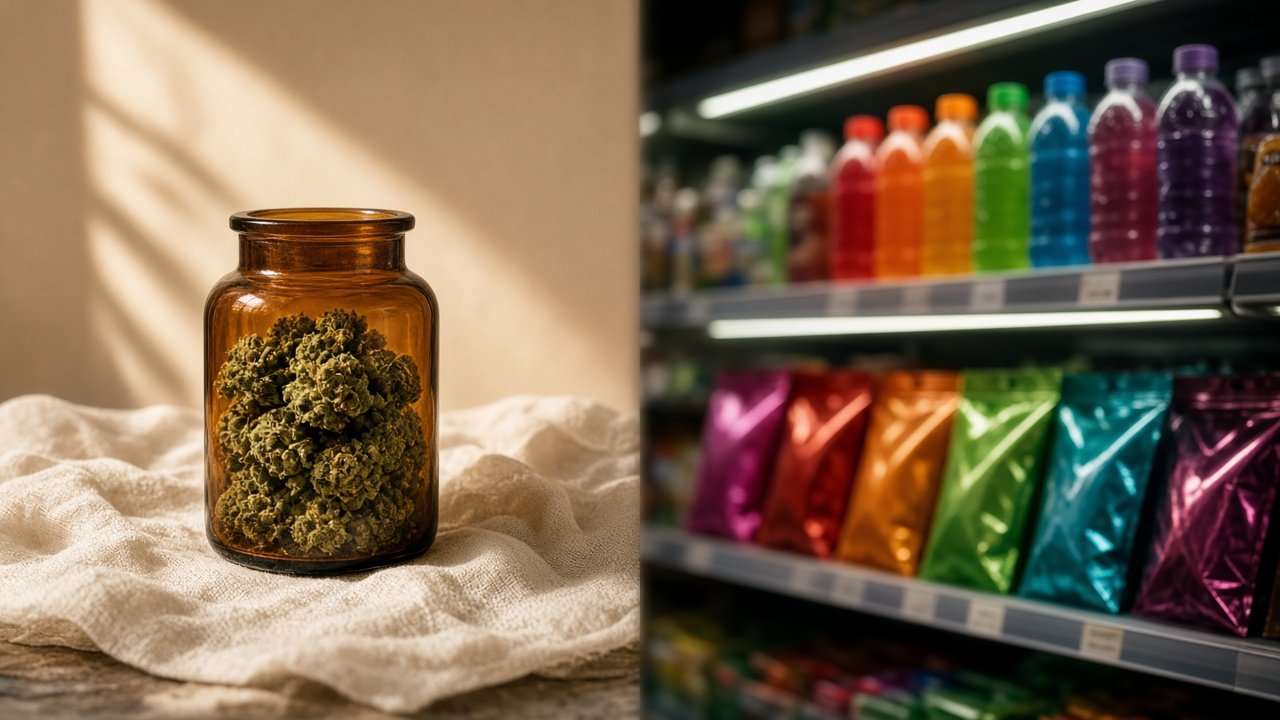
The bag by the lottery tickets still says hemp. After December 11, 2026, a bag like that stops counting as hemp under federal law.
Congress can still rewrite the rule before then. The gas-station gummy sits on that date. So does the smoke-shop flower sold for the high, and so does the hemp drink in the party-store cooler. Licensed cannabis stays legal. The hemp bag is what changes.
What Changes for a Michigan Shopper on December 11? #
On December 11, 2026, a finished hemp product that can get you high stops qualifying as hemp if the container is over a 0.4 milligram combined total. That total counts THC and THCA, plus other cannabinoids that act like THC or are sold as if they do. The gummy by the register is the product this date was written for. Licensed cannabis is a different product, and this date does not make it illegal.
Congress put the new definition in Section 781 of Public Law 119-37, signed November 12, 2025. The section starts with "Effective 365 days after the enactment of this Act." That landed on November 12, 2026. Section 2019 of Public Law 119-103, signed September 2, 2026, then changed what takes effect on November 12. Until December 11, 2026, those amendments apply only to products that contain a cannabinoid the plant cannot naturally make. The gas-station bag, the hemp drink, and smoke-shop flower sold for the high wait until December 11.
H.R. 6500 is the funding bill that carried Section 2019. The Senate passed it 90 to 6 on August 8, 2026 (Record Vote 228). The House agreed to the Senate amendments 370 to 48 on September 1, 2026 (Roll 286). Those counts cover the whole funding bill. Hemp was not a separate vote. The president signed it on September 2.
The Congressional Research Service (CRS) covers this in an In Focus updated September 28, 2026. It says products pushed out of the hemp definition go back under the Controlled Substances Act as marijuana. In Detroit, that is the gap between a party-store cooler and a licensed counter.
| What you picked up | Federal clock | Still a Michigan adult purchase? |
|---|---|---|
| Gas-station or smoke-shop gummy sold as hemp THC | December 11. Over 0.4 mg combined total in the retail container is not hemp. | Not as hemp. Michigan already pulled intoxicating THC out of that aisle. |
| Hemp drink or seltzer from a party store | Same December 11 container cap. | Not as hemp. A licensed cannabis drink is a separate product. |
| Smoke-shop flower sold for its THCA | December 11. Total THC includes THCA. | Not as hemp. Licensed flower is the legal lane. |
| A cannabinoid the cannabis plant cannot make | November 12, 2026. | Still not a gas-station item under state rules. |
| Licensed adult-use flower, edible, or drink | This hemp rewrite does not cancel state adult-use law. | Yes, if you are 21 or older and inside the state limits. |
| Fiber, grain, and other industrial hemp with no intoxicating cannabinoids | Stays inside the hemp definition. | Yes. |
The 2018 Farm Bill versus the later hemp law puts the old delta-9 rule next to the rewrite. That guide used the original November 12 date for the whole change. The September law moved most of it to December 11. This is the clock as of October 8, 2026.
Which Gas-Station and Smoke-Shop Products Does the Federal Rule Hit? #
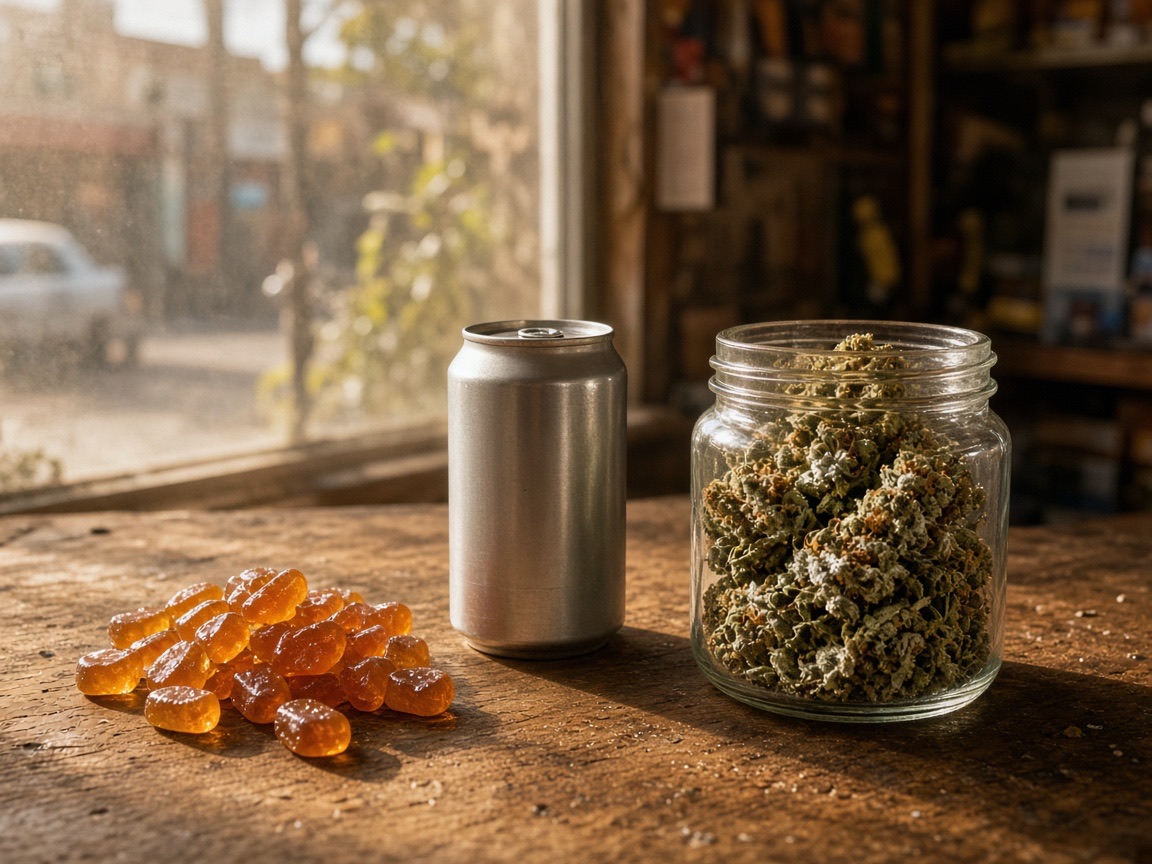
The December 11 rule hits intoxicating products sold as hemp: delta-8 gummies, hemp THC drinks, and flower sold for its THCA. It does not hit a licensed eighth. It does not hit rope, seed, or a stalk grown for fiber. If the point of the package is the high and the package claims hemp, it goes on the December 11 list.
Delta-8 is a form of THC. The plant can make a trace of it. The gas-station version is usually built outside the plant, often by converting CBD. Section 781 draws that line. A cannabinoid the plant cannot make is the November 12 exclusion. A cannabinoid the plant can make is different. If it was "synthesized or manufactured outside the plant," that is a December 11 exclusion. The quoted wording is in Public Law 119-37. I won't guess which brand is which. If the bag is sold to get you high, the 0.4 milligram container cap catches it on December 11 either way.
Hemp drinks sit under the same hemp rule as the gummy. A can is a container, and the statute lists "can" in its definition of container. A party-store seltzer labeled in whole milligrams of THC is far past 0.4 milligrams. How a drink compares with a gummy is in THC beverages.
Smoke-shop flower sold as hemp THCA is on the list. The new definition stops measuring only delta-9. Total THC includes THCA, the raw acid form that heat turns into THC. The 2018 rule let sellers point at a low delta-9 number while the jar was full of THCA. Section 781 names THCA inside the total. After December 11, a jar you buy for the high cannot hide behind that old delta-9 number.
Here is how I sort a shelf:
- Hemp gummy, delta-8 gummy, or "legal THC" gummy at a gas station or smoke shop. December 11 container cap.
- Hemp seltzer, hemp soda, or hemp shot in a cooler. December 11. The can is the container.
- Flower, pre-roll, or vape sold as hemp THCA. December 11. Total THC includes THCA, and the jar is the container.
- A product built around a cannabinoid the plant cannot make. November 12. The FDA list of those names is not out yet. More on that below.
- Product from a licensed retailer, with a statewide monitoring tag. Not this federal hemp test. State adult-use rules still apply.
What Does 0.4 Milligrams per Container Mean? #
The cap is 0.4 milligrams for the whole retail container, counted once. Per gummy does not matter, and neither does a percent. "Greater than 0.4 milligrams combined total per container" is the phrase in Section 781. Cross that line and the finished product is not hemp.
The combined total is two piles added together. Pile one is total THC. The statute's long word is tetrahydrocannabinols, and that pile includes THCA. Pile two is any other cannabinoid that has similar effects, or is marketed as if it does. The Secretary of Health and Human Services decides which cannabinoids sit in pile two. Both piles are in the same sentence of Public Law 119-37. A label that only prints "THC" can still fail once pile two is counted.
A container is the innermost wrap that actually touches the product you buy. The statute's examples are a jar, bottle, bag, box, packet, can, carton, or cartridge. The shipping case does not count. A four-pack box might not count either, if each can is what touches the liquid.
A can labeled 5 milligrams of THC is 12.5 times the finished-hemp cap, since 5 divided by 0.4 is 12.5. That holds only if those 5 milligrams count toward the combined total. A drink sold for a real high is already past a cap measured in tenths of a milligram.
| Label you might see | What the statute compares it with | Over 0.4 mg in the container? |
|---|---|---|
| 5 mg THC in one can | 0.4 mg combined total in that can | Yes, if the 5 mg counts in the total. More than 12 times over. |
| 10 mg THC in one bag of gummies | 0.4 mg in the whole bag, not per piece | Yes. The bag is the container. |
| 1 mg THC in a single-piece pack | 0.4 mg combined total in that pack | Yes. One milligram is already more than twice the cap. |
| A trace under 0.4 mg combined total, no similar-effect add-on | The same 0.4 mg line | No. That product can still fit the hemp definition. |
Percent and milligrams are two separate tests. The hemp that was grown still has to be at or under 0.3 percent total THC on a dry-weight basis, and that percent includes THCA. The 0.4 milligram line is for the finished product in your hand. A gummy can be made from a crop that passed 0.3 percent and still fail as a finished product.
The CRS also notes that FDA had 90 days from the November 12, 2025 signing to publish two lists. One covers cannabinoids the plant can make. The other covers cannabinoids with effects like THC. The same In Focus, updated September 28, 2026, says that list had not been published. So the 0.4 milligram line is set, but the official list of "similar effects" is still blank. If a clerk says the cap is "0.3 percent, same as always," they are quoting the old plant test.
Why Does Smoke-Shop THCa Flower Fail the Test? #
Smoke-shop flower sold for its THCA fails because the new federal total counts THCA, and a jar of flower is not a 0.4 milligram container. The 2018 definition looked at delta-9 THC only. Sellers could print a low delta-9 number on flower that was full of THCA. Section 781 puts THCA in the total, so that old print job fails.
The plant test and the jar test both move on December 11. They measure different things.
- The plant. Hemp means Cannabis sativa L. with a total THC concentration, including THCA, of not more than 0.3 percent on a dry-weight basis. That is the amended definition in Public Law 119-37. Flower grown to be strong is over 0.3 percent once THCA counts. Under that definition it is marijuana.
- The finished product. Even if someone tried to call the jar a "final hemp-derived cannabinoid product," the container cannot hold more than 0.4 milligrams combined total. One gram at 1 percent THCA is about 10 milligrams. That is 25 times the container cap. And 1 percent is a weak number for flower people buy to smoke. The statute does not print a lab conversion formula. THCA is named in the total.
A label that says "non-psychoactive THCA" describes raw flower. Light it and the THCA becomes THC. After December 11, that label does not keep the jar inside hemp.
Michigan shoppers already have a licensed place to buy flower. The smoke-shop version was the workaround: same plant, hemp paperwork, and no tracking tag from the Cannabis Regulatory Agency (CRA). The federal rewrite is aimed at that workaround. A licensed eighth is outside it. Hemp-derived THC and marijuana-derived THC can feel alike and still sit under different rules. The longer explainer is hemp-derived versus marijuana-derived.
Flower details that trip people up:
- A lab sheet (COA) that only lists delta-9 under 0.3 percent is the old test. Ask whether total THC, including THCA, is on the sheet. The statute now cares about that column.
- A pre-roll is still a container. The tube or the pack in your hand is the retail unit.
- A vape cart sold as hemp THC is a cartridge. "Cartridge" is one of the statute's own examples of a container.
- Industrial hemp flower is a different jar. Microgreens and immature leaf from seed under the total-THC line can still be industrial hemp.
What Actually Changes on November 12? #
November 12, 2026 is only for cannabinoids the cannabis plant is not capable of making. Gummies, drinks, and THCa flower that use cannabinoids the plant can make stay on the December 11 clock. People mash the two dates into one. They are two clocks.
Section 2019 of Public Law 119-103 is one sentence. Until December 11, 2026, the amendments from Section 781 apply only to products described in paragraphs (1)(C)(ii)(I) and (1)(C)(iv)(I). Those two paragraphs are the intermediate product and the final product that contain cannabinoids "not capable of being naturally produced" by Cannabis sativa L. Everything else in the new definition waits until December 11.
The Congressional Research Service describes that November 12 window as certain synthetic cannabinoids. It also says the rest of the new definition, including the finished-product cap, does not take effect until December 11, 2026.
I won't name your gummy's molecule and drop it on November 12. Section 781 ordered FDA to publish, within 90 days of November 12, 2025, a list of cannabinoids known to be naturally produced by the plant, based on peer-reviewed literature. The CRS In Focus updated September 28, 2026 says that list still had not been published. Without it, a clerk's guess is only a guess.
| Date | What flips | What does not flip yet |
|---|---|---|
| November 12, 2026 | Intermediate and final hemp products that contain a cannabinoid the plant cannot naturally produce. | The 0.4 mg container cap. The total-THC plant test that counts THCA. Cannabinoids made outside the plant even if the plant can make a trace. |
| December 11, 2026 | The rest of Section 781, including the 0.4 mg combined total per container and total THC that includes THCA. | Nothing in this statute moves the date later than December 11. A new bill would have to do that. |
Delta-8 sits in a messy middle, and the statute already has a slot for it. If the plant can make it, and a lab made the batch outside the plant, that is the "synthesized or manufactured outside the plant" exclusion. That exclusion is not in the November 12 pair of paragraphs. It arrives December 11. Michigan did not wait for either date. The state pulled delta-8 out of gas stations in 2021, and that is covered below.
What Stays Legal for a Michigan Adult? #
A Michigan adult 21 or older can still buy, possess, and use licensed marijuana inside the limits in state law. December 11 changes what counts as hemp. It does not repeal the state's adult-use statute, and a licensed jar was never hemp.
MCL 333.27954 says a person under 21 may not possess, consume, purchase, cultivate, process, transport, or sell marihuana. If you are 21 or older, MCL 333.27955 is the personal limit I point people to:
- On you: 2.5 ounces or less of marihuana, and not more than 15 grams of that may be concentrate.
- At home: not more than 10 ounces, plus what your plants on the premises produce.
- Plants: not more than 12 plants for personal use, and not more than 12 plants possessed, cultivated, or processed on the premises at once.
Those numbers come from Michigan law. Federal hemp law has no allowance like them. Flower you grow at home or buy from a licensed retailer is marihuana under that act.
Licensed edibles and drinks have their own ceilings, and they run much higher than 0.4 milligrams because they are not hemp. The CRA technical bulletin dated April 24, 2025 sets adult-use infused edibles at 10 milligrams per piece and 200 milligrams per container. Adult-use beverages are 10 milligrams in the drink and 100 milligrams per container. The bulletin's own example says an adult-use gummy container tops out at 200 milligrams of THC. Two hundred divided by 0.4 is 500. A legal Michigan gummy package can hold five hundred times the federal finished-hemp cap, because it is marijuana in the licensed system.
What stays available after December 11, if Congress does not pass a new bill:
- Licensed adult-use cannabis from a retailer, if you are 21 or older and you stay inside the possession limits above.
- Home plants, up to the 12-plant rule in the same statute, on your own premises.
- Industrial hemp grown for stalk, fiber, grain, or non-cannabinoid seed compounds. Section 781 still includes that in the definition of hemp.
- A finished hemp product at or under the 0.4 milligram combined total in the retail container. That is a trace amount.
What does not stay available as "hemp," once December 11 arrives:
- The intoxicating gummy, drink, or THCa flower that was using the hemp label to sit in a gas station or smoke shop.
Federal law and Michigan law are still two maps. State-licensed marijuana does not become hemp, and a hemp definition does not ban it.
On a swing shift in metro Detroit, the party store on the way home is the easy stop. It is not a licensed one.
How Is This Different From Michigan's Own Rules? #
Michigan already told gas stations and smoke shops to stop selling intoxicating THC. The federal date is a second clock. The December 11 headline makes it sound like the state was wide open until Congress moved. It was not.
On October 7, 2021, the agency that is now the Cannabis Regulatory Agency posted a notice, effective October 11, 2021. All THC products derived from the cannabis plant would be covered by state law. The page says those products "will no longer be available in convenience stores, gas stations, and tobacco/smoke shops throughout the state." It names delta-8 THC and THC-O-acetate. As of that effective date, making, holding, transferring, stocking, selling, or giving away delta-8 or THC-O-acetate without a license was illegal. That page is still up: All THC products derived from the cannabis plant.
So a shopper has two separate things to track:
- State problem. Intoxicating THC in an unlicensed shop is already outside the state's licensed system.
- Federal problem. A lot of those same bags kept a hemp claim under the 2018 delta-9 test. December 11 is when that federal claim fails for finished products over 0.4 milligrams combined total per container.
The September state enforcement action, including what a license suspension means, is in licensed flower versus gas-station THC.
| Question | Michigan rule already in place | Federal hemp rule on December 11 |
|---|---|---|
| Can a gas station sell delta-8 gummies? | No. Unlicensed sale has been illegal since October 11, 2021. | Those gummies also stop qualifying as hemp if the container is over 0.4 mg combined total. |
| Can a licensed retailer sell an adult-use edible? | Yes, inside the CRA milligram caps. | The hemp cap does not rewrite the CRA bulletin. |
| Does a hemp label equal a safety test? | No. CRA tracking and testing attach to licensed product. | A hemp claim that fails the new definition is a marijuana claim under federal law. |
| Who is the shopper rule for? | Adults 21 and older, in the licensed system. | Anyone holding a product that was leaning on the hemp definition. |
If a smoke shop in Wayne County still has gummies on the counter, that shelf was already a state-law problem. December 11 adds a federal label problem on top.
What Did the October Investor Survey Actually Say? #
Investors put a 58 percent probability on the federal intoxicating-hemp ban actually taking effect. The law itself is already signed. The 58 percent is a guess about whether Congress changes the rule again before the date.
ATB published its note on October 2, 2026. The survey ran from September 21 to September 29, and respondents "assigned a 58% probability to a federal intoxicating hemp ban taking effect." You can read it at ATB Cannabis Investor Sentiment Survey. On October 8, 2026, Forbes ran Javier Hasse's write-up of that survey, the hemp ban and licensed cannabis.
Read the 58 percent the way a shift lead reads a rain forecast. The statute is already on paper. Section 2019 already moved the broad cap to December 11. The survey asks whether that date still arrives as written. Investors can be wrong, and a new bill can still pass. As of October 8, 2026, no later bill had passed to push the date again.
What the 58 percent does not say:
- It does not say delta-8 is legal in a gas station until December 11. State law already said no.
- It does not say your licensed eighth is on the same clock.
- It does not say Congress voted 58 percent. The funding-bill votes were 90 to 6 in the Senate and 370 to 48 in the House.
- The note does not print how many people answered, so I have no head count.
If you are shopping this month, treat December 11 as the date on the calendar. Treat 58 percent as those investors' odds that the calendar gets edited. Buy licensed if you want a purchase that does not wait on Congress.
What Should You Check Before You Buy Another Convenience-Store Gummy? #
Check whether the shop is a licensed Michigan retailer, and add up the milligrams in the whole package. A hemp logo on a gas-station bag is not a pass. Michigan already bars the sale, and December 11 is the federal cutoff.
I use four checks:
- Who is allowed to sell it in Michigan. If the shop cannot sell licensed marijuana, it cannot sell delta-8 either. The CRA's 2021 notice is the state rule. A cooler of hemp seltzer does not make a party store a licensed retailer.
- The milligrams in the whole container. Add up the package. If the can or the bag is over 0.4 milligrams of THC, it misses the finished-hemp cap on December 11. A "5 mg" drink is more than 12 times over. A "10 mg" bag is 25 times over.
- THCA on flower, as well as delta-9. If the sheet shows THCA and the jar is sold to smoke, the December 11 total includes that THCA. A delta-9 number under 0.3 percent is the old test.
- The shop's license, if you want the product that stays. Licensed adult-use edibles can be 10 milligrams in a piece and 200 milligrams in the package under the April 24, 2025 CRA bulletin. That package is legal in the licensed lane. A hemp bag with those milligrams would be over the hemp cap.
I skip the scare talk about a raid on your glove box. I also skip any claim that Congress will "for sure" delay this again. The delay that already happened is the one-month move to December 11. Another delay would take a new law, and none is on the books as of October 8, 2026.
If you want flower instead of the bag, buy it from a licensed seller. Divine Toke is mail order only at divinetoke.org, with no storefront and no local delivery.
FAQ #
Are gas-station THC gummies already illegal in Michigan? #
Yes. Unlicensed sale of delta-8 and other THC from the cannabis plant has been illegal in the state since October 11, 2021. The CRA notice dated October 7, 2021 says those products will no longer be sold in convenience stores, gas stations, and smoke shops. December 11 adds a federal hemp-definition failure on top of that state rule.
Do licensed Michigan dispensary edibles get banned on December 11? #
No. Licensed adult-use edibles answer to the CRA caps, and the federal hemp cap does not apply to them. The April 24, 2025 bulletin allows 10 milligrams in an adult-use piece and 200 milligrams in the package. Those products are marijuana in the licensed system, and Section 781's 0.4 milligram line is a hemp test.
Is a hemp seltzer labeled 5 milligrams over the federal cap? #
Yes, if that 5 milligrams counts toward the combined total in the can. Section 781 sets the finished-hemp line at greater than 0.4 milligrams per container. Five divided by 0.4 is 12.5, so a 5 milligram can is more than 12 times over. A can is a container under the statute. The same math hits a 10 milligram bag.
If the label says under 0.3 percent delta-9, is the flower still hemp? #
Not after December 11, if total THC including THCA is over 0.3 percent, or if the jar holds more than 0.4 milligrams. The 2018 test looked at delta-9 only. Public Law 119-37 puts THCA inside the total. One gram at 1 percent THCA is about 10 milligrams, which is already far over a 0.4 milligram container. Smoke-shop flower sold for the high is the product that change describes.
What counts as one container? #
The innermost package that touches the product you take home. Section 781 lists a jar, bottle, bag, box, packet, can, carton, or cartridge. A shipping case does not count. The 0.4 milligram combined total counts once for that retail unit.
Does this federal change make Michigan dispensary flower illegal? #
No. December 11 rewrites the federal hemp definition. It does not repeal state adult-use law. A person 21 or older can still possess 2.5 ounces, with not more than 15 grams of concentrate, under MCL 333.27955, and the home limit is 10 ounces plus the plants on the premises. Dispensary flower was never hemp. The hemp cutoff does not reach back and ban it.
Can a Michigan adult still grow plants at home? #
Yes. The same statute allows up to 12 plants for personal use at your residence. MCL 333.27955 says not more than 12 plants may be possessed, cultivated, or processed on the premises at once, and you have to be 21 or older under MCL 333.27954. That is marihuana under state law.
What about my CBD bottle? #
A CBD bottle can miss the hemp definition on December 11 if the whole container's combined total is over 0.4 milligrams. The cap is per container, so a full bottle is one unit even when each drop looks small. CBD sold for calm is a separate shopping question from gas-station THC. If you take CBD, Will Your CBD Still Be Legal After December 11? covers it.
Did Congress already pass this, or is it still a proposal? #
Congress already passed it, and December 11 is an effective date. Section 781 of Public Law 119-37 is the definition. Section 2019 of Public Law 119-103 holds most of that definition back until December 11, 2026. The Senate vote on the funding bill was 90 to 6. The House vote on the Senate amendments was 370 to 48. A later bill could still change the date. No such bill had become law by October 8, 2026.
Does a 58 percent survey mean the cutoff might not happen? #
The 58 percent is investors' odds that the ban takes effect, and the statute is already law. ATB's October 2, 2026 note says respondents assigned a 58 percent probability to a federal intoxicating hemp ban taking effect. Forbes wrote that survey up on October 8. Shop as if December 11 is the date. The 58 percent is the chance Congress edits the calendar, and it is no reason to ignore the date.
Is a party-store hemp drink the same thing as a licensed cannabis drink? #
No. The party-store can is leaning on a hemp claim. The licensed drink is marijuana under CRA rules. A licensed adult-use drink can hold 10 milligrams, with a 100 milligram container cap, under the April 24, 2025 CRA bulletin. A hemp can over 0.4 milligrams combined total fails the federal hemp test on December 11. How drinkable cannabis feels, once you are in the licensed lane, is covered in THC beverages.
If You Want the Licensed Lane #
The bag by the lottery tickets has a date on it. December 11, 2026 is when a finished hemp product over 0.4 milligrams combined total per container stops being hemp. November 12 is only for a cannabinoid the plant cannot make. Michigan adults 21 and older still have the licensed system: 2.5 ounces on you, 10 ounces at home, up to 12 plants. Delta-8 at a gas station was already outside that system.
If you want the plant instead of the workaround, start with a licensed seller. More on the rules:
- Hemp-derived versus marijuana-derived THC: why the two can feel alike and still sit under different laws.
- Licensed flower versus gas-station THC: the state enforcement picture.
- The Farm Bill comparison: the 2018 rule next to the later rewrite.
- THC beverages: drinkable cannabis, once you are buying the licensed kind.
- Will Your CBD Still Be Legal After December 11?: the CBD side of the same date.
Divine Toke is a Detroit-rooted, sun-grown, living-soil brand. The shop is mail order at divinetoke.org, with no storefront and no local delivery. Pre-rolls are 1 gram, and the 20-pack is 20 of those joints for $120.
This is a shopper explainer, not legal advice. Rules can still change if Congress passes another bill. As of October 8, 2026, they have not.
Grown in Detroit. Shipped to your door.
Small-batch, sun-grown cannabis cultivated in living soil. Mail-order shipping to all 50 states.