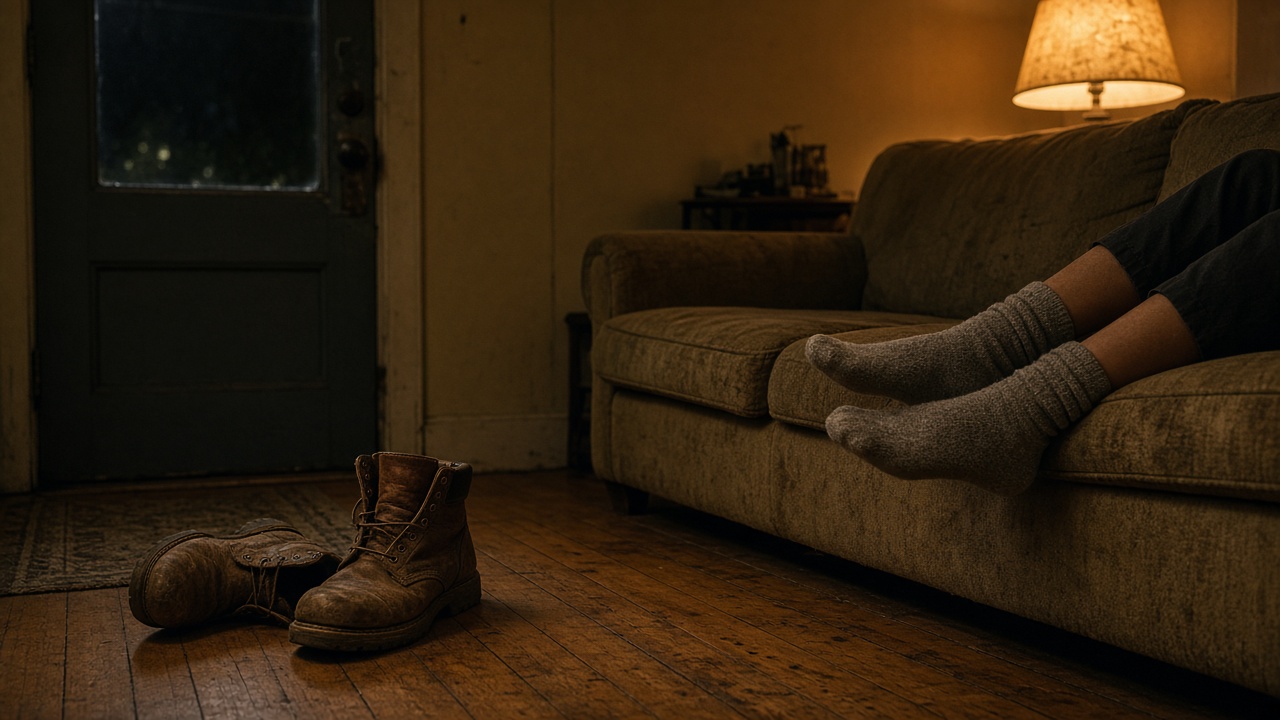
Restless Legs After a Shift: What Cannabis Research Covers
Boots off after a Detroit shift, and the legs won't stay still. Cannabis research on restless legs is thin. A 2025 sleep guideline starts with iron.
Questions this article answers
- what does research say about cannabis and restless legs
- does cannabis help restless legs after a shift
- is there a clinical trial of cannabis for restless legs
- is restless legs a Michigan medical marijuana condition
- should I check iron before trying cannabis for restless legs

Head Cultivator
On this page
Boots off after a Detroit shift, and your legs still won't settle.
The research on cannabis for that is thin: I couldn't find a randomized trial for ordinary restless legs, and the 2025 sleep guideline doesn't list cannabis.
People sell cannabis for this exact night. The human studies are a short stack of case reports and surveys. A story from a clinic isn't a trial, and a treatment plan needs a comparison group. My tolerance isn't a typical tolerance, so my own couch makes a bad test.
Divine Toke is a Detroit-area Michigan farm. We grow sun-grown flower in living soil, and no strain of ours is for this urge. The clinic is a different building, and that's where this gets sorted.
Trouble falling asleep is a cousin question. The sleep guide, the insomnia review, and the indica piece cover feeling sleepy. This page is about the urge to move.
What Does Research Say About Cannabis and Restless Legs? #
Human research on cannabis for restless legs is thin. A 2026 review found no strong trial. The authors say the papers cannot support a treatment recommendation.
Restless legs syndrome is the clinic name. Some papers say Willis-Ekbom disease instead. Same urge, two names.
Saha and colleagues published a scoping review on July 1, 2026. They searched through April 30, 2025, screened 5,370 records, and kept seven studies.
Those seven are case reports, surveys, and post hoc looks at older trials. Post hoc means somebody asked the restless-legs question after the trial was already built for something else.
The same review says cannabis may ease symptoms in those reports. Then it draws a line. Without randomized trials, the evidence isn't enough for a clinical recommendation, and I'm holding to that line.
In a randomized trial, some people get the product and some get a lookalike, and nobody knows which. I couldn't find that trial for ordinary restless legs and cannabis.
The 2025 American Academy of Sleep Medicine guideline is the document clinicians follow for care. It lists iron tests and gabapentin-family drugs. Cannabis isn't on the list.
| What you hear | What the papers can hold |
|---|---|
| Cannabis cures restless legs | No trial supports a cure. The 2026 review refuses a treatment recommendation. |
| CBD beat a sugar pill | One post hoc look, in Parkinson's. No difference from placebo. |
| A spray lowered scores | Open-label. Mostly multiple sclerosis. No comparison group. |
| The sleep guideline added cannabis | The 2025 guideline doesn't list it. |
| Shift work proves a jar will help | A factory study links rotating shifts to more reports. It never tested cannabis. |
If your night is mostly "I can't fall asleep," go to the sleep cluster. If the problem is an urge that shows up the minute you finally sit, you're on the right page.
What Does the Urge Feel Like After a Shift? #
The pattern is an urge to move the legs. A creepy or achy feeling often rides along. It shows up when you are still, and walking eases it.
Saha and colleagues describe it in plain terms. The urge is hard to ignore. Tingling, crawling, or aching can come with it. It gets worse when you rest, and evening and night are the usual hours.
A 2014 update from the International Restless Legs Syndrome Study Group added a fifth rule: the feeling shouldn't be confused with similar problems from other conditions. Allen and colleagues wrote that update. A blog can't run that rule on you. A clinician can.
Mix-ups are common after a long shift, and a clinician still has to sort them out. That's what the fifth rule is for.
- A tight boot can put a foot to sleep. That's pressure on a nerve, and walking helps that one too, for a different reason.
- A charley horse is a cramp. It grabs and lets go.
- Concrete-sore calves ache where you worked them. They don't always demand a lap around the kitchen.
- The restless-legs pattern wants movement, hates stillness, and prefers the late hours.
Ten hours on a Wayne County floor will make any legs loud. The syndrome is the urge that arrives when the work is already over.
If this is new, get it seen. Same if it climbed fast, or if it came with weakness, numbness that stays, or swelling. Those are clinic visits, and the exam belongs there.
Why Does the Clock Matter on a Rotating Shift? #
The urge follows a body clock. In one auto-plant study, rotating shifts came with more restless-legs reports than a fixed morning schedule.
Michaud and colleagues put seven adults with primary restless legs and seven healthy adults through a 28-hour lab routine. Leg discomfort rose and fell on a circadian pattern in both groups. The restless-legs group had the harder version. Circadian means the body's day-night clock. The shift bell runs on a different timer.
In that small lab, the rise in melatonin came before the symptoms got worse in the restless-legs group. Melatonin is the hormone that climbs in the evening. The authors suggest it might connect to dopamine signals and to the nighttime worsening. Seven people in a lab is a clue, and a small one.
The shift study is bigger, and cannabis never comes up in it. Sharifian and colleagues surveyed 780 men at an automobile plant in Tehran in 2009. Three groups, 260 workers each. One group kept a permanent morning schedule. Two groups rotated through morning, afternoon, and night.
Restless-legs reports ran 15 percent on the rotating schedules and 8.5 percent on the permanent morning schedule. The difference was statistically significant. The authors call rotational shift work a risk, a factor that can stir the problem up.
Before you carry that percent onto your own time clock, look at the limits.
- All men. One factory. One country. Questionnaires did the measuring, and a sleep lab never entered the study.
- People with restless legs in that plant were older and had more years on the job.
- The paper never handed anyone cannabis.
Dearborn, Warren, and Sterling Heights run rotating crews too, so the schedule looks familiar. The 15 percent still belongs to that Tehran plant. Leave it there.
A night shift moves the hours you lie down. The classic peak in the criteria is evening and night, so a Detroit hospital shift that ends at 7 a.m. puts your sleep in the morning. Daylight, yard noise, and a clock that sits off the evening peak all land on that nap. No trial in this file tests cannabis in that morning window.
Late October in southeast Michigan, a day shift can end in the dark, and the couch lands right on the evening peak. The iron test still comes first.
Rotating sleep and sore bodies have their own pages. Shift-work sleep after Labor Day and the trades and recovery page cover the night after labor. This page sticks to the urge.
Which Human Studies Are on the Record? #
The record is case series and surveys. One placebo comparison found no CBD difference. A later spray study had no comparison group.
I'll go through them in the order a careful reader would. The dramatic stories rank first in Google and last in trust.
A 2017 report of six adults #
Megelin and Ghorayeb published "Cannabis for restless legs syndrome: a report of six patients" in Sleep Medicine in August 2017. The public abstract on PubMed is empty. Outcome details below come from the 2026 review, which read the paper.
The 2026 scoping review describes that series. Six adults, symptoms for 5 to 23 years, and other restless-legs medicines hadn't been enough. The review says their iron stores were adequate and all six had started cannabis on their own. They reported complete relief, and better sleep with it.
The review's table says five smoked and one used CBD under the tongue. It also notes nausea in the smoked group, and one person who kept smoking only for flare-ups.
Look at the word complete. These are people who felt a total change and then met a researcher. Nobody put a comparison group beside them. Expectancy can fill a story like that, and so can a coincidence in a bad month. The review that repeats the story still says it can't support a recommendation.
A 2020 note that asks for trials #
Ghorayeb published a 2020 paper in Sleep and Breathing titled as more evidence. The abstract says the group extended the earlier reports. It doesn't print a success count I can quote. It says clinical trials still have to test the benefit.
The 2026 review describes a French series of 12 adults and says 11 reported improvement. One did not. Three who switched to under-the-tongue CBD told the clinic that smoked cannabis felt stronger. One person had a panic attack. I'm labeling those counts as the review's description of an uncontrolled series, since the abstract I could read doesn't carry them.
A later chapter by Ghorayeb in 2021 gives a size for the syndrome. Moderate-to-severe restless legs affects nearly 3 percent of people in North America and Europe. That chapter repeats the call for trials. Counting the people who have it doesn't tell you how many improve on cannabis.
The placebo comparison in Parkinson's #
This is the comparison the rest of the file lacks, and it's a narrow group.
de Almeida and colleagues did a post hoc look at a phase 2/3 trial. The trial was double-blind and placebo-controlled. The restless-legs question wasn't the original reason for the trial.
Eighteen adults had Parkinson's disease, REM sleep behavior disorder, and restless legs. REM sleep behavior disorder means people act out dreams. Six received 75 to 300 milligrams of CBD. Twelve received placebo capsules. Follow-up ran 14 weeks.
CBD showed no difference from placebo on the main restless-legs score, and none on the secondary scores either. They used the International Restless Legs Syndrome rating scale, where higher means worse.
Mind the fences. These were adults with Parkinson's and a dream-enactment problem, and the product was CBD capsules. Smoked flower is another product. A miss here can't speak for everyone coming off a shift. It does end the claim that CBD beat placebo for restless legs, because in this comparison it didn't.
An open-label spray study in 2026 #
Lillo-Triguero and colleagues published an exploratory study in the Journal of Neurology on July 2, 2026. That's after the scoping review stopped searching and before this page's date.
Open-label means everyone knew they were getting the spray. There was no placebo group.
Eighteen adults entered, and sixteen had multiple sclerosis. The spray was about 2.7 milligrams of THC and 2.5 milligrams of CBD. THC is the compound that makes you high. CBD doesn't get you high the way THC does.
The starting mean score was 22.44. The paper calls that severe. Scores were lower at one month and at three months. The paper prints p less than 0.001 for that drop. Wake after sleep onset got shorter, with p = 0.015. Sleep latency and sleep efficiency didn't change significantly. Latency is how long it takes to fall asleep. Efficiency is how much of the time in bed is actually sleep.
At one year, the paper says 66.66 percent were still using the spray. Those who stayed still showed a lower score. The paper prints p = 0.000 for that staying group. People who quit aren't in that one-year win.
Median iron numbers in the group were in the normal range, so nobody can say the spray fixed an iron deficiency.
The authors call the spray effective. That's their word, and I'm leaving it with them. Eighteen people is a small group, and sixteen of them had multiple sclerosis. A press operator in Warren with ordinary restless legs sits outside that group. Multiple sclerosis comes with its own nerve and spasm picture, and severe spasms have their own line on the state list. I cover that below without coaching anyone on a checkbox.
Surveys that mix other illnesses #
Samaha and colleagues surveyed adults on dialysis at the Ottawa Hospital. The paper is from 2020 in the Canadian Journal of Kidney Health and Disease. Dialysis is the machine treatment for failed kidneys.
192 of 277 eligible people finished the survey. That's 69 percent. Eighty-six people, 45 percent, reported restless-legs symptoms. Itching was even more common, at 67 percent.
Fifteen people reported using cannabis for symptoms, and nine noted improvement. The abstract's "symptoms" cover restless legs and itching together, so nine of 15 is a mixed note. Calling it a cure rate would be a stretch. Kidney failure is its own disease, the Ottawa numbers are memories, and the study never assigned a tested product.
Yenilmez and colleagues published a 2021 survey in the Journal of Parkinson's Disease. They analyzed 1,348 questionnaires from a German Parkinson's community. Parkinson's-related cannabis use was reported by 8.4 percent.
Pain and muscle cramps were the stronger memory. More than 40 percent of cannabis users reported relief there. Restless legs sat in a cluster with stiffness, tremor, mood, and anxiety. That cluster "subjectively improved for more than 20 percent." Subjectively means they remember it that way, with no placebo and no lab night.
The 2026 review pulls a tighter split from this survey. It describes 28 people using cannabis for restless legs, with 6 reporting improvement. I'm sticking with the abstract's own wording, the "more than 20 percent" cluster. Either way, it's memory in Parkinson's disease.
Reviews that refuse a routine yes #
Maddison, Kosky, and Walsh reviewed medicinal cannabis for sleep disorders in 2022. Restless legs is on their list. Their line is direct: the evidence is insufficient for routine use in any sleep disorder.
Lavender and colleagues updated the sleep picture in December 2024. They say the evidence base doesn't match how widely people already use cannabinoids for sleep problems. Lots of people using something doesn't make it a finished trial.
Yeh and colleagues reviewed lesser-known restless-legs options in 2023. Cannabis is on that list, next to drugs most people have never heard of. They tell clinicians to follow the evidence-based recommendations first. They neither recommend nor discourage the extra options. That drawer belongs to a clinician who already ran the main plan.
One more paper, so the names don't get mashed together. A 2026 case report describes palmitoylethanolamide, a fatty molecule the body already makes. One person, already on gabapentin, felt the painful part ease. That's about the molecule. Divine Toke doesn't sell it, and one story can't start a supplement plan.
Where Do Iron and Dopamine Fit? #
The 2025 sleep guideline tells clinicians to check iron studies in every person with clinically significant restless legs. Cannabis is absent from that plan.
Winkelman and colleagues wrote the American Academy of Sleep Medicine guideline. Journal of Clinical Sleep Medicine, 2025, volume 21, pages 137 to 152. The good-practice statement is expert consensus. The drug lines are graded.
Iron first. A routine "normal" flag on a basic panel can still miss the range sleep doctors use for this syndrome, which is why their cutoff looks strict.
The guideline says test serum iron studies on a regular basis when restless legs are clinically significant. Include ferritin and transferrin saturation. Transferrin saturation is a second iron number, calculated from iron and total iron-binding capacity.
Do the draw in the morning. Skip iron supplements and iron-containing foods for at least 24 hours before the needle. A fortified breakfast cereal counts as an iron-containing food.
The guideline says this consensus note hasn't been tested in its own trial. Here are the adult cutoffs in that note:
- Ferritin at or under 75 ng/mL, or transferrin saturation under 20 percent.
- At those numbers, the note puts oral iron or IV iron on the table.
- Ferritin between 75 and 100 ng/mL: the note allows IV iron only.
- These cutoffs differ from the cutoffs a general checkup uses.
ng/mL means nanograms per milliliter, the unit on the lab sheet. Bring the sheet. Don't start a bottle of iron because a blog printed 75.
Kids get a lower ferritin line in the same statement, under 50 ng/mL. This page is about adults after a shift. If the person with the urge is a child, that's a pediatric appointment.
The second good-practice step is cleaning up what stirs symptoms. The guideline names alcohol, caffeine, antihistamine drugs, serotonergic drugs, antidopaminergic drugs, and untreated obstructive sleep apnea.
After overtime, that list looks like this.
- The beer with the boots off.
- The coffee that got you through a double.
- An allergy pill that makes you sleepy. Many of those are antihistamines.
- Some antidepressants that act on serotonin. Don't drop one because it's on a list. Tell the prescriber.
- Drugs that block dopamine. Some nausea medicines sit here. Ask before you blame the plant.
- Loud snoring and untreated sleep apnea. A closed airway will wreck the night whether or not your calves crawl.
The third good-practice line is pregnancy. Restless legs are common in pregnancy. The guideline tells prescribers to weigh pregnancy safety for every treatment they consider. If you are pregnant, the cannabis conversation belongs with your obstetric clinician. A jar is the wrong thing to bring to that visit.
What the guideline actually recommends #
These are the strong recommendations for adults. The academy says clinicians should follow them in most cases.
- Gabapentin enacarbil
- Gabapentin
- Pregabalin
- IV ferric carboxymaltose, when the iron numbers fit
Gabapentin and pregabalin are medicines often used for nerve pain, and a prescriber writes them. A terpene percent on a flower label tells you nothing about that.
The guideline suggests against the standard use of levodopa, pramipexole, ropinirole, and the rotigotine patch. The remarks name augmentation as the long-term harm. Augmentation means the problem can grow while you stay on the drug. The summary I'm using doesn't print a household checklist for it. The practical point is time: short-term quiet can turn into a longer mess.
Cabergoline gets a strong recommendation against.
Opioids are a conditional suggestion, including extended-release oxycodone, for selected adults. Conditional means weaker than the gabapentin lines. Leave that opioid with the prescriber who wrote it. Tell them before you add cannabis. No trial in this file measures the two together for restless legs.
| Guideline move | How sure they are | Cannabis on that line |
|---|---|---|
| Morning iron panel | Good-practice statement | No |
| Gabapentin-family drugs | Strong | No |
| IV iron when the numbers fit | Strong for one iron product | No |
| Standard use of common dopamine drugs | Suggests against | No |
| Cannabis, THC, or CBD | Not listed | The gap |
Why "low dopamine, so use cannabis" fails #
Dopamine drugs can quiet the legs for a while. That's why they were popular. The 2025 guideline moved them off the standard plan because the long-term harm can outweigh the early relief.
The spray paper offers another idea in its background. Cannabinoids can slow glutamate release in the striatum. Glutamate is a go-signal between nerve cells. The striatum is a deep brain area tied to movement. The authors say that might make a spray worth studying.
The study measured a symptom score. It didn't measure glutamate in anyone's brain. A hypothesis in an introduction isn't a result.
Your jar doesn't know your ferritin, and the shift bell doesn't change the blood draw.
Is Restless Legs on the Michigan Medical List? #
Restless legs is absent from the Michigan Cannabis Regulatory Agency list. A physician decides whether some other listed condition fits. Checkbox coaching stays off this page.
The CRA eligibility FAQ prints the debilitating conditions. I checked the wording against that page. You will see cancer, glaucoma, HIV, Crohn's disease, PTSD, arthritis, autism, Parkinson's disease, and chronic pain, among others.
You will also see a catch-all. A chronic disease, or its treatment, can qualify when it produces one of these. Severe and chronic pain. Severe nausea. Seizures. Severe and persistent muscle spasms, including spasms characteristic of multiple sclerosis.
You won't find the words restless legs.
Chronic pain is a listed condition, and severe spasms are a listed path. If your clinician documents one of those, that's their certification. Stretching an urge into a pain box to make a card easier is a bad move, and I'm staying out of it.
A card and a jar are ways to get cannabis. The papers still have to show a benefit, and clinicians still follow the 2025 care sequence: iron, the gabapentin-family drugs, and a hard look at dopamine drugs. The card doesn't replace that visit.
Adults 21 and older can buy without a card under MCL 333.27955, the adult-use possession section. A medical card is a second door through the patient and caregiver program. The tax and the limits differ, and the research on this syndrome is just as thin through either door.
We sell sun-grown flower to adults by mail. We have no storefront and no public address. Nothing in the catalog is a restless-legs product. If a budtender, a comment, or a label says otherwise, it's ahead of the papers.
What About Sleep, the Drive, and a Drug Test? #
A quieter score and a sleepy feeling are different measurements. Driving after cannabis follows its own rule.
The spray study is the place to see the split. The symptom score fell. Wake after sleep onset got shorter. Sleep efficiency and the time it took to fall asleep didn't show a significant change. Even in that open-label group, "the night got fixed" claims more than the sleep numbers do.
Maddison and colleagues already said medicinal cannabis doesn't have enough evidence for routine use in sleep disorders. Restless legs was one of the disorders on that list. Insomnia was another. Our insomnia review page covers that second question, and our felt-versus-measured sleep page covers a wrist monitor against a feeling of rest. Those pages use other tools to answer other questions.
An indica label can't settle this urge. If the label is your question, what decides sleepiness is the page. Terpenes, the amount, and your own night matter there, but none of that is a restless-legs trial. Divine Toke has no sleep strain for this syndrome.
Don't drive on this. A hit in the parking lot, then the freeway, is impairment on a commute. The rules are in the blood-THC and driving piece. Read them before you treat the ride home as recovery.
Auto plants, trades, and a lot of union shops still test, and a legal jar and a job can collide. The employment page spells it out. There's no honest workaround for a test.
If the next shift starts at 6 a.m. in a Wayne County warehouse, a heavy night can steal the morning. I can't quote a clock for when you're sharp again. People differ, and my tolerance isn't a typical tolerance, so my morning is a bad template for yours. Leave extra time. Don't learn your limit on a forklift.
Stacking matters too. Gabapentin, pregabalin, opioids, and cannabis can all make a person drowsy, and I don't have a restless-legs trial of the combination. Your prescriber has your chart. Tell them before a Macomb night shift or a Dearborn start.
What Should You Do Before You Experiment? #
Ask for a morning iron panel, and leave your prescriptions alone until the prescriber changes them.
This is the order I'd want a friend on a rotating crew to use. It follows the guideline, and it doesn't follow a case report.
- Book the blood draw. Morning ferritin, iron, and transferrin saturation. No iron pill and no iron-fortified breakfast for 24 hours before, the way the 2025 guideline describes.
- Bring the shift schedule. Say whether you rotate, work nights, or end a day shift in the dark. The Tehran plant study is a clue about rotating schedules. Your clinician needs your actual clock.
- List the stirrers. Alcohol, caffeine, allergy pills, antidepressants, nausea drugs, and snoring. Don't stop a prescribed antidepressant on your own.
- Name every leg medicine. Pramipexole, ropinirole, rotigotine, gabapentin, pregabalin, opioids. If a dopamine drug still helps and you want off it, that change is the prescriber's job. Augmentation is a reason clinicians rethink the drug. A blog is a bad place to quit it.
- Say if your kidneys are in trouble, or if you are pregnant. Both change the plan. The dialysis survey and the pregnancy line in the guideline are the reasons.
- If you still want to try cannabis, say that out loud in the room. Tell them the form, the rough amount, and whether you drive or get tested. How that doctor visit goes is a separate walk-through.
A jar after the iron panel is a personal experiment with a thin evidence file. Track the urge, the clock, and the next shift. If the legs spread, start earlier in the day, or get meaner, call the clinician. That pattern is what they watch for on dopamine drugs, and it's reason enough to stop guessing.
What to write down for seven nights #
A notebook beats a feeling you try to remember on Sunday.
- Clock-out time, and when you finally sat down
- The first moment the urge showed up
- Whether a short walk stopped it, and for how long
- Alcohol, caffeine, allergy pills, and every prescription
- How the next shift felt, including the drive
Bring that page to the appointment. Seven nights won't prove a product. They'll show the clinician the clock.
What Do People Ask After a Shift? #
The short answers live here. The studies behind them are in the sections above.
Can cannabis cure restless legs? #
No trial shows a cure. The 2025 sleep guideline does not list cannabis. Saha and colleagues kept seven studies. They said the evidence can't support a clinical recommendation. Case reports of relief are real stories, and they sit at the bottom of the evidence pile.
Is there a randomized trial of cannabis for ordinary restless legs? #
I could not find one for ordinary restless legs. The comparison on record is a post hoc look at CBD in Parkinson's disease. Shift workers smoking flower were outside that group. de Almeida and colleagues found no difference from placebo.
Did CBD beat placebo? #
No. In that Parkinson's group, CBD did not lower the restless-legs score more than placebo. Six adults received 75 to 300 milligrams. Twelve received placebo. Follow-up was 14 weeks. A miss in Parkinson's with dream-enactment problems is a narrow miss. It still blocks the claim that CBD won.
What did the 2026 spray study show? #
Scores fell, and there was no placebo group. Eighteen adults entered. Sixteen had multiple sclerosis. Lillo-Triguero and colleagues used about 2.7 milligrams of THC and 2.5 milligrams of CBD. The starting mean score was 22.44. They called that severe. The drop at one and three months has p less than 0.001. The authors say effective. An open before-and-after study can't carry that word for a plant worker.
Should I get an iron test before I try anything? #
Yes. Clinicians should check ferritin and transferrin saturation when restless legs are clinically significant. That's the 2025 guideline. For adults, the consensus cutoff is ferritin at or under 75 ng/mL. Transferrin saturation under 20 percent is the other cutoff. Draw it in the morning. Stay off iron pills and iron-rich food for 24 hours. Ask the clinician to order it.
Why are dopamine drugs no longer the usual first plan? #
The 2025 guideline suggests against standard use of those dopamine drugs. The drugs are pramipexole, ropinirole, rotigotine, and levodopa. The reason is long-term harm, especially augmentation. Gabapentin, pregabalin, and gabapentin enacarbil have strong recommendations instead. Cabergoline has a strong recommendation against it. Don't stop a current prescription because of this page.
Does the medical list include restless legs? #
The named CRA list does not include restless legs. Chronic pain and severe persistent muscle spasms are separate listed paths. A Michigan physician has to decide if one of those truly fits. The eligibility FAQ is the list. Adults 21 and older can also buy under MCL 333.27955 without a card. Being able to buy it isn't evidence that it works.
Does shift work raise the chance of restless legs? #
One auto-plant study found higher reports on rotating shifts than on a fixed morning shift. Sharifian and colleagues reported 15 percent versus 8.5 percent among 780 men in Tehran. The percent comes from that plant. Cannabis wasn't part of the study. A small lab study found the urge itself runs on a body clock.
Will an indica label handle this? #
A label cannot treat the urge. Sleepiness and restless legs get measured differently. Read what actually decides sleepiness if the label is your question. Divine Toke doesn't sell a sleep strain for this syndrome.
Can I drive to the next shift after using cannabis for my legs? #
No. Treat the drive as impairment until you are fully yourself again. Driving rules are in the blood-THC piece. Job testing is in the firing piece. A 6 a.m. start in a Wayne County warehouse is a bad place to guess.
Where This Leaves a Work Night #
See a clinician, get the morning iron panel, and keep your current prescriptions until that person changes them.
The couch after a shift is real, and so is the crawl in your legs. The research on cannabis for it is a short, thin stack. Case series and surveys describe relief. The one placebo comparison we have didn't favor CBD. The 2026 spray study had no comparison group, and most of those people had multiple sclerosis. The 2025 sleep guideline builds the plan around iron and gabapentin-family drugs. I couldn't find a randomized trial of cannabis for ordinary restless legs.
Divine Toke is a Detroit-area Michigan farm. Sun-grown flower, living soil, mail order for adults. Nothing we sell is a cure for this.
If the night is really about falling asleep, use the sleep guide. If the night is the urge to move, start with the blood draw.
This article is for educational purposes only and is not medical advice. Always consult your healthcare provider before starting any new wellness routine.
Grown in Detroit. Shipped to your door.
Small-batch, sun-grown cannabis cultivated in living soil. Mail-order shipping to all 50 states.
You Might Also Enjoy

A Big Review Found Medical Cannabis May Barely Help Insomnia. Here Is What That Means
October 13, 2026 · 21 min read
You Felt Rested, the Tracker Said Otherwise: The New Study on Cannabis and Middle-Age Sleep
October 9, 2026 · 28 min read
After the Equinox: Shorter Days, Shift Sleep, and Not Doubling the Night Dose
September 24, 2026 · 20 min read