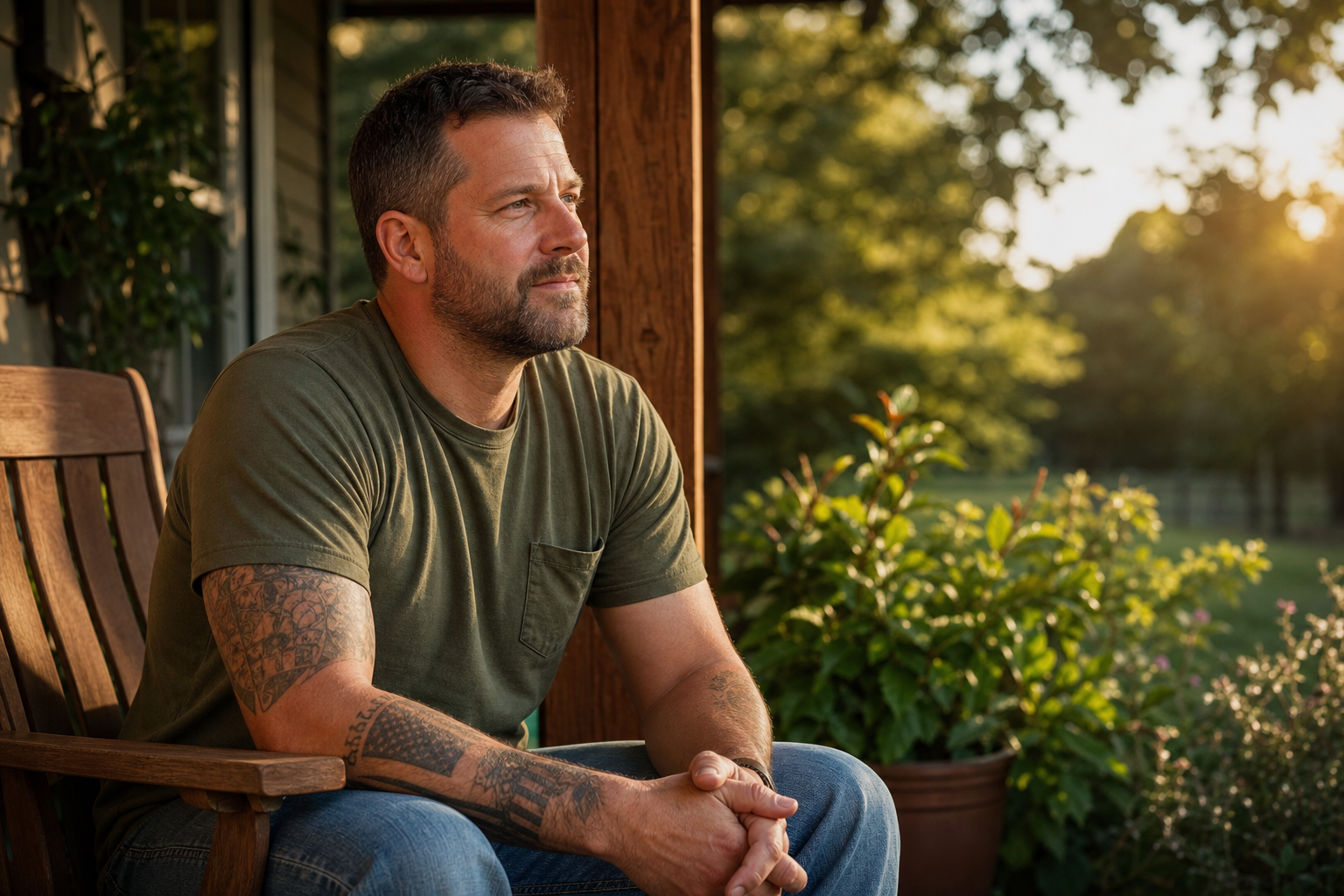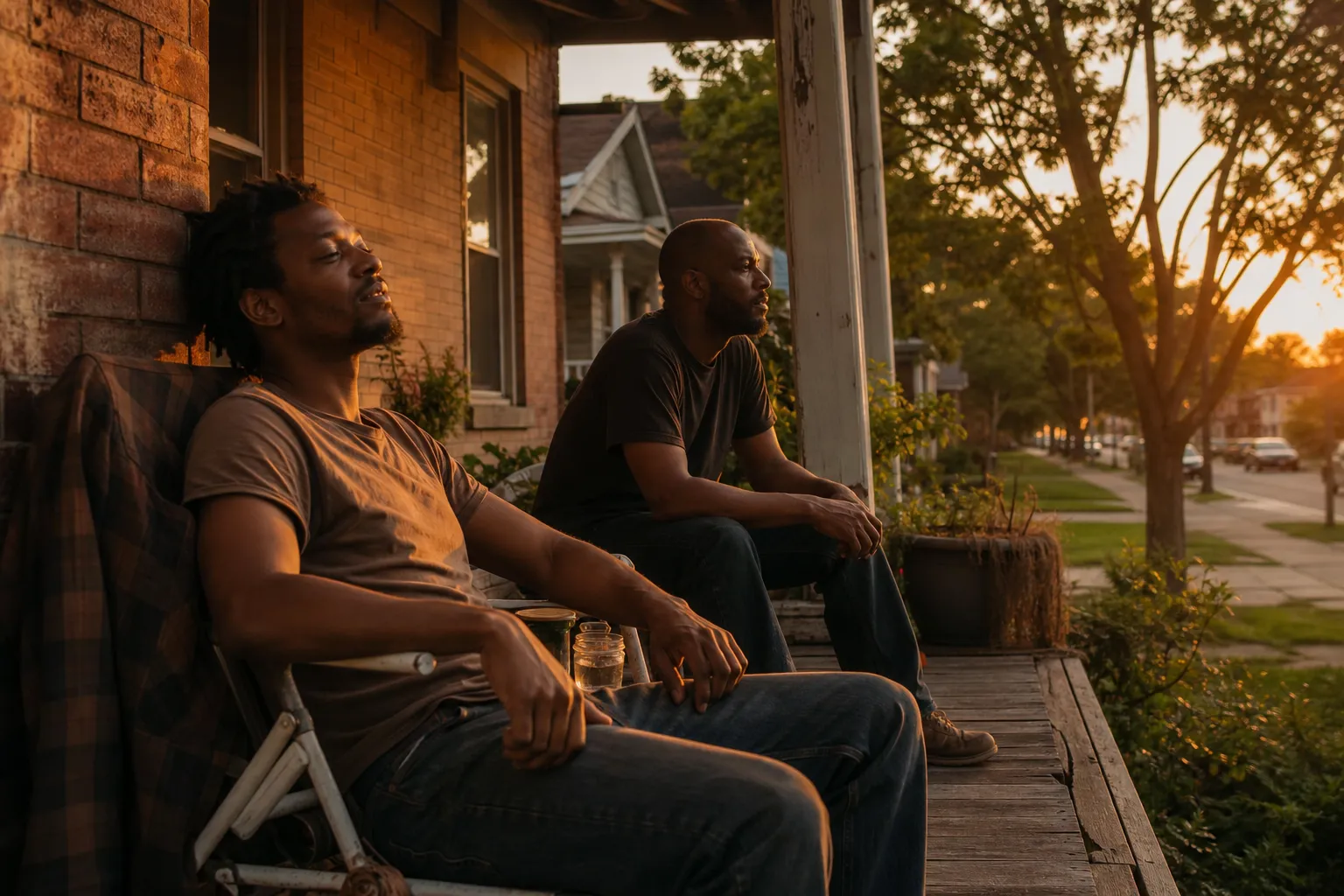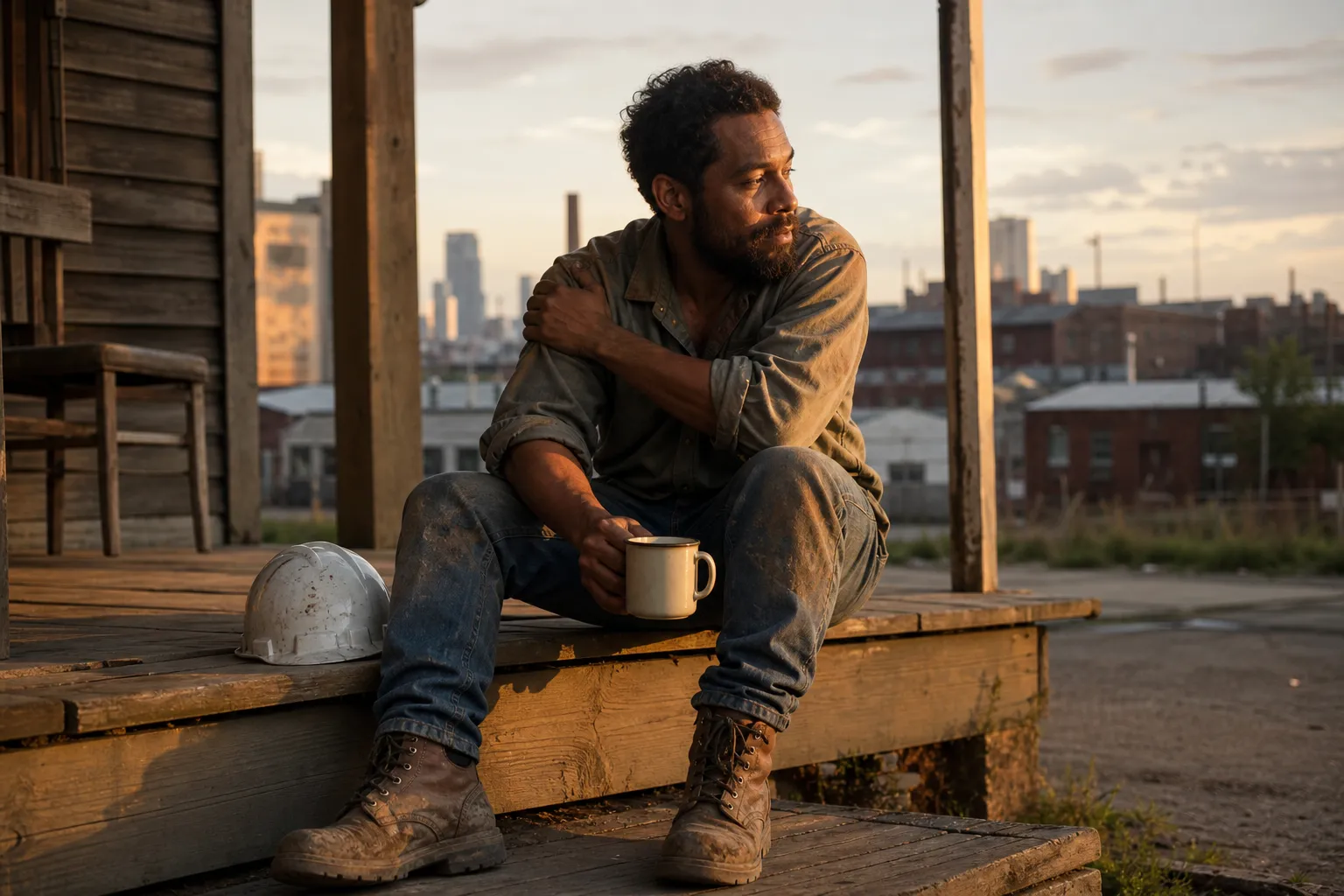
Detroit Trades and Cannabis Wellness: Shift Work, Pain, and Recovery

Jamie
Head Cultivator
The question on a lot of Detroit jobsites is simple: how do you use cannabis after a shift for pain and sleep without wrecking rest — or a job that still tests? This is a community recovery guide for Metro Detroit trades, plant crews, and union shifts. It is not a pain-science textbook, and it is not a how-to for beating a screen.
If you want the full pain map, start with our cannabis for pain natural relief guide. If your knees and hands are the main story, see cannabis and arthritis. This post stays on the clock: clock-out habits, third-shift sleep, Michigan's chronic-pain card path, and the job rules that do not care that weed is legal.
How Do Detroit Tradespeople Use Cannabis After a Shift? #
Most people who use cannabis after a Detroit trades shift treat it as an off-the-clock recovery tool — for sore backs, restless sleep, and the come-down after overtime — not as something you take on a lift or a line. The honest pattern is clock out, get home safe, then decide if the plant helps you rest. It is not a jobsite painkiller, and it is not a free pass on a urine screen.
That is the culture I hear from construction, auto, warehouse, and hospital crews around Metro Detroit. People are not chasing a party high after ten hours on concrete. They want the body to quiet down so they can sleep before the next punch-in. Some use a little flower. Some use a topical. Some have a Michigan medical card for chronic pain. A lot of people do none of that because their shop still tests.
Divine Toke is a sun-grown organic cannabis farm rooted in Detroit, Michigan. We sell clean flower. We do not sell a fantasy that legal weed rewrote your CBA or your general contractor's drug policy.
Here is the after-shift stack that actually matches how tradespeople talk about it:
| After-shift move | What people are trying to do | The catch |
|---|---|---|
| Get home first | Separate the plant from the job and the drive | Impairment on the road is still impairment |
| Eat and stretch | Drop the nervous system before any THC | Skipping this and going straight to a joint often wrecks sleep |
| Low-dose flower or a topical | Take the edge off soreness or racing thoughts | Relief is modest; THC can fog the next clock-in |
| Protect a sleep block | Eight dark hours if you can get them — even after nights | Cannabis does not reset your body clock |
| Know the test rule | CBA, project owner, hospital, or DOT — pick the real one | Michigan legalization does not erase a positive THC test |
A few ground rules that keep this honest:
- Never use on the job, on a ladder, or in a cab. Balance and reaction time matter in this work.
- Do not drive high. That is not a vibe issue. That is a crash and a court issue.
- Do not treat cannabis as a reason to skip physical therapy, a brace, or a doctor's plan.
- If your shop tests, assume THC can cost you the job. Read our Michigan drug-testing guide before you guess.
This is recovery culture, not a medical protocol. Your union steward, your clinician, and your own logbook know your situation better than a blog post.
Who this is for — and who should skip the plant #
This post is for adults on Detroit-area trades, plant, warehouse, or hospital shifts who already wonder about cannabis after work. It is not for anyone who has to stay test-clean, drive a CDL route, or stay sharp on a short turnaround.
Use it if:
- You clock out with a wrecked back or buzzing hands and want a plan, not a hype reel
- You work nights or rotating shifts and sleep is the actual fight
- You are 21+ in Michigan, or you are looking at a chronic-pain medical-card conversation with a real doctor
- You can be honest about impairment and a possible drug test
Skip cannabis — or talk to a doctor first — if:
- You are in a safety-sensitive or DOT-tested seat
- Pain is new, one-sided, numb, or getting worse week to week
- You already cannot stay off pain pills without a clinician's plan
- You would have to drive, climb, or run a machine while it is still in you
No invented patient stories here. If a shop "success story" cannot name a study or a policy, treat it as a story.
Why Do Plant and Jobsite Shifts Beat Up Recovery? #
The lift hurts. The hours hurt more. Metro Detroit construction, skilled trades, and plant work stack heavy bodies on broken sleep — and that combo is why so many people look for something after the shift besides another pill.
This is not a small crowd. The U.S. Bureau of Labor Statistics Detroit-Warren-Dearborn snapshot put mining, logging, and construction employment at 92.9 thousand in June 2026 (preliminary). The same metro series averaged about 89,000 of those jobs across 2025, per the BLS figures posted on FRED. That is a lot of backs, knees, and shoulders clocking in around Detroit, Warren, Dearborn, and the supplier ring.
Construction still pays for that wear in missed days. The CPWR June 2025 Data Bulletin counted 33,200 private-construction musculoskeletal disorders that caused days away from work in 2021–2022. The rate was 19.4 per 10,000 full-time workers, down from 33.9 in 2011 — better, not gone. Specialty trade contractors (the electricians, pipefitters, carpenters, and HVAC crews) had the worst rate in the bulletin: 28.4 per 10,000.
Opioids sit in the same story. CPWR reported that 5.2% of construction workers used a prescription opioid in 2022 — but 27.6% of those with a musculoskeletal injury did. Overtime workers used opioids more often than full-time workers (7.1% vs. 4.4%). That is why a lot of Detroit tradespeople talk about cannabis as a different after-work tool, not as a miracle. They have seen what daily pills can do.
| What beats you up | Why it lingers after the shift |
|---|---|
| Repetitive lift and reach | Joints and tendons do not reset in eight hours |
| Vibration and concrete | Hands and low back stay "on" after you clock out |
| Overtime and sixth days | Less sleep, worse food, shorter recovery window |
| Nights and rotating shifts | Your body clock fights the schedule; sleep gets thin |
| Heat, cold, and Michigan weather swings | Stiff joints on the drive in; worse after a winter third shift |
NIOSH's work-schedules guidance is blunt: long hours, short rest, and shift work cut alertness. That is fatigue science, not cannabis science. If you are already running on five hours, a strong edible is not "recovery." It is another hit to tomorrow's reaction time.
Overtime and rotating nights make the hurt last #
Plant life around Detroit is not a neat 9-to-5. UAW reporting on Detroit Diesel showed a third-shift add and recalls when demand jumped — the kind of schedule change that reshuffles sleep for a whole department. The UAW-GM National Agreement also allows alternative and seven-day operations in some cases, with notice rules and premium pay (including time-and-a-half on a sixth consecutive scheduled day for skilled trades in that book). That is contract language, not a city ordinance. Do not invent a Detroit "recovery law." There isn't one.
What the contract does not do is grow you extra sleep. A sixth day with time-and-a-half still leaves Saturday's back on Sunday's shift.
What "recovery" means on a union clock #
On a union clock, recovery is not a spa day. It is:
- Making the next shift without being a hazard
- Sleeping in the window you actually have — 7 a.m. after nights, not a perfect 10 p.m.
- Not waking up worse than you clocked out
- Staying employable if the job still tests
That last line is why this post keeps the plant in its lane. Cannabis can be part of a Detroit trades recovery culture. It cannot replace rest, food, or a steward who knows your CBA.
Does Cannabis Actually Help Work Pain After a Shift? #
Sometimes, a little — mostly for how pain feels, not for healing the tissue, and not as a proven fix for jobsite muscle soreness. The best federal review still says some THC-containing products give small short-term pain drops, while CBD alone has not beaten placebo for chronic pain intensity. That is useful. It is not a green light to toss your treatment plan.
The AHRQ 2025 living systematic review is the cleanest summary I trust for this. High or comparable THC-to-CBD oral products were tied to a small improvement in pain. Function and disability barely moved. Dizziness, sedation, and nausea went up. Synthetic or purified oral CBD alone was not tied to lower pain intensity versus placebo (moderate-strength evidence). If a cream shop tells you CBD is "clinically proven for work pain," they are selling harder than the evidence.
For after-work muscle soreness specifically, the picture is thinner. A 2024 randomized pilot (PubMed 38980809) tested topical CBD cream (~100 mg) after a hard lower-body session. It did not beat placebo on soreness or performance. Health Canada's clinician monograph notes a short-term signal for nerve pain with smoked or vaporized cannabis — and says there are no good human trials for muscular pain. Your lumbar disc and your delayed-onset soreness are not the same problem.
People still reach for it after a work injury. A 2023 Ontario workers' compensation survey (PMC10357653) of 1,196 injured workers found 27.4% used cannabis in the past year, and 14.1% used it for the work-related condition. In that "for the injury" group, 62.1% had sleep problems most or all of the time — and only about one in three had gotten guidance from a clinician. That matches what I hear in Detroit: people self-experiment after the shift, then hope it is helping.
| Claim you hear on the floor | What the evidence actually says |
|---|---|
| "CBD cream knocks out work soreness" | One 2024 pilot found no performance or soreness win vs placebo |
| "CBD pills fix chronic pain" | AHRQ: oral CBD alone not better than placebo for pain intensity |
| "THC takes the edge off" | Small short-term pain drop in some products; more sedation |
| "It heals the muscle" | No good evidence it speeds tissue repair |
| "Everyone at the shop uses it, so it works" | Common use ≠ proven recovery |
If your pain is widespread and wired (fibromyalgia-type), that is a different medical conversation — see our fibromyalgia guide. If it is stiff, grinding joints, see the arthritis post. Weekend gym recovery is closer to our fitness and cannabis piece. This section's job is simpler: do not bet your next shift on a miracle.
What the research supports — and what it does not #
Supports, with hedges:
- Some people feel less pain after THC-containing cannabis
- Sleep onset can feel easier for some users
- A topical will not get you high the way flower can — but it also may not do much
Does not support:
- Cannabis as a cure for a work injury
- CBD-only products as a reliable pain drug
- Using cannabis instead of physical therapy, imaging, or a prescribed plan
- "I feel fine" as proof you are safe on a jobsite
Talk to the clinician who already manages your pain before you add cannabis — and never stop a prescription because a blog or a buddy said to. Drug interactions are real. A doctor who knows your meds is the right person to check that, not a shop-floor rumor.
How Do You Time Cannabis After Third Shift Without Wrecking Sleep? #
Cannabis may help some people fall asleep faster after a night shift. It does not reset your body clock, and a heavy THC dose can steal REM sleep and leave you foggy for the next punch-in. If your goal is "knock out at 8 a.m. after nights," start low, keep it off the drive home, and protect a dark, quiet sleep block. If your goal is "fix shift-work sleep disorder," the plant is the wrong tool.
A 2022 review of cannabinoids and sleep (PMC9036386) is the honest headline: evidence for treating sleep disorders is limited and mixed, and products can cause daytime sleepiness and hurt driving capacity. Older lab work still matters here too. A simulated night-shift study (PMC5578830) found low-to-moderate THC eased some performance and mood drops in frequent users. That is a lab finding in people who already use. It is not a safety badge for a Detroit assembly line or a roof in January.
Observational data also cuts against the "it'll just knock me out clean" story. A 2024 sleep-timing analysis (PMC11446118) linked cannabis use close to bedtime with more time awake after you first fall asleep and lower sleep efficiency for some people. THC often shortens the time to fall asleep and can suppress REM — the dream-stage sleep your brain uses to sort the day. You may feel out faster and still wake up unrested.
Plain translation for third shift:
- Your clock is wrong, not just your "tired." Night work fights daylight. Cannabis does not flip that switch.
- Sedation is not the same as good sleep. Passing out on the couch after a strong edible is not recovery.
- Next-shift fog is a safety issue. If you have to be back in eight hours, a high-THC edible is a bad bet.
- Alcohol plus cannabis is worse. Cross-fading multiplies impairment. Save that fight for another article — just don't do it before a shift.
First shift, second shift, and nights #
| Shift | Better timing idea | What usually goes wrong |
|---|---|---|
| First (days) | After you're home, fed, and done driving — early evening if you sleep at a normal hour | Using at 4 p.m., then wondering why you can't stay awake for dinner with kids |
| Second (afternoons) | After the commute, before your delayed "night" | A late edible that is still climbing when you need to be up at 10 a.m. |
| Third (nights) | After blackout curtains are up and you are in the sleep space — small inhaled dose if you use at all | Smoking in the driveway still in work clothes, then fighting daylight and a racing mind |
A simple timing rule I trust more than strain names:
- Home and off the road first.
- Food and water so THC does not hit an empty stomach (edibles especially).
- One small dose. Wait. Do not chase it.
- Lights down. Phone down. Cool room if you can get it.
- No redose if you have to be back on a short turnaround.
If sleep is the only reason you use, and you still wake wrecked after two honest weeks, the plant is not fixing the schedule. Talk to a clinician about shift-work sleep — not just about cannabis. For athletes and gym recovery (different clock, similar "don't train high" rule), see cannabis and fitness.
Flower, Topical, or Edible After Work — Which Fits a Job? #
Pick the method that matches your clock-out window and your job risk — not the one that sounds "strongest." Flower hits faster and fades sooner. Edibles hit later and last longer. Topicals stay local and are the least likely to get you high — and the least proven for sore muscles.
This is the practical fork after a Detroit shift. A sun-grown flower joint (or a small bowl) is what a lot of people already know. An edible is what people grab when they "don't want to smoke." A CBD cream is what people buy when they still have to pass a test or think they can skip the high. Each trade-off is real.
Health Canada is useful here: inhaled cannabis has the fastest onset and the most immediate impairment. Oral products go through the liver and can feel stronger and longer. Topicals are meant to stay on the skin. None of those routes has strong human proof for muscular work pain.
| Method | How fast it shows up | How long it tends to last | Sleep fit | Jobsite / next-shift risk |
|---|---|---|---|---|
| Inhaled flower | Minutes | A few hours for most people | Can help you start sleep if the dose is small | High acute impairment; still a THC-test risk |
| Edible / capsule | 30–120 minutes (sometimes longer) | Often 6–8+ hours | Easy to overshoot and sleep through an alarm — or wake groggy | Highest "still high at clock-in" risk if you dose late |
| Tincture (under the tongue) | Often 15–45 minutes | In between flower and a full edible | Easier to measure than a brownie | Still THC if the bottle has THC |
| Topical cream | Local; little or no high if it stays on skin | Hours on the skin | Won't knock you out | Lowest impairment; soreness proof is weak (PubMed 38980809) |
A few shop-floor rules:
- If you have a short turnaround (nights to nights, or a call-back), skip late edibles. A small inhaled dose — or nothing — is the less-dumb option.
- If you have kids at home after first shift, a heavy edible at 5 p.m. can make you a worse parent before it makes you a better sleeper.
- If your job tests for THC, no method with THC is "safe." Topicals that contain THC can still be a policy problem if they are not truly local-only products — and many CBD oils are not as THC-free as the label implies. This is not a test-evasion guide. If testing is the issue, read the Michigan drug-testing post and talk to your steward or a lawyer.
- If you just want a ritual, a stretch, a shower, and tea will not show up on a screen.
Divine Toke's lane is clean, sun-grown organic flower — generic, labeled, no invented "trades strain." Shop by how it smells and how it treats you, not by a nickname on a menu. Michigan packs should carry a lab panel. If you want more on how Detroit growing culture fits the city, see growing cannabis in Detroit.
Can You Get Fired for Off-the-Clock Cannabis in Michigan Trades? #
Yes. In Michigan, a private employer can generally still fire you for a positive THC test even though adult-use cannabis is legal. Legal weed changed what the state can charge you with. It did not automatically rewrite HR, the project owner, or the Department of Transportation.
This is the part people get wrong on smoke breaks. Michigan voters legalized adult-use cannabis under the Michigan Regulation and Taxation of Marihuana Act (MRTMA). The same statute tells employers they may keep drug policies and take action when you violate them or work under the influence. A medical card does not flip that for most private jobs. The Sixth Circuit's Casias v. Wal-Mart decision is the case lawyers still cite: Michigan's medical law did not create a private lawsuit just because you were fired after a positive test.
DOT-covered work is even tighter. The DOT marijuana notice says federal testing rules did not change because a state legalized. FMCSA still lists marijuana among the drugs in the panel for safety-sensitive commercial drivers.
This article will not tell you how to beat a test. If you need the full map — MRTMA, Casias, CDL, Schedule III, union angles — use our Can you get fired for legal weed in Michigan? post. Talk to a steward or an employment lawyer about your shop. This is not legal advice.
| Work setting around Detroit | Who actually writes the drug rule | Practical takeaway |
|---|---|---|
| Building trades / GC site | Project owner + contractor policy + often the CBA | Owner rules can be stricter than state law |
| Auto plant / supplier | Company policy + UAW or other contract language | Alternative schedules in the UAW-GM book do not equal a cannabis pass |
| Warehouse / logistics | Employer policy; DOT if you drive | Random and post-accident screens are common |
| Hospital / patient care | Employer + licensing boards | Many systems still treat THC as a fail |
| CDL / DOT | Federal testing rules | State legalization does not pull marijuana off the panel |
Construction, plants, and CDL are not the same rulebook #
Same city. Different books.
- Construction: You can be legal at home and still fail a site you needed for overtime. The general contractor's binder wins more arguments than a Facebook post about "legal weed."
- Plants: A UAW third-shift add — like the Detroit Diesel recall and third-shift story — changes your sleep. It does not change a plant-safety drug rule unless the contract says it does.
- CDL: If you hold the license that pays the mortgage, treat federal marijuana testing as the rule that matters, not Michigan's adult-use statute.
If you are going to use cannabis at all in a tested job, the only honest move is to know the policy in writing and decide if the risk is worth it. There is no clever timing trick in this article. There shouldn't be.
How Does Michigan's Medical Card Work for Chronic Pain? #
In Michigan, chronic pain is a named qualifying condition for a medical cannabis card — but a card is a doctor-certified registry path, not job insurance. Fibromyalgia is not listed by name. If that is your diagnosis, access still usually runs through chronic pain (or another listed condition) if a Michigan physician agrees it fits.
The Michigan Cannabis Regulatory Agency's eligible-conditions FAQ lists Chronic Pain on its own line. It also lists a broader bucket: a chronic or debilitating disease (or its treatment) that produces severe and chronic pain, severe nausea, seizures, or severe muscle spasms. Arthritis and rheumatoid arthritis are named too. Fibromyalgia is not on that named list. Don't let a clinic ad tell you otherwise.
The path is doctor-first:
- You have a real relationship with a Michigan-licensed MD or DO — not a one-click stranger if you can help it.
- The physician certifies a qualifying condition and that you are likely to benefit from medical use.
- You register with the state for a patient card.
- You still follow adult-use rules if you are 21+ and shopping the adult-use counter instead.
Adult-use remains legal for adults 21+ under MRTMA. A lot of Detroit tradespeople never get a card and just buy adult-use. The card can matter for taxes, purchase limits, and talking to a clinician. It does not automatically block a private-sector firing after a positive test — see Casias and the drug-testing guide.
| Question | Straight answer in Michigan (2026) |
|---|---|
| Is chronic pain a named qualifying condition? | Yes — CRA FAQ |
| Is fibromyalgia named? | No — pathway is usually chronic pain if a doctor certifies it |
| Do I need a card to buy at 21+? | No — adult-use is a separate door |
| Does a card protect my private job? | Usually no |
| Should I stop prescribed pain meds when I get a card? | No — not unless your prescribing clinician changes the plan |
If your pain is the widespread, sleepless kind that gets labeled fibromyalgia, read the fibromyalgia complete guide for the condition side. This section is only the Michigan doorway: chronic pain is the named path most tradespeople will actually use.
A card is also not a reason to skip the boring medical work. Imaging, physical therapy, a better mattress, a job that doesn't wreck the same shoulder every week — those still matter. The CRA is the state agency to start with for official program pages. Ignore random clinic blogs that invent extra qualifying conditions.
Medical card vs adult-use at the counter #
If you are 21 or older in Michigan, you can buy adult-use cannabis without a card. The card is optional. It is a medical-program door, not the only door.
Under MRTMA section 5, adults 21+ may generally possess up to 2.5 ounces, with no more than 15 grams of that as concentrate, and may keep up to 10 ounces at home. Section 4 says amounts over 2.5 ounces in a residence must sit in a locked or secured container or area. Those are planning numbers, not a dare to stockpile. Medical-program limits and taxes can differ — confirm on the CRA site before you treat a Facebook chart as law.
| Door | Who it is for | What it does not do |
|---|---|---|
| Adult-use (21+) | Most Detroit tradespeople who just want legal flower after a shift | Protect a private job or a CDL |
| Medical card (chronic pain pathway) | People whose clinician certifies a qualifying condition | Rewrite HR, DOT, or a GC drug binder |
| Both in the same week | Legal in Michigan if you follow each program's rules | Make THC invisible on a urine screen |
If you only need a Friday night jar and your job does not test, adult-use is the simpler path. If you already see a doctor for long-term pain, ask that doctor whether certification makes sense. Do not shop a "card mill" ad that promises a rubber stamp for a bad back.
What Recovery Habits Matter More Than the Plant? #
Sleep, food, and not being a hazard on the next shift beat any joint. Cannabis can sit in a Detroit trades recovery kit. It should not be the kit.
NIOSH keeps saying the quiet part: long hours and shift work cut alertness. CPWR keeps showing the cost of worn-out bodies and the opioid overlap. If those are the facts, the first recovery tools are boring:
| Habit | Why it outruns a joint |
|---|---|
| A real sleep block | Dark room, same window most days, no "I'll sleep when I die" heroics |
| Food that isn't gas-station dinner five nights a week | Blood sugar crashes feel like "I need to smoke" |
| Water and electrolytes on hot Michigan jobs | Dehydration makes soreness and headaches louder |
| Ten minutes of stretch or a walk | Movement is still the cheapest anti-stiff tool |
| Physical therapy or a good trainer when something is actually injured | Cannabis does not put a disc back |
| The written drug policy | Knowing the rule is part of recovery if the job pays the bills |
| A clinician who will tell you no | Doctor-first if pain is new, one-sided, numb, or getting worse |
A simple after-shift order that does not depend on getting high:
- Commute sober.
- Shower, food, five to ten minutes of easy movement.
- Decide if you still need the plant. If the answer is only "I'm bored," skip it.
- If you use, one small dose — then lights down.
- Log what you did (shift, dose, sleep hours, next-morning fog). Two weeks of notes beat a year of guessing.
Community matters here more than branding. Steward, crew, family, a clinic that treats you like an adult — that is Detroit recovery culture. Divine Toke can grow clean sun-grown flower in Michigan. We cannot clock out for you, rewrite a CBA, or make third shift into day shift.
If cannabis is only helping you ignore an injury that is getting worse, that is not wellness. That is delay. Get it looked at.
After-shift mistakes I see too often #
These are culture problems, not "you failed weed" problems:
| Mistake | What to do instead |
|---|---|
| Smoking in the truck before you leave the lot | Drive sober. Use at home, if at all |
| Chasing a late edible on a six-hour turnaround | Skip it, or keep any THC tiny and early in the sleep window |
| Using cannabis to skip food and stretching | Eat and move first. Then decide |
| Assuming "legal in Michigan" means "legal at this site" | Read the policy. Ask the steward |
| Stacking beer and a joint "to come down" | Pick one. Alcohol plus THC hits harder and lasts uglier |
| Raising the dose every week because Tuesday still hurts | That is tolerance, not a tougher job. Hold the dose or take a break |
| Hiding use from the doctor who writes your other meds | Tell them. PMC10357653 found most injured workers using cannabis for the injury got no clinician guidance |
Winter in Michigan makes this louder. Cold stiffens hands on the drive in. Dark mornings after a night shift make sleep even thinner. The plant does not change the latitude. Blackout curtains and a consistent sleep window do more than a heavier jar.
Frequently Asked Questions #
Can cannabis help after a construction shift? #
Sometimes it takes the edge off how pain feels. It does not heal the job, and the proof for muscle soreness is weak. The AHRQ 2025 living review found only a small short-term pain drop with some THC-containing products, plus more sedation and dizziness. CPWR still counted 33,200 construction MSD cases with days away from work in 2021–2022. Use the plant as an after-shift tool, not as a substitute for rest or medical care.
Will a Michigan medical card protect my trades job? #
Usually no. A card is a state registry path for a qualifying condition. It is not a shield against a private employer's drug policy. Casias v. Wal-Mart is the case that still gets cited: Michigan's medical law did not create a private firing lawsuit. For the full employment map, read Can you get fired for legal weed in Michigan?.
Is fibromyalgia a named Michigan qualifying condition? #
No. Fibromyalgia is not on the CRA named list. Chronic pain is named. Many people with fibro-type pain get certified through that chronic-pain pathway if a Michigan MD or DO agrees it fits. Named condition is not a cure claim. See our fibromyalgia guide for the condition side.
Can I use cannabis after third shift and still sleep? #
You can try a small dose after you are home — but do not expect it to fix night-shift sleep. A cannabinoid sleep review (PMC9036386) calls the clinical evidence limited and flags daytime sleepiness. THC may help you fall asleep faster and still cut REM or leave you foggy for the next clock-in. Protect a dark sleep block first. Cannabis does not reset your body clock.
Do CBD creams fix sore muscles after work? #
Not in the best small trial we have. A 2024 randomized pilot (PubMed 38980809) found topical CBD cream did not beat placebo on soreness or performance after fatiguing exercise. A cream is the lowest-impairment option if you still want to try something local. It is not a proven recovery drug. Health Canada also notes a lack of human muscular-pain trials.
Can my boss fire me for legal weed in Michigan? #
Yes, in most private jobs, if you violate a workplace drug policy. MRTMA legalized adult-use and still lets employers keep those policies. This is general information, not legal advice. Details and CDL/DOT lanes are in the drug-testing post.
What if I hold a CDL or drive for the job? #
Federal testing still includes marijuana. The DOT marijuana notice says state legalization did not change the federal process. FMCSA lists marijuana among tested substances for safety-sensitive commercial drivers. Do not treat a Michigan card or adult-use purchase as a CDL pass.
Is it safe to use cannabis before I drive home? #
No. Impairment is impairment, legal weed or not. Inhaled cannabis can hit in minutes. That is the worst time to get in a truck after a ten-hour shift. Get home first. Sleep-and-cannabinoid reviews also flag driving-capacity concerns even when people think they "feel fine."
Should I stop my pain meds if I start cannabis? #
No — not unless the clinician who prescribed them changes the plan. Cannabis is not a reason to dump a pain contract, a muscle relaxer, or an anti-inflammatory on your own. Injured-worker research (PMC10357653) found most people using cannabis for a work condition never got clinician guidance. Don't be in that group. Bring it up.
Flower, edible, or topical — what should I try first after a shift? #
If you already use flower and you have a long enough sleep window, a small inhaled dose after you're home is the most predictable. Skip late edibles on a short turnaround — they last too long. A topical is the lowest high and the weakest soreness proof. Match the method to the clock and the drug policy, not to a menu nickname.
Does Divine Toke sell a special trades recovery strain? #
No. We don't invent strain names for job titles. Divine Toke grows sun-grown organic flower in the Detroit, Michigan area. Shop by smell, how you sleep, and a real lab label — not by a "shift-worker" nickname. If a shop promises a cultivar that "heals trades backs," walk.
Closing Thoughts #
Detroit trades recovery is a clock problem first and a cannabis problem second. Clock out. Get home. Eat. Sleep in the window you have. If the plant helps you take the edge off without wrecking tomorrow, keep the dose small and honest. If your shop tests, treat that rule as real — Michigan legalized the plant, not a positive screen.
If you're curious to try clean flower as one off-the-clock tool, look for sun-grown, clearly labeled product and a pace you can keep. At Divine Toke — a sun-grown organic cannabis farm rooted in Detroit, Michigan — we care about plant quality and straight talk more than hype. Your CBA, your doctor, and your next shift still come first.
Dig deeper here:
- Cannabis for pain: a complete guide to natural relief
- Can you get fired for legal weed in Michigan?
- Cannabis and fitness: how athletes use weed for recovery
- Growing cannabis in Detroit: urban revival
This article is for educational purposes only and is not medical advice. Always consult your healthcare provider before starting any new wellness routine. It is also not legal advice. Employment questions belong with a union steward or an employment lawyer.
Grown in Detroit. Shipped to your door.
Small-batch, sun-grown cannabis cultivated in living soil. Mail-order shipping to all 50 states.