Farming on Michigan Time: Frost Dates, Hoop Houses, and the Short Season

Jamie
Head Cultivator
Michigan outdoor cannabis does not run on a California calendar. It runs on frost dates and night length. For Detroit shoppers, that is why sun-grown flower shows up as a season, not a year-round tap.
This guide answers one question: why is Michigan's outdoor cannabis season so short, and how do frost dates and hoop houses change what sun-grown flower Detroit shoppers actually get?
Why Is Michigan's Outdoor Cannabis Season So Short? #
Michigan outdoor cannabis is a short-season crop because two clocks squeeze it: frost on both ends, and day length in the middle. Warm-season plants cannot sit in the field until the last spring freeze is gone. Photoperiod plants will not finish flower until nights get long enough. Then the first fall freeze can end the season before a slow cultivar is done.
Think of it like a Michigan tomato. You do not plant it in March. You do not leave it out after a killing freeze. Cannabis that follows the sun has the same problem — plus a light switch. Indoor rooms flip that switch on a timer. Open fields wait on the sky.
MSU Extension puts the state's frost-free window in plain numbers: some Upper Peninsula spots get only about 80 frost-free days, while some Lower Peninsula spots get up to about 170. That is the whole outdoor year for a frost-tender plant. It is not a vibe. It is the calendar.
The squeeze looks like this:
| Clock | What it does | Why it shortens the season |
|---|---|---|
| Last spring freeze | Ends the safe plant-out window | Soil and nights stay too cold too late |
| Photoperiod | Starts flower when nights get long | Bloom often waits until late summer |
| First fall freeze | Ends the field | Flower may still be finishing when frost arrives |
| Great Lakes humidity | Keeps nights wet | Rot pressure can force an early cut |
A photoperiod plant is one that flowers when nights get long enough. Most outdoor cannabis works that way. A 2023 University of Guelph study (PMC10386198) describes cannabis as a short-day plant: shorter days (longer nights) trigger bloom. Indoor growers force that with a 12-hour light / 12-hour dark schedule. Outdoors, Michigan has to wait for nature.
That is why "Michigan time" is not a slogan. It is the gap between the last spring freeze and the first fall freeze, minus the weeks the plant still spends in veg after transplant. Detroit-area fields sit in the warmer southeast pocket of that map. Northern and inland fields sit in a tighter one.
Divine Toke grows sun-grown organic flower on that same Michigan clock. We do not get a secret extra month. Nobody in this climate does. The honest story is the calendar — not a farm flex.
If you want the soil-and-place half of this story, read how Michigan land shapes flower. This post stays on climate and structures: frost dates, hoop houses, and why the season is short.
What Are Michigan's Last-Spring and First-Fall Frost Dates? #
Southeast Michigan's median first 32°F freeze is mid-October — Detroit's median is October 18 — and last-spring freeze in the Detroit metro often lands from late April into early May. Those are climatology dates, not promises. MSU Extension frost climatology (1981–2018) is the table to trust for fall. MSU's frost-free date table is the table to trust for spring.
A frost date is the typical day a place hits 32°F or lower. A killing freeze is colder — often cited at 28°F. Soft tissue on a cannabis plant does not need a hard freeze to get hurt. A light frost can burn leaves and flowers. A hard freeze can end the plant.
NWS Detroit/Pontiac says it simply: October is when the growing season ends across Southeast Michigan. They publish average first-date maps for a 32°F freeze and a 28°F hard freeze. That is the consumer-facing clock for metro Detroit.
Median first 32°F fall freeze from the MSU Extension 1981–2018 climatology:
| Place | Median first 32°F | 10th percentile (early years) | 90th percentile (late years) |
|---|---|---|---|
| Detroit | Oct. 18 | Oct. 10 | Nov. 6 |
| Ann Arbor | Oct. 14 | Oct. 1 | Oct. 26 |
| Flint | Oct. 9 | Sept. 23 | Oct. 21 |
| Grand Rapids | Oct. 11 | Sept. 29 | Oct. 24 |
| Cadillac | Sept. 21 | Sept. 4 | Oct. 7 |
| Traverse City | Oct. 6 | Sept. 24 | Oct. 22 |
Same source, median first 28°F killing freeze: Detroit Nov. 3, Ann Arbor Nov. 1, Flint Oct. 20, Cadillac Oct. 6. Soft frost can arrive weeks before the hard one. Outdoor flower is racing the 32°F date, not waiting for 28°F.
Spring is the other wall. MSU's statewide frost-free table lists the date by which 50% of years have already seen a last 32°F:
| Station | 50% last spring 32°F | 25% later than |
|---|---|---|
| Detroit city | April 24 | April 30 |
| Detroit Metro | May 3 | May 11 |
| Pontiac | May 6 | May 13 |
| Ann Arbor | April 29 | May 6 |
| Flint | May 8 | May 15 |
| Cadillac | June 1 | June 12 |
MSU Extension has said the same thing in garden language: Detroit's average last frost has been listed around April 30, and that word average is doing a lot of work. A late May cold snap can still happen.
For outdoor cannabis and other warm-season crops, the safe field window is after that last spring freeze and before that first fall freeze. In metro Detroit that is often roughly May into mid-October. That is not a Divine Toke harvest date. It is the climate box every outdoor grower in this region is inside.
Southeast Michigan vs. Inland and Northern Michigan #
Lakes Erie, St. Clair, and Huron keep Southeast Michigan's first fall freeze among the latest in the state. MSU Extension maps that clearly: earliest first freezes hit interior Upper Peninsula and northern Lower Peninsula sites. Latest first freezes sit along the southeast and southwest lakeshores.
That is why Detroit-area outdoor crops often get more finish time than a Cadillac or Grayling field. It is also why a "Michigan harvest" is not one week. The state is long. The lakes are huge. Inland valleys can frost while a lakeshore ridge is still mild.
A few load-bearing contrasts from the same MSU fall-freeze table:
- Cadillac median first 32°F: Sept. 21 — almost a month earlier than Detroit
- Vanderbilt median first 32°F: Sept. 10
- Monroe median first 32°F: Oct. 22
- Port Huron median first 32°F: Oct. 31
If you only remember one local fact: metro Detroit is on the late side of Michigan frost. That is a real advantage. It is still not a California season.
Why 2026 Does Not Get a Single Magic Frost Date #
There is no official "first frost Detroit 2026" date you can circle in January. MSU Extension says you cannot reliably forecast first freeze more than a few days out. Growers watch the actual forecast. Shoppers should treat October as the danger month, not a guaranteed week.
NWS Detroit/Pontiac's 2025 end-of-season notice is a good example of how this works in real time. In mid-October 2025 they stopped issuing frost advisories because the growing season had ended across Southeast Lower Michigan and the climatological average first freeze had been reached for most locations — even if a widespread killing freeze had not yet hit.
So for 2026:
- Plan with the medians (Detroit first 32°F around Oct. 18; last spring around late April to early May)
- Decide with the 3–5 day forecast
- Do not treat a garden-app "first frost 2026" number as a law
MSU also notes the target is moving a little. Mean temperatures in Michigan have warmed more than 2°F since the early 1980s, and first-freeze dates at Lansing trended about 10 days later across that 1981–2018 record. Averages can drift. A single October night can still wreck a field.
What USDA Hardiness Zones Mean for Detroit Cannabis #
A USDA hardiness zone tells you the average coldest winter night — not how long you can grow outdoor cannabis. Detroit-area growers usually plan in the warm southeast band MSU Extension treats as Zone 6a–6b. That helps with perennials and winter survival. It does not set your transplant week or your fall cut.
The 2023 USDA Plant Hardiness Zone Map — built with USDA ARS and Oregon State’s PRISM Climate Group — uses 30-year averages of the lowest winter temperature (1991–2020). Zones are 10°F wide, then split into 5°F half-zones (6a / 6b). The official map lives at planthardiness.ars.usda.gov.
What the zone is good for:
- Winter cold — can a woody plant or overwintered cover crop live through January?
- Rough regional comparison — Upper Peninsula vs. metro Detroit
- Garden-calendar grouping — MSU’s Lower Peninsula calendar is built on Zone 6a, then shifted a week for 6b or 5b
What the zone is not good for:
- Last spring frost
- First fall frost
- How many weeks a photoperiod cultivar needs to finish
- Whether a hoop house will save you in October
MSU’s Lower Peninsula garden calendar (updated March 31, 2026) gives the frost ranges people actually plant by:
| Zone | Average last spring frost | Average first fall frost |
|---|---|---|
| 6b (warmer SE pockets) | April 15–April 30 | Oct. 15–Oct. 31 |
| 6a | May 1–May 15 | Oct. 6–Oct. 21 |
| 5b | May 10–May 25 | Sept. 25–Oct. 10 |
| 5a | May 20–May 30 | Sept. 20–Oct. 1 |
That 6b fall window (Oct. 15–31) lines up with Detroit’s median first 32°F of Oct. 18 in the MSU climatology table. The match is useful. It is still a range.
USDA itself warns that a zone is an average of extreme winter lows, not the coldest night that will ever happen. About half the country moved one warmer half-zone on the 2023 map compared with 2012. That does not mean outdoor cannabis in Detroit now has a West Coast finish. It means January is, on average, a bit less brutal. Flower still has to beat October.
If you are a Detroit shopper, zone talk is background. Frost dates and day length are the clocks that change the jar.
How Photoperiod and the Fall Equinox Set the Flowering Clock #
Outdoor photoperiod cannabis in Michigan starts flowering when nights get long enough — often as days drop toward the 14-to-16-hour range — and that usually happens before the fall equinox, not on it. The equinox is a useful landmark. It is not the plant's switch.
Photoperiod means "day length." A short-day plant flowers when nights get long. PMC10386198 found that all ten drug-type cultivars they tested initiated flower under photoperiods up to 14 hours of light. Some even initiated under 15 hours, but those flowers did not keep developing. Indoor rooms often force bloom at 12 hours light / 12 hours dark. Nature in Michigan is slower and sloppier.
An ASHS HortTechnology review of photoperiod-sensitive hemp notes that after a juvenile phase, many cultivars may start flowering when day length drops below about 14 to 16 hours. That is a band, not a single minute on the clock. Genetics decide where in the band a plant sits.
Metro Detroit daylight in 2026 already shows how fast the dimmer moves. ClickOnDetroit / WDIV reported that by July 8, 2026, Southeast Michigan was losing more than one minute of daylight per day. Metro Detroit had about 15 hours and 6 minutes that day. The last day with at least 15 hours was July 13.
So the flowering clock is already running in midsummer. The summer solstice is the turning point — the longest day. After that, nights stretch a little every evening. By late August and early September, many photoperiod plants are in bloom. The fall equinox (about Sept. 22) is when day and night are close to even. By then, a lot of outdoor flower is already weeks into the stretch.
| Date-ish landmark | What the sky is doing | What the plant is often doing |
|---|---|---|
| Summer solstice (late June) | Longest day | Still mostly veg / just tipping |
| Mid-July | Days still ~15 hours, but shrinking fast | Late veg, pre-flower on some plants |
| Late August | Days heading toward the 14-hour band | Flower often underway |
| Fall equinox (late Sept.) | Near 12-hour days | Mid-to-late flower for many cultivars |
| Mid-October | Short days + frost risk | Finish or get cut |
Two clocks, one squeeze:
- Light clock — bloom starts when nights are long enough
- Frost clock — bloom has to finish before 32°F
A cultivar that needs a long flower (think 10–12 weeks of bloom) can run out of calendar in Michigan even if Detroit's median first freeze is Oct. 18. A faster cultivar has more room. That is plant breeding and weather, not a farm secret.
This is also why indoor flower never "misses" October. Rooms do not wait for the equinox. For how growers then judge readiness once flower is on — trichomes, pistils, weather — see when sun-grown cannabis is ready. This post stays on the calendar that creates that pressure.
What Hoop Houses and High Tunnels Actually Buy #
A hoop house (high tunnel) in Michigan usually buys weeks of shoulder season — not a California year and not a heated winter flower room. USDA NRCS's Michigan community-garden high-tunnel guide puts the basic gain at about two weeks earlier in spring and two weeks later in fall, and lists a typical extension of 2–4 weeks. That is the honest number for a passive plastic tunnel.
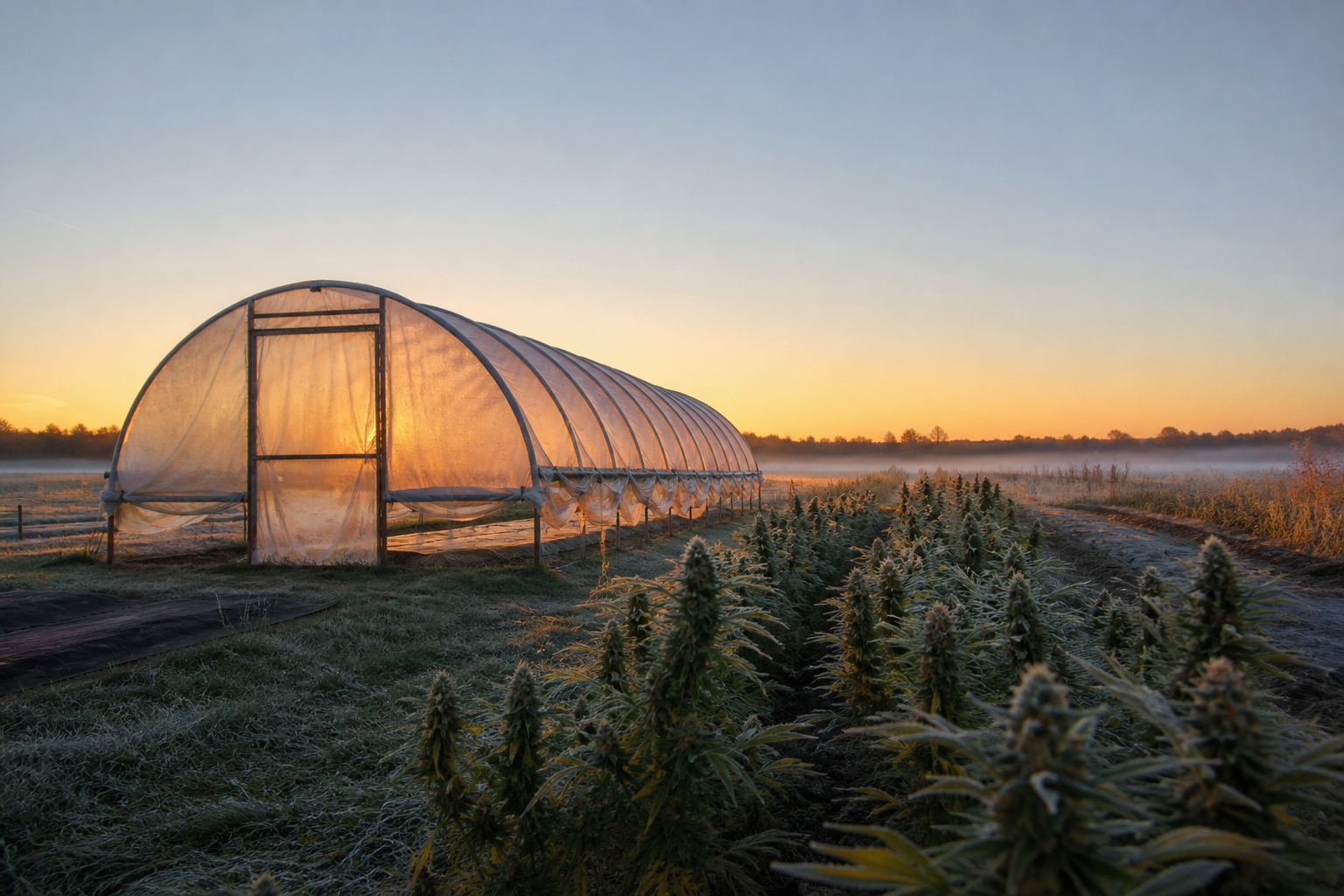
A hoop house / high tunnel is a steel-hoop structure with plastic over it. It is mostly solar-heated. Sides roll up. There is no full HVAC. MSU Extension bulletin E3138 calls hoophouses "passive solar greenhouses" that stretch warm- and cool-season crops and can allow winter harvest of cold-tolerant vegetables. The line that stuck with me: most tools let farmers farm more area. A hoophouse lets them farm more time.
More time is not infinite time. E3138 also notes those Michigan startup farms saw their biggest profits in May, then a late-summer bump, with October through February as the slow, low-profit stretch. Winter greens in a tunnel are a different crop than finishing frost-tender flower.
What a tunnel actually changes:
- Spring: soil and air warm sooner, so transplants can go in a little earlier
- Fall: a light frost that would burn an open field may miss plants under plastic
- Rain and wind: the cover knocks back weather beating
- Light: the sun still sets. Plastic does not add hours of darkness control unless you add light-dep tarps
- Heat in summer: the most common mistake, per NRCS, is overheating the house
MSU Extension adds a smaller tool: floating row covers give about 2 to 8°F of frost protection. That is a blanket, not a bunker. A 28°F night with a 6°F bump is still a freeze.
An MSU horticulture high-tunnel bulletin is more hopeful for warm-season vegetables (tomato, pepper, cucumber): season extension of as much as 4–6 weeks earlier in spring and later in fall, if the house is managed well (MSU HRT high-tunnel PDF). Hold both numbers at once. NRCS says ~2 weeks each end for a basic tunnel. MSU hort says skilled warm-season use can stretch toward 4–6. Neither one turns October Michigan into August Humboldt.
| What people hope | What the structure usually delivers |
|---|---|
| "Year-round outdoor weed" | Weeks on each shoulder, if you manage vents |
| "Frost-proof" | A buffer of a few degrees; not armor |
| "California season" | Still a Great Lakes fall |
| "Set it and forget it" | Daily venting, snow load, and heat watch |
MSU horticulture professor Gregory Lang puts high tunnels in one sentence: they let you influence rain, temperature, wind, and light. Influence is the right word. Control is what a true greenhouse or indoor room buys.
For cannabis, the extra weeks matter most at the edges:
- A little earlier plant-out after a cold May
- A little more runway if a mid-October 32°F night is coming
- Less rain on finishing flowers, which can cut rot pressure
They do not change the photoperiod clock by themselves. Nights still get long. Plants still flower when genetics say so. If you want a midsummer flip, that is light deprivation — pulling tarps to fake a long night — which is a different tool stacked on top of a tunnel.
Light Dep Is a Different Tool Than a Hoop House #
Light deprivation (light-dep) fakes a long night so photoperiod plants flower earlier. A hoop house by itself does not do that. Plastic keeps rain and a few degrees of frost off. It does not shorten July days.
Some growers pull opaque tarps over a greenhouse or tunnel to force bloom while the outdoor sky is still long. That can move finish earlier — useful if you want to beat Detroit's October frost median. It is also labor. Miss a tarp and a stray night-light can stall flower. PMC10386198 notes cannabis can be extremely sensitive to stray light during bloom.
So if a Detroit shopper hears "we run light-dep in hoop houses," translate it this way:
- Hoop house = weather jacket (weeks)
- Light-dep = fake fall (a chosen flip date)
- Together = a way to finish before the NWS Detroit October wall
- Still not indoor = the sun is still the lamp; the year is still one main outdoor cycle
That combo can change when a sun-grown lot shows up. It does not give you a 12-month outdoor tap.
Divine Toke is a sun-grown farm brand. We talk hoop houses because Michigan growers use them. We will not invent how many tunnels sit on our ground or what week they save. The useful consumer fact is simpler: structures buy weeks. The climate still sets the season.
Hoop House vs. Greenhouse vs. Open Field #
A hoop house is a cheap, passive sun tunnel. A greenhouse is a tighter, often heated and lighted room. An open field is the full Michigan sky. All three can grow sun-fed cannabis. They do not make the same calendar, and they do not make the same jar.
MSU's high-tunnel bulletin asks the right question: when does a high tunnel become a greenhouse? Their answer, for northern climates, is when you are trying to grow and harvest in December and January. At that point you need more than rolled plastic. You need a structure built for winter production. Even then, they are talking salad greens that treat the house like a refrigerator — not frost-tender flower running a 10-week bloom.
USDA NRCS funds "high tunnel systems" (hoop houses) as a conservation practice: extend the season, protect plants, cut some pesticide and transport load. USDA's Michigan high-tunnel notice says the same thing in farmer English — earlier spring, later fall or winter. That is produce language. It is still the right mental model for cannabis: season stretch, not season delete.
| Factor | Open field | Hoop house / high tunnel | Heated greenhouse / indoor |
|---|---|---|---|
| Heat | Whatever Michigan gives | Solar bump; vents or it cooks | You set it |
| Frost | Full risk | Days-to-weeks of buffer | Low, if systems hold |
| Rain on flower | Direct | Mostly blocked | Blocked |
| Day length | Nature | Nature, unless you add light-dep | Timer |
| Season | Last frost → first frost | A little wider | Year-round if you pay for it |
| Cost / complexity | Lowest | Medium | Highest |
| What Detroit shoppers taste | Full weather year | Weather with a jacket | Consistency |
A menu that says sun-grown can mean open field, hoop house, or sun-fed greenhouse. Ask which one. The word sells a feeling. The structure decides how much of Michigan's October the plant actually felt.
Open field is the hardest teacher. You get full-spectrum sun, wind, and the real frost date. You also get September rain on dense tops. That humidity story belongs in late-summer harvest for Detroit consumers. The structure story is this: a tunnel can keep rain off. It cannot make nights short in July unless someone pulls a tarp.
Greenhouse and indoor rooms win on repeatability. They lose the "this only happens in a Michigan October" story. For the broader taste and energy argument, see sun-grown vs indoor cannabis. Here the only point is calendar: indoor does not farm on Michigan time. Outdoor does. Hoop houses sit in between — still on Michigan time, with a slightly longer leash.
Why Michigan Time Is Not California Time or Indoor Time #
Michigan outdoor cannabis is shorter than a lot of California outdoor because the frost-free window is shorter and fall is wetter and colder — and it is shorter than indoor because indoor ignores frost and day length. Latitude is part of it. Climate type is the rest.
MSU Extension again: Upper Peninsula gardens may get ~80 frost-free days. Lower Peninsula gardens may get up to ~170. Detroit-area outdoor cannabis lives in the longer Lower Peninsula band, but even 170 days is one warm-season pass. You do not get a second full photoperiod crop in an open Michigan field the way a long-season climate can stack plantings.
Indoor rooms do not have a frost-free number. PMC10386198 spells out why growers pay for that: they hold plants in veg on long days (often 16+ hours of light), then flip to a short day and run bloom on a clock. Energy cost is the trade. Calendar risk is near zero.
California is not one climate. A lot of its outdoor regions sit in warmer USDA hardiness zones than Michigan's 4–6 band, with last spring frost earlier and first fall frost later. Dry late-season air also changes the finish. Michigan is a humid continental place wrapped around the Great Lakes. Springs stay cool. Falls get wet. First freeze in metro Detroit still clusters in October, per NWS Detroit/Pontiac.
| System | What sets the season | Typical outdoor story |
|---|---|---|
| Michigan open field | Last spring freeze + first fall freeze + natural day length | One main crop; plant after frost; finish before October frost |
| Michigan hoop house | Same clocks, plus 2–6 weeks of buffer if managed | Still one main photoperiod cycle; slightly wider edges |
| Many CA outdoor regions | Longer frost-free stretch, often drier finish | More calendar room for long-flower cultivars |
| Indoor / heated greenhouse | Timers and HVAC | Year-round cycles; no October deadline |
Three honest takeaways for Detroit shoppers:
- Sun-grown Michigan flower is seasonal by physics, not by marketing.
- A hoop house does not import Humboldt County. It imports a couple of extra weeks and a rain jacket.
- Indoor flower on a January shelf is not "fresher than outdoor" by default. It is available. Outdoor freshness is a fall-and-winter story after harvest and cure.
The soil under that short season still matters. Living soil does not add frost-free days, but it is how the plant eats while the calendar runs. See living soil isn't dirt and mycorrhizal fungi if you want the underground half.
What Detroit Shoppers Get From a Short-Season Crop #
Detroit shoppers get sun-grown outdoor flower as a fall crop with a weather fingerprint — not a 12-month tap — and hoop houses only smear that season by weeks. Indoor jars keep the shelves full. Outdoor jars tell you what the year did.
That is the consumer half of Michigan time. The farm half is frost dates and day length. The shop half is: when a short season is the input, seasonality is the output.
Here is what the climate actually hands you:
- A once-a-year outdoor wave. Photoperiod plants in the field finish when nights are long and frost is close. That piles harvest into fall.
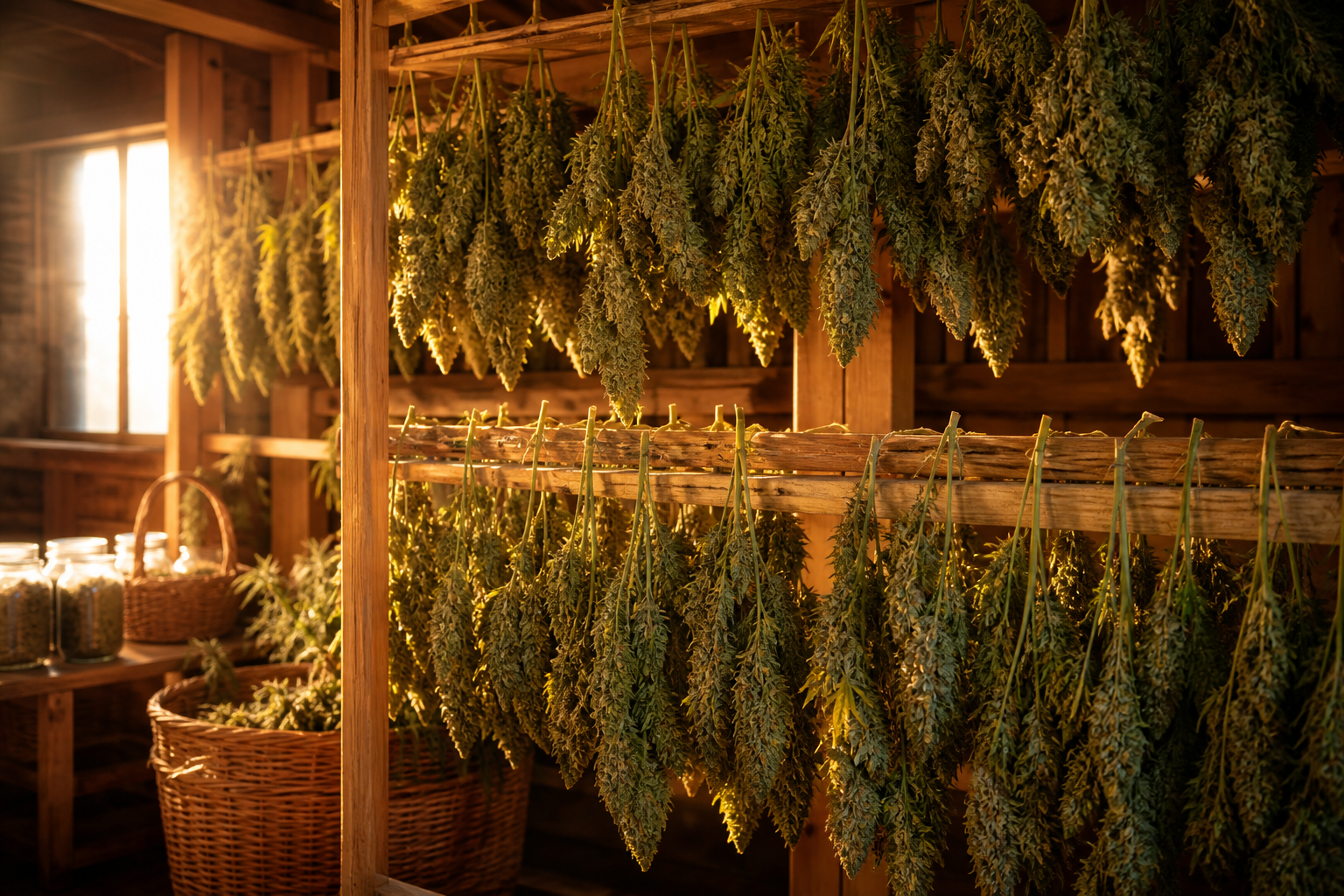
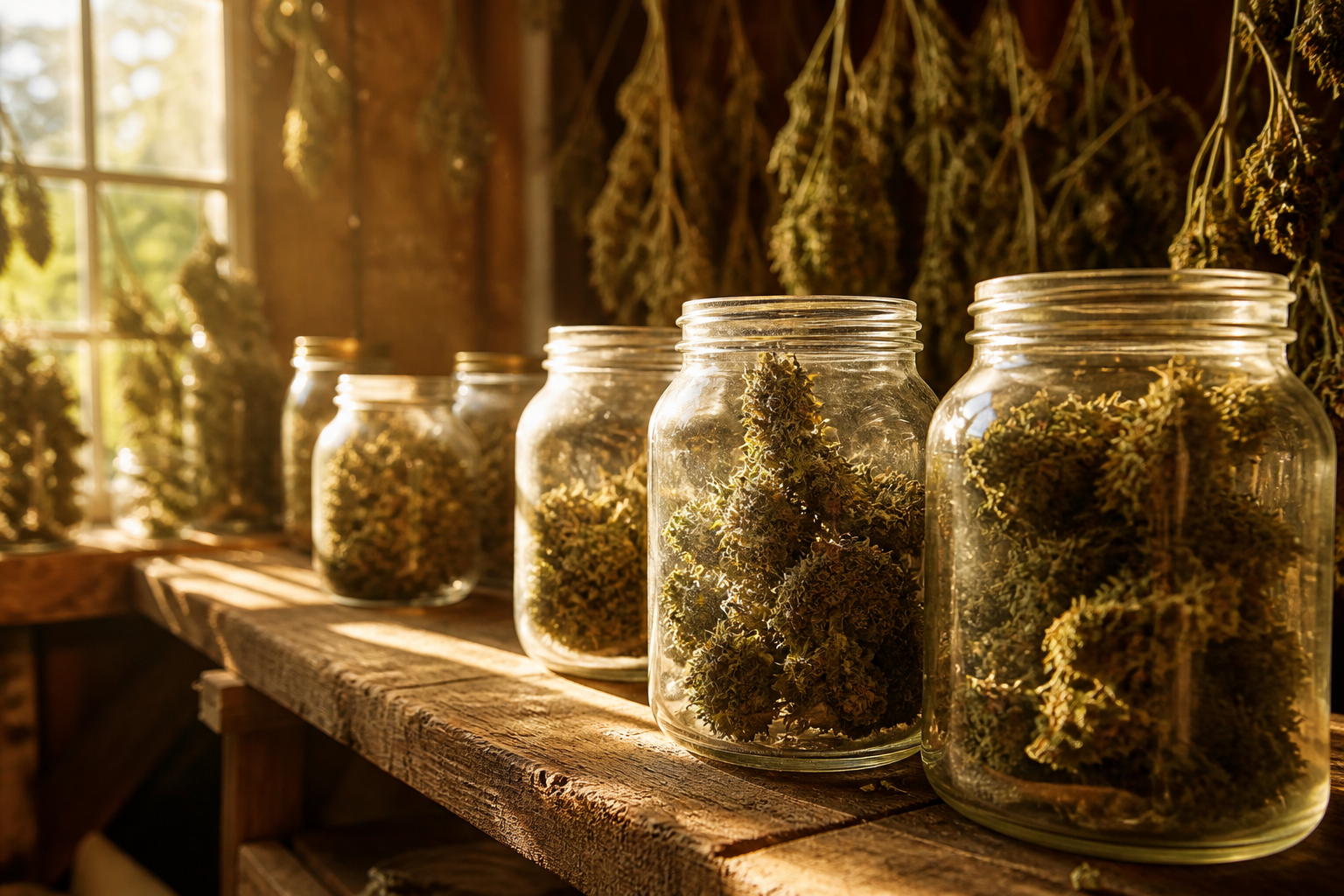
- A delay after the cut. Drying and curing are a separate step. Do not expect "cut Tuesday, loud jar Thursday." For how cure protects smell, see how curing protects terpenes. This is not a drying guide.
- Year-to-year drift. A year with an early 32°F night in southeast Michigan can force earlier cuts. A late first freeze can give more finish. MSU shows Detroit's first 32°F has landed as early as Oct. 2 and as late as Nov. 12 in the 1981–2018 record.
- Structure tells. Greenhouse or hoop-house lots may beat the open-field rush by a bit. They still are not indoor perpetual harvest.
Michigan CRA rules still apply either way: legal flower is tested and labeled. The climate does not waive the lab. It only decides when the outdoor lots exist.
| If you want… | The short season means… |
|---|---|
| The same jar in March and October | Lean indoor or well-stored prior outdoor |
| This year's sun-grown story | Watch fall, after plants beat frost and get cured |
| "Grown in a tunnel" | Ask. It may be a few weeks wider, not a new climate |
| A reason the outdoor smells like a place | Michigan day/night swing and a hard stop in October |
Divine Toke is a Detroit-rooted, sun-grown organic cannabis farm brand. We sell the fact of a short season, not a pretend endless harvest. If you want the shelf-timing and freshness checklist — harvest dates on labels, what "late summer" does and does not mean — that is already written in late-summer harvest for Detroit consumers. This page is the climate why behind that shopping why.
Common Calendar Mistakes Backyard-Curious Growers Make #
The most common Michigan outdoor mistake is treating a zone number, a hoop house, or a phone-app frost date as a full season. The calendar is still the crop. Backyard-curious growers in Detroit hit the same walls licensed farms hit. The walls just have fewer staff.
This is not a how-to-grow guide. It is a list of calendar errors that waste a year.
| Mistake | Why it fails in Michigan | Better frame |
|---|---|---|
| Planting warm-season transplants in April because "Detroit is 6b" | MSU still shows Detroit Metro's 50% last spring 32°F on May 3 | Zone ≠ last frost. Wait for your site. |
| Circling one "first frost 2026" date in January | MSU says you cannot forecast first freeze more than a few days out | Use medians to plan. Use the forecast to cut. |
| Thinking a hoop house = winter flower | NRCS buys ~2 weeks each end for a basic tunnel | Weeks, not a new climate. |
| Starting a long-flower photoperiod plant in July | Bloom may not start until days shorten, then frost arrives | The light clock and frost clock both have to fit. |
| Copying a California outdoor diary | Different frost-free days, different fall humidity | Farm on Michigan time. |
| Leaving vents shut on a 80°F day | NRCS flags overheating as the top tunnel error | Plastic cooks as easily as it protects. |
| Ignoring snow load and wind | MSU E3138 picked heavy frames for Michigan snow and wind on purpose | A cheap hoop that collapses is not season extension. |
Adults 21+ in Michigan can grow a limited number of plants at home under state adult-use rules. Check current Michigan CRA limits, security, and local rules before you put a tunnel in a yard. A hoop house does not change the plant count. It also does not hide a crop from the weather as much as people hope.
If you never grow a plant, this list still helps you read a budtender. When someone says "we run hoop houses," the follow-up is: how many weeks did that buy this year, and did October still show up?
FAQ: Frost Dates, Hoop Houses, and Michigan Outdoor Cannabis #
When can I plant outdoor cannabis in Michigan? #
After your site's last spring freeze — for much of lower Michigan that means late May into early June for frost-tender transplants, and a bit earlier in the warmest Detroit-city pockets if nights stay above 32°F. MSU's frost-free table puts Detroit city's 50% last-spring 32°F at April 24 and Detroit Metro's at May 3. Cannabis is a warm-season plant. Soil temperature matters as much as the air. MSU's garden calendar tells vegetable growers to wait until after frost for tomatoes and peppers. Treat outdoor cannabis the same way.
What is Detroit's first frost date in 2026? #
There is no official first-frost date for Detroit in 2026 — only climatology plus a short-range forecast. MSU Extension says first freeze cannot be forecast reliably more than a few days ahead. The planning number is Detroit's median first 32°F on October 18 (1981–2018). NWS Detroit/Pontiac frames October as the month the growing season ends in Southeast Michigan. Use that median to plan. Use the actual forecast to decide.
What is Detroit's last spring frost date? #
Detroit-area last spring 32°F usually lands from late April into early May, depending on the station. MSU lists April 24 as the 50% date for Detroit city and May 3 for Detroit Metro. Pontiac's 50% date is May 6. MSU has also cited Detroit's average last frost around April 30 — and stressed the word average. A late cold night can still show up after that.
What USDA hardiness zone is Detroit on the 2023 map? #
Metro Detroit sits in the warmer southeast Michigan band that MSU Extension plans as Zone 6a–6b. The official 2023 USDA Plant Hardiness Zone Map is based on average annual extreme winter minimums for 1991–2020, not frost-free days. Zone 6b's MSU first-fall-frost range is Oct. 15–31, which matches Detroit's median Oct. 18 freeze. Look up your exact ZIP on the USDA map. Do not use the zone as a plant-out date.
Do hoop houses let you grow cannabis all winter in Michigan? #
No. A hoop house buys weeks on each end of the season. It does not turn Michigan into a year-round outdoor flower climate. USDA NRCS cites about two weeks earlier and two weeks later, or a 2–4 week extension, for high tunnels. MSU E3138 says tunnels can support winter harvest of cold-tolerant vegetables, not frost-tender bloom. Cannabis flower still needs the right night length and will not like a January hoop house the way spinach does.
What is the difference between a hoop house and a greenhouse? #
A hoop house is a passive plastic tunnel. A greenhouse is usually a tighter building that can add heat, fans, and lights. MSU draws the line at true winter production: when you want December–January harvest in a northern climate, you have left "high tunnel" territory. MSU's Gregory Lang says tunnels let you influence rain, temperature, wind, and light. Influence is cheaper than control. Control is what indoor rooms sell.
When does outdoor cannabis start flowering in Michigan? #
When nights get long enough for that cultivar — often as days fall toward about 14–16 hours, which in southeast Michigan is underway by late summer, before the fall equinox. An ASHS HortTechnology hemp review puts many cultivars' trigger under 14 to 16 hours of day length. PMC10386198 saw flower initiation in all tested drug-type cultivars at up to 14 hours of light. ClickOnDetroit had metro Detroit at about 15 hours 6 minutes on July 8, 2026, and losing more than a minute a day. The dimmer is already moving in July.
Why is Michigan's outdoor season shorter than California's? #
Because Michigan's frost-free window is shorter and fall is colder and wetter than many California outdoor regions. MSU ranges Michigan from about 80 frost-free days in some Upper Peninsula sites to about 170 in some Lower Peninsula sites. NWS Detroit still ends the southeast growing season in October. Many California growing areas sit in warmer USDA hardiness zones with a longer frost-free stretch. Indoor ignores both maps.
How many frost-free days does Michigan have? #
It depends on the site: MSU Extension cites about 80 days in some Upper Peninsula locations and up to about 170 in some Lower Peninsula locations. Metro Detroit is on the longer Lower Peninsula side. That is still one warm-season pass for frost-tender cannabis. Do not average the whole state into one number. Cadillac's median first 32°F is Sept. 21; Detroit's is Oct. 18, per MSU climatology.
Can a hoop house save outdoor cannabis from an early October freeze? #
Sometimes it can buffer a light frost. It is not a guarantee against a hard freeze or a week of 25°F nights. NRCS treats high tunnels as a 2–4 week extender. MSU says row covers add about 2 to 8°F. Stack those tools and you might ride out a 30°F night. You will not turn a killing freeze into July. Growers still watch the NWS forecast and decide whether to cut.
Farming on Michigan Time #
The calendar is the crop. Michigan outdoor cannabis is short because last spring freeze, first fall freeze, and night length all have a vote. Hoop houses buy weeks. They do not buy Humboldt. Detroit shoppers who understand that stop expecting year-round outdoor drops and start reading sun-grown flower as a fall story with a weather year attached.
If you are curious to try sun-grown organic flower from a Detroit-rooted farm brand, start with the season you are actually in. Ask whether a lot is open-field, tunnel, or indoor. Let living soil and full sun do what they do — then let October be October.
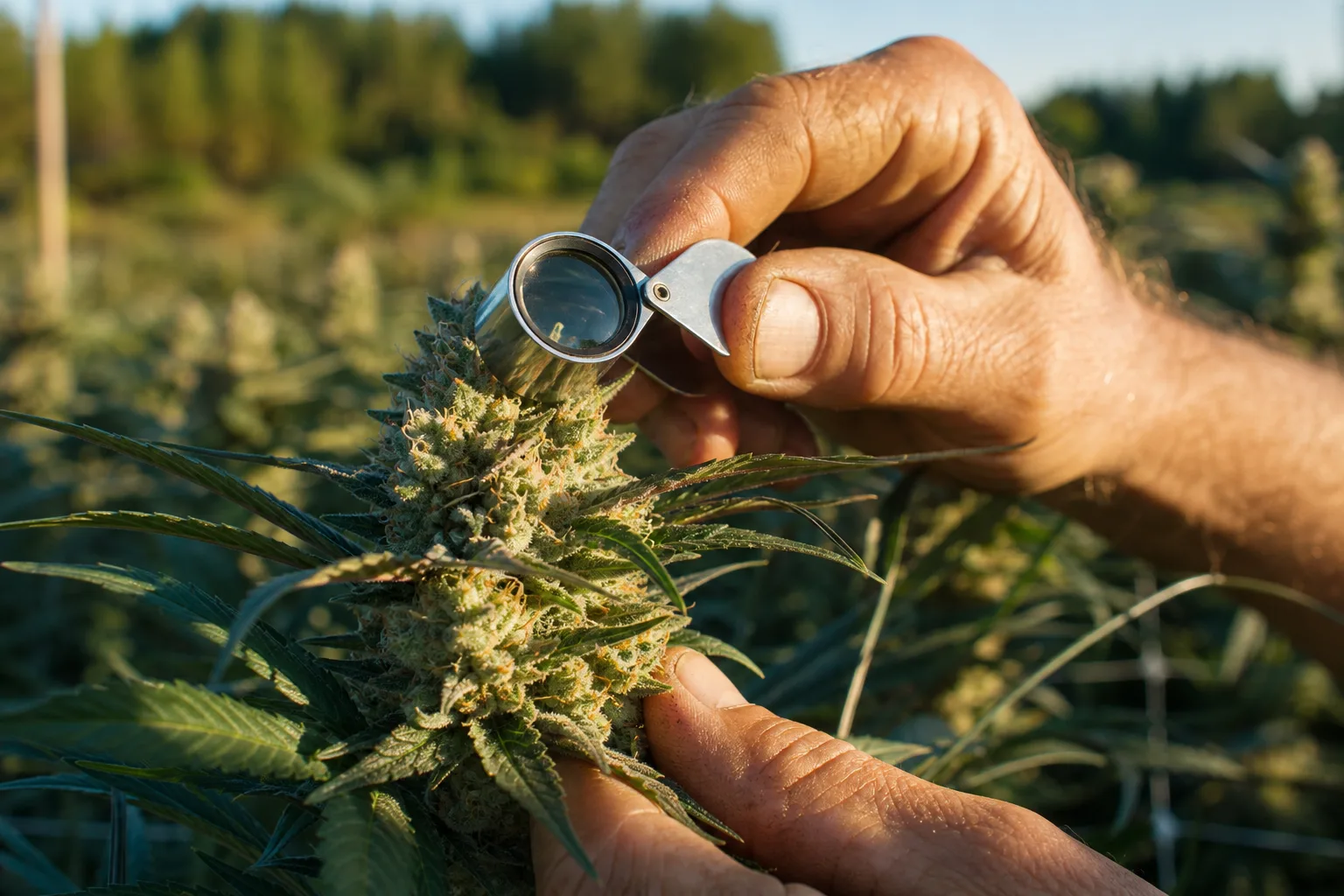
For the soil web under that short season, read living soil isn't dirt and mycorrhizal fungi. For how land and lakes shape smell, see Michigan terroir. For indoor vs sun, see sun-grown vs indoor. For solstice as the dimmer switch, see summer solstice and sun-grown cannabis. For readiness under a loupe, see when sun-grown cannabis is ready. For what that season means on a Detroit shelf, see late-summer harvest for Detroit consumers. For why patience after the cut matters, see how curing protects terpenes.
This article is for educational purposes only and is not medical advice. Always consult your healthcare provider before starting any new wellness routine.
Grown in Detroit. Shipped to your door.
Small-batch, sun-grown cannabis cultivated in living soil. Mail-order shipping to all 50 states.