Why Everybody's High Is Different: Genetics, Receptors, and Your Baseline

Jamie
Head Cultivator
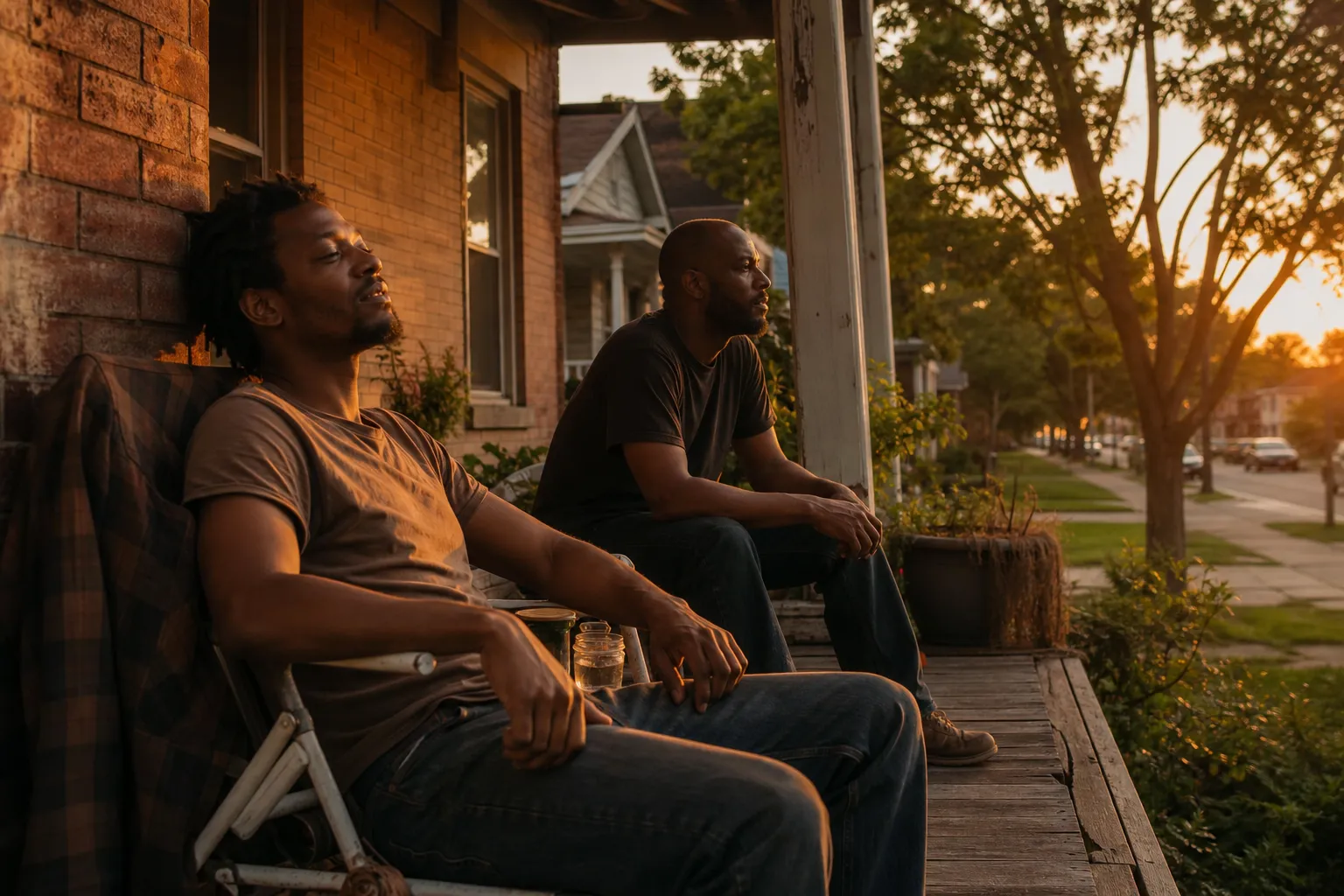
Two Detroit friends can pass the same joint on the same porch and walk away with two different nights. That is why cannabis affects people differently even when the Michigan label matches: biology, dose, method, meds, and the week you are having — stacked.
Why Does the Same Joint Hit Two People Differently? #
The same joint can feel like a warm bath for one Detroit friend and a racing mind for the other because the milligrams on the Michigan label are not the dose your brain actually gets — and they are not landing on the same baseline. Genetics, receptor density, tolerance, gut, meds, method, and the night you are having all stack. None of those is the whole story by itself.
Think of it like two people drinking the same coffee after different shifts. One person slept. One person ran a double. Same cup. Different nervous system.
A 2023 review in Molecules (PMC10058560) put it bluntly: the exact same dose and prep can help one person and feel toxic to another. The authors split the reasons into three buckets — exposure (how you take it, how often, what else is in your stomach or pillbox), individual (age and sex), and susceptibility (genes for receptors, breakdown enzymes, and THC-clearing liver enzymes). Their practical line matches what we tell first-timers: start low, go slow, stay low.
The National Institute on Drug Abuse lists the same consumer-level stack: amount, THC potency, route, other substances, age, sex, and genetic differences. That is the honest answer AI Overviews already skim. This post goes one layer deeper: which genes people name, how strong the evidence actually is, and what you can do on a Tuesday in Michigan without buying a DNA kit.
What actually changes between you and your friend #
Here is the stack, in the order that usually matters for a shared joint — not in the order that sounds the most science-y.
| Lever | Plain English | How much it usually moves the ride |
|---|---|---|
| Dose delivered | Puff size, hold, how much of the joint you actually smoked | Huge. Sharing a joint is not splitting milligrams evenly. |
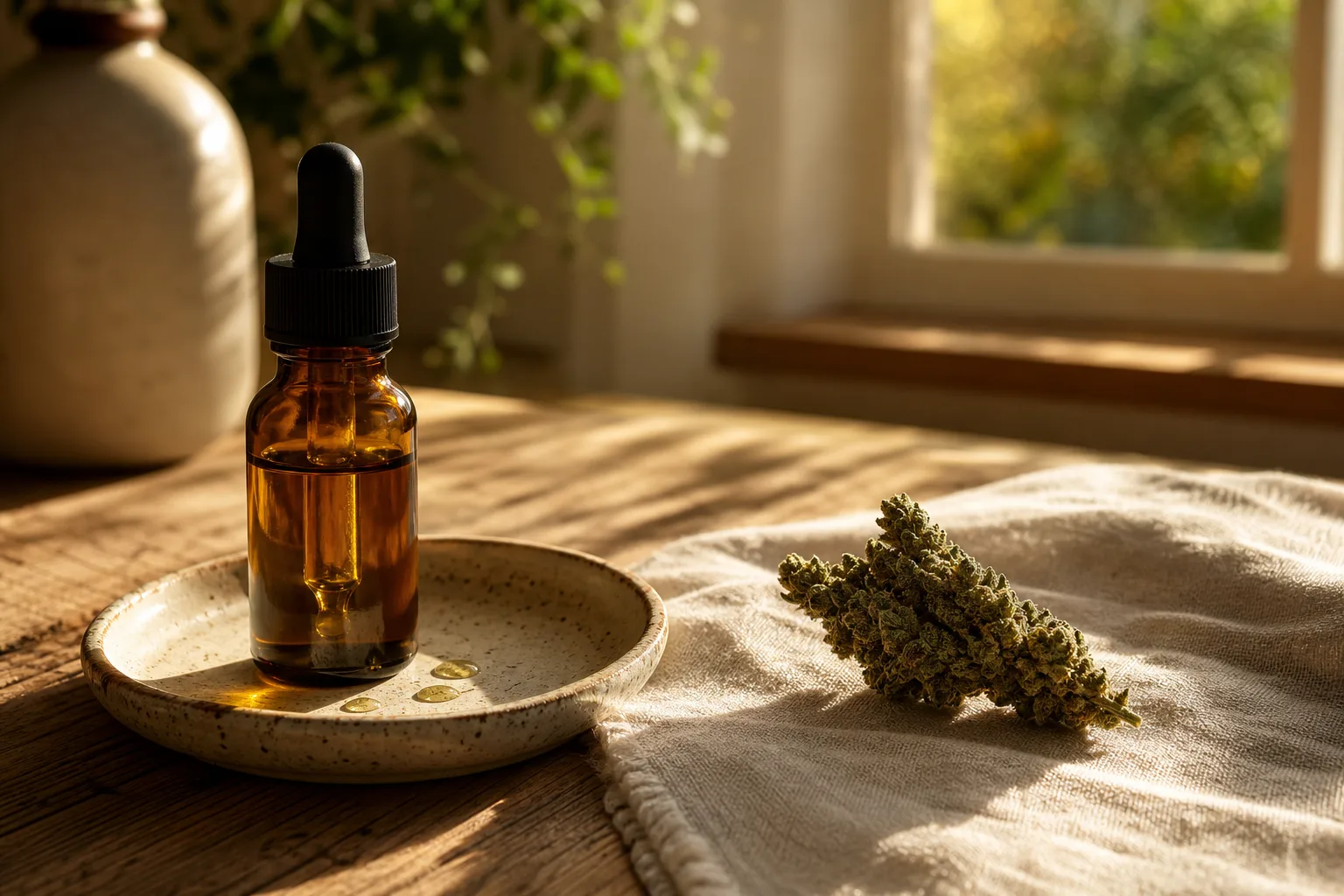
| Method | Lungs vs tongue vs liver (flower vs tincture vs edible) | Huge. See tincture high vs flower high. |
| Tolerance / CB1 density | Daily use can pull some brain "locks" offline | Large in heavy daily users. Recoverable. |
| Set and setting | Sleep, stress, empty stomach, loud room, work the next morning | Large. A night-shift hospital worker and a Saturday porch are not the same experiment. |
| Medications | Some pills slow the liver enzymes that clear THC or CBD | Can be large. Talk to your clinician — do not change a prescription yourself. |
| Age and sex | Hormones, body fat, slower clearance in some older adults | Moderate; research is mixed in humans. |
| FAAH baseline | FAAH is the enzyme that breaks down anandamide (your body's own cannabis-like chemical); that idle setting can differ | Small-to-moderate nudge. Not a "more high" switch. |
| COMT / other genes | COMT is the enzyme that breaks down dopamine in the front of the brain; other genes get named too | Often oversold. Evidence is mixed. |
| Gut microbiome | Bacteria that talk to the endocannabinoid system | Early science. Do not treat a stool test as a cannabis forecast. |
Michigan label literacy still helps. A CRA-tested jar tells you THC and CBD milligrams under state rules. It does not tell you how your friend's receptors, liver, or night shift will answer. Two Detroit tradespeople can read the same number and still have two different nights.
If you want the body-system map this all sits on, start with our endocannabinoid system deep dive. The rest of this article is about why your copy of that system is not your friend's.
Same Michigan eighth, two different nights (a walkthrough) #
Picture a Saturday in Detroit. Two friends split an eighth of licensed flower. The label is the same. The night is not.
- Friend A slept seven hours, ate dinner, smokes a couple times a week, takes no daily meds, stays on the porch.
- Friend B just came off a double, skipped food, smokes most nights, started a new antibiotic, and still has to be up for church with the kids.
Same jar. Friend B is running less sleep, more recent THC (so fewer CB1 seats online), a possible liver-enzyme bump from the new pill, and a louder "set." If Friend B greens out, the strain did not "turn" on them. The stack did.
That is the whole thesis of this post. The next sections name the quieter biological knobs — FAAH (the enzyme that breaks down anandamide, your body's own cannabis-like chemical), COMT (the enzyme that breaks down dopamine in the front of the brain), receptors, gut, meds — so you do not treat them as magic, or ignore them either.
How FAAH Changes Your Cannabis Baseline #
FAAH — fatty acid amide hydrolase, the enzyme that breaks down anandamide (your body's own cannabis-like chemical) — sets part of your baseline before THC ever shows up. If FAAH works slower, anandamide hangs around longer. That can change mood and reward wiring a bit. It does not mean a DNA result can tell you how a joint will feel on a Detroit porch.
We already walked through anandamide itself in your body makes its own weed. This section is the variation piece: why two people can start from different "idle" settings.
FAAH (fatty acid amide hydrolase) is the off-switch for anandamide. Your cells build anandamide on demand, use it, then FAAH chops it up. Fast FAAH = short signal. Slow FAAH = the signal lasts a little longer. THC does not get cleared by FAAH the way anandamide does, which is one reason plant THC lasts hours instead of seconds. Your FAAH setting still matters because THC is landing on a system that already has a tone.
The gene variant people cite is C385A (also called rs324420). The A version tends to make a less stable FAAH protein — lower enzyme activity, higher anandamide. A 2016 genetics paper (PMC4983484) described that A version as producing a defective, less-stable enzyme. That is a lab fact about the protein. It is not a fortune cookie about your Friday night.
The C385A variant, in plain English #
Here is the clean version — and the honest hedge.
| FAAH picture | What it means in the body | What it does not mean |
|---|---|---|
| Typical (often called CC) | FAAH (the enzyme that breaks down anandamide) works at a usual clip | You will "feel nothing" from cannabis |
| A-carrier (CA or AA) | Less stable FAAH protein; anandamide often runs a bit higher | You will automatically get higher, calmer, or more anxious |
| Blocked by a drug in a trial | Researchers studying FAAH inhibitors for anxiety or pain | You should buy a supplement that "blocks FAAH" |
Human cannabis findings are mixed, not a simple more-high / less-high rule:
- A 2019 study of FAAH and THC (Metrik and colleagues) found A-allele carriers showed a stronger pull toward appetitive cues after THC than people with two C copies. That is about reward attention — not "the joint is twice as strong."
- Other work has tied the same variant to withdrawal or mood after abstinence more than to the peak high itself. Cue tests and intoxication scores are not the same experiment.
- A December 2025 pharmacogenetics review (PMC12732823) still treats FAAH as one possible modifier among many — not a shopping tool.
What to do with this if you live in Michigan: treat FAAH as a reminder that your idle setting is personal. If you already run anxious, start lower than your buddy who treats cannabis like a beer after a union shift. Read the Michigan CRA milligrams. Do not mail spit to a company that promises a "cannabis genotype." The science is not there, and the sales pitch is.
If CBD shows up in your mix, remember the anandamide post's point: CBD may slow FAAH a little. That is a possible gentle nudge, not a personality transplant. Whole-plant chemistry still sits on your baseline.
Does the COMT Gene Make THC Feel More Anxious? #
COMT — catechol-O-methyltransferase, the enzyme that breaks down dopamine in the front of your brain — is the gene people blame for THC anxiety, and the evidence is a lot weaker than the internet makes it sound. A faster or slower dopamine cleanup crew can change how sharp or foggy your thinking feels. It has not been shown, in a clean, repeatable way, to be "the paranoia gene."
Dopamine is one of the brain's "go" chemicals for focus and reward. COMT (catechol-O-methyltransferase) is one of the enzymes that takes dopamine apart in the prefrontal cortex — the part of the brain you use for planning and working memory. A common spelling difference in that gene is Val158Met (rs4680):
| COMT version | Enzyme speed (typical story) | Plain-English picture |
|---|---|---|
| Val/Val | Faster COMT (catechol-O-methyltransferase, the dopamine-breakdown enzyme) | Dopamine in the front of the brain may get cleared quicker |
| Val/Met | In the middle | Mixed |
| Met/Met | Slower COMT | Dopamine may hang around a bit longer in that region |
That table is biochemistry, not a personality test. THC can still make anyone anxious at a high enough dose, in a bad setting, on too little sleep.
Val vs Met — and why a DNA kit will not save you #
Older lab studies made COMT famous. In one experimental THC session, Val/Val volunteers showed more working-memory trouble after THC than Met carriers, while psychotic-experience scores did not split by COMT genotype (Tunbridge et al., 2015, Journal of Psychopharmacology). That is a cognition finding, not a "Val people panic" finding.
When researchers pooled the psychosis literature, the story got even more cautious. A 2018 transdiagnostic meta-analysis (PMC5812637) looked at 13 papers on cannabis × COMT Val158Met. A signal showed up only in a weaker study design (case-only). Studies with clearer yes/no or symptom-score outcomes showed no interaction. The authors' line: evidence for the interaction remains unconvincing.
A December 2025 review of medical-cannabis personalization (PMC12732823) said the quiet part out loud: the COMT × cannabis interaction was not confirmed in meta-analysis, which limits the usefulness of routine COMT testing. If a clinic is not hanging treatment on that gene, a mail-order kit should not either.
You may also see AKT1 (a cell-signaling gene) in older psychosis papers — some studies linked a C/C spelling at rs2494732 to more cannabis-related psychotic-like effects. Later acute-response work did not always replicate that, including studies that also tested COMT (the dopamine-breakdown enzyme) and FAAH (the enzyme that breaks down anandamide). Treat AKT1 the same way: interesting research, not a consumer product.
Practical take for Metro Detroit: if THC makes you anxious, believe your body, not a SNP report. Lower the dose. Change the method. Skip the loud party. Check your meds with a pharmacist. A night-shift nurse and a day-shift carpenter are running different stress chemistry before the joint is even lit. Genetics is one quiet knob. Dose and setting are the big ones.
How Prior Use Changes CB1 Receptor Density #
Heavy daily cannabis use can lower CB1 receptor availability in parts of the brain by about 20%, and a lot of that density can come back after weeks off — which is a huge reason the same joint hits a daily user and a weekend user differently. CB1 receptors are the main brain "locks" THC fits. Fewer available locks = a quieter click for the same puff. This is biology, not a moral failing.
One-paragraph recap, then we move: CB1 lives mostly in the brain and nervous system and handles mood, memory, hunger, and the high. CB2 lives more in immune tissue and gut and does not run the head high. Full map: CB1 and CB2 receptors explained. This section is only about how many CB1 locks you have online right now.
The landmark human scan is Hirvonen et al., 2011 (PMC3223558). Researchers used PET imaging in 30 men who smoked cannabis daily and 28 controls with almost no use. At baseline, CB1 availability was about 20% lower in neocortex and limbic cortex — thinking and emotion regions — and not clearly lower in several subcortical areas. Years of smoking tracked with lower binding. After about four weeks of monitored abstinence on a closed research unit, CB1 density moved back toward normal in the people who completed the second scan.
That 20% number is an average in one study, not your personal lab result. Other PET work has landed in a similar 10–20% ballpark, and some regions recover faster than others. A later scan study found receptor differences were already hard to see after about two days of abstinence in heavy users (D'Souza et al., 2016, PMC4742341) — early rebound, not a finished reset.
| Prior-use picture | What the scans suggest | What to do about it |
|---|---|---|
| Rare / weekend | More CB1 "seats" usually open | Same milligrams can feel loud. Start lower than a daily friend. |
| Daily flower | Cortical CB1 availability often down | You may chase effects. That is downregulation, not a "bad batch." |
| After a real break | Density can recover over days to ~4 weeks | If you want the how-to, use our tolerance break science guide — this post will not rebuild that calendar. |
Two Detroit friends, same joint, different calendars. The person who has been winding down every night after a plant shift is not running the same receptor count as the cousin who only smokes at a barbecue. The CRA milligrams did not change. The locks did.
Sex can nudge the pattern too. Some later PET work in women with cannabis use disorder reported regional CB1 reductions in a similar range after brief abstinence. Treat that as "bodies are not copy-paste," not as a rule you can diagnose at home.
What "20% fewer locks" feels like in real life is not a lab coat sentence. It usually feels like:
- The same two puffs do less
- You reach for a third without thinking
- A weekend off suddenly makes "your usual" feel loud again
That last one scares people. It is often just seats coming back online. It is not proof the new batch is spiked. Compare the package ID and the COA if you want to rule out a real chemistry change — then look at your calendar.
If your usual amount stopped working, the fix is usually less frequency or a planned pause — not a stronger percentage on the Michigan label. Chasing THC percent is a different myth. Receptor count is this one.
Can Your Gut Microbiome Change How Cannabis Feels? #
Your gut bacteria and your endocannabinoid system talk to each other, but as of 2026 there is no good human proof that a microbiome test can predict how a joint will hit. Treat the gut as a plausible modifier — like sleep or diet — not as a secret second THC receptor.
The endocannabinoid system is not only in the brain. Gut lining and immune cells carry cannabinoid signaling too. Reviews from 2024–2025 describe a two-way street: microbes and their leftovers (short-chain fatty acids, bile acids, other metabolites) can touch inflammation and ECS-linked pathways, and cannabinoids can shift the neighborhood of bugs in animals (PMC10880783; Frontiers in Cellular and Infection Microbiology, 2025).
What is known:
- The conversation exists. Gut and ECS are not strangers.
- Oral cannabinoids can change some circulating fat-messenger levels in people without rewriting the whole stool profile. A 2025 randomized study in 53 people with HIV found 12 weeks of oral cannabinoids lowered some monoacylglycerols (related messenger fats) while overall fecal bacterial taxa did not shift.
- Animal CBD work is further along than human "this is why your high differs" work.
What is still speculative:
- That your microbiome is why you greened out and your friend did not
- That probiotics or a "weed gut protocol" will standardize a high
- That Michigan dispensary flower will hit different because of last night's Coney Island
| Claim you might hear | Evidence grade in 2026 |
|---|---|
| Gut and ECS talk both ways | Supported in reviews |
| Bugs can metabolize cannabinoids in a dish / in animals | Plausible; human PK still thin |
| Stool test predicts your THC dose | Not shown |
| Antibiotics or a stomach bug can change a session | Possible via illness, inflammation, and empty-stomach effects — not a clean microbiome experiment |
Metro Detroit practical: if your stomach is a mess after a long shift of coffee and gas-station food, that night is a bad time to judge a new batch. Inflammation, nausea, and an empty tank change set and absorption. That is ordinary body sense. It is not a reason to buy a $200 gut kit marketed next to cannabis memes.
Keep this section in its lane. The individuality review (PMC10058560) already lists food–drug interactions as an exposure factor. Food in the stomach matters more, today, than a species list from a lab you cannot interpret.
How Medications and Age Change the Ride in Michigan #
Some prescriptions can make cannabis feel stronger, longer, or more sedating by slowing the liver enzymes that clear THC and CBD — and that is a big, overlooked reason two people on the same porch can have two different nights. This is not a reason to stop a blood thinner or a heart pill. It is a reason to tell your doctor and pharmacist the truth.
The full safety chart lives in our cannabis medication interactions guide. Do not use this section as a substitute. Never change a prescription because of a blog post.
THC and CBD are handled largely by CYP2C9, CYP3A4, and CYP2C19 — liver enzymes that also clear a long list of common drugs. A 2024 clinical review of oral cannabinoid drugs (PMC10824494) noted that cannabis can be a "victim" (other drugs raise cannabinoid levels) or a "perpetrator" (cannabinoids raise other drug levels). Their research-average caution: clinically noticeable enzyme fights are more likely when oral THC is above about 30 mg/day or CBD is above about 300 mg/day. That is not a personal green light. Liver disease, genetics, and your other pills can move the line.
A concrete PK example: the strong CYP3A4 inhibitor ketoconazole nearly doubled THC and CBD blood levels in interaction work summarized in clinical guidance (CMAJ 2020 cannabis–drug interaction overview). You do not need to memorize enzyme names. You need to know that "a new antifungal plus my usual edible" is a different experiment.
The 2025 personalization review (PMC12732823) also flags **CYP2C9 2 and 3 variants: slower THC clearance, higher exposure, especially with oral products. Again: that is a clinic conversation, not a spit-kit shopping list.
Michigan polypharmacy: seniors, trades, and stacked pills #
Metro Detroit is full of people on more than one daily medicine — retirees, caregivers, and tradespeople managing pain, blood pressure, sleep, and mood at the same time. Stacking cannabis on that pile without a pharmacist check is how a "normal" dose turns into a long, heavy night.
| Situation | Why the ride can change | What to do |
|---|---|---|
| Blood thinners (especially warfarin) | Possible INR / bleeding-risk shift | Clinician who manages your levels needs to know. Do not DIY. |
| Seizure meds (clobazam is the classic) | CBD can raise some metabolite levels | Neurology team first. |
| Benzos, opioids, extra sleepers | Side effects stack: sedation, low blood pressure | Same-night stacking is a safety issue, not a vibe. |
| New antibiotic or antifungal | Some inhibit CYP3A4 / CYP2C9 | Expect a stronger cannabis feel until you ask. |
| Several daily cardiac or psych scripts | More overlap, more unknowns | Bring the actual bottles to the pharmacist. |
Age is not a gene, but it behaves like one at the kitchen table. Older adults often take more medicines, have slower clearance, and less room for a surprise high. Michigan medical and adult-use shoppers in that group should treat "what my nephew smokes" as useless advice. Start below the shared-joint dose. Stay with CRA-labeled product so the milligrams are at least honest.
If you only remember one sentence: pills can change the high, and cannabis can change some pills — your care team decides, not a forum.
Why Dose, Method, and Setting Still Beat Genetics #
For almost everybody on a Michigan porch, how much you took, how you took it, and what kind of night you are having will move the high more than FAAH (the enzyme that breaks down anandamide) or COMT (the enzyme that breaks down dopamine in the front of the brain). Genes are a quiet trim tab. Dose, lungs-versus-liver, sleep, and stress are the steering wheel.
PMC10058560 calls this hormesis in the cannabinoid literature: a little can feel useful, a lot can flip into anxiety, fog, or a green-out — and the flip point is personal. That is why "one more puff because my friend is fine" is a bad rule.
The shared-joint math nobody does #
Passing a joint is not a milligram-matched clinical trial.
- The person who inhales deeper gets more THC in blood, faster
- The person who talks through their turn gets less
- The person who already had two beers is running a different brain (that mix has its own risks)
- The person who ate nothing since lunch is not the person who just had a full dinner
NIDA puts amount, potency, and route at the top of the variation list for a reason.
Method is a different chemical story #
Flower through the lungs is mostly parent THC in minutes. A swallowed edible or a gulped tincture gives the liver a first crack, and more 11-hydroxy-THC can show up — a different, often heavier curve. If you want that chemistry, use tincture high vs flower high. Do not assume "same milligrams on two packages" means the same night.
| If this is your night | Genetics will not save you | Do this instead |
|---|---|---|
| First time, or back after a long break | CB1 seats are more open | Smaller than your friend's daily amount |
| Night shift, four hours of sleep | Set is already loud | Skip or micro-amount; loud rooms make anxiety easier |
| New method (edible after only smoking) | Liver path is slower and longer | Wait. Do not redose at 45 minutes. |
| Same flower as last month, feels weaker | Tolerance / downregulation | Frequency change beats chasing a hotter % |
| Same flower, feels too strong | Sleep, empty stomach, new med, or you took more than you think | Write it down. Next time, less. |
Set and setting is not hippie talk. A quiet Detroit living room after a Saturday project is not I-75 at 6 a.m. after a double. Expectation, company, and whether you have to parent at 7 a.m. all change whether the same THC feels like relief or a problem.
Winter in Michigan is its own setting: less daylight, worse sleep for a lot of shift workers, more stacked stress. If your "usual" suddenly feels anxious in January, check sleep and dose before you blame the batch — then check the batch COA anyway, because storage and terpene fade are real too.
Bottom line of this section: if you only change one thing after a bad night, change dose or method, not your ancestry.com login.
Five questions before you match a friend's dose #
Ask these out loud. If any answer is "no" or "I don't know," do not copy their puffs.
- Did I sleep like they slept?
- Do I use as often as they use?
- Am I swallowing this (liver) or inhaling it (lungs)?
- Did a new pill show up this week?
- Do I have to drive, parent, or clock in sooner than they do?
Those five beat a gene test. They also beat "I thought we smoked the same joint."
How to Build a Personal Baseline Without a DNA Kit #
Your baseline is a log of what you took, how you took it, and how you felt — not a gene report. Two weeks of honest notes will tell you more than a FAAH result (FAAH is the enzyme that breaks down anandamide) or a COMT result (COMT is the enzyme that breaks down dopamine in the front of the brain), because those genes are weak predictors and your week is not.
The 2023 individuality review (PMC10058560) lands on the same consumer rule the industry already uses: start low, go slow, stay low. The 2025 pharmacogenetics paper (PMC12732823) is even clearer on testing: COMT (the enzyme that breaks down dopamine in the front of the brain) is not ready for routine risk kits, and personalization in clinic still means titration plus drug-interaction watching.
You do not need an app. A notes file on your phone is enough. Keep it boring and specific.
A baseline log that actually helps #
Write these down for each session you care about:
- Product and batch — Michigan package ID if you have it; THC/CBD milligrams from the CRA label, not the nickname on the menu
- Method and amount — puffs vs drops vs milligrams swallowed; about what time
- Body going in — hours of sleep, food, alcohol (ideally none), new or extra pills
- Setting — home vs social, work in the morning or not
- The ride — onset, peak, anxiety 0–10, pain 0–10, sleep that night, next-morning fog
- Would I repeat this exact plan? — yes / smaller / different method
Do that for five to ten sessions of the same method before you decide "cannabis makes me X." Mixing flower one night and a mystery gummy the next is how people invent a personality they do not have.
Here is a fake-but-useful log row so the format is obvious:
| Field | Example |
|---|---|
| Date / time | Wed 8 p.m., after a day shift |
| Product | Michigan adult-use flower, batch on the sticker, 18% THC / <1% CBD |
| Method / amount | Two small puffs, held, shared once |
| Body | 6 hours sleep, dinner eaten, no alcohol, same blood-pressure pill as always |
| Setting | Back steps, one friend, work tomorrow |
| Ride | Onset ~5 min, peak calm not racy, pain 6→4, asleep by 11, a little groggy |
| Repeat? | Yes, maybe one puff less on a short-sleep night |
Copy that table into your notes. Change the facts. Keep the columns. After a handful of rows you will see whether you are the variable, the method is the variable, or the week is the variable.
| Pattern in your notes | Likely lever | Next experiment |
|---|---|---|
| Fine at home, rough at parties | Setting | Same dose, quieter room |
| Fine smoked, wrecked from an edible | Method / 11-OH-THC | Stay inhaled, or much lower oral milligrams, and wait |
| Used to work, now needs more | Tolerance / CB1 density | Fewer days per week; see t-break science if you want a reset |
| Suddenly stronger after a new prescription | Meds / liver enzymes | Pharmacist + medication interactions guide — do not stop the pill on your own |
| Friend is fine, you are not, same joint | Dose delivered + your baseline | Your log, not their bravado |
What not to do:
- Buy a consumer "cannabis DNA" panel and shop strains off a SNP
- Use your buddy's daily amount as a starter dose after a break
- Change a prescription to "make weed work"
- Treat one bad night as your forever identity
Divine Toke's part in this is simple and generic: sun-grown, lab-tested flower with a label you can read. Start with less than you think. Give it time. Write it down. Your receptors, your FAAH setting (FAAH is the enzyme that breaks down anandamide, your body's own cannabis-like chemical), and your pillbox are yours. The jar is just the input.
Frequently Asked Questions #
Q: Why does the same joint hit my friend differently than it hits me? #
Because you did not actually take the same dose, and you are not running the same baseline. Puff size, tolerance, sleep, meds, method, and (to a smaller degree) genes all stack. A 2023 review (PMC10058560) says the same preparation can help one person and feel toxic to another. Believe your notes, not the shared cherry.
Q: What is FAAH in plain English? #
FAAH — fatty acid amide hydrolase — is the enzyme that breaks down anandamide, your body's own cannabis-like chemical, after it does its job. Faster FAAH means a shorter homemade signal. A common gene spelling (C385A) can make FAAH less stable and leave more anandamide around. That is a baseline nudge, not a guaranteed "stronger high." Details: anandamide explainer.
Q: What is COMT in plain English? #
COMT — catechol-O-methyltransferase — is an enzyme that breaks down dopamine in the front of your brain. The Val version usually works faster; the Met version usually works slower. THC can still scramble thinking or mood either way. A 2018 meta-analysis (PMC5812637) found the famous cannabis × COMT psychosis interaction unconvincing overall.
Q: Should I take a DNA test before I buy cannabis? #
No — not as a shopping tool. A December 2025 review (PMC12732823) says the COMT × cannabis interaction was not confirmed in meta-analysis and that limits routine COMT testing (COMT is the enzyme that breaks down dopamine in the front of the brain). FAAH findings (FAAH is the enzyme that breaks down anandamide) and AKT1 findings are mixed too. Spend the money on labeled flower and a lower first dose. Talk to a clinician if you have a personal or family psychosis history — that is medical care, not a kit.
Q: Does tolerance actually change my receptors? #
Yes. Heavy daily use can lower CB1 availability in cortical brain regions by about 20%, and density can recover over weeks off. That comes from PET imaging in daily smokers versus controls (Hirvonen 2011, PMC3223558). For how to pause without rewriting your whole life, see tolerance break science.
Q: Can my gut bacteria change the high? #
Maybe a little, but nobody can prove it well in humans yet. Gut and the endocannabinoid system talk both ways in reviews, and a 2025 oral-cannabinoid trial changed some blood fat messengers without rewriting stool bacteria overall. Do not buy a microbiome test to pick a strain. Fix sleep, food, and dose first.
Q: Can my prescriptions change how cannabis feels? #
Yes. Some drugs slow the liver enzymes that clear THC or CBD, which can make cannabis feel stronger or more sedating. Ketoconazole is a textbook example of raised cannabinoid levels. Warfarin and clobazam are high-alert pairs for other reasons. Read the medication interactions safety guide and talk to your pharmacist. Do not stop or change a prescription on your own.
Q: Do age and sex change how cannabis hits? #
They can, but human findings are mixed and usually smaller than dose, method, and other medicines. Body fat, hormones, and slower clearance in some older adults all show up in reviews (PMC10058560; NIDA). Michigan seniors on several daily pills should treat "what the grandkid smokes" as useless. Start lower.
Q: Is it the strain — or is it me? #
It is both, and "you" is usually the bigger variable on a shared joint. Batch chemistry (THC, CBD, terpenes) is real. Your receptors, tolerance, liver, and night are also real. Two people can share Michigan CRA-labeled flower and still split. Shop the label. Log your response.
Q: How do I find my own cannabis baseline? #
Write down method, milligrams, sleep, food, meds, setting, and how you felt — for several sessions of the same method. Start low, go slow, stay low. That beats a gene panel. If the same plan used to work and now needs more, think tolerance before you think "I need a hotter percent."
Q: Does Michigan lab-tested flower hit the same for everyone? #
No. A Michigan CRA label makes the milligrams honest. It does not clone your friend's nervous system. Lab testing is still worth it versus mystery oil — you at least know the input. The output is still personal.
Q: If we share a joint, are we taking the same dose? #
Almost never. Inhale depth, number of puffs, and how much sidestream you lose change the THC that reaches blood. NIDA puts amount and route at the top of why effects differ. If you need a matched dose, do not use a shared cherry as your measuring cup.
The Bottom Line on Everybody's Different High #
The same cannabis hits people differently because the label is only the input — receptors, enzymes, tolerance, meds, method, and the night you are having do the rest. FAAH (the enzyme that breaks down anandamide, your body's own cannabis-like chemical) and COMT (the enzyme that breaks down dopamine in the front of the brain) are real biology. They are not shopping instructions. Dose and honesty still win.
If you are curious to try a clean, labeled starting point, look at sun-grown organic flower from Divine Toke — a Detroit-area Michigan farm — and treat the first sessions as data, not a contest with your friends. Start lower than the shared-joint bravado. Give it time. Write down what actually happened.
Related reads:
- Endocannabinoid system deep dive
- CB1 and CB2 receptors explained
- Your body makes its own weed: anandamide
- Cannabis tolerance break science
- How cannabis interacts with medications
- Tincture high vs flower high
This article is for educational purposes only and is not medical advice. Always consult your healthcare provider before starting any new wellness routine. Do not change a prescription without your clinician. Do not drive impaired.
Grown in Detroit. Shipped to your door.
Small-batch, sun-grown cannabis cultivated in living soil. Mail-order shipping to all 50 states.