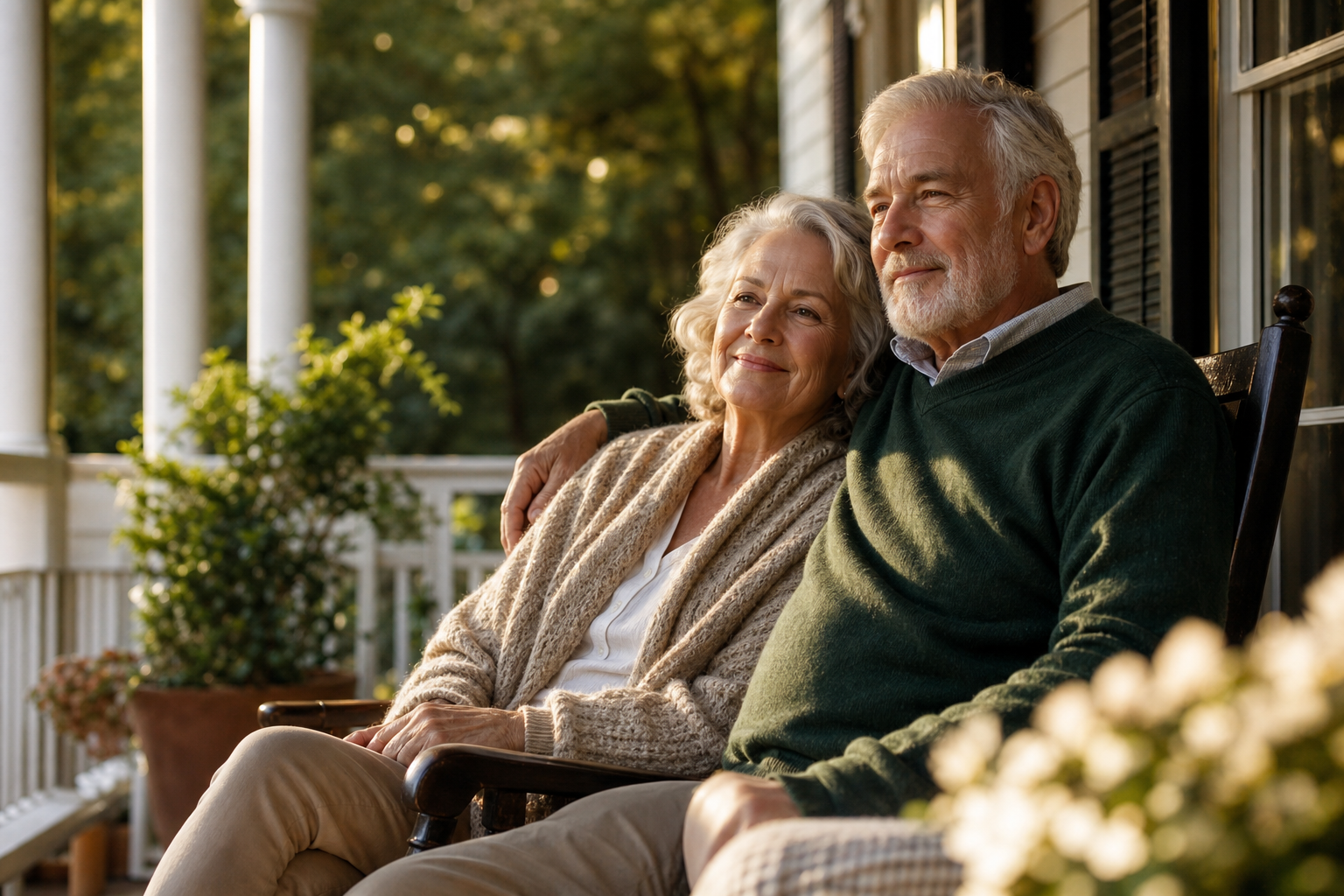
Cannabis for Seniors: A Gentle, Practical Starter Guide

Jamie
Head Cultivator
If you are 65 or older and your back, knees, or sleep have been fighting you for years, you are not alone in wondering whether cannabis might help. This guide is written for you — or for the adult child doing the research — with plain language, safety first, and no pressure to "just smoke a joint and see what happens."
The short answer: Most seniors who benefit from cannabis start with a low dose of CBD, add a tiny amount of THC only if needed, pick a smoke-free product, and talk to their doctor and pharmacist before mixing cannabis with prescription meds.
Why Are More Seniors Trying Cannabis Now? #
More seniors are trying cannabis because chronic pain, poor sleep, and stiff joints are common — and many people want relief without relying only on pills. Cannabis use among U.S. adults 65 and older has climbed fast. Past-month use rose from about 4.6% in 2021 to 7% in 2023 — a jump of roughly 46% in two years, according to National Survey on Drug Use and Health (NSDUH) analysis published in JAMA Network Open.
That is not a fad. It is a shift in how older adults manage daily discomfort.
| Reason Seniors Try Cannabis | What They Often Hope For |
|---|---|
| Joint and back pain | Less stiffness, more mobility |
| Poor sleep | Falling asleep faster, fewer wake-ups |
| Anxiety or stress | Calmer evenings without a heavy pill |
| Fewer opioids | Plant-based relief with lower pill count |
| Curiosity after legalization | Legal access in states like Michigan |
The Arthritis Foundation notes that many people with arthritis explore CBD when other options fall short. NORML's fact sheet on older adults reports that seniors often cite pain and sleep as top reasons — not recreation.
Stigma is fading, but slowly. Your doctor may still seem surprised if you bring it up. That does not mean you are doing something wrong. It means the medical world is still catching up to what millions of older adults are already trying at home — often without telling anyone.
If you grew up when cannabis was illegal everywhere, it is normal to feel unsure. This guide assumes that. No judgment. Just facts you can use.
Who is driving this trend? It is not just lifelong users aging into retirement. NSDUH data analyzed in JAMA Network Open shows new senior users — people trying cannabis for the first time in their 60s and 70s — are a big part of the growth. Adult children sometimes shop for parents. Spouses try it together. Veterans explore plant options after years of VA pills.
Michigan fits the national picture. Legal adult-use sales since 2019 mean Detroit-area seniors can walk into a licensed shop with an ID — no back-alley risk, no mystery product. That access matters when you are managing blood pressure, glaucoma, or a finicky stomach and need labeled milligrams instead of a friend's guess.
| Myth | Reality |
|---|---|
| "Cannabis is only for young people" | Fastest-growing user group nationally is 65+ |
| "You have to smoke to get relief" | Tinctures, topicals, and capsules skip the lungs |
| "CBD is useless without THC" | Many seniors get real relief from CBD alone |
| "Your doctor will judge you" | They need to know — for interaction safety |
One honest caveat: Rising use does not prove rising safe use. Many seniors start without telling their doctor — and polypharmacy makes that dangerous. The rest of this guide exists so you can join the trend without joining the ER statistic.
How Does the Aging Body Respond to Cannabis Differently? #
Your body processes cannabis more slowly after 65, so the same dose that felt mild at 40 can feel strong at 70. Age changes how your liver breaks down drugs, how much water is in your tissues, and how sensitive your brain is to THC — the compound in cannabis that can make you feel "high."
Think of it like coffee. At 30, two cups might barely register. At 70, one cup after dinner might keep you up all night. Cannabis works the same way for many seniors.
| Age-Related Change | What It Means for Cannabis |
|---|---|
| Slower liver metabolism | THC and CBD stay in your system longer |
| Less body water | THC can reach higher blood levels from the same dose |
| More fat tissue | THC stores in fat and releases slowly over days |
| Lower blood pressure | Cannabis can cause dizziness when standing up |
| Multiple prescriptions | Higher risk of drug interactions (see below) |
Stanford Medicine's 2025 guidance for seniors warns that older adults face greater risks from dizziness, confusion, and falls — even at doses that seem small. That is not fear-mongering. It is biology.
What Changes in Your Liver and Kidneys Matter #
Your liver uses enzymes called CYP450 (pronounced "sip-four-fifty") to break down both cannabis and many prescription drugs. THC and CBD can slow or speed up those enzymes. When that happens, your regular meds may build up or wear off too fast.
A 2025 review of drug interactions with medical cannabis in older adults flagged concerns across heart meds, blood thinners, pain pills, sleep aids, and more. This is why "talk to your doctor and pharmacist" is not boilerplate — it is the single most important safety step for seniors.
Why "Start Low and Go Slow" Matters More After 65 #
"Start low and go slow" means begin with the smallest labeled dose, wait at least several days, then increase only if you need more. For seniors, this rule is stricter than for younger adults.
A PMC review on cannabis in older adults notes that lower starting doses and CBD-first approaches reduce side effects like dizziness, sedation, and confusion. Many clinicians suggest 1–2.5 mg of THC or 5–10 mg of CBD as a first try — not the 10 mg gummies marketed to experienced users.
Rule of thumb: If you are new to cannabis or returning after decades away, cut the package's suggested dose in half — or lower. You can always add more next week. You cannot undo an edible that already hit too hard.
Hydration and food matter. Taking tinctures or edibles on an empty stomach can hit harder — especially THC. A few crackers or yogurt can smooth the ride. Keep water nearby; dry mouth is common and annoying at night.
Alcohol stacks risk. One glass of wine plus 2.5 mg THC can feel like 10 mg THC. Many senior ER visits involve both. Skip alcohol on nights you test new cannabis doses.
| Situation | Adjust How? |
|---|---|
| Frail or underweight | Start 50% lower than chart above |
| Kidney disease | Doctor must approve — clearance slows |
| Liver disease | Avoid high THC; monitor with clinician |
| Prior bad reaction | Try CBD-only or skip entirely |
| Caregiver administering | Document dose and time every dose |
What Is the Endocannabinoid System — and Why Should Seniors Care? #
Your body already makes cannabis-like compounds — and the system that manages them helps control pain, sleep, mood, and swelling. That system is called the endocannabinoid system (ECS). Think of it as a thermostat for comfort: when something hurts or keeps you awake, the ECS tries to dial things back toward balance.
Plant cannabis works by plugging into two main receptor types:
| Receptor | Where It Lives | What It Does (Plain English) |
|---|---|---|
| CB1 | Brain, nerves | Pain relief, mood, appetite, the "high" from THC |
| CB2 | Immune cells, joints, gut | Calms swelling, supports immune balance |
THC (tetrahydrocannabinol) binds strongly to CB1 — that is why it can ease pain and also affect memory or balance. CBD (cannabidiol) does not make most people feel high. It works more like a helper that steers the ECS toward calm and less swelling.
For seniors, the ECS matters because:
- Joint pain and arthritis involve CB2 receptors in inflamed tissue — which is why CBD for arthritis pain gets so much attention.
- Sleep and stress tie into CB1 signaling — low-dose THC at night helps some people, but too much backfires.
- Gut comfort also runs through ECS pathways — relevant if you take NSAIDs or have a sensitive stomach.
You do not need a biology degree. Just remember: cannabis is not foreign magic dust. It talks to a system your body already uses. That is why low, steady doses often work better than big hits — especially when you are older.
How Should a Senior Start Dosing Cannabis Safely? #
Start with the smallest dose on the label, use it at home in the evening, and wait at least 48–72 hours before increasing. This is the safest path for seniors new to cannabis — whether your goal is pain, sleep, or stiff joints.
| Goal | Suggested Starting Point | Wait Before Increasing |
|---|---|---|
| General wellness / mild pain | 5–10 mg CBD, little or no THC | 3–5 days |
| Arthritis or chronic pain | 10:1 CBD:THC ratio; ~1–2.5 mg THC max | 5–7 days |
| Sleep | 1–2.5 mg THC at bedtime or 5–10 mg CBD | 3–5 days |
| Topical joint pain | Thin layer on affected area, 2–3× daily | 1 week |
These ranges align with older-adult dosing guidance in peer-reviewed reviews and clinical pharmacotherapy literature on cannabinoids. They are starting points — not prescriptions. Your doctor may adjust based on your meds and health history.
Never stack methods on day one. Do not take a tincture, eat a gummy, and rub on a balm the same night. Pick one product. Learn how your body responds.
For a deeper walkthrough of delivery methods, see our tincture vs. flower vs. edible guide. For edible-specific math, see the edibles dosing guide.
A Simple First-Week Dosing Schedule #
Week one is about listening, not chasing a high. Use this sample schedule only after your doctor clears cannabis for your situation:
| Day | Action |
|---|---|
| Day 1–2 | 5 mg CBD only (tincture or capsule), taken with food |
| Day 3–4 | Same dose; note pain, sleep, and any dizziness |
| Day 5 | If no relief and no side effects, add 1 mg THC or bump CBD by 2.5 mg |
| Day 6–7 | Hold steady; journal how you feel morning and night |
Keep a simple notebook or phone note: date, product, milligrams, time, effect at 1 hour and 4 hours. This log helps your doctor adjust safely — and saves you from guessing next month.
Signs You Took Too Much — and What to Do #
Too much THC feels like heavy sedation, racing heart, paranoia, or spinning dizziness — not just "extra relaxed." For seniors, oversedation raises fall risk. Know the signs:
- Room spinning or trouble standing
- Extreme dry mouth with confusion
- Anxiety or panic instead of calm
- Sleepiness that lasts into the next afternoon
What to do:
- Sit or lie down in a safe place — preferably not on stairs.
- Sip water. Do not drive anywhere.
- Wait it out. THC peaks in 1–3 hours for edibles; effects can last 6–8 hours.
- Call for help if you have chest pain, trouble breathing, or cannot stay awake.
Next time, cut the dose in half. Many seniors find their sweet spot is lower than any package suggests.
What THC-to-CBD Ratio Works Best for Older Adults? #
Most seniors do best with a high-CBD, low-THC ratio — often 10:1 or 20:1 CBD to THC — adding only a tiny amount of THC if CBD alone is not enough. CBD handles swelling and baseline pain with minimal mental fog. A small THC boost can deepen relief for some people without a strong high.
| Ratio (CBD:THC) | Best For | Caution |
|---|---|---|
| 20:1 | First-timers, daytime use, anxiety-prone seniors | Relief may be mild for severe pain |
| 10:1 | Arthritis, general chronic pain | Still low intoxication risk at proper dose |
| 5:1 | Moderate pain when 10:1 falls short | More THC side effects — use at home first |
| 1:1 | Severe pain, experienced users | Higher dizziness and fall risk for seniors |
Research on THC/CBD combinations for chronic pain suggests combined products can outperform CBD alone for some conditions — but lower total THC is better tolerated in older adults.
Practical example: A 10:1 tincture labeled "100 mg CBD / 10 mg THC per bottle" might deliver 10 mg CBD and 1 mg THC per 1 mL dropper — if the label says so. Always read the per-serving line, not just the bottle total.
CBD alone is not useless. The Arthritis Foundation states that some arthritis patients report improved pain and sleep with CBD, though evidence is still evolving. Starting CBD-only keeps your options open.
If you want a broader pain framework beyond ratios, our cannabis for pain guide walks through terpenes, topicals, and microdosing in more depth.
What Are the Best Smoke-Free Cannabis Options for Seniors? #
Tinctures, capsules, edibles, and topicals let seniors avoid smoke while controlling dose more precisely than a joint. Lungs age like everything else. Smoke-free cannabis options are strongly preferred for older adults — especially anyone with COPD, asthma, or heart disease.
| Method | Onset | Duration | Senior-Friendly? |
|---|---|---|---|
| Sublingual tincture (under tongue) | 15–45 min | 4–6 hours | ✅ Excellent — easy to adjust drops |
| Capsule / tablet | 30–90 min | 6–8 hours | ✅ Good — fixed dose, no taste |
| Edible (gummy, chocolate) | 30–90 min | 6–8 hours | ⚠️ OK — easy to overdo; start very low |
| Topical cream/balm | 15–30 min local | 2–4 hours local | ✅ Excellent for joints — no high |
| Smoking / vaping flower | 1–5 min | 2–4 hours | ❌ Avoid if lung or heart issues |
AARP's guide to cannabis in older adults emphasizes smoke-free routes and labeled milligram doses over "taking a puff and seeing what happens."
Tinctures and Sublingual Drops #
Tinctures are liquid extracts you hold under your tongue for 30–60 seconds before swallowing. They are the most flexible option for seniors because you can literally count drops.
Why seniors like them:
- Dose adjusts by the half-dropper — not the whole brownie
- Faster onset than edibles (no full stomach delay)
- Often come in CBD-dominant ratios
- Discreet — looks like any other dropper bottle
How to use: Shake the bottle. Fill the dropper to your target line. Hold under tongue, then swallow. Take with a small snack if CBD upsets your stomach.
Edibles and Capsules — Extra Caution for Seniors #
Edibles hit slower but last longer — which makes them easy to overdose if you take a second dose too soon. The classic mistake: "Nothing's happening" at 45 minutes, so you eat another gummy. At 90 minutes, both kick in.
Rules for seniors:
- Start at 1–2.5 mg THC — not 5 mg, not 10 mg.
- Wait a full 2 hours before even thinking about more.
- Store edibles away from regular snacks. Label them clearly. Grandkids and spouses have eaten the wrong gummy.
- Read our edibles dosing guide before your first edible.
Capsules behave like edibles but remove the candy temptation. They are a good choice if you want the same dose every night for sleep.
Topicals for Joint Pain Without a High #
Cannabis creams and balms work on the skin over sore knees, hands, and backs — without getting you high. THC and CBD absorb locally into tissue with minimal bloodstream entry at normal doses.
Best use cases for seniors:
- Osteoarthritis in fingers, knees, or hips
- Morning stiffness before activity
- Layered relief — topical plus low-dose oral CBD
The Arthritis Foundation notes that topical CBD may help some arthritis patients, though more research is needed. Topicals are low-risk for drug interactions — but tell your doctor anyway.
How to apply topicals for best results:
- Wash and dry the skin over the sore joint
- Use a pea-sized amount — more is not always better
- Massage in for 30–60 seconds; do not cover with airtight bandage unless directed
- Wash hands after — avoid rubbing eyes
- Wait 20–30 minutes before judging effect
Transdermal patches (different from balms) can deliver THC into the bloodstream — read labels carefully. If a patch says "systemic," treat it like an edible for driving and fall-risk rules.
Vaping and seniors: Some older adults vape dry flower or oils for fast pain relief. Smoke-free advocacy groups still note that vapor is not risk-free for lungs. If you have COPD, asthma, or cardiovascular disease, oral and topical routes remain safer first choices. Discuss inhalation with your pulmonologist — not just the budtender.
Can Cannabis Help Seniors With Arthritis and Joint Pain? #
Cannabis — especially CBD and low-dose THC — may ease arthritis pain and stiffness for some seniors, but it is not a cure and results vary person to person. Early research and patient surveys are promising. No one should stop prescribed treatments without a doctor's OK.
What the evidence suggests so far:
| Finding | Source Level | Takeaway for Seniors |
|---|---|---|
| CBD may reduce arthritis pain and improve sleep in some patients | Patient surveys + early trials | Worth a careful trial with low doses |
| THC/CBD combos can outperform CBD alone for moderate pain | PMC chronic pain review | Keep THC tiny — 1–2.5 mg range |
| Topicals help localized joint pain with low systemic risk | Clinical experience + emerging data | Good first step for knee or hand pain |
| NSAID use sometimes drops when cannabis helps | Observational reports | Doctor must monitor — do not quit meds alone |
The Arthritis Foundation says CBD should be one tool in a full pain plan — exercise, weight management, physical therapy, and prescribed meds still matter.
A practical arthritis stack many seniors try (with doctor approval):
- Morning: CBD-only tincture (5–10 mg) + topical on worst joint
- Afternoon: Topical reapplication if needed — no extra THC if driving
- Evening: 10:1 tincture with 1–2.5 mg THC if stiffness peaks at night
Movement still matters. Cannabis may take the edge off enough to stretch or walk — which helps joints more over time. Do not let pain relief replace physical activity your doctor recommends.
For a full pain playbook — nerve pain, back pain, fibromyalgia — see our cannabis chronic pain guide.
Can Cannabis Help Seniors Sleep Better? #
Low-dose THC or CBD at bedtime helps some seniors fall asleep faster, but too much THC can fragment sleep and cause grogginess the next morning. Sleep is one of the top reasons older adults try cannabis — and one of the easiest goals to overshoot.
| Approach | Typical Starting Dose | Pros | Cons |
|---|---|---|---|
| CBD-only | 5–15 mg, 1 hour before bed | No high, minimal hangover | May be mild for severe insomnia |
| Low THC | 1–2.5 mg THC at bedtime | Faster sleep onset for some | Dizziness if you get up at night |
| CBN products | Varies — read label | Marketed for sleep | Evidence still limited — start low |
| Combined 10:1 tincture | 1 mg THC + 10 mg CBD | Balanced for many seniors | Needs consistent timing nightly |
A PMC review on cannabis in older adults notes that sedation is among the most common effects — useful for sleep at the right dose, dangerous if it causes middle-of-the-night bathroom falls.
Sleep hygiene still comes first. Cannabis is not a substitute for:
- A regular bedtime (same time nightly)
- Limiting caffeine after noon
- Keeping the bedroom cool and dark
- Reducing screen time before bed
Pair cannabis with those habits — not instead of them. Our cannabis and sleep complete guide covers CBN, terpenes like myrcene, and how THC affects REM sleep in more detail.
Nighttime safety tip: If you use a THC product for sleep, keep a nightlight path to the bathroom. Standing up quickly when medicated is a common fall trigger for seniors.
What Drug Interactions Should Seniors Watch For? #
Cannabis can interact with many common senior medications — especially blood thinners, blood pressure drugs, sedatives, and pain pills — because THC and CBD change how your liver processes other drugs. If you take more than one prescription, this section matters more than any product recommendation.
Polypharmacy — taking five or more meds — is standard for many adults over 60. Adding cannabis without a medication review is risky.
| Medication Class | Interaction Risk | What Could Happen |
|---|---|---|
| Blood thinners (warfarin) | THC/CBD inhibit CYP2C9 | Higher INR, bleeding risk |
| Blood pressure meds | Additive lowering | Dizziness, fainting, falls |
| Opioids / gabapentin | Additive sedation | Oversedation, slowed breathing |
| Benzodiazepines (Ativan, Xanax) | Additive sedation | Confusion, fall risk |
| Antidepressants | CYP450 competition | Level changes — monitor closely |
| Statins | CYP3A4 interaction | Muscle pain, level shifts |
A 2025 review of drug-drug interactions with medical cannabis in older adults screened interactions across antihistamines, heart drugs, CNS meds, endocrine drugs, GI drugs, and pain medications. The takeaway: assume interaction until your pharmacist says otherwise.
Penn State Health's Medical Minute urges patients to disclose any CBD or THC use — including gummies and creams — because even "non-psychoactive" CBD affects enzymes.
Blood Thinners, Heart Meds, and Cannabis #
If you take warfarin (Coumadin), cannabis — especially CBD — can raise your INR and increase bleeding risk. This is one of the best-documented cannabis drug interactions.
Evidence includes:
- A systematic review in Pharmacotherapy documenting multiple warfarin case reports with INR elevation
- PubMed-indexed case data showing THC and CBD inhibit CYP2C9 — the main enzyme that clears warfarin
- Reports of warfarin dose reductions of roughly 20–30% needed after starting CBD in some patients
Do not start CBD while on warfarin without INR monitoring. Your doctor may need to adjust your warfarin dose and check blood work more often.
Heart rhythm meds, beta-blockers, and ACE inhibitors can also interact. Stanford's senior cannabis cautions flag cardiovascular risks when cannabis combines with existing heart conditions.
Pain Pills, Sleep Aids, and Mixing Risks #
Stacking cannabis on top of opioids, gabapentin, or sleep aids multiplies sedation — sometimes dangerously. Many seniors already take hydrocodone, tramadol, or nightly trazodone. Adding even 2.5 mg THC can tip the balance.
A PMC review on polypharmacy and cannabinoids notes that some patients reduce other meds when cannabis works — but that taper must be doctor-supervised. Never quit opioids cold turkey.
Green-light process:
- List every prescription, OTC drug, and supplement.
- Ask your pharmacist: "Does CBD or THC interact with any of these?"
- Start cannabis on a weekend when someone can check on you.
- Report increased sleepiness, confusion, or bruising immediately.
Does Cannabis Increase Fall and Dizziness Risk in Older Adults? #
Yes — cannabis can increase dizziness, balance problems, and fall risk in seniors, especially with THC, standing up quickly, or mixing sedating meds. Falls are a leading cause of injury and hospitalization for adults over 65. Cannabis is not harmless just because it is plant-based.
Research highlights:
| Finding | Details |
|---|---|
| Poorer balance in chronic users | A controlled study in older chronic cannabis users found worse one-leg stance, slower gait, and higher fall risk vs. non-users |
| Dizziness is a top side effect | Stanford Medicine lists dizziness and orthostatic hypotension (blood pressure drop on standing) among the most common senior side effects |
| Sedation stacks with other drugs | Combining cannabis with sleep aids or opioids raises fall odds — see polypharmacy section above |
Fall-prevention checklist for seniors using cannabis:
- First doses at home — never on a ladder, never right before a walk
- Use nightlights for bathroom trips after bedtime THC
- Sit up slowly — dangle legs before standing
- Wear stable shoes — skip loose slippers on medicated evenings
- Tell a family member when you are trying a new dose
- Skip THC before driving, climbing stairs with no rail, or bathing
CBD alone carries lower fall risk than THC — but any sedating substance deserves respect. If you feel woozy, treat it like a fall waiting to happen and sit down.
How Do You Talk to Your Doctor About Cannabis? #
Tell your doctor exactly what you are using or considering, why you want it, and every medication you take — then ask directly about interactions and monitoring. Most doctors are not cannabis experts, but they know your heart, kidneys, and prescription list better than any budtender.
University of Arizona Health Sciences recommends treating cannabis like any new supplement: bring it up openly, without shame.
Script you can read aloud:
"I'm interested in trying CBD or low-dose THC for my [pain / sleep / arthritis]. I'm currently taking [list meds]. Is cannabis safe for me? Would you want to monitor anything if I start at a low dose?"
Bring to the appointment:
| Item | Why It Helps |
|---|---|
| Full medication list | Includes OTC, aspirin, supplements |
| Product label photo | Shows CBD:THC ratio and mg per serving |
| Your symptom journal | Proves what you have already tried |
| List of goals | "Sleep by 11 pm" beats vague "feel better" |
Also talk to your pharmacist. They often catch interactions doctors miss — especially with warfarin, statins, and blood pressure stacks. Penn State Health notes that many patients hide CBD use; that silence is where harm happens.
If your doctor dismisses you outright, ask for a referral or a pharmacist consult. You still need medical oversight — especially over 65.
Medical card vs. adult-use in Michigan: Adults 21+ can buy at licensed dispensaries without a medical card. A medical card may offer tax savings or higher purchase limits for some patients — ask your clinic what applies to your situation. This guide does not replace legal or medical advice on certification.
What Should Seniors Expect at a Dispensary for the First Time? #
A licensed dispensary visit takes about 15–30 minutes: show ID, talk to a budtender about your goals, and buy a low-dose smoke-free product — you do not need to know strain slang to get help. In Michigan, adults 21+ can shop at adult-use stores with a valid photo ID. No medical card required for basic access.
Step-by-step first visit:
| Step | What Happens |
|---|---|
| 1. Check-in | Hand over ID; age verified (21+ in Michigan) |
| 2. Waiting area | Menus on screens — products listed by type and mg |
| 3. Budtender consult | Tell them you are new, your age, and your goal |
| 4. Product selection | They suggest low-dose tincture, capsule, or topical |
| 5. Checkout | Cash or debit (varies by store); receipt shows mg |
First-timer guides from Realm of Caring and Stairway Cannabis echo the same advice: say you are new, say you want low THC, say you take prescriptions.
Questions to ask the budtender:
- "What has the lowest THC per serving for sleep / pain?"
- "Is this full-spectrum, broad-spectrum, or CBD isolate?"
- "How many milligrams per dropper / gummy / capsule?"
- "Do you have COA lab results for this batch?" (Certificate of Analysis — proves potency and pesticide screening)
- "What would you suggest for someone who has never used cannabis in 40 years?"
What NOT to do on visit one:
- Buy the highest-THC flower because someone said it "knocks you out"
- Grab a 10 mg edible because it is on sale
- Let a friend pick for you without reading the label
Bring reading glasses. Labels are small. Milligrams matter more than strain names for seniors.
If the shop feels overwhelming, leave with one product — a 20:1 tincture or CBD topical — and try it for a week. You can always go back.
Our first-timer's guide covers mindset, set and setting, and common mistakes that apply at any age.
What Does Research Say About Cannabis and Memory in Seniors? #
Occasional or low-dose cannabis use in older adults is not clearly linked to faster dementia in recent large studies — but heavy THC use can impair memory and thinking in the short term, especially in people already at cognitive risk. The honest answer is nuanced. Fear-based claims in both directions oversimplify.
What recent research shows:
| Topic | What Studies Suggest |
|---|---|
| Long-term dementia risk | A JAMA Network Open cohort study found cannabis use was not associated with faster cognitive decline or increased dementia risk over time in older adults |
| Heavy / high-THC use | Journal of the International Neuropsychological Society research notes short-term memory and executive function can suffer — especially with frequent high doses |
| Acute impairment | THC affects attention and recall for hours after use — driving and complex tasks suffer |
| CBD vs. THC | CBD alone does not produce the same acute memory effects as THC |
Penn Memory Center's review stresses that product potency today is far higher than what many seniors used decades ago. A "small amount" in 1975 is not a small amount in 2026.
Practical guidance for seniors worried about memory:
- Prefer CBD-dominant products for daily use
- Cap THC at the lowest effective dose — often 1–2.5 mg
- Avoid daytime THC if you manage finances, medications, or drive
- Skip cannabis if you have active cognitive impairment or dementia — unless a specialist supervises
- Track memory in your dose journal — if words slip or confusion rises, stop and call your doctor
Cannabis is not a proven dementia treatment. Treat any claim that it "prevents Alzheimer's" as marketing — not medicine.
How Much Does Cannabis Cost — and How Can Seniors Save? #
Medical cannabis for seniors often costs roughly $30–$150 per month depending on dose, product type, and how often you use it — and low-dose microdosing keeps costs lower than many people expect. Prices vary by state, store, and potency. These ranges are ballpark — not quotes from any single shop.
| Product Type | Typical Price Range | Approx. Monthly Cost (Low Dose) |
|---|---|---|
| CBD tincture (30 mL) | $30–$60 | $20–$40 if using 5–10 mg/day |
| Low-dose gummies (10-pack) | $15–$35 | $15–$30 if 2–4 gummies/week |
| Topical balm | $25–$50 | $15–$25 with daily joint use |
| Capsules | $30–$70 | $25–$45 for nightly sleep dose |
Money-saving tips that do not cut corners on safety:
- Microdose — 1 mg THC nightly beats 10 mg nightly for both your wallet and your balance
- Buy CBD-dominant — often cheaper per calm day than high-THC products
- Use topicals for local pain — spares oral dose on bad knee days only
- Watch sales — but never buy a product you cannot read the mg label on
- Ask about senior or veteran discounts — some Michigan dispensaries offer them; policies vary by store
Insurance rarely covers cannabis. Medicare and most private plans do not reimburse dispensary purchases as of 2026. HSA/FSA coverage is uncommon. Budget accordingly.
Quality over cheapest deal. Pesticide-free, lab-tested cannabis matters more as you age — especially if your immune system is compromised. At Divine Toke, we grow sun-grown organic flower without synthetic pesticides because clean inputs matter for wellness-focused consumers. We do not quote specific prices here; check your local licensed retailer for current menus.
Compare value by cost per milligram, not package size. A $40 tincture with 600 mg CBD costs less per mg than a $25 bag with 100 mg total.
Hidden costs to budget for:
| Expense | Why It Matters |
|---|---|
| Doctor visit | May need interaction review or INR check |
| Lab-tested products | Worth a few extra dollars vs. untested bargains |
| Ride service | On days you test THC — no driving |
| Storage | Airtight container away from heat; edibles need child-safe lock |
| Trial period | First month is experimentation — buy small sizes |
When cannabis saves money: Some seniors report buying fewer OTC sleep aids, ibuprofen, or muscle rubs once cannabis works — but track spending for 60 days before assuming savings. Observational polypharmacy data suggests substitution happens for some patients; it is not guaranteed.
When cannabis costs more than expected: Chasing relief by buying new products every week adds up fast. Pick one ratio, hold it two weeks, then adjust. Impulse shopping at the dispensary is the senior budget trap nobody warns you about.
Frequently Asked Questions #
Is cannabis safe for seniors? #
Cannabis can be reasonably safe for some seniors at low doses — but safety depends on your health, your medications, and how you use it. Past-month use among adults 65+ reached 7% nationally in 2023, showing many older adults are trying it — often for pain and sleep. That does not mean it is safe for everyone. Talk to your doctor first, especially if you take blood thinners, heart meds, or sedatives.
Can I use cannabis if I take blood thinners like warfarin? #
No — not without close medical supervision. THC and CBD can raise warfarin levels and INR through CYP2C9 enzyme inhibition, increasing bleeding risk. Case reports in Pharmacotherapy document INR spikes requiring dose changes. If your doctor approves a trial, plan for extra blood work — do not start CBD from a dispensary on your own.
What is the best starting dose of THC for someone over 65? #
Most clinicians suggest 1–2.5 mg of THC as a starting point — not 5 mg or 10 mg. Older-adult dosing reviews emphasize lower thresholds because seniors metabolize THC more slowly. Wait 48–72 hours before increasing. Many never need more than 2.5 mg for sleep or pain support.
Should seniors use CBD, THC, or both? #
Start with CBD alone; add a tiny amount of THC only if CBD is not enough. A 10:1 or 20:1 CBD:THC ratio balances relief with lower intoxication risk. The Arthritis Foundation notes many arthritis patients start with CBD before considering THC.
Are edibles safe for older adults? #
Edibles can be safe at very low doses — but they are the easiest method to overdose because they kick in slowly. Start at 1–2.5 mg THC, wait a full 2 hours, and never take a second dose the same night. Stanford's senior cannabis guidance flags edibles as high-risk for confusion and falls when seniors misjudge timing.
Can cannabis replace my pain pills? #
Cannabis may help some seniors use fewer pain pills — but you should never stop prescriptions without your doctor's plan. Some patients report reduced NSAID or opioid use when cannabis works, per polypharmacy and cannabinoid reviews. Opioid tapering requires medical supervision. Sudden stops are dangerous.
Will cannabis make me fall or feel dizzy? #
It can — especially with THC, new doses, or mixed sedatives. A PMC balance study in older cannabis users found higher fall risk and poorer one-leg stance vs. non-users. Dizziness is among the most common senior side effects in Stanford Medicine's 2025 review. Use nightlights, sit up slowly, and dose at home first.
Does cannabis cause dementia or memory loss in seniors? #
Heavy THC can impair memory short-term; long-term dementia links are unclear in recent large studies. A JAMA Network Open cohort analysis found cannabis use was not associated with faster cognitive decline in older adults over time. High-dose or daily high-THC use is still risky for acute thinking tasks — drive and manage meds only when sober.
Do I need a medical marijuana card in Michigan? #
No — Michigan adults 21+ can purchase at licensed adult-use dispensaries with a valid photo ID. A medical card may offer benefits for some qualifying conditions (tax or purchase limits vary). Ask your doctor whether medical certification makes sense for your health situation — not every senior needs one to buy CBD or low-dose THC products legally.
What smoke-free option is easiest for a first-timer? #
A CBD-dominant tincture or a cannabis topical is usually the gentlest entry point. Tinctures allow drop-by-drop control; topicals target joint pain without a high. Smoke-free options for older adults are widely recommended over smoking for lung and heart safety. Avoid edibles on day one unless you are confident about milligram math.
How long does it take for a cannabis edible to work? #
Most edibles take 30–90 minutes to kick in and peak around 2–3 hours — sometimes longer if you ate a big meal. Effects can last 6–8 hours. That delay causes most senior overdoses: taking more too soon. AARP's older-adult cannabis guidance stresses waiting before redosing.
Can I drive after using cannabis? #
No — do not drive after THC. CBD-only products without THC are less impairing, but if you feel sleepy or slow, stay off the road. THC impairs reaction time and balance for hours. Seniors already face higher crash injury risk. Stanford Medicine lists motor impairment among key cautions. Plan rides for errands on days you test new doses.
Should I tell my pharmacist about cannabis? #
Yes — always. Pharmacists catch interactions doctors miss. Penn State Health recommends disclosing every cannabinoid product — gummies, oils, and creams included. Bring the label or a photo showing CBD and THC milligrams per serving.
What if cannabis does not help my pain or sleep? #
Stop increasing the dose and talk to your doctor about other options — cannabis does not work for everyone. Lack of response may mean wrong product, wrong ratio, or a condition that needs different care. A JAMA Network Open analysis of senior cannabis use shows growing trial rates — but individual results vary widely. Your clinician can adjust meds, refer physical therapy, or revisit sleep studies.
A Gentle Next Step #
You do not have to figure this out alone — start small, stay smoke-free, and loop in your doctor before anything touches your pill organizer. Cannabis for seniors is not about getting high. It is about waking up with less stiffness, getting a full night of sleep, or taking the edge off pain so you can still garden, play with grandkids, or finish a short walk.
If you are curious to try clean, sun-grown cannabis from a Michigan farm that takes wellness seriously, Divine Toke grows organic flower without synthetic pesticides — the kind of product many seniors prefer when lung health and purity matter. Ask your budtender for lab-tested, low-dose options — or explore smoke-free formats that fit your routine.
Keep learning at your pace:
- Cannabis for chronic pain — full pain playbook beyond senior basics
- Cannabis and sleep complete guide — nighttime dosing, CBN, and REM research
- First-timer's guide: what nobody tells you — mindset and mistakes at any age
- Tincture vs. flower vs. edible — delivery method deep dive
- Edibles dosing guide — milligram math that prevents bad nights
Your body has changed. The cannabis world has changed too. A slow, informed start beats a brave first night every time.
This article is for educational purposes only and is not medical advice. Always consult your healthcare provider before starting any new wellness routine.
Grown in Detroit. Shipped to your door.
Small-batch, sun-grown cannabis cultivated in living soil. Mail-order shipping to all 50 states.
You Might Also Enjoy
Menopause and Cannabis: Sleep, Hot Flashes, and Hormonal Balance
August 12, 2026 · 38 min read
Cannabis and Fibromyalgia: A Complete Guide to Managing Widespread Pain
August 4, 2026 · 37 min read
Can Cannabis Kill Cancer Cells? What 6 New Lab Studies on CBD and THC Actually Show
August 2, 2026 · 36 min read