Cannabis Pharmacogenomics: Do DNA Tests Tell You How Weed Will Hit?
Do cannabis DNA tests work? CYP2C9 can change oral THC. COMT and FAAH kits are not ready. A Detroit-plain 2026 guide to what liver genes actually change.
Questions this article answers
- do cannabis DNA tests work
- what is cannabis pharmacogenomics
- does CYP2C9 change how THC hits
- can a DNA test tell you how cannabis will feel
- CYP2C9 *3 THC AUC sedation
- should I take a cannabis genetic test

Head Cultivator
On this page
A spit kit cannot tell a Detroit union shift how a Michigan jar will hit. Pharmacogenomics — how gene spellings change a drug's path — is real for a few liver enzymes. It is not a shopping list. This post answers one question: do cannabis DNA / pharmacogenomic tests work, and what do liver genes actually change?
I grow sun-grown organic cannabis in Michigan. I still get the same sales pitch secondhand: mail saliva, get a “cannabis genotype,” shop like a clinic. The 2023 review that mapped this field said personalized cannabis was not ready. A 2025 review said the same, with a narrower yes: CYP2C9 can change oral THC. That is the honest split. Impairment is still impairment. Meds still matter. A kit does not clock a night shift at a Detroit plant.
What this page will do:
- Define pharmacogenomics without a textbook voice
- Separate liver-gene facts from kit claims
- Walk CYP2C9, CBD enzymes, receptor genes, labels, and the early clinic studies
- Send you to existing posts for receptors, edibles chemistry, and pill charts
What it will not do: retell why two friends can split a session. That query already has a home. It will not invent Divine Toke strains, farm acres, or a gene product we do not sell.
What Is Cannabis Pharmacogenomics? #
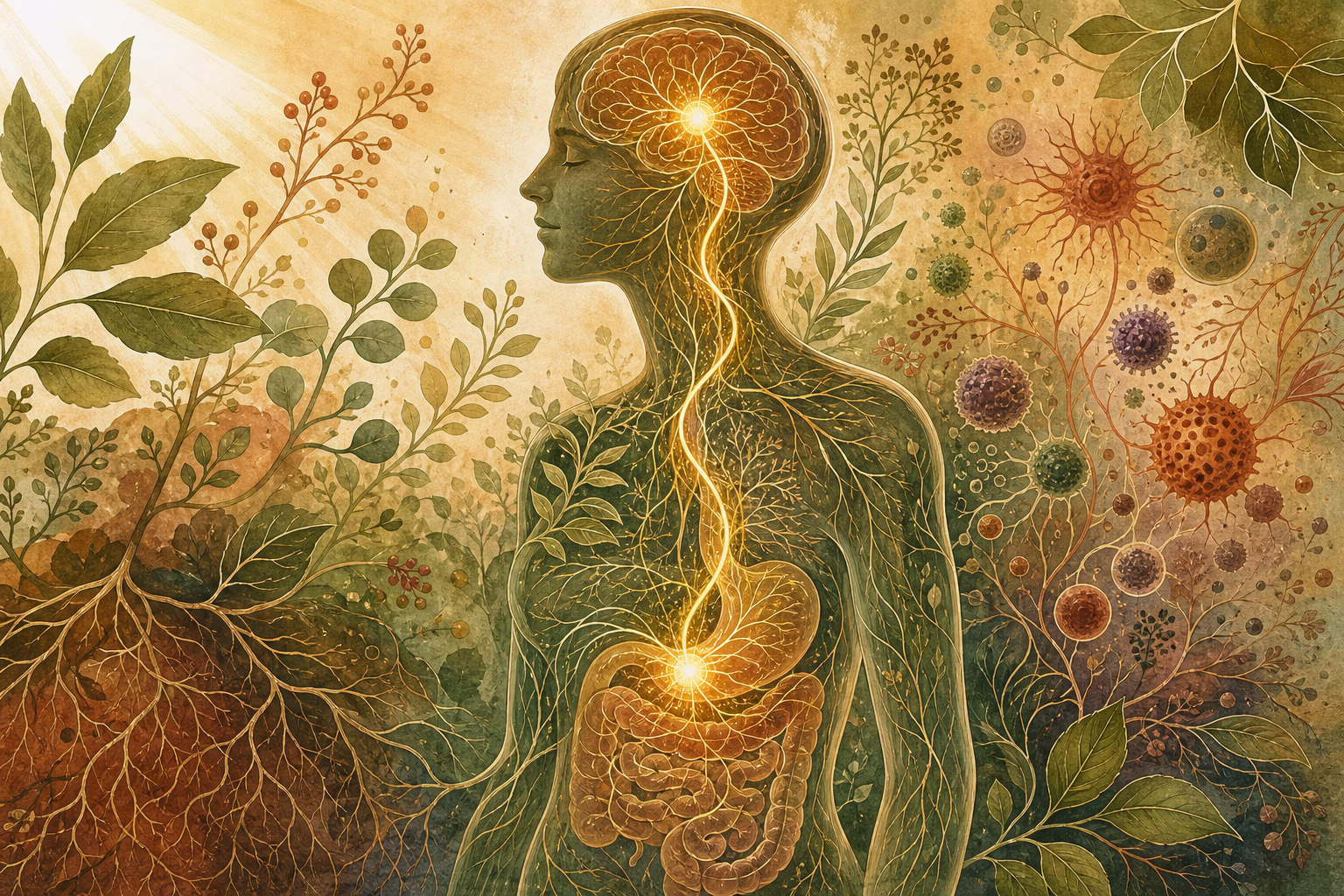
Pharmacogenomics is the study of how small spelling differences in your genes change how a drug moves through your body — and for cannabis, that mostly means liver enzymes, not a fortune cookie about your high. A gene is a set of instructions. A variant is a common spelling change. Some variants slow the enzymes that break down THC or CBD. That can raise blood levels. It does not pick your strain.
Think of the liver as a checkout line after a Metro Detroit double. If the line is slow, the same bag sits longer. CYP enzymes — cytochrome P450 enzymes, the liver's cleanup crew — are those cashiers. THC and CBD use a few of them. The 2023 review by Babayeva and Loewy in Current Issues in Molecular Biology mapped that crew and the receptor genes people keep naming. Their honest close: more research is needed, and personalized cannabis is not ready.
A December 2025 review in Genes (PMC12732823) said the same thing in newer language. CYP2C9 (the main liver enzyme that starts breaking down THC) is a real knob for oral THC. COMT (the enzyme that breaks down dopamine in the front of the brain) and FAAH (the enzyme that breaks down anandamide, your body's own cannabis-like chemical) are not routine tests. AKT1 rs2494732 is high-risk stratification in that review, not a routine kit.
The three buckets, in plain English #
| Bucket | What it is | Ready for a spit kit? |
|---|---|---|
| Liver enzymes (CYP2C9, CYP2C19, CYP3A4) | How fast THC or CBD leaves your blood | CYP2C9 is the strongest oral-THC signal. Still not a home dosing app. |
| Pumps (ABCB1) | How some drugs get moved in and out of cells | Research only. Mixed. |
| Receptor and brain genes (CNR1, CNR2, COMT, FAAH, AKT1) | How locks and mood chemistry are built | Cataloged. Not a shopping list. |
Pharmacokinetics is the blood-level story: how much drug shows up and how long it stays. Pharmacodynamics is the lock-and-key story: what the drug does once it lands. Kits love mixing those two. Your body does not.
Divine Toke is a Detroit-area Michigan sun-grown organic cannabis farm. We read labels. We do not sell gene reports. If you want the body-system map this sits on, start with our endocannabinoid system deep dive. This page stays on tests and liver genes.
As of September 2026, there is no CPIC (Clinical Pharmacogenetics Implementation Consortium) guideline that tells a clinician how to dose cannabis from a spit kit. CPIC does publish warfarin and CYP2C9 rules. That is a different drug. Do not treat a cannabis SNP report like a warfarin table.
What this word actually covers:
- Which enzymes chew THC and CBD
- Which common spellings slow those enzymes
- Which early pain and epilepsy studies tried to use genes in a clinic
- Why a mail-order kit is still an upsell
What it does not cover: a promise that your Friday night is written in saliva.
Can a DNA Test Tell You How Cannabis Will Hit? #
No. A consumer cannabis DNA test cannot tell you how a joint, gummy, or tincture will hit — not your strain, not your milligrams, not your anxiety risk. Some liver-gene findings are real in research. They do not add up to a spit-kit shopping tool. The 2025 personalization review (PMC12732823) treats CYP2C9 as the one THC knob with useful pharmacokinetics. It treats COMT as a brain-chemistry modifier, not a clinically actionable marker, because a later meta-analysis did not confirm the famous cannabis × COMT psychosis story.
Companies still sell the dream. Endocanna and Strain Genie style kits pitch SNPs (single-letter gene spellings) as a map to “your” ratio, dose, or side effects. GenomeWeb's report on Endocanna described that pitch as a safety-and-formulation report. The science those pages sit on is the same mixed catalog Babayeva and Loewy reviewed in 2023. Catalog is not a product.
The FTC's November 2023 consumer alert asked a simpler question that still applies in 2026: can you trust the marketing claims your genetic-testing company makes? For cannabis kits, the honest answer is mostly no. There is no FDA-cleared spit test that predicts your THC ride.
A kit can still be technically correct about a letter in CYP2C9 and functionally false about your Saturday. That is the trick. Labs can call a SNP. They cannot call your shift, your empty stomach, or a new blood-pressure pill. The FTC alert was written for health-claim hype in general genetics ads. Cannabis kits sit in that same fog. If the landing page promises a strain, a dose, or a side-effect forecast, treat it as advertising.
What a kit can say vs what it can prove #
| Kit line | What is true | What is sales |
|---|---|---|
| “We look at liver genes.” | CYP2C9 can change oral THC exposure in studies. | Your report is not a dose. |
| “We look at COMT / FAAH.” | Those genes exist. They have mixed cannabis papers. | They are not a paranoia switch or a calm switch. |
| “We match you to a strain.” | Plant chemistry is real. | Your saliva does not name a cultivar. |
| “This is personalized medicine.” | Clinics use PGx for some other drugs. | Cannabis PGx is not ready for home use. |
If you want the porch-level story of why two people can split a session and walk away different, that is a different article: why everybody's high is different. That page owns receptors, FAAH, COMT, tolerance, and baseline. This page owns the kit and the liver-gene dose question. Do not buy a panel to answer either one.
A Metro Detroit tradesperson on second shift does not need a cheek swab to learn this: start lower than your buddy, wait out an edible, and tell the pharmacist the truth about pills. A kit will not clock your sleep, your empty stomach, or a new antibiotic. Those move the ride more than a SNP report.
What to believe from a report, if you already have one:
- A CYP2C9 poor-metabolizer note is a reason to be extra careful with swallowed THC — not a reason to panic about two puffs of flower.
- A COMT or FAAH result is trivia until a clinic says otherwise.
- A “best strain” list is marketing.
Write the session down instead. Your notes beat their barcode.
How CYP2C9 Changes THC (and Why Edibles Feel It First) #
**CYP2C9 — the main liver enzyme that starts breaking down THC — can raise oral THC exposure by about three times in people with two slow 3 copies, compared with two typical 1 copies. That is a blood-level fact from a human study, not a personality test. It shows up first in edibles and other swallowed products because the dose walks through the liver before it hits the rest of you.
Sachse-Seeboth and colleagues (2009, Clinical Pharmacology & Therapeutics) gave people 15 mg of oral THC. People with *CYP2C93/3* had about a 3-fold higher THC AUC — area under the curve, a measure of total exposure over time — than people with *CYP2C91/1*. Their inactive leftover, 11-COOH-THC, sat about 70% lower. Sedation trended higher in *3 carriers. Babayeva and Loewy (2023) restated that 3× AUC and the extra-sedation trend. The 2025 Genes review (PMC12732823) still treats *2 and *3 as slower THC clearance and higher exposure, especially by mouth.
AUC is not “how high you felt.” It is how much drug your blood saw. More AUC can mean a longer, heavier night. It can also mean more impairment. Treat that as a caution, not a dare.
Why the edible path feels the gene first #
Swallowed THC takes a gut-to-liver road. That first pass is where CYP2C9 (the THC-breakdown enzyme) and CYP3A4 (another cleanup enzyme) chew a share of the dose and build 11-hydroxy-THC, a second intoxicating compound. Smoke and vapor mostly skip that front door. The chemistry of that split lives in 11-hydroxy-THC explained. This section only needs one line: if your CYP2C9 is slow, the swallowed path is the one that can stack. A Schulte inhaled study (PMC13161248) of 27 people on low-THC/high-CBD vapor saw no significant CYP2C9/CYP2C19 blood-level split — more evidence flower is quieter, not a takedown of the oral *3/*3 3× AUC.
A Michigan adult-use gummy is capped at 10 mg THC per serving and 200 mg per container under CRA rule R 420.404. Medical infused products allow 50 mg per serving, same 200 mg container cap. Those numbers are the label. They are not the milligrams your blood keeps if your checkout line is slow.
| CYP2C9 picture | Plain English | What research saw with oral THC |
|---|---|---|
| *1/*1 | Typical enzyme speed | The comparison group in Sachse-Seeboth |
| *1/*3 or *1/*2 | One slower copy (intermediate) | Higher THC / lower 11-COOH-THC trend; not as loud as *3/*3 |
| *3/*3 | Two slow copies (poor metabolizer) | ~3× THC AUC; ~70% less 11-COOH-THC; sedation trend |
| *2/*2 | Two *2 copies | Slower than *1 in general CYP2C9 work; THC signal is weaker than *3/*3 |
*2 is real. It is not as cleanly quantified for THC as *3/*3. Do not let a kit flatten them into one “slow” stamp.
Poor metabolizer, in this article, means the enzyme works slower than the common *1 version. It does not mean your liver is failing. It does not mean flower is unsafe. It means a swallowed dose can hang around. Intermediate means one slower copy. Normal (*1/*1) is the comparison group in the 2009 oral-THC study. Ultrarapid is not the main THC-CYP2C9 story. If a kit uses those words, translate them back to speed of one enzyme, then ignore the strain paragraph that follows.
Ancestry is not a stereotype. It is why one kit panel can miss you. #
Babayeva and Loewy noted that *CYP2C92 and 3* are common in people of European descent (up to about 18% combined in some counts) and uncommon in many African-American and most Asian groups. In African-descent populations, *5, *6, *8, and *11 matter more for CYP2C9 activity. A kit that only shouts about *2 and *3 can miss the variants that actually slow the enzyme in a Detroit family with West African ancestry. That is a fairness problem, not a vibe.
CPIC already treats those African-ancestry CYP2C9 alleles as dose-relevant for warfarin. Nobody has a matching CPIC table for THC. Until they do, a spit kit that ignores *5/*6/*8/*11 is incomplete even on its own terms.
What this means on a Michigan night #
- Flower or a pre-roll: the liver still sees THC later. The *3 story is quieter. Dose, hold, and tolerance still run the night.
- A 10 mg adult-use gummy: this is the experiment where a slow CYP2C9 can turn “one serving” into a long couch. Wait. Do not stack.
- A medical 50 mg serving: that is a clinic conversation, not a porch experiment — especially on blood thinners or several daily pills.
- A tincture held under the tongue: some of it skips first pass. Some gets swallowed. See tincture high vs flower high. Treat swallowed leftover like an edible.
If a kit says you are a CYP2C9 poor metabolizer, believe the caution, not the brand's strain list. Start lower on anything you eat. Tell your pharmacist. Do not change a prescription because a PDF said “slow liver.”
What About CBD, CYP2C19, and CYP3A4? #
CBD is mostly handled by CYP2C19 and CYP3A4 — two other liver cleanup enzymes — and it can also slow those same enzymes, which is why a pharmacist cares more about your pillbox than about a spit-kit “CBD genotype.” THC's loud gene story is CYP2C9. CBD's loud story is interactions, not a home DNA score.
Babayeva and Loewy (2023) put the split in one line: THC uses CYP2C9 and CYP3A4; CBD uses CYP2C9, CYP2C19, and CYP3A4. The 2025 review (PMC12732823) adds the metabolite names. 7-OH-CBD is CBD's main active leftover. CYP2C19 (the enzyme that starts that step) builds a lot of it. Loss-of-function CYP2C19 spellings (*2, *3) can slow that path. The gain-of-function spelling *17 can speed it. There is not a clean, consumer-ready “CBD dose from your CYP2C19 report.”
CYP3A4 clears more than half of prescription drugs. It also helps oxidize both THC and CBD. Gene variants like *22 exist. Their cannabis effect is usually secondary next to CYP2C9 (for THC) and CYP2C19 (for CBD). Pills that block CYP3A4 can raise cannabinoid levels. That is a drug-interaction fact, not a kit feature.
What each enzyme is doing #
| Enzyme | Job with cannabis | Why a Detroit pharmacist asks |
|---|---|---|
| CYP2C9 | Main first cut of THC; also sees CBD and S-warfarin | Slow gene or a new CBD/THC habit can change exposure |
| CYP2C19 | Main path to 7-OH-CBD; CBD can inhibit it | High-dose CBD + clobazam is a labeled clinic problem |
| CYP3A4 | Helps clear THC and CBD; CBD can inhibit it | Lots of heart, infection, and transplant meds share this line |
A gas-station CBD gummy is not Epidiolex, the FDA-approved CBD medicine. The Epidiolex label still matters because it is the cleanest human warning we have: CBD can raise other drugs that use CYP2C19 and CYP3A4. Clobazam (a seizure medicine) is the famous pair. That full chart lives in our cannabis medication interactions safety guide. Do not clone it here. Do not stop a seizure drug because a blog mentioned CYP2C19.
Babayeva and Loewy also noted that blocking CYP2C9 cut 7-OH-CBD formation in donor livers even when CYP2C19 was in the mix — so CBD is not a one-enzyme story. They had no solid human data on CYP2C9 SNPs and CBD blood levels. That gap is still a gap in 2026. A kit that prints a CBD “metabolizer type” is guessing past the paper.
Practical CBD rules without a swab #
- Tell the pharmacist the milligrams, not the brand vibe.
- Prescription-range CBD (hundreds of milligrams) is a different risk than a 10 mg softgel.
- CYP2C19 “poor metabolizer” on a report is a reason to watch sedation and other-drug levels with a clinician — not a reason to buy a different hemp SKU.
- Michigan medical vs adult-use changes tax, purchase limits, and the edible serving cap. It does not change your enzymes.
If you only remember one CBD sentence: the enzyme names matter because of pills, not because a spit kit found your “calm genotype.”
Receptor Genes (CNR1 / CNR2) — What the 2023 Review Actually Found #
CNR1 and CNR2 — the genes that build CB1 and CB2 receptors, the main locks THC fits — are cataloged in the 2023 review, and the evidence is mixed, small, and not a reason to buy a spit kit. CB1 is the brain-and-nerves lock that runs a lot of the high. CB2 sits more in immune tissue and gut. The receptor map is in CB1 and CB2 receptors explained. This section is only what gene papers actually showed.
Babayeva and Loewy (2023) spent pages on CNR1 spellings tied to cannabis use disorder, schizophrenia risk, and brain-volume studies. Some papers found a link. Some did not. They said almost all CNR1 genetics work was built to study addiction risk, not to pick a Friday night dose. They also noted CNR1 variants are uncommon in African-American samples in some datasets, and more common in European-descent samples. That is another reason a one-size kit is a bad tool.
The 2025 Genes review (PMC12732823) is blunter: common CNR1 and CNR2 polymorphisms have heterogeneous, small, often non-replicated effects. No consistent, clinically actionable association with medical-cannabis response has been shown. The authors do not recommend routine CNR1/CNR2 testing for personalization.
What those gene names mean on a porch #
| Name | Plain English | What reviews actually support |
|---|---|---|
| CNR1 | Gene for the CB1 receptor (the main brain lock for THC) | Lots of addiction and psychiatry papers. Not a dose algorithm. |
| CNR2 | Gene for the CB2 receptor (more immune / gut) | Even thinner for “how the high feels.” |
| ABCB1 | Gene for P-gp, a pump that moves some drugs | A few THC-level and pain-response signals. Research only. |
| FAAH / COMT / AKT1 | Anandamide-breakdown enzyme; dopamine-breakdown enzyme; a cell-signal gene | Mixed. Sibling post covers the porch version. Not kit-ready. |
rs1049353 is the CNR1 spelling Poli used in the 2022 pain study (next section). Remember it as “one letter researchers keep typing,” not as your shopping code.
If a kit prints “CB1 sensitive” or “high receptor density,” ask what SNP they used and what human cannabis-response trial backs that sentence. Most cannot point to one. Receptor count also moves with daily use — that is tolerance, not your birth certificate. Do not let a PDF confuse those.
Divine Toke will not sell you a receptor score. We grow sun-grown flower. Your locks are yours. The jar is the input. For the five-factor stack (plant, milligrams, path, body, night), stay with the high isn't one thing. This page stays on whether a gene test can run that stack. It cannot.
Why the Same Michigan Label Is Not the Same Dose #
A Michigan CRA label tells you milligrams in the package. It does not tell you milligrams your liver leaves in your blood — and that gap is the whole pharmacogenomics story. Pharmacogenomics (how gene spellings change a drug's path) is one reason two legal servings can be two different exposures. It is not the only reason. It is the one this post owns.
The Michigan Cannabis Regulatory Agency requires lab THC and CBD on licensed products. That is useful. It is also a starting number. CYP2C9 (the main THC-breakdown enzyme) can multiply oral exposure. Food, other pills, and first-pass all sit on top. A label cannot see those.
Michigan also runs two markets. Adult-use and medical are not the same tax, age, purchase cap, or edible serving cap. As of 2026, state-licensed medical marijuana sits in federal Schedule III under the April 28, 2026 Federal Register final rule (91 FR 22714). Typical adult-use flower does not. The Justice Department announcement covered FDA-approved marijuana medicines and products under a qualifying state medical license. Recreational stays Schedule I. The DEA's June 29–July 15 2026 hearing on broader rescheduling closed with no final rule. Adult-use was still Schedule I as of September 2026 while the ALJ recommendation sat pending. Your enzymes do not care which counter you used. Your legal box does.
Label vs exposure — a shopper table #
| What you see | What it is | What it is not |
|---|---|---|
| THC % or mg on a CRA label | Lab estimate of what is in that batch | Your personal blood level |
| Adult-use edible 10 mg serving | State cap per dose (R 420.404) | A promise it will feel like 10 mg in you |
| Medical edible 50 mg serving | Higher medical cap, same 200 mg container limit | A gene-adjusted clinic dose |
| “Indica / sativa” on the jar | Marketing shorthand | A CYP2C9 result |
| Schedule III on a medical SKU | Federal box for licensed medical / FDA products | Proof adult-use is federally legal |
A night-shift nurse at a Detroit hospital and a day-shift carpenter can buy the same licensed eighth. The sticker matches. The swallowed milligrams still meet two livers. If one person is a CYP2C9 poor metabolizer and eats a gummy, the label under-describes the night. If both smoke two small puffs, the gene gap usually shrinks. Method is a dose tool. The label cannot choose it for you.
NCSL's medical-cannabis tracker (page updated September 2, 2026) counts 41 states, three territories, and D.C. with medical programs as of June 26, 2025 — up from the 37 states in the 2023 Babayeva review. Michigan is one of those programs and an adult-use state. More states on a map does not make a spit kit more true.
How to use a Michigan label without pretending it is PGx:
- Read THC and CBD milligrams, not the nickname.
- Treat an edible serving as a maximum starting story, then wait.
- If you have a medical card, ask your certifying clinician before you jump to the 50 mg cap.
- If you only have adult-use access, the 10 mg cap is still plenty of room to overshoot if your liver is slow.
- Do not “correct” a label with a kit's strain list.
The plant chemistry stack — cannabinoids, terpenes, method — is the high isn't one thing. This section is only the label-versus-liver gap.
Cannabis, Prescriptions, and Why Your Pharmacist Cares (Warfarin / CYP) #
Your pharmacist cares because THC and CBD share liver enzymes with real medicines — especially CYP2C9 with warfarin — and a spit kit does not replace an INR check. This is a pointer, not a second safety manual. The full class-by-class chart is how cannabis interacts with your medications. Do not change a prescription because of this post or a DNA PDF.
Warfarin is a blood thinner with a thin safety window. S-warfarin, the stronger half, is a CYP2C9 substrate. CPIC already publishes warfarin dose rules for CYP2C9 variants, including *5, *6, *8, and *11 in African-ancestry patients (CPIC warfarin / CYP2C9 evidence, PMC7057225). Cannabis is not in that table. The overlap is the warning: the same enzyme family that can stack oral THC can also sit under a drug that must stay in a tight range.
Babayeva and Loewy (2023) flagged CYP2C9 inhibition and warfarin-relevant alleles. Case reports have tied cannabis or CBD to INR shifts. Case reports are not a trial. They are enough to call the clinic that manages your levels before you start, stop, or jump oral THC or high-dose CBD.
What to say at the counter (and what not to) #
| Say this | Skip this |
|---|---|
| Product type (flower, edible, tincture) and milligrams | “The DNA kit said I'm a fast metabolizer.” |
| When you started or changed cannabis | Asking them to pick a strain from a SNP |
| That you take warfarin, clobazam, or several daily pills | Stopping a pill on the drive home |
| New bruising, dark stools, unusual bleeding | Treating a kit as an INR |
Metro Detroit seniors and tradespeople often run polypharmacy — more than one daily medicine — for blood pressure, pain, sleep, and mood. A union-shift worker who adds a 10 mg gummy after a new antifungal is running a drug–drug–gene stack the 2025 review (PMC12732823) calls phenoconversion: pills can make a “normal” genotype act like a poor metabolizer. The kit cannot see last Tuesday's prescription.
Three pharmacist facts, then stop:
- Warfarin / CYP2C9 is the blood-thinner flag. Recheck INR if cannabis starts or changes.
- CBD / CYP2C19 / CYP3A4 is the high-dose and seizure-med flag. Epidiolex labeling is the clinic reference, not a hemp-aisle slogan.
- The interactions guide is the deep page. This page only explains why a gene test is not a substitute for that conversation.
If you take warfarin, transplant drugs, or clobazam, talk first. Education is not a green light.
What the Early Pain and Epilepsy PGx Studies Showed #
The early clinic studies showed hints — a CNR1 spelling tied to dropping out of pain treatment, CBD-response signals in treatment-resistant epilepsy, and a 20-person Canadian pharmacy pilot — not a consumer test you should buy. Babayeva and Loewy (2023) used those three examples as “a path.” The path is still a dirt road.
Poli 2022 — chronic pain and CNR1 dropout #
Poli and colleagues (2022, Genes, PMC9601332) enrolled 600 Italian chronic-pain patients. 564 had usable genotypes. It was open-label and not randomized. Doctors changed THC and CBD as they went. They tested six SNPs, including CNR1 rs1049353, ABCB1, COMT, and others.
Pain dropped about 20% in the first month and about 43% by one year in people who stayed. That is an average with a wide spread. A quarter of patients felt worse or no better after a month. 443 people (about 76%) left cannabis therapy over the whole study. In the first month, 78 dropped; their average pain change was null or negative.
Dropout in that first month linked to CNR1 rs1049353 under a recessive model (χ² = 5.6, p < 0.018). People with GG or GA were about 2.4 times more likely to stay than AA homozygotes. Pain relief associated more with ABCB1, TRPV1, and UGT2B7 combinations — and the authors did not apply a Bonferroni correction. This is exploratory. It is not a spit-kit rule for a Detroit back.
TRE CBD study — n = 113 #
A U.S. open-label CBD study in treatment-resistant epilepsy (TRE) genotyped 113 patients (112 analyzed) on the Affymetrix drug-metabolizing enzymes and transporters array (PMC8530979). Variation in pharmacogenes associated with CBD response and some side effects. That is a clinic epilepsy signal under high-dose purified CBD. It is not a license for a hemp-aisle DNA upsell.
TRE means seizures that keep going after standard drugs. Those patients are already in a medical lane. Their CBD doses look nothing like a 10 mg Michigan adult-use serving. Copying their array onto a consumer kit is a category error. If you or a family member is in that lane, the conversation is with the neurologist — and with the medication interactions guide for clobazam and friends — not with a mailer.
Canadian pharmacy pilot — n = 20 #
Two urban Canadian pharmacies ran a cannabis PGx counseling pilot (PMC7819344). Twenty patients got profiled. Pharmacists walked the results. About 75% said the consult had high value. Feeling heard is not the same as a validated dose. Twenty people is a hallway, not a highway.
| Study | Who | What they found | What they did not prove |
|---|---|---|---|
| Poli 2022 | 564 analyzed pain patients | ~20% / 43% pain drop; CNR1 tied to dropout | A retail CNR1 kit |
| TRE CBD PGx | 113 genotyped / 112 analyzed | Pharmacogene signals with CBD | A consumer CBD genotype |
| Canadian pharmacies | 20 patients | People liked the pharmacist talk | Clinical utility at scale |
Babayeva and Loewy's close still holds in 2026: we need better trials, standard methods, and real dose–response work. Personalized cannabis is not ready. A Metro Detroit senior in pain should take that as permission to journal and start low, not as a reason to mail spit.
What to Do Instead of Buying a Spit Kit #
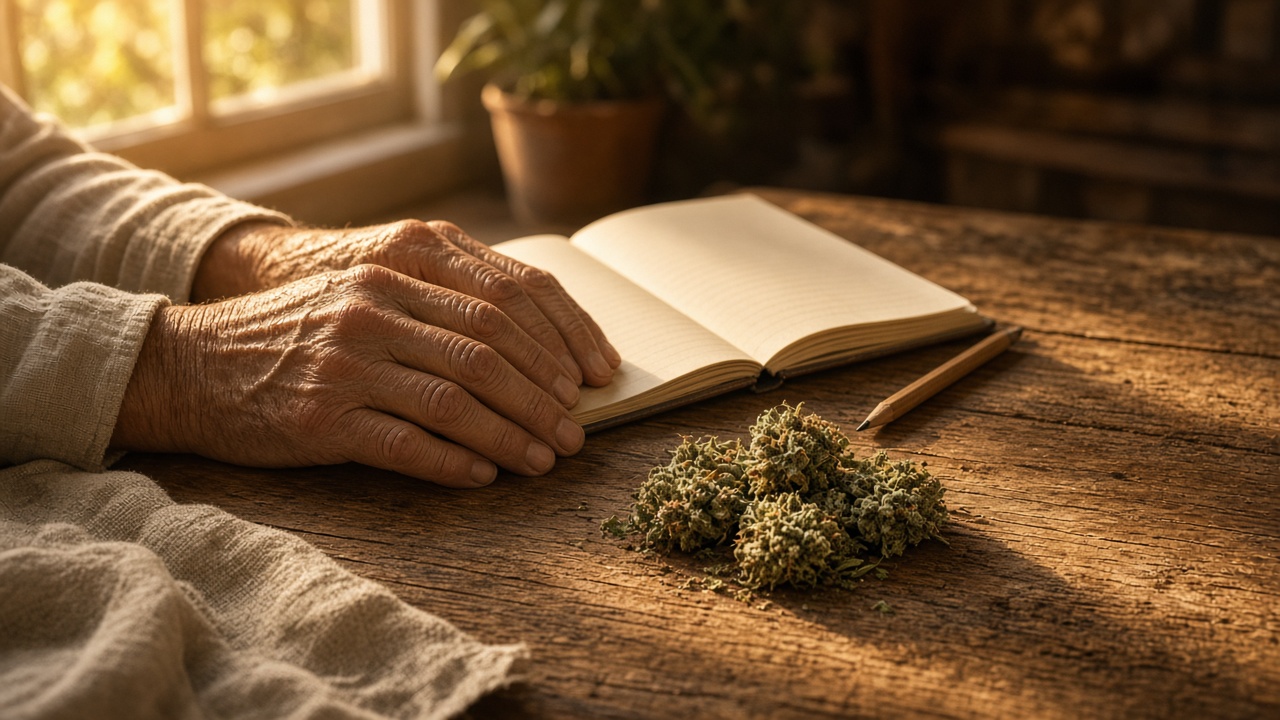
Write down method, milligrams, sleep, food, meds, and how you felt — for several sessions of the same method — and treat a CYP2C9 caution as a reason to go slower on edibles, not as a shopping list. A notebook is cheaper than a kit. It also sees the week you are having. A swab does not.
The 2025 review (PMC12732823) still puts careful titration and safety monitoring ahead of broad gene panels. Babayeva and Loewy (2023) asked for better evidence before anyone calls this personalized medicine. That is your permission to skip the upsell.
A one-page log that beats a barcode #
- Date and shift — day, afternoon, or night. Metro Detroit hospital and plant hours change the baseline.
- Product — Michigan adult-use or medical, package ID, THC/CBD milligrams from the CRA label.
- Method and amount — puffs, mg eaten, or tincture held vs swallowed.
- Body — sleep hours, food, alcohol (ideally none), new pills.
- Ride — onset, peak, sedation 0–10, pain 0–10, next-morning fog.
- Repeat? — same plan / smaller / different method.
Do that five to ten times on one method before you decide “cannabis makes me X.” Mixing a joint one night and a mystery gummy the next is how people invent a gene they do not have.
| Pattern in the log | Likely lever | Next step |
|---|---|---|
| Fine smoked, wrecked from 10 mg | First-pass / CYP2C9 / 11-OH-THC | Stay inhaled, or cut oral milligrams and wait |
| Suddenly heavier after a new pill | Meds / phenoconversion | Pharmacist + medication interactions guide |
| Kit said “slow CYP2C9,” edible felt long | Oral exposure | Believe the caution. Do not chase a strain list. |
| Kit said “COMT anxious,” party felt loud | Dose and setting | Lower milligrams. Quieter room. Ignore the SNP. |
Spend the kit money on this instead #
- Labeled, lab-tested flower you can actually read.
- A lower first edible — Michigan adult-use servings start at a 10 mg cap, not a dare.
- One pharmacist question if you take warfarin, seizure meds, or several daily pills.
- Time. Impairment is real. Do not drive. Do not run a press or a lift after a new oral dose.
If you already mailed spit, keep the CYP2C9 line as a sticky note on edibles. Trash the strain match. Your receptors, your pillbox, and your Tuesday are not in that tube.
Divine Toke's part is generic and local: sun-grown, lab-tested flower and pre-rolls with a label. Start with less than you think. Give it time. Write it down. That is pharmacogenomics you can use without a lab coat.
Frequently Asked Questions #
Do cannabis DNA tests work? #
No — not as a tool that tells you how cannabis will hit, which strain to buy, or what dose to take. Pharmacogenomics (how gene spellings change a drug's path) is real for a few liver enzymes. Consumer kits still oversell COMT, FAAH, and “strain matches.” The 2025 Genes review (PMC12732823) treats CYP2C9 as the useful oral-THC knob and does not treat COMT or CNR1 as routine tests. There is no FDA-cleared cannabis spit test for predicting your high.
What does CYP2C9 change for THC? #
**CYP2C9 — the main liver enzyme that starts breaking down THC — can raise oral THC exposure about three times in *3/*3 people versus 1/1. Sachse-Seeboth 2009 measured that ~3× THC AUC after 15 mg oral THC, with ~70% lower 11-COOH-THC and a sedation trend. That is a blood-level finding. It is not a flower-shopping code.
Why do edibles show the liver-gene effect first? #
Because swallowed THC takes a gut-to-liver first pass, and inhaled THC mostly does not. Slow CYP2C9 keeps more THC in that path and changes the 11-hydroxy-THC mix. The chemistry lives in 11-hydroxy-THC explained. A Michigan adult-use serving is still 10 mg under CRA R 420.404 — the gene can make that serving feel larger.
Should I test COMT or FAAH before I buy cannabis? #
No. COMT (the enzyme that breaks down dopamine in the front of the brain) failed to show a consistent cannabis × psychosis interaction in meta-analysis, which is why PMC12732823 will not use rs4680 alone for medical-cannabis stratification. FAAH (the enzyme that breaks down anandamide) is a candidate modifier, not a kit. Spend the money on labeled flower and a lower first dose.
Is medical cannabis Schedule III in 2026? #
Yes for FDA-approved marijuana medicines and qualifying state-licensed medical products — not for typical adult-use flower. The April 28, 2026 Federal Register final rule (91 FR 22714) moved those medical lanes to Schedule III. The DOJ announcement matches that split. Adult-use remains Schedule I. The June 29–July 15 2026 DEA hearing on broader rescheduling closed with no final rule. Adult-use was still Schedule I as of September 2026 while the ALJ recommendation was pending.
How many U.S. states have medical cannabis programs in 2026? #
NCSL counts 41 states, three territories, and D.C. as of June 26, 2025 — and updated that page on September 2, 2026. That is up from the 37 states in the 2023 Babayeva review. Adult-use is 24 states, three territories, and D.C. on the same tracker. Low-THC-only programs do not count as comprehensive.
Can CBD or THC change warfarin through CYP2C9? #
They can in some people, which is why INR follow-up matters and a DNA kit does not replace it. CYP2C9 clears S-warfarin. CPIC already uses that gene for warfarin dosing (PMC7057225). Cannabis is not in the CPIC table. Call the clinician who manages your levels before you start or change oral THC or high-dose CBD. Full pairs: medication interactions guide.
Did the 2022 pain study prove a CNR1 spit-kit rule? #
No. Poli et al. (PMC9601332) saw a CNR1 rs1049353 link to first-month dropout (χ² = 5.6, p < 0.018; GG+GA about 2.4× more likely to stay than AA) in 564 analyzed patients. Pain relief tied to other genes. The study was open-label, doses changed, and they skipped Bonferroni. Interesting. Not a retail test.
What should I tell a Michigan pharmacist? #
Product type, milligrams, when you started, and your full pill list — especially warfarin, clobazam, or several daily meds. Skip the strain-match PDF. A Metro Detroit senior on polypharmacy needs an INR or interaction check, not a SNP nickname. Bring the CRA label if you have it.
What should I do instead of buying a cannabis DNA kit? #
Log five to ten sessions of the same method: milligrams, sleep, food, meds, and the ride. Treat a CYP2C9 poor-metabolizer note — if you already have one — as an edible caution. Babayeva and Loewy (2023) said personalized cannabis is not ready. A notebook agrees.
Does adult-use Michigan flower sit in Schedule III? #
No. Typical adult-use flower stays federal Schedule I as of September 2026. Medical Schedule III from the April 28 rule does not flip a recreational eighth at a Detroit counter. The June 29–July 15 2026 DEA hearing on broader rescheduling closed with no final rule. The ALJ recommendation was still pending as of September 2026. Michigan adult-use is still a state-legal market under CRA rules. Do not treat Schedule III as a workplace or driving free pass.
Can a DNA test pick my strain or terpene panel? #
No. Strain names are already a weak map to chemistry. Your saliva does not name a cultivar or a terpene panel. Shop the Michigan COA. If you want how plant plus method plus body stack, use the high isn't one thing — not a kit.
If You're Curious to Try a Lower-Input Night #
If you're curious to try sun-grown flower instead of a spit kit, start with a small amount of labeled Michigan flower or a pre-roll and write the night down. A journal still beats a barcode. Divine Toke grows sun-grown organic cannabis in Michigan. The shop SKUs, if you name them, are Blueberry Mojito, Honey Bananas, and L.A Sunshine — flower and pre-rolls, not edibles, not a gene panel. Read the milligrams. Wait on anything you swallow.
For the body-system map, see the endocannabinoid system deep dive. For why two people can split a session, see why everybody's high is different. For the edible liver path, see 11-hydroxy-THC explained. For pills, stay with the medication interactions safety guide.
This article is for educational purposes only and is not medical advice. Always consult your healthcare provider before starting any new wellness routine.
Try Blueberry Mojito — sun-grown in Detroit
Small-batch, living-soil flower cultivated in our Detroit sun-houses. Ships to all 50 states.