What CBG Actually Does, and How to Spot It on a Michigan COA
CBG rarely shows on the jar sticker. Here's what the mother cannabinoid actually does, and how to find it on a Michigan COA.
Questions this article answers
- what does CBG do
- does CBG get you high
- how to find CBG on a Michigan COA
- CBG vs CBD

Head Cultivator
On this page
You cracked the lid after a late Detroit shift. The sticker lists THC and CBD. Fine. But your buddy said this batch had CBG, and that word is nowhere on the jar. The answer's on the lab sheet, not the sticker.
What Is CBG, and Why Do People Call It the Mother Cannabinoid? #
CBG (cannabigerol) is the plant's "starter" cannabinoid. Almost every other major cannabinoid begins as CBGA, then enzymes convert that acid into THCA, CBDA, or CBCA as the plant matures. People call CBG the mother cannabinoid because the chemistry tree starts there, not because it's the loudest line on a menu board.
Here's the short plant story in plain words:
- The plant builds CBGA (cannabigerolic acid) first.
- Special enzymes steer most of that CBGA into THCA, CBDA, or CBCA.
- Heat (smoking, vaping, cooking) knocks the acid forms into THC, CBD, CBC, and CBG.
- By harvest on typical THC-forward flower, little CBG is left. Most of the starting material already became something else.
Think of CBGA like flour on a bakery bench. Once the bakers (enzymes) turn most of it into bread, cake, or cookies (THC, CBD, CBC paths), only a little flour is left in the bowl. That leftover is why everyday flower COAs show a quiet CBG line even when the plant started with plenty of CBGA.
A 2022 MDPI review on the origin of cannabigerol walks through that pathway and notes CBG's weaker pull on CB1 compared with THC, which is why CBG doesn't run the "high" the way THC does. For a wider map of how the plant's compounds stack, see our cannabinoids guide.
| Form | What it is | Why it matters on a COA |
|---|---|---|
| CBGA | Acid precursor still in raw flower | Often the bigger number before heat |
| CBG | Neutral form after decarboxylation | What many people mean when they say "CBG" |
| CBG-dominant cultivar | Genetics or harvest timing that leave more CBG unconverted | Rare on Michigan menus, ask for the full panel |
At Divine Toke, a sun-grown organic cannabis farm rooted in Detroit, Michigan, we talk about CBG the same way we talk about the other minor cannabinoids: if it's on the lab sheet, it's part of the plant's full story. Not a secret strain name. A line item.
Metro Detroit shoppers who grew up chasing "highest THC" miss this mother-cannabinoid story completely. Menus got built around the loud number. The plant kept its quiet starter chemistry anyway. Ask for the sheet that shows it.
Does CBG Get You High? #
No. Early human data and pharmacology reviews treat CBG as non-intoxicating. It doesn't hit CB1 the way THC does. A 2025 pharmacokinetics and pharmacodynamics study of CBG (PMC12722920) reported that CBG was not intoxicating, even when researchers accounted for how it was taken and blood levels.
That tracks with receptor math. A PMC paper on CBG action at CB1 and CB2 and the MDPI origin review both describe low affinity for cannabinoid receptors. Think several-fold weaker at CB1 than THC. Low affinity means a weak handshake. THC kicks the door. CBG knocks soft, if at all.
What that means on a Michigan night:
- You can have measurable CBG on a COA and still feel little or no "high" from CBG itself.
- If a product also has meaningful THC, the high still comes from THC (and how terpenes and dose stack with it).
- Budtender talk that frames CBG as "like a lighter THC" is marketing noise. The receptor story doesn't back that up.
- Edibles and flower still follow the same rule: CBG doesn't suddenly become intoxicating because you ate it. First-pass metabolism changes THC's story more than CBG's.
For how CB1 and CB2 actually work in simple words, see CB1 and CB2 receptors explained.
| Compound | Rough CB1 role | Intoxicating? |
|---|---|---|
| THC | Strong CB1 agonist | Yes |
| CBD | Indirect modulator, low CB1 agonist activity | No |
| CBG | Weak / partial CB1–CB2 activity | No (per current human PK/PD data) |
If you work second shift at a plant outside Detroit, or you drive after a late hospital rotation, that distinction matters. Non-intoxicating on paper still doesn't mean "safe to drive after a THC-heavy jar." Read the whole panel. Dose for your night. Leave the car keys out of it when THC is in the mix.
What Does CBG Actually Do in Your Body? #
Early research suggests CBG is a multi-target plant compound: a weak touch on cannabinoid receptors plus other dials like TRP channels, serotonin signaling, and α2-adrenoceptors, not a single "miracle" switch. Keep the caveat: most of the exciting work is still in cells and animals, not large human trials.
A 2023 PMC basic-science overview of cannabinoids (PMC10788142) summarizes CBG as a partial agonist at CB1 and CB2, an antagonist at 5-HT1A, an agonist at α2-adrenoceptors, and active at several TRP channels (TRPA1, TRPV1, TRPV2) with TRPM8 antagonism. Older binding work in PubMed 20002104 also flagged CBG as a potent α2 agonist and a moderately potent 5-HT1A antagonist in brain-membrane experiments.
Plain version: CBG doesn't slam one lever. It taps a few. That's why the marketing sounds huge while the clinical file stays thin.
| Target (plain words) | What papers say CBG may do | Why you should care when shopping |
|---|---|---|
| CB1 / CB2 | Weak / partial activity | Explains little or no high from CBG alone |
| TRP channels | Activates or tunes pain/heat/irritation sensors | Early research links this to sensory and swelling pathways |
| 5-HT1A (serotonin) | Antagonist in binding studies | Mood/calm claims are premature. Mechanism only |
| α2-adrenoceptors | Potent agonist in membrane work | Another non-CB pathway on the board |
A 2024 comprehensive CBG review (PMC11597810) and The Pharmacological Case for Cannabigerol (PubMed 33168643) both put antibacterial activity, inflammatory bowel disease hypotheses, and neuroprotective models near the top of the interest list, while still framing them as research leads, not proven consumer cures.
Gut, swelling, and early research #
Preclinical work suggests CBG may calm gut swelling in animal colitis models; human IBD proof isn't there yet. A classic 2013 Biochemical Pharmacology colitis study (PubMed 23415610) found CBG reduced inflammation markers in a mouse colitis model. Reviews still cite that line of work when they talk IBD potential (PubMed 33168643).
Preclinical, in plain words: researchers saw a signal in animals or cells. Nobody handed you a Michigan dosing chart. The jump from mouse gut to human Tuesday is where a lot of cannabis marketing loses its honesty.
For Metro Detroit readers with shift-work stress and a sensitive gut, that's interesting context. Not a dosing plan. Talk with a clinician who knows your history. Don't drop prescribed meds because a jar panel lists CBG. If your care team is open to plant conversations, bring the COA printout, not a screenshot of a meme.
Antibacterial and other lab findings #
Lab studies have shown CBG activity against certain Gram-positive bacteria, including MRSA strains, still a research finding, not a home remedy. A 2020 ACS Infectious Diseases paper reported potent CBG activity against methicillin-resistant Staphylococcus aureus. The 2024 PMC review highlights that antibacterial signal as one of CBG's sharper preclinical edges.
Other early findings you will see cited:
- Appetite: A 2016 Psychopharmacology rodent study (PubMed 27503026) saw increased food intake without classic THC-like intoxication signals.
- Neuroprotection: Older Huntington-disease model work (PubMed 25252936) and newer reviews keep neuroprotection on the hypothesis list.
- 2025 mini-review framing: A Frontiers in Pharmacology 2025 CBG mini-review stacks antioxidant, anti-inflammatory, and neuromodulatory talk. Still mechanistic, not a green light for cure claims.
Whole-plant context still matters. CBG rarely rides alone in flower. See why whole-plant beats isolates for how minors and terpenes share the ride.
How Much CBG Shows Up in Regular Flower? #
On most mature THC-forward flower, CBG sits under about 1% because the plant already converted most CBGA into other cannabinoids before harvest. That's why Michigan shoppers who only scan THC % never notice CBG. It's a quiet line, not a menu headline.
Breeders who want louder CBG either:
- Harvest earlier, before conversion finishes, or
- Use genetics with weaker THCA/CBDA synthase activity so more CBGA stays put
Those CBG-forward products exist in the broader market, but they're not the default eighth on a Detroit shelf. On everyday sun-grown flower, treat detectable CBG as a bonus line: proof the plant kept some of its starting chemistry, not a guarantee of a special "CBG high."
| Product type | Typical CBG story | Shopping tip |
|---|---|---|
| Standard THC flower | Trace to low CBG / CBGA | Ask for full cannabinoid panel |
| Early-harvest / CBG-bred flower | Higher CBG possible | Verify CBG and CBGA on the COA |
| CBG isolate / distillate | High CBG by design | Different product class than flower |
| Full-spectrum extract | Minors can ride along | Still read the batch COA |
Michigan climate shapes outdoor harvest windows and cure timing, which can nudge acid-to-neutral ratios on a COA. It's another reason two jars with similar THC can show different minor lines. Trust the batch sheet over a strain name.
A few practical ranges people ask about (directional, not Divine Toke batch claims):
- Trace / ND: common on high-THC flower. Not a defect
- Detectable but under ~1%: normal leftover mother chemistry
- Clearly higher CBG: usually intentional genetics or early harvest. Demand the COA
You won't catch us quoting a house CBG percent. Batch chemistry moves. The sheet is the receipt.
Is CBG on Michigan Jar Labels? #
No. Michigan adult-use consumer labels must show THC and CBD concentrations, not CBG. Under Michigan Admin. Code R 420.504, the package sold at a licensed sales location has to carry lab-reported THC and CBD, plus identity, net weight, lab info, and required warnings. CBG is not on that mandatory sticker list.
That's why your Detroit buddy can swear a batch "has CBG" while the jar face stays quiet. The Michigan Cannabis Regulatory Agency writes the labeling and testing rulebook. CRA sampling and testing technical guidance frames additional cannabinoids (including CBG / CBG-A in lab guidance) as analytes a safety compliance facility may report, not as required front-of-pack callouts for shoppers.
Practical takeaway for Michigan buyers:
- Sticker = compliance snapshot (THC, CBD, warnings).
- COA = deeper lab report for that batch.
- If you care about CBG, ask for the Certificate of Analysis every time.
It's the same literacy move as reading terpene panels. Our Michigan COA terpene guide for everyday shoppers covers the aroma half of the sheet. This post is the CBG half.
How Do You Spot CBG on a Michigan COA? #
Look for separate lines labeled CBG and CBGA (sometimes written CBG-A) on the cannabinoid potency panel. Then confirm the batch ID matches the jar in your hand. If those lines are missing, the lab either didn't report minors or the producer didn't ask for that panel depth. You can't invent CBG from a THC number.
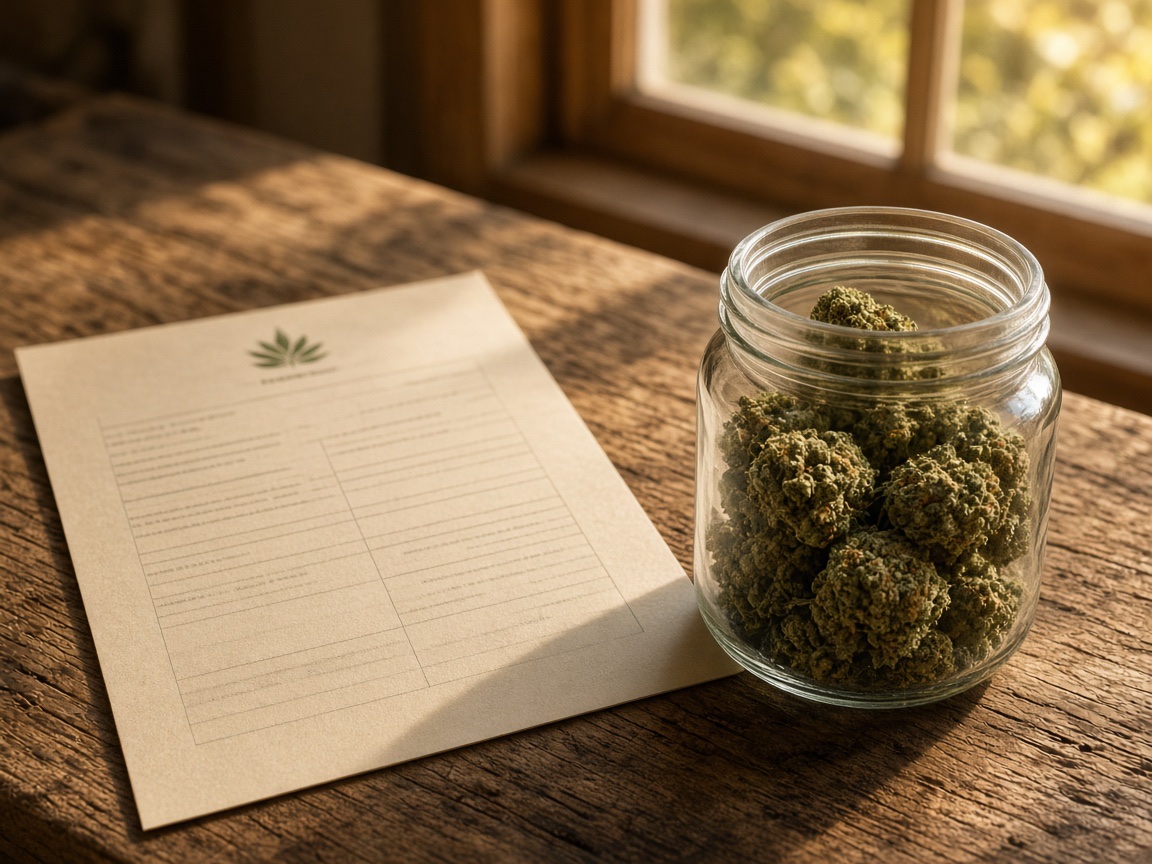
A Michigan Certificate of Analysis is the lab's report for a specific lot. Licensed product still has to clear safety and potency testing under CRA rules before retail sale. The sticker is the short version. The COA is the full quiz.
Some shops keep a binder. Some text you a PDF. Some stick a QR on the jar that opens the lab page. Any of those work, as long as the lot number matches. A pretty chart with no batch ID is wallpaper.
CBG vs CBGA on the same sheet #
CBGA is the acidic precursor. CBG is the neutral form after decarboxylation, a high CBGA number is not the same as the same amount of ready-to-smoke CBG. Labs often list both because they're different analytes. Heat converts acid forms toward neutrals, so flower COAs commonly show more acid forms than you'd measure after a full burn.
| Line on COA | Plain meaning | Shopper note |
|---|---|---|
| CBGA / CBG-A | Acid starter form | Often higher in unheated flower |
| CBG | Neutral cannabigerol | What many brands mean in "CBG" talk |
| Total CBG (if shown) | Lab's combined or calc'd figure | Read the method footnote |
| ND / <,LOQ | Not detected / below limit of quantitation | Treat as effectively none for shopping |
If a brand advertises "high CBG" but the COA only shows CBGA, ask them to explain the conversion math out loud. If they can't, you're shopping vibes, not chemistry.
A quick COA checklist for Metro Detroit shoppers #
Use this next time you're in a licensed shop after a plant shift or a hospital night:
- Match batch / lot ID on the COA to the package or menu tag.
- Find the cannabinoid table, not just the big THC bar chart.
- Scan for CBG and CBGA as separate rows.
- Note the test date and lab name. Stale or mismatched sheets are a red flag.
- Check safety sections (pesticides, heavy metals, residual solvents, microbials) even if you came for CBG.
- Ignore strain lore if the panel disagrees. The sheet wins.
- Screenshot or save the PDF so you can compare the next batch of the "same" name.
If the budtender can't pull a COA, walk. Michigan's regulated market exists so you don't have to guess. For terpene rows on the same sheet, pair this checklist with reading a Michigan COA for terpene panels.
Great Lakes humidity and long Michigan cure windows can nudge how acid and neutral forms land on a sheet from harvest to jar. It's another reason batch-to-batch shopping beats "this cultivar always has CBG" folklore.
CBG vs CBD vs THC: A Plain Comparison #
THC runs the intoxicating high through CB1. CBD is non-intoxicating with a different receptor story. CBG is also non-intoxicating and sits upstream as the mother cannabinoid with its own multi-target profile. Mixing their marketing slogans is how people get confused at the counter.
| Factor | THC | CBD | CBG |
|---|---|---|---|
| Gets you high? | Yes | No | No (PMC12722920) |
| Main shopper fame | Potency / euphoria | Calm / wellness aisle | "Mother" / minor panel |
| Typical flower level | Dominant on most MI menus | Varies, often low on THC flower | Usually trace to low |
| On MI jar sticker? | Required (with CBD) | Required (with THC) | Not required (R 420.504) |
| Evidence maturity | Extensive human use history | More human trials than CBG | Mostly preclinical + early human PK |
When someone in a Metro Detroit break room says "CBG is just CBD 2.0," smile and ask for the COA. Different molecules. Different sticker rules. Different research depth.
Who Might Care About CBG on the Panel? #
People who already shop by full-panel chemistry, not just THC %, are the ones who should glance at CBG. It's a literacy upgrade, not a miracle aisle. Early research interest clusters around gut swelling models, antibacterial lab work, and multi-target pharmacology (PubMed 33168643, PMC11597810). That's research interest, not a prescription.
You might care if you:
- Already ask for terpene panels and want the cannabinoid half of the same habit
- Prefer whole-plant flower over single-molecule bottles
- Are comparing two jars with similar THC and want more signal than a nickname
- Heard CBG talk online and want the Michigan COA version of the story
- Are helping a parent or partner read a label after a long union shift and want one clear ask at the counter: show me CBG on the COA
You might not need to obsess if you:
- Are brand new and still learning dose and set/setting
- Only have access to a sticker with THC/CBD and no COA (fix that first)
- Were promised CBG will replace a medication. That claim is out of bounds
- Are shopping solely for a strong THC night and already know your dose
Divine Toke's angle is simple: sun-grown flower deserves a full read. We're not going to invent a CBG house strain to make the point. If a batch shows CBG on the sheet, that's chemistry talking, not a slogan.
Seniors in the Metro Detroit medical market sometimes hear "CBG for gut" from a friend group text. Bring the COA to that conversation. Bring the clinician too. Plant literacy and medical care can sit at the same table without one pretending to be the other.
Common Mistakes When Shopping for CBG #
The biggest mistake is trusting the jar face for CBG when Michigan law only requires THC and CBD on that sticker. The second biggest is treating CBGA as if it were already CBG.
Watch for these traps:
- Confusing sticker and COA: sticker is compliance, COA is depth (R 420.504).
- Reading CBGA as CBG: acid ≠ neutral. Heat changes the picture.
- Chasing a percent without a batch match: if the lot ID doesn't match, the number is someone else's flower.
- Assuming "minor" means "useless": the amount is small, but the pathways can still differ from THC and CBD (PMC10788142).
- Buying CBG hype as a cure: preclinical ≠ prescription. Keep the clinician in the loop.
- Ignoring safety panels: a loud CBG line doesn't excuse failed pesticide or metal tests.
- Thinking CBG alone explains the night: dose, terpenes, sleep, and THC still run most of the feel (entourage effect guide).
Michigan winters and long dark evenings already mess with sleep and mood for a lot of Metro Detroit households. Adding a new cannabinoid to the routine without reading the sheet just adds noise. Slow down. Ask for the PDF. Then decide.
Frequently Asked Questions #
Does CBG get you high? #
No. Current human pharmacokinetic work reports CBG as not intoxicating. A 2025 CBG PK/PD study (PMC12722920) found CBG was not intoxicating even after accounting for route and blood concentration. Weak CB1 affinity versus THC is the receptor reason (PMC6021502). If a product also contains THC, that THC can still get you high.
What is the difference between CBG and CBD? #
Both are generally non-intoxicating, but they are different molecules with different receptor profiles and research histories. CBD has a larger human-trial footprint; CBG is earlier in the clinical pipeline and is also the biosynthetic "mother" precursor story via CBGA (MDPI origin review). Don't swap their names on a Michigan menu and expect the same night.
Why is CBG usually low on flower COAs? #
Because most CBGA converts into THCA, CBDA, or CBCA before harvest on THC-forward cultivars. Mature flower often shows only trace-to-low CBG. Higher CBG usually means special genetics or earlier harvest timing, confirm on the batch COA, not the nickname.
Is CBG required on Michigan cannabis labels? #
No. Michigan R 420.504 requires THC and CBD concentrations on consumer packages, not CBG. See Mich. Admin. Code R. 420.504. Detroit-area shoppers who want CBG must request the Certificate of Analysis.
What is CBGA versus CBG on a lab report? #
CBGA is the acidic precursor; CBG is the neutral form after decarboxylation. CRA testing guidance lists additional cannabinoids such as CBG and CBG-A among analytes labs may report (CRA sampling and testing guidance). Read both lines. Don't collapse them into one story.
Can CBG help with gut inflammation? #
Early animal research suggests possible benefit in colitis models; human IBD proof is not established. The 2013 murine colitis study (PubMed 23415610) is still widely cited, and reviews flag IBD as a leading hypothesis (PubMed 33168643). That's not medical advice. Talk with your clinician.
Is CBG antibacterial? #
In lab studies, yes against certain Gram-positive pathogens including MRSA; that doesn't make CBG a substitute for antibiotics. See the 2020 ACS Infectious Diseases MRSA paper and the 2024 CBG review (PMC11597810). Keep infections in medical care, not jar lore.
How much CBG should I look for on a COA? #
There is no official Michigan "good CBG %" for everyday flower, detectable, batch-matched CBG is the practical bar for most shoppers. Trace amounts are normal. Loud CBG lines usually mean a specialized product. Compare batches, not Instagram claims. Pair the number with safety-pass results from a licensed lab.
Does CBG help with sleep or focus? #
Neither claim is settled in large human trials; don't buy CBG as a guaranteed sleep or focus fix. Reviews discuss broad pharmacology, including serotonin and adrenergic targets (PMC10788142, PubMed 20002104). They don't hand out a bedtime protocol. Your dose, terpenes, and THC still matter more for most nights.
Where do I find CBG if the jar sticker only shows THC and CBD? #
Ask the retailer for the batch Certificate of Analysis and scan the cannabinoid potency table for CBG and CBGA. That is the Michigan-legal shopping move. The Michigan CRA regulates the market. The sticker follows R 420.504. The COA is where minors show up when the lab reports them.
Closing Thoughts #
CBG is the plant's starting point, not the loudest line on a Michigan sticker. If you care about it, the Certificate of Analysis is where the truth lives. You want CBG and CBGA as separate rows, a batch ID that matches, and safety panels still green.
If you're curious to try sun-grown flower with a full lab story behind it, start with the sheet, then the jar. Read the cannabinoids guide, dig into how to read Michigan COA terpene panels, and keep CB1/CB2 basics handy when a budtender starts talking receptors. Whole-plant context lives in the entourage effect.
Divine Toke grows sun-grown organic flower for everyday Michigan adults who want honest chemistry. Detroit roots, honest panels, no made-up CBG hype. Just literacy you can use at the counter.
This article is for educational purposes only and is not medical advice. Always consult your healthcare provider before starting any new wellness routine.
Grown in Detroit. Shipped to your door.
Small-batch, sun-grown cannabis cultivated in living soil. Mail-order shipping to all 50 states.