Earth Day Edition: Cannabis Farming That Heals the Planet

Jamie
Head Cultivator
Indoor cannabis cultivation consumes an estimated 18.7 billion kilowatt-hours of electricity annually in the United States — roughly 1% of the nation's total electricity use. A single indoor grow facility can have an energy density exceeding that of a data center. Per pound of product, indoor cannabis is one of the most energy-intensive crops ever cultivated.
Sun-grown regenerative cannabis does the opposite: it uses zero artificial lighting, sequesters carbon through healthy soil ecosystems, and rebuilds degraded land. The environmental gap between these two approaches is enormous — and your purchasing decisions determine which one thrives.
The Environmental Cost of Indoor Cannabis #
| Factor | Indoor Cannabis | Sun-Grown Cannabis |
|---|---|---|
| Lighting energy | 12-18 hours/day of HPS or LED, 500-1000W per light | Zero — sun provides all light |
| HVAC energy | Constant heating, cooling, dehumidification | Natural climate regulation |
| Carbon footprint per pound | ~2,000-5,000 lbs CO2 equivalent | Net negative (carbon sequestration) |
| Water efficiency | Recirculating but energy-intensive | Rain-fed supplemented with irrigation |
| Waste | Disposable growing media, runoff, e-waste from lighting | Minimal — composted soil stays in place |
| Terpene diversity | 10-15 compounds | 30+ compounds |
The math is stark: Every pound of indoor cannabis carries a carbon footprint comparable to driving a car 2,000-5,000 miles. Every pound of sun-grown cannabis in healthy, living soil actively removes carbon from the atmosphere.
What Regenerative Cannabis Farming Looks Like #
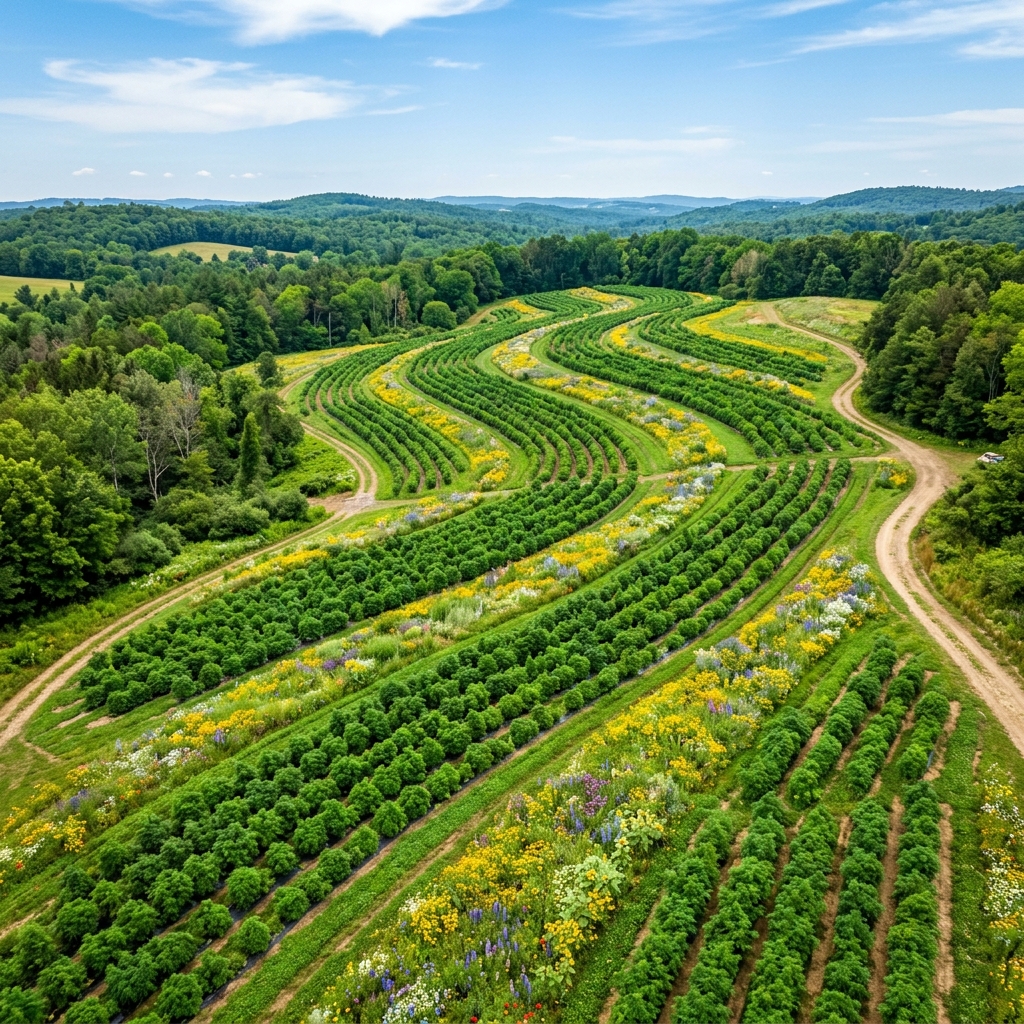
Regenerative agriculture doesn't just avoid damage — it actively improves the land it operates on. At Divine Toke, our farming practices include:
1. Living Soil (No Synthetic Inputs) #
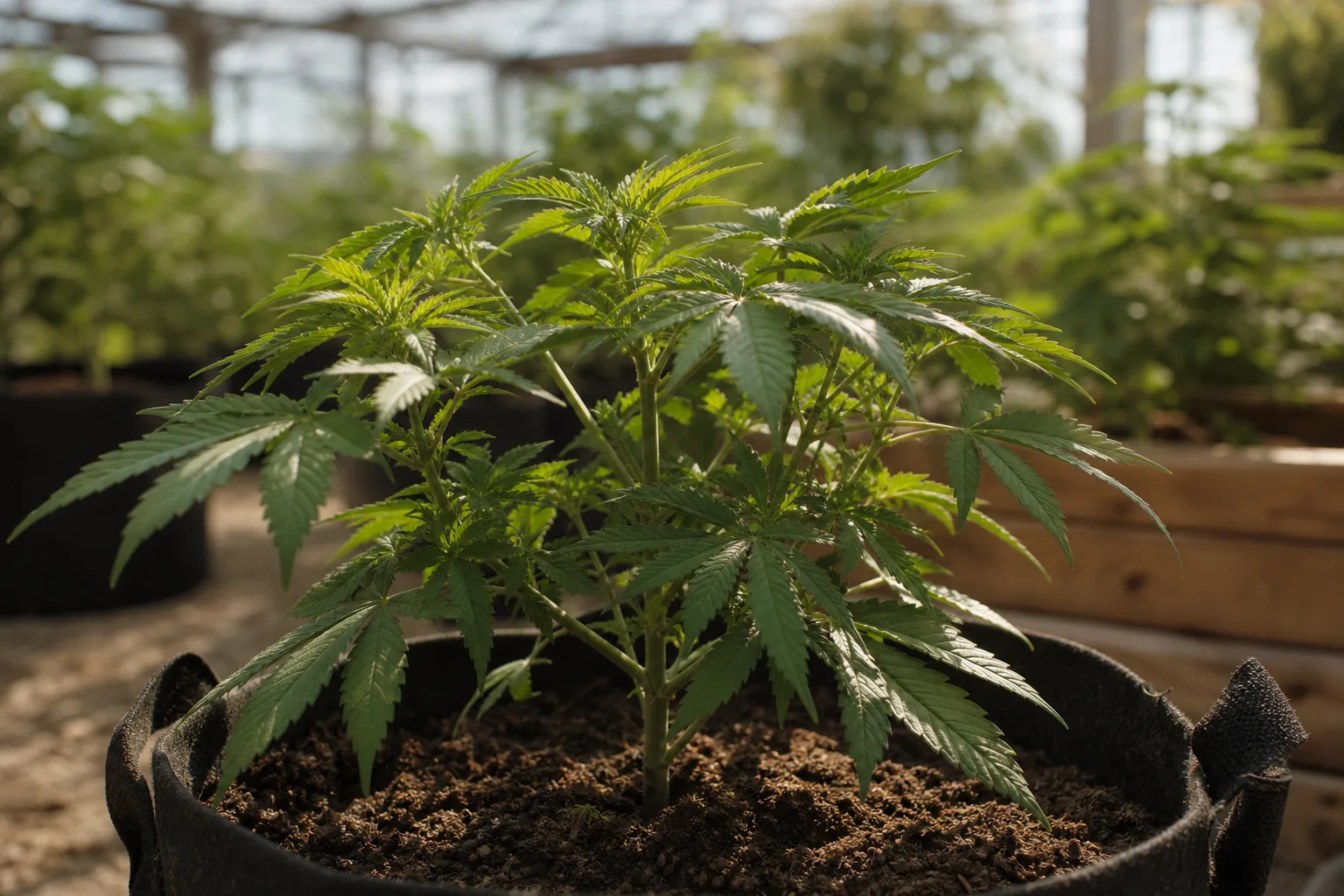
Our soil is a living ecosystem — bacteria, fungi, protozoa, nematodes, and earthworms working together to cycle nutrients. No synthetic fertilizers, no chemical pesticides, no salt-based amendments. Every nutrient comes from compost, cover crops, and mineral amendments.
2. Cover Cropping #
Between cannabis growing seasons, we plant nitrogen-fixing cover crops (clover, vetch, peas) that pull nitrogen from the atmosphere and deposit it in the soil through their root systems. When turned under, these plants become green manure — feeding the soil biology.
3. No-Till Practice #
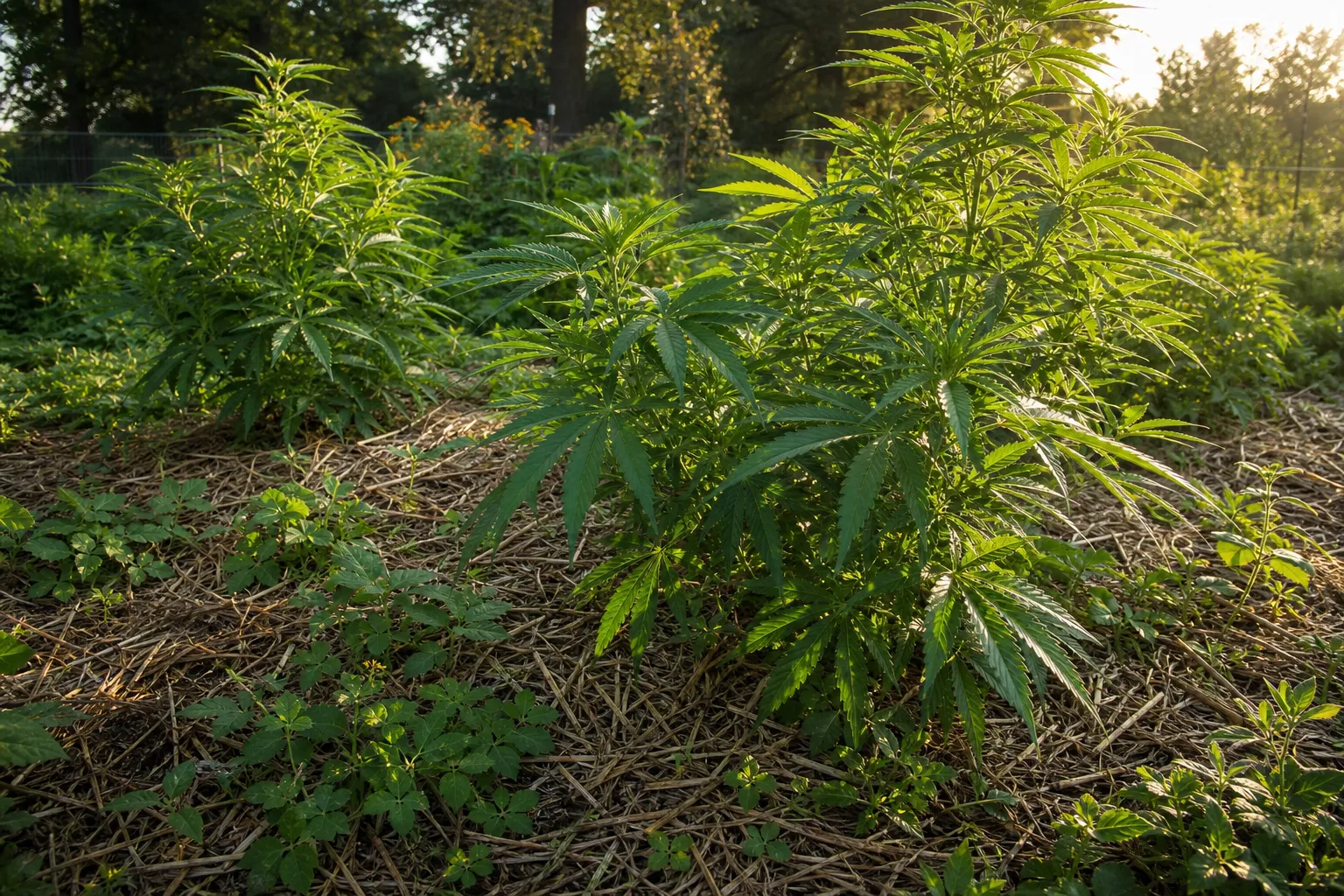
We never flip or plow our soil. Tilling destroys mycorrhizal fungal networks — underground webs that connect plant roots and facilitate nutrient exchange. Undisturbed soil sequesters more carbon and retains more water.
4. Companion Planting #
We grow cannabis alongside companion plants — basil (repels pests), marigolds (trap crop for aphids), clover (nitrogen fixation), sunflowers (attracts beneficial pollinators). This reduces pest pressure without pesticides and increases biodiversity.
5. Water Conservation #
Rain catchment, drip irrigation, and mulching reduce our water use to a fraction of indoor hydroponic systems. Living soil retains water naturally — healthy organic matter acts like a sponge.
Carbon Sequestration: How Cannabis Soil Fights Climate Change #
Healthy soil is the planet's second-largest carbon sink after the ocean. When managed regeneratively:
- Plants photosynthesize — pulling CO2 from the atmosphere
- Root exudates (sugars and amino acids) feed soil microorganisms
- Microorganisms process carbon into stable organic compounds
- Carbon is stored in soil as humus — where it can remain for decades or centuries
- No tilling keeps that stored carbon in place
Net result: Our farm removes more carbon from the atmosphere than it emits. Every harvest is carbon-negative. Indoor grows are the opposite — every harvest adds to emissions.
What You Can Do This Earth Day #
As a Consumer #
- Ask where your weed was grown — indoor, greenhouse, or outdoor/sun-grown
- Choose sun-grown when available — you're voting for sustainability with every purchase
- Look for regenerative certifications like Sun+Earth Certified
- Accept seasonal availability — sun-grown cannabis follows natural harvest cycles
As a Grower (Home or Commercial) #
- Grow outside if your climate and local law allow it
- Build living soil instead of buying bottled nutrients
- Compost your cannabis waste — stalks, leaves, and roots feed the next cycle
- Avoid disposable growing media — reusable, living soil is both cheaper and better
FAQ: Cannabis and the Environment #
Q: How much energy does indoor cannabis use? #
A: Indoor cannabis cultivation in the US consumes approximately 18.7 billion kilowatt-hours annually — roughly 1% of total national electricity consumption. Per square foot, indoor grows often exceed the energy density of data centers.
Q: Is sun-grown cannabis better for the environment? #
A: Yes, dramatically. Sun-grown cannabis uses zero artificial lighting, relies on natural climate regulation, and when combined with regenerative practices, actively sequesters carbon in the soil. The carbon footprint difference is the equivalent of thousands of pounds of CO2 per production cycle.
Q: What is Sun+Earth Certified? #
A: Sun+Earth Certified is a third-party certification verifying that cannabis is grown outdoors in living soil using regenerative organic practices with fair labor standards. It's the most rigorous environmental and ethical certification available for cannabis.
Q: Does sustainable cannabis cost more? #
A: Sometimes slightly more, reflecting the labor-intensive nature of regenerative practices. However, sun-grown cannabis eliminates massive electricity costs, so production economics can be competitive. The real cost differential is in consumer willingness to pay for quality and ethics.
Q: Can indoor cannabis be sustainable? #
A: Indoor grows can reduce their footprint through LED lighting, renewable energy, and water recycling — but they cannot match the sustainability of sun-grown production. The fundamental energy requirement of replacing sunlight with electricity creates an unavoidable environmental cost.
Q: How does cannabis compare to other crops environmentally? #
A: Indoor cannabis has one of the highest carbon footprints per pound of any agricultural product. Sun-grown cannabis, particularly in regenerative systems, has a footprint comparable to or better than most organic vegetable farming — and can be carbon-negative.
Q: What happens to water used in cannabis farming? #
A: Indoor hydroponic systems recirculate water but require energy-intensive treatment. Sun-grown farms using living soil and mulching retain water naturally — healthy organic matter holds up to 20 times its weight in water, reducing irrigation needs significantly.
Q: Does Divine Toke use any electricity for growing? #
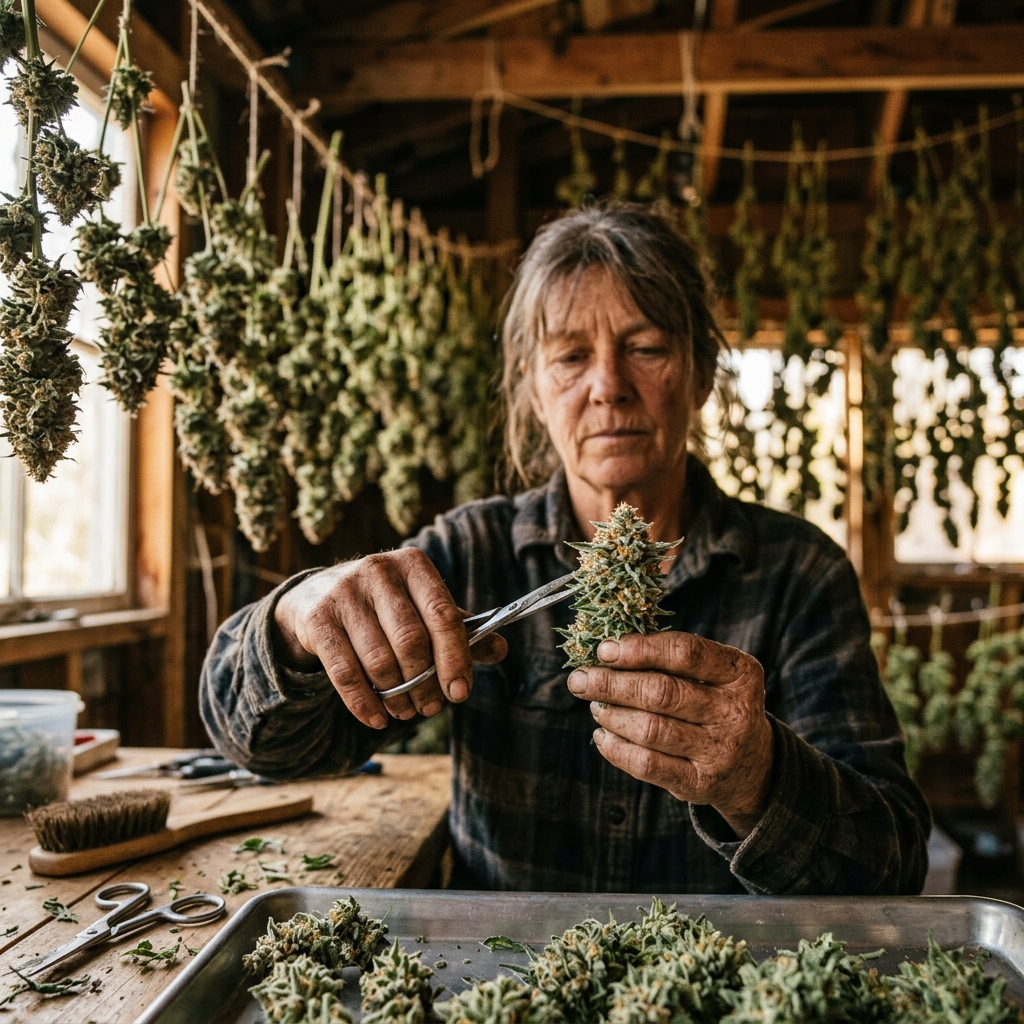
A: Our cannabis grows entirely under natural Michigan sunlight — no grow lights, no HVAC for grow rooms. We use electricity for post-harvest processing (drying, trimming) and farm infrastructure, but the cultivation itself is powered by the sun.
The planet doesn't need another indoor grow. It needs farms that give more than they take.
The Regenerative Process → · Living Dirt → · Sun-Grown vs. Indoor →
Grown in Detroit. Shipped to your door.
Small-batch, sun-grown cannabis cultivated in living soil. Mail-order shipping to all 50 states.