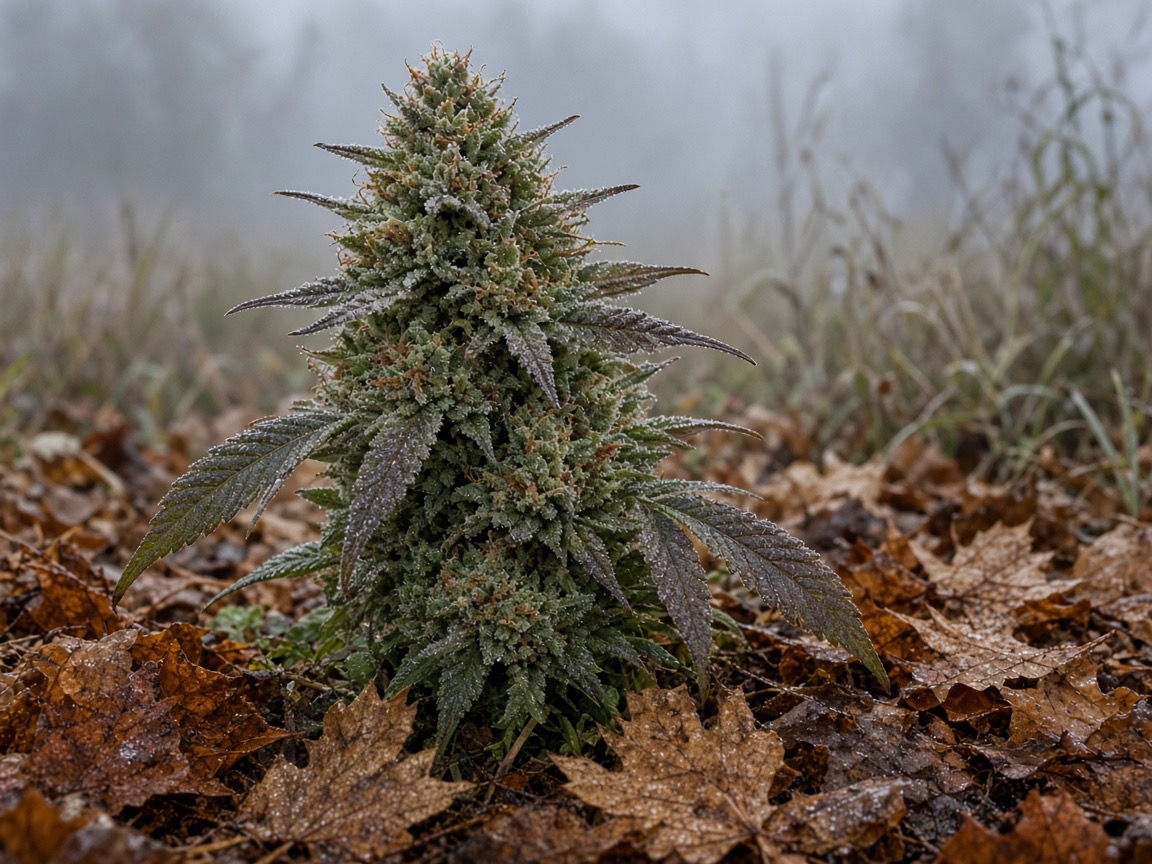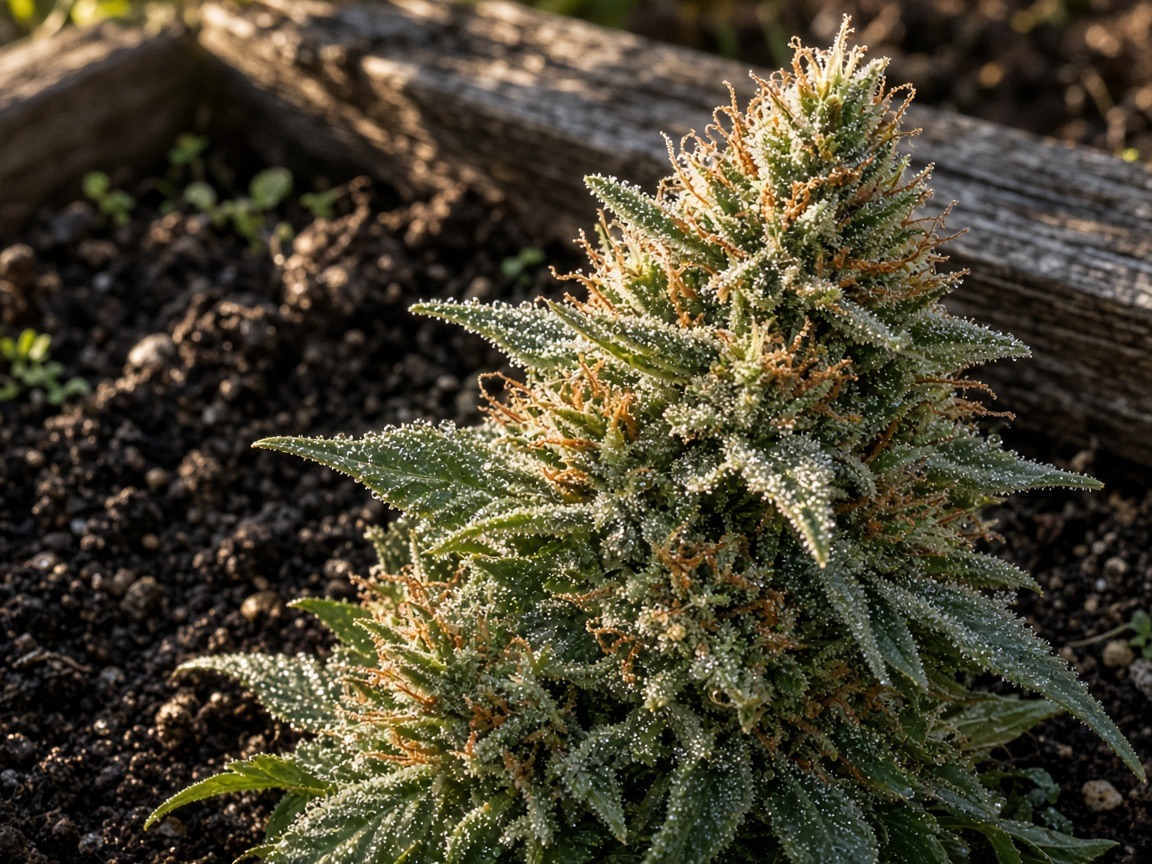
Found a Seed in Your Michigan Bud? How Pollen Drift Happens
A seed in your bud means pollen landed on that flower. How far it travels, what it does to potency, and why a bag seed is a bad Michigan garden plan.
Questions this article answers
- why are there seeds in my weed
- is seeded cannabis flower worse
- how far can cannabis pollen travel
- can hemp pollinate marijuana in Michigan
- should I plant seeds from my bud in Michigan

Head Cultivator
On this page
A seed in your bud means a grain of pollen landed on that flower. Sometimes it blew in from miles away.
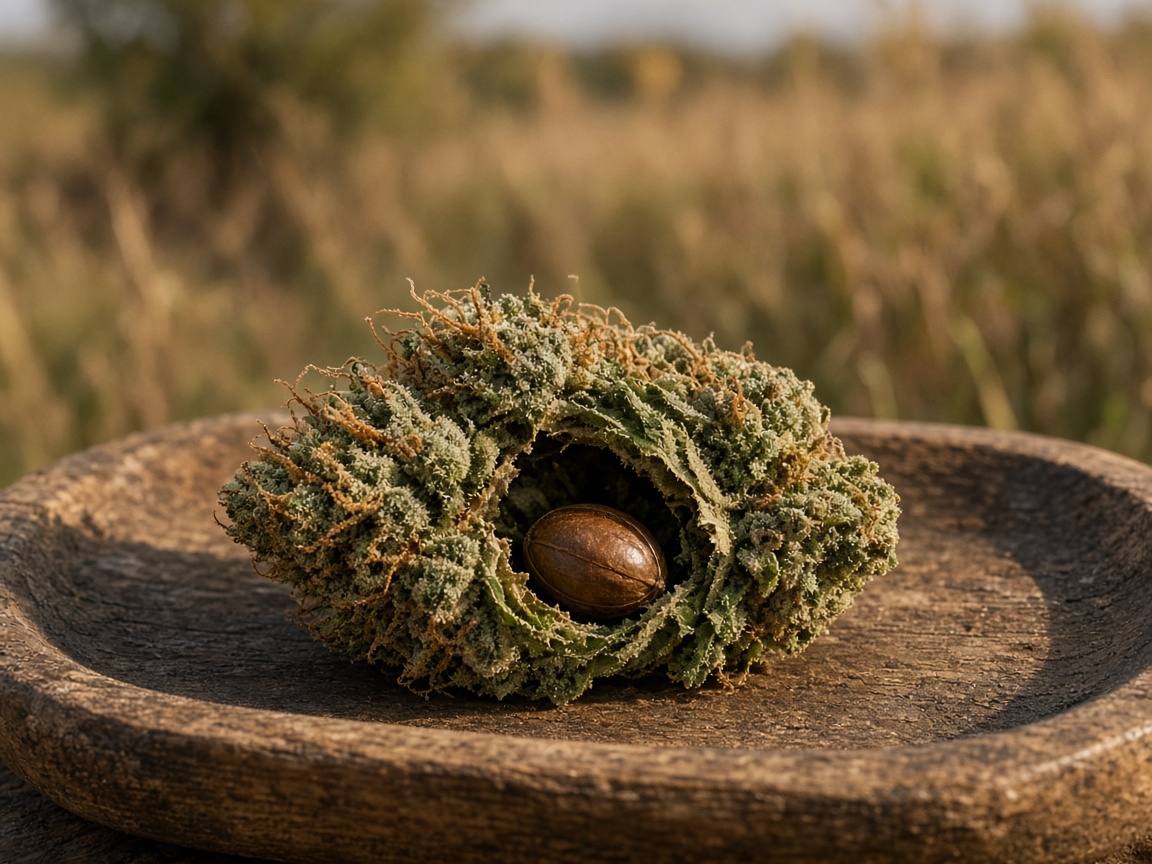
You hear it as a click in the grinder or a pop in the joint. The plant spent the rest of bloom growing that seed instead of packing the bud. Growers call a seedless bud sinsemilla, Spanish for "without seed." The nug in your hand is the other outcome.
Divine Toke ships flower by mail from divinetoke.org. We have no shop counter and no street address. Outdoor flower from any farm can pick up a seed in the fall, and I won't promise ours never has.
Picking a start for next year? That's the seed vs clone page. This one stays on the seed already in your hand.
Why Is There a Seed in My Michigan Bud? #
Pollen landed on that flower, and the plant made a seed from it. The pollen came from a male plant, or from a male part growing on a female.
Cannabis plants are usually either male or female. The Canadian Food Inspection Agency biology document says the species is wind-pollinated. A female flower puts out hairs. Those hairs are pistils, the parts that catch pollen. A grain sticks. A tube grows down to the ovule, the bit that becomes the seed.
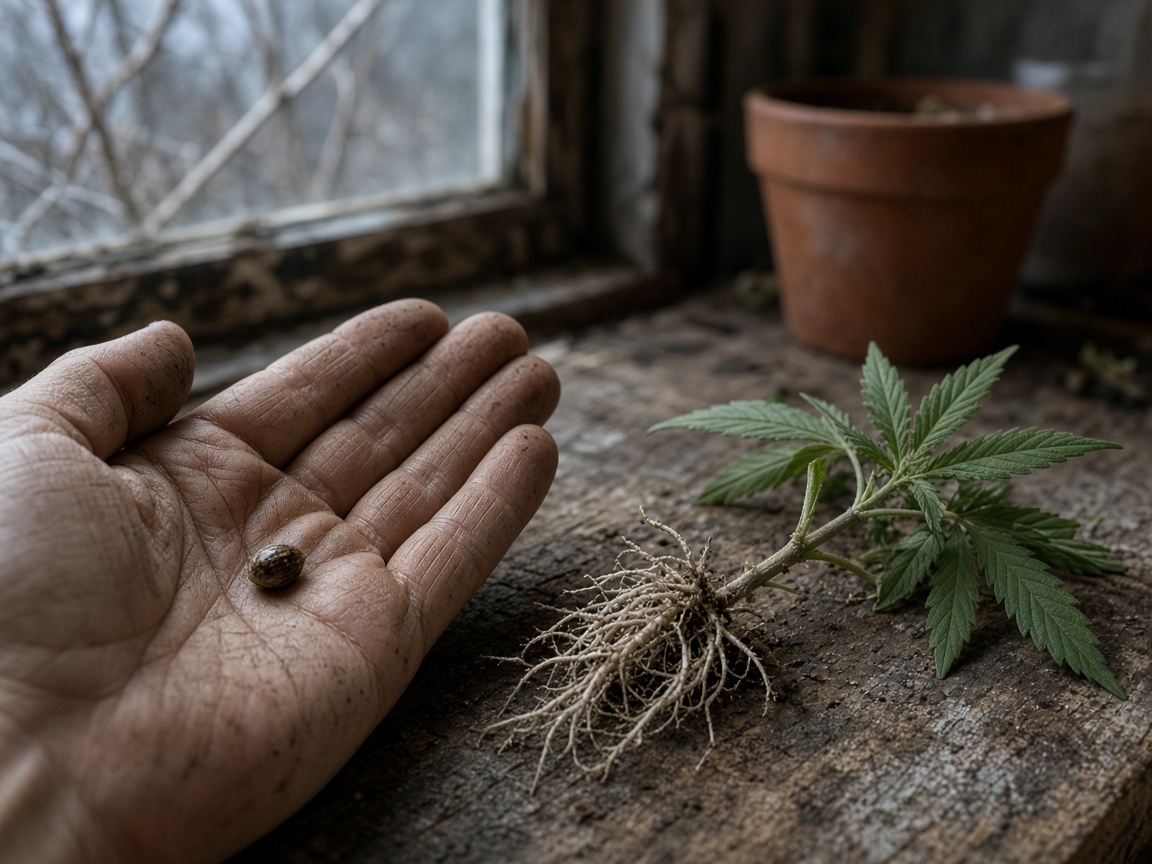
A finished seed is hard and oval, usually brown, gray, or mottled. A pale, soft one never finished. An orange hair isn't a seed, and hairs darken late in flower on seedless buds too.
| What you found | What it is | What it is not |
|---|---|---|
| Hard oval, brown or mottled | A finished seed | Proof of which plant made the pollen |
| Pale and easy to crush | An unfinished seed | A usable seed for next year |
| Orange or brown hair | A pistil, the pollen catcher | A seed |
| Tiny yellow "banana" in the bud | A male part on a female flower | A seed |
If what you found is white and sugary instead of hard and oval, that's a different check. See whether frost-hit cannabis is safe to smoke.
One seed in one nug is a small miss. A cola stuffed with seeds is a different product. The plant spent its bloom on seeds while you thought you were buying flower.
A seed also doesn't tell you how the crop was started. A clone row can still get seeded if pollen gets in. A seed-grown row can finish seedless if every male is pulled in time.
How Does Pollen Land on a Female Flower? #
Wind carries it and the female hairs catch it. Bees aren't the main story with this plant.
Oregon State University Extension puts it in farm terms. Pollen is made in the male parts, the stamens. It has to reach the ovule inside the female part, the pistil. So cannabis makes two kinds of plants. One throws pollen and one catches it.
Male plants stretch. OSU says that stretch is thought to put the pollen up in the wind. The flowers look like little bunches of sacs, and they open to release the pollen. The CFIA says one male flower can produce 350,000 pollen grains, and one plant holds many flowers. A 2024 Scientific Reports study puts one male plant at about 100 million grains.
Pollen grains are tiny. The same 2024 paper, describing earlier work, puts hemp pollen around 30 microns. For scale, a human hair is several times thicker. Grains that small ride the air. The CFIA also says this pollen can stay alive for days, and for over a week when conditions are right. A grain doesn't have to hit the bud in the same hour it left the male.
Insects can move some pollen, but wind does the carrying. OSU's hemp publication is about wind, field isolation, and male plants in the row. Don't blame the bees for a seeded jar.
Three ways a bud gets a seed:
- A male plant in the same garden or the same field opened up.
- A female grew a few male parts and dusted herself, or the plant next to her.
- Pollen blew in from another field. Hemp and the cannabis in a jar are the same species.
The seed looks the same whichever way it happened.
How Far Can Cannabis Pollen Travel? #
Most of it drops close. A share of it still travels for miles, and the studies measured both.
People argue about this in October, when outdoor Michigan flower is in the jar and somebody finds a seed. The research has two layers. Field traps measured the near cloud. A weather model and older reports describe the long tail. Neither layer was measured on a city block, but wind works the same way over any county.
The only field study to count hemp pollen at set distances from a known source is Small and Antle 2003. It ran in the Journal of Industrial Hemp. The CFIA biology document and the 2024 Scientific Reports paper both lay out what it found.
What those sources report:
- At 100 meters, about 330 feet, pollen density had fallen to less than 1% of the density inside the source field. That's a big drop that still leaves pollen in the air.
- At 400 meters, about a quarter mile, the drop had slowed down. The 2024 paper says the traps still caught about 17,000 grains per square meter per day at that outer edge. Small and Antle called that enough for excellent seed set.
- They only sampled out to 400 meters, so the cloud hadn't run out by the last trap.
The 2024 paper then modeled hemp pollen on real weather, county by county, across the lower 48 states, July through November. It's a simulation, not a farm trial, but the numbers are plain:
- About 70% of the simulated pollen landed in the first distance bin. That bin is 250 meters, about 820 feet.
- The simulated cloud fell to 1% of the pollen released within 3 kilometers, just under 2 miles.
- The authors point out that 1% of about 100 million grains is still about a million grains.
- Inside about 20 kilometers, about 12 miles, night deposition ran 10 to 100 times higher than day deposition. By 20 kilometers, about 97% of the night particles had landed, versus about 81% during the day.
- The model ran out to 50 kilometers. Past a few miles, the tail changed with the weather. It didn't drop to zero at a set distance.
Older reports, cited in that same paper, include cross-pollination out to about 20 kilometers and even 48 to 96 kilometers. The CFIA records reports of cannabis pollen dispersal over 300 kilometers, including from North Africa to southwestern Europe. That's rare, long-haul air. I'm not telling you a seed in a Wayne County jar flew in from another country.
Seed producers already act like the miles are real. The CFIA says Canada requires isolation distances of up to 4.8 kilometers for pedigreed industrial hemp seed. That's about 3 miles. OSU Extension puts the same idea in miles: as much as three miles for registered hemp seed, and a half mile for certified seed. OSU also says a seed crop can tolerate some pollen. A flower crop that wants to stay seedless can't.
| Distance | What was actually reported | How to read it |
|---|---|---|
| 330 feet (100 m) | Under 1% of the pollen density inside the source field | Still enough to matter |
| 820 feet (250 m) | About 70% of simulated pollen landed in this first bin | Most grains are local |
| Quarter mile (400 m) | About 17,000 grains per square meter per day at the last trap | Called enough for excellent seed set |
| Just under 2 miles (3 km) | Simulated pollen down to 1% of what was released | 1% of one male can still be about a million grains |
| About 3 miles (4.8 km) | Canada pedigreed hemp-seed isolation, up to this far | Registered seed isolation is described as much as three miles |
| About 12 miles (20 km) | Reported cross-pollination, and night deposition still much higher in the model | Possible, not the usual grain |
| Over 180 miles (300 km) | Reported long-range transport, including Africa to Europe | Rare weather, not a garden plan |
What "miles" means for a jar in Detroit #
A seed in a Detroit jar usually means a male or a nanner close by. Miles are the long tail, and that tail is documented.
The 2024 model landed about 70% of its simulated pollen inside about 820 feet. That covers your backyard and the next one over, not a drive across the state. If a neighbor two houses down left a male in a backyard grow, that explains one seed.
The miles still matter. OSU Extension says Canada's isolation can run as much as three miles for registered hemp seed. The CFIA says up to 4.8 kilometers, the same three miles. The 2024 paper cites reports of cross-pollination out around 12 miles. I wouldn't bet a jar on a 12-mile trip. I wouldn't bet a seedless crop on a fence either.
Pollen also waits. A male that opened on a Tuesday can still matter on Friday, so "I pulled it yesterday" can be late.
What this means at the kitchen table:
- One seed, and the rest of the bag looks clean: check a second nug, then pick the seed out.
- Seeds in nug after nug: the crop was pollinated, and the flower already paid the cannabinoid cost described below.
- You grow outside and a hemp or cannabis male is flowering upwind: a few hundred feet won't save you, and a few miles is no guarantee.
Pollen traveled to make that seed. Sometimes the trip was miles. Usually the male or the nanner was much closer. "No pollen can cross a fence" doesn't hold up against the measurements.
Can Michigan Hemp Pollen Seed a Cannabis Field? #
Yes. Hemp and the cannabis in a dispensary jar are the same species. Michigan still had hundreds of acres of hemp in the ground in 2024.
The CFIA calls gene flow between industrial hemp and drug-type plants in the field a growing concern. Gene flow just means pollen from one crop fathering seeds in another. A grain of hemp pollen can fertilize a female cannabis flower, whatever license is on the fence.
Michigan's numbers are in the 2024 Michigan Industrial Hemp Report from the Michigan Department of Agriculture and Rural Development. The report prints more than one acreage because more than one agency collects the numbers. Read the tables before you quote an acre.
Registered growers under the 2018 Farm Bill line: 49 in 2023, and 36 in 2024.
Planted acres, from Farm Service Agency figures printed in that report:
- 2021: 1,188 acres
- 2022: 255 acres
- 2023: 96 acres
- 2024: 330 acres
Growers also report straight to MDARD. For 2024 that column says 393 acres planted and 330 harvested, with 63 acres disposed of for all causes. That's two planted numbers for the same year, and I won't blend them. Both say Michigan planted a few hundred acres, up from the 96 acres on the FSA line for 2023.
Permits were larger than plantings. In 2024 the report lists 809 permitted outdoor acres and 814 acres of total permitted area. It says permitted acres are often much higher than acres actually planted, so a permit doesn't mean a flowering field.
The report has no county map, so I won't put a hemp field on a Detroit block. Pollen doesn't stop at a county line either. A licensed outdoor cannabis row and a hemp field in the same county can share a wind. That's a general example, not a Divine Toke field, and the state report doesn't name our neighbors.
What the hemp was grown for matters too. The report says hemp for CBD or other cannabinoids still dominated, at 69% of growers in 2024, based on pre-harvest sampled lots. Fiber, grain, and seed-for-propagation are still on the intended-use list. A grain crop or a seed crop has to flower, and flowering males throw pollen. A cannabinoid field often starts from female plants. It can still throw a male or a hermaphrodite, a plant with both sexes. A female-only plan can still miss a plant.
The 2024 report doesn't set a pollen-isolation distance, and I won't invent one. The distance evidence is the Canadian rule and the studies above, not an MDARD mile marker.
Outdoor flower in this state is a short-season crop, and the calendar, frost, and hoop houses are in farming on Michigan time. Female flowers sit outside for weeks while they finish. Any male that opens in that window has a breeze to ride.
What Is a Nanner on a Cannabis Plant? #
A nanner is a male flower part growing out of a female bud. It can shed pollen and seed that bud without a male plant anywhere nearby.
Punja and Holmes studied this in marijuana flower clusters. Plants are normally male or female. Commercial growers keep the females and destroy the males, because seed formation reduces flower quality. Sometimes a female still grows anthers, the pollen sacs. On a bud they often look like tiny yellow bananas. That's the nanner.
Punja and Holmes found the anthers on those hermaphrodite flowers looked like male anthers, made pollen, and made seed. The paper also says the mechanism is poorly understood.
Growers blame a light leak, a heat spike, a drought, or a harvest left too long. Those are suspects. Nobody has measured one temperature or one minute of light that flips the switch, and I won't hand you a made-up cutoff. The result is what you can trust. A few male parts on a female are enough to seed the cola they sit in.
Indoors, a closed room doesn't need a hemp field three miles away. One nanner in the tent can dust the plants sharing that air. Outdoors adds wind and the neighbor, but indoor flower gets no free pass.
Sun doesn't cause seeds. Open air gives pollen a long road, and a closed room gives a nanner a short one. How the two styles grow is on the sun-grown versus indoor page.
If the pollen came from a hermaphrodite, the seeds are a separate genetics story. Punja and Holmes found seedlings from those seeds were genetically female, while ordinary male-female crosses came out about half and half. You can't see that difference on the seed. Don't plant one to find out until you've read the plant-count section below.
What to look for on a plant, if you grow:
- Male: clusters of sacs, often on a taller, stretchier top. Pull it before the sacs open if you want seedless flower.
- Female: white hairs, then buds that swell around them.
- Nanner: one or a few yellow bananas sticking out of an otherwise female bud. Bag the branch if you can do it without shaking pollen everywhere. Then decide if that plant stays.
Does a Seed Make the Flower Weaker? #
In one controlled study, pollinating the flower cut cannabinoid content by about 60% in one plant line and 75% in another. Picking the seeds out later doesn't put that back.
The study is Feder and colleagues, 2021, in Frontiers in Plant Science (PMC8602813). They pollinated female cannabis flowers and compared them with unpollinated flowers on the same kind of plant. A THC-rich line averaged about a 75% drop in cannabinoid content after fertilization. Cannabinoids are the THC, CBD, and related compounds the flower makes. A CBD-rich line averaged about a 60% drop. The mix of compounds stayed mostly the same, but the amount went down.
The limits matter, so don't turn 75% into a slogan.
- It's one study and two female lines, not every jar on the shelf.
- The drop is an average. It wasn't identical for every compound or every date they sampled.
- One minor compound, CBCA, went up about 50% in one cross. The overall average still fell.
- The paper is about what built up in the flower. It isn't a promise about how one joint will feel in your body.
- "Seeded weed is always 75% weaker" is a bad reading of a careful paper.
The authors still give a practical line: if the goal is high cannabinoid levels, avoid fertilization. Punja and Holmes said the commercial version earlier. Seed formation reduces flower quality, which is why growers pull the males.
Strength has other October rumors too. Whether cold nights make flower stronger is its own page: do cold nights make cannabis stronger.
The seed itself isn't the part you wanted to smoke. It's hard, and in a joint or a grinder it can crack, pop, and taste like a burnt shell. No taste trial backs that up. It's just what a hard seed does in heat.
Seeds also add weight that isn't smoke. A heavy eighth can be dense flower, or it can be flower plus seeds. Bag weight is its own argument, covered in smalls vs tops and what the bag weighs.
Pull the seeds before you grind, but know it doesn't rewind the plant. Feder's drop was measured in the flower after fertilization.
| Question | Seedless flower | Seeded flower |
|---|---|---|
| What the plant worked on | The flower and its resin | The flower, plus seeds |
| Cannabinoid content in the Feder study | The unfertilized baseline | About 60% to 75% lower, by plant line |
| What you feel in the smoke | The bud | The bud, unless a seed pops |
| What the gram includes | Flower | Flower plus hard seed weight |
| What picking seeds out fixes | Nothing to fix | The pop and the grit, not the lost content |
A few seeds in a big jar are a small annoyance. A bud that is mostly seed is the case the study describes.
How Do You Pick Seeds Out of a Bud? #
Break the nug over a plate and pinch the hard seeds out before you grind. That fixes the pop and the grit.
Do this on a plate, a tray, or a sheet of paper. Seeds bounce, and a kitchen floor is a bad place to look for one.
- Start with dry fingers. Wet bud smears and hides the seed.
- Break the nug into small pieces. Don't mash it yet.
- Look for hard ovals. A finished seed is firm. Roll one against the plate and it should feel like a tiny pebble, not leaf.
- Pinch them out. Tweezers help on a tight cola. A thumbnail works too.
- Leave the pale, squishy ones out of any "I'll plant these" pile. They never finished.
- Grind only after the hard seeds are out. A seed in a grinder cracks into bitter bits through the whole grind.
- If you roll, break the bud first. A seed in the middle of a joint is the one that pops halfway through.
Bright light helps, and so does contrast. A white plate shows a dark seed, and a dark tray shows a pale one. Dense outdoor flower hides seeds against the stem, so split the cola instead of just looking at the outside.
What to skip:
- Don't wash the bud to float the seeds. You'll wreck the dry flower.
- Don't bake the bud to "kill" seeds. Heat and time are how aroma leaves.
- Don't decide the jar is fine because the first nug had one seed. Check a second piece from the middle of the bag.
If a bag from us is full of seed, write the shop. I won't invent a refund rule on this page. Divine Toke sells online only, so there's no counter where I can spread a nug out for you before you pay. A dispensary that lets you see the flower makes that check easy. With mail order, the check happens at home, on the plate.
Should You Plant a Seed From the Bag in Michigan? #
You can sprout it, but you won't get the jar you liked. Michigan caps you at 12 plants on the premises, so a mystery seed uses up a slot.
The bud you liked is, at best, one parent of that seed. The other parent is unknown. It might be a male down the road, a male in the same row, or a nanner on the mother. Punja and Holmes found ordinary cross-fertilized seed came out about one male for every female. OSU Extension puts open-pollinated hemp seed in the same range, about 30% to 50% male plants. If the pollen came from a hermaphrodite, Punja and Holmes found the seedlings were genetically female instead. You can't tell which kind of seed you have by looking.
A bag seed isn't a stable, named cultivar. Nobody selected it and nobody checked the father. Two seeds from one bag can finish in different weeks, smell different, and throw different amounts of pollen. A clone is a cutting of one known plant. The full comparison is on the seed vs clone page.
Then there's the cap. MCL 333.27955 is part of the Michigan Regulation and Taxation of Marihuana Act. It says a person 21 or older may cultivate not more than 12 marihuana plants for personal use. It also says no more than 12 plants may be possessed, cultivated, or processed on the premises at once. Two adults in one home don't get 24. The same subsection caps home storage at 10 ounces plus what those plants produce. That's the statute's wording, not legal advice, and a lease can still say no plants.
Do the math on the sex ratio. Say you pop a dozen bag seeds and about half are male. You could be raising a pile of pollen factories inside a 12-plant garden. Those males can seed your females before you know what they are. You end up with seeded flower and a spent cap.
The season is the other limit. Outdoor flower doesn't give a mystery plant extra months, and a bag seed doesn't know that calendar. Frost, day length, and hoop houses are in farming on Michigan time.
| Plan | What you actually get | The 12-plant problem |
|---|---|---|
| Plant every seed in the bag | Unknown fathers, mixed sex, mixed finish | Males eat slots and can seed the females |
| Keep only females after you can see flowers | Closer to a flower crop | You still guessed for weeks, and a nanner can show up late |
| Start next year from a cut of a plant you watched | A copy of that plant, problems included | Uses a slot on a known plant |
| Buy flower and skip the garden | The jar in front of you | Zero plants, zero pollen risk at home |
How to scout your plants for males before the sacs open #
Walk the plants twice a week once the tops start to flower. A male you catch before the sacs open doesn't get to make a seed.
All you need for this is daylight and a habit.
What you're looking for:
- Hairs. A female starts with white hairs at the nodes, where branches meet the stem. Those are pistils. Leave her.
- Sacs. A male starts with a tight cluster of little balls on a short stem, with no hairs coming out of it. That plant is the pollen source. Pull it before the balls open into flowers.
- Both. A nanner is a yellow banana sticking out of a bud that otherwise looks female. Punja and Holmes showed those parts make real pollen. Don't wait to see if it "stays small."
- Bag, then cut. If sacs are already open, pollen is on your sleeves. Slide a bag over the top, cinch it, cut the plant at the soil, and walk it off the garden. Don't shake it over the females on the way out.
- Count the premises. MCL 333.27955 caps you at 12 plants on the premises at once. A culled male still counts until it's gone. Don't start extras "just in case" and leave the males standing.
A hoop house doesn't cancel the male check. Plastic stops some weather. It won't stop a male in the same row, and indoor rooms fail the same way when nobody looks.
If you already have plants up, do the walk this week. A male you leave "one more day" is how next month's jar gets seeds. Bag it, cut it, and get it off the premises if keeping it would put you over 12. I'm not your lawyer, and I don't want you learning about pollen the hard way.
Frequently Asked Questions #
Short version: a seed means pollen got through. Seeded flower can carry far fewer cannabinoids, and a bag seed is a poor plan under Michigan's 12-plant cap.
Why are there seeds in my weed? #
Pollen hit a female flower and the plant made a seed. The pollen came from a male plant or from a nanner, a male part on a female. The CFIA describes cannabis as wind-pollinated, and one male flower can hold 350,000 grains. One seed proves a grain landed, but it can't tell you how far that grain flew.
Is seeded flower worse? #
It is worse if you were buying it for the cannabinoids. Feder and colleagues measured about a 75% drop in cannabinoid content after fertilization in a THC-rich line. A CBD-rich line dropped about 60%. Punja and Holmes note that seed formation reduces flower quality. A couple of seeds in a large jar is a smaller problem than a bud full of them.
How far can cannabis pollen travel? #
Most simulated pollen lands within about 820 feet, and documented trips still reach miles. The 2024 Scientific Reports model put about 70% of particles in the first 250 meters. Canada isolates pedigreed hemp seed by up to 4.8 kilometers, about 3 miles, per the CFIA. Reports of much longer travel exist, but they're the tail, not the typical grain.
Can a Michigan hemp field seed cannabis? #
Yes, if that hemp is flowering and the wind can move the pollen. Hemp is Cannabis sativa, the same species. MDARD's 2024 hemp report lists 36 registered growers and, on the FSA line, 330 acres planted in 2024. The report has no county map and no isolation distance, so don't picture a hemp farm on your block. Don't assume pollen stays in its field either.
What is a nanner? #
A nanner is a yellow male flower part growing on a female bud. Punja and Holmes showed those anthers can release pollen and make seed, and they called the mechanism poorly understood. One nanner can seed the other plants in a room, with no male plant miles away.
Will picking the seeds out fix the potency? #
No. It stops the pop but doesn't bring back the cannabinoids. Feder's drop was measured in the flower after fertilization, before anyone cleaned a jar. Pick the seeds out anyway, over a plate, so you don't grind grit into the rest of the bud.
Can I smoke the seeds? #
I wouldn't. A seed is a hard shell around a baby plant, and in a joint it can pop and taste harsh. Pinch it out. This page isn't a guide to eating seeds from a jar of flower, and a bag seed isn't a tested food.
Should I plant a seed I found in my bud? #
Only as a gamble you can afford to lose. The father is unknown, and OSU Extension says open-pollinated seed is often about 30% to 50% male. A male in a legal Michigan garden can pollinate every female you meant to keep. The seed won't grow the plant you smoked.
How many cannabis plants can I grow at home in Michigan? #
Twelve on the premises at once, even with two adults in the home. MCL 333.27955 says a person 21 or older may cultivate not more than 12 plants. It also says no more than 12 plants may be on the premises at once. The same subsection caps stored flower at home at 10 ounces, plus what those plants produce. This isn't legal advice. Your lease can be stricter than the statute.
Does one seed ruin the whole bag? #
Not by itself. One seed taints the nug it grew in, so check a second piece from the middle of the bag. Seeds add weight that isn't smoke, which ties into smalls versus tops. A bag that crackles in every bud is seeded flower.
Can indoor flower have seeds too? #
Yes. A nanner in a closed room doesn't need wind from a hemp field. Outdoors adds miles of air and other farms. Indoors, the distance is short but the biology is the same. The seed looks the same either way: a hard oval that clicks on the tray. The style comparison is on the sun-grown versus indoor page.
Does a seed mean the grower started from seed instead of a clone? #
No. Pollen can seed a flower on a clone as easily as one on a seedling. The seed shows fertilization happened and says nothing about how the mother was started. That question lives on the seed versus clone page.
What a Seeded Jar Means for the Rest of the Bag #
Pick the seeds out and judge the flower that is left. Don't start a Michigan garden from a mystery seed unless you can cull males within the 12-plant cap.
You noticed the click, and that was the hard part. A seed just means a female flower got pollinated. On outdoor flower in this state, the usual suspects are a missed male, a nanner, or wind-borne pollen, hemp included.
Most of that pollen falls nearby. The 2024 model put about 70% of it inside about 820 feet. The tail is real enough that Canada isolates pedigreed hemp seed by up to about 3 miles. Keep both facts in mind when you look at a seeded nug. "It must have flown 12 miles" is usually too far, and "pollen can't cross a fence" is too sure.
If you want sun-grown flower from a Detroit-rooted brand, it's on the site. Divine Toke is mail order only. Pre-rolls are 1 gram, and the 20-pack is 20 of those 1 gram joints for $120. I won't promise any pack is seedless by slogan. Break a nug over a plate and you'll know.
More on the topics above:
- The season: farming on Michigan time
- The weight you paid for: smalls versus tops
- Next year's start: seed versus clone
- Sun versus a room: sun-grown versus indoor
This article is for educational purposes only. It isn't legal advice, and it isn't a promise about any one jar.
Grown in Detroit. Shipped to your door.
Small-batch, sun-grown cannabis cultivated in living soil. Mail-order shipping to all 50 states.