What \"Dirt Weed\" Actually Means, and How to Spot It in a Michigan Jar
A jar that smells like dry hay can still pass a Michigan lab test. Here is what dirt weed means and how to spot it by smell, seeds, and sticks.
Questions this article answers
- What does dirt weed mean, and how do I tell low-grade flower from clean, well-grown flower before I buy?
- what is dirt weed
- dirt weed meaning
- how to tell if weed is bad
- does dirt weed mean grown in dirt

Head Cultivator
On this page
A jar that smells like dry hay can still pass a Michigan lab test. The lab checks for things like mold, chemical residue, and heavy metals. It doesn't sniff the bud.
That's what people mean by dirt weed. The word describes the finished bud, and the soil has little to do with it.
I'm Jamie. I grow sun-grown flower in Michigan, and my tolerance isn't a typical tolerance. I still won't smoke a jar that smells like a barn.
What Does Dirt Weed Mean? #
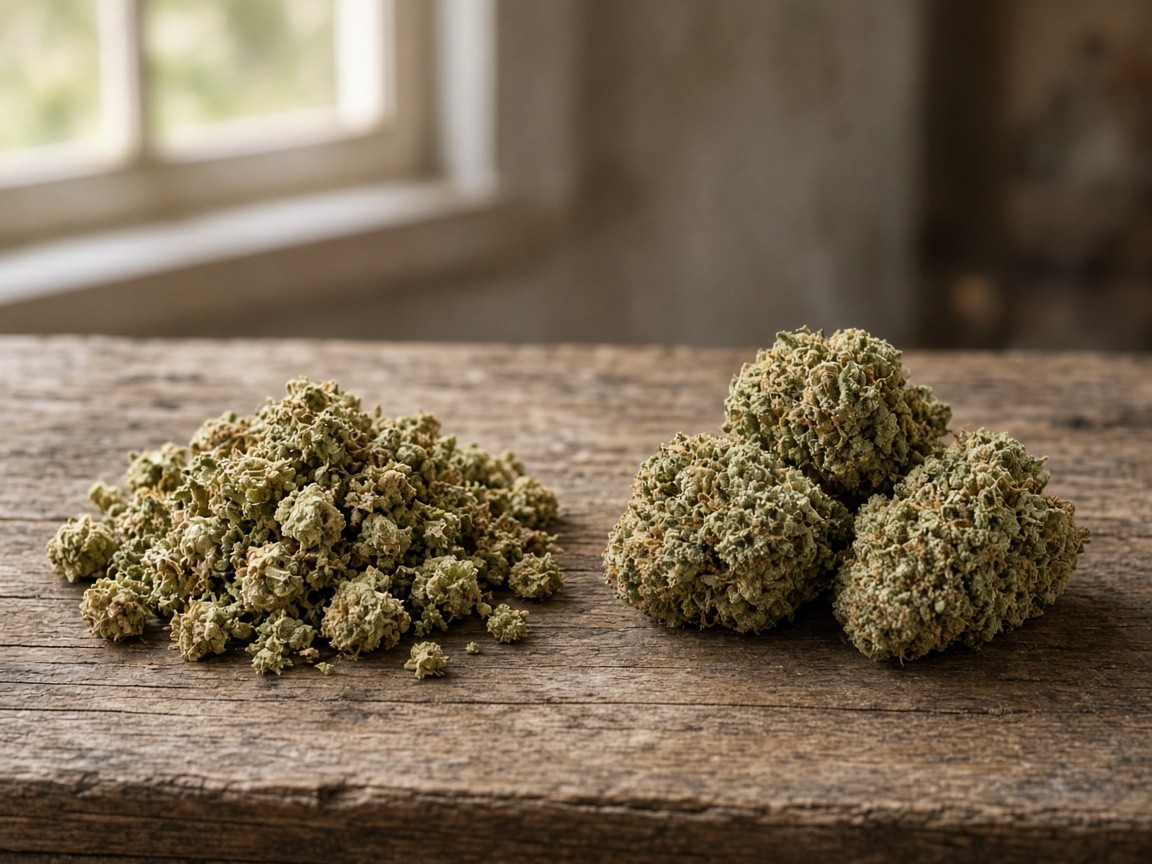
Dirt weed is slang for very low-grade flower: dry, brown, crumbly, seedy, stemmy, and harsh-smelling. Shoppers use it as an insult. You will not find it as a strain name, a lab grade, or a Michigan legal category.
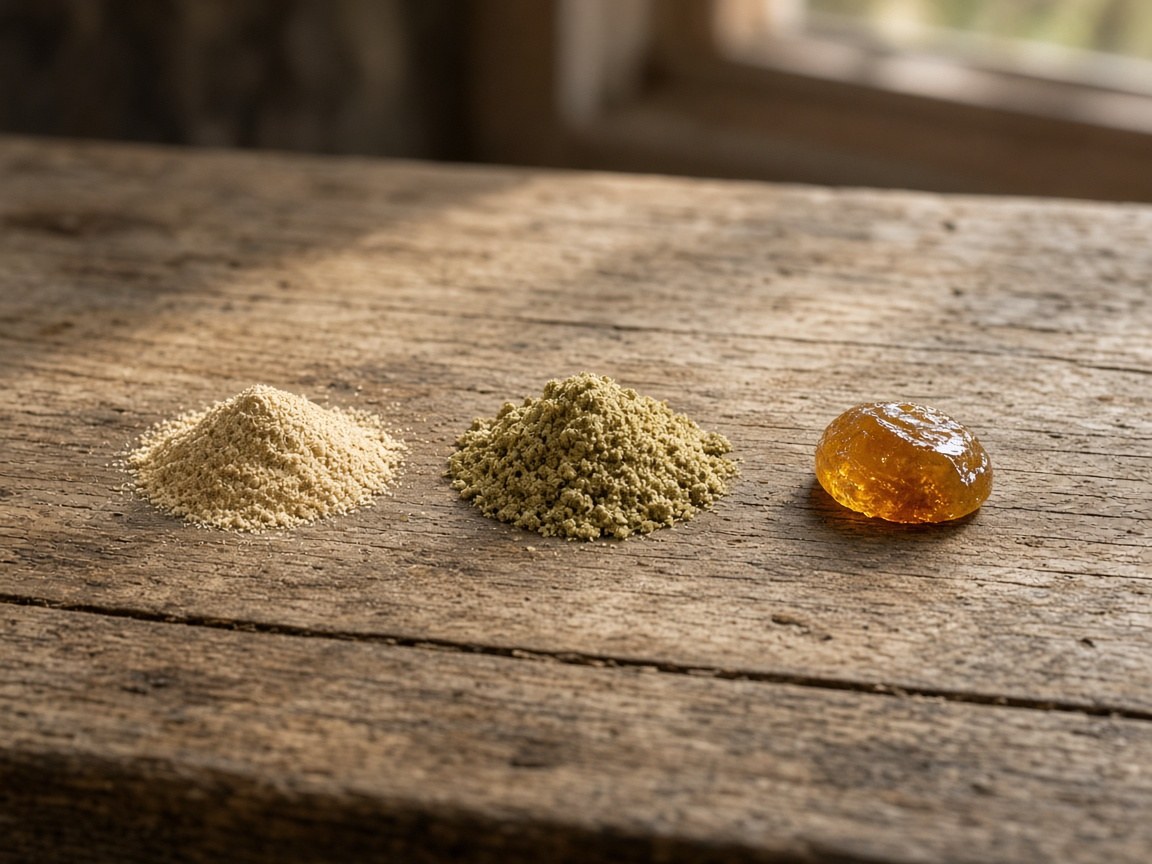
Weedmaps' flower-slang guide puts dirt weed in the bad-flower pile with ditch weed, regs, reggie, schwag, and brick weed. That pile is dry, crumbly, brown, harsh-smelling flower. Regs is short for regular. Schwag is the same bottom shelf, said another way. Brick weed is flower pressed into a block so it could be moved. The press crushes the buds and knocks off the frost, the sparkly resin on the outside.
Mids sit above that pile. A Ganjapreneur vocab note from June 28, 2026 puts mids in the middle. They rank above reggie, schwag, and brick weed, and below the dense frosty buds people call top shelf. Nobody agrees on exactly where the line sits. A Detroit counter and a 1970s parking lot would draw it in different places.
| Word you hear | What the person usually means | What it does not prove |
|---|---|---|
| Dirt weed | Brown, dry, seedy, stemmy, harsh flower | A THC percent, a farm, or a failed lab |
| Schwag or regs | The same bottom shelf, said a different way | That every mid-price jar is garbage |
| Brick weed | Flower squeezed into a block | That every outdoor plant was pressed |
| Mids | Middle flower, usable, not the loud jar | That the cure was careful |
| Sinsemilla | Spanish for without seed, from the same Weedmaps guide | That seedless flower was dried well |
A pile of seeds means the plants got pollen. The flowers put their energy into seed, and the buds stay loose. One seed in an otherwise green, loud jar is no big deal. Walk if the bag is half seed and half stick. Classic dirt weed has the whole stack: brown color, seeds, stems, a dead smell, and a scratchy smoke.
The flower looks dirty: brown, dusty, full of plant trash. People hear "dirt" and guess the grower used bad soil.
None of these words go on a Michigan label. R 420.504 asks for net weight, lab THC and CBD, and a line saying the real value may vary by 10%. When they apply, it also asks for harvest date and strain name. It never mentions dirt weed, mids, or top shelf. A clerk can say those words, but the rule doesn't check them.
Is Dirt Weed the Same Thing as Living Soil? #
No. Dirt weed judges the flower in the jar. Living soil names a way of growing, a bed full of microbes and old plant matter. A hot dry can wreck living-soil flower. And brown, hay-smelling flower can come from a bed that was never living at all.
The USDA Natural Resources Conservation Service calls soil health the soil's ongoing ability to work as a living ecosystem. That ecosystem supports plants, animals, and people. Healthy soil holds water, cycles food for roots, and stays full of tiny life.
A National Cannabis Industry Association member note from September 21, 2020 gives a plain shop definition. Living soil, it says, is the community of microbes breaking down organic matter so roots can eat. Bacteria and fungi do that job. Mycorrhizae, fungus that partners with roots, reach past the zone the root already emptied.
| Phrase | What you are talking about | What to do with it |
|---|---|---|
| Dirt weed | How the finished flower looks, smells, and smokes | Open the jar. Trust the nose and the sticks. |
| Living soil | How the bed feeds the plant | Read the grow story, then still open the jar. |
| Dirt, as in soil | The ground, or a bag of potting mix | Ask what lived in it. Do not use it as a quality score. |
| Hay smell | A rushed dry, or a cure that never finished | Walk, even if the menu says living soil. |
People type "dirt weed" and land on soil articles because of the word dirt. The farm side lives in how living soil grows cannabis.
Divine Toke is a Detroit-rooted, sun-grown, living-soil brand. We sell online at divinetoke.org, and we don't run a counter. Living soil feeds the plant. A rushed dry can still turn that flower brown.
Plenty of clean flower is grown in coco, rock, or a living bed. The method tells you what fed the plant. The jar tells you how it was dried. I would rather smoke a careful indoor cure than a sun-grown plant that was cooked in a dryer and bagged brown.
What Does Dirt Weed Look and Smell Like? #
Look for brown or tan buds, a hay or must smell, visible seeds, thick stems, and flower that crumbles to dust. One of those alone can be a miss. All of them together is dirt weed.
Rusty orange hairs on a forest-green bud are pistils, the hairs on the flower. They're normal. So is purple on the leaves, which can be a cold-night color. Dirt weed looks tired: faded olive into tan, then brown, with almost no sparkle. The sparkle is trichomes, the resin glands.
| Check | Dirt-weed jar | Clean, well-grown jar |
|---|---|---|
| Smell in the first second | Hay, dry grass, must, or almost nothing | A real plant smell: pine, pepper, citrus, gas, fruit |
| Color | Tan, brown, gray-green, faded | Green with orange or rust pistils, maybe some purple |
| Seeds | Many hard seeds you can roll out | None, or a rare one you can pick |
| Stems | Sticks make up the weight | A thin stem inside a bud, not a bag of twigs |
| Hand feel | Dust, or wet and spongy | Springy, a little tacky, breaks into chunks |
| Smoke | Scratchy, hot, grassy | You can taste something besides burn |
Squeeze one bud over the counter, or the kitchen table if the jar came by mail. Dust means the flower is too dry or too old. A wet, soft bud can mean the dry never finished.
The CRA testing bulletin revised September 23, 2024 lets a marijuana sample pass on water activity only at 0.65 aw or under. Water activity is free water, the kind mold can use. It isn't how damp the bud feels in your hand. A pass means the sample wasn't a wet mold risk on test day. It can still be dust-dry. ASTM's note on standard D8197 puts a quality band for dry flower around 0.55 to 0.65. Michigan's line is the wet ceiling. The same ASTM note says water activity under 0.50 dries the terpenes out and flattens taste and smell.
Seeds mean pollen landed. The flower made seed, and the bud stayed airy. One seed is a small thing. A jar that rattles is dirt weed.
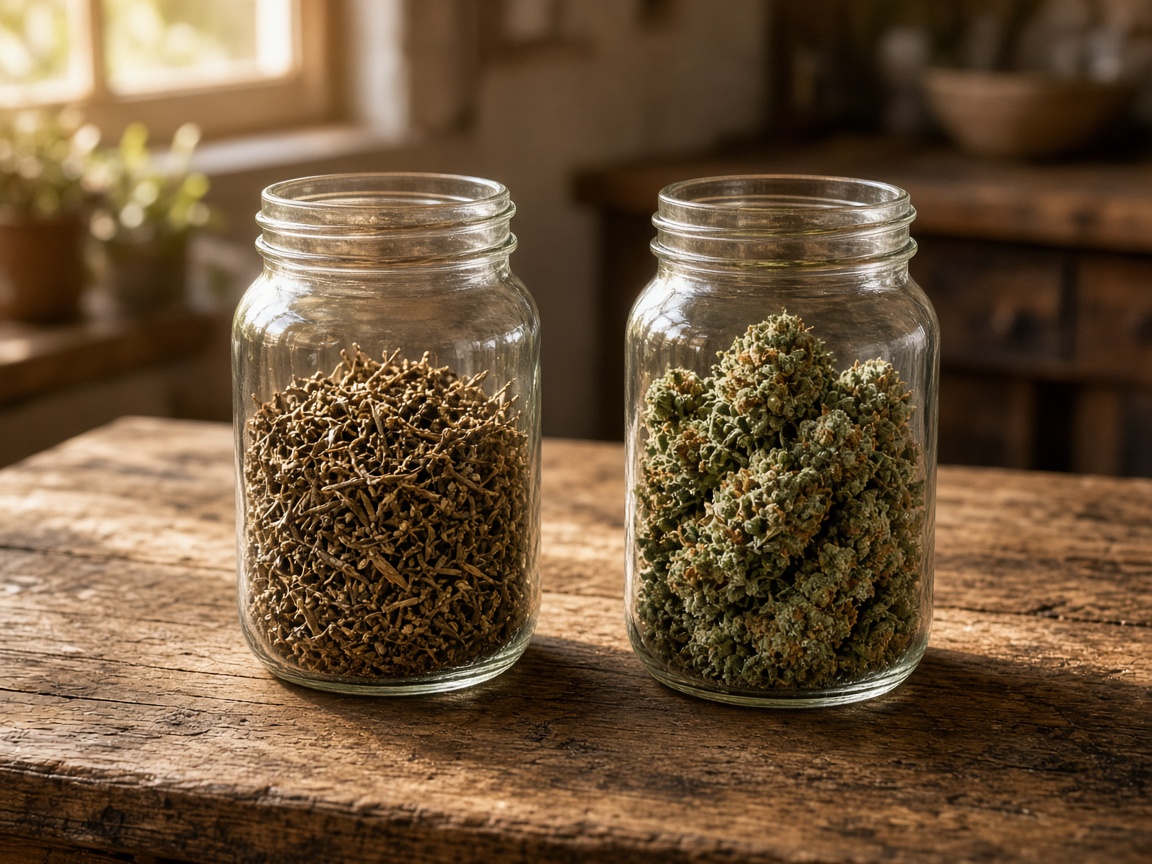
Stems are the sticks you can't smoke. Break a bud. If the woody core is most of the piece, you paid for lumber. The same CRA bulletin caps stems in crude marijuana at 5.0% and other foreign matter at 2.0%. A legal jar can carry a little stick and still pass. A jar that looks like yard waste fails you, whatever the lab sheet says.
Harsh smoke has more than one cause. Over-dry flower burns hot. Flower that never finished curing tastes like green plant. Old flower tastes flat. Moldy flower is a health problem, so don't power through a jar that smells like a basement.
Why Does Bad Flower Smell Like Hay? #
A hay smell usually means the dry or the storage stripped the real aroma and left only grass. Shoppers often blame leftover chlorophyll, the green pigment. The papers point at drying method and storage time instead, because both change the smell chemicals.
Fresh cannabis holds a lot of water. A 2024 Scientific Reports paper (PMC11180634) puts fresh inflorescences, the flower clusters, around 78% to 80% moisture. The authors dried three hemp cultivars: Kompolti, Eletta Campana, and Silvana. Tray drying sat at 18°C (about 64°F) and 55% humidity for 6 days. Freeze-drying was a cold vacuum for 24 hours. The lab measured cannabinoids and volatile compounds, the chemicals that reach your nose. The two dries gave different profiles.
Those were hemp varieties, not a high-THC eighth off a dispensary menu. Still, how the water leaves the flower changes the smell you paid for. A rushed dry can leave a green, grassy nose. A careful hang, where the plant dries slowly on a line, can take days.
Storage matters too. The same 2024 paper kept tray-dried flower for 6 months in the dark at 18°C and 60% humidity. It used three containers: a brown glass jar with a tight lid, a plastic box (high-density polyethylene), and an open tray. Glass held a different profile than the other two. The plastic box and the open tray ended up about the same.
A year-long storage study shows how fast the smell fades. Milay and colleagues, 2020 (PMC7593247), followed a THC-rich variety and a CBD-rich variety for a year in the dark. Whole flower and ground flower sat at 25°C, 4°C, −30°C, and −80°C. Terpenoid levels, the smell oils, fell fast under every condition they tried. Grinding the flower, and temperatures under −20°C, were the worst for those oils. 25°C, about 77°F, moved the natural cannabinoids the most. Their best everyday compromise was whole flower held at 4°C, about 39°F.
| What you notice | What the studies showed | What to do |
|---|---|---|
| Hay or cut grass | Drying method changes the volatile profile (PMC11180634) | Check the harvest date, then smell |
| Smell fading in a bag | Plastic and open air ended up alike; glass held a different profile | Move it to a glass jar with a lid |
| Old jar, weak nose, still "has THC" | Terpenes fell fast in a one-year study even in the dark (PMC7593247) | Skip it if the nose is dead, whatever the percent says |
| Jar left in a hot car | 77°F was already the worst cannabinoid shelf in that study | A closed car in July runs hotter than that shelf |
CBN, cannabinol, rose over that year. People call CBN the sleepy leftover of old THC, and in this study it showed up as flower aged. On the CBD-rich variety it was a poor age marker, staying under 0.01% by weight even at a year.
Chlorophyll can add a green taste, but I wouldn't pin the whole hay smell on one pigment. The oils that make a jar smell like pine or pepper leave when the dry goes wrong. They keep leaving while the jar sits. Use your nose for those oils and the lab sheet for the safety panel. More on shopping by smell is in nose-shopping by terpenes.
Can Michigan Flower Pass the Lab and Still Be Dirt Weed? #
Yes. A lab safety pass checks contaminants and a few measurements. It says nothing about smell, cure, brown color, or how the smoke will feel.
The Michigan Cannabis Regulatory Agency requires the tests in R 420.305. For flower, the list includes potency, foreign matter (powdery mildew plus organic and inorganic material), microbes, chemical residue, heavy metals, and water activity. Mycotoxins can be added if the agency asks. Terpene testing is allowed under subrule (18) but not required. A legal jar can come with a blank terpene page, and if you shop by nose, a blank page tells you less.
The lab can't cherry-pick, either. Subrule (16) blocks a lab from picking the best material in a batch. It also blocks pre-testing, and drying the sample down to cheat the water number. Passing results have to be in the statewide monitoring system before the batch can be released for packaging and sale. The package tag on your jar is how you match it to that record. The longer version of what "lab tested" does and doesn't promise is what lab tested means in Michigan.
The stem and trash caps sit in the CRA Sampling and Testing Technical Guidance, version 5.2, revised September 23, 2024:
| Check | What a pass allows | What it refuses |
|---|---|---|
| Stems | Up to 5.0% of crude marijuana | A sample over that stem share |
| Other foreign matter | Up to 2.0% | More than that share of other junk |
| Inorganic trash | None | Any glass, metal shavings, or synthetic fibers are an automatic fail |
| Water activity | At or under 0.65 aw | Wetter than 0.65 aw |
| Adult-use yeast and mold | Up to 100,000 CFU/g on bud, shake, trim, and kief from a harvest batch | Over that count |
| Medical yeast and mold | Up to 10,000 CFU/g on that same bud row | Over that count |
| Aspergillus, Salmonella, STEC | Not detected in 1 gram | Any detection of those named germs |
CFU means colony-forming units, a count of yeast and mold the lab can grow from a gram. Adult-use flower is allowed a much higher yeast-and-mold count than medical flower on that table. Infused products sit at 10,000 CFU/g on both rows. A pass means the jar is under that ceiling. Whether it smells clean or smokes smooth is your call.
Foreign matter means stems, other plant bits, and real trash like glass, metal, and plastic fibers. A seed-heavy, brown, hay-smelling bud can clear those gates. The bulletin also tells labs to cut small compact buds, the ones shops call popcorn, in half and look inside. Small is just a size. More on that in smalls versus tops and what the bag weight buys.
The label you can read without a PDF is R 420.504. Before a sales location sells the container, it has to show the grower, the package tag, and harvest date if it applies. It also needs strain name if it applies, net weight, the lab name, and any test analysis date. THC and CBD come with a note that the real number can be off by 10%. Match the tag, then smell.
How Do I Spot Dirt Weed Before I Pay? #
Open the lid, smell once, look for seeds and sticks, then read the harvest date and the package tag. Ten seconds covers the nose and the color. The tag takes another half minute. Skip either one and you're guessing.
At a licensed Michigan counter, ask them to open the jar before it goes in the exit bag. If they won't open it, you're buying a picture.
- Smell first. Hay, must, ammonia, or no smell at all means no. A real plant smell means keep going.
- Look second. Brown and bald is the dirt-weed look. Green with orange hairs and a little frost is flower that still has resin on it.
- Break one bud if the shop allows it. Dust or a woody core means you're paying for something you won't enjoy smoking.
- Read the harvest date on the label required by R 420.504. A date from last winter on a "fresh drop" sticker means old flower.
- Match the package tag to the lab PDF. A strain page that doesn't show the tag is just a poster.
- Check the amount against the law. MCL 333.27955 lets a person 21 or older purchase and possess 2.5 ounces or less. No more than 15 grams of that can be concentrate. At home you may keep up to 10 ounces, plus what your own plants produce, and you may grow up to 12 plants. If you're chasing a cheap ounce, see what Michigan flower costs per ounce first. Then buy only what you can store with the lid on.
Mail order is the other way to buy in Michigan. Divine Toke ships. We have no storefront and no street address, so there's no counter where someone opens a jar for you. When yours arrives, run the same checks at the kitchen table before you grind any of it. A sealed mailer can still hold tired flower.
Heat is on you once you walk out. The warmest shelf in the Milay study was 25°C, about 77°F. A closed car in a Detroit July parking lot runs hotter than that. After a shift or a roof job, get the jar into the house first. Glass beat plastic and open air in the six-month hemp storage test, so keep the lid on a glass jar. Keep a tired bud out of the jar with your good flower, too. Two strains in one jar covers how smells share the air under one lid.
If the price is the only thing it has going for it, walk. I've smoked a lot of jars, and the ones I remember badly all smelled dead.
Are Smalls, Mids, and Regs the Same as Dirt Weed? #
No. Smalls are a size. Mids are a middle grade. Regs and dirt weed are the bottom insult. A little bud can be the same plant as the fat top. A mid can smell alive. Dirt weed is the jar that fails the nose and the eye together.
| Name | The real question | Dirt weed? |
|---|---|---|
| Smalls or popcorn | Were these little buds sorted by size, or are they the lower branches that got less light? | Only if they are also brown, seedy, and dead-smelling |
| Shake | Did the flower already break into crumbs? | Crumbs can be good flower or floor sweepings. Look. |
| Trim | Is this the leaf the scissors cut off? | Leaf burns hot and tastes green. It is not a bud. |
| Mids | Is this usable middle flower with some smell left? | No. Mids are the shelf above regs. |
| Regs, schwag, brick, dirt weed | Is this dry, brown, harsh, and full of trash? | Yes. Those words point at the same problem. |
The CRA bulletin tells labs to cut small compact buds in half so they can see the inside. That's a contaminant check, and it says nothing about how well little buds were grown. If a clerk is selling you "the same weed, just smaller," read smalls versus tops first.
People online use "mids" to mean "mediocre" about everything. For flower, the June 2026 Ganjapreneur note keeps the older ranking: reggie at the bottom, mids in the middle, loud flower on top. The lab THC on your package tag, give or take the 10% label window, is the number you can lean on.
Brick weed is a shipping word. Growers pressed flower into blocks to move it, and the buds came out dense, dry, and scuffed. If you ever see a rectangular chunk that flakes like a brownie made of lawn, that's the old picture.
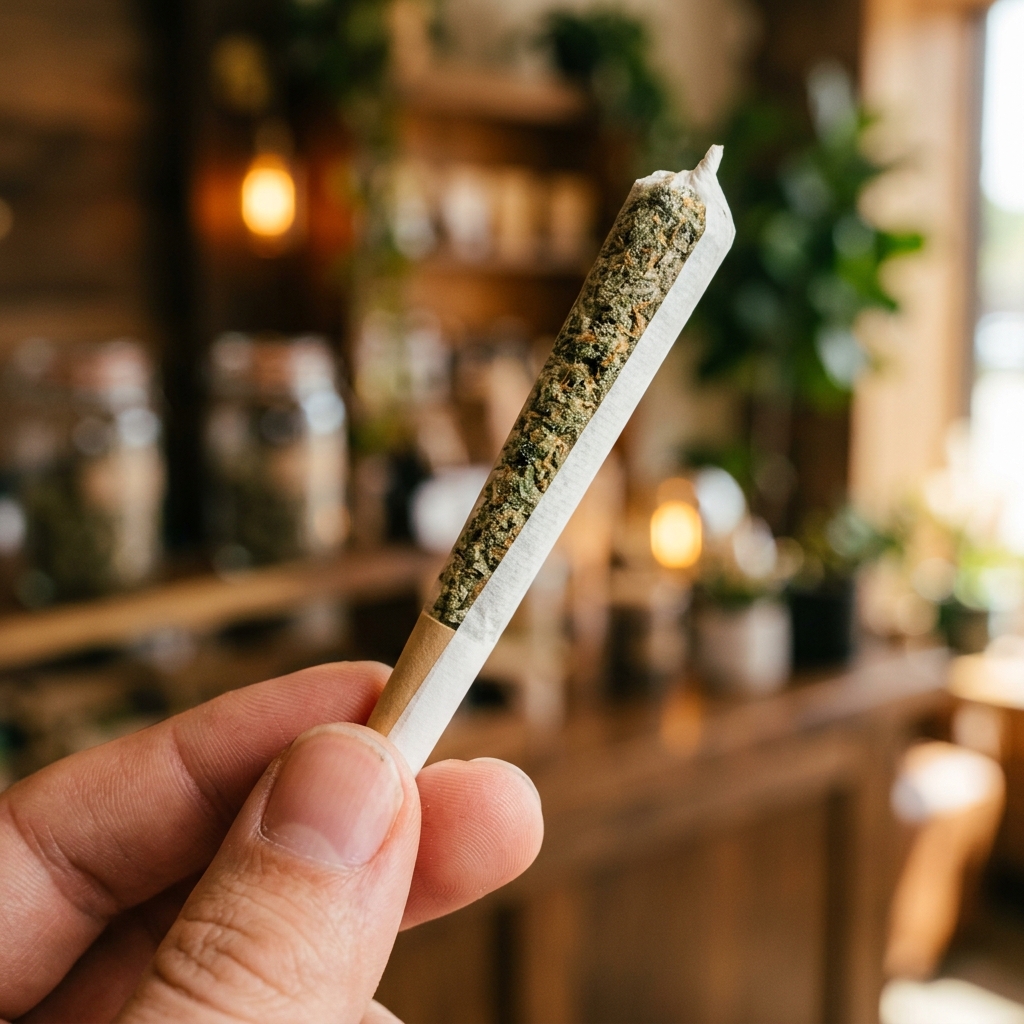
Pre-rolls make this harder. Once flower is ground, you can't see the size, seeds, or stems, and a harsh joint can be mostly trim. If you're learning this eye test, practice on flower you can still see.
What If the Jar Smells Musty or Like Ammonia? #
Do not smoke it. Hay is a quality miss. Must, ammonia, or anything fuzzy is a safety miss.
Ammonia often means the flower stayed wet in a closed space and went anaerobic, short on air. Bacteria did the work a dry room should have done. Must and wet-basement smells point to mold. Fuzzy white or gray growth isn't "earthy," and neither is a dark, slimy spot on a bud. Real earthy is a terpene smell, like soil after rain. Mold smells like a forgotten sponge.
The CRA bulletin treats some microbes much harder than others. Adult-use bud can pass total yeast and mold at a high count, 100,000 CFU/g. Aspergillus flavus, fumigatus, niger, and terreus must be not detected in 1 gram. So must pathogenic Salmonella and Shiga toxin-producing E. coli. A legal pass can still leave ordinary yeast and mold in the flower, but those named hazards get no pass at all. Your nose can't name the species, but it can tell you to stop.
| Smell | Likely story | What I do |
|---|---|---|
| Dry hay or cardboard | Aroma oils are gone | I don't buy it. I don't "use it for edibles" either. |
| Wet grass | The cure never finished | Same. A green taste makes for a rough night. |
| Ammonia | Wet flower sat sealed | Trash. Don't dry it on a plate and hope. |
| Must or a wet basement | Mold is on the table | Trash. Don't smoke it. Don't cook it. |
| Pine, pepper, citrus, gas, fruit | The oils are still there | Then I read the date and the tag. |
If you already bought it from a licensed shop, take it back with the package tag and ask them to look. The Michigan CRA licenses those shops and the labs. I can't see your jar from here, so if it smells like mold, stop smoking it tonight.
If you already feel sick after smoking something that smelled wrong, talk to a clinician. Don't drive. The label you bought already carries a driving warning under R 420.504.
Frequently Asked Questions #
What does dirt weed mean in plain words? #
Dirt weed means bad flower: brown, dry, seedy, stemmy, and harsh. Weedmaps files it with schwag, regs, and brick weed. It is slang, not a strain and not a license category. If the jar smells like hay and falls apart in your fingers, you already have the definition.
Does dirt weed mean the plant grew in dirt? #
No. The word describes the finished bud, and the soil has little to do with it. Soil health, in the USDA's definition, is ground that still works as a living system. A 2020 industry note describes the microbes that break organic matter down for the roots. That can be good farming. The cure is a separate step. The farm side is in living soil.
How fast can I spot dirt weed in a jar? #
The smell and the color take about ten seconds. Pop the lid. Hay, must, or no smell is enough to walk. Brown buds with seeds and thick sticks confirm it. The harvest date on an R 420.504 label is the second pass. Ten seconds won't read a pesticide panel, but it will keep you from paying for a dead jar.
Is brown flower always dirt weed? #
Not by itself. Brown with no frost and a dead smell is the dirt-weed look. Orange hairs on a green bud are normal. Purple can be a cold-night color. Patchy dark spots with a must smell are a mold question. Color alone never tells you the THC percent.
Do seeds mean the flower is dirt weed? #
A jar that rattles with seeds is the classic picture. One seed is no big deal. Seeds mean pollen landed and the plant made seed instead of only flower. Weedmaps defines sinsemilla as "without seed," which is what most shoppers expect from a cured jar. Pick the single seed out if the rest of the bud is green and loud. Walk if the bag is half seed.
Are small buds the same as dirt weed? #
No. Smalls are a size sort. Dirt weed is a quality insult. The CRA bulletin tells labs to cut compact popcorn buds in half and inspect the inside. That's a contaminant check, and it says nothing about how well little buds were grown. Compare grams and smell on smalls versus tops.
Can lab-tested flower still be dirt weed? #
Yes. The lab pass is a safety gate. It doesn't grade flavor. R 420.305 requires potency, foreign matter, microbes, chemicals, metals, and water activity. It allows terpene tests but doesn't require them. Crude marijuana can still pass with up to 5% stems, per the September 23, 2024 bulletin. Brown hay-smelling flower can clear that bar.
Why does my weed smell like hay? #
The smell oils left during the dry, the cure, or the months in a bag. PMC11180634 found tray drying and freeze-drying produced different volatile profiles on three hemp cultivars. Glass storage held a different profile than open air. PMC7593247 found terpene levels fell fast over a year under every temperature they tried. A humidity pack won't bring back oils that already left. Nose-shopping is covered in the terpene smell guide.
Is mids the same as dirt weed? #
No. Mids means middle. Dirt weed means the bottom. The June 28, 2026 Ganjapreneur note puts reggie, schwag, and brick weed below mids, and loud flower above them. Use the package tag and your nose. A mid that still smells like a plant is a different buy from a hay jar.
What should I do if the jar smells like mold? #
Do not smoke it, and do not cook with it. Must and ammonia are a different problem from hay. The CRA bulletin requires Aspergillus species, Salmonella, and Shiga toxin-producing E. coli to be not detected in 1 gram, even while adult-use bud may pass total yeast and mold at 100,000 CFU/g. You can't name the species by smell, but your nose can tell you to stop. If you feel sick, call a clinician.
Does a higher THC number fix a hay smell? #
No. The percent doesn't put evaporated oils back in the bud. R 420.504 already warns that the labeled THC and CBD may vary by 10% from the report. A big number on a silent jar tells you nothing about the smoke. If you can't smell the oils, they're gone. The safety panel is explained in what lab tested means.
Can I judge flower that shows up in the mail? #
Yes. Open it at home and run the same nose, seed, stem, and date checks. Divine Toke is mail order only. There is no counter and no street address. MCL 333.27955 still caps what you may possess in public at 2.5 ounces if you are 21 or older. A shipped jar can be excellent or tired, and the lid tells you which.
If You Want Flower You Can Smell #
Buy flower that still smells like a plant, then confirm the package tag matches the lab sheet. Dirt weed is the jar that smells like hay, looks brown, and wastes your money on seeds and sticks. Living soil is a way to feed a plant. The two got tangled because they share a word.
Start with sun-grown flower and trust your nose over a menu word. Divine Toke sells sun-grown flower online at divinetoke.org. Shop pre-rolls are 1 gram, and a 20-pack is 20 of those 1-gram joints for $120.
If you want more, start here:
- Living soil covers the grow side.
- Smalls versus tops covers bud size.
- What lab tested means in Michigan covers the safety pass.
- Nose-shopping covers smell.
This article is for educational purposes only and is not medical advice. It isn't a lab result for the jar in your hand, either. Always consult your healthcare provider before starting any new wellness routine. Don't drive after you smoke.
Grown in Detroit. Shipped to your door.
Small-batch, sun-grown cannabis cultivated in living soil. Mail-order shipping to all 50 states.