Does 48 Hours of Darkness Before Chop Change the Bud?
Does 48 hours of darkness before chop raise cannabis resin or THC? The evidence is thin. Here is what the claim misses, especially during a Michigan fall.
Questions this article answers
- Does 48 hours of darkness before chop increase cannabis resin?
- Does darkness before harvest increase THC or terpenes?
- Is 48 hours of darkness before cannabis harvest a myth?
- Should outdoor cannabis sit under a tarp before harvest in Michigan?

Head Cultivator
On this page
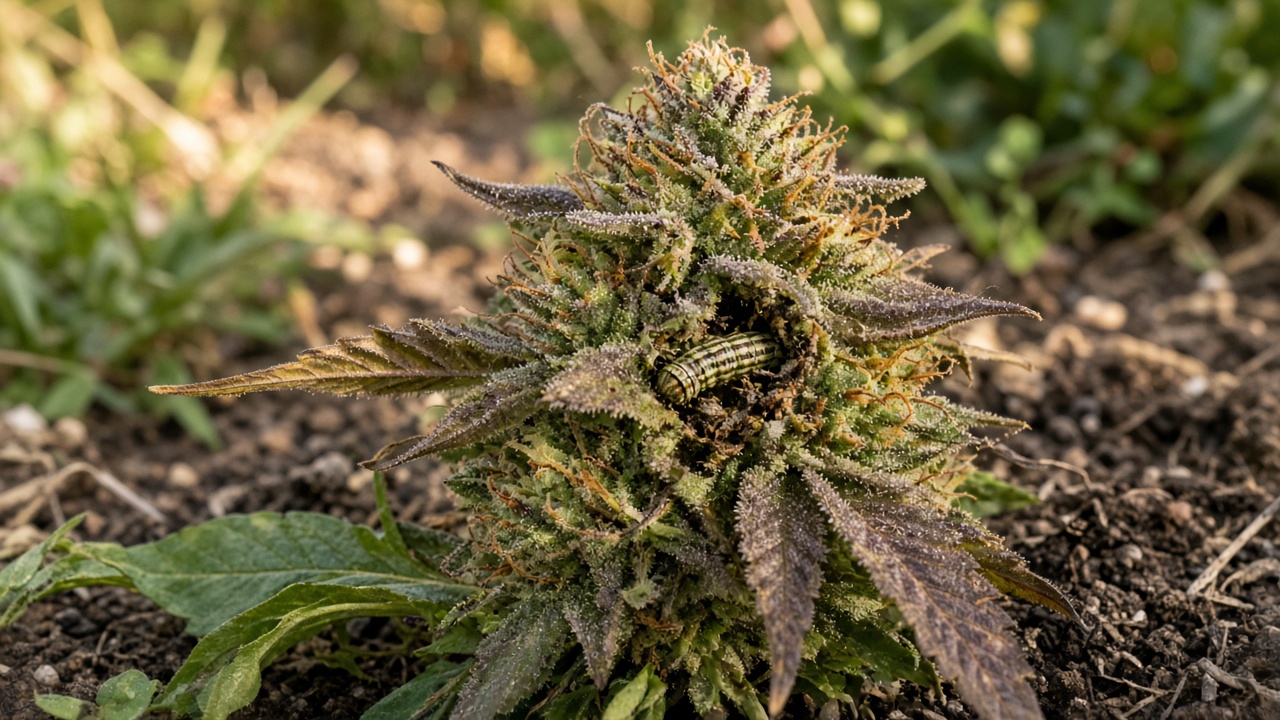
You or a friend may have already tried it: two days under a tarp or in a dark room right before chop. The studies I could find show late flowers still change and light matters all season, but none of them tested that blackout.
The claim in one line: 48 hours of darkness before chop can increase cannabis resin.
Does 48 Hours of Darkness Before Chop Increase Resin? #
There is no solid controlled evidence that 48 hours of darkness before chop adds resin, THC, or terpenes to cannabis flower. Don't let a promise nobody has tested outrank a clean harvest decision.
Growers have passed this one around for years. The story goes like this: the ripe plant senses the dark, pushes out one last wave of resin, and you end up with a louder bag.
A story like that needs a direct test. The cannabis papers I could verify look at light intensity, repeated flowering schedules, time of day, and other stresses. None of them shows a matched crop gaining resin after a final 48-hour blackout.
One 2025 trichome study tracked compounds across a normal 12-hour light period. The chemistry moved during the day, so mature flowers are still active. It never tested two full days of darkness before harvest, so it can't settle the grow-room claim (Dimopoulos et al., 2025).
A 2021 lighting study found that more light through flowering raised flower yield and total cannabinoid yield. Light matters across the whole crop cycle (PMC8144505). A last-minute blackout wasn't part of that test.
If you're shopping, don't pay extra for a “48-hour dark” story unless matched lab results sit behind it. Smell, condition, harvest timing, and test results are what a jar should earn its price on.
| Claim | What the evidence can support today |
|---|---|
| Two days of darkness makes more trichomes | No controlled cannabis trial establishes it |
| Two days of darkness raises THC | No matched harvest study establishes it |
| Two days of darkness raises terpenes | No matched harvest study establishes it |
| Late flowers still change chemically | Yes, late-flower chemistry can still move |
| Good environmental control matters | Yes, across the full flowering and harvest process |
A missing study matters here because the promised result is measurable. A fair trial could count trichomes, weigh dry flower, and send matched samples out for cannabinoid and terpene testing. Labs do that every day. Until somebody runs it, “more resin in 48 hours” is a grow-room claim, not a lab result.
If you like the ritual, keep it. Just don't call it proven.
What Is the 48-Hour Darkness Claim? #
The 48-hour darkness claim says a fully ripe plant makes a last burst of sticky resin when light disappears before harvest. People also say it makes the smell louder, raises THC, or gives the plant time to “use up” chlorophyll.
Those are separate claims, but they usually ride together in one story, and the bundle sounds stronger than any single piece has earned.
The usual version goes like this:
- A grower waits until the plant already looks ready.
- The plant goes into a dark room or under an opaque tarp for one to three days.
- The grower cuts the plant and sees a frosty, strong-smelling flower.
- The dark period gets credit for everything the plant had already built in late flower.
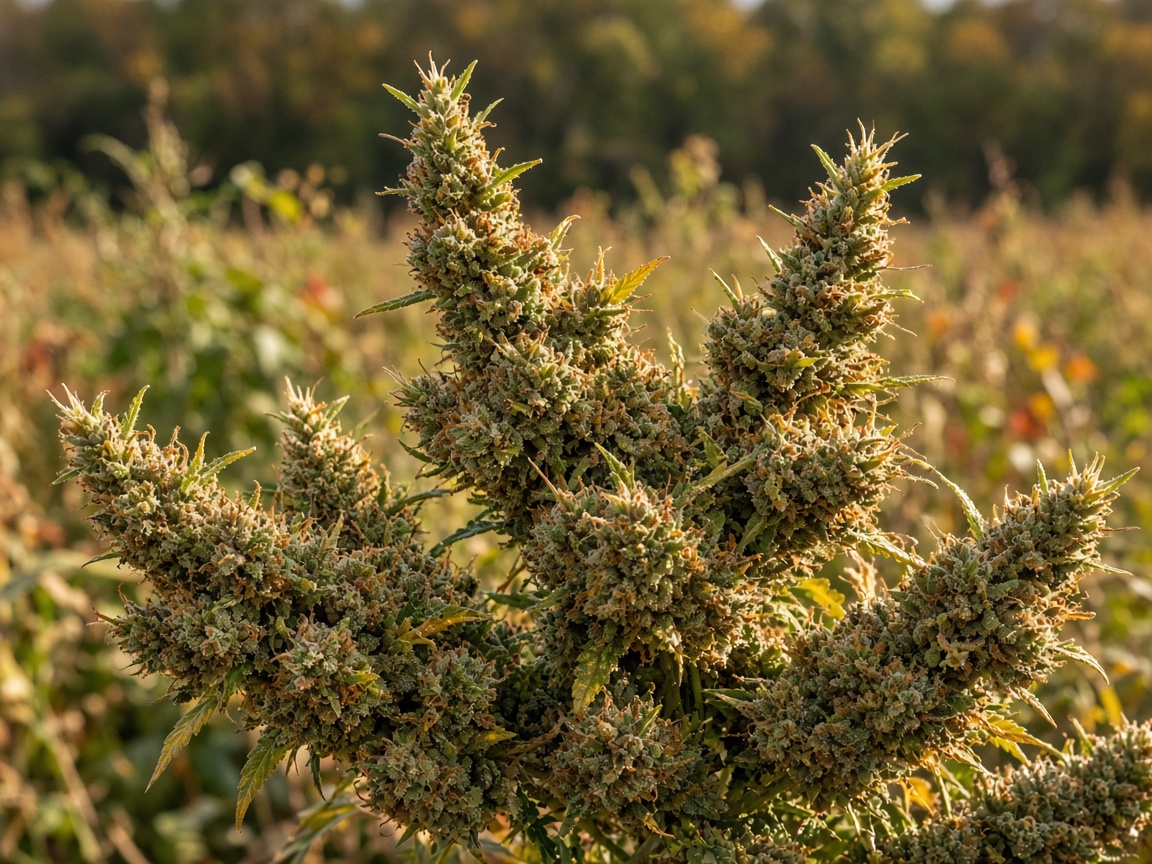
The hard part is step four. A ripe plant can look frosty because of its genetics, a decent finish in the weather, and a good harvest window. All of that happened before the final two days.
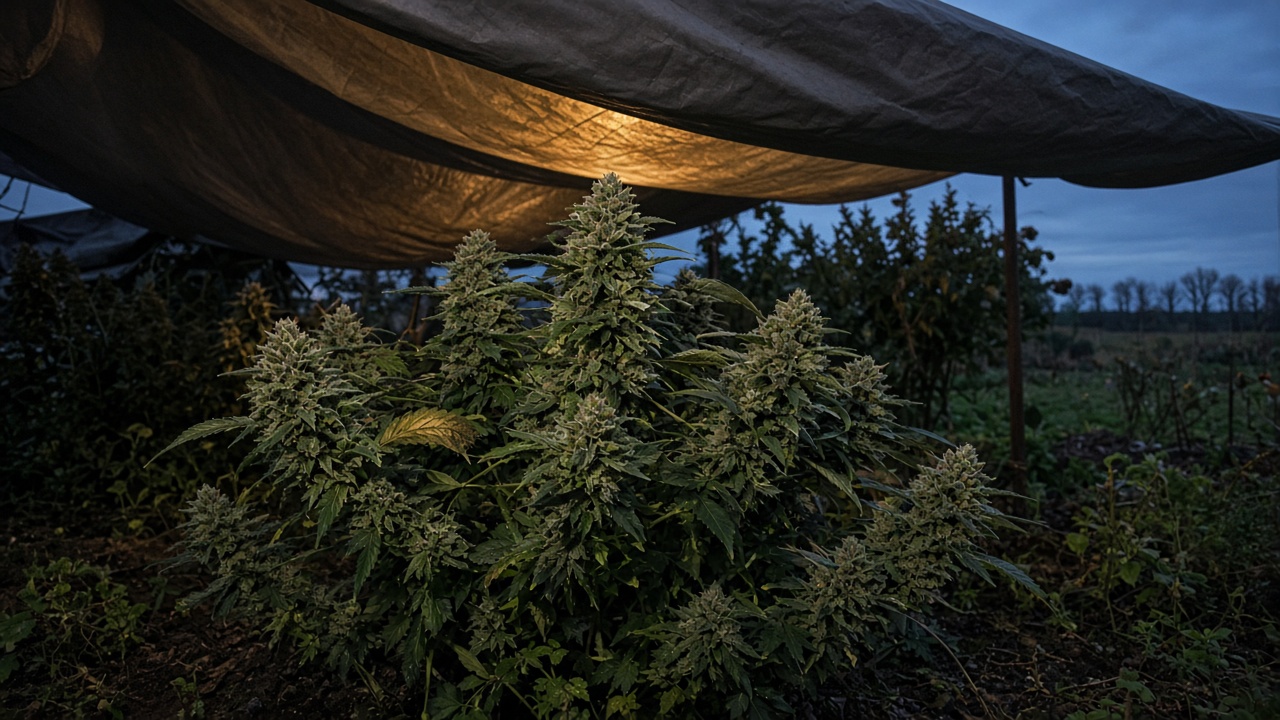
Outdoor gardens run into the same thing. Throw a tarp over a plant ahead of rain, cut it a couple of days later, hang it with care, and the flower might smell great. You still can't pin that on the dark.
| What someone sees after darkness | Other reasons it may have happened |
|---|---|
| A frosty bud | Genetics and weeks of gland development |
| A strong nose | Cultivar chemistry, cool handling, or a fresh cut |
| A high THC percentage | Harvest maturity, lab variation, or water-loss effects |
| A heavier feel | Maturity, age, terpenes, amount used, and personal tolerance |
| Less green leaf showing | A crop already near the end of its cycle |
Chlorophyll is the green pigment that lets leaves capture light. A living plant can break down some chlorophyll as it ages, but no good cannabis paper shows 48 dark hours make finished flower cleaner or smoother.
Resin means the sticky material in the plant’s glandular trichomes. Researchers treat trichome development as part of flower growth, with cannabinoids and terpenes (the aroma compounds) shifting over that longer stretch (PMC10071647).
Scale matters here. Two days can change the clock, the temperature around the plant, and how wet the canopy stays. That's a short window to grow a reliable new crop of gland heads.
Some growers like a short dark hold before chop, and what they see is real to them. The resin jump hasn't shown up in any study I could find.
Does Cannabis Biology Support a Final Resin Surge? #
Cannabis can keep changing late in flower, but the evidence does not show a universal resin surge caused by 48 hours without light. Late flower is still moving, and it varies by plant and by weather.
Cannabinoids and terpenes build up over the whole flowering cycle, and each cultivar peaks on its own schedule.
One development study tracked several cannabis chemotypes through growth. It found cannabinoid and terpene patterns changing as the flowers matured (Aizpurua-Olaizola et al., 2016). That's a reason to respect harvest timing. It says nothing about a two-day darkness boost.
Photosynthesis is how a plant uses light to make sugars from carbon dioxide and water. Those sugars feed growth and metabolism. In the dark, the plant shifts its energy use because new sugar capture has paused.
That alone doesn't settle every small change inside a mature bud. It does make a giant last-minute production leap hard to assume.
A 2026 pre-harvest study found that leaf wounding or stem splitting could alter cannabinoids and terpenes when applied seven or 11 days before harvest (Serraf and Bernstein, 2026). That's useful because it shows late flowers can respond. It also shows timing matters, since one treatment gave different results at seven days than at 11. The study tested wounding and stem splitting, not darkness.
| Late-flower fact | What it means for the 48-hour claim |
|---|---|
| Flower chemistry changes as buds mature | Harvest timing deserves care |
| Cultivars peak on different schedules | One rule cannot fit every plant |
| Some stresses can shift chemistry over days | A direct darkness trial is still needed |
| Trichomes develop through flower growth | A final blackout is too short to assume new gland production |
| Darkness stops fresh photosynthesis | Large new-resin claims need unusually strong proof |
The word “stress” gets used too loosely in cannabis talk. Stress can mean drought, heat, wounding, disease pressure, weak roots, or a light change. Each one touches the plant differently.
Outdoor plants already take real late-season stress. Cool nights, dew, rain, and a frost forecast all show up near harvest. A tarp over the top can blur a weather decision with a potency claim.
Late flower is still alive and still changing. That doesn't make every last-minute trick a way to improve the jar.
Why Is a Final Dark Period Different From the Flowering Clock? #
A final 48-hour blackout is different from the repeated long nights that tell photoperiod cannabis to flower. One is a late harvest treatment. The other is a seasonal signal repeated over weeks.
Photoperiod means the daily pattern of light and dark. Many cannabis cultivars begin flowering after the dark period grows long enough and repeats night after night.
Indoor growers often flip to 12 hours of light and 12 of dark for that transition, and research shows the best schedule still varies by cultivar, so 12/12 isn't a magic number (PMC10004775).
By harvest, that decision is long made. The flower has spent weeks building its shape, glands, cannabinoids, and aroma.
| Plant stage | What darkness is doing | Time scale |
|---|---|---|
| Early vegetative growth | Keeps many photoperiod plants from flowering | Repeated daily schedule |
| Flower initiation | Repeated long nights guide reproductive growth | Days to weeks |
| Late flower | The plant finishes mature buds | Weeks |
| Final 48 hours | A short harvest treatment | Two days |
The flowering clock listens for a pattern. It isn't a button that restarts bloom on a ripe plant.
Photoperiod research has tested when plants switch from long days to shorter ones. Those schedules change flower size and timing because they shift the whole flowering program (PMC8786113).
That's a long way from a ripe plant sitting in a dark tent its last weekend.
A ripe outdoor plant has been reading longer autumn nights since late summer. Two extra covered days in October are a different kind of signal, and they can also change airflow, temperature, dew, and leaf wetness around dense flowers.
This is where a real observation can get misread. The plant may already be ready. The grower covers it. The crop comes down two days later. The flower still looks mature because the plant had already done the long work.
For the real is-it-ready call, use the sun-grown harvest timing guide. It covers the loupe, pistils, and weather window. This page sticks to the final-darkness claim.
What Would a Real 48-Hour Test Need to Measure? #
A real test would compare matched plants, use the same harvest maturity, and measure dry flower rather than trusting a before-and-after photo. Without that, a dark-period result is wishful thinking with a sticky label.
Start with closely matched plants. Clones from the same mother plant would cut down the genetic noise. One group keeps its regular light schedule. The other gets the 48-hour dark hold.
Both groups would need the same:
- harvest readiness
- room temperature
- humidity and airflow
- cut method
- sample location on the plant
- dry handling before the lab test
Dry weight matters because water can change a percentage. A flower that loses more moisture can show a higher concentration on paper without any extra cannabinoids. Postharvest research treats drying and storage as major influences on measured cannabis chemistry (PMC9404914).
| Measure | Why it belongs in the test |
|---|---|
| Dry flower weight | Checks whether one group actually produced more usable flower |
| THC, THCA, CBD, and CBDA | Separates a concentration claim from a general “potency” story |
| Total cannabinoid mass | Shows whether the plant made more material overall |
| Terpene panel | Tests the stronger-smell claim with numbers |
| Trichome count or surface imaging | Tests the visible-resin claim |
| Moisture content | Catches percentage shifts caused by water loss |
| Replicated samples | Shows whether the result repeats |
One plant is a story. Several matched plants are a test.
The lab should be blind to which group got the dark hold, so nobody reads the samples hoping for a winner.
That's why a beautiful before-and-after photo proves very little. Flower density, camera light, frost from earlier weeks, and a phone flash at the right angle can all flatter one bud.
Outdoors, the real decision is practical. If a tarp keeps rain off a nearly ready crop and air still moves, that's a weather call. Calling it a resin booster takes a lab result nobody has shown yet.
What Can Two Dark Michigan Days Add to Outdoor Risk? #
Two dark days can add risk when an opaque tarp traps humid air, holds dew near dense flowers, or cuts off the airflow that lets a canopy dry. The wet, still pocket under the cover is where mold gets going.
In Michigan this question usually shows up in October. The flower is close, the forecast looks rough, and someone wants to cover it from rain and try the 48-hour trick while they're at it.
A tarp can be a weather tool. It can also become a low ceiling over wet buds.
The NWS Detroit/Pontiac climate normals put Detroit’s average October precipitation at 2.45 inches. That is less rain than September, but dew, passing rain, and slow-drying mornings still matter late in the season.
The same NWS office marks October as the end of the growing season across Southeast Michigan on its first-fall-freeze guidance. That frost pressure is why growers make fast calls. It doesn't add any proof to a potency claim.
| Situation under a cover | What can happen |
|---|---|
| Tarp stays high and the sides stay open | Rain may stay off while air can move |
| Tarp rests near flowers | Condensation can touch the buds |
| Closed sides stay shut overnight | Humid air can sit inside the canopy |
| Dense flower stays wet after sunrise | Botrytis risk can rise |
| Grower delays a ripe cut for a darkness ritual | Weather risk gets more time |
Botrytis is the gray mold behind many cases of bud rot. It likes moisture, plant tissue, and weak airflow.
MSU Extension’s industrial hemp bulletin flags gray mold as more common when humidity and free moisture stay high. That's a familiar Michigan fall setup after rain or heavy dew.
UMass Extension’s humidity guidance lays out the basic physics. When warm, moist air cools at night, it can hit the dew point and condense on cooler plant surfaces.
Detroit, Ann Arbor, Flint, Grand Rapids, and the lakeshore all have their own fall timing. The Michigan problem is the same everywhere: cool nights can turn a cover into a damp little room.
The grower should keep two decisions separate. A cover can keep rain off. It has no proven record of making more resin.
The forecast and the canopy can answer the first question. The second still has no convincing controlled study.
After the cut, the cannabis drying guide takes over. This page stays out of dry-room advice.
What Should a Grower or Shopper Take From This? #
Treat a 48-hour dark period as an optional ritual with an unproven payoff, then put your attention on the harvest and handling choices that have clearer stakes.
A grower can still choose the routine, with expectations to match.
Outdoors, rain, frost, and humidity are the real threats, and they can force the harvest call. A potency promise shouldn't push a healthy crop into a worse weather window.
If you're shopping, the bag in your hand can't prove a 48-hour darkness story. It can show freshness, smell, condition, and whether the seller can answer basic harvest questions.
| If you hear this claim | A useful follow-up question |
|---|---|
| “We gave it 48 hours dark for more resin” | Was a matched lab test run on treated and untreated flower? |
| “The bud is frostier now” | Was trichome density measured, or was it a visual call? |
| “It smells louder after darkness” | Did the terpene panel change on a dry-weight basis? |
| “The tarp saved the crop” | Did it stay dry and ventilated through the night? |
| “Darkness makes it smoother” | Was the flower handled well after the cut? |
None of this is a reason to mock growers who use the practice. Growing weed runs on habits passed along from real observation. A habit just sits in a different category than a measured result.
The choices that matter most come earlier. Healthy plants need to reach an honest harvest window. The crop needs cover from weather when the forecast calls for it. The cut has to happen before rot wins. Then the next stage has to protect the flower that's already there.
If you want the broader growing story, the regenerative cannabis process connects soil, sun, and post-harvest care. If your question is “Is this plant ready now?”, stay with when sun-grown cannabis is ready.
Divine Toke is a Detroit-rooted Michigan brand, so local weather belongs in this conversation. October rain, overnight dew, and an early freeze can change a harvest decision faster than any internet tip.
Keep the plant healthy. Keep a cover from turning into a wet pocket. Make the harvest call from ripeness and weather. If somebody claims a potency lift, ask for the lab sheet.
Frequently Asked Questions #
Does 48 hours of darkness before harvest increase THC? #
Research answer: no controlled cannabis study has shown a reliable THC increase from a final 48-hour dark period. The direct evidence gap covers THC, THCA, terpene content, trichome density, and dry-flower yield. The 2025 trichome paper measured chemistry over 12 hours of normal light, not 48 hours of pre-harvest darkness (Dimopoulos et al., 2025).
Does pre-harvest darkness make more trichomes? #
Research answer: no published controlled trial has shown that 24, 48, or 72 hours of darkness makes mature cannabis grow more trichomes. Trichomes develop through flower growth, where they make and hold cannabinoids and terpenes (PMC10071647). A frosty-looking bud after two days in the dark may simply be a frosty bud that was already ripe.
Does darkness make cannabis smell stronger? #
A stronger smell after darkness is possible as a personal observation, but no controlled study establishes a reliable terpene increase from 48 dark hours. Terpenes are volatile aroma compounds, so temperature, handling, and the time after cutting can change what your nose catches. The 2016 development study found terpene patterns shift across flower development, which takes much longer than two days (Aizpurua-Olaizola et al., 2016).
Should cannabis be harvested at the end of the normal dark period? #
Harvesting near the end of the normal dark period can be a reasonable handling choice when it avoids heat and harsh light. That choice is different from adding an extra 48 hours of blackout. The evidence supports careful handling. It doesn't show a bonus resin yield from stretching the dark cycle.
Does a 48-hour dark period start flowering again? #
No, a mature flower does not restart its flowering program because it sits in darkness for two days. Cannabis responds to repeated long nights across its growing schedule, and cultivar response varies (PMC10386198). By harvest, the plant has already spent weeks in reproductive growth.
Is 24 hours of darkness before chop any better supported? #
No, the same evidence gap applies to a 24-hour darkness hold. Swap 48 hours for 24 and the missing comparison is still missing. Light treatments across an entire flower cycle can affect yield, as shown in PMC8144505, but that doesn't validate a final-day rule.
Can a tarp over cannabis create bud rot in Michigan? #
Yes, a tarp can raise bud-rot risk when it traps moisture around dense flowers and limits air movement. Michigan’s late-season rain, dew, and cool nights make that a real concern. MSU Extension identifies gray mold as more common with high humidity and free moisture.
Does a dark period lower chlorophyll before harvest? #
A plant can lose chlorophyll as it ages, but no solid cannabis evidence says a 48-hour dark period produces a cleaner or smoother finished bud. Chlorophyll is a green leaf pigment, and its breakdown is one piece of a larger maturation process. Final quality still comes down to the crop’s harvest condition and what happens after the cut.
Can a lab prove whether darkness improved a crop? #
Yes, a lab can test the claim when treated and untreated plants are matched and measured the same way. The comparison needs dry flower weight, moisture, cannabinoid concentration, total cannabinoid mass, and terpene panels. One lab report from one treated plant cannot answer the 48-hour question.
What matters more than a 48-hour darkness trick? #
Harvest readiness, weather risk, clean handling, and the condition of the finished flower matter far more than an unproven final blackout. Michigan growers can lose a crop to a wet October week or a hard freeze in a single night (NWS Detroit/Pontiac). Use the harvest window as the main decision, then protect the quality already on the plant.
Closing: Where the 48-Hour Claim Stands #
Forty-eight hours of darkness before chop may be a harmless preference in a controlled setup, but it has no proven record of building more resin or stronger flower. The claim has gotten around a lot faster than the evidence has.
Nobody who tried it is foolish. The promise needs a quieter voice.
If the plant is truly ready, the harvest call should follow the ripeness and the weather. If Michigan rain, dew, or frost is closing in, the crop needs an honest weather plan. If someone says the dark hold made the bag stronger, a matched lab result is the fair next question.
Short checklist:
- Check readiness first. Use the harvest timing guide for the actual cut decision.
- Treat covers as weather equipment. Keep moisture and airflow in mind during a Michigan fall.
- Ask for a real comparison. Photos and a louder story can't replace dry-weight lab data.
- Protect what the plant already made. The drying guide picks up after the scissors.
- Shop the finished flower with your senses. A clean nose and a cared-for bag tell you more than a secret-last-two-days claim.
People around Detroit and across Michigan ask about this one, and it deserves a straight answer: the 48-hour darkness claim is ahead of the evidence.
If you're curious about sun-grown flower, start with what the plant does across the whole season. Two dark days at the end don't carry that story.
Grown in Detroit. Shipped to your door.
Small-batch, sun-grown cannabis cultivated in living soil. Mail-order shipping to all 50 states.