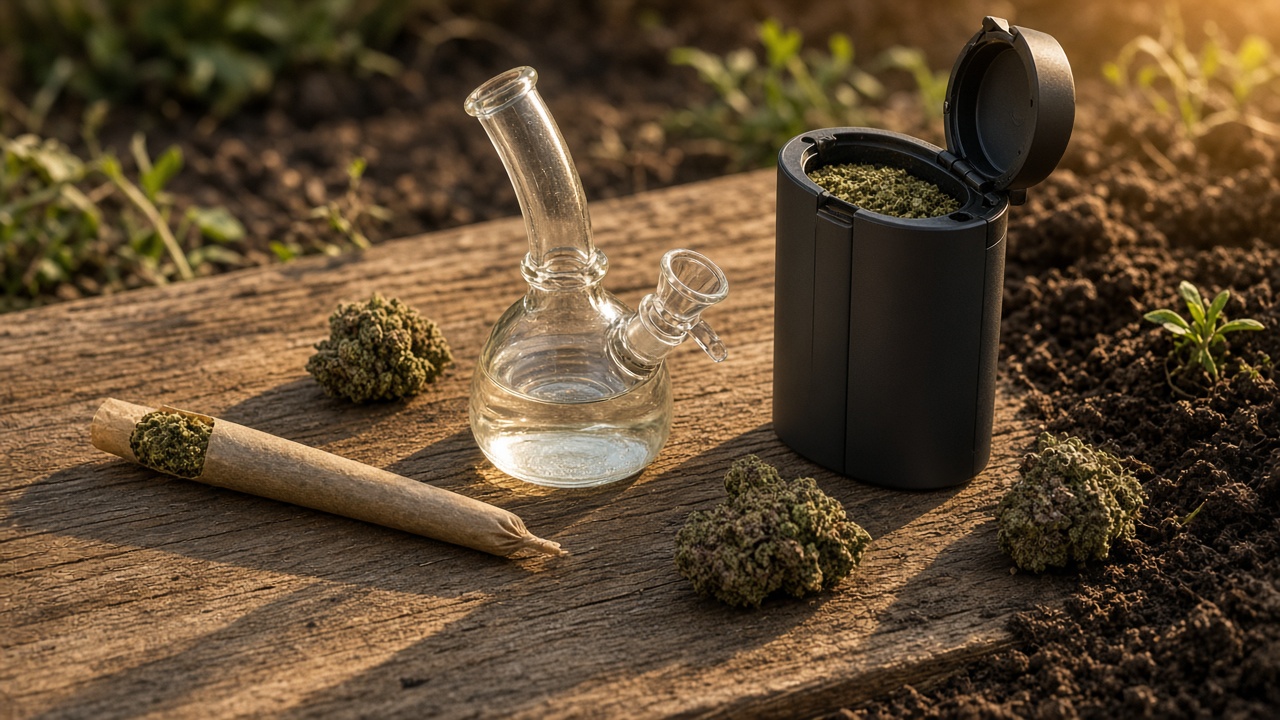
A Little and a Lot Are Different Highs
Smoking more changes the kind of high once the easy part stalls. A little can leave you easy, and a lot can turn heavy and sharp while you still feel high.
Questions this article answers
- when does smoking more change the kind of high
- does the third bowl feel different from the first
- why does a little weed and a lot feel different
- can you feel high and anxious at the same time
- does more THC stop adding to the high

Head Cultivator
On this page
The first bowl and the third bowl are different places.
Smoking more changes the kind of high once the easy feeling, the memory, and the body stop moving together. A little can leave you easy. A lot can leave you heavy and on edge, and you still feel high.
By Jamie, grower at Divine Toke. Divine Toke is Sun+Earth Certified.
When does smoking more change the kind of high? #
Smoking more changes the kind of high when the easy feeling stalls and the heavy, foggy, or sharp part keeps climbing. You can still feel high after the night has already turned.
The National Institute on Drug Abuse says cannabis can leave you happy or relaxed. It can also stretch time, blur thinking and memory, and throw off how your body moves. That same page says anxiety, fear, and panic show up more often after a large amount. A strong product does the same, and so does having little practice with weed. Amount sits on their list beside potency and how you take it.
How much you smoke is one piece of a bigger stack. The map is in the high isn't one thing.
What moves when you keep going:
- The easy, content feeling can drop while the high is still there.
- Memory errors and slow thinking pick up.
- The body gets less steady, and alertness falls.
- Anxious and down feelings can rise on that same night.
Researchers call it biphasic when a little and a lot pull opposite ways. A 2024 review went looking for that pattern in people, on pain, anxiety, and sleep. Amount showed up in the papers they kept. Direct tests of the flip are still thin. There isn't enough research yet on how one person's body answers a given night, and a night you actually had still counts.
Each lab put a smaller amount next to a bigger one. Most of them used people who don't smoke every day. A research cigarette was built for the lab. Your third bowl is the one in your hand.
Why can a little ease you while a lot winds you up? #
A smaller amount of THC eased distress after a lab stress task. A slightly bigger amount raised bad mood before that task started. They swallowed a capsule.
Childs, Lutz, and de Wit (2017) gave 42 healthy adults a capsule with 0, 7.5, or 12.5 mg THC. They waited 2.5 hours, then ran a speech and a math task in front of judges. The 7.5 mg group reported less distress after the task, and they rated it as less of a threat. The 12.5 mg group was in a worse mood before the task started, and their performance slipped.
The social-room version of that night is in when a little helps in company and a bigger amount backfires.
Smoked weed can make the same turn. Hunault and colleagues (2014) had 24 recreational smokers finish research cigarettes with 0, 29, 49, or 69 mg THC. As the cigarette got stronger, feeling high went up. So did dizziness, a dry mouth, a pounding heart, and ratings for bad memory, anxiety, sedation, and feeling down. Alertness, contentment, and calmness went down.
The high stayed in the ratings, and calm fell out of them.
What rose, and what fell, on those cigarettes:
- Feeling high, anxiety, sedation, and feeling down all rose.
- A dry mouth, dizziness, and a pounding heart rose with them.
- Alertness, contentment, and calmness fell.
A 2009 paper from that lab used the same strengths, and the cannabis was mixed with tobacco. 24 men in that paper smoked a few times a month. They weren't daily smokers. They got slower on reaction tests as the THC went up. Errors rose on short-term memory and on sticking with a dull task. Feeling high and feeling drowsy also split across the strengths. The slowdown kept climbing with the cigarette. It didn't wait for the high to feel finished.
What happens to your sense of time if you keep smoking? #
THC can make seconds feel long, and in the best lab test that stretch didn't get bigger just because the amount did. People who smoke often didn't show the stretch at all.
The clock itself is in why cannabis makes minutes feel long. Smokers expect the next bowl to stretch the minutes even more.
Sewell and colleagues (2013) gave THC through a vein, in a lab, to 44 people, at more than one strength. They judged gaps of a few seconds. Every strength made people guess long and finish some timing tasks early. That fits an inner clock running fast. The stretch didn't track the strength. People who rarely smoke showed the long guess at the middle and high strengths. People who smoke often looked like the no-THC session.
So another bowl is a weak bet for even longer minutes, once smoking is a habit. My tolerance isn't a typical tolerance. I can still lose a sentence. I don't use the clock as the sign that the night turned.
When does memory fall out of the session? #
Memory errors and slower thinking show up as the amount climbs, and they can keep climbing after the pleasant part has arrived. That's the foggy bowl, where the sentence you started is gone.
I've smoked the third joint and then hunted for the lighter that was already in my hand.
Hunault and colleagues (2009) saw those short-term memory errors rise as the research cigarette went up that ladder, cannabis mixed with tobacco. Reactions, attention, and motor control slowed on the same climb. Böcker and colleagues (2010) used that ladder with 16 people and found working memory got slower, item by item, as the THC went up.
A vapor study splits "you feel it" from "the test fell apart." Spindle and colleagues (2021) had 20 people who don't smoke often inhale vapor at 0, 5, or 20 mg THC. On other days they ate brownies at 0, 10, or 25 mg. The low vapor and the low brownie brought good feelings and didn't hurt the thinking tests. The high ones brought good and bad feelings, and the tests dropped.
Those 20 people weren't daily smokers. The brownie days went through the stomach. The vapor half is the closer match to a session. A little can register before the memory test cares. A lot makes the test care. NIDA lists impaired thinking and memory with the short-term effects, and a large amount with the anxious ones.
When does the body get heavy? #
The body gets less steady as the amount stacks, and alertness drops with it, while the high rating can still be rising. A racing heart can spike and fade. The unsteadiness can hang on.
Zuurman and colleagues (2008) gave 12 healthy men pure THC in a vaporizer. The steps ran from 2 mg up to 8 mg, about an hour and a half apart. They breathed pure THC vapor. Ground flower wasn't in the device. Body sway rose with the amount and didn't settle back between steps. Alertness fell. Feeling high rose. Heart rate jumped after each step and came back down. The heart and the body weren't on the same clock.
The cigarette ratings land in the same neighborhood. Hunault and colleagues (2014) saw sedated and down go up with the stronger cigarettes, and feeling stimulated go down. You can feel high and heavy in the same hour. NIDA lists impaired body movement with the short-term effects.
Where does more stop adding? #
More stops adding to the easy part before it stops adding to the rough part. Feeling high can already be obvious while the tests, the anxious marks, and the heavy body are still climbing.
Spindle and colleagues (2018) had 17 adults who hadn't used cannabis in the past month smoke and vaporize flower at 0, 10, and 25 mg THC. At 10 mg they could tell they were high, and thinking slipped a little. At 25 mg the effect was stronger, bad effects showed up more, and thinking and coordination fell off harder. Vapor hit harder than the same milligrams smoked.
In that study, blood THC and heart rate peaked within 30 minutes and were back near baseline in 3 to 4 hours. Some of the felt effects, and the test drops, were still around at about 6 hours. The 2021 vapor study found the same kind of split. After inhaling, blood THC was usually back at baseline well before the effects were gone.
Hunault and colleagues (2014) also saw wanting more come apart from feeling the drug. The want didn't climb in a straight line with the feel.
| What the lab compared | At the smaller amount | At the bigger amount |
|---|---|---|
| Capsule before a stress task | 7.5 mg eased distress after the task | 12.5 mg raised bad mood before it started |
| Research cigarettes | Feeling high rose as the cigarette got stronger | Anxious, sedated, and down rose too, and calm fell |
| Smoked or vaped flower, rare smokers | 10 mg felt like a high, and tests slipped a little | 25 mg brought more bad effects, and tests fell harder |
| Vapor, rare smokers | 5 mg brought good feelings, and the tests held | 20 mg brought good and bad feelings, and the tests dropped |
If the top end tips over, the picture of that next stretch is in greening out.
Does the percent on the bag pick the bowl you're on? #
No. The percent is how strong the flower is. The bowl you're on is how much of it you already smoked. A hot label can still be a small first bowl. A milder jar can still be a heavy third.
The longer version is the THC potency myth. NIDA lists amount and potency as two different reasons the effect changes. Hunault's cigarettes were loaded up to 69 mg THC, and the ratings still moved with the amount in that cigarette. The sticker didn't stand in for what they smoked.
Daily smoking moves your own line. Sewell and colleagues saw the clock stretch go quiet in people who smoke often. How a break changes that line is in cannabis tolerance breaks. I just smoke a joint, or two, or three. The third one is a different place than the first, even on a jar I've smoked all year.
What you'll actually catch if you pay attention:
- The easy feeling flattening while you still feel high.
- Losing the thread of a sentence you just started.
- Your body getting heavy, or your stance getting less steady.
- Minutes staying about where they were, once you already smoke every day.
A joint doesn't print the milligrams that reached you. The lab numbers above belong to those labs.
FAQ #
Does the third bowl just turn the first one up? #
Often it doesn't. The easy part can stall while heavy, foggy, and sharp feelings keep climbing. Hunault and colleagues (2014) saw feeling high rise with stronger cigarettes, and they saw calm and alertness fall on the same climb. NIDA lists a large amount as a reason anxiety shows up more often. You can still feel high. The night can already be a different one.
Why does the same jar feel fine on one joint and rough on three? #
The jar didn't change. The amount you smoked did. Spindle and colleagues (2018) used flower at 10 mg and at 25 mg in people who rarely smoke. The smaller amount was a clear high with a small slip on the tests. The bigger amount brought more bad effects and a harder drop on thinking and coordination.
Is a swallowed capsule the same as another hit? #
A capsule waits, and a hit arrives through the lungs. Childs, Lutz, and de Wit (2017) gave the capsule 2.5 hours before the stress task. Their 7.5 mg eased distress after the task, and 12.5 mg raised bad mood before it. That split is real for a capsule. Your couch counts bowls. Their pill was weighed in milligrams.
Do daily smokers get the same flip as newer smokers? #
The clock part goes quiet in people who smoke often. The rest of the night can still change. Sewell and colleagues (2013) found no time-stretch difference in frequent smokers across the strengths they tested. NIDA still lists experience as one reason effects differ, and a large amount as a reason anxiety is more common.
Can you feel high and less calm in the same hour? #
Yes. The cigarette study measured both at once. Hunault and colleagues (2014) had feeling high go up while contentment and calmness went down, and anxious and sedated ratings went up. You don't have to pick one label for the hour. Those ratings showed up together.
Does the THC in your blood tell you which high you're in? #
The blood number can leave while the high stays. Spindle and colleagues (2021) found that after vapor, blood THC was usually back at baseline well before the effects were gone. Their 2018 smoke-and-vapor study saw blood and heart rate settle in 3 to 4 hours, while some effects hung on around 6 hours.
Does vapor hit like smoke at the same milligrams? #
In one lab, vapor hit harder than smoke at the same milligrams. Spindle and colleagues (2018) had 17 people smoke and vaporize 10 mg and 25 mg. Vapor produced stronger effects on most measures and a higher peak in the blood. A joint and a vaporizer can share a milligram number and still be different nights.
Will another bowl make minutes even longer? #
Once you smoke often, another bowl is a weak way to stretch the clock further. Sewell and colleagues (2013) saw the seconds stretch, and the stretch didn't grow with the amount. Frequent smokers didn't show it. The longer walk through that clock is in why minutes feel long.
Why do the thinking tests fall apart after the high is already obvious? #
A clear high and a failed test aren't the same step. Spindle and colleagues (2021) saw 5 mg of vapor bring good feelings without hurting the thinking tests. At 20 mg the feelings included a rough side, and the tests dropped. Hunault and colleagues (2009) saw memory errors and slower reactions keep climbing as the cigarette got stronger.
Does sharing a joint change which high you get? #
It can, because a passed joint doesn't split into equal shares. How deep you pull, how long you hold, and how many hits you take change what arrives. NIDA lists the amount taken and the way you take it as separate reasons the effect changes.
The jar from us #
Divine Toke is the Michigan mail-order shop for the sun-grown flower I grow, in living soil. We sell it by mail. Flower, 1g pre-rolls, and the 20-pack, 20 of those joints for $120. Honey Bananas also gets pressed into solventless rosin, and Sundog is the bio hash. If you're curious to try the flower, it's at the shop.
The wider map is the high isn't one thing. Count the bowls before you blame the jar.
This article is for educational purposes only and is not medical advice. Always consult your healthcare provider before starting any new wellness routine.
Try Honey Bananas — sun-grown in Detroit
Small-batch, living-soil flower cultivated in our Detroit sun-houses. Ships to all 50 states.