Light Leak and Reveg on an Outdoor Cannabis Plant
Why an outdoor cannabis plant grows fresh leaves late in flower, how porch or hoop-house light breaks its dark period, and what partial reveg looks like.
Questions this article answers
- Why is my outdoor cannabis plant growing leaves again late in flower?
- Can a porch light cause an outdoor cannabis plant to reveg?
- What does a light leak do to a flowering cannabis plant?
- Can a hoop house light interrupt cannabis flowering?

Head Cultivator
On this page
New leaves are showing up on a plant that was already flowering.
Little single-blade leaves pushing out of buds you figured were nearly done.
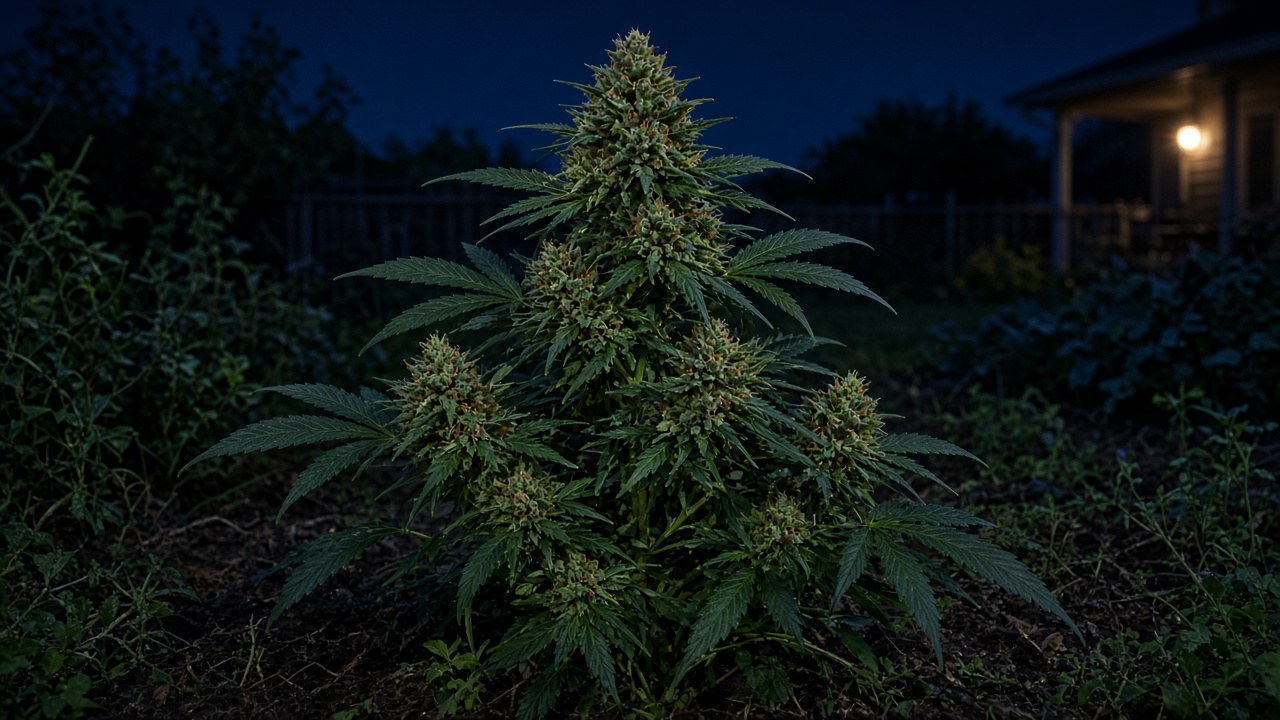
Before you blame the feed, walk outside after dark. The porch light that helps you find your keys can reach a plant across the yard, and by the time odd leaves show up inside ripe flower, the night may have been getting broken for weeks.
Why Would a Flowering Outdoor Plant Grow Leaves Again? #
A flowering outdoor cannabis plant can grow leaves again when its long nightly dark stretch gets cut short often enough to weaken the flowering signal.
Growers call that switch back to leaf and shoot growth revegetation, or reveg. A photoperiod is the plant's daily pattern of light and dark. Reveg can start halfway through flower. It can also start late, when the buds already look close.
Cannabis pays attention to how long the dark lasts. Daytime sun is only half the story. The 2025 cannabis night-break study in PMC describes cannabis as a short-day plant, which means a long night that stays dark helps hold it in flower.
A lamp that keeps coming on during that night can change the message. The plant may answer with fresh shoots, stretched little branches, and leaves that look wrong for the stage it was in.
Partial reveg is what I call it when some branches keep building flower while other spots start making leafy growth again. That uneven look is the clue. It points to a local light: a porch fixture, a gap in a hoop-house wall, a branch that finally grew into a beam.
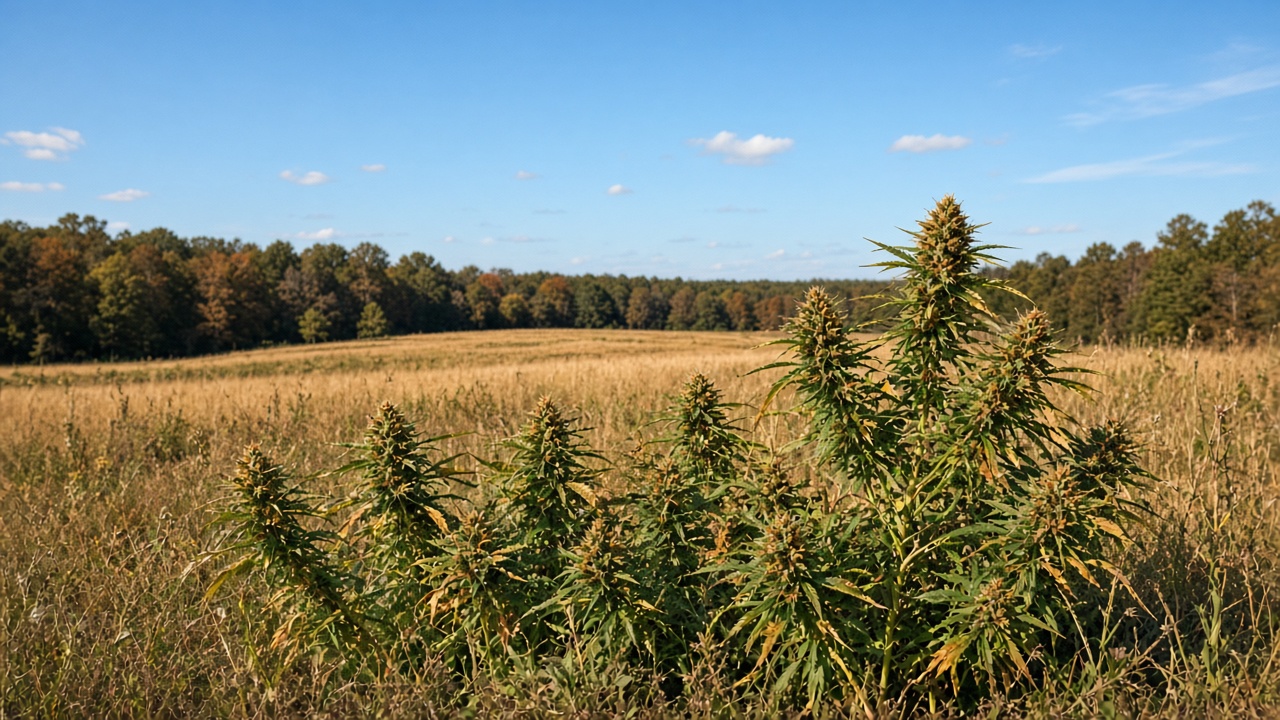
For outdoor flower here, the normal season still runs on shortening days and frost risk. That bigger clock is covered in the normal outdoor flowering clock. This post covers the accident inside that clock, where a plant gets a false little piece of daytime after dark.
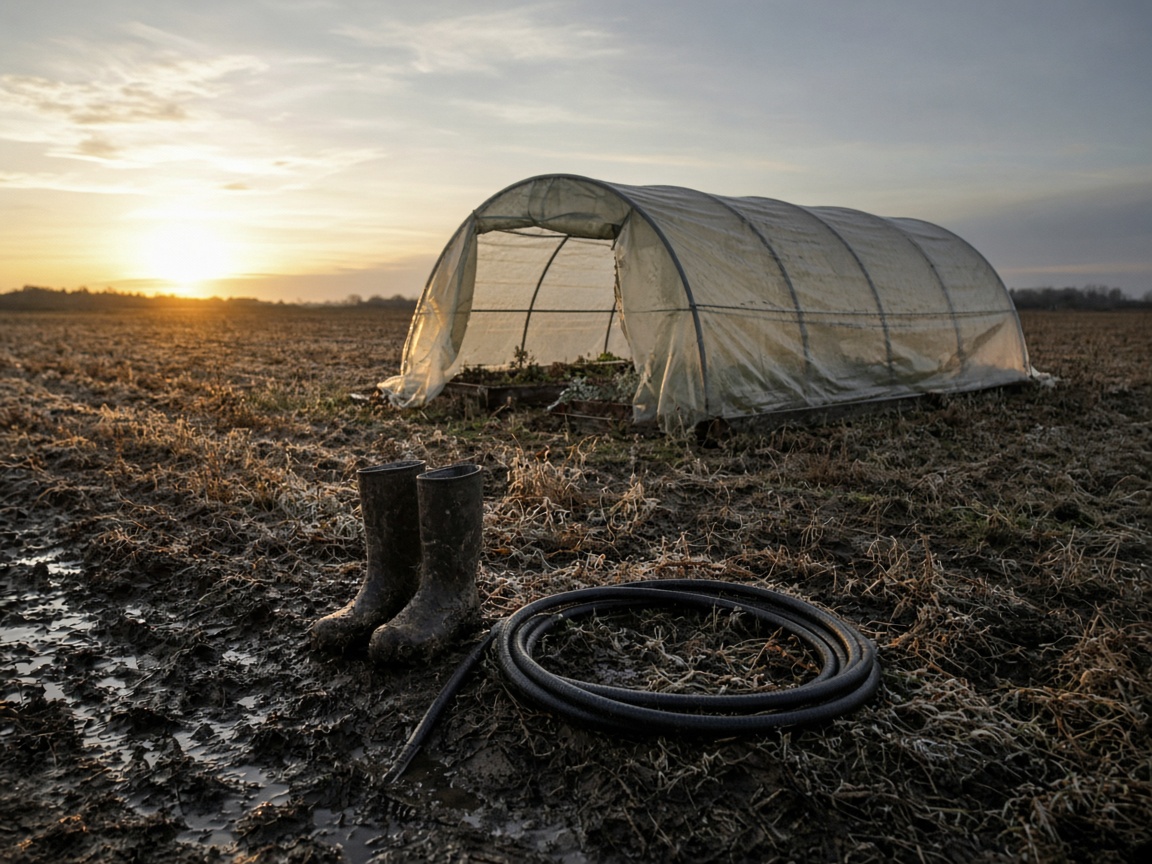
If you grow around Detroit, a porch fixture can sit close enough to matter. A hoop house beside a barn, garage, or work area can catch the same stray light through its plastic.
One strange leaf settles nothing. Look at the newest growth for a pattern:
- Fresh shoots leaving established buds, well past a small sugar leaf near a flower
- Single- or three-finger leaves that keep appearing on newer growth
- Longer spaces between new nodes as the branch starts reaching again
- Old flowers beside new leafy tips on the same branch
- A brighter-facing side that looks different from the shaded side
The case gets stronger when several of those signs stack up over time. Yellow lower leaves alone point somewhere else. So can one odd tip after a rough weather week.
Reveg changes which way the whole plant is growing, and you see it in the new structure. A light check beats guessing from one leaf.
What Do Reveg and Photoperiod Mean? #
Reveg begins when the plant reads its nights as too short or too interrupted to keep its flowering program steady.
Day length gets the attention, but the dark stretch carries just as much of the message. Growers call cannabis a long-night plant as well as a short-day plant, and both names describe the same thing. The plant wants a long night, and it wants that night to stay dark.
In one HortScience cannabis photoperiod study, the tested genotype flowered best with at least 10.8 uninterrupted hours of darkness. That number belongs to that plant under those study conditions. Treat it as a clue for outdoor plants, since other cultivars can land somewhere else.
Plants research on cannabis photoperiod sensitivity found that cultivars can respond differently when day length changes. That helps explain why two plants standing near the same Detroit garage can look different. One keeps flowering. The other throws a leafy tip toward the light.
Here's the signal in a table:
| Night pattern | What the plant can read | What may show up |
|---|---|---|
| Long, dark, and steady | Flowering season is still on | Flowers keep maturing |
| Long night with a repeated light pulse | Daytime may have come back | Flower timing can stall or get uneven |
| Night shortened by a lamp | Vegetative conditions are returning | New leafy shoots can start |
| Light reaching one edge only | One branch gets a different signal | Partial reveg can stay on one side |
The research term for a light pulse inside the night is a night break. The 2025 PMC night-break paper used a one-hour light interruption as a way to maintain vegetative cannabis growth.
So a security light deserves a look. It can run for short stretches and still matter, as long as it keeps showing up after the plant starts counting darkness.
The PLOS ONE cannabis light study also found that light during the dark period delayed flowering in cannabis. That paper tested near-infrared light in a controlled setting, and a porch bulb is a different source with a different exposure. Still, both point the same direction: light during the dark period can change flowering timing.
Which Night Lights Can Interrupt a Dark Period? #
Any repeated artificial light that reaches the leaves after dark can interrupt the night, including a porch lamp, motion light, streetlight, or work light inside a hoop house.
The bulb doesn't need a cannabis label. Leaves take in whatever light reaches them.
Michigan State University's Managing Light Pollution guide calls unwanted electric lighting in a neighboring area light pollution. The guide also explains that photoperiod-sensitive plants can react to very low light levels. That matters around a hoop house, because translucent plastic can spread a nearby glow across more than one branch.
Oregon State University photoperiod guidance gives the broad plant-science version: a brief light interruption during a long night can create the same response as a longer day.
Here are the usual suspects to check after dark:
| Night light source | How it reaches a flowering plant | Clue worth checking |
|---|---|---|
| Porch or garage fixture | A steady beam crosses a yard, fence, or driveway | The exposed side faces a house |
| Motion security light | Short bright bursts repeat when people, pets, or cars move | The timing changes after dinner or near a driveway |
| Streetlight or parking-lot lamp | Constant glow lands on the upper canopy or one field edge | The same outer branches stay brighter all night |
| Vehicle headlights | Repeated driveway or road traffic sweeps across the same spot | Damage lines up with a drive or entrance |
| Hoop-house work light | A lamp stays on during checks, packing, or repairs | The light leaks through doors, seams, or plastic |
| Barn or shed light | An exterior fixture shines through an open door or vent | Reveg sits near the structure-facing wall |
| Neighbor's greenhouse light | Supplemental lighting spills past curtains or gaps | A distant glow has a fixed nightly schedule |
| Timer, controller, or indicator light | Small lights sit close to leaves every night | The source is inside the protected space |
Michigan State University's photoperiod-control handout describes night interruption as a way growers change a plant's perceived day length. A fixed porch light that comes back every night matters more than a quick flashlight check. Duration, timing, brightness at the leaf, and how often the light returns all matter.
The source may sit farther away than you'd guess. Wet pavement, pale siding, hoop-house plastic, and a white wall can bounce a beam into a spot that looked sheltered in daylight. Fall nights come earlier, so a leak is easy to miss on a busy October evening. A lit edge beside a dark row can also make the contrast easier for the plant to read.
For an outdoor plant near Detroit, start where people go after work. The porch. The garage. The side door. The light that pops on when somebody pulls in.
Nobody has to be careless for a leak to happen. Plants grow taller. Leaves turn toward an opening. A bulb gets swapped. A sensor gets aimed lower. The exposure changes, and nobody decided to change the flowering cycle.
What Does Partial Reveg Look Like on a Branch? #
Partial reveg usually looks like new vegetative shoots trying to grow through flowers that were already under way.
One branch can tell two stories. Older buds hold their form. New growth comes out leafy, stretched, and a little confused. The cannabis night-break research describes flowers that receive dark-period light as having delayed or disrupted reproductive development. In a yard or hoop house, that can look like a branch that stops matching its neighbors.
Start at the newest tissue. Old fan leaves fade late in the season for plenty of reasons. The fresh tip tells you more.
These signs fit the reveg pattern:
- Leaves push out of a mature flower site. The leaves may begin with one or three fingers.
- New shoots stretch above the bud. They have visible spaces between leaf sets instead of staying packed into flower.
- More leaflets return over time. A leaf can move from one blade toward a more familiar multi-finger shape as vegetative growth rebuilds.
- Flower growth slows or gets uneven. The bud stays there, while the new tip spends energy on stems and leaves.
- The pattern repeats. Several new nodes matter more than one funny leaf.
| What you see | What it can mean | What gives it more weight |
|---|---|---|
| One small single-blade leaf | A clue only | More of the same leaf appears on new nodes |
| Leafy tip inside a flower | Early partial reveg | A longer shoot keeps rising from that site |
| One branch reaching up | Local light may be involved | The branch faces a fixture or bright opening |
| Buds beside fresh leaves | Mixed growth signals | The newest growth keeps acting vegetative |
| A whole plant making leafier shoots | Bigger timing problem | The night audit finds more than one source |
The 2023 cannabis photoperiod study found that flowering response changes with cultivar and day length. So leaf shape alone can't settle it. Two outdoor plants can react at different speeds. One might show a leafy tip. Another might build a whole little branch.
Cool fall weather can slow growth, and a run of new vegetative nodes still shows through. Take dated photos from the same angle over a few days. That turns a hunch into a record of what the branch is doing.
If you're buying flower later, reveg is mostly a grow-side story. It can still show up as loose, leafy flower that never filled in like the rest of the plant. A label won't tell you that. The grow history will.
How Does Reveg Differ from Normal Late-Flower Growth? #
Reveg makes new leafy architecture, while normal late-flower changes stay inside the plant's flowering architecture.
In yard terms: a flowering plant can age, get stressed, make fresh floral tissue, or set seed without going back to a leaf-and-branch pattern. The new growth shows you which one is happening. Read the whole tip instead of naming the problem from one leaf.
| New growth pattern | What it looks like | Where the next check goes |
|---|---|---|
| Partial reveg | Leafy shoots, visible nodes, and leaves rising from older flower | The dark period and nearby light |
| Normal late-flower aging | Older fan leaves fade while buds keep their compact structure | General finish and plant health |
| Heat or light stress | Bleached, curled, crisp, or twisted upper leaves | Heat, direct sun, and general stress |
| Fresh floral stacking | New bracts and pistils keep building at the flower tip | Flower form, rather than leaf-and-node growth |
| Seed development | Individual bracts swell around a hard seed | Pollen and seed signs |
Foxtailing is the common name for fresh floral stacking. It stays flower parts all the way up. Partial reveg sends out leaves and branch-like shoots that grow away from the flower. Keeping those two apart saves you from chasing a different harvest problem.
The HortScience photoperiod study shows why the light question comes first when vegetative growth appears in a flowering cannabis plant. Its tested genotype needed a long uninterrupted night to flower. A broken night gives you a reason to check the leaf-and-node pattern before you blame food, weather, or genetics.
Stress can sit beside a light leak. October brings cold nights, wind, wet plastic, and a rush to finish jobs before frost. Those conditions can make any plant look rough. They don't explain a new run of vegetative nodes on their own.
Seed development has its own clue. The swelling stays inside individual bracts, and reveg shows up as leaves and shoots. If the tip keeps making leafy stem after leafy stem, write down the light source and the timing. If it keeps making bracts and pistils, keep the light question open without forcing the reveg label. Something else may be going on.
Why Can Reveg Show Up on Only One Side of a Plant? #
A light leak can hit one branch, one edge, or the top of a plant while the rest still gets a much darker night.
Leaves don't all sit in the same light. A tall branch can rise above a fence. One side can face a garage. Another side can sit behind dense leaves or a hoop-house post. That's why partial reveg looks strange at first. It's one plant, and the branches are getting different nightly signals.
Michigan State University's light-pollution guide explains that stray electric light can reach nearby greenhouse sections and change the photoperiod plants receive. The same idea applies outside a protected structure. A beam has an edge. A curtain seam has an edge. A plastic wall has an edge. The branches near that edge respond first.
Here are a few ordinary ways the uneven pattern happens:
- The plant got taller. A branch moved above a fence, shrub, or row cover that used to block the light.
- The light got moved. A security fixture was tilted after installation or aimed toward a drive.
- The season opened a sightline. Leaves dropped from a nearby tree, or a door began staying open after dark.
- The plant got turned or relocated. One branch began facing the glow instead of facing away.
- The surface started reflecting. Wet pavement, pale siding, or hoop-house plastic added light from an angle.
The PLOS ONE dark-period-light study found that added light can delay flowering in cannabis. A porch fixture will act differently from a lab light, but the study gives the investigation a direction. Find where the response is strongest, then stand at that branch after dark.
In a Detroit backyard, the yard can look black from the kitchen and still have a bright line along one fence. In a hoop house, a lamp can look contained from the aisle and still glow through a flap or seam toward the crop.
Light leaks are often a geometry problem. Look for the line between the branch that changed and the branch that didn't. That tells you more than treating the whole plant as one evenly lit thing.
What Can a Grower Check After Dark? #
Check the plant from the branch's height after dark, then trace every repeated light source back to its switch, sensor, door, seam, or timer.
A daytime inspection misses it. What you want to know is whether the leaves get light during the stretch that should be dark.
UMass Amherst's photoperiod-control guide explains that low-intensity lighting can change photoperiod responses when it extends or interrupts the night. You're hunting for a repeated exposure. A stadium lamp isn't required.
Keep the check simple:
- Walk the outside after the place is dark. Look from the canopy toward the house, street, garage, and road.
- Wait for motion lights. A sensor can stay quiet while you stand still, then fire when a dog, car, or person passes.
- Check doors, vents, and seams. A hoop-house lamp can escape from places that look closed during the day.
- Look for reflected glow. White siding, wet concrete, metal, and plastic can throw light sideways.
- Write down the timing. A regular pattern makes the cause easier to separate from weather or general stress.
The Michigan State University photoperiod handout describes blackout material as a way growers exclude light when they need a shorter perceived day. That's a handy principle for diagnosis. The plant needs darkness that's actually dark at the leaf.
Close a gap. Change the direction of a fixture. Keep a work light from spilling toward the crop. Those fixes go after the light path. Swapping fertilizer, stripping leaves, and piling on changes all at once muddy the result. If you change five things in one weekend, the plant's next move won't tell a clean story.
Fix one confirmed light problem first. Then watch the new growth. Take photos of the same branch every few days, from the same angle, with the date marked. That record shows whether leafy growth keeps pushing forward or the branch settles back into flowering.
For a Detroit-area hoop house, do the check when the barn, driveway, and porch are in their usual evening routine. The plant lives through that routine every night, so that's the one to watch.
Can an Outdoor Plant Settle Back Into Flower? #
An outdoor plant may settle back into flower after the dark period is restored, though the time and finish quality depend on how long the interruption lasted and how far the reveg response went.
The old leafy growth won't turn back into a finished bud. Watch what the plant makes next. The 2025 cannabis night-break paper shows that dark-period light can maintain vegetative growth. Take the interruption away and the plant gets a chance to read long nights again. It still needs time, and the time differs by cultivar and by branch.
Research on cannabis photoperiod differences found cultivar-specific responses to day length. So one grower may see a branch settle down quickly while another sees leafier growth hang around.
| What affects the next phase | Why it matters |
|---|---|
| How long the light leak lasted | A longer interruption gives the plant more time to build vegetative growth |
| How much of the plant saw the light | One exposed branch can recover differently from a whole bright edge |
| How late it is in flower | Less time remains for new flowers to develop before seasonal pressure arrives |
| Cultivar sensitivity | Cannabis types do not all use the same photoperiod threshold |
| Weather and plant stress | Cold, wet, or damaged tissue can complicate what new growth looks like |
Be patient. The plant needs several dark cycles before new growth can show whether the signal changed. That's one more reason to stop changing everything at once. A clean nightly dark period gives you a baseline. Then the tip shows whether it goes back to floral growth or keeps building leaves.
Outdoor growers here work inside a shorter finish window than growers in warmer places. The normal frost and flowering schedule lives in the Michigan season guide. A light leak can eat into that already short finishing time. For a Detroit gardener, a small evening fixture can turn into a big fall headache.
If you're shopping, it's one more reason to see flower as a seasonal crop. That bud made it through sun, dark, weather, and the end of the season.
Why Do Michigan Light Leaks Matter Near Harvest? #
Michigan's outdoor season is already tight near harvest, so a plant that loses its dark period can lose time it does not have to spare.
Michigan State University notes that daylight falls below 12 hours starting in mid-September. That gives outdoor photoperiod plants the longer nights that support flowering. It also makes an evening light leak matter more. The sun set did its job, then a porch lamp, security lamp, or hoop-house work lamp changed the night at the leaves.
Outdoor cannabis has to finish through cool nights, rain, and the approach of frost. The frost calendar lives in The Michigan season guide, so I'll leave it there. What matters here is the overlap. A plant that spends late-season energy on new vegetative shoots can end up with loose, leafy, uneven flower when the weather asks for a finish.
| Fall reality | Why a light leak adds pressure |
|---|---|
| Nights get longer | The plant needs that darkness to maintain flower |
| Evenings get busier and darker earlier | Porch and work lights see more use |
| Protected structures get used after sunset | A small hoop-house lamp can spill through a gap |
| Cool, wet weather can arrive | Time lost to reveg leaves less room for a clean finish |
| Frost risk moves closer | The outdoor clock does not pause for a confused branch |
Detroit gardeners know the evening routine changes fast once fall comes in. The driveway light stays on longer. The garage door opens after work. The hoop-house check happens with a headlamp or a work light. Those are normal fall chores, and they're the first places to look when an outdoor plant starts sending leafy growth through mature buds.
At Divine Toke, I want people shopping sun-grown flower to understand why the grow story matters. Dark nights are part of how outdoor flower finishes. So are dry timing and the care that happens after cut.
If you want the next step after a clean finish, read how drying carries flower from harvest to cure.
If the weather side of a late harvest worries you, late-September rain and bud rot covers what a Detroit shopper should refuse in a jar.
If you're curious to try sun-grown flower from Divine Toke, start with the jar in front of you. Use your nose. Read the label. Ask how it was handled. Good flower holds up to those questions before you ever light it.
Frequently Asked Questions #
Can a porch light make an outdoor cannabis plant reveg? #
Yes, a porch light can contribute to partial reveg when it repeatedly reaches the leaves during the long nighttime dark period.
The 2025 cannabis night-break study used a one-hour night light interruption to maintain vegetative growth. A household fixture has different brightness and timing, so the result can run from no visible change to a few leafy shoots.
Do streetlights affect outdoor cannabis flowering? #
A streetlight can affect flowering if its light reaches the plant often enough to interrupt darkness.
Oregon State University documents photoperiod responses from streetlights in outdoor plants, and cannabis research shows dark-period light can delay flowering. The branch closest to the glow may show the first change.
Why are there single-blade leaves in my cannabis buds? #
Single-blade leaves can be an early reveg clue when they keep appearing with new vegetative shoots inside older flower.
One HortScience cannabis study found its tested genotype needed at least 10.8 hours of uninterrupted darkness to induce flowering. One odd leaf needs more context. A run of new leafy nodes is stronger evidence.
Can a motion light cause partial reveg? #
A motion light can cause trouble when it fires often enough to keep splitting the plant's nightly dark stretch.
The tested night-break treatment in the PMC cannabis paper lasted one hour, which shows why repeated nighttime illumination deserves a close look. Record when the sensor turns on before you decide it caused the change.
Does one odd leaf prove an outdoor cannabis plant is revegging? #
One odd leaf is only a clue.
The stronger sign is a sustained run of new shoots, new nodes, and increasingly vegetative leaves after the flowering structure was already set. Cannabis photoperiod research also shows cultivar responses vary, so the pattern across the plant matters more than one leaf.
How is partial reveg different from foxtailing? #
Partial reveg sends leaves and branch-like shoots out through the flower, while foxtailing keeps adding floral parts at the tip.
Fresh pistils and bracts can stack into a longer flower shape. Leaves with clear nodes send the light check back toward reveg.
Can a hoop-house work light interrupt cannabis flowering? #
Yes, a work light can interrupt flowering if it leaks through plastic, an open door, a vent, or a seam and reaches the plant night after night.
Michigan State University's light-pollution guide says blackout screens and curtains stop electric light from entering a protected structure. For a practical check, stand at the plant after the normal evening work is done.
Will an outdoor cannabis plant return to flower after a light leak stops? #
It may return toward flower after the dark period is restored, though the pace and finish vary by cultivar and by how far reveg progressed.
The 2025 night-break study shows cannabis uses dark-period light as a growth signal. Give new tips several dark cycles before you judge by their shape.
Does shorter fall daylight cause reveg by itself? #
Shorter fall daylight lengthens the natural night, which supports outdoor cannabis flowering.
Michigan State University says state daylight drops below 12 hours in mid-September. Reveg becomes more likely when artificial light cuts into that dark window.
Grown in Detroit. Shipped to your door.
Small-batch, sun-grown cannabis cultivated in living soil. Mail-order shipping to all 50 states.