How Detroiters Are Shopping Sun-Grown vs Indoor This Harvest
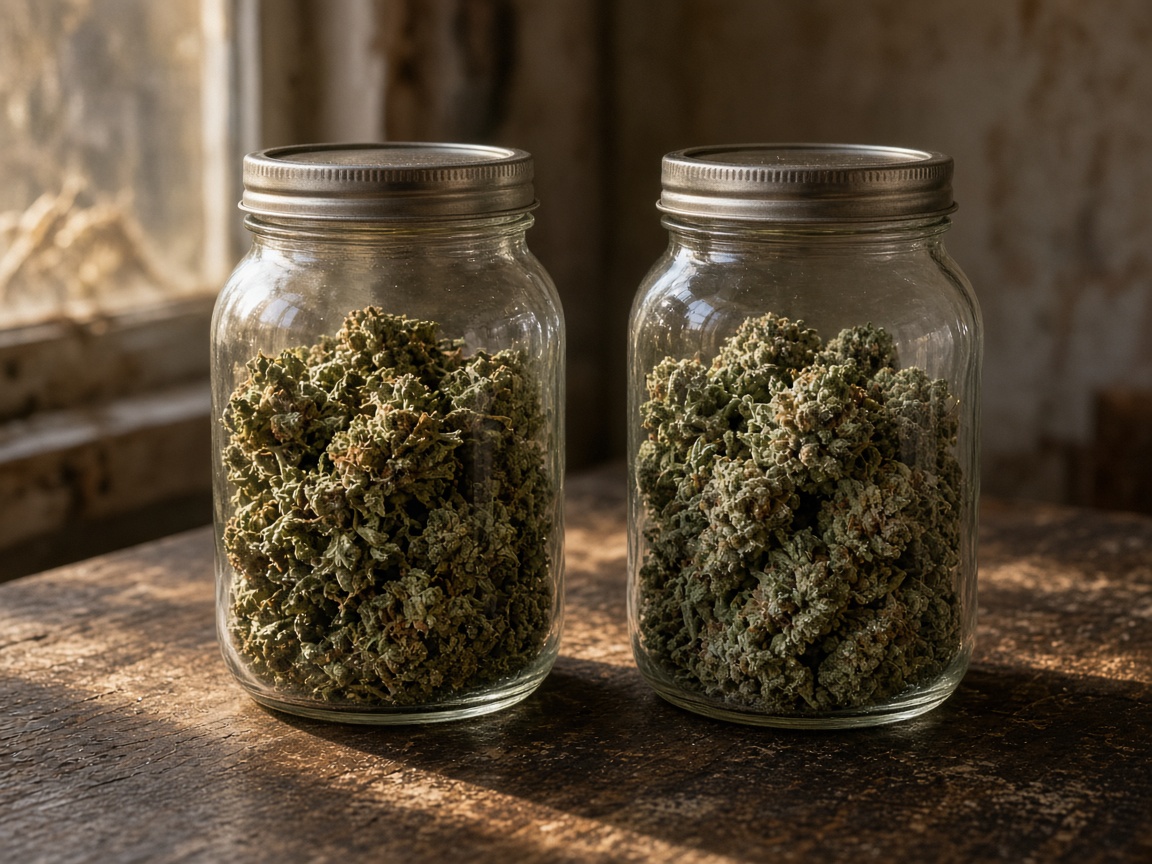
Two jars on a Detroit counter this September harvest. How Detroit shoppers pick sun-grown vs indoor by price, nose, freshness, and leftover outdoor stigma.
Questions this article answers
- How are Detroit shoppers choosing sun-grown vs indoor flower this September harvest?
- is outdoor weed cheaper than indoor in Michigan
- does a Michigan label say indoor or outdoor
- is sun-grown cannabis weaker than indoor
- how to shop harvest flower in Detroit

Head Cultivator
On this page
Two lids on a Detroit counter this week. Same THC number. One's cheaper and smells like a field. The other looks tighter and costs more.
People crack both. They sniff. Then they check the sticker and the price. That's the harvest shop I keep watching.
I'm Jamie. I grow sun-grown organic flower for Divine Toke around Detroit. This is how shoppers are actually picking sun-grown vs indoor this September harvest.
If you want the farm-side "why sun" piece, that's in sun-grown vs indoor. If you want why cut week isn't jar week, that's in September harvest on a Detroit menu. This one stays with the two piles in front of you: price, nose, freshness, and the leftover outdoor stigma that still moves a hand.
How are Detroit shoppers choosing sun-grown vs indoor this harvest? #
They're shopping two piles, not two teams. Indoor still wins the first look. Sun-grown wins when the nose and the price both clear. Freshness dates break ties. I don't have a Detroit poll with quoted shoppers. I have a counter pattern and the public numbers behind it.
Metro Detroit is a price market right now. The Michigan CRA February 2026 monthly report put the average adult-use flower ounce at $59.85. Marijuana Herald, citing the CRA August report, put that same average at $60.33 in August. That's a cheap legal market. A $20 swing between two eighths still feels like real money after a shift.
Here's the habit I see:
| What the hand does first | What it usually means | What to do next |
|---|---|---|
| Grabs the frosty indoor jar | Prestige look. Higher sticker THC. "Safe" pile | Crack the lid anyway. Pretty can still be old |
| Grabs the cheaper sun-grown jar | Value. Harvest talk. Field smell | Read harvest date. Cheap can still be hay |
| Sniffs both, then checks dates | The honest shop | Buy the loud, dated jar. Ignore the grow-style slogan |
| Asks "which one is outdoor" | The label often won't say | Ask. Then smell. Then read the cut date |
Southeast Michigan is carrying a lot of that traffic. Marijuana Herald reported the CRA August split with the East and Southeast region at $98.26 million in adult-use sales and Wayne County at $29.71 million. Those are licensed-shop dollars, not farm-stand stories. The two piles live in that same cash line.
Three filters, in the order people actually use them:
- Price. Michigan flower is already cheap on average. The cheaper pile gets the first serious look from folks who buy by the week, not by the trophy.
- Nose. If the cheap jar smells like grass clippings, the hand goes back to indoor. If the indoor jar smells like cardboard, the cheap jar wins.
- Dates. Harvest date is the cut. Pack date, if it exists, is the lid. How to read both is in harvest date vs pack date.
Indoor still has the prestige tag. Sun-grown still has the leftover "dirt weed" tag. Both tags are lazy. The jar in your hand is a lot, a dry, a cure, and a storage story. Grow style is one chapter.
A Detroit shopper who treats the two piles like two different plants will get talked into a look. A Detroit shopper who treats them like two lots on one shelf will go home with something they can smell.
Who reaches for which pile #
I don't have named shoppers. I have patterns after a Detroit week.
- After a shift. Auto, hospital, warehouse, trades. The hand wants the jar that looks like it'll work. Indoor gets that first look. Price still wins if the indoor lid is dead.
- A parent buying for Saturday, not for a trophy. Sun-grown gets a real look because the ounce math matters. They still walk if it smells like clippings.
- A senior who hasn't bought legal flower before. Indoor looks "cleaner." That's the leftover story. Walk them through both lids. The seniors door lesson is in Detroit seniors at the dispensary if that's the whole visit, not the pile choice.
- Someone hosting. They grab indoor because it photographs. Then they complain the bag went quiet by Sunday. Dates and storage beat the photo.
Greenhouse sits in the middle of a lot of Michigan boards. Lamps plus sun. It can look indoor and smell outdoor, or the reverse. Treat greenhouse as a third lot, not a synonym for sun-grown. Ask. Then sniff. Then read the cut.
A Saturday counter, no quotes #
You walk in with cash. The case has a frosty indoor eighth at a premium and a sun-grown eighth on sale. Harvest photos are on the TV. The clerk says the outdoor is "this year's."
Do this in two minutes:
- Ask harvest date on both jars.
- Smell both if they'll let you.
- If only one lid is loud, that's the buy, even if it isn't the sale.
- If both are loud, buy the cheaper dated one and go home. You can come back.
- If neither is loud, leave. Harvest week will still be there next Saturday.
That's the whole method. The rest is why those five steps exist.
Why does indoor still get the first look? #
Indoor still looks like the "real" jar to a lot of Detroit shoppers because it's denser, frostier, and often prints a higher THC number. That look sold indoor as top-shelf for a decade. The habit didn't die when outdoor got legal and cheap.
I watch people tilt an indoor eighth toward the case light. Tight buds. White frost. A number in the mid-20s. Then they glance at the sun-grown jar like it's last year's peaches. Same counter. Same tax. Different story in their head.
What that look actually is:
- Density. Indoor rooms run the same day length and the same lamp every week. Buds often pack tighter. That photographs well in a case.
- Frost. Trichomes, the resin glands, catch the light. Indoor can look snowed-on even when the smell is thin.
- The THC sticker. R 420.504 requires THC and CBD on the sealed container, with a printed note that the real value may sit 10% above or below the lab number. Indoor lots often win that race. The sticker doesn't say "this will smell louder."
- Consistency. Indoor can repeat a look. Outdoor changes with the week. Shoppers who want the same jar twice lean indoor.
None of that means indoor is cleaner, fresher, or kinder to your night. It means indoor won the beauty contest.
| Indoor cue in the case | What it proves | What it doesn't prove |
|---|---|---|
| Tight, frosty buds | The plant was stacked and lit on a schedule | The jar is this month's cut |
| 26% THC on the lid | A lab ran potency on that lot | The high will feel better than 19% with a loud nose |
| "Indoor" on the menu card | Someone wrote a grow style | The flower was stored well |
| A higher price | The shop thinks it can get it | You will like it more |
Michigan shoppers have been trained to chase the number. The Michigan CRA makes that number easy to see. It doesn't make grow style easy to see. The same rule that prints THC does not require the words indoor, outdoor, or greenhouse. If the menu card is the only place "indoor" appears, treat it as marketing until a clerk can back it up.
The first-look habit is strongest after a long shift. Auto, hospital, warehouse, trades. You want the jar that looks like it'll work. Indoor looks like it'll work. That's a tired-brain shortcut, not a lab result.
If you already grabbed indoor, do one extra step before you pay:
- Crack the lid if they'll let you.
- If it smells like hay or perfume, put it back.
- Check harvest date. A pretty indoor jar from last winter is still last winter.
Pretty gets you to look. It shouldn't get you to pay. Next up is why the other pile is cheaper, and why that cheapness is doing more work than the frost.
Why is sun-grown cheaper on a Michigan counter this fall? #
Sun-grown is cheaper because outdoor canopy costs less to run, and Michigan already has too much flower for the price the shelf can hold. Indoor still asks a prestige premium. Outdoor often lands in the value bin. The state's own averages don't split the two piles. Your receipt does.
Start with the public floor. The Michigan Department of Treasury Q3 2026 wholesale price list values flower at $641.41 per pound for July 1 through September 30. The Q2 list was $629.39 per pound. Those numbers are tax math for all flower, not an indoor column and an outdoor column. Treasury says it builds an average retail, then divides by 1.5. That method points at about $60 an ounce as the state's own retail assumption. It matches the CRA ounce averages in the last section.
Now the pressure under that floor. MLive reported that even after the 24% wholesale tax, flower hit a record-low average in June 2026. For the first half of 2026 versus the first half of 2025, the same story said flower volume was down 1.2%, flower prices were down 1.5%, and adult-use revenue was down 5.3%. Robin Schneider at the Michigan Cannabis Industry Association told MLive that licensed shops are clustered in cities that opted in, so they fight for the same customers and keep retail prices flat. Growers and processors eat more of the tax.
What that means on a Detroit counter:
| Price fact | What it is | What a shopper can do with it |
|---|---|---|
| ~$60 / oz CRA average | All licensed flower, mixed grow styles | A $90 indoor eighth is a premium ask, not the market |
| $629 to $641 / lb Treasury list | Tax valuation, not a live bid | The wholesale market is compressed. Cheap lots exist |
| 24% wholesale tax | Paid upstream, not printed as 24% on your ticket | Your receipt still shows the 10% excise and 6% sales tax |
| Sun-grown on sale | Outdoor lots compete on price first | Use the sale. Then smell. Then read the cut date |
The 24% layer is real. It doesn't print on your ticket the way the 10% does. If you want that receipt story, it's in Michigan's Q2 wholesale tax print. The tax didn't make indoor cheap or outdoor fancy. It squeezed the middle. Outdoor still has to win on value.
Why outdoor can take a lower number and still ship:
- Sun and soil replace a room full of lamps.
- A harvest window dumps a lot of flower in a few weeks.
- Some outdoor lots are sold as bulk or value, even when the nose is honest.
- Indoor still gets the "exotic" menu font, so shops protect that price.
Don't treat cheap as a warning by itself. Cheap can mean a farm that didn't pay for a warehouse of lights. Cheap can also mean a tote that sat. Price gets you to the lid. The lid is still your job.
A metro Detroit shopper buying for the week, not the gram, will feel this first. Two eighths at $28 versus one eighth at $45 is dinner. That's why sun-grown is getting a real look this harvest, even from people who used to walk past it.
How to read the ticket without mixing taxes #
Your Detroit receipt isn't a grow-style report. It's a tax stack.
- 10% excise and 6% sales tax print at the register. Those are the lines you can see.
- 24% wholesale doesn't print as 24% on that ticket. It was collected upstream. Treasury's wholesale marijuana tax pages are where that layer lives.
- A cheaper sun-grown eighth can still ring close to an indoor eighth after tax if the shop padded the indoor "deal." Compare pre-tax shelf prices, then smell.
If two jars are $4 apart after tax and only one lid is alive, stop doing math. Buy the alive one. Harvest week is when shops test whether you'll pay for a story. The ticket won't save you. The lid will.
Does sun-grown smell different from indoor, or just cost less? #
It can smell different. The price gap isn't the whole story. Crack both lids. If one smells like pepper and hops and the other smells like a closet, that's oil, not the sticker. Those smells are terpenes, the oils in the flower. A 2023 lab comparison of the same genetics found outdoor lots had a wider terpene mix and more of several woody, peppery oils than indoor lots. That's a lab finding. It doesn't mean the jar in front of you is loud.
The paper is PMC9861703. Researchers compared commercial cannabis grown in natural light versus artificial rooms. Outdoor samples showed more terpene diversity. They also ran higher on several sesquiterpenes, the heavier oils, including beta-caryophyllene (pepper), alpha-humulene (hops), and a few cousins in that family. Some indoor samples showed more oxidized cannabinoid leftovers, which is a fancy way to say the indoor chemistry looked a little more beat-up.
Plain version:
- Same plant family. Different weather and light. Different oil mix.
- Outdoor often smells more like a field, a forest, or a spice rack.
- Indoor often smells cleaner and simpler, or it smells like the bag it sat in.
- None of that prints as "better." It prints as "not the same."
UV light isn't a magic booster. A PMC8593374 grow study found extra short-wavelength UV-B did not raise terpene or cannabinoid quality. In one cultivar it knocked some oils down. So don't let a clerk sell you "more sun equals more terps" as a rule. Sun changes the mix. Handling still decides if those oils survive the hang.
| Nose on the lid | Likely story | Shop move |
|---|---|---|
| Mango, pine, pepper, real plant | Oils are still alive | Worth the money if the date is honest |
| Sweet grass / hay | Dry or cure went wrong, or the jar is tired | Put it back. Grow style won't save it |
| Perfume or cleaner | Terps added, or the flower is covering something | Ask for the COA. Walk if they shrug |
| Almost nothing | Dead jar. Light, heat, or time | Indoor frost won't fix a silent lid |
Your nose tells you what's loud. The lab sheet tells you what they measured. Use both. How to read the terpene page on a Michigan COA is in reading a Michigan COA. How those oils die in a humid September kitchen is in terpene freshness after harvest.
A Detroit shopper who only compares price will miss the loud cheap jar. A Detroit shopper who only compares frost will miss it too. Crack both lids. If the sun-grown one smells like the plant and the indoor one smells like a closet, the cheap jar just won. If both smell like hay, leave with neither.
I grow in living soil under sun. I still fail a jar with my nose before I trust my own pride. You should fail a jar the same way, including ours.
If two jars smell the same, the cheaper dated one is the buy. If you can't tell them apart, you're sniffing too fast. Step outside, breathe, come back, and do it again. A Detroit case is loud with other bags. Give your nose ten seconds of quiet. Then pick.
How do Detroit shoppers check freshness when both piles share a shelf? #
They should read harvest date first, then smell, then treat any pack date as the lid, not the birthday. Indoor and sun-grown sit in the same case this week. A new indoor drop can be older than a new outdoor hang. Grow style doesn't tell you the age.
R 420.504 already requires date of harvest, if applicable, on the sealed container, plus the lab name and any test analysis date. It doesn't require a pack date. It doesn't require the words indoor or outdoor. So the freshness tools you actually have are:
- Harvest date. When the plant came down.
- Test analysis date. When the licensed lab finished the passing test.
- Pack date, if someone printed one. When this lid went on.
- Your nose. What survived the hang and the shelf.
Stack them. A September pack on a March harvest is a new sticker on an old plant. A September harvest with no pack date is normal in Michigan. Missing harvest date on flower is the problem.
| Clock | What it answers | Harvest-week trap |
|---|---|---|
| Harvest date | When was this cut | "Fresh crop" font on last year's outdoor |
| Test date | When did this lot pass | A new test on an old tote |
| Pack date | When was this lid sealed | A Tuesday pack hiding a winter cut |
| Nose | Are the oils still there | Pretty indoor that smells like cardboard |
Indoor can look new forever. Lamps don't print a birthday. Sun-grown can look rustic and still be this year's plant. If you only shop looks, indoor wins. If you shop clocks, the honest lot wins.
Southeast Michigan still has runway. MSU Extension frost climatology puts Detroit's median first 32°F freeze at October 18. The National Weather Service Detroit/Pontiac office treats October as the end of the growing season in Southeast Michigan. That's why a lot of photoperiod outdoor is still finishing or hanging in mid-September. A "harvest drop" this week may be early genetics, greenhouse, or last year's jar with new talk.
Cut week versus jar week is the whole point of September harvest on a Detroit menu. Late-summer pressure versus shelf timing is in late-summer harvest for Detroit consumers. Your move: don't let harvest energy skip the date.
If you already bought the jar, keep it alive. A Detroit apartment in September is humid, then the heat kicks on and the air goes dry. Both ends kill smell. Keeping September flower alive in a Detroit apartment is the home half of this counter habit.
What leftover stigma still follows outdoor flower? #
The leftover stigma is that outdoor is dirty, weak, and "not real weed." That story is older than Michigan's licensed market. It still moves a hand toward indoor even when the outdoor jar is louder and cheaper.
I'm not inventing a Detroit shopper quote to prove it. I didn't find a 2025 to 2026 primary survey that measured outdoor stigma in Wayne County. What I can source is the chemistry, the label, and the price behavior.
The old story in three lines:
- Outdoor grew in a ditch or a bag. Seeds. Stems. Mystery spray.
- Indoor grew in a clean room. Frost. A number. A brand.
- Therefore indoor is adult. Outdoor is a compromise.
Licensed Michigan outdoor isn't a ditch bag. It still has to pass the same safety tests as indoor before it can sit in that case. The CRA doesn't run a separate "outdoor gets a pass" lane. R 420.305 is the testing rule for a harvest batch. Passed results have to be in the statewide monitoring system before that flower is released for packaging and sale.
What the stigma gets wrong:
| Leftover line | What is actually true | What you should still check |
|---|---|---|
| "Outdoor is weaker" | PMC9861703 didn't find a simple weaker rule. It found a different oil mix and fewer oxidized leftovers in some outdoor samples | THC on the sticker. Then the nose |
| "Outdoor is dirty" | Dirt is soil. Licensed lots still need a passing safety test | Mold smell. Hay. A clerk who won't show a COA |
| "Outdoor is last resort" | Price is often the reason it is on the bottom shelf, not quality | Harvest date. If the date is honest and the lid is loud, it isn't a consolation prize |
| "Indoor is cleaner" | Indoor can be clean. Indoor can also be old, sprayed, or stored hot | Same tests. Same dates. Same sniff |
The stigma also hides a real risk. Outdoor flower that was rushed through a wet September can grow Botrytis, bud rot, in the field. Indoor flower that sat in a warm back room can go dead without looking dead. Both piles fail for different reasons. Shame is a bad detector. A lid and a date are better.
Sun+Earth is one way some farms prove the outdoor lane isn't a ditch story. The Sun+Earth seal is about sun, living soil, and labor rules, not a THC trophy. How to read that seal is in what Sun+Earth certified actually means. A seal isn't a smell. Still crack the lid.
If you grew up calling outdoor "dirt weed," you're not dumb. You're carrying a street memory into a licensed case. The move this harvest is simple. Smell the cheap jar. If it's loud and dated, the stigma just cost you nothing except the extra indoor dollars you didn't spend.
What should you ask at a Detroit counter this September? #
Ask grow style, harvest date, and whether you can smell both lids. Then buy the lot that wins those three, not the font. A good clerk already has the answers. A bad clerk sells you a vibe.
You don't need a speech. You need five short asks. Say them like you're buying peaches at Eastern Market, because you are.
- Grow style. Indoor, greenhouse, or sun-grown. The sticker often won't say. R 420.504 never required that line.
- Harvest date. Point at the jar. If they only have a pack date, ask for the cut.
- The matching COA. Tag on the jar should match the PDF. How to read the terpene page is in the Michigan COA guide.
- Both lids. Smell indoor and sun-grown in the same minute. Your nose needs a comparison, not a memory.
- Storage. Was this case in a hot window. Did the jar sit open for every demo. A loud farm can still die in a bright case.
Write this on your phone before you walk in:
| Ask | Good answer | Walk-away answer |
|---|---|---|
| Grow style | Indoor / greenhouse / outdoor, said without a shrug | "It's just weed" |
| Harvest date | A month and a day, or a COA that shows it | "It's fresh, trust me" |
| COA | They pull the tag match | They show a different brand's PDF |
| Lid | They let you smell, or they smell it with you | Lid stays glued and they get annoyed |
| Price gap | They can say why one costs more | They only say "indoor is better" |
Cash-first is still the Detroit reality at most licensed counters. Bring more than the jar price. Adult-use tickets add the 10% excise and 6% sales tax. The 24% wholesale layer is upstream. Details sit in the Q2 tax print.
If you already know you like a lot, a 1g pre-roll is a cheap test. A 20-pack is 20 × 1g at $120 when you're past the test. Don't buy the pack on a first sniff of a harvest jar you've never smoked. Shop the single first.
Divine Toke is a Detroit-area sun-grown farm brand. We don't run a named retail counter on this page. If a licensed Michigan shop has our flower, shop that lot the same way you shop a stranger's lot. No extra strain story. No fake address. If you need a name on a tube later, the shop strains we actually sell are Blueberry Mojito, Honey Bananas, and L.A. Sunshine. Those names still lose to a dead lid.
When does harvest week actually change what you buy? #
Harvest week changes the talk before it changes the jar. Mid-September in metro Detroit is still indoor-heavy on a lot of boards. Early outdoor can show. The main photoperiod wave is still hanging, curing, or standing. Shop the shelf you have, not the farm photo in the group chat.
I wrote the menu-timing version already. September harvest on a Detroit menu is cut week versus jar week. Late-summer harvest for Detroit consumers is frost and humidity pressure. Those two posts cover timing. This is the buy.
How the season actually edits a shopping trip:
| Week feeling | What is usually on the shelf | How to shop it |
|---|---|---|
| Early September harvest talk | Indoor plus some early outdoor or greenhouse | Don't pay a "new crop" tax on last year's font |
| Mid to late September | Mixed. Some fresh cuts if they dried fast | Ask harvest date on both piles |
| October (Croptober talk) | More sun-grown if testing kept up | Still sniff. Volume is not quality |
| After first hard frost | Whatever made it through dry and test | Indoor fills gaps. Outdoor isn't "over." It's in totes |
MSU Extension still puts Detroit's median first freeze in mid-October. That's why I don't treat September 19 as peak jar week for Michigan photoperiod outdoor. I treat it as the week people start choosing a pile with harvest in their mouth.
What harvest week should change in your cart:
- You become date-strict. Harvest energy is when old indoor gets a new story.
- You give sun-grown a real sniff. The stigma is loudest when the first outdoor trays hit. That's also when a good lot is easiest to miss.
- You don't stock an ounce of a stranger's harvest on day one. Buy a small amount. Smoke it. Then go back.
- You don't wait for a perfect outdoor drop if indoor is loud and dated now. Fresh indoor beats future outdoor that is still wet.
What harvest week shouldn't change:
- Your nose still wins.
- THC percent is still a sticker, not a personality.
- A 20-pack is still for a lot you already trust.
- Driving home high is still a no. The CRA consumer page is written for adults 21 and older. The jar waits until you're in a private place that allows it.
If you want one harvest-week rule for a Detroit counter: buy the louder, better-dated jar, even if it isn't the pile your friends are posting. The farm photos are real. The case is a later chapter. Shop the chapter in your hand.
Frequently Asked Questions #
Is outdoor flower cheaper than indoor in Michigan? #
Usually yes, on the shelf, because outdoor costs less to run and shops sell it as value. The state doesn't print an indoor price and an outdoor price. The Treasury Q3 2026 list values all flower at $641.41 per pound. Marijuana Herald put the CRA August retail ounce at $60.33. Indoor still asks more in a lot of cases. Treat cheap as a reason to sniff, not a reason to sneer.
Is sun-grown weaker than indoor? #
Not as a rule. Indoor often prints a higher THC number. That's a sticker race, not a quality law. PMC9861703 compared the same genetics in natural light and in rooms and found a wider outdoor terpene mix, not a simple "weaker" result. Smell the lid. Read the number. Then decide if that number is the night you want.
Is outdoor flower dirtier than indoor? #
Not automatically. Licensed Michigan outdoor still has to pass the same safety tests before it can be sold. R 420.305 is that gate. Dirt in living soil isn't the same thing as a dirty jar. Mold smell, hay, or a clerk who won't show a COA are the real dirt signals. Indoor can fail those too.
Does a Michigan label have to say indoor or outdoor? #
No. R 420.504 requires harvest date when it applies, the cultivator, the package tag, weight, THC and CBD, the lab, and warnings. It doesn't require grow style. Ask the clerk. Read the menu card as marketing until someone can back it up.
Why does indoor look frostier in the case? #
Indoor rooms can stack tighter buds and a more even frost because the lamps never take a day off. That look sells. It doesn't prove the jar is this month's cut, and it doesn't prove the oils are alive. Crack the lid. A frosty silent jar is still a dead jar.
Should I shop THC percent or nose this harvest? #
Shop nose first, then use THC as a dose clue. The sticker can sit 10% off the lab number under R 420.504(1)(f). A 26% indoor jar that smells like cardboard will disappoint you faster than a 19% sun-grown jar that smells like the plant. Percent is volume. Nose is the night.
When does new sun-grown hit Detroit shelves? #
Some early lots can show in September. The main photoperiod wave is later, after dry, cure, and test. Detroit's median first freeze is October 18 in the MSU Extension frost set. That's why mid-September menus stay indoor-heavy. Full timing lives in September harvest on a Detroit menu.
How do I check freshness on either pile? #
Read harvest date, then smell, then treat pack date as the lid. R 420.504 already prints the cut when it applies. A new pack date can sit on an old plant. The date lesson is in harvest date vs pack date. If it smells like hay, the date won't save it.
Does harvest week mean I should stock up? #
No. Buy a small amount of a lot you can smell, then go back if it treats you well. Michigan flower is already cheap on the CRA averages. An ounce of a stranger's harvest is a tote you now have to store in a Detroit apartment. Test first. A 20-pack is for a lot you already trust.
What do I ask the budtender about the two piles? #
Ask grow style, harvest date, and for both lids. If they can only sell you a vibe, walk. If they pull the matching COA and let you compare indoor and sun-grown in the same minute, you're in a real shop. Bring cash. The 10% and 6% still print. The 24% doesn't.
Is greenhouse the same as sun-grown? #
No. Greenhouse is a third lot. It can use sun, lamps, or both. Some Michigan boards write "outdoor" when they mean a hoop house. Ask the clerk to say sun-grown, greenhouse, or indoor. Then smell it like any other jar. A hoop house can be honest flower. It still isn't the same as a field plant that finished under open sky.
Can a cheap sun-grown jar still be a good lot? #
Yes. Cheap is often the outdoor price, not a quality grade. MLive described a compressed retail market where shops fight for the same opted-in cities. Value trays are how a lot of that fight looks. If the harvest date is this season and the lid smells like a plant, the sale is the point. If the lid smells like hay, the sale is a tote they need to move.
If you want a jar you can shop with your hands #
Crack both lids. Read the cut. Pay for the louder, better-dated jar, even if it isn't the pile you were taught to want. Indoor can be honest. Sun-grown can be honest. The leftover story about dirt weed is what wastes money.
If you want the menu-season version of why September talk isn't a jar, read September harvest on a Detroit menu. If you want the frost and humidity calendar, read late-summer harvest for Detroit consumers. If you want the sticker clocks, read harvest date vs pack date. If you want the oils after you get home, read terpene freshness after harvest.
If you want sun-grown organic flower from a Detroit-area farm, start at the Divine Toke shop. We sell flower and 1g pre-rolls. A 20-pack is 20 × 1g at $120 when you already know the lot. Shop the lid the same way you would at a licensed counter. Katie packs what you order. I grew it. Your nose still gets the last word.
This article is for educational purposes only and is not medical advice. Talk to your healthcare provider before you change how you use cannabis. Don't drive high.
A loud cheap jar beats a pretty silent one. Take both lids. Then go home.
The pile isn't the product. The lot is. Indoor and sun-grown are just how that lot got here. Shop the lot.
Katie's packing. I'm hanging. You're the one at the counter.
Try Blueberry Mojito — sun-grown in Detroit
Small-batch, living-soil flower cultivated in our Detroit sun-houses. Ships to all 50 states.