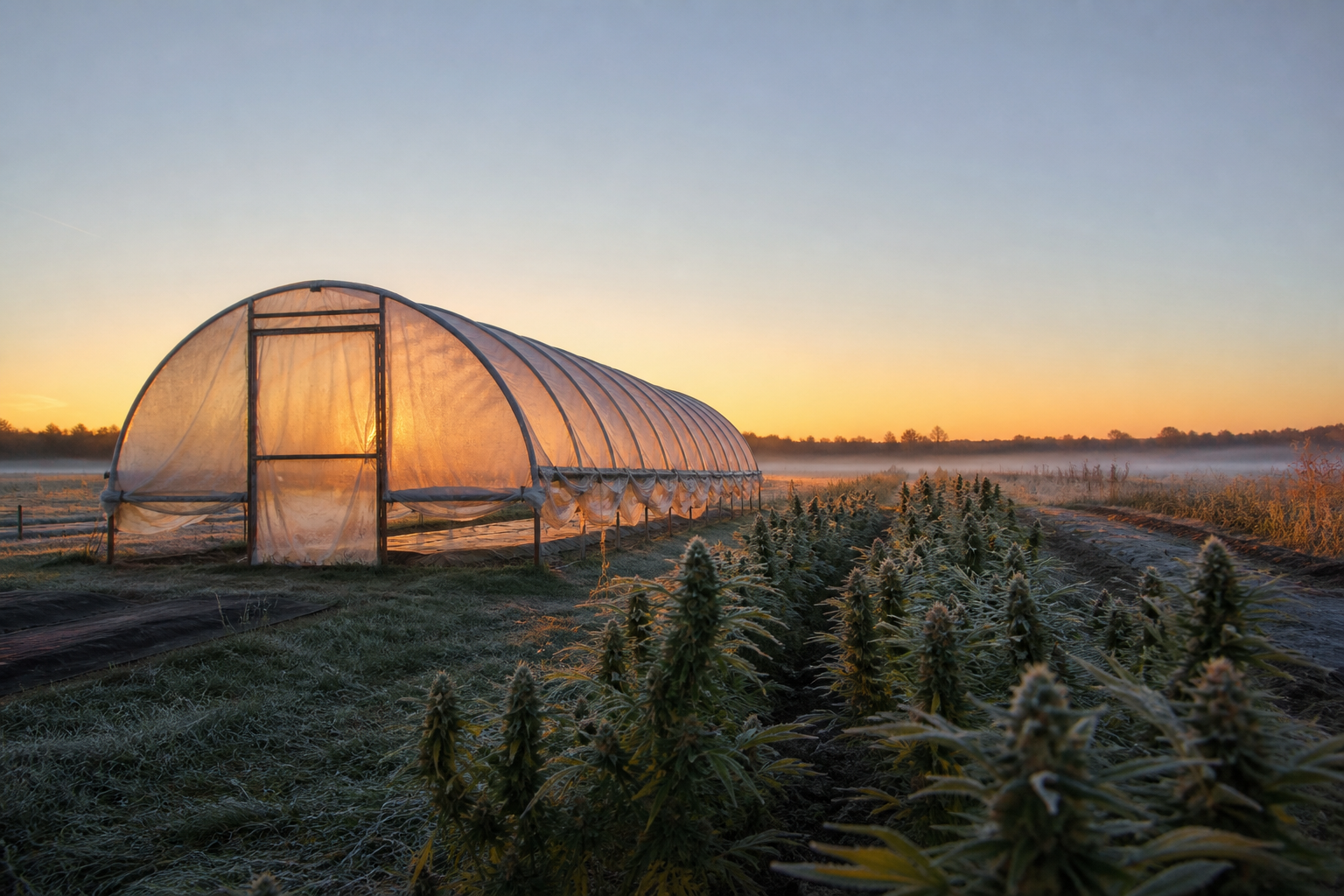
What Foxtailing Is After a Warm October Stretch
Skinny towers growing from an outdoor cannabis bud are called foxtails. Learn when genetics, heat, light, or re-veg may be behind the shape.
Questions this article answers
- What is foxtailing on cannabis, and why does a warm stretch grow skinny towers on outdoor buds?
- does heat cause cannabis foxtailing
- genetic foxtailing vs heat stress cannabis
- does foxtailing mean cannabis is bad
- foxtailing vs reveg cannabis

Head Cultivator
On this page
After a warm week, some buds sprout skinny towers off the top, like a second, thinner bud stacked on the first.
That's foxtailing. Heat can cause it in some plants, and genetics or bright light can leave the same shape.
The shape alone won't tell you which one you're looking at. I'm Jamie. I grow sun-grown flower for Divine Toke, a Detroit-rooted Michigan cannabis brand. My tolerance isn't a typical tolerance, and I care more about what a bud actually shows than a tidy grow-room story.
What Is Foxtailing on a Cannabis Bud? #
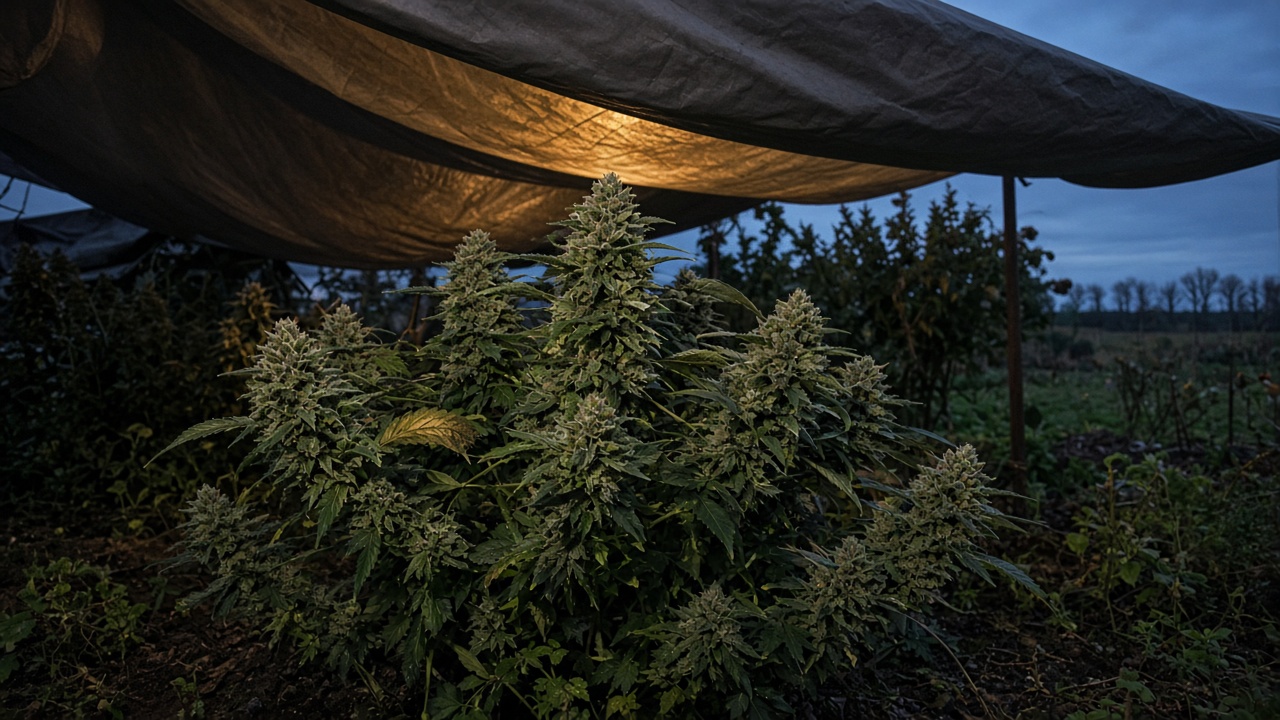
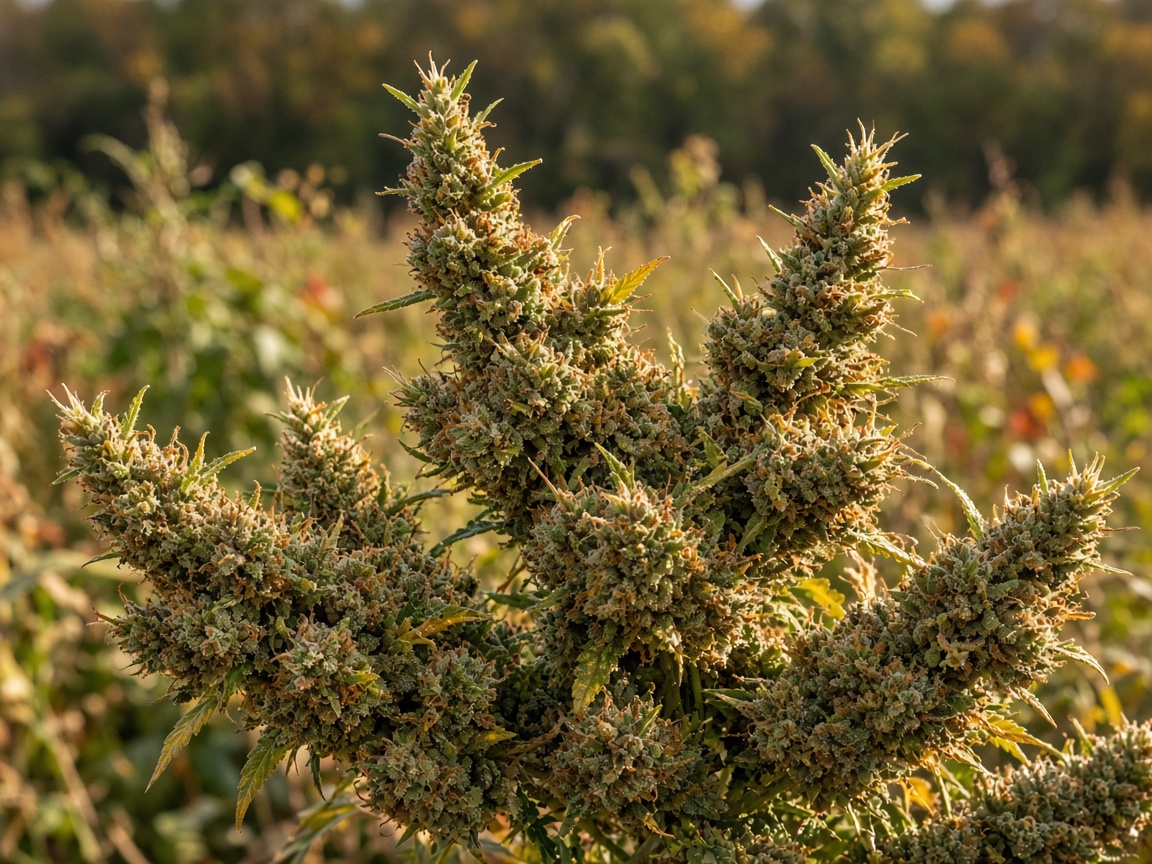
Foxtailing is when fresh flower growth stacks into thin, pointed towers above an older cannabis bud. The lower bud can look finished while newer bracts, tiny flower parts, and white pistils keep building at the tip.
The name is a grower word. It describes the shape before it explains the cause. A 2025 controlled-temperature study used the term for inflorescence reversion, or renewed floral growth during the flowering phase, in one cannabis genotype (Holweg et al.).
Think of a pine cone that kept adding a narrow second cone from its top. The rest of the bud can stay dense. The tail is the new, skinny part.
For a Detroit shopper, it's a look you may see after a late outdoor finish. It says nothing about quality by itself. A clean, loud bud can foxtail. A stressed one can too.
What the word describes #
The word points to a visible pattern: small floral pieces stack upward instead of swelling into one even, round mass. The towers can be one short finger or several uneven points across a cola.
Common tells include:
- A narrow tip above a broader bud. The tower often looks younger than the flower under it.
- Fresh white pistils at the top. Pistils are the hair-like parts of the female flower.
- Small overlapping bracts. A bract is a leaf-like wrapper around the flower.
- An uneven outline. One side can keep growing while another side stays compact.
The word doesn't settle a cause. The peer-reviewed papers use more exact terms like branchlets, floral units, internodes, and inflorescence development (Architecture and Florogenesis in Female Cannabis sativa). “Foxtailing” is just the plain word growers use after looking at the result.
One photo of a finished bud can't tell you the whole summer, the cultivar, the flower temperature, or the light schedule.
Why “calyx tower” is close enough for shoppers #
“Calyx tower” gets the picture across, even though a cannabis bud contains several tiny parts packed together. Shoppers usually call the little swollen pods around the pistils calyxes. In botanical language, the bract and the small flower it wraps are separate structures.
The dense female cannabis flower is a repeated pattern of reduced leaves, bracts, flowers, and small side shoots (the cannabis architecture study). When a new set of those pieces keeps stacking upward, the eye reads a tail.
| What you see | Plain name | What it means here |
|---|---|---|
| Tiny pod around a hair | “Calyx” in shop talk | Part of the new floral stack |
| Small leaf-like wrapper | Bract | Helps make up the bud shape |
| Hair from the flower | Pistil | Fresh tips can show newer white hairs |
| Skinny tower above an older bud | Foxtail | A shape that needs context |
Call it a calyx tower, a fox tail, or a stacked tip. What matters is what the plant kept making and where.
How Does a Normal Cannabis Flower Keep Building? #
A cannabis bud grows from many repeated floral units packed close together, so some stacking is normal before it looks like a fox tail. Short days shift the shoot tip into a condensed flower structure with tight branchlets, bracts, and flowers (a 2019 cannabis florogenesis paper).
A good flower already has layers. A cola is a crowded run of small pieces built along a short stem.
During flower the plant has three jobs:
- Make more floral units. Each unit adds a small flower and its wrapper.
- Keep the spaces short. Short internodes, the stem gaps between growth points, make a compact bud.
- Finish the older parts. The lower flower changes while fresh parts can still appear above it.
A foxtail shows up when that stacking looks stretched, pointed, or late compared with the rest of the bud. The line between normal stack and a clear tail is visual. It has no lab test or official size cutoff.
Outdoor flower can show more shape variation than a picture-perfect menu close-up. Wind, sun angle, cultivar structure, late heat, and short fall days all work on the same plant. The shape alone still can't assign blame.
Why some buds stack more than others #
Cultivars differ in when they flower, how tightly they shorten their internodes, and how many side flower units they build. Those traits can make one plant look chunky and another look taller or more layered under the same broad conditions.
A genome-wide study of 123 hemp accessions found several flowering-time regions across different environments (Toth et al. on PubMed). Flowering time changes the plant’s architecture because the switch to flower changes branching and stem growth.
| Architecture piece | Compact flower tendency | More extended flower tendency |
|---|---|---|
| Reproductive internodes | Short gaps between units | Longer gaps between units |
| Side flower units | Packed close together | More visible individual stacks |
| Transition into flower | Tight, steady condensation | More open or uneven development |
| Cultivar response | Similar shape across the plant | More shape variation across sites |
A genetic foxtail doesn't have to look damaged. The plant may just be building the way it builds. Similar tails from the lower branches to the upper colas on the same plant give that explanation more weight.
Researchers can measure plant architecture and flowering time. They haven't agreed on one botanical definition for every shape growers call foxtailing. So name the shape first and leave the cause open until the growing story fills in.
Genetics, Heat, and Light Are Different Foxtailing Stories #
Genetics, heat, and light can all sit near a foxtailed bud, yet they leave different clues. A good read starts with where the tails appear, when they started, and whether the same cultivar repeats the shape across the plant.
The strongest direct heat evidence is narrow: one controlled flowering study found foxtailing-like reversion under higher temperatures in one genotype (Holweg et al.). Genetics and light need their own rows. Folding them into one “stress” answer skips too much.
| Possible story | Pattern you might see | What supports it | What the shape cannot prove |
|---|---|---|---|
| Genetics | Similar tails on upper and lower flowers, often repeated across plants of one cultivar | Flowering time and architecture vary with genotype (Toth et al.) | The exact cultivar trait from one loose bud |
| Heat | Fresh late towers after a sustained hot flowering period | A 31/27°C treatment caused reversion in one genotype (Holweg et al.) | That every warm day produces foxtails |
| High canopy light | More tails on the most exposed top flowers | Light changes cannabis morphology and chemistry (Magagnini et al.) | A universal light-intensity cutoff |
| Night interruption | Flowering sites get leafy, open, and irregular over time | Short days support condensed inflorescence development (the photoperiod study) | That every leafy tip is revegetation |
For Michigan outdoor flower, a warm October stretch can be part of the heat row. It cannot erase the genetics row. A Detroit grower would need the cultivar history and the actual conditions to sort that out with confidence.
Light works the same way. Sunlight can be intense. A close indoor fixture can add radiant heat. Both can change the top of a plant, and a finished jar rarely keeps enough evidence to separate the two.
What the bud shape can and cannot prove #
A foxtail proves that fresh floral growth stacked into a tower. It does not prove heat damage, bad genetics, weak flower, or a light leak.
| From the finished flower | Safe conclusion | Claim to leave alone |
|---|---|---|
| One pointed tower | Fresh floral growth kept stacking there | “This definitely overheated” |
| Similar tails throughout the plant | A cultivar pattern is plausible | “This cultivar has a known foxtail gene” |
| Tails mostly on the highest tops | Local heat or light exposure is plausible | “The grower used bad lights” |
| Leafy shoots and longer stems | Reversion needs a closer look | “Every sugar leaf means reveg” |
| Clean smell and intact structure | The bud may still be enjoyable | “The shape proves potency” |
At a local counter, a strange-looking bag still gets the normal label, smell, and storage check. So does a pretty round bud.
You can't diagnose a farm from one cola. You can stop treating every skinny tower as a failure.
Can a Warm Flowering Stretch Trigger Foxtailing? #
Sustained heat during flowering can trigger foxtailing-like reversion in some cannabis genetics. The cleanest direct study I found compared a 25/21°C day-and-night treatment with a 31/27°C treatment during short-day flower (Holweg et al.).
The hotter rooms ran about 88°F by day and 81°F at night. In the ‘Harmony CBD’ genotype, the researchers saw renewed inflorescence growth they described as foxtailing. Fresh calyx-like growth pushed out during a phase when the older flower should have been maturing.
That study is useful because it measured more than a few dramatic tops. The higher temperature also lowered total cannabinoid concentration in both tested genotypes. In the affected genotype, it reduced inflorescence dry matter too.
| What the study supports | What it does not support |
|---|---|
| High flowering temperatures can cause reversion in at least one genotype | Every cultivar foxtails in the heat |
| Fresh floral growth can continue above older flower | Every tail is heat damage |
| Heat can hurt cannabinoid concentration under those conditions | A warm fall creates a predictable potency result |
| Genotypes can respond differently | One exact outdoor temperature threshold for every field |
“Heat always makes fox tails” oversells it. A warm spell can affect a late outdoor plant, and plants respond to duration, leaf and flower temperature, water status, cultivar, and stage of flower.
The paper tested a controlled room. A Detroit backyard has sun, wind, night cooling, and soil moisture all moving around. The study gives you a real mechanism to think about. It can't hand you a calendar diagnosis.
Why “warm” does not mean every October day caused it #
A warm October can be one piece of the story. “Warm” needs a time frame, a flower temperature, and a cultivar before it explains anything about a bud.
The controlled trial held the higher setting through the flowering phase. A few warm afternoons outdoors are a different exposure. A closed-up, still hoop house can also hold far more heat at flower level than a nearby open field.
Here's how I'd put it:
- A warm stretch can raise the question. It's a fair reason to look at new upper-bud towers.
- Sustained heat has direct evidence in one genotype. The Holweg study gives that part real footing.
- Bud shape can't backfill a temperature record. A tail on a jar doesn't reveal how warm the flower got.
- Cultivar history still matters. A plant that stacks this way every season may be showing its own build.
This page stays on the bud shape, so there's no weather outlook here. Heat belongs in the picture because one controlled cannabis study saw it change the flower’s development.
Why Can Light Be Part of the Picture? #
Light can change cannabis structure, though current research does not give one brightness number that predicts foxtailing. Intense light, radiant heat, cultivar response, humidity, and flower position can move together.
A study of three light sources found changes in cannabis morphology and cannabinoid content across treatments, while total cannabinoid yield did not change in the same simple direction (Magagnini et al.). Another controlled study found light spectrum changed CBD, CBDA, terpenes, and where compounds sat within the flower (Llewellyn et al.).
Those papers show that light matters. Neither one sets a universal “foxtailing starts here” line.
| Light-related question | What the evidence can say | What stays uncertain |
|---|---|---|
| Can lighting change flower growth? | Yes, light treatments change morphology (PMC8489345) | Which change will look like a tail in every cultivar |
| Can high light change a top flower? | It can add more energy and often more heat at the exposed canopy | The share caused by light versus flower temperature |
| Can spectrum change chemistry? | Yes, responses vary by spectrum and flower position (PMC9612076) | A simple “best spectrum” for every cultivar |
| Lamp setting visible in a finished bud | No | The grower’s exact setup |
For an indoor or greenhouse plant, the topmost flowers can sit closest to a lamp or hot roof. When only those tops build new towers, canopy exposure becomes a reasonable clue. It still needs the growing record to become a diagnosis.
Outdoor plants get sunlight across the whole canopy, yet upper flowers can still be more exposed than lower ones. That's another reason a photo alone can only say so much.
Why the top colas can tell a different story #
The top colas can carry more light and heat than the lower branches, so location on the plant matters. A tail on every level reads differently from tails that show up only on the highest exposed flowers.
Match the pattern to a question:
- Upper flowers only: ask about canopy heat, direct light, and airflow.
- Upper and lower flowers: ask whether that cultivar often stacks this way.
- One odd branch: ask about local damage or a branch-level change.
- Many leafy new shoots: look beyond foxtailing toward a change in the plant’s flowering program.
This page stays on the bud shape. A separate light-leak and revegetation article can cover the grow-side troubleshooting. For a shopper, the point is smaller: tall exposed tips make an environmental story more plausible, but they don't prove it.
I'm not claiming Divine Toke's outdoor flower foxtails from sun, heat, or anything else. I don't have a field record for it, and you should be careful with any grower who invents one for a sales pitch.
Is It Foxtailing or a Plant Sliding Back Into Vegetative Growth? #
Foxtailing adds more floral growth to a bud. Vegetative reversion adds shoots, stems, and true leaves back into the flower. They can look messy from a distance, yet the tissue being added is different.
Cannabis needs a short-day pattern to build and hold its usual condensed inflorescence. Researchers found that short-day exposure drives branching at the shoot apex and reduces internode length, creating the packed female flower structure (the 2024 photoperiod study).
A light interruption can disturb that program, and the finished bud may grow open and leafy. That's a different story from a narrow floral tower.
| What is growing from the older flower? | More likely read | What you may see |
|---|---|---|
| Stacked bracts, fresh pods, and white pistils | Foxtailing | A pointed floral finger |
| Small sugar leaves inside a normal bud | Normal flower structure | Short leaves among resinous flower |
| Longer stem sections and new leaf blades | Vegetative reversion | Open, leafy growth between flowers |
| Single-finger leaves followed by increasingly normal leaves | A stronger reversion clue | New shoots changing their form over time |
That first row is why a white-pistil tower doesn't mean a plant “went back to veg” by itself. A cannabis flower naturally includes reduced leaves and bracts. The pattern gets more convincing when long internodes and true leaf blades join it.
For a shopper holding a dried bud, that distinction can be hard. Trim can hide leaves. The tail may also be cut short. Use it as a shape read, then move to the parts a jar can answer better: scent, storage, lab label, and overall condition.
What true revegetation looks like #
True reversion changes the plant’s growth program, so it looks more leafy and stemmy than a simple floral tower. The bud starts making pieces that look like renewed vegetative shoots.
Signs worth separating from a foxtail:
- Leaf blades get obvious. They have the familiar serrated cannabis-leaf shape.
- Stem gaps get longer. The new growth has more space between sites.
- The flower opens up. Buds can become less condensed as shoots push through.
- The change keeps progressing. Later growth looks more vegetative than the tip before it.
No single sugar leaf proves that process. Cannabis flowers naturally carry reduced leaves, bracts, flowers, and axillary growth (the 2019 architecture paper). The full pattern matters.
That's as far as this post goes. The foxtail question is about skinny floral towers, so a dedicated light-leak piece can handle the causes and grow-side fixes for reversion.
What Does a Warm October Change About the Shape? #
A warm October stretch can keep late floral growth active long enough for skinny towers to show, especially in a heat-sensitive cultivar. It cannot turn a foxtail into proof that the weather caused it.
Detroit Metro’s 1991–2020 October normals are a 62.0°F average high and 44.0°F average low, according to NWS Detroit/Pontiac. Those are historical averages for the local outdoor setting.
Autumn outdoors also swings more than a controlled room. A plant can see direct afternoon sun, a warm sheltered wall, cooling after sunset, wind, dew, and shaded lower branches in the same day. That makes a single “warm October” label too broad to diagnose a bud.
| Outdoor context | What it can change | What it cannot tell you |
|---|---|---|
| Warm days | Flower surface temperature and ongoing growth pressure | The exact temperature inside a bud |
| Cool nights | How fast a plant sheds daytime heat | Whether a tail is genetic |
| Upper-canopy sun | Exposure at the top of the plant | The cultivar’s full light history |
| Detroit-area October normals | The usual climate backdrop (NWS Detroit/Pontiac) | The outcome of a particular field |
| A dried jar | The final shape you can inspect | The weather record behind it |
I read an outdoor foxtail as a hint about the season. One plant may finish through a warm pocket. The same cultivar may stack towers in a different year, and a cultivar planted beside it may stay compact.
For Detroit buyers, it explains why a late-season sun-grown bag can look less uniform than an indoor catalog photo. Outdoor flower carries a real season into the jar.
Why local weather only sets the scene #
Local weather gives you a reason to ask questions. It can't give a verdict on one cannabis bud. The controlled temperature study used fixed day-and-night settings across flowering. An outdoor Detroit plant gets a moving mix of sun, shade, wind, and cooling.
The NWS Detroit/Pontiac normals also list 2.53 inches of average October precipitation at Detroit Metro. Rain and damp are a separate late-season worry from foxtailing. This post stays on the towers, and the bud-rot guide covers when to refuse a musty jar.
The state is big, too. A garden in Detroit, a field near Flint, and a northern Lower Peninsula plot don't live the same fall. MSU Extension’s first-freeze climatology shows Detroit’s median first 32°F date later than many inland and northern locations.
That variation is why I won't give you one foxtailing temperature. The direct cannabis evidence is a controlled-room result in one genotype. Locally, a warm finish may be one part of the story, and the bud shape leaves room for genetics and light too.
If you want the broader season clock, Farming on Michigan Time covers frost dates and short-day flower. This post stays on the skinny tower in front of you.
Does Foxtailing Mean the Flower Is Bad, Weak, or Unsafe? #
Foxtailing is a flower-shape clue. It has no standalone grade for strength, finish, cleanliness, or safety. A cultivar can stack tall flowers and still make a sound, clean jar. Heat-linked reversion deserves more caution because the controlled study also found lower cannabinoids under the hotter treatment (Holweg et al.).
Notice “under the hotter treatment.” That result belongs to the study’s conditions and genotypes, so nobody gets to look at a tail and announce a THC number.
Safety works the same way. Michigan’s Cannabis Regulatory Agency Consumer Connection is the place for regulated-market basics, and a bud’s silhouette can't replace required testing, package information, proper storage, or your own smell check.
| Question | What a foxtail can tell you | What you need for a real answer |
|---|---|---|
| Is it strong? | The flower kept stacking | Batch-specific label and lab information |
| Is it clean? | Nothing reliable | Licensed-source checks, packaging, and condition |
| Is it fresh? | A tail may look new at the tip | Pack date, smell, moisture, and storage |
| Is it moldy? | Shape alone says nothing | Open-bud inspection and a musty-smell check |
| Is it ready for harvest? | It may show continued floral growth | The grower’s field record and close plant inspection |
Purple is a separate question. If the tail is dark-colored, the cold-nights color guide covers pigment.
Trichome timing is its own harvest question, and the sun-grown harvest timing guide covers the loupe and the maturity call. A foxtailed tip can sit on a mature lower flower, which is why shape and harvest timing shouldn't get mashed into one shortcut.
What foxtailing cannot tell you from a jar #
A finished jar can show you the architecture. It cannot show you the complete growing story. Treat the tail like one clue among several.
| Jar clue | Fair read | Overreach to avoid |
|---|---|---|
| Pointed floral tower | The bud kept building upward | “The grower overheated it” |
| Fresh white pistils at the tip | The tip developed later than lower flower | “It was harvested at the wrong time” |
| Even towers across several buds | A cultivar tendency is plausible | “Every plant of this cultivar does this” |
| One irregular tip | Local variation happened | “The whole batch is defective” |
| Musty smell or brown core | Pass on the jar | “Foxtailing caused the mold” |
An odd-shaped bag is nothing to fear on sight. Hold shape, scent, and label in the same hand. That reads flower better than chasing perfectly round buds.
How Should a Shopper Read a Foxtailed Bud? #
Read the foxtail as part of the bud’s shape, then check the same basics you would use for any flower: source, label, smell, and condition. The state’s legal adult-use framework gives adults 21 and older a regulated route to cannabis, and the CRA Consumer Connection explains the agency’s consumer role.
For a Detroit shopper, the move is calm curiosity. An unusual tower is worth a look. It's no reason to panic and no reason to pay extra.
- Look at the whole bud. Is the tail made of floral pieces, or is it leafy and stemmy?
- Check the rest of the batch. Similar shapes across buds can point toward cultivar architecture.
- Use your nose. The flower should smell like plant oils, not a damp basement. The Michigan bud-rot guide covers the refuse signs.
- Read the package. Batch details and licensed-market information tell you more about the product than the tower does.
- Keep the claim modest. “This bud foxtailed” is a fair observation. “This farm overheated every plant” is a guess.
| If you notice | Shopper meaning | Next move |
|---|---|---|
| One skinny floral tower | A shape worth understanding | Inspect scent and structure |
| Several buds with the same tidy tower | Cultivar expression is plausible | Ask whether the cultivar often stacks |
| Towers plus leafy shoots | Reversion becomes more plausible | Ask for a different lot if you dislike the form |
| Towers plus wet, musty, or brown interior | Separate quality issue | Refuse the flower |
| Compact buds with poor smell | Shape did not save the jar | Pass anyway |
Weather is part of the seasonal story, and the buying decision is bigger than weather. A clean, well-stored flower from a licensed source earns more trust than a pretty bud that smells wrong.
A short question to ask at the counter #
Ask whether the cultivar is known for stacking or whether the lot faced extra heat late in flower. A good answer may be “we don't know.” That beats a made-up explanation.
You can also ask:
- Whether the other buds in the batch look similar.
- To check the package and the lab information.
- Whether a fresher lot offers the same kind of effect.
At a Detroit counter, that lets a budtender talk about what's actually in front of them, and it skips a fight over a growing story neither of you can verify.
Divine Toke sells online, so there's no counter conversation. The rule holds for every jar anyway: read the details you have, smell it when you can, and let an odd shape stay one clue.
Frequently Asked Questions #
What is foxtailing on cannabis? #
Foxtailing is a pointed tower of fresh floral growth rising from an older cannabis bud. It looks like narrow stacked pods, bracts, and fresh pistils built on top of a broader flower. The peer-reviewed temperature paper uses “foxtailing” for a form of inflorescence reversion (Holweg et al.).
Why do cannabis buds grow skinny towers late in flower? #
Skinny towers can grow when a cultivar naturally stacks that way or when flower development keeps restarting under stress. Cannabis inflorescences are built from repeated floral units, so continued stacking can look dramatic late in the cycle (the 2019 architecture paper). Heat, light exposure, and disrupted flowering can all sit near the same visual result.
Does warm weather cause cannabis foxtailing? #
Warm flowering conditions can cause foxtailing-like reversion in some genetics. In the controlled study, 31/27°C day-and-night conditions produced the response in ‘Harmony CBD’ (Holweg et al.). That result doesn't create one outdoor temperature rule for every cannabis cultivar.
Is cannabis foxtailing genetic? #
Yes, genetics can make foxtailing or a long-stacked flower shape more likely. Flowering time and plant architecture vary across cannabis genetics, and a study of 123 accessions found several flowering-time genomic regions (Toth et al.). Tails that repeat across the whole plant support that possibility.
Can too much light cause foxtailing? #
High canopy light can be part of a foxtailing story, especially when the exposed top flowers carry most of the towers. Lighting studies show that cannabis morphology responds to the light environment (Magagnini et al.). Research does not provide one universal light-intensity cutoff for foxtailing.
Is foxtailing the same as revegetation? #
No. Foxtailing adds floral towers, while revegetation adds renewed stems and true leaves. Short days normally create cannabis’s condensed flower structure (the photoperiod study). Long stem gaps, serrated leaf blades, and leafy shoots are stronger reversion clues than a pointed floral tip.
Does foxtailing make cannabis less potent? #
Foxtailing alone does not give you a potency result. The hotter treatment in the controlled study lowered total cannabinoid concentration, yet that finding belongs to those conditions and genotypes (Holweg et al.). A genetic tail can still come from a normal-looking cultivar expression, so use the batch label for the actual number.
Does foxtailing mean a cannabis bud is unsafe? #
No. A foxtail is a shape, and it tells you nothing about safety. Michigan consumers should use licensed-market information, packaging, and condition checks; the Michigan CRA Consumer Connection explains the regulated consumer framework. A musty smell or brown, soft interior is a separate reason to pass on a bud.
Can you tell the cause of foxtailing from a finished jar? #
Usually no. A finished jar can show the floral tower, yet it cannot show the plant’s full temperature, light, and cultivar history. A lower and upper canopy pattern, the flower-room record, and repeated plants give a grower more evidence than one trimmed bud does. The direct research supports careful language around cause (Holweg et al.).
Should shoppers avoid foxtailed cannabis? #
Shoppers do not need to avoid a foxtailed bud on sight. Check that it smells fresh, comes from a source you trust, and has no damp or moldy signs. The cold-nights color guide and harvest timing guide cover two other visual shortcuts worth keeping separate.
Closing: Read the Shape as One Clue #
Foxtailing is a skinny, stacked tower of new cannabis flower growth. A warm stretch can contribute in some genetics, yet the tower itself can't separate heat from light or cultivar architecture.
The best direct heat study saw foxtailing-like reversion at 31/27°C in one genotype, along with lower cannabinoid concentration under that treatment (Holweg et al.). That's worth knowing, and no reason to write off every pointed bud after a warm October.
If you are curious about sun-grown flower, shop the Divine Toke menu for the current options. Read the bag, use your nose, and let the bud’s shape stay one part of the story.
Related reading:
- The regenerative cannabis process
- Farming on Michigan Time
- Do cold Michigan nights make cannabis stronger, or just change the color?
- When is sun-grown cannabis ready to harvest?
- Late-September rain and bud rot
This article is for educational purposes only and is not medical advice. Always consult your healthcare provider before starting any new wellness routine.
Grown in Detroit. Shipped to your door.
Small-batch, sun-grown cannabis cultivated in living soil. Mail-order shipping to all 50 states.